
In fast-paced hospital environments, time and budgets are under constant pressure, yet billions are still lost globally to preventable wound complications. A gauze bandage roll is often the first line of defense in trauma and post-surgical care, but a low-quality choice can delay healing and waste critical resources.
Procurement teams often face a “transparency gap”: uncertainty of whether the factory that made it truly met the FDA or EU MDR standards. Was it 100% pure cotton, or was the supply chain at risk?
This article aims to solve this problem. We go through factory-level production insights, explain the difference between yarn counts, and provide an expert list of the top 10 gauze bandage roll manufacturers in China. By the end, your procurement team will precisely know what to look for in securing the best value without sacrificing patient care.
Key Takeaways
- The top 10 gauze bandage roll producers in China, BKA MED (no. 1 for its vertically integrated, fully compliant ISO 13485, CE MDR, FDA, NGO experience, and its approach of risk mitigation), followed by Winner Medical Co., Ltd., Gauke Healthcare Co., Ltd., KINGPHAR, and others
- A gauze bandage roll is manufactured by first ginning and cleaning raw cotton bales, followed by carding, spinning into yarn, weaving into a meshed fabric, scouring and bleaching (preferably with hydrogen peroxide), slitting with precision and controlled-tension rolling onto cores, packaging, and possible sterilization.
- There are three main methods of sterilization for gauze bandage rolls: ETO (Ethylene Oxide gas, which is the most common method for bulk lots but requires degassing), Gamma Radiation (highly effective for high-density pallets utilizing Cobalt-60), and Steam Autoclave, an ecologically clean process sufficient for small batches.
- High-quality cotton fabric used in bandages relies on low-lint fibers obtained from long staple, yarn counts typically 21s-40s that balance strength with flexibility, hydrogen peroxide bleaching for superior absorbency and purity, and sourcing certifications that reflect ethical sourcing and satisfy compliance demands from institutions and the world over.
Top 10 Gauze Bandage Roll Manufacturers in China
When sourcing medical supplies on a big scale, finding the right manufacturing partner to work with is more than just choosing the supplier that charges the lowest prices. It requires identifying a facility that understands the critical nature of medical supplies.
In China today, there are numerous manufacturers of medical supplies in relation to wound care. This notwithstanding, some of the best manufacturers have demonstrated excellence not only in manufacturing but in fully appreciating the regulatory requirements of countries of import.
Below is a list of some of the 10 best manufacturers of medical gauze bandage rolls in China today that are currently leading in the market. These are not just exporters but are fully integrated manufacturers that take raw cotton all the way to the final sterilization of each piece of Gauze Bandage Roll they manufacture.
1. BKA MED
BKA MED (Hubei Baikang Medical Instrument Co., Ltd) takes the top spot in our list of the best Chinese Gauze Bandage Roll makers, and for a good reason.
Established in 2010, it is driven by their core philosophy of “Baikang,” which translates to “all people healthy.” For the past decade, BKAMED has maintained an impeccable record of quality and has transformed its business model from simple production to an integrated partnership with NGOs and health departments worldwide.
BKAMED has an integrated production facility for all its medical products, including medical disposables. While they produce everything from surgical tapes to catheters, Gauze Bandage Rolls are still an integral part of their business. They understand that although a bandage roll is a high-volume consumable, any lapse in quality can lead to patient infections or secondary injuries. This is why their modern facilities in Hubei Province utilize automated weaving and rolling machines to maintain high precision.
BKA MED’s production prowess is reinforced by its vertically integrated supply chain. By controlling the process from the raw cotton stage through to the final sterile bandage packaging, they can maintain strict quality controls and offer more stable pricing than middlemen. Their current production capacity allows them to meet 30 to 40 high-cube containers on export, catering to more than 70 nations spread over Europe, Southeast Asia, and Africa.
Pros:
- Vertical integration. They manage the entire life cycle of the cotton fabric used in bandages, ensuring purity and consistent absorbency.
- NGO Experience: They have experience working under the strict documentation and shipping requirements of international humanitarian organizations
- Customization: They offer flexibility in OEM/ODM services, like certain mesh counts and bilingual package labeling.
- Comprehensive Compliance: The company holds ISO 13485, CE (MDR), and FDA registrations. This makes their products ready for immediate import into the global markets.
Cons:
- Higher MOQ for Customization: While they are flexible, specialized private-label runs typically require a minimum order to maintain production efficiency.
Why BKA MED Ranks #1
BKA MED has the advantage of being able to assist in the fast and easy procurement of Gauze Bandage Rolls from China because of their “Risk Mitigation” approach. They do not just supply goods but are a complete compliance solution as well. They can manage mixed-container shipments, including bandages, tapes, and gauze, making them priceless to procurement organizations.
2. Winner Medical Co., Ltd.
Winner Medical is one of the most recognized companies in the Chinese medical textile industry. Founded back in 1991, the firm started operations in Shenzhen, but today it has evolved into a giant company, boasting more than 15,000 employees.
Winner Medical is widely credited with pioneering “PurCotton” technology, which revolutionized the way 100% cotton materials are used in both medical and consumer sectors.
They boast an enormous production capacity. As a publicly-traded company, Winner Medical operates multiple industrial parks that produce a Gauze Bandage Roll at a scale few others can match. They distribute their products to more than 110 other nations.
Pros
- Massive Capacity: Capable of handling national purchasing contracts that demand millions of rolls in a single window.
- Innovation Leader: Industry standards are defined by patented non-woven and cotton technologies.
- Environmental Standards. They focus on green manufacturing, a significant plus for European consumers who value the environment.
- Advanced Testing: Features some of the most sophisticated in-house laboratory testing for yarn strength and bio-burden levels
Cons:
- Complex Corporate Structure: Smaller consumers may not get the same individual attention as in more niche manufacturing companies.
- Cost. Because it is an international brand, the cost includes intangibles such as R&D.
3. Gauke Healthcare Co., Ltd
Operating out of Hubei, Gauke Healthcare has carved out a specialized business as a major manufacturer of first aid kits for the past two decades. Although they manufacture many other types of gauze dressing and bandages, their principal claim to fame has been their ability to provide such products in complete kits for the automotive and industrial markets.
Gauke Healthcare currently manufactures more than 6 million first aid kits every year, which means their Gauze Bandage Roll production is optimized for consistency and fit.
Now, this focus on kits doesn’t mean they don’t sell bulk rolls; rather, it means every roll of cotton gauze they make is designed to meet the highest “field-use” durability.
Pros:
- First Aid Specialists: Rolls designed to be quickly applied, usually suited for emergency or trauma care.
- European Compliance: Outstanding at satisfying German and EU requirements (DIN/MDR).
- Reliability: It exports around 30 containers a month, and it always meets the delivery time requirements.
- Integrated Production: More than 90% of kit components are produced in-house to achieve a close match between bandages and kits.
Cons:
- Niche focus: Sometimes the best value is found within kit-ready sizes and could be less diverse than the competition.
- Lead Times: Peak capacity for big car contract jobs may increase lead times for new customers.
4. KINGPHAR
KINGPHAR Medical (Hubei Qianjiang Kingphar Medical Material Co., Ltd.), established back in 1989, can be cited as one of the most experienced players in China’s medical gauze market. KINGPHAR boasts of having over 800 committed employees and an installation of 1,000 sets of equipment.
The KINGPHAR product lineup focuses on the Medical Gauze Series-Jumbo Roll and the Gauze Bandage Roll offered to all patients admitted in the Surgical Ward. KINGPHAR is famous for its “Pure Oxygen” bleaching lines that provide an exceptional white and absorbent cotton sheet.
KINGPHAR can generate over 800 x 40-foot full-container loads per year. This capacity makes KINGPHAR an OEM supplier of some of the largest names in global healthcare products – catering to bandages that comply and conform to USP, BP, or EP pharmacopeia standards.
Pros:
- Vast Experience: Over 30 years of experience, including highly experienced regulatory roles.
- Pharmacopeia Expertise: The products comply with American and British medical standards to exude high medical credibility.
- Production Speed: The high machine count ensures speedy processing and filling of orders.
- Clean Room Excellence: Provides Class 100,000 clean rooms, thereby ensuring controlled manufacturing of even non-sterile products.
CONS: –
- Conventional Business Model:They may feel less “digitally accessible” than newer, marketing-focused firms, preferring long-term traditional contracts.
- Reduced Flexibility for Smaller Orders: Large-scale benefits large volume buyers.
5. Ningbo Medelast Co., Ltd. –
Ningbo Medelast is a name often found in the supply chains of sports medicine and specialized wound care. Established in the year 2002, the company has been focused on the weaving technology required for various fixation products. Their Ningbo branch acts as an important export base for a wide range of medical disposables, focusing mainly on the Gauze Bandage Roll, including the elastic series.
What sets Medelast apart is their emphasis on investing in sophisticated weaving equipment, which has helped them produce not only the standard but also the tubular and highly elastic series, which other general manufacturers tend to shy away from.
Their strong output capacity can easily reach over 5 million pieces monthly for their bandage products, which cater mainly to the European and North American markets where product assurance matters greatly.
Pros:
- Technical Versatility: Specialized in complex weave structures tailored for both conventional and high-stretch medical uses.
- Rapid Prototyping: Most appropriate for firms demanding customized sizes for their gauze bandage roll products.
- Quality Compliance: ISO 13485 and CE (MDR) certified, thereby complying with present European laws regarding safety standards.
- Mixed-Product Shipping: A wide range of bandages can be consolidated through the mixed-product shipping method.
Cons: –
- Pricing Structure: Such specialized equipment might drive the price structure for the conventional cotton rolls higher than that of regular, mass-market factories.
- Lead Times for Specialized Items: Custom elastic or tubular weaves may involve longer production lead times compared with standard items.
6. Lianyungang Baishun Medical Treatment Articles Co.,
Baishun Medical has been around since 1988, which makes it a seasoned player in the domain of absorbent cotton and gauze. They own three manufacturing units, of which one is completely devoted to gauze products in Hubei. This creates substantial production and a turnover of around 10 million dollars every year, primarily in terms of their Gauze Bandage Roll exports.
The company has more than 300 workers in their payroll, enjoying a mix of “old-timer reliability” and new environmental considerations. The firm was quite proactive in adopting wastewater treatment for its bleaching lines.
The organization operates in every continent, including South America and the Middle East, where its ‘BSMD’ brand name has come to mean consistency in quality.
Pros:
- Strong Industry Background: 36+ years developing a stable cotton fabric for bandages.
- Massive Production Output: German products are used to sustain the production of 5,000 tons of medical cotton and gauzes annually.
- Environmental Responsibility: An eco-friendly bleaching process appeals to brands focusing on CSR.
- Competitive Pricing: Volume production can provide aggressive pricing for non-sterile rolls.
Cons:
- Brand Focus: Focusing on BSMED branding poses potential challenges when extensive customization is required.
- Communication Speed: Because it is an established large-scale company, communication may not always be immediate.
7. Suzhou Sunmed Co., Ltd
Established back in 1993, Suzhou Sunmed is a giant in medical exports, with several production facilities stretching from Jiangsu, Zhejiang, and Anhui provinces. Their distributed production facilities provide excellent flexibility and scalability.
With thousands of SKUs, some of their best-selling products for exports related to first-aid and hospital supplies may be found in Gauze Bandage Roll, a top-three product. Sunmed also shines well in retail and wholesaling, from mere hospital suppliers to actual partner supermarkets and other pharmacy chains around the world.
Their massive QC team of over a hundred personnel can guarantee all cotton gauze rolls adhere to ISO 13485:2016 standards
Pros:
- Retail Expertise: Experts in private label packaging from individual barcoding to shelf-ready display boxes.
- Huge Product Portfolio: Ideal for customers who are interested in Gauze Bandage Roll in addition to syringes, tapes, and first-aid kits.
- Global Footprint: Exports to 60+ countries with sophisticated logistics and custom documents.
- Strong QC culture: “The large inspection team helps ensure consistency across bases and batches,” says the company.
Cons:
- Minimum Order Quantities: Because they deal with massive retail volumes, their MOQs can be quite high for smaller or mid-sized distributors.
- Complexity: Navigating such a large catalog can sometimes be overwhelming for buyers looking for a simple, single-product relationship.
8. Anji Wande Medical Products Co., Ltd.
Located in the famous “Bamboo Village” of Anji, Wande Medical was established in 2003 with a focus on orthopedic and trauma supplies. They are renowned for their Plaster of Paris (POP) bandages. However, their Gauze Bandage Roll production is equally impressive. They have invested over 3.5 million USD in their 10,000 square meter facility to ensure high-end production standards.
Wande Medical is the one-stop destination for those requiring quality products, such as paraffin-coated gauze or rolls of the highest quality in orthopedics. With an employee base of over 85 and top-notch technical experts, they meticulously check yarn count and weave to ensure that it is not hampered by any casting tape or splint chemicals.
Cons:
- Orthopedic Specialists: Their Gauze Rolls are optimized for Casts & Splints, providing superior skin protection.
- High Daily Output: Automated coating and rolling lines have a daily output of as high as 4,600 standard dozens per day.
- Sterile Capabilities: They maintain a Class 100,000 aseptic workshop for their sterile bandage lines.
- Niche Market Leader: They hold a high market share in major hospitals for specialized trauma and orthopedic consumables.
Cons:
- Specific Focus: Their production is heavily geared toward orthopedic uses, which might mean less variety in standard “surgical” gauze types.
- Regional Logistics: Great location, but a little way from the ports compared to Ningbo or Shanghai.
9. TOPWIN Med
Topwin (Hubei) Medical Products began their operations in 1999 and are today a key pillar in Hubei’s medical industry base. With 600+ staff and three primary production bases, they possess over 100,000 square meters of workshop area. As a top 10 player in Chinese industry, they provide a complete range from textiles to finished and sterilized Gauze Bandage Roll.
Their key strength is their capability and certifications: “Pure Oxygen Roll-Type Bleaching provides improved brightness and absorbency as compared to conventional bleaching methods.” Their export output exceeds 800 containers per year. They are the supplier of choice for world brands requiring a high volume and 100% cotton version for BP and USP standards.
Pros:
- Enhanced Bleaching: Their pure oxygen process produces impurity-free, hydrophilic gauze.
- Massive Resource Base: The company has over 1,000 weaving and folding machines, which help provide a big tender capacity
- Full Chain Control: Like BKA MED, they control the weaving and bleaching, which ensures the cotton fabric used in bandages is consistent. –
- Comprehensive Certification: They hold ISO 13485, CE Marking, GMP Controlled Manufacturing certification standards
Cons: –
- Institutional Priority: A focus on larger contracts may impair responsiveness for smaller orders.
- Standardization: Designed for standard sizes, while non-standard requests would incur higher set-up costs.
10. Forelong Medical
The Service-Oriented Supplier Forlong Medical, founded in the year 2010, is a relatively new competitor that expanded rapidly through their service-oriented approach. They market themselves as professional medical disposable products providers, emphasizing the quality of their gauze dressings and bandages.
Forlong built their facility according to international standards and caters to the “Amazon era” medical supply requirements. They provide online services that operate round-the-clock and offer flexible order amounts, going to the extent of providing a two-year warranty for their products, which is unconventionally long-lived for medical disposables.
Pros: –
- Exceptional Customer Service: The one-hour response service makes for a very responsive experience. –
- No Strict MOQs: Ready to collaborate without high MOQ. –
- Fast Delivery: With efficient logistics and typical lead times of 15-17 days for a standard shipment. –
- Transparent Quality: Detailed inspection reports prior to dispatch.
Cons: –
- Broker-Style Breadth: A broad line can translate to shallow vertically integrated weaving of cotton if specialists exist. –
- Younger Brand: This brand lacks the long history of older brands that some consumers may find compelling when buying
Understanding Gauze Bandage Roll in Medical Supply Chains
The work of a typical Gauze Bandage Roll is security, compression, and protection of wound coverings, which makes it one of the foundational elements in wound management practice globally.
To procurement officers and healthcare administrators, the Gauze Bandage Roll is a high-volume commodity that has to follow the rigid mechanical tolerances to guarantee a smooth introduction in the hospital operations.
Defining Gauze Bandage Roll and Core Specifications
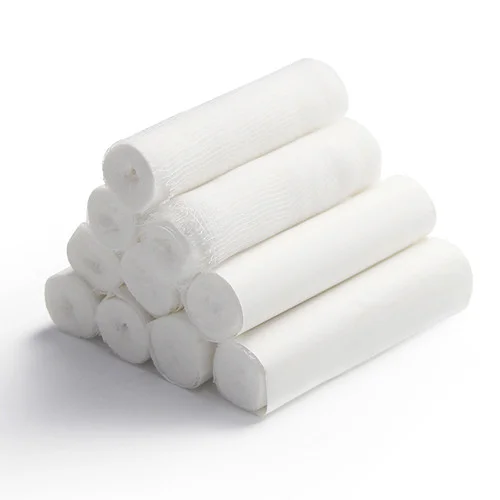
In order to clearly explain what a Gauze Bandage Roll is, it is necessary to differentiate it with regular absorbent gauze. Although they both have a cotton origin, Gauze Bandage Roll is woven or slit specifically in order to keep longitudinal integrity in the wrapping process. This makes the material not to fray or lose form when subjected to tension on a limb or torso.
Structural differences from flat-fold or cut-sheet cotton
The major difference between a roll of cotton gauze and a flat-folded sponge is the weave and finishing. High absorbency and direct contact, as well as folded edges to prevent linting, is commonly the design of flat-fold gauze. Conversely, the Gauze Bandage Roll is focused on tensile strength and “stretchability” even with the non-elastic ones.
Normal cut-sheet cotton does not have the continuous structural support required in circumferential wrapping. See, when a clinician is deploying a Gauze Bandage Roll, the task is usually to form a second layer that stays in place without shifting. The weave of the cotton bandage worn is designed to bite into itself and give its low-slip surface which cannot be emulated by flat sheets.
Standard widths, lengths, and roll diameters used in institutional bidding
Institutional procurements operate on standardization. For a gauze bandage roll to be considered, it has to meet certain specifications that fulfill the dimensions of available storage systems and clinical guidelines. The failure to conform to these standards may cause automated dispensing or physical storage constraints.
The most popular dimensions in the international market are:
| Standard width | Standard length | Common application |
| 5 cm (2 in) | 4m, 5m, 10m | Small extremity securement (fingers, wrists) |
| 7.5 cm (3 in) | 4m, 5m, 10m | Standard limb dressing and joint support |
| 10 cm (4 in) | 4m, 5m, 10m | Lower leg and heavy wound management |
| 15 cm (6 in) | 5m, 10m | Torso wrapping and extensive surface area bums |
Other than width and length, roll diameter is another important but frequently ignored measure. High density winding enables the use of more material in less space and this is a significant variable in global shipments.
To be able to fit into the standard first-aid kits compartments or wall-mounted dispensers, Procurement teams may specify a maximum roll diameter of the Gauze Bandage Roll.
Why the Rolled Format Dominates Institutional Procurement
The design of Gauze Bandage deals with the two largest hidden costs in health care: logistics and time. In running a regional hospital system, any slight reduction in the time of application or warehouse area provides a huge budgetary relief.
Space efficiency in shipping containers and warehouse racking
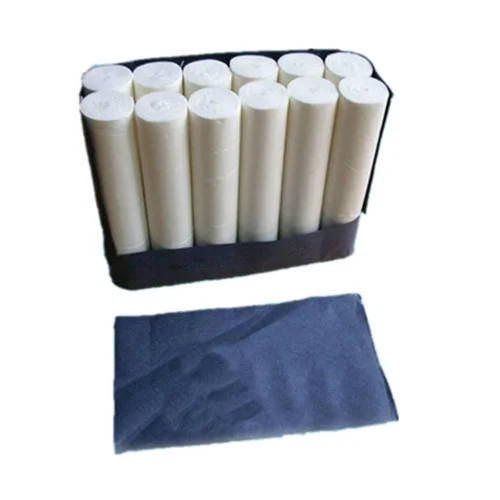
The cylindrical shape of a Gauze Bandage Roll is superior for high density packing. These rolls are vacuum-compressed or stacked tightly in inner boxes unlike loose-fill sponges or large pre-filled applicators. This maximizes the use of 40-foot high-cube containers, as this is an effective way of reducing the landed cost per unit to the importer.
The Gauze Bandage Roll has a uniform design, which allows for standardized palletization. Palletization is the practice of stacking and securing products onto a strong, flat platform called a pallet so they can be moved, stored, and transported easily as one stable load often using forklifts or similar equipment.
Here’s the thing: when every unit occupies a predictable cubic volume, inventory management software can more accurately predict stock levels. It is this predictability that is needed in order to have a just-in-time supply chain within facilities that have limited storage footprints.
Reduced waste and faster application in high-volume settings
In any emergency department or rush surgical ward, any time you spend messing around with packaging is a second lost in patient care. The Gauze bandage roll allows for continuous, uninterrupted application. With one hand, clinicians can wrap a site and at the same time hold the tension on the other, which is very hard to do with flat-sheet alternatives.
Now, consider the aspect of material waste. In the case of a Gauze Bandage Roll, the provider only applies the necessary length to a particular patient. Any spare amount will be left to the next process or will be at least disposed of with little waste. The cost-effectiveness of a Gauze Bandage Roll makes it the most affordable solution to use in the case of a large-scale clinical setting.
Differentiation from Elastic, Cohesive, and Non-Woven Alternatives
While the Gauze Bandage Roll is a staple, it exists alongside a variety of other bandage types.. All of them have certain clinical implications, though the conventional cotton gauze roll is the most versatile as it can be used due to its breathability and the minimal possibility of skin irritation.
- Elastic Bandages: This one has a high compression level but there is a risk of cutting off circulation when used improperly. Gauze Bandage Roll offers light compression, which is far safer to use in general.
- Cohesive Bandages- These adhesive bandages do not stick to skin. They are convenient, but can be much more costly than a regular Gauze Bandage Roll.
- Non-Woven Bandages: This type is composed of artificial fibers and is less expensive in most occasions. Nevertheless, they do not contain the natural absorbency and the grip of a quality bandage roll manufactured out of 100% cotton.
Gauze bandage roll is usually paired with gauze dressing and bandages to form a multi-layered barrier. The structural integrity is provided by the roll and the primary dressing through this system approach ensures the wound exudate is taken care of. Considering the Gauze bandage roll as a high-volume institutional environment, we can compare it with these alternatives.
| Feature | Cotton Gauze roll | Elastic Bandage | Non-woven roll |
| Breathability | High | Low | Medium |
| Absorbency | High | Low | Low |
| Cost | Low | High | Very low |
| Primary Use | To secure and protect | Compression and support | Light protection |
Clinical Applications and System-Level Integration
The versatility of the Gauze Bandage Roll allows it to fit various anatomies and different clinical applications. Whether it is securing a post-surgical drain or providing a protective barrier over a fragile skin graft, the mechanical properties of the cotton weave remain consistent. This consistency makes the rolled format a staple in the medical supply chains across the world.
Primary and Secondary Dressing Securement.
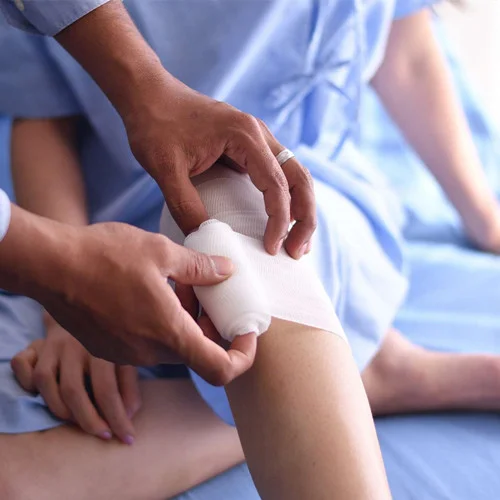
The purpose of the Gauze Bandage Roll is to use it as a secondary securement layer. In clinical practice, a primary dressing is applied to cover the wound, to control the moisture, and promote healing. However, these primary dressings often lack the adhesive or structural strength to stay in place independently, especially on mobile joints like knees or elbows.
This is where the gauze bandage roll comes in. Clinicians roll it around the limb to form a stable sleeve that holds the primary dressing in place without excess medical adhesives that tend to tear the skin of elderly and pediatric patients. This approach keeps the wound covered during movements before full recovery.
Compatibility with Gauze Dressings and Bandages
Effective wound management is dependent on the combination of different types of materials. The Gauze bandage roll is designed to be compatible with a wide range of gauze dressings and bandages in order to create a full protection system. This compatibility is determined by how well the layers interact, ensuring that moisture is wicked away while maintaining structural integrity.
Layering Protocols in modern wound care
Current wound management techniques often involve a particular pattern of layers in order to create an ideal healing environment. The first layer typically includes a non-adherent pad or a medicated sponge. The secondary layer, commonly in the form of a Gauze Bandage Roll, is then placed to apply a light compression and to absorb any strike-through fluid exudation.
A third level might include a sterile bandage or tape to complete the fixation process. The goal here is to create breathability and security. This Gauze Bandage Roll provides a breathable environment because of its pores. This allows for airflow, which is essential in preventing maceration of the skin. Maceration occurs when the skin softens due to retained moisture.
Most common gauze and rolled bandage combination is procured together
When hospitals issue tenders, they often don’t purchase products in isolated lots. Instead, they look for “kits” or bundles that reflect actual usage. For instance, the typical post-op dressing kit consists of 4×4 Gauze Sponges, a Gauze Bandage Roll, and Paper Tape. Procurement professionals keep abreast of these bundles to prevent running out of supplies for which an item has been used.
Institutional bidding combinations that arise most often are as follows:
- “Wound Debridement Sets” – Gauze pads; size – 10cm x 10cm; supplied along with 7.5cm gauze bandage rolls.
- Burn Care Bundles: Large-size non-stick pads and 15cm wide rolls for torso wrapping.
- Minor Trauma Kits: Small ster
Use in First-Aid Kits, Catheter Fixation, and Orthopedic Support
Apart from traditional wound care, Gauze Bandage Rolls can also be used in specialized medical institutions. The Gauze Bandage Rolls are used in trauma centers for temporary catheter fixation, when standard adhesive devices are not available or when the patient is sweating or has oily skin. The cotton material creates a high-friction interface that maintains the tubing.
The Gauze Bandage Roll is also used in orthopedics, acting as the under-cast padding or a Robert Jones bandage to help reduce swelling. Its ability to be applied with consistent tension makes it ideal for supporting strained ligaments before a more permanent splint is applied.. It acts as a buffer to protect the skin against the hard ends that the orthopedic fibers present.
Furthermore, it is a fact that Gauze Bandage Roll is widely favored among first aid box items. Whether it is a school clinic or an industrial manufacturing plant, Gauze Bandage Roll is chosen over other products for hemorrhage control and stabilization. It is a simple product that can be handled even by personnel trained only for basic first aid.
Volume Requirements Across Hospital Departments
To estimate the quantity of Gauze Bandage Rolls needed, there must be a granular analysis of activities conducted by the departments. These pointing products are generally consumed in varied quantities by different wards. For instance, there may be a greater turnover of the small, medium, or large packs in the outpatient surgical unit as opposed to the long term facility caring for the aged.
Now, let’s break down the typical consumption patterns found in a 500-bed general hospital:
| Department | Primary Use Case | Estimated Monthly Volume (Rolls) |
| Emergency Department | Trauma stabilization and primary securement | 2,500-4,000 |
| Operating Theatre | Post-surgical dressing securement | 1,500-2,500 |
| Orthopedics | Cast padding and joint support | 1,000-2,000 |
| General Wards | Secondary dressing changes | 3,000-5,000 |
| Intensive Care Units (ICU) | Fixation of lines and specialized dressings | 500-1000 |
The general wards usually constitute the most significant consumption as indicated in the table since patients need to undergo daily or bi-daily dressing changes. In the case of a Gauze Bandage Roll manufacturer, the logistics system will need to address the demand which involves the ability to support high-frequency continuous deliveries. Any disruption of the supply of these rolls may lead to stagnation of the normal discharge of patients.
In the context of international aid, NGOs often look for a Gauze Bandage Roll that can perform in extreme climates. Whether in the humidity of a tropical field hospital or the dry heat of a desert clinic, the 100% cotton material remains stable. It doesn’t melt like some synthetic adhesives or become brittle like low-quality plastics, making it the most resilient choice for global health initiatives.
Raw Materials: Choosing Cotton That Meets Institutional Standards
The effectiveness of a ready-made gauze bandage roll does not get determined on the shelf for sale, but rather begins with the materials that go into making this product. If improper cotton is used, then the final product may shed, rip, or absorb liquids poorly, and this is unacceptable in a medical facility.
Cotton is a major component in gauze dressings and bandages because it is a breathing fabric that is soft and has a natural ability to absorb liquids. Not all cotton rolls, though, satisfy institutional demands. Medical-quality cotton has to be free from all forms of contamination, including seeds, leaf particles, and waxes. When these contaminants are not cleansed away, the gauze produced may not be effective.
Cotton Fabric Used in Bandages
Processing natural Cotton to produce fabric used in bandages involves cleaning, spinning, and weaving. Each of these processing steps influences what kind of bandages will be produced, including their texture, absorbability, and durability. No wonder hospital buyers closely observe the type of fibers used.
Long-staple vs medium-staple cotton performance
Length of fibers plays an important role. Long-staple cotton yields more lustrous cotton fibers with less lint. This has immense significance in surgery. Medium-staple cotton, having an average quality lying between the other two types, comes in handy in many applications. It can easily be made useful for various purposes.
Yarn count ranges
Yarn count also plays an important role. Coarser yarn is used for robust wrappings, which require strength. Medium yarn, in sizes ranging from 21s to 32s, is the norm for an average gauze bandage roll. Delicate yarn, approximating 40s, finds applications in high-quality items, where flexibility exceeds strength.
Bleached vs. Unbleached Cotton
Most medical institutions prefer using bleached cotton. This is because bleach removes the oils in the cotton that prevent it from absorbing and is responsible for giving the bandage its cleanliness and white color.
Nowadays, hydrogen peroxide is preferred in bleach since it is more environmentally safe and healthy compared to other bleach chemicals. Cotton that is unbleached does not absorb well and is thus less preferred in sterile medical bandages.
Sourcing, Compliance, and Sustainability
The cotton market is one of the most volatile commodity sectors in the world. For a manufacturer, maintaining a stable price for a Gauze Bandage Roll requires a sophisticated sourcing strategy that spans multiple continents.
Avoiding child labor and forced labor compliance risks (UFLPA, EU due diligence)
There are also strict regulations in the US and Europe requiring that cotton not be sourced from forced or child labor. A shipment of gauze bandage rolls can be disqualified if the sourcing cannot be documented. Ethical sourcing practices are no longer voluntary.
Sustainability Certifications That Matter to European and North American Buyers
BCI, GOTS, and OEKO-TEX certifications are becoming a critically important factor in tenders. This not only ensures that a consumer is confident that a bandage bandage roll is skin-friendly, but also that it meets all medical-grade requirements.
Selecting the appropriate cotton quality in the case of a gauze bandage roll requires various considerations, such as performance, safety, cost, and ethical aspects. When manufacturers focus on the quality of the fibers, their count, correct bleaching, and ethical sourcing, it becomes possible to acquire a trustworthy cotton gauze bandage roll that works satisfactorily in real-world situations, meeting exactly what hospitals demand.
The Complete Production Process
The manufacturing journey of a Gauze Bandage Roll is an intricate transition from a raw agricultural commodity to a precision-engineered medical device.
Despite the simplicity of the end product, the backend operations involve complex mechanical engineering and chemistry. Large purchasing groups need to understand this reality at the manufacturing level as part of their supplier assessment process in identifying their supplier’s ability to maintain consistency at an enormous scale.
Each process, from the cleaning of the cotton fibers to the final sterilization process, has to be carefully regulated. A margin of temperature variation in the bleaching process or a slight discrepancy in the slitting process can jeopardize the use of the Gauze Bandage Roll in the clinical setting.
This section discusses the operational standards that distinguish the best practitioners in the area of medical textiles.
From Bale to Fabric: Ginning Through Weaving
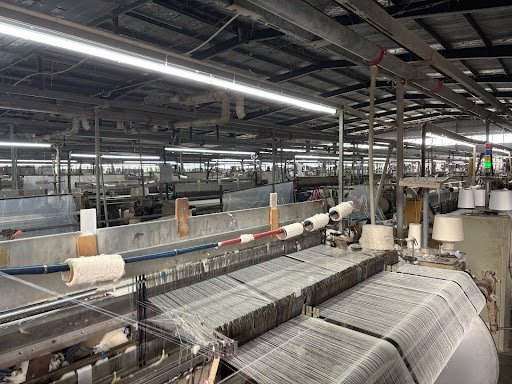
The process starts when raw cotton bales are delivered to the spinning mill. The raw cotton is unwrapped, and through the process of “ginning” or “cleaning,” the fibers are freed of seeds and leaves.
The cleaned cotton is then “carded” and aligned parallel to one another, resulting in the production of yarn. The yarn produced has an influence on the “feel” of the Gauze Bandage Roll.
Spun cotton then goes to high-speed looms to be made into fabric. This is where cotton fabric starts having its mesh texture. In bandages designed as hospital supplies, the plain-weave pattern usually has both warp and weft yarns at right angles to each other. Loom sensors track the density of the weave in terms of its mesh number (e.g., 19×15 or 24×20).
In the modern manufacturing process, air jet or water jet looms are used to minimize defects while maximizing production. The speed of such looms beats all others, as they can produce thousands of meters of gauze in a single day. During this phase, the tension on the threads is kept constant to prevent the fabric from bunching or thinning, which would lead to an inconsistent Gauze Bandage Roll during the slitting stage.
Bleaching, Scouring, and Medical-Grade Finishing
Once the “grey fabric” is woven, it is far from being a medical product. In its raw state, the gauze contains natural oils, waxes, and pectins that make it water-repellent. Scouring and bleaching complete the purification process to create a highly absorbent material required for wound care. This is the most chemically-intensive part of Gauze Bandage Roll production.
Hydrogen peroxide vs chlorine bleaching routes
Historically, the chlorine bleaching of medical gauze was the norm, but this leaves toxic residues and dioxins behind. Newer suppliers of medical equipment have turned to hydrogen peroxide (H2O2) bleaching, an oxygen-based bleaching technique, which leaves nothing toxic behind.
H2O2 bleaching destroys natural pigments without harming the cellulose fibers, resulting in an electronically bright, pure Gauze Bandage Roll. This results in a Gauze Bandage Roll that is exceptionally white and has a higher level of purity.
For procurement, ensuring the product undergoes H2O2 bleaching can help adhere to contemporary safety requirements, such as the EU Medical Device Regulation.
Controlling residual chemicals (AOX, pH, whiteness index)
After bleaching, the material then undergoes a series of washing processes to eliminate residues from the chemicals. The quality departments measure the pH levels of water to maintain a neutral position (approximately 5.5 to 8.0 levels), which prevents skin irritation during clinical use. The gauze bandage roll would cause reactions with open wounds if it is too acid or alkaline.
In addition, factories are also careful to observe the Whiteness Index and the AOX (Adsorbable Organic Halogens) levels. The higher the Whiteness Index, the purer the removal of the organic matter, and the lower the AOX levels, the stronger the assurance that no chlorinated substance was used. This distinguishes medical gauze from other textiles.
Slitting, Rolling, and Core Variations
In this stage, the bleached gauze is now processed into Gauze Bandage Roll products. The large sheets of gauze are cut into separate units with specific width dimensions and wound with a set degree of tensile force.
Precision slitting tolerances institutional buyers demand
Slitting precision is critical because irregular edges can fray or catch on medical instruments or spread lint into a wound. Typically, competitive bids on a medical institution’s tender demand a slit margin tolerance of ±1 mm. Specialized facilities rely on circular blades guided by a laser beam to create a clean edge on each roll, like a selvage finish.
Winding tension is also important. If it is too tight, the roll will not have loft and will not be absorbent; too loose, and it will fall apart when it is shipped or used. computers automatically calculate how many turns are required to achieve the desired size (4 m, 5 m, 10 m, and so on) before the paper is rolled off.
Key Options Available for Exportation
The core acts as the backbone for the gauze bandage roll. Although there are local markets that prefer the coreless structure for cost reduction, international deliveries may require the incorporation of a core for easy handling.
- Paper cores: Regular use in a hospital environment; light, biodegradable, and stiff enough for easy unrolling.
- Plastic Cores: Preferred for their advantage in a humid environment as it reduces lint.
- Coreless: Best for vacuum-sealed first aid kits with limited storage area. Core selection will depend on intended usage as well as storage conditions in the target country.
Choosing the right core variation depends on the final application and the storage conditions of the destination country. For a manufacturer, having the flexibility to offer all three types allows them to serve a more diverse range of gauze bandage rolls to the global market.
Sterilization Methods
The process of changing a standard roll into a sterile bandage needs a proven method of sterilization that eradicates all forms of microbial life without affecting the properties of the cotton.
Consider the three basic techniques now used in modern factories.
| Method | Process | Ideal For | Notes |
| ETO (Ethylene Oxide) | Gas-based chemical sterilization | Bulk gauze rolls in plastic/paper pouches | Most common; requires a “degassing” period to remove gas residue. |
| Gamma Radiation | Cobalt-60 isotope radiation | Large-scale, high-density pallets | Extremely effective; can slightly yellow the cotton if the dose is too high. |
| Steam (Autoclave) | High-pressure saturated steam | Small-batch, in-hospital use | Environmentally friendly but can leave the gauze damp if not dried properly. |
ETO (Ethylene Oxide) remains widely used for mass production, as it’s economically feasible and fiber-friendly, though the facility needs to accommodate an effective aeration chamber to remove the residual gas before packaging, which is a safety measure auditors check.
In-House vs Third-Party Testing Protocols
Factories perform in-house testing on a real-time basis for each production made. These include tests for yarn count, mesh, and absorbency. This allows the production team to make adjustments in case the production goes out of specification.
However, such tests within the industry prove to be insufficient for regulatory requirements. Industry members further conduct testing of their samples within third-party testing laboratories to verify their products, including gauze dressings, as per USP or BP requirements.
Scaling from 50,000 to 5 million a month
SZU refers to scale up. The scale-up process requires more than equipment. When a manufacturing plant expands the scale of 5 million Gauze Bandage Roll units a month, the whole operational logic shifts.
Manual checking is replaced with AI-based optical sorters that are capable of picking a loose strand of a string of threads.
Logistics related to raw materials may also become an issue. There is a focus on a steady supply of cotton yarn and packaging materials in order to avoid line formations.
The capacity required for sterilization must also be appropriate. At times, industrial scale ETO chambers for sterilization of many pallets are required. Even in such cases, meeting demands related to healthcare on time is possible.
Overall, the creation of a Gauze Bandage Roll is a highly technical combination of the old and new. To optimize every variable, from the chemistry of bleaching to a precise slitting blade, a product is developed that is safe for the patient and efficient for the healthcare professional. It is essential for the institutional buyer to have factory-level knowledge for a partner who can serve at all scales.
Global Regulatory and Quality Standards
Importing a roll of cotton gauze isn’t just the simple act of moving cotton across borders. Once the product is destined for medical use, it automatically becomes a regulated medical device. Each country lays strict rules to keep the gauze dressings and bandages making their way into its healthcare system safe, clean, and reliable.
For procurement teams, reading and following these rules can spell the difference between smooth customs clearance and a shipment stuck in a warehouse for weeks or worse, a rejection. These regulations exist for a simple reason: to protect patients. Paperwork is often missing, or certificates do not correspond with what is on the box. Depending on the situation, both the importer and the manufacturer might face serious legal and financial troubles.
Here is a brief rundown of the key regulatory systems that matter most in the importation of gauze bandage rolls as they concern the U.S., Europe, and world quality standards. It looks at what to exactly check before ordering any bandage roll.
FDA Requirements for Class I Gauze Bandages (United States)
When it comes to the U.S. FDA, one has to pay attention to the details. Although some rules refer to 21 CFR 878.4010, most gauze bandage rolls fall under 21 CFR 878.4014, which relates to non-resorbable gauze and sponges for external use.
The upside: these products are Class I medical devices, meaning low risk. Most Class I devices are exempt from the FDA’s 510(k) premarket notification process, thus allowing easier and less expensive entry to the marketplace.
Exemption from 510(k) does not mean exemption from oversight. Manufacturers must still meet FDA General Controls, including:
- FDA facility registration
- Device listing for each gauze bandage roll
- Good Manufacturing Practices (GMP)
The shipment could be flagged at the first U.S. port of entry if a factory isn’t registered appropriately.
FDA requires sterilization processes for sterile bandages that have been validated, with clear batch traceability. For non-sterile products, too, one needs traceability back to the raw materials, which in this case is the cotton fabric. This constitutes the essence of FDA compliance.
EU MDR (2017/745) – Understanding Rule 1 vs. Rule 4
The transition in Europe from the old MDD to the stricter EU Medical Device Regulation changed everything for medical devices handling of wound care products. Now, the classification of a product-a gauze bandage roll, for instance-determines the complexity of an approval process.
Under MDR Annex VIII:
- Rule 1 deals with Non-invasive, non-sterile bandage rolls used for basic support. Normally, these are Class I devices and can thus be declared by the manufacturer.
- Rule 4 applies when gauze bandage rolls will come into contact with injured skin, absorb wound exudate, or act as a wound barrier.
Key implications:
If the product is sold as a sterile bandage, then it becomes Class Is. The “s” signals that a Notified Body must audit the sterilization process, including facility inspections, reviewing ETO or gamma sterilization records, and verifying controls.
If a supplier claims sterile status with CE marking but cannot provide a valid Notified Body number, that’s a red flag.
ISO 13485:2016
ISO 13485:2016 specifies the quality management system requirements for manufacturing medical devices at a global level. This does not supplant any FDA or MDR requirements, but it does complement them. It would be best described as the operating manual for running a medical-grade factory.
When auditing a supplier for a gauze bandage roll, don’t stop at the certificate. Try to understand how the system works in practice. For example:
- If a batch has a weaving defect, then does a clear corrective action process exist?
- Can production be stopped and traced back to the source material?
- Are sub-suppliers in yarn and cotton monitored?
Sub-tier supplier control becomes very important because the cotton fabric may come from a third party, and if poor quality happens at that level, then the final bandage suffers.
One should also review basic design and performance documentation. Even simple gauze dressings have to have defined standards of absorbency and tensile strength. That’s what makes it medical-grade production instead of ordinary textiles.
Additional Certifications Buyers Often Request
CE Mark
A CE marking is required in Europe, but not all CE markings are created equal.
- Non-sterile gauze bandage rolls may, in many cases, be self-declared by the manufacturer.
- Sterile bandage products must bear a four-digit Notified Body number, such as, CE 0123.
If a supplier makes the claim of sterility without the involvement of the Notified Body, that is a high risk. Always check that the scope of the CE certificate exactly matches the product you will be purchasing.
MDSAP – One audit, multiple markets
MDSAP enables a single audit to cover the regulatory requirements of the U.S., Canada, Australia, Brazil, and Japan. Generally speaking, a manufacturer approved by MDSAP is well-organized and of low risk, which will save importers time and decrease compliance headaches when sourcing gauze bandage rolls for multiple markets.
WHO Prequalification for NGO and Aid Programs
For humanitarian and NGO supply chains, WHO recognition carries some weight. While full WHO prequalification isn’t required for something as basic as bandage rolls, factory inspections aligned with WHO standards are often sufficient to gain approval, especially when supplying cotton gauze in regions with limited healthcare infrastructure where reliability is most needed.
Common Customs Rejection Issues (and How to Avoid Them)
Even compliant gauze bandage rolls can be delayed by simple mistakes. Common problems include the following:
- Missing/wrong UDI code
- Wrong HS code, possibly. Medical bandages usually fall under HS 3005.
- Unmatched packaging language and rules of the destination country
- Sterility claims that are not supported by batch reports
Preparation is the best defense. Request your supplier to perform a full pre-shipment document review, send advance packaging photos to your customs broker, and make certain every claim printed on the box has supporting official documentation.
Final Thoughts
Regulations exist to protect patients. When clinicians reach for a gauze bandage roll, they expect it to be safe, uncontaminated, and reliable in use. By adhering to FDA rules, EU MDR requirements, and global quality standards, manufacturers and importers help preserve that trust.
Ultimately, compliance isn’t just pieces of paper; it is what keeps gauze dressings and bandages safe, effective, and ready whenever needed most.
Why BKA MED Stands Out As a Reliable Manufacturing Partner For Hospitals & NGOs Across The World
Choosing the right partner in the volume business of a gauze bandage roll is not merely an economic decision. It has implications in the treatment of the patients, the reliability of the supply chain, and the planning of resource allocation. What makes BKA MED unique in a crowded market is that they focus on what the institutions care most about when it comes to matters of bandage supplies, consistency in quality, and reliability of delivery.
And at the root of this strategy is this simple truth: medical products must never impede medical activities. When a medical specialist reaches for a gauze bandage roll, it should perform exactly as intended—not a single quality surprise or labeling headache in sight. BKA MED patterns its operations in such a manner that it almost feels like an extension of the medical facility’s own product supply chain in ensuring every gauze bandage roll conforms to global standards.
Vertical Integration: From Cotton to Sterilization
A crucial factor behind the reproducible quality is complete vertical integration. Most producers subcontract processes like yarn spinning, sterilization, et cetera. All phases at BKA MED are vertically integrated; they control the entire process of the cotton fabric used in bandages within their single quality management system.
It begins with cotton selection and purification prior to spinning. The fact that yarn is produced in-house enables consistency in strength and texture. The in-house weaving process ensures that mesh density is consistent, thereby ensuring that each gauze bandage roll provides an optimal balance of breathability and strength.
Quality controls extend even further, right up until finishing, slitting, and then even packaging. The ultimate process, sterilization, is carried out in-house by using ETO chambers. In this way, risks associated with transporting non-sterile products to third-party laboratories, as well as higher lead times, need not be considered. Purchasers can therefore assure traceability of every individual sterile bandage, right back to its origins from basic cotton.
Tender Ready Compliance Documentation
In many cases, winning a hospital or NGO tender can be as much a question of paperwork as quality. In recognition of this, BKA MED has a complete system of compliance documentation ready to submit at a moment’s notice.
This includes ISO 13485:2016 Certification, CE (MDR) marking, and FDA registration. When contracting organizations place bids to provide gauze bandage rolls or sterile bandage products, they will have access to technical files, biological safety reports, and regulatory statements without any delay.
As part of the package and apart from the certificates of authenticity, there are also batch traceability statements and reports on sterilization validation. Such openness is greatly appreciated in the case of NGOs, which are controlled by strict donor or customs supervision. As such, there is less chance of border delays for gauze bandage rolls.
Proven Global Supply Experience
The regional width is one of the best factors that can identify a credible manufacturer. BKA MED has been providing gauze bandage rolls to health care centers in Europe, North America, and Sub-Saharan Africa, which have different needs.
European and North American customers are usually looking for up-to-date regulatory requirements, correct product labeling, and quick shipment. Customers in Africa, in turn, may need products to resist the influences of high humidity, longer shipment times, and more limited storage space.
By extending its services to such different customers, BKA MED has gained tremendous experience in accommodating various requirements in terms of product characteristics and shipping methodologies.
Solid Tech and Regulatory Backing before and after Orders
Manufacturing partnerships are much more complex than an agreement to buy and sell. Issues emerge concerning yarn number, absorbency, chemical residue, and regulatory affairs. BKA MED stands by the purchaser with an expert technical staff knowledgeable about clinical and manufacturing conditions.
Prior to production, the group works with procurement and clinic personnel to ensure that the specifications for the gauze bandage rolls are verified. After delivery, a variety of services are offered, including customs clearance, warehousing, and quick turnaround for feedback from the operational sector. When a region changes its regulatory standards, labeling and documentation are done promptly.
With this continuous support, the procurement team is protected from potential risks and is never faced with the problem of going it alone in dealing with compliance issues.
Price Stability and Partnership Contracts
Cotton prices can fluctuate because of climatic conditions, transportation bottlenecks, and political instability. This is a problem for hospitals working within tight budgets. To overcome this problem, it has taken measures to protect raw material prices through hedging by keeping stockpiles of cotton at strategic times.”
It also allows for fixed prices for a roll of cotton gauze over a long period of time. Many hospitals and health departments choose a contract period of a few years in order to protect against price escalation. It is one of the reasons for choosing BKA MED for a long-term high-volume contract.
It also benefits the manufacturer to be operationally efficient. By reducing wastage in the weaving and slitting stages of manufacturing, the manufacturer is able to remain cost-effective without necessarily having to lower the quality of the product. Such savings at the factory level allow the manufacturer to pass the benefits on to the consumer and
Real Flexibility with Mixed-Container Orders
Hospitals also require more than one product. Besides a gauze bandage roll, they also require gauze dressings and bandages, tapes, and adhesive plasters. Although many factories dispatch whole containers for a particular product, BKA MED provides versatile schemes for transporting different containers.
In one shipment, there may be various wound care products. This is practical, especially when considering NGOs, private clinics, or distributors who may not have ample space.
Through such customization of order consolidation, BKA MED enables buyers to receive exactly what they ordered, without surplus products, without packaging. It is this combination of scalability and flexibility that makes BKA MED stand out in the international medical supplies sector.
Partner with BKAMED
Through this article, we have analyzed the range of the Gauze Bandage Roll’s lifecycle from raw cotton selection to the worldwide standards for hospitals. We also considered the top 10 gauze bandage roll manufacturers in China so that you are fully updated with the prevailing market scenario. Though there may be numerous companies in the market, the one that ensures sufficient production volume and complete quality control is the one that safeguards your supply chain
That said, as a leader in medical supplies like these, we at BKA MED are proud of our reputation as a gold standard. Because we take all aspects of our processes, from where your bandages’ fabric is woven right down to when your bandages are sterilized, we’re able to provide you with much greater consistency as well as value than our competitors can. In medical tenders, you can’t afford to fall short when you need ‘tender-ready’ documentation.
If your hospital or NGO is in the process of reviewing your medical inventory, we would be more than grateful to help your cause. Feel free to reach out to us or ask for a quote should your NGO require the gauze bandage rolls.
Our team is always geared towards assisting with the technical know-how as well as offering the flexibility in shipping necessary to ensure your medical staff remains well-stocked in their facilities.
