
The demand for gauze bandage rolls continues to grow globally as hospitals, clinics, and pharmacies increase spending on wound care and surgical supplies. Recent market reports estimate that the gauze bandage rolls market surpassed $2 billion in 2025, and it is projected to expand steadily over the next decade. However, did you know that inconsistent product quality and missing certifications still create major sourcing risks?
For importers, pharmacies, and distributors, sourcing gauze bandage rolls from the right supplier is as important as securing competitive pricing for these and other medical consumable products. Buyers face stricter regulatory expectations, rising customer demands for sterile and CE or ISO-certified products; and increasing pressure to maintain stable inventory levels.
Looking to source ISO-certified cotton gauze bandage rolls from China? Partner with a reliable manufacturer that offers verified certifications, consistent production standards, and OEM support. This will help you reduce procurement risks while improving long-term supply chain stability.
In this article, we explain how pharmacies and distributors can secure ISO-certified gauze bandage rolls from reliable Chinese manufacturers. Keep reading.
What Are Cotton Gauze Bandage Rolls?
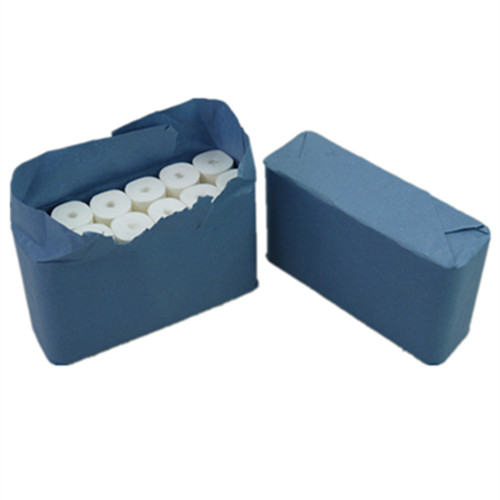
Cotton gauze bandage rolls, woven medical dressing materials, are used for securing wound dressings, absorbing blood, providing wound protection and light compression. These products are cost-effective, breathable, versatile — utilized in hospitals, clinics, pharmacies, and emergency responders.
Most are made from purified cotton yarn, then woven into an open mesh. This design provides sufficient flow of air and keeps it absorbent. A 100% cotton gauze roll BP USP standard product typically meets pharmacopeia specifications for purity, absorbency, and fiber content.

Cotton gauze bandage roll products are frequently purchased in bulk quantities by pharmacies and distributors for use in surgical departments, retail pharmacies, outpatient departments and first aid kit assemblers. They are available in sterile/non-sterile, elastic and OEM tailored versions, depending on the specific intended use.
Medical gauze roll ISO certified suppliers are more sought after for a good reason. They give healthcare buyers an additional assurance of uniformity and traceability in the manufacture of the product.
Types of Cotton Gauze Bandage Rolls
There are several types of medical cotton gauze bandage rolls:
1. Sterile vs. Non-Sterile
Sterile gauze bandage rolls are packaged and irradiated or chemically processed to make sure they are free of all the microbes, thus it is safe to be applied or used on direct surfaces of the wounds. They are often packaged individually in either paper or plastic sleeves.
Non-sterile gauze does not guarantee germ-free. It is useful in wrapping, cleaning and/or padding (under a plaster). Pharmacies that have sterile gauze on order must check on certifications of sterility and shelf life.
2. Woven vs. Non-Woven
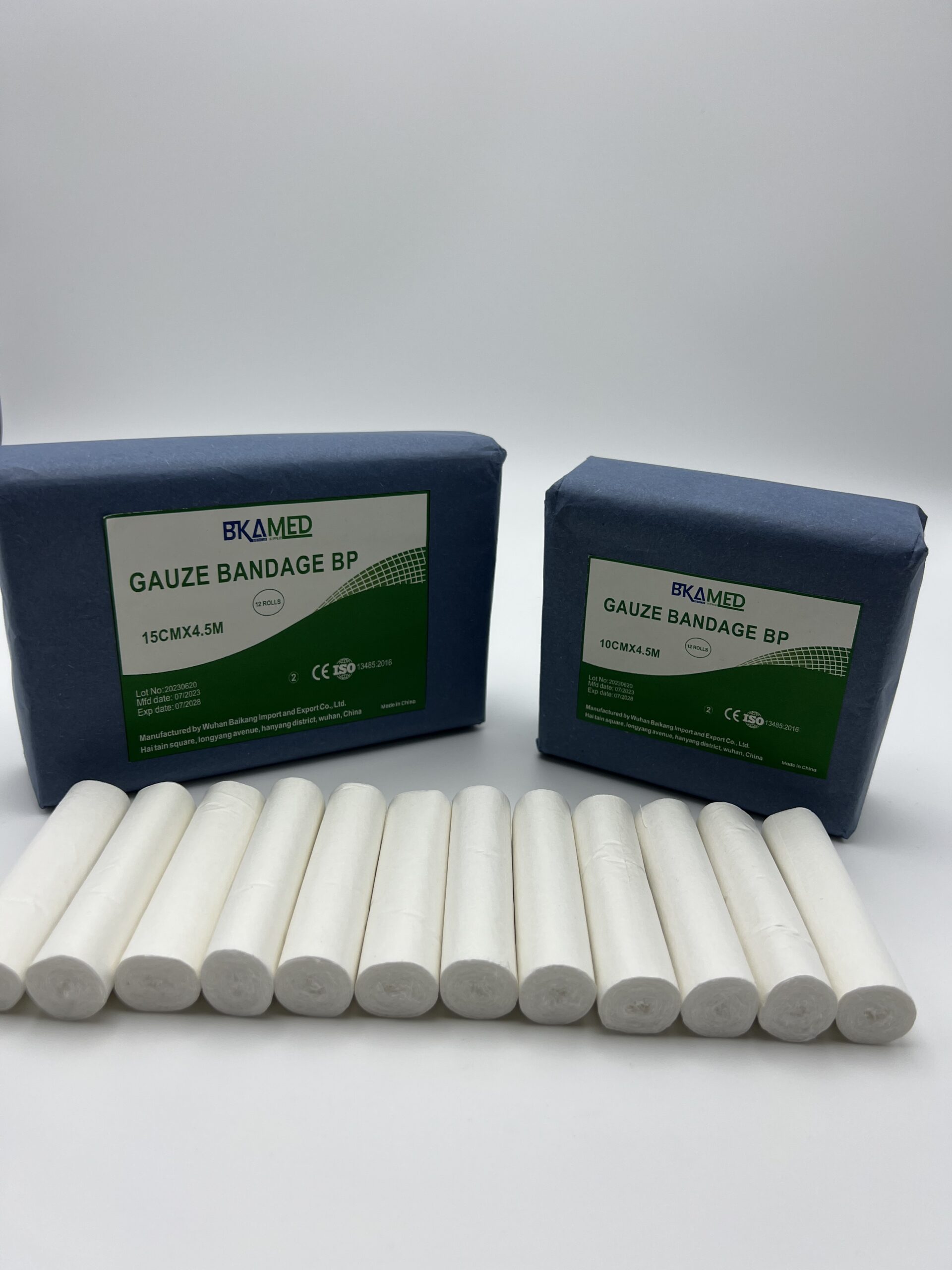
Woven gauze is made by the traditional weaving of cotton yarn (plain weave), providing high tensile strength but may shed fibers. On the other hand the non-woven gauze is made from bonded or pressed cotton fibers. It gives very low lint, and occasionally higher absorbency per ply count which is beneficial in clean room application.
3. Elastic and Conforming Gauze
Some cotton gauze bandage rolls are slightly elastic to fit the body shape. Conforming (elastic) gauze swabs conform and stick to themselves or are lightly adhesive; good on joints and extremities. They provide wound protection and the compression needed (for swelling).
4. Jumbo Rolls
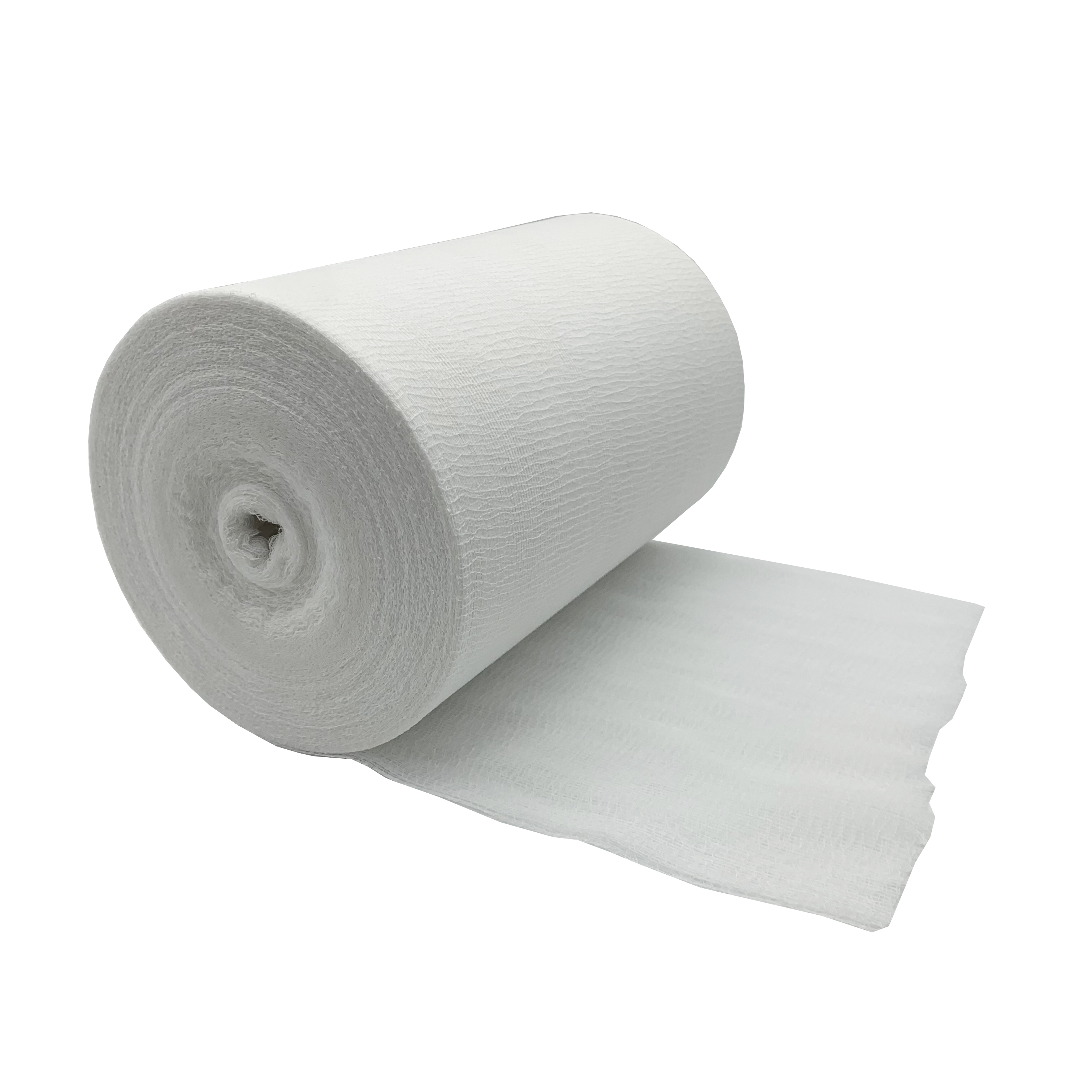
Jumbo gauze rolls (wider and longer) are available for industrial users or OEM conversion. They may come in the form of absorbent cotton bandage roll factory offering and then be re-wrapped with smaller rolls within the company.
5. OEM and Customized Gauze Rolls
There are numerous distributors who may need gauze bandage roll OEM private label solutions. Packaging, size, labeling and branding can be tailored by the manufacturer to the specific needs of B2B buyers to suit their regional retail or institutional marketing.
Understanding Mesh Count, Width, and Ply (Common Specifications)
When purchasing, the following specifications are important and can impact how the gauze bandage roll is used and what its cost is:
Mesh Count
This is the number of threads per unit of width used in the weave. A medium open gauze roll (30×20 mesh count) means that there are 30 threads per inch in the one direction of the gauze and 20 threads per inch in the other. The higher the mesh (40×30) the closer the thread is woven together and the less space between each thread of the material.
A lower mesh count gauze bandage roll (e.g. 16×13) is very coarse with big holes. A higher, though, finer mesh gauze will absorb more gauze for a given area. Do always check the mesh count to meet the local specifications (always).
Ply (Thickness)
Gauze rolls are frequently referred to by the terms ply count (layers):
4-ply
6-ply
8-ply
12-ply, etc.
The thicker the ply the more absorbent and opaque the material will be. Heavy exudates get an 8-12 ply dressing and for light dressings, 4-6 ply suffices. Price is also affected by ply.
Yarn Count
Usually supplied in terms of the number of threads that can be spun from one pound of cotton in a standard size of yarn, such as 21s, 32s, 40s. The higher the number the smaller the yarn. A lower number, such as 40s instead of 21s will give softer, lighter fabric (slightly higher surface area per weight).
Width and Length
The normal size is a cotton bandage roll of 3 inch (7.5 cm), 4 inch (10 cm), and 6 inch (15 cm) wide. Usually 4.5 yards (approx. 4.1 metres) per roll although bulk converters may have them in jumbo lengths. Wholesalers will use full jumbo rolls (200 meters) or 4.5 meter rolls per carton unit (yd). Confirm exact dimensions.
Absorbency (Standards)
It is important that fluid flows through gauze rapidly. Pharmacopeias (BP, USP) specify a standard “sinking time”. Buyers often request gauze meeting BP/USP standard for absorbency.
For example, a 100% cotton gauze roll BP USP standard typically has defined limits for liquid absorption. BP Type 13 Light or USP Type VII is common for general-purpose cotton gauze bandage rolls. So, a manufacturer who meets BP/USP standards ensures consistency and patient safety.
Color (Bleached vs. Natural)
Most medical gauze bandage rolls are mostly bleached white and even when labelled with colours, it is still bleached white. Unbleached gauze (beige) is not commonly used in the medical field. It is easier to assess contamination with White gauze (e.g. blood).
Sterile vs. Non-Sterile Packaging
Separate wraps of sterile barrier packaging are used for each roll or bulk packs (e.g. poly bags) are used for rolls of non-sterile packaging. Customers should verify by package labelling that the product is sterile and that the product has not exceeded its expiration date.
Understanding these terms (for example, what exactly a gauze roll 30×20 mesh count means or why a buyer might require 100% cotton gauze roll BP USP standard) is important. Because pharmacies can specify precisely what they need and avoid miscommunication with Chinese suppliers.
Sterile vs Non-Sterile Gauze Bandage Rolls
| Feature | Sterile Gauze Bandage Rolls | Non-Sterile Gauze Bandage Rolls |
|---|---|---|
| Definition | Gauze rolls that have undergone sterilization to eliminate microorganisms and bacteria. | Gauze rolls that are manufactured cleanly but are not sterilized before packaging. |
| Primary Use | Used for direct wound contact, surgical procedures, and post-operative care. | Used for secondary dressing, wound padding, cleaning, and general medical support applications. |
| Packaging | Individually sealed in sterile pouches to maintain sterility until use. | Commonly packed in bulk bags, cartons, or non-sterile retail packaging. |
| Manufacturing Process | Requires additional sterilization processes such as ethylene oxide (EO) or gamma sterilization. | Does not go through terminal sterilization procedures after production. |
| Risk of Contamination | Lower risk because the product is sterilized and sealed before use. | Higher risk if used directly on open wounds without sterilization. |
| Cost | More expensive due to sterilization, validation, and sterile packaging requirements. | Lower cost because production involves fewer processing steps. |
| Shelf Life | Often includes validated shelf-life to maintain its sterility with time. | Shelf life mainly depends on packaging integrity and storage conditions. |
| Regulatory Requirements | Requires sterility validation documentation and strict quality controls. | Generally subject to fewer compliance requirements. |
| Typical Buyers | Hospitals, surgical centers, emergency departments, and clinics. | Pharmacies, first aid suppliers, veterinary clinics, and general healthcare distributors. |
| Storage Requirements | Should stay sealed and protected from moisture or package damage. | Easy storage requirements as sterility maintenance is not necessary. |
| Bulk Purchasing Cost | High wholesale pricing because of compliance and sterilization costs. | More affordable for large-volume procurement. |
| Ideal For | Wound care environments requiring infection control. | General medical and healthcare applications where sterility is not necessary. |
Why China Dominates the Global Gauze Supply Market
China has established a vast medical textile industry. The country has an extremely high production level and offers competitive pricing that is hard for other countries to compare with.
China’s Position in Medical Textile Manufacturing
China’s global total export values for gauze, bandages and other cotton medical consumable products totalled around USD 1.47 billion in 2022 alone. This is over double that of the EU which was $677 million (in total exports). This places China as the world’s number one in cotton gauze bandage roll production and exports.
There are many advanced automated looms and bleach/sterilization plants in these provinces. Similarly, major ports like Shanghai, Ningbo, and Shenzhen facilitate fast export of medical gauze. Government support for medical consumable exports also helps China maintain its global edge.
Advantages of Sourcing Cotton Gauze Bandage Rolls From China
Medical cotton gauze bandage roll made in China has several benefits including:
- Low Unit Costs: Chinese gauze factories benefit from integrated cotton supply chains and economies of scale. They can offer 100-300% lower disposable gauze bandage roll wholesale price. Their large OEM volumes drive prices down further.
- High Production Capacity: Many cotton gauze factories in China are capable of manufacturing hundreds of thousands of cotton gauze bandage rolls per month. That means they can fulfill gauze bandage bulk order pharmacy requests or fast scale-ups for emergencies (e.g., during epidemic outbreaks).
- Gauze Bandage Roll OEM Private Label: Most manufacturers offer gauze bandage roll OEM private label solutions. That means pharmacies and distributors can brand China-made gauze as their own, with custom printing on the packaging. New artwork and integration of barcodes will usually be done at the factories.
- Customization & Variety: Chinese factories have a wide variety of choices available: mesh type, plies, width (cotton bandage roll 3 inch, 4 inch, 6 inch) and even radiopaque thread. Minor changes to spec or packaging are easier to negotiate when working directly with a factory.
- Fast Turnaround: By using automated cutting/rolling lines and in-house sterilization, suppliers in China can shorten lead times. They often maintain safety stock of standard sizes to ship quickly.
- Regulatory Export Experience: experienced medical gauze exporters are familiar with international regulations (e.g. CE marking, FDA registration, and obtaining Certificates of Free Sale). They can provide many export documents as required by cotton gauze bandage rolls importers.
Potential Risks Buyers Must Understand
When entering a partnership with a sterile gauze bandage roll manufacturer, pharmacies and distributors should take into account these risks:
- Fake or Expired Certifications: There are suppliers out there who can just print out fake ISO 13485, or CE certificates, or they send scanned copies with the wrong dates. Importers must scrutinize any document.
- Quality Inconsistency: Smaller or unrated factories may not be able to manage consistency from one batch to another. A single shipment could be one type of weave density, the next slightly different if there had been a change in the looms settings during each shipment. Request pre-shipment samples and inspect all lots
- Hidden Costs: Extremely low FOB quotations may often exclude key fees. For instance, inspection fees, (inland) trucking costs, upgrading packaging, or compliance testing. Clarify the conditions so there is a better understanding and no surprise charges on arrivals.
- Communication Barriers: Time zone differences and language can cause misunderstandings. Misinterpretation in specs (e.g. mesh count vs. inches) can happen. So, work with China suppliers that have strong English communication or appoint a local agent.
- Regulatory Non-Compliance: Medical regulations in China are different from the EU/US. Some factories may not follow EU MDR or 21 CFR processes unless specifically certified. If a supplier can’t demonstrate CE or FDA clearance for gauze bandage rolls, there’s risk of rejection by customs.
Knowing about these risks ahead of time will allow pharmacies and distributors to take proactive steps and help mitigate these risks without sacrificing the advantages that China has to offer in terms of manufacturing.
Key Certifications Pharmacies and Distributors Must Verify
Pharmacies and distributors should regard certifications when importing cotton gauze bandage rolls from China as a must-have to qualify a supplier. While price is important, documentation will help safeguard your business from product quality issues, customs headaches, and regulatory liability.
A supplier can promise consistent output. Only proof that proves compliance with the regulations can show whether or not the factory is subject to a controlled medical-device system. Thus, the most significant documents to check are the following:
- The manufacturer’s quality system certification.
- The market-specific regulatory status for your destination country.
- And the sterilization evidence for any sterile gauze product.
So then let’s examine some of the crucial certifications you’ll need to check before sourcing cotton gauze bandage roll from China manufacturers:
1. ISO 13485 Certification
First and foremost, ISO 13485 is the certificate to look for. It is the global recognized quality management standard for medical device design and manufacture. This is significant for B2B buyers because it proves the factory utilizes a medical-device-specific quality system and not a general manufacturing framework.
That distinction is important for all cotton gauze bandage rolls. That is where consistency in material, weaving, packaging, labeling, and traceability can affect clinical performance and regulatory compliance.
Confirm that the ISO 13485 certificate is:
- Current.
- Issued by a credible certification body.
- Covering the exact factory name and address that appears on the quotation, invoice, and shipping documents.
The scope should also fit medical devices manufacturing, not just generic textile production. Buyers are likely to spot the first red flag during that check.
2. CE Mark for the European Market
If the gauze will enter the EU or EEA, you need to verify CE marking and the underlying conformity documents. The European Commission says medical device manufacturers have the main responsibility to ensure that their medical devices are CE marked for the European market.
The CE mark alone is not sufficient. Request EU Declaration of Conformity, and verify the description of the product fits the type of gauze being purchased. If a notified body was involved, this must be accompanied by the notified body identification number, if one has been used.
That “check” is useful for pharmacies and distributors, who can now find out if a product being exported is compliant or if the carton label was pasted on for sales. That is, the CE mark should be traceable to the technical file, conformity route, and manufacturer responsibility chain. This is the record of documents you should demand before buying in volumes.
3. FDA Registration for the U.S. Market
For shipments to the U.S., do not be misled by phrases like “FDA certified” or “FDA registration certificate.” FDA is explicit: “it does not issue device registration certificates, and registration or listing does not mean the establishment or its products are approved, cleared, or authorized.”
Therefore, it’s important for B2B buyers to check on the specific FDA establishment registration and specific FDA device listing, rather than a certificate created by a vendor. The important thing to find for the procurement department is to compare the supplier’s factory name, product code and the up-to-date listing of the product with the product he wishes to import.
4. Sterilization Validation for Sterile Gauze
If the gauze is packaged/available as sterile, request sterility validation documentation. For medical devices, ISO 11135 outlines requirements for an ethylene oxide process to develop, validate and routinely control.
In addition, ISO keeps up to date on standards that pertain to the type of sterile wound-care products you purchase, as well as the methods used for testing and validating the sterilization processes. Process documentation is evidence to support a sterile product claim, and it is not enough to have it on the label.
At very least, buyers should be assured of support for the actual method of sterility achieved, lot level traceability and release documentation. That is the difference between a product that is merely packaged as sterile and a product that has been validated under a recognized sterilization control system.
5. Product-specific Documentation and Traceability
Remember, also, to consult technical documentation for the product that the distributor and Pharmacy will be obliged to review. That includes:
- Product name (specifically requested)
- Dimensions
- Ply count
- Packaging format
- How many steps would it take to bring it up to a sterile condition (if it is sterile)
- The manufacture details on all documents
The reason is straightforward: having a valid certificate for one product line shouldn’t necessarily imply it for another line from the same factory. The documents must adhere closely to the product that is being imported.
This is where batch traceability comes into play, too. If a consumable medical product such as ‘gauze’ is being imported, it is imperative that the import is traceable to a specific batch of manufacture, production date and release record.
That sort of traceability provides assistance in complaint handling, recall and internal audits for quality. It also provides your procurement team with a cleaner means to compare companies that produce sterile gauze bandage roll within the dimensions of not only cost, but also other elements.
6. What Strong Buyers Ask for Before Ordering
A responsible sourcing team does not settle for a simple “do you have the certificate”? It asks for:
- The certificate
- The scope
- The issuing body
- The expiry date
- The specific name of the product being manufactured
- The factory address that appears on the shipment
It then compares if a document is really for the target market. This is particularly relevant where the product is a medical consumable which could be dispensed to hospitals and/or a public tender or to pharmacies.
Typically, the low unit price only becomes an advantage when clean, consistent and substantive paperwork can be easily provided by the supplier. For medical sourcing, these are hidden costs associated with missing documents: delayed clearance, returns of goods, internal rework and lost customer trust.
How Pharmacies and Distributors Can Identify Reliable China Gauze Roll Manufacturers
Pharmacies and distributors must do thorough research and inquiries to find reliable China gauze roll manufacturers. There are several ways:
1. Verify ISO 13485 and Regulatory Certifications
The first thing the healthcare buyer needs to do is to determine if the manufacturer’s quality systems are accepted medical device quality systems.
Reliable gauze bandage roll manufacturers have ISO 13485 certification. That is a confirmation that the factory follows standardized quality management processes for medical device production.
Buyers targeting the European market should also verify CE certification. And those importing into the United States should confirm FDA registration.
A reliable supplier will be able to supply:
- ISO 13485 certificates
- CE documentation
- FDA registration details
- Sterility validation reports
- Product testing reports
Don’t just rely on screenshots or edited PDFs! You may request certificate numbers and confirm the certificate through official certification authorities if possible. Compliance documents are sensitive and, “manufacturers that are reluctant to provide” these documents pose future procurement risks.
2. Assess Manufacturing Capabilities
In reliable factories, typically several production phases are managed within the company. This includes the processing of cotton, weave, sterilization, bleaching, slitting, packaging and quality inspection. The Vertically Integrated Production creates consistency and traceability.
To assess a supplier ask questions like:
- Do they manufacture raw gauze fabrics on their own in their complete factories?
- How do they sterilise them?
- What volume of their production are they able to deliver?
- Are they willing to sign long term contracts for supplies?
- Do they keep cleanroom-manufacturing conditions?
Factories with modern automated production lines generally deliver more stable quality than traders or small workshops outsourcing production to third parties.
Also, good manufacturers offer customization services, such as:
- Different ply counts
- Various mesh sizes
- X-ray detectable threads
- Both sterile and non-sterile options available
- OEM private labeling
These capabilities indicate operational maturity and stronger manufacturing infrastructure.
3. Request Samples Before Bulk Orders
Request product samples. They help pharmacies and distributors inspect quality before committing to large purchases. A trustworthy gauze roll manufacturer ought to be happy to supply evaluation samples along with the technical specifications.
When evaluating samples, B2B customers should check the following aspects:
- Absorbency
- Whiteness consistency
- Softness
- Lint levels
- Edge finishing
- Roll uniformity
- Packaging quality
Medical-grade gauze should be made of 100% cotton, with low levels of impurities, and with regulated bleaching processes. Leading manufacturers like BKAMED often use hydrogen peroxide bleaching to improve absorbency while reducing chemical residue risks.
Note: Testing samples internally or through third-party laboratories reduces procurement risks significantly.
4. Conduct Factory Audits or Third-Party Inspections
This is one of the strongest ways to identify reliable suppliers. A physical audit helps buyers confirm whether the manufacturer actually owns the facility, follows hygiene standards, and maintains documented quality systems.
If it’s not possible to conduct onsite visits, pharmacies and distributors can hire third-party inspection companies. For example SGS, TUV, or Bureau Veritas can help conduct supplier assessments on your behalf. Typically the audits assess:
- Production processes
- Cleanroom conditions
- Employee training
- Batch traceability
- Incoming raw material inspections
- Final product testing
- Documentation systems
Manufacturers with transparent operations usually welcome inspections. That is because they understand institutional buyers require supply-chain verification.
5. Evaluate Export Experience
Experience is important in sourcing medical consumables. A manufacturer of cotton gauze bandage rolls with reliability has knowledge of shipping rules and requirements for international shipping, customs documentation and country specific compliance. BKAMED is already exporting to Africa, Europe, Middle East and North America and has better systems in place.
Ask suppliers about:
- Main export markets
- Experience in international trade (for other countries) and the host country
- Existing distributor partnerships
- Average lead times
- Incoterms offered
- Container loading experience
Experienced export experts are more likely to have the understanding necessary to deal with customs clearance paperwork, packaging and labelling issues, and logistics for large volumes.
6. Check Supply Stability and Communication
A well-documented track record of communication can be a positive sign of supplier reliability. Professional manufacturers respond in a clear manner; they offer fast technical responses and keep organized documentation. Slow responses and ambiguous answers, or ever-shifting citations, could all indicate issues with the business.
Supply stability is equally important. Reliable manufacturers maintain stable cotton sourcing, backup production systems, and predictable lead times. Some manufacturers even support long term supply contracts to protect buyers from raw material price fluctuations.
Note: Pharmacies and distributors should also evaluate whether the supplier can scale production during periods of high demand without sacrificing the quality of the gauze bandage rolls.
7. Avoid Choosing Suppliers Based on Price Alone
Sometimes poor products or compliance issues are masked by offering a lower price. Very inexpensive gauze rolls can come with:
- Inferior cotton quality
- Weak absorbency
- High lint content
- Poor sterilization controls
- Inconsistent sizing
- Incomplete documentation
For pharmacies and distributors, supply reliability and regulatory compliance are usually more valuable than short-term savings. A slightly higher-cost supplier with verified certifications, stable production systems, and strong export experience often delivers lower long-term procurement risk.
Pricing Factors in Wholesale Cotton Gauze Bandage Rolls
When comparing wholesale prices for gauze rolls, consider several variables beyond the per-roll price.
- Raw Cotton Prices: The most expensive part of the manufacture of the gauze bandage rolls is cotton itself. Medical gauze is 100% absorbent cotton, therefore fluctuations on the global cotton market directly influence its wholesale prices.
- Quality Grade Cotton: Longer fibres mean higher grade cotton. It is soft, highly absorbent, and durable and it’s more expensive than lower grade cotton.
- Sterilization Requirements: Sterile gauze rolls are more expensive as manufacturers must perform EO or gamma sterilization, validation testing, monitoring, and sterile packaging.
- Ply Count: Cotton gauze bandage rolls with higher ply counts, such as 8-ply or 12-ply, use more material and provide better absorbency, which increases the costs of production.
- Mesh Density and Thread Count: The higher the thread counts the stronger and more absorbent the cotton gauze is. However, it requires more cotton and tighter weaving processes.
- Roll Size and Dimensions: Wider and longer gauze rolls requires more raw cotton, which directly increases the unit pricing.
- Bleaching and Finishing Processes: Medical-grade bleaching, purification, and finishing treatments improve whiteness and absorbency, however it increases the overall production costs.
- Packaging Type: Individual sterile packs, dispenser boxes, export cartons, and reinforced packaging materials increases the overall costs of production and shipping.
- OEM and Private Labeling: Custom branding, logo printing, barcode labeling, and multilingual packaging can increase the manufacturing complexity and costs.
- Regulatory Compliance Costs: ISO 13485 certification, CE marking, FDA registration, and product testing requires audits and documentation, which increases the operational costs.
- Production Volume: Large wholesale cotton gauze bandage roll orders usually reduces per-unit costs as factories spread labor, packaging, and operational expenses across higher volumes.
- Minimum Order Quantity (MOQ): Smaller orders often costs more per unit as manufacturers can not maximize production efficiency at low volumes.
- Manufacturing Automation Level: Factories with advanced automated weaving and packaging lines may offer better pricing stability and production efficiency.
- Port and Customs Charges: Import duties, customs clearance fees, warehousing, and port handling charges increases the total procurement costs for B2B buyers.
- Supply Chain Stability: Disruptions in the supply of cotton, shipping routes, or sterilization capacity can increase prices during shortages or high demand periods.
- Storage and Shelf-Life Requirements: Sterile cotton gauze bandage rolls with strict storage and shelf-life requirements may require additional protective packaging and inventory controls
OEM and Private Label Opportunities
With increasing competition in the healthcare distribution industry, many pharmacies and medical wholesalers are moving towards OEM or private label sourcing. With brand identity and higher profit margins as goals, distributors are opting for customized products over generic ones that are sold under the manufacturer’s brand name.
Chinese manufacturers have been making major strides here as they are able to provide high scalability of production and offer the flexibility to customize and mass manufacture at competitive rates. As a result, numerous purchasers currently deal directly with a medical gauze roll ISO certified supplier to create brand names product lines specifically customized for local healthcare markets.
Why Pharmacies Use Private Label Gauze Products
Private label gauze products enables pharmacies and distributors to sell them under their own brand names while outsourcing manufacturing services to factories. This strategy is common in medical consumables as it helps B2B buyers build stronger market presence without investing in manufacturing infrastructure.
-
Brand Recognition
Pharmacies and distributors can build a more effective niche for their products in the highly competitive healthcare industry through private labelling. Rather than selling general gauze bandage rolls that other competitors sell, they can have customized packaging components that customers can easily recognize.
A branded cotton gauze bandage roll creates a more professional image and improves customer loyalty among for B2B buyers. Brand recognition also helps pharmacies and distributors position themselves as healthcare solution providers rather than simple resellers.
-
Better Margins
Many pharmacies and distributors opt for OEM sourcing for a good reason. That is because branded products often generate better profit margins than generic cotton gauze bandage roll alternatives.
When buyers source directly from an absorbent cotton bandage roll factory, they eliminate many intermediary costs and gain more control over the pricing. That enables them to maximize profitability while still maintaining competitive pricing in the market.
Private label gauze products also reduce direct price comparisons. Because competitors cannot easily source the same branded cotton gauze products.
-
Market Differentiation
There are numerous manufacturers of medical consumables in the market and generic providers that offer the same wound care items. OEM sourcing allows pharmacies to differentiate themselves from competitors by providing special packaging, configurations, and/or specialty specifications.
For example, pharmacies and distributors can place bulk cotton gauze bandage roll orders for:
- Sterile or non-sterile variants
- Pediatric packaging
- Travel-size first aid rolls
- Hospital-grade wound care kits
- Premium clinic packaging
Some B2B buyers also request specialized products such as gauze roll 30×20 mesh count variations or enhanced absorbency options to target specific customer segments. Customized products improve positioning in both retail and institutional healthcare markets.
OEM Services Offered by Chinese Manufacturers
Leading manufacturers like BKAMED offer a wide range of OEM services to pharmacies and distributors. With a medical gauze roll ISO certified supplier, customisation of almost every aspect of the product is possible. This improves the utility of the product to the ultimate benefit of B2B buyers.
a) Custom Packaging
One of the most popular OEM services is custom packaging. Manufacturers like BKAMED can produce:
- Retail-ready boxes
- Polybag packaging
- Bulk hospital cartons
- Shelf-display packaging
- Sterile peel pouches
- Multilingual packaging
Custom packaged products ensure compliance with the local laws and stores’ needs. For B2B buyers targeting consumer healthcare markets, attractive packaging can strongly influence the purchasing decisions of customers.
b) Logo Printing
Most manufacturers offer direct logo printing on product packaging, labels, cartons, and instructions. This service allows pharmacies and distributors to create consistent branding across multiple wound care products, such as:
- Cotton gauze bandage roll
- Surgical gauze
- Sterile swabs
- Adhesive dressings
- First aid supplies
Professional logo printing enhances product visibility and boosts the brand’s presence in the market.
c) Customized Specifications
Chinese OEM manufacturers are reliable, and they can change the product specifications as per the requirement of the buyers. Options for customization may include:
- Roll length and width (mm)
- Ply count
- Mesh density
- Cotton purity
- Sterility requirements
- Packaging quantities
Most B2B buyers specifically request 100% cotton gauze roll BP USP standard products to meet international medical requirements. Hospitals and institutional buyers can also ask for customized absorbency levels or different configurations for the wound care.
d) Barcode and Retail Packaging Solutions
Pharmacies and distributors often need barcode-ready packaging for inventory management and retail scanning systems. OEM suppliers can provide:
- UPC barcodes
- QR codes
- Retail labeling
- Batch traceability labels
- Expiry date printing
- Serialized packaging
These features enhance inventory monitoring and help guarantee regulatory compliance. Most suppliers are also able to sell a retail packaging that is suitable for supermarket and pharmacy chains.
Things to Confirm Before OEM Orders
When sourcing from an OEM, it is essential that the planning process appears prior to the start of production. Pharmacies and distributors need to check a few things to prevent possible delays, compliance or branding problems.
a) Packaging Approvals
Packaging prototypes should always be requested prior to mass production by the buyer. This includes approval of:
- Label design
- Product dimensions
- Color accuracy
- Translation accuracy
- Regulatory statements
- Barcode placement
Wrong packaging can cause customs issues or regulatory violations in some countries. Documentation of final approvals should be made in written format prior to production.
b) Artwork Guidelines
Generally every manufacturer will have technical artwork requirements in regards to logo files, packaging layouts and print requirements. Therefore, B2B buyers need to validate:
- Accepted file formats
- Print resolution needs
- Color requirements
- Packages size requirements
- And language formatting
Optimized artwork preparation helps to avoid bottlenecks and printing mistakes.
c) Intellectual Property Protection
Brand protection is extremely important in OEM manufacturing. Pharmacies and distributors should verify:
- Ownership of trademark(s)
- Any confidentiality/non-disclosure agreement that might pertain
- Product exclusivity, if applicable
- Packaging ownership rights
This is beneficial in avoiding unauthorized duplication of products or incorrect use of product branding.
d) Production Timelines
There is generally a longer lead time for OEM orders than standard stock orders. Production schedules can incorporate:
- Packaging design approval
- Raw material procurement
- Printing production
- Sterilization processing
- Final quality inspections
- Export documentation
Pharmacies placing gauze bandage bulk order pharmacy shipments should confirm realistic production schedules before making supply commitments to customers.
Mistakes Pharmacies and Distributors Should Avoid
- Buying the Cheap Gauze Only: Do not choose a seller based on the price of the gauze. Having a lower quotation can mask bad-quality cotton, missing certificates or lack of services. Rather, check the value — a slightly higher price tag from a medical gauze roll ISO certified supplier can be well worth the effort to prevent rework or rejections further down the road.
- Failure to perform Due Diligence: Always check the credentials of the supplier. Be wary of a supplier that claims to be ISO certified — before believing the claim certificates need to be investigated. Counterfeit or expired ISO 13485 certificates are common.
- Ordering Without Samples: Do not make a bulk order without seeing any of the gauze bandage rolls. Always get and test samples. With a sample from stock or a small pilot run, you will discover any problem areas that may reveal themselves before you spend thousands of dollars — such as wrong mesh count, poor absorbency, linting.
- Failure to Observe Sterility Requirements: clearly indicate sterile vs. non-sterile. A high price can be paid for ordering the wrong type of non-sterile gauze when you were expecting sterile rolls for clinical purposes. Be sure to look for manufacturers that are certified for EO or gamma radiation to make sure that the process they use has been tested.
- Overlooking Packaging/Labeling: Don’t forget import regulations. For private labeling, make sure that artwork complies with regulations (language, registration labels, etc.). Also make sure the supplier packages supplies in the correct medical grade packaging that is clean, with seals that will not be broken or can be easily opened or further damaged by contamination.
- Failure to Check Lead Times: Chinese factories may give an optimistic lead time. Always use a buffer! If it normally takes 15–17 days to produce a bulk gauze order after artwork approval, assume a week extra for shipping or inspection delays. Plan ahead to avoid stockouts.
Checklist Before Placing a Wholesale Order
Ordering of bulk quantities of cotton gauze bandage rolls should proceed with caution to avoid the pitfalls. So, check the following things:
- Verified Certificates: Check ISO 13485, CE marking and FDA certificate, etc. issued by the factory. Check the date and scope and make sure that the gauze is covered.
- Product Samples Approved: Test and approve from gauze bandage rolls for absorbency, strength and fit for use. Take 1 specimen for every spec (ply, size & sterile pack).
- Quality Control (QC) Plan: Ensure there is in-process QC with the gauze bandages supplier. For large orders, have them audited by a third party and determine in advance how to receive the products.
- Compliance with Standards: Ensure compliance with Standards e.g., USP/BP (as appropriate) and biocompatibility (if required). This implies that the supplier needs to supply a test report/official declaration of conformity.
- Contract Terms Clear: Agree on Incoterms (e.g., FOB, CIF), terms of payment, penalties for defects, and warranty and include clauses for delays or rejects.
- Customs Documentation: Obtain all customs documentation — customs codes, certificates (CE certificate, FDA 510(k) numbers, and registration data) for your market. Make sure to check with the manufacturer if they will provide these items.
- Packaging & Labeling Finalized: Once all the art and packaging has been finalized, clear it for production. Ensure it contains all the information on: the ingredients (eg., 100% cotton), lot numbers, expiry date (where applicable) and directions for use.
- Intellectual Property: If you’re private labeling, ensure the trademarks and logos are licensed or your own. Use non-disclosure or contract terms to protect any custom formulations or branding.
Confirming each of the items above is important as it ensures your bulk order of cotton gauze bandage roll will arrive as expected, with no last-minute surprises.
Final Thoughts
When buying cotton gauze bandage rolls in bulk from China, it is possible to find good rates, and a fair amount of supply. The country has highly competitive and unbeatable capacity and pricing for its gauze manufacturers but buyers need to exercise due diligence. It is essential to concentrate on established ISO certified manufacturers with capacity to comply with Quality Systems.
Ask for evidence of compliance when a supplier claims that the item is CE marked or FDA approved. Work with a supplier who is familiar with all the factors involved in a medical textiles product (e.g., sterile vs. non-sterile gauze bandage rolls) and has the ability to customize medical textile product types to your needs.
Consistency is desired and safety is paramount. Trust can be lost or harm be caused to patients in one bad roll. Therefore, pay attention to the quality control, such as the inspection of the factory procedures in absorbent cotton roll bandage and product testing in a laboratory. Keep in mind, the leading suppliers such as BKAMED, have established their reputation by such simple measures as making sure each batch is up to international standards.
Adopting a comprehensive procurement process, pharmacies and distributors can secure cotton gauze bandage rolls that meet BP/USP standards and local regulations, at a favorable wholesale prices. In doing so, they keep shelves stocked, customers safe, and business costs predictably low — turning Chinese manufacturing power into a strategic advantage for their wound-care offerings.
Partner With BKAMED Today for Reliable Cotton Gauze Bandage Roll OEM Solutions
When it comes to cotton gauze bandage rolls, BKAMED (Hubei Baikang Medical) stands out as a trusted partner for high-volume buyers. We are a vertically integrated medical textiles company that controls the entire process — from raw cotton to finished sterile gauze rolls. This means consistent quality: Each batch is ensured with a QC procedure internally done based on ISO and CE standard. In fact we are ISO 13485, CE (MDR) and FDA registered according to the most rigorous regulations in the world.
At BKAMED we offer flexibility and reliability. We do OEM private label projects and can label gauze rolls with your name and logo, while enjoying competitive factory-direct pricing. Moreover we provide quick dispatch, virtually all our bulk orders are sent out within 15-17 days of inspection which definitely helps in keeping a steady stock. BKAMED is capable of serving your export requirements since it has over 70 countries as its export destinations, and numerous international audits.
Choosing BKAMED means working with a partner who understands the nuances of gauze manufacturing, quality assurance, and regulatory compliance — ensuring you receive certified, high-grade cotton gauze bandage rolls every time. So, looking for a reliable gauze roll for a first aid kit manufacturer? Contact us today for 100% cotton gauze roll BP USP standard.
