
The most amazing part about hydrophilic cotton bandage roll is its ability to attract and absorb water quickly while remaining soft, breathable, and comfortable. Its ease of use is among the reasons for its widespread use within hospital and clinic facilities, emergency services and at home. When produced to recognized quality standards, it helps protect wounds, secure dressings, and support better patient care.
But, for importers and hospital buyers, purchasing hydrophilic cotton bandage rolls just involves more than finding the lowest price. Several key factors contribute to having a secure supply chain. For example the quality of the product in question, manufacturing standards, regulatory requirements, production capacity, packaging and supplier reliability.
This guide will explain to importers and hospital buyers everything they need to know before purchasing bulk hydrophilic cotton bandage roll. From understanding product specifications and international standards to evaluating OEM capabilities and selecting a reliable manufacturer in China, you’ll learn how to source hydrophilic cotton bandage rolls that deliver consistent quality, competitive pricing, and long-term value for your business.
Hydrophilic Bandage: What is It and How is It Used?

A hydrophilic cotton bandage roll is a medical bandage made from 100% purified cotton that has been washed, bleached, and processed to absorb liquids quickly. Unlike ordinary cotton fabric, hydrophilic cotton is designed to rapidly wick away blood, wound exudate, and other fluids while remaining soft and breathable. The properties render it a typical product in the hospitals, center, surgical centers or in emergency care.
Generally, the term “hydrophilic bandage” or “hydrophilic gauze” can be used interchangeably, although there are slight differences in their uses. Gauze is the primary wound contact layer, while a hydrophilic cotton bandage roll secures dressings, provides gentle compression, supports injured limbs, and protects wounds from external contamination.
How to Apply a Hydrophilic Cotton Bandage
- Clean the wound and put a sterile dressing or gauze over it.
- Start wrapping the bandage below the injured site.
- Overlap each turn by about half the width of the bandage.
- Be sure to apply it tightly enough that the dressing stays put, yet avoid putting too much pressure on it so it restricts blood circulation.
- Use clips, adhesive tape or a wrap to keep the end secure if necessary.
In most wounds, the hydrophilic cotton bandage would be used as a secondary dressing. This is meant to keep the main dressing in place and offers comfort, breathability and protection while healing.
Common Uses of Hydrophilic Cotton Bandage Rolls
Hydrophilic cotton bandage rolls are widely used in the healthcare industry for their versatility, comfort, and cost-effectiveness. They are often used by health professionals for:
- Securing wound dressings and gauze pads
- Supporting sprains and soft tissue injuries
- Holding surgical dressings in place
- Providing light compression over the wound to reduce swelling
- Protecting burns and post-operative wounds
- Wrapping limbs after orthopedic procedures
- Emergency first aid and trauma care
- General medical wound care in hospitals, clinics and home care environments
What Makes a Bandage Roll “Hydrophilic”?

The term hydrophilic is defined as “water-loving” . For medical textiles, it also means the natural wax and impurities have been removed from the cotton fibers. That means the hydrophilic cotton bandage roll attracts and absorbs liquid rather than resisting it. Cotton is naturally absorbent, and hydrophilic cotton is designed to perform that way more consistently.
Innate impurities in raw cotton (such as waxes, pectins, oils and other substances) render the fibers water resistant. These hydrophobic impurities are removed during the manufacturing process by scouring and bleaching the cotton. After the impurities are removed, the cellulose fibers are very hygroscopic, and can absorb water easily.
Key Characteristics of Hydrophilic Cotton Bandages
A good quality hydrophilic cotton bandage roll provides several advantages in terms of performance that healthcare providers depend on daily. That includes:
- Fast absorption of blood and wound exudate
- Smooth surfaces for improved patient comfort
- Breathable construction that allows air circulation
- Reliable tensile strength, for secure wrapping
- Low linting to help maintain a clean wound environment
- Flexible and comfortable fit to various body areas
The aforementioned features make a hydrophilic bandage roll suitable for not only regular wound healing treatment, but also more advanced medical uses.
Manufacturing Processes That Create Hydrophilic Cotton
To make a hydrophilic cotton bandage roll, manufacturers run their cotton rolls through several controlled and regulated processes:
- Choosing high quality 100% cotton fibers
- Scouring to remove natural waxes, oils, and pectins
- Bleaching to improve purity, whiteness, and absorbency
- Weaving into a soft, uniform bandage fabric
- Rolling, cutting, sterilizing (when required) and packaging according to medical standards
All these stages are well managed with strict quality control, resulting in each bandage roll having uniform absorbency, strength and safety in clinical use.
Why Hydrophilic Cotton Bandage Rolls Still Matter in Modern Wound Care
In spite of all the progress, hospitals continue to use cotton-based wound care materials in a number of ways. They’re flexible, convenient, and familiar to healthcare personnel. Woven absorbent gauze has been used for wound care for a long time, and medical gauze is commonly made from natural cotton yarns.
The hydrophilic nature of cotton helps it draw in moisture, supporting fluid management in dressing and wound contact applications. A hydrophilic cotton bandage roll is still a basic product in general wards and surgery because of this reason.
The continued relevance of hydrophilic cotton bandage roll relies on several key characteristics:
- Superior Fluid Management: The “hydrophilic” treatment alters cotton fibers to maximize wicking, allowing the bandage to rapidly draw moisture and blood away from the injury. This helps to avoid excess fluid collection, maintain a dry and clean skin environment around the wound.
- Optimal Airflow & Breathability: Unlike synthetic, occlusive dressings, woven cotton allows proper air flow. This breathability is essential to prevent anaerobic bacteria growth and to prevent maceration of tissues.
- Hypoallergenic and Gentle Care: Medical grade cotton does not contain any harsh chemicals, it is safe and non-irritating for patients with sensitive skin, allergies and compromised immune systems.
- Versatility and Conformability: The hydrophilic cotton bandage roll can be easily cut to size, used to securely hold primary dressings in place, and can be wrapped around awkward joints such as the elbow and knee without restricting mobility.
- Cushioning and Protection: This hydrophilic, cotton bandage roll can act as a secondary dressing or be used for padding. It helps to protect the delicate wound bed from external friction, impact and pressure.
The Construction Details B2B Buyers Should Care About
100% Hydrophilic Cotton Material

The quality of a good bandage roll depends upon the quality of the cotton. Medical grade or hydrophilic bandages rolls are typically made from 100% purified cotton that has been scoured and bleached to remove contaminants, impurities and natural oils/waxes. This procedure makes the cotton more soothing to the skin and absorbent at the same time.
Medical absorbent cotton should possess the absorbency and purity requirement according to the Pharmacopoeia or relevant quality standard. For B2B buyers, it is important that they also check the quality of the cotton used and its uniformity in fibre quality. Low quality raw materials can cause reduced absorbency, more linting and impact on overall performance of the bandage.
Open-Weave Construction
The hydrophilic cotton bandage roll is usually made with a loose weave so as to allow for free air circulation but still have adequate strength to hold wound dressings. There are numerous benefits to this layout:
- Ensures ventilation under the wound.
- Helps prevent excessive moisture buildup.
- Makes the bandage light and comfortable.
- Enables some flexibility at joints and curves in the body.
The weave should be even from the centre to the ends of the hydrophilic cotton bandage roll. If the weaving is not even, then there might be weak parts in the weaving that could tear during application.
High Absorbency
One of the hydrophilic cotton bandage roll’s characteristics is the ability to absorb fluids and exudate. During its manufacture, the hydrophobic substance is washed off the cotton fibers, so that the material quickly absorbs blood, saline and wound exudate.
There’s a good reason as to why it’s important for manufacturers should achieve uniform consistency in absorbency. It supports good wound care practices and allows for consistency of clinical effect in every production batch.
Soft and Skin-Friendly Texture
Bandages are frequently worn for longer periods by patients. A soft fabric can help prevent abrasion and irritation on the skin, which can cause discomfort or pain. Hydrophilic cotton bandage roll manufacturers like BKAMED maintain strict control over yarn quality and finishing processes. This is to ensure they produce bandages that feel comfortable without sacrificing strength.
Low-Lint Construction
Loose fibers may get in the wound site to contaminate these regions or create clinical issues during procedures. Premium hydrophilic cotton bandage rolls are designed so that when used and removed a minimum amount of lint is released. When B2B buyers evaluate suppliers, they should question whether any quality control procedures are in place to ensure the fabrics produced do not lint and to ensure the overall quality of the fabric.
Secure Selvedge Edges
The selvedge is the finished edge running along both sides of the bandage. Selvedges when properly made helps to eliminate unravelling in storage and in use. Some advantages of a good selvedge includes the following:
- Reduce fraying.
- Improve durability.
- Make wrapping easier.
- Maintain a neat appearance.
- Reduce product waste.
This seemingly small construction detail can make a great difference to the nurse and clinician’s overall user experience.
Consistent Width and Length
Standardized products are essential for medical facilities. Every hydrophilic cotton bandage roll should match the labeled dimensions so healthcare professionals can work efficiently without unexpected variations.
The usual size range available from manufacturers is widths of 5 cm, 7.5 cm, 10 cm and 15 cm, as well as differing lengths of rolls suitable for different clinical uses. Similarly, consistency simplifies inventory management for importers and hospital procurement departments.
Balanced Stretch and Flexibility
Generally, a hydrophilic cotton bandage roll will be made to have a minimal amount of stretch. They should be flexible enough to conform to body contours while also remaining stable after application.
A hydrophilic cotton bandage roll that stretches excessively may loosen over time. One that is not flexible enough, though, can be hard to go around joints or irregular body contours.
Sterile or Non-Sterile Options
Construction requirements may differ depending on whether the product is supplied sterile or non-sterile. Sterile bandages are individually packaged and sterilized for use in surgical procedures and wound care requiring aseptic conditions.
Non-sterile bandages are commonly used for general dressing fixation, first aid kits, and routine clinical applications. That is where sterilization is not needed before use. So, B2B buyers should select the appropriate option based on their target market and customer requirements.
Packaging That Protects Product Integrity
Quality of construction is not limited to the “bandage” itself. The right packaging is helpful in preserving cleanliness, preventing moisture exposure, and protecting the rolls during transit and long term storage.
Additionally, most importers and hospital buyers also request customized packaging of the hydrophilic cotton bandage roll. This is in addition to private labeling, instructions in multiple languages, creating bar codes and designing a product for the local market.
Which Standards Apply to Hydrophilic Cotton Bandage Rolls?
Hydrophilic cotton bandage rolls are primarily regulated as medical devices. They need to meet the pharmacopoeia standards of the respective regions as well as specific, international quality, sterilisation and material safety requirement. The first quality reference for many buyers is the manufacturer’s QMS.
Quality Management System (Manufacturing)
- ISO 13485: This is an important international standard pertaining to quality management systems that are used to produce medical devices. It’s very pertinent to any medical grade hydrophilic cotton bandage roll manufacturer.
- ISO 10993: Biocompatibility testing to make sure the hydrophilic cotton bandage roll isn’t causing any irritation, toxicity or allergic reactions, in accordance with ISO 10993.
Pharmacopoeia Standards (Material Quality & Purity)
These standards are used to establish the composition, thread count and absorbency (sinking time) of the hydrophilic cotton bandage roll:
- USP (United States Pharmacopeia): Classifies the cotton bandage rolls according to intended use (I to VIII) and USP Type VII is the most popular one.
- BP (British Pharmacopoeia): Governed by the MHRA, it uses a classification system based on fabric construction (e.g., BP Type 13 Light).
- EP / EN 14079: A European standard for absorbent cotton gauze that has specific requirements about foreign material and acidity.
- National Pharmacopoeias: Local pharmacopoeias e.g., Indian Pharmacopoeia (IP) prescribe local equivalents which include a specified absorbency rate and weight of the hydrophilic cotton bandage roll.
Sterility & Packaging Standards
- ISO 11135 / ISO 11137: These are the standards dictating the validation and routine control of sterilization processes (e.g.,Ethylene Oxide or Gamma Irradiation) for sterile rolls.
- ISO 11607: Specifies the requirements for materials, sterile barrier systems, and packaging. Sterile rolls must maintain an intact barrier until the point of use.
- Labeling: Non-sterile rolls must prominently show “NON-STERILE” or “NOT STERILE” on the roll label to avoid improper use in surgical procedures.
Other Relevant Standards
For the European market, CE marking is a major gatekeeper. CE marking, according to the European Commission, means a product has been evaluated to comply with any relevant EU safety, health and environment requirements. In other words, it is not a rule of thumb that whatever is on sale in China can be exported. The supplier has to demonstrate the correct conformity pathway for target market.
For gauze-type products, many buyers should also ask about performance-based standards such as BS EN 14079. The standard typically covers absorbent cotton gauze and absorbent cotton and viscose gauze.
British and European industry references describe it as a performance and test-method standard. That makes it relevant when buyers want a hydrophilic cotton bandage ISO CE certified product with documented testing around absorbency, purity, and other performance factors.
Procurement teams should also remember that standards are not only about paper. WHO’s procurement quality policy focuses on open supplier qualification and a transparent set of quality-assurance considerations for essential health products.
But that’s the approach hospital buyers should take! A certificate will help you but it is just one aspect of qualification. Things such as supplier control, batch traceability, labeling, packaging and consistent production history are of equal importance.
Finding a Reliable Wholesale Supplier in China
China remains a major sourcing hub for medical textile and gauze products. That means buyers need to look for a hydrophilic gauze roll supplier China with export experience and manufacturing depth.
The right supplier should be familiar with medical devices, not just general textile knowledge. That difference matters because importers and hospital buyers need documentation, reliability and controlled production, not only the fabric output.
Factory Specialization
The first thing to evaluate is factory specialization. A good supplier will be able to produce medical gauze or bandages on a regular basis, not occasionally. Choose a surgical cotton bandage roll OEM partner who understands medical packaging, sterilization workflows, and paperwork for exports. A factory that serves hospital buyers and international distributors will usually be easier to manage than a general textile factory.
Communication
Communication is the second thing. Good Suppliers answer spec questions, test questions and package requests in a clear way. They do not hide behind vague phrases. They can describe the differences between woven, bleached, sterilised and non-sterile rolls. They also can verify dimension and weight tolerances.
Consistency
The third thing is consistency. Request samples beforehand, production photos and inspection records. Inquire about the company’s procedure for lots that fall outside spec. Query about the consequences of delays and damages to the product. A reliable partner will already have those answers at hand.
Export and Private Labeling
It is also important to confirm whether or not the supplier supports export and private labeling services. A factory that regularly serves wholesalers usually understands carton markings, barcode placement, language requirements, and regulatory wording. That reduces risks for importers and hospital buyers from different markets.
How to Judge Factory Pricing the Right Way
One of the biggest mistakes B2B buyers make is selecting a supplier based on the lowest price only. Although a competitive absorbent cotton bandage roll factory price is important, it should never be the only factor when making a purchasing decision.
The goal in this case is to find a manufacturer who can provide the best overall value through:
- Consistent quality
- Reliable production
- Regulatory compliance
- Dependable delivery
Sourcing from a hydrophilic gauze roll supplier China or other manufacturers? Well, it’s important to evaluate the total cost of ownership as it will help you avoid expensive quality issues and supply chain disruptions.
Compare Products with the Same Specifications
Factory prices are only meaningful when compared to other products with the same specifications. A lower quote can be the result of a wide variety of factors: materials, methods of construction, packaging and/or quality.
When asking for quotations, ensure every hydrophilic cotton bandage roll supplier prices the same specifications. For example:
- Cotton composition (e.g., 100% hydrophilic cotton wound dressing)
- Width and roll length
- The weight of the fabric
- Weave density
- Sterile or non-sterile packaging
- Packaging quantity per carton
- Required certifications
Note: Without standardized hydrophilic cotton bandage roll specifications, the comparison of prices can be misleading.
Understand What Drives Factory Pricing
The final quotation for a hydrophilic cotton bandage roll, is influenced by several factors in the manufacturing process. These include:
- Cotton quality and fibre grade
- Whether H2O2 bleached cotton bandage bulk materials are used or not
- The number of yarns and quality of the weave
- Production automation
- Labor and manufacturing costs
- Packaging materials
- Sterilization requirements
- Quality control and laboratory testing
- Export documentation and certifications
Premium cotton bandage materials and strict quality control naturally increases the manufacturing costs. However, they also improve product consistency and reduces the risks of rejected orders and customer complaints.
Look Beyond the Unit Price
A factory may offer the lowest unit price but charge more for the services that other manufacturers offer as part of the unit. Get a full estimate for:
- Product prices
- OEM or private label fees
- Packaging costs
- Sample charges
- Freight terms (e.g., EXW, FOB, or CIF)
- Inspection fees
- Export documentation
- Lead time
Comparing total landed cost provides a much more accurate picture than comparing unit prices only.
Verify Certifications Before Comparing Prices
When comparing prices with the other manufacturers, see if the products they offer are of the same quality standard or if they are much cheaper than the others.
A reputable medical-grade cotton bandage roll manufacturer should provide the documentation to support compliance with the relevant quality management systems and product requirements. Many international buyers specifically want hydrophilic cotton bandage ISO CE certified product as these certifications support market access and demonstrate established manufacturing controls.
Evaluate Manufacturing Capabilities
If the factory has adequate production capacity, then they can provide competitive pricing. So inquire about the following from potential suppliers before ordering hydrophilic cotton bandage roll in bulk:
- Monthly production capacity
- Number of production lines
- Quality inspection procedures
- Export experience
- Production lead times
- Inventory management
Generally, a skilled surgical cotton bandage roll OEM manufacturer is better prepared to handle efficiently repeat orders, seasonal demand, and customized production without sacrificing quality.
Assess Product Construction
Pricing should always reflect the quality of the finished hydrophilic cotton bandage roll. Look for construction features such as:
- Uniform weave
- Soft, absorbent cotton
- Non-fraying selvedge gauze bandage construction
- Consistent dimensions
- Strong tensile strength
- Excellent cotton bandage roll skin ventilation for patient comfort
These characteristics contribute to better clinical performance and reduces product wastage for healthcare providers.
Consider Order Volume and Long-Term Partnerships
The majority of factories will have tiered pricing, depending on the quantity of your order. The higher the quantity of an item that is ordered, the lower the manufacturing price per unit will be.
If you regularly place a bulk order for hydrophilic cotton bandage roll, then negotiating a for an annual purchasing agreement may give you:
- Better factory pricing
- Stable production schedules
- Priority manufacturing
- Improved payment terms
- Consistent inventory availability
Long term relationships tend to bring higher reward than negotiating aggressively on a single order.
Beware of Prices That Are Too Low
If the price seems unusually low, this should always prompt additional due diligence as it may indicate:
- Lower-grade cotton
- Reduced absorbency
- Poor weaving quality
- Inadequate quality inspections
- Missing certifications
- Limited export experience
- Hidden charges added later in the purchasing process
A supplier who is reliable will present information on pricing clearly and reliably and offer technical information, product specimens, and quality documents as evidence for his quote.
Focus on Value Instead of Cost Alone
The best sourcing decision is rarely the cheapest one. Rather, seek out a supplier who offers competitive pricing, consistent quality, excellent manufacturing capabilities, regulation adherence, effective outreach, and reliable delivery.
Useful tip for importers and hospital buyers: Choosing the right hydrophilic cotton bandage roll factory protects your reputation, strengthens customer relationships, and reduces the total cost of ownership.
OEM Customization Options
OEM customization allows importers and hospital buyers to source hydrophilic cotton bandage rolls that match their market requirements rather than buying generic products. OEM services offer extended options, enhanced differentiation and better customer retention for those developing their own brand.
Expert medical-quality cotton bandage roll manufacturers needs to be able to customize throughout the product. Also packaging, labelling and logistics throughout the production process and ensuring consistent quality throughout production.
Product Size Customization
Different healthcare markets require different sizes of the hydrophilic cotton bandage roll. Hospitals, pharmacies, and first aid kit manufacturers usually have unique specifications depending on their intended uses.
Most hydrophilic cotton bandage roll manufacturers can customize:
- Roll width (5 cm, 7.5 cm, 10 cm, 15 cm, or custom)
- Roll length
- Fabric weight (GSM)
- Number of layers
- Thread count
- Core diameter
- Roll tightness
These options allows importers and hospital buyers to develop products tailored to specific customer segments.
Cotton Material Options
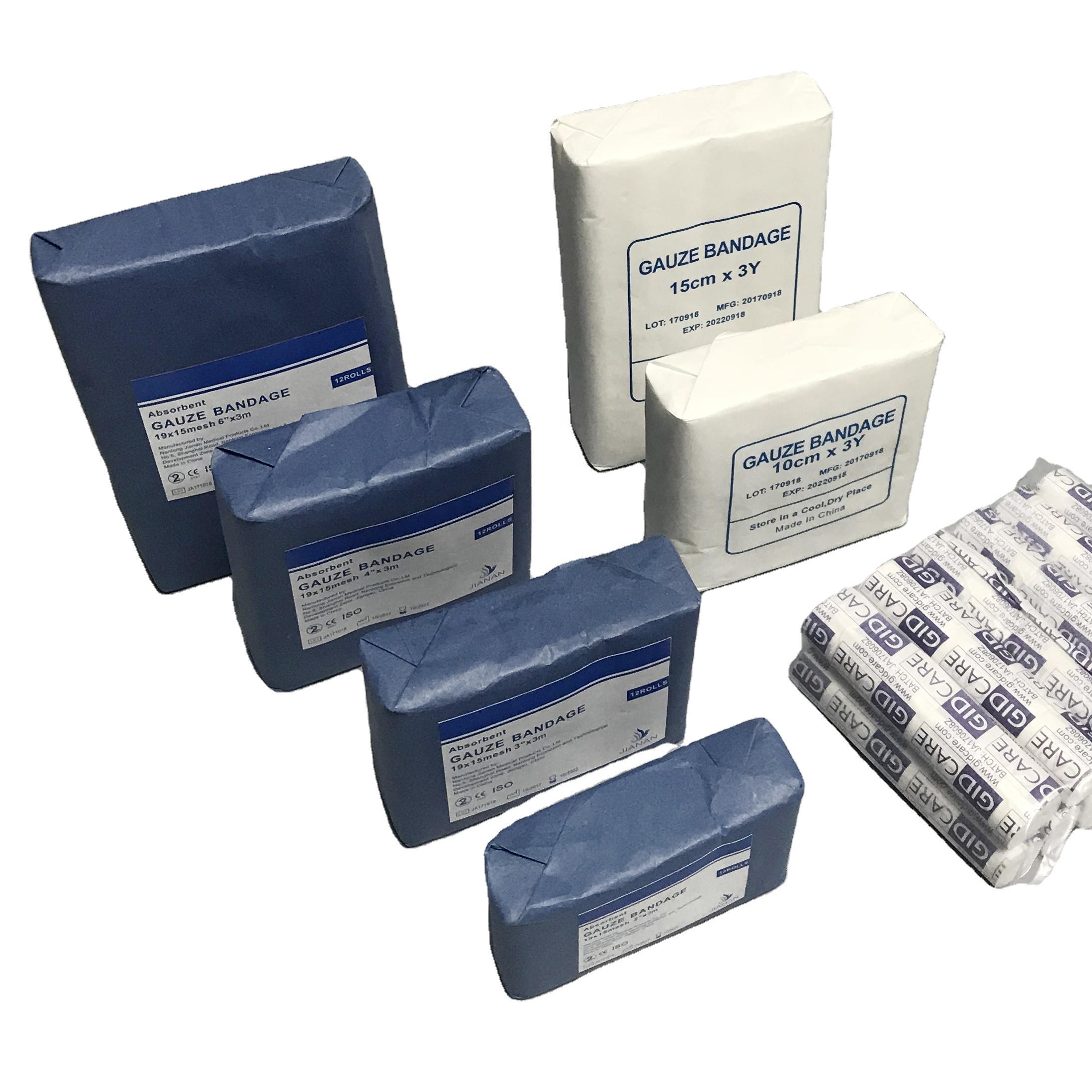
The quality of raw cotton directly influences absorbency, softness, and durability. Many manufacturers offer opportunities for the purchaser to choose:
- 100% hydrophilic cotton wound dressing
- Different cotton fiber grades
- H2O2 bleached cotton bandage bulk
- Whiteness level
- Absorbency performance
- Softness requirements
For medical applications, buyers should request technical specifications and laboratory test reports to verify the consistency of the hydrophilic cotton bandage roll.
Weaving and Construction
Construction quality affects both clinical performance and customer satisfaction. In most cases, OEM options can include:
- Plain weave or customized weave density
- Non-fraying selvedge gauze bandage
- Different yarn counts
- Improved tensile strength
- Enhanced flexibility
- Optimized cotton bandage roll skin ventilation
These construction features enhance the comfort of the patient and make it simpler for health care providers to apply the bandage.
Sterile and Non-Sterile Production
Manufacturers generally offer two production options for hydrophilic cotton bandage roll. Sterile bandages are individually packaged and sterilized for surgical procedures and wound care that needs aseptic conditions.
Non-sterile bandages on the other hand, are commonly supplied for general wound dressing fixation, first aid, and routine clinical use. The appropriate option typically depends on the buyer’s target market and the regulatory requirements.
Private Label Branding
Private labeling is one of the most requested OEM services globally. Typically manufacturers can tailor:
- Company logo
- Product name
- Brand colors
- Package design
- User instructions
- Product specifications
- Barcode printing
- QR codes
- Multilingual labeling
Private label products allow distributors to create brand awareness without relying just on the price alone.
Customized Packaging
Packaging should protect the product while supporting efficient transportation and retail presentation. The typical OEM packaging options are:
- Individual poly bags
- Paper wrap
- Peel pouches
- Retail-ready boxes
- Bulk cartons
- Hospital supply packaging
- Export cartons
- Customized carton dimensions
Buyers serving supermarkets, pharmacies, or hospitals often require different packaging formats for each sales channel.
OEM Labeling for International Markets
Labelling standards vary depending on the export market. A professional hydrophilic gauze roll supplier China can provide labels that include:
- Product specifications
- Lot number
- Manufacturing date
- Expiration date
- Storage instructions
- Country of origin
- Regulatory symbols
- CE and other applicable markings where appropriate
Customized labelling makes product registration and distribution in overseas markets easier.
Certification Support
For importers and hospital buyers, the certifications are just as important as the product customization. Reliable manufacturers should be able to provide documentation that supports compliance with relevant standards, including:
- ISO 13485 Quality Management System
- CE documentation where applicable
- Product testing reports
- Material safety documentation
- Batch inspection reports
Many healthcare buyers specifically request hydrophilic cotton bandage ISO CE certified products. This is to help them meet their customers and regulatory expectations.
OEM for Hospital Procurement
Companies supplying healthcare institutions often require products that meet precise purchasing specifications. For a hospital bandage roll bulk order, manufacturers can customize:
- Hospital-specific packaging
- Color-coded labels
- Tender documentation
- Pallet configuration
- Master carton quantities
- Warehouse barcodes
These services helps importers and hospital buyers to streamline inventory management and improve procurement efficiency.
Minimum Order Quantities (MOQ)
Generally, OEM production requires a minimum order quantity, and that MOQ depends on the level of customization. For example:
- Standard private labeling usually has a lower MOQ.
- Fully customized packaging requires a higher MOQ.
- Custom-sized products often involve larger production runs.
- Unique carton designs may require additional printing quantities.
Importers and hospital buyers should confirm MOQ requirements before finalizing the artwork and production schedules for their hydrophilic cotton bandage roll order.
Product Sampling Before Mass Production
Before placing a large hydrophilic cotton bandage roll order, request production samples to assess:
- Absorbency
- Fabric softness
- Roll dimensions
- Packaging quality
- Printing accuracy
- Label information
- Overall workmanship
Sample approval reduces the risks of receiving hydrophilic cotton bandage roll that does not meet your specifications.
Choosing the Right OEM Manufacturing Partner
Some factories may lack experience in handling large-scale OEM projects. An established surgical cotton bandage roll OEM manufacturer should have a dedicated team of:
- Engineers
- Quality control
- Export handlers
These are the teams that can support product development from sampling to mass production.
The best partners offer transparent communication, consistent quality, and flexible customization without compromising production efficiency. For long term B2B buyers, choosing the right OEM manufacturer creates opportunities for strengthening brand identity, expanding into new markets, and building a more competitive medical supplies business.
Packaging Choices That Improve Hospital Use
Packaging is more than a means of protecting the hydrophilic cotton bandage roll during shipping. In hospitals, it affects storage efficiency, infection prevention, inventory management, and how quickly healthcare professionals can access supplies during patient care. The right packaging material can minimize waste volume, enhance work productivity and help ensure the hydrophilic cotton bandage roll is in good condition until use.
Individual Packaging for Better Hygiene
Individually wrapped bandage rolls are preferred in hospitals because they keep the product free from dust, moisture and contamination before use. This also enables staff to limit waste by removing packaging for only what is required for a particular patient.
Note: The packaging for sterile products must maintain the sterile barrier until the package is opened and should be compatible with the sterilization method used.
Sterile vs. Non-Sterile Packaging
The right packaging depends on the intended use of the hydrophilic cotton bandage roll:
- Sterile packaging of the hydrophilic cotton bandage roll is commonly used in surgical procedures, post-operative wound care, and situations requiring aseptic handling.
- Non-sterile packaging of the hydrophilic cotton bandage roll is best for general dressing fixation, first aid, orthopedic support, and daily clinical use.
B2B buyers should ensure the packaging matches the clinical requirements of their customers.
Waterproof Protective Wrapping
A hydrophilic cotton bandage roll readily absorbs moisture. That makes protective packaging important during shipping and storing. The use of waterproof paper or plastic wrapping will decrease exposure to humidity, dust and other environmental contaminants.
Clear Product Identification
Hospital staff need to identify medical products quickly, particularly in emergency departments and operating rooms. Properly labeled products decrease mistakes and makes managing inventory much easier.
The package should be clearly marked with:
- Product name
- Bandage size
- Sterile or non-sterile status
- Lot number
- Manufacturing date
- Expiration date (where applicable)
- Manufacturer information
- Storage instructions
Large, easy-to-read printing is helpful in improving efficiency for healthcare workers.
Bulk Packaging for Hospital Procurement
Hospitals often procure thousands of hydrophilic cotton bandage rolls at a time. Bulk packaging helps simplify the receiving, warehousing, and stock replenishment process. So, manufacturers can customize:
- Number of rolls per inner box
- Number of boxes per master carton
- Carton dimensions
- Pallet configuration
- Shipping labels
- Barcode identification
A well organized bulk hydrophilic cotton bandage roll packaging also reduces handling time within hospital supply departments.
Barcode and Traceability Features
Most modern hospitals now employ a barcode system to control their supplies. Including barcodes, QR codes and batch numbers on the packaging improves inventory accuracy and makes product traceability much easier if quality issues arise. These features are particularly beneficial for distributors supplying multiple healthcare facilities.
Packaging Designed for Efficient Storage
Hospital storage space is often limited. Compact, stackable cartons allow supply teams to maximize warehouse capacity while protecting the hydrophilic cotton bandage roll from damage when transporting and storing. Strong cartons can also reduce the risks of crushed products during international shipping.
Custom Packaging for Private Labels
Importers and hospital buyers with their own brand can benefit from customized hydrophilic cotton bandage roll packaging that has:
- Company logos
- Brand colors
- Multilingual instructions
- Retail-ready designs
- Hospital-specific labeling
- Custom carton printing
Private label packaging is helpful in strengthening brand recognition while also maintaining a professional appearance.
Choose Packaging That Supports Clinical Efficiency
The best packaging balances product protection with ease of use. Importers and hospital buyers should look for hydrophilic cotton bandage roll packaging that:
- Preserves the quality of the hydrophilic cotton bandage roll
- Simplifies inventory management
- Supports infection control practices
- Allows healthcare professionals to access the hydrophilic cotton bandage roll supplies quickly
A Well designed packaging is helpful in protecting the hydrophilic cotton bandage roll and contributing to a more efficient and reliable healthcare supply chain.
Why Breathability and Skin Comfort Matter
A hydrophilic cotton bandage roll should do more than absorb. It should also support patient comfort. The open structure should allow airflow, which helps the area feel less trapped. That is why buyers often ask for cotton bandage roll skin ventilation as a quality point, even if they do not phrase it that way in a specification sheet.
Other reasons why breathability and skin comfort matter in a hydrophilic cotton bandage roll include:
- Reducing heat buildup around the wound
- Helping in limiting moisture accumulation
- Supporting healthier skin around the dressing area
- Improving patient comfort during wear
- Lowering the risk of skin maceration
- Allowing better air circulation
- Making longer wear times more tolerable
- Helping the bandage feel lighter and less irritating
- Supporting use on sensitive skin
- Improving overall user acceptance in hospitals
What an Importer Should Check in a Sample
A product sample is the first opportunity for importers and hospital buyers to verify whether a manufacturer can consistently deliver the quality as quoted and product specifications.
Catalogs and certificates are important, although nothing can replace a hands-on evaluation of the hydrophilic cotton bandage roll. Conducting thorough sample inspection is helpful in identifying quality issues before placing a hospital bandage roll bulk order. That reduces the risks of costly returns, customer complaints, and disruptions in the supply chain.
Instead of focusing on the appearance of the hydrophilic cotton bandage roll alone, importers and hospital buyers should evaluate the sample from different perspectives. That includes the material quality, construction, absorbency, packaging, documentation, and manufacturing consistency.
Verify the Cotton Quality
Generally, it’s important to start by assessing the raw material. A high quality 100% hydrophilic cotton wound dressing should feel soft, clean, and comfortable without any stiff areas or rough patches.
Look for:
- Uniform white color
- Soft texture
- No foreign particles
- No unusual odor
- Even fiber distribution
Discoloration, unpleasant smells, or inconsistent texture may indicate poor raw materials or inadequate processing.
Test the Absorbency
Hydrophilic cotton bandage roll is designed to absorb fluids quickly. So the simplest quality check is performing an absorbency test on this product. Typically, the sample should:
- Absorb water quickly
- Wet evenly across the surface
- Retain moisture without falling apart
- Leave minimal fiber residue on the wound
Slow absorption is a clear indication of insufficient scouring or bleaching during its production. B2B buyers should confirm that absorbency meets the product specifications provided by the manufacturer before sourcing H2O2 bleached cotton bandage bulk.
Inspect the Weaving Quality
The weave of the hydrophilic cotton bandage roll should be consistent throughout. It’s important to check for:
- Uniform thread spacing
- No loose threads
- No skipped weaving
- Consistent fabric density
- No holes or weak sections
An unevenly weaved hydrophilic cotton bandage roll can reduce durability and affect its clinical performance.
Examine the Selvedge
The edges of the hydrophilic cotton bandage roll deserve special attention because they influence both its durability and ease of use. A quality non-fraying selvedge gauze bandage should:
- Remain intact during unrolling
- Resist unraveling
- Have smooth, evenly woven edges
- Maintain its shape during wrapping
Frayed edges often indicate poor manufacturing control in the hydrophilic cotton bandage roll and may create difficulties during clinical use. Procurement specifications frequently require smooth selvedges with no fraying.
Measure Product Dimensions
Don’t assume that the stated dimensions of the hydrophilic cotton bandage roll are accurate. Verify:
- Roll width
- Roll length
- Weight
- Fabric thickness
- Roll consistency
Random measurements across multiple samples help determine whether the factory maintains consistent production standards.
Evaluate Strength and Flexibility
The hydrophilic cotton bandage roll should be flexible enough to wrap around joints while maintaining sufficient strength for normal clinical use. Check whether the sample:
- Tears easily
- Maintains its shape
- Wraps smoothly
- Returns to its original form after handling
Poor tensile strength can lead to the hydrophilic cotton bandage roll failing during its application.
Assess Breathability and Comfort
Importers and hospital buyers value products that improve patient comfort. A good hydrophilic cotton bandage roll should have the following characteristics:
- Good cotton bandage roll skin ventilation
- Soft contact with the skin
- Comfortable wrapping
- Lightweight construction
- Easy conformability
These characteristics of the hydrophilic cotton bandage roll can improve the overall user experience in hospitals and clinics.
Review Packaging Quality
The packaging should reflect the manufacturer’s attention to detail. Inspect:
- Sealing quality
- Print clarity
- Product labeling
- Carton strength
- Moisture protection
- Barcode accuracy
For sterile products, make sure the packaging remains intact without punctures or damaged seals until it’s used.
Request Technical Documentation
A reputable medical grade cotton bandage roll manufacturer should be able to provide the supporting documentation with the sample. Ask for:
- Product specification sheet
- Certificate of Analysis (COA)
- Batch testing reports
- Material specifications
- Sterility reports (if applicable)
- Quality inspection records
Complete documentation demonstrates that the manufacturer has established quality control processes.
Verify Certifications
If the supplier claims to produce hydrophilic cotton bandage ISO CE certified products, request current certificates and ensure that it is relevant to both the production facility and the cotton bandage type being supplied. Don’t just rely on marketing materials or website claims only. Independent verification is helpful in reducing regulatory and commercial risks.
Test Multiple Samples
Avoid evaluating just one hydrophilic cotton bandage roll sample. Ask multiple samples from various production lots to evaluate:
- Batch-to-batch consistency
- Uniform appearance
- Stable absorbency
- Consistent dimensions
- Packaging quality
Reliable manufacturers produce consistent products regardless of the production date.
Evaluate OEM Capabilities
If you plan to work with a surgical cotton bandage roll OEM supplier or a hydrophilic gauze roll supplier China, ask for a customized sample before the mass production. Verify that the factory can accurately reproduce your:
- Brand logo
- Packaging design
- Product dimensions
- Label information
- Carton printing
- Private-label requirements
Approving an OEM sample before production minimizes misunderstandings and ensures the finished hydrophilic cotton bandage roll complies with your brand standards.
Even after establishing a long term supplier relationship, continue evaluating samples any time new product specifications, raw materials, or packaging changes are introduced. Regularly inspecting samples assists importers to sustain the quality standard, safeguard their reputation, and ensure all the products they receive will match or exceed customer requirements.
Common Procurement Mistakes to Avoid
Choosing the Lowest Price Instead of the Best Value
Most first time importers focus almost entirely on finding the lowest absorbent cotton bandage roll factory price. While the cost is an important factor, selecting a supplier based on the price alone can lead to inconsistent product quality, delayed deliveries, and higher long term costs.
Selecting the right hydrophilic cotton bandage roll is about finding an appropriate price and a steady manufacturing, quality assurance, and customer service.
Ignoring Product Specifications
Some buyers compare quotations without ensuring that every supplier is offering the same product specifications. Differences in the quality of cotton, roll size, absorbency, weave density, packaging, or sterility can affect the price and performance significantly. Before evaluating quotations, always compare the products that have the same specifications.
Failing to Verify Certifications
Don’t take a supplier’s certifications seriously because they are listed on their website or product catalog. It’s important to ask for up-to-date documentation to ensure that the manufacturing entity meets the desired quality. When buying hydrophilic cotton bandage ISO CE certified products, check the validity of the certificates that apply to this product.
Skipping Sample Evaluation
One of the most costly procurement mistakes a B2B buyer can make is to approve a supplier without evaluating samples of the product. However, samples can assist assessing absorbency, softness, construction, packaging, consistency, etc. Any reliable medical grade cotton bandage roll manufacturer should provide production samples for evaluation.
Overlooking Manufacturing Capacity
A supplier might be able to make great samples however lack adequate manufacturing ability to create large orders. However, before placing a hospital bandage roll bulk order, ask about their monthly production capacity, production lines available, lead time and their capacity of scaling-up production during periods of high demand.
Ignoring Construction Quality
Some procurement teams focus on dimensions and pricing only, and they overlook important construction details. The non-fraying selvedge gauze and bandage construction, uniform weaving, and effective cotton bandage roll skin ventilation are some of the features that improve the clinical performance and enhance patient comfort. These aspects must be considered when choosing suppliers.
Not Reviewing OEM Capabilities
Importers planning to develop a private-label brand can sometimes assume every supplier provides the same OEM services. In reality, there is a wide variation of OEM capabilities. Prior to selecting a surgical cotton bandage roll OEM partner, make sure that the manufacturer can create customized sizes, packaging, labelling, and branding that align with your market needs.
Failing to Assess Communication
Lack of communication can cause inaccuracies in the production process, shipping delays, and miscommunication. A reliable hydrophilic gauze roll supplier, China should respond promptly, clearly respond to technical questions, provide accurate documentation, and keep buyers informed throughout the production process. Strong communication is often a good indicator of long term business reliability.
Underestimating Logistics and Lead Times
Many importers focus on manufacturing expenses and tend not to pay attention to shipping timetables and manufacturing lead time. Long delays can create inventory shortages and disrupt customer deliveries. Buyers need to verify production time, shipping routes, and export protocols prior to entering into a purchase agreement.
Neglecting Long-Term Supplier Relationships
Treating every purchase as a one-time transaction can limit future opportunities. Building a long term partnership with a reliable manufacturer can lead to more consistent quality, stable pricing, priority production, and better customer support. For healthcare products like 100% hydrophilic cotton wound dressing, reliable supply is as important as competitive pricing.
Logistics, Lead Time, and Supply Continuity
Procuring a high quality hydrophilic cotton bandage roll is is just one aspect of an effective sourcing approach. Importers and hospital buyers must also consider the supplier’s logistics management, production lead time and continuity of supply.
Even a medical grade cotton bandage roll manufacturer with competitive pricing can be a business risk if the shipments are delayed or production can not keep up with demand. Healthcare providers will always have peace of mind knowing that any necessary wound care products are available.
Logistics
International logistics directly affect delivery costs, inventory planning, and customer satisfaction. Before placing a hospital bandage roll bulk order, buyers should confirm the supplier’s export capabilities, shipping experience, and preferred trade terms. An experienced hydrophilic gauze roll supplier China should be familiar with the following:
- International shipping procedures
- Export documentation
- Customs requirements
- Packaging standards that protect products during long distance transportation
Also, importers should ask about carton dimensions, pallet configuration, container loading capacity, and moisture-resistant packaging. Because 100% hydrophilic cotton wound dressing products readily absorb moisture, proper packaging is needed to preserve the quality throughout the shipment process. Having a supplier with established logistics partners and reliable shipping processes is helpful in reducing transit delays and minimizing the risks of damaged goods.
Lead Time
Another critical consideration for wholesale buyers is the production lead time. Lead time simply includes raw material procurement, manufacturing, quality inspections, packaging, and shipment preparation before the goods leave the factory. Depending on order volume and customization requirements, production schedules can significantly vary.
If you require a surgical cotton bandage roll OEM product with customized packaging, private labeling, or specific dimensions, production will generally take longer than standard stock items. It is advisable for the buyer to ask for attainable production schedules.
Similarly, it’s important to avoid relying on estimated delivery dates only, but confirm whether the manufacturer can increase capacity during high demand periods. Planning orders in advance, several weeks or months ahead is helpful in preventing inventory shortages.
Supply Continuity
Importers and hospital buyers can not afford interruptions in their supply of essential wound care products. Production capacity, raw materials sourcing, inventory control and quality management systems are all essential to the manufacturing to ensure consistent supply continuity.
When evaluating suppliers, ask whether or not the manufacturer:
- Maintains stable cotton supplies
- Operates multiple production lines
- Has contingency plans for equipment maintenance or unexpected increases in demand
A manufacturer producing hydrophilic cotton bandage ISO CE certified products should also maintain consistent quality across every production batch to ensure reliable performance. Further enhancing the continuity of supply can be done through long term supply contracts, production forecasts and regular contact with your supplier.
Experienced importers prioritize dependable manufacturing partners rather than selecting a factory based on the lowest absorbent cotton bandage roll factory price alone. That is, those that can deliver consistent quality, reliable lead times, and uninterrupted supply year after year.
How to Structure a Purchase Order
When a purchase order is clear you avoid risk. It must contain all the following details:
- Product Name
- Size
- Material composition
- Color
- Weave style
- Packaging
- Label language on the product
- Number of products
- Target Price
- Inspection method
- Port/Delivery Address
The more detailed the PO, the fewer disagreements afterwards.
The PO should also set the tolerances, which minimizes arguments about slight variations. Any range of size or tolerance in packaging may give the supplier confidence that the buyer will accept their product. The buyer has to make it clear if they are expecting a very tight tolerance.
Artwork approval, the barcode information, carton instructions and regulatory language if applicable should be attached to the PO for OEM orders. If the product is intended for a tender, the buyer has to include bid requirements for the tender. A well managed procurement process saves money.
A strong supplier will appreciate a detailed PO. It assists them in production planning and eliminating production errors. It also renders the relationship more business-like and predictable.
When a Buyer Should Choose OEM Instead of Stock
Stock products are useful when speed matters. OEM is better when brand control matters. For customers who are buying the roll intending to subsequently retail it under their own-brand name, OEM is typically the best choice. If the buyer needs fast replenishment for hospital distribution, stock may be faster.
OEM also makes sense when the market has packaging or labeling expectations that stock products do not meet. This is typical of export markets and tender supply. It is also quite popular through branded pharmacy channels. In such cases, customization is not optional but part of the sales model.
The challenge with OEM is planning. It usually requires more lead time, artwork approval, and packaging review. That is why importers and hospital buyers should not treat OEM as a last-minute add-on. This needs to be incorporated from the outset in the sourcing time frame.
For repeat hydrophilic cotton bandage roll orders, OEM often creates better long term value. The importers and hospital buyers have control over presentation, and the supplier has a more stable order pattern. That can typically improve the relationship on both sides.
Questions Importers Should Ask Before Ordering Hydrophilic Cotton Bandage Rolls
Choosing a supplier involves more than reviewing a quotation or comparing the absorbent cotton bandage roll factory price. Before placing an order, importers and hospital buyers should ask detailed questions. That is questions to verify the manufacturer’s capabilities, quality systems, and ability to meet long term supply requirements. The responses are helpful in identifying reliable partners and reducing the risks of delays, quality or regulatory issues.
What Raw Materials Do You Use?
Inquire whether the bandage rolls are manufactured from 100% hydrophilic cotton wound dressing material and if the cotton has been well scoured and bleached. Ask for technical specifications and test reports confirming the processes used in the bleaching and the absorbency. That is if your market requires H2O2 bleached cotton bandage bulk products.
Which Quality Certifications Do You Hold?
A reliable medical grade cotton bandage roll manufacturer should be able to provide documentation for quality management systems and applicable product certifications. When the supplier markets products that are designated as “hydrophilic cotton bandage ISO CE certified”, ask to see the latest ISO CE certificates. Ensure that these are certifications for production facility and the product in question.
Can You Provide Product Test Reports?
Any claims for quality should always be documented. Request that the manufacturer provides a report on absorbency, tensile strength, whiteness, dimensions, batch composition, sterility validation (if applicable), and batch inspection results. These documents help confirm that the products meet the agreed specifications.
What OEM Services Do You Offer?
Are you planning to build your own brand? Well, ask whether the supplier offers surgical cotton bandage roll OEM services or not. These capabilities are helpful in avoiding delays later in the project.
How Do You Control Product Quality?
Quality Control should be incorporated into each process during the manufacture. Ask questions such as:
- How many quality inspections are performed?
- Are raw materials inspected before production?
- Is every production batch tested?
- How do you manage defective products?
- Can third-party inspections be arranged before shipment?
Factories with a known quality control system are likely to create products with a higher degree of consistency.
What Are Your Production Capacity and Lead Times?
Supply reliability is crucial for importers and hospital buyers. Ask the supplier:
- What is your monthly production capacity?
- What is the standard lead time?
- Can production be increased during peak demand?
- How do you handle urgent orders?
The responses will help determine whether the manufacturer can support your future business growth or not.
What Shipping Terms Do You Offer?
Clarify shipping responsibilities before signing a purchase agreement. Inquire if the pricing is based on:
- EXW
- FOB
- CIF
- DDP (if available)
Also, ensure shipping arrangements, export documentation and estimated transit dates are also confirmed to avoid potential additional expenses.
Can You Provide Customer References?
Many manufacturers with export experience are glad to give references or show previous export work, subject to confidentiality. Knowing that a hydrophilic gauze roll supplier, China has successfully supplied importers and hospital buyers in other countries, it increases confidence in the partnership.
How Do You Handle After-Sales Support?
Despite strict quality controls, problems may still occur from time to time. Typically, before ordering products from a supplier, inquire about their product complaint handling policies, returns policies, and technical support. A responsive manufacturer with clear after-sales procedures is more likely to become a reliable long term partner.
Why Long-Term Supplier Partnerships Succeed
The best outcomes in medical sourcing come from stable relationships, not one-off bargains. The more you know an industry supplier understands you, your packaging requirements, and your reorder frequency, the better they’ll serve you over time. That matters in hydrophilic cotton bandage roll, where continuity is more important than hype.
Additionally, long term suppliers also get better at matching your market with time. They discover what packages are effective, what shipping is best for your region and which design details your customers prefer. That’s where value adds up. Each order becomes easier than the last.
A strong partnership also helps during market pressure. Freight rates change. Cotton pricing changes. Lead times change. With a trustworthy supplier, there is more space for planning as both are already in a trusting the process.
That is why importers and hospital buyers should think beyond the first purchase. The right hydrophilic cotton bandage roll supplier becomes part of the procurement system, and not just a vendor.
Conclusion
Ordering a hydrophilic cotton bandage roll wholesale is not difficult when the buyer knows what to check. The product itself is simple, but the sourcing process is not. You need the right material behavior, the right standards, the right factory, and the right packaging plan.
For importers and hospital buyers, the best path is to compare suppliers by more than price. Review their quality system, samples, documents, customization options, and logistics support. If they can handle a hospital bandage roll bulk order and still keep quality stable, they are worth serious consideration. If they can also support surgical cotton bandage roll OEM work, that is even better.
When you find the right partner, the product becomes easier to source, easier to reorder, and easier to sell. That is the kind of supply relationship that supports growth.
Partner with BKAMED for Reliable Hydrophilic Cotton Bandage Rolls for Hospital Supply

Looking for a dependable hydrophilic cotton bandage roll supplier for your next wholesale order? BKAMED supports importers, distributors, and hospital buyers with stable quality, OEM customization, and export-ready packaging options. Trust BKAMED to help you choose the right specification for your market.
Our team can provide samples, product details, and a competitive factory quote so you can move forward with confidence. Contact us today to request a quote, review samples, and discuss the best specification for your market.
