Surgical caps might be regarded as one of the basic items in a hospital. However, in actual sense, they are at the center of infection control, airflow management and sterile field protection. The problem that most healthcare systems encounter is not their utilisation, but their sourcing in a way that is always compliant with the global safety and regulatory standards.
The stakes are surprisingly high when one failure in supplies or inconsistency in quality can impact surgical results. This is why the procurement teams are starting to pose more questions regarding the manufacturing quality, certification systems, supplier reliability.
This article gives a comprehensive report of the worldwide surgical headwear environment. It discusses prominent Chinese producers, manufacturing operations, material science, regulatory compliance in key markets, and the increased need of PPE supply chains that are reliable. It further clarifies why BKAMED has emerged as a standard to all hospitals and distributors of surgical caps in the world.
Key Takeaways
- BKAMED boasts a high production base in China with several large production bases in Hubei, more than 400 employees, 4,500 sq ft specialized cleanrooms, ISO 13485 and CE certification, and a good export record of 70 countries, making it an ideal choice of the company in high volume sterile supply.
- Medical textiles market is estimated at approximately 30.8 billion in 2024 and is estimated to grow to 40.8 billion by 2030, at a CAGR of about 4.8, due to the growing healthcare infrastructure in the emerging markets and the increased safety standards.
- Each day, human hair and skin sheds thousands of bacteria-filled particles (up to 50,000 CFUs per hair) and so high-quality surgical caps are necessary to stop airborne contaminants that may reach the sterile field and result in surgical site infections (SSIs).
- The process of making surgical caps entails a series of accuracy such as choice of raw material (PP, SMS or Spunlace), automated cutting and ultrasonic welding, multi-stage quality checks and final sterilization using ETO gas or Gamma irradiation, which guarantees medical grade sterility.
Top 10 Chinese Surgical Caps Manufacturers.
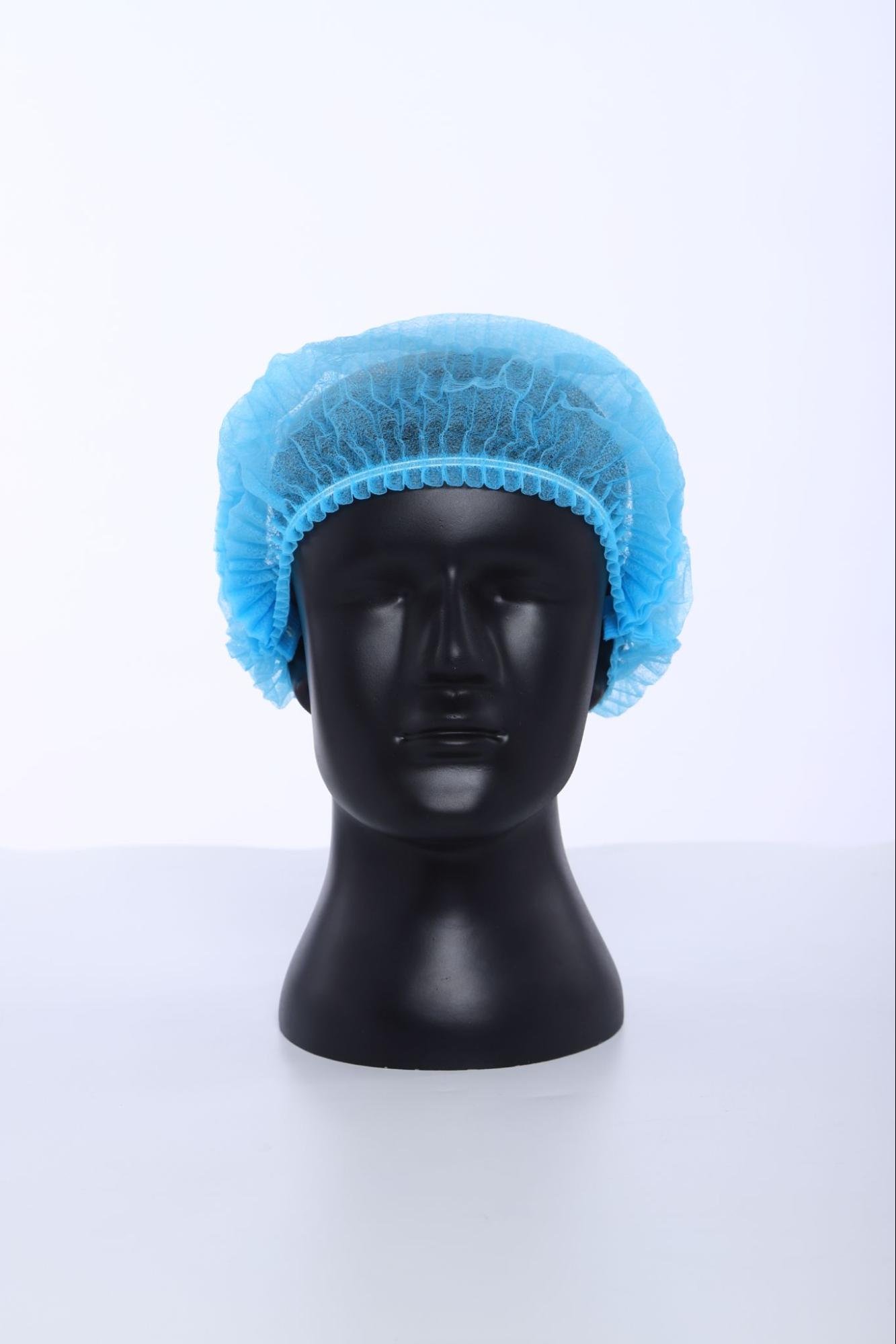
1. BKAMED (Hubei Baikang Medical Instrument Co., Ltd.)
BKAMED (Hubei Baikang Medical Instrument Co., Ltd.) is very high in terms of excellence in the sterile consumables business. The company was originally established in 2008 as a first-aid manufacturer specializing in the production of first-aid but has since grown to be a massive enterprise with several manufacturing facilities scattered in Huanggang, Wuhan and Xiantao. The organization today provides a strong team of more than 400 specialized employees.
They do not merely produce goods, they have a 4,500-square-meter facility that is specially created to be used in manufacturing of precision medical goods. Their ability to meet huge world demand on such basic necessities as the surgical cap or other bandages is really impressive as they can meet orders expressed monthly with a high degree of consistency.
Their vertical integration and clinical rigor is what makes this manufacturer unique, as you see. Although there are those who can see a medical headwear as a mere piece of textile, this team sees a doctor surgical cap as a shield against cross-contamination.
They have managed to overcome the toughest regulatory barriers as they are both ISO 13485 and CE certified to guarantee that their products are safe in world standards. They also have a wide distribution with their products being exported to close to 70 countries around the globe.
Pros
- Has several massive production plants in Hubei to carry out supply chain redundancy.
- Has more than 30 years of experience in the industry in the medical and healthcare field.
- Has a 4,500-square meter, Class 100,000 cleanroom facility.
- Characterized by a committed workforce of more than 400 people to produce in large volumes.
- Offers full sterilization certification with ETO and Gamma.
- Provides flexible OEM and ODM services to meet the individual institutional needs.
Cons
- Emphasizes much on high-specification export markets that can result in extended lead times on small domestic orders.
- Enforces a strict quality procedure that could lead to a higher price margin than uncertified local workshops.
2. Winner Medical Co., Ltd.
Winner Medical Co., Ltd, commonly called a giant of the medical manufacturing industry, was set up in 2000 in Shenzhen. The company has expanded to have an unbelievable number of 15,600 employees since its establishment making it among the biggest employers in the medical supply arena worldwide.
Their infrastructure is very huge as it contains a number of high-technological industrial parks which are the backbone of their world-wide work. Their capacity to produce is in the billions of units per year, and their monthly output can fill the national healthcare inventories at the busiest times with little difficulty.
Their difference with others lies in the fact that they have patented a technology of Purcotton that has transformed the application of raw cotton in medical disposables. This enable them to produce a doctor’s cap which has better breathability than the regular synthetic material.
They have passed all the major regulatory obstacles ever to be considered, such as the FDA, CE and ISO certifications, and they have been first to adopt the complicated EU MDR requirements. They cover a geographical area of about 110 countries with a clientele base of more than 5,000 hospitals in China alone. This is why they are considered a major wholesale doctor caps manufacturer for the worlds largest healthcare networks.
Pros
- More than 15,000 employees to operate a huge, trusted international supply chain.
- Employs Purcotton technology that has been patented with enhanced patient and provider comfort.
- Caters to more than 5,000 hospitals in the country and is exporting to 110 countries around the world.
- Invests about 7% of its yearly revenue into research and development.
- Owns several large industrial parks that have fully automated production lines.
- Has extensive international licenses such as FDA 510(k), CE and ISO.
Cons
- The sheer size of the firm can result in a less customized experience of customer service to the smaller niche customers.
- Sometimes the high demand of their patented materials may result in changes in inventory of certain product lines.
3. Zhibo Bio-Medical (Leboo Healthcare)
Since its inception in 2006, Zhibo Bio-Medical (Leboo Healthcare) has grown to be one of the leading experts in infection control. The company has a complex manufacturing system, located in Beijing, and it deals with high-performance medical protective equipment. They have a high number of skilled workers in their production facilities and these facilities are specifically geared towards effectiveness and high quantity production.
They are able to manufacture millions of units per month due to their capacity and therefore there is always a doctor cap or a complete surgical gown set to be supplied to their international partners.
The design diversity and material science is the unique value proposition of Leboo. They do not merely provide a typical doctor caps, but a great variety of choices such as PP and SMS materials to fit in various surgical settings.
They already possess the ISO 13485 and the newest MDR (EU) 2017/745 standards certificates, demonstrating their adherence to the current safety standards. Their reach is another factor to consider, as at the moment it is over 80 countries and with a client base of over 200 loyal clients around the world.
Pros
- Is a specialist in high-performance infection control and SMS and PP materials.
- Has an international presence of more than 80 countries with a wide range of clients.
- Provides customized design services to make medical products fit institutional requirements.
- In full compliance with ISO 13485 and the latest EU MDR (2017/745) standards.
- Offers a one-stop shop to surgical packs, gowns and all forms of surgical caps.
- Has extremely mechanized production lines that result in the homogeneity of the products and size.
Cons
- Their niche in the protective apparel could imply reduced variety in other medical equipments.
- Minimum order quantities are usually aimed towards the larger institutional distributors as opposed to the individual small clinics.
4. Henan Jianhe Medical Technology Co., Ltd.
Henan Jianhe is a vibrant company in the medical consumable market, with particular emphasis on the non-woven disposable market. The company has a complex manufacturing center in Xinxiang, Province of Henan that is commonly referred to as the central point of sanitary materials in China.
They are currently staffed with close to 150 employees, but their expansion strategies hint at the figure soon increasing to 350, as new facilities are finished. Their plant currently has a 3,000-square-meter ISO Class 8 cleanroom and on-site EO sterilization center that has ensured that every doctor surgical cap is treated with clinical accuracy.
They are a fast-growing organization, in terms of size, their annual sales are expected to be 250 million RMB when their high polymer material projects are fully finished. They have a very impressive geographical reach that is impressive as a young company with active export channels to healthcare providers in Brazil and other parts of Southeast Asia.
Their monthly capacity, however, is oriented towards high volume surgical packs which frequently contain special physicians surgical caps that are constructed to guarantee maximum sterility. They have overcome significant regulatory challenges and received the ISO 13485 and CE certifications and the approval of the FDA is underway.
Their uniqueness lies in the fact that they make the production flow modern; with the introduction of sterilization on the very territory of the factory, they significantly shorten the lead time and risk of contamination by means of external processing. This enables them to uphold a quality first ideal that is usually stringent than most old factories in the area.
Pros
- Has a high-purity production 3,000-square- Meter ISO Class 8 cleanroom.
- Has on-site EO sterilization center to simplify the supply chain and save lead times.
- In Xinxiang, it has access to a huge regional network of raw material suppliers.
- Has received ISO 13485 and CE certification on international trade.
- Projecting a high capacity growth as new high polymer project buildings are completed.
- Has a good history of exporting successfully to very stringent markets such as Brazil.
Cons
- Employs a comparatively small number of workers relative to the older industrial giants in the medical industry.
- The certification of FDA is still ongoing, and it may restrict the present penetration of particular US-based government contracts.
5. Nantong Hope Industry and trade Co., Ltd.
Nantong Hope was established in 1995 and has more than 30 years of experience in mastering the job of a dedicated producer of medical dressing and protective garments. The company, which is based in Nantong City in Jiangsu Province, employs 101 to 200 workers in its management to handle a stable production of vital clinical products.
They are a regular partner to those interested in purchasing a wholesale doctor caps manufacturer because their factory of 15,000 square meters is geared towards regular production of textiles. North America, Eastern Europe and Southeast Asia are their main markets; this demonstrates an excellent international geographical coverage.
While numerous companies are oriented on the wide scope of hardware, Nantong Hope is specialized in medical fabrics peculiarities. Their monthly capacity is strong enough to take large amounts of orders on gauze and non-woven products such as surgical caps doctor units on a daily basis. They have overtaken the regulatory barrier of ISO 9001 and ISO 13485 such that their management systems are comparable to the international healthcare standards. This sustainability in the industry has enabled them to create an extremely dependable supply chain of medical headwear.
They are unique because they have extensive experience in absorbent materials and surgical draping. This experience is directly translated into the quality of their scrub hats that are not only breathable, but also durable in long hospital shifts.
Pros
- Has more than 30 years experience in manufacturing in the field of medical dressings and textiles.
- Operates a big 15000-square-meter manufacturing plant geared towards large-volume non-woven production.
- Has a great presence in the healthcare market in North America and Eastern Europe.
- Has basic certification of ISO 9001 and ISO 13485 to ensure uniformity in quality management.
- Provides a differentiated product line with the range of gauze rolls up to specialty surgical caps.
- Characterized by a stable work force that has long term experience in the craftsmanship of medical textiles.
Cons
- Their scale of workforce is mid-range and this could take more time to lead time when there is a sudden, huge volume spike.
- Specializes mainly in conventional medical dressings, which may lack diversity in high-tech polymer products.
6. Allmed Medical Products Co., Ltd.
Allmed Medical Products is a giant in the industry that was founded in 1992 and is publicly traded in Shenzhen Stock Exchange. They are run at a huge capacity and have thousands of workers and numerous production facilities that cover the whole process of production including spinning and weaving to complete sterilization.
In 2024, they made over 3.3 billion CNY in revenue alone, a feat to their massive production capacity. They lead the market in manufacturing the scrub caps of doctors and nurses in almost all the major world markets such as the USA, Germany and France.
Allmed is unique in its own way when it comes to vertical integration. They can do this, by regulating the production of raw materials, to provide a certain degree of consistency to their scrub cap to doctors that most other manufacturers can only dream of. They have passed through the toughest regulatory barriers, such as the latest EU MDRs and FDA 510(k) approvals. They have a monthly production in the tens of millions of units and, therefore, can be counted as a gold standard when it comes to stability in the B2B supply chain.
Allmed also invests a lot on research and development in order to develop materials that are not only environmentally friendly, but very effective as well as barriers. Allmed offers the type of industrial assurance that can hardly be matched whether it is a doctors scrub cap or wound care kits needed by an institution. They have geographical coverage that is virtually incomparable, supplying the biggest hospital networks in the world with a list of products that is virtually comprehensive in terms of the infection control requirements.
Pros
- Characterized by huge vertical integration, which regulates the supply chain between the raw material and sterilization.
- Listed publicly with a high financial stability and billions of CNY in revenue.
- Has thousands of employees in several industrial scale production parks around the world.
- Has premium regulatory certifications such as FDA 510(k), CE, and the new EU MDR certifications.
- Gives a monthly production capacity which is capable of stabilizing inventories of medical supplies nationally.
- Holds a dominant market share in the highly regulated markets such as the United States and Germany.
Cons
- The immense size of the company can occasionally lead to slower/corporate communication among smaller clients.
- Standardized production can be less responsive to highly-customized, small-volume product design.
7. Xinxiang Huaxi Sanitary Materials Co.,Ltd.
Founded in 1997, Xinxiang Huaxi Sanitary Materials Co., Ltd. is situated in the Dingluan Industrial Zone of Changyuan County, a region commonly touted as the heart of production of medical consumables in China. The company handles a huge business with a staff of 3,200 employees and a huge facility of 80,000 square meters. Within this space, 3,000 square meters have been allocated to Class 10,000 and 30,000 purified workshops. They have a production capacity of 1,000 sets of modern machinery that has enabled them to produce a yearly value of about 33 million USD. This scale will guarantee high monthly production of key products such as the surgical cap and other disposable equipment.
They have ISO 9001, ISO 13485 and CE certification and their products are fit in the global healthcare settings. They have a wide geographical coverage, especially in Japan, France, Russia and Turkey. They are currently well known as a reputable wholesale doctor caps manufacturer for institutions that need large quantities, different specifications and short delivery times. They stand out as a highly qualified supplier since they are capable of keeping a high qualified rate in the range of their products: gynecological dilators to surgical caps.
Pros
- has a huge 80000-square-meter building and extremely specialized clean-up workshop areas.
- It has a large number of employees (3,200) to maintain consistent and large-volume production.
- Has more than 1,000 sets of sophisticated equipment to serve a wide range of medical consumables.
- Has earned international standards such as ISO 13485 and CE to trade internationally.
- Has a special research unit that has more than 30 staff members that are concerned with product improvement.
- Have competitive prices and short delivery cycle as they have large scale industry presence.
Cons
- Their mass of employees and facility alone can contribute to a more rigorous administration.
- It can happen that managing a product catalog of more than 1,000 SKUs leads to different lead times of specialized products.
8. Guangzhou Powecom Labor Insurance Supplies Co., Ltd.
Guangzhou Powecom is a famous brand of functional protective equipment and respiratory health, which was established in 2009. The company has a well-developed workforce of more than 500 individuals working in 100,000 and 300,000 grade clean workshops. Although they are well known worldwide due to their mask making business, their ability in making medical headwear is also important. They have 300 production lines, and have shown an incredible capability of manufacturing 15 million masks per day, in addition to large quantities of products such as the scrub doctor cap. Their geographical coverage was at its highest mark amid the global health crisis where they exported more than 1 billion units to the markets in the United States, Europe and Asia.
The distinction of Powecom is that they can scale very fast and are on the whitelist of key international regulators. They have passed stringent GB, YY/T as well as EN149 certification (CE 2834) and their products have been compared with the NIOSH N95 standards. They even imported German melt-blown cloth production equipment in order to regulate the quality of their filter media at the point of origin. They have now become a popular option for surgical caps for men and women hat have undergone rigorous anti-counterfeit and quality assurance databases.
Pros
- Employs 300 robotized production lines to produce a very high number of protective equipment per day.
- Has high grade cleanroom workshops that have 100,000 and 300,000 grade sterility.
- Has a whitelist position with the US and EU on trusted epidemic prevention materials.
- Has waterproof high-tech anti-counterfeit, digital check of each product bag.
- Checks the quality of raw materials by producing their high grade melt-blown filter cloth internally.
- Provides a limited portfolio of safety products, which have been tested against international NIOSH and CE standards.
Cons
- They can be disadvantaged by their strong emphasis on high-volume, automated production that might restrict their capacity to meet low-volume, custom demand.
- Respiratory protection is closely linked to branding, and this may dwarf their more extensive medical apparel collections.
9. Xiantao Daoqi plastic Co., Ltd.
Xiantao Daoqi Plastic Co., Ltd., is a company that was founded in 1988 in the centre of the city of Xiantao which is the non-woven centre of China. The company has expanded tremendously to the extent that it has bought 30,000 square meters of land to deal with the size of production that is growing. They have now over 300 employees, with 40 technical specialists who manage the production of their products. They have a high level of concentration in their manufacturing capacity on the non-woven disposables with a monthly production that meets a wide market base across the world especially in the west.
It is one of the few companies that values intellectual property and has registered 8 patents nationally over its product designs. They have already overcome the regulatory hurdle of CE and ISO 13485 ensuring their surgical caps disposable offerings meet the safety needs of the operating rooms in modern times. Their market life, which has been more than 30 years, has enabled them to master the ergonomics of the scrub caps for women bouffant styles and other headgears with regard to their scrub caps.
Pros
- Has 8 national patents on groundbreaking designs of products in the medical consumable segment.
- Fruits of more than 35 years of Xiantao non-woven hub manufacturing experience.
- Sits on a huge 30, 000-square meter facility with dedicated space to increase production requirements.
- Has got a high proportion of technical personnel so as to maintain a high quality control and product development.
- Adheres to the ISO 13485 and CE standards of the international medical market.
- Emphasizes on quality first philosophy which has earned them decades of reputation.
Cons
- They have a more traditional facility layout than the latest smart factories, which are constructed within the past five years.
- Strong focus on the Western export markets can lead to poor access to some regional domestic tenders.
10. Hubei Qianjiang Kingphar Medical Material Co., Ltd.
China Hubei Qianjiang Kingphar, was established in 1954 and restructured in 1989, is among the oldest players in the medical supply industry. They have more than 500 employees and a manufacturing plant covering more than 100 acres making them monumental in scale. They have 500 sterile package equipment sets and state-of-the-art oxygen roll-type-bleaching lines. Their production level is impressive, and they produce over 800 x 40′ FCL of surgical dressings and supplies per month. This enables them to become a leading international supplier of products such as the surgical cap and other sterile gauzes.
Kingphar’s vertical integration is one of the pioneering free import and export businesses in China. They have passed all major regulatory challenges such as ISO 13485, CE and the most recent EU MDR certifications and have even passed a number of factory audits by the United States FDA. They have a geographical presence in over 70 countries, mostly in Europe and the USA. Today they are considered to be one of the leading manufacturers of surgical caps doctors (wholesale) that offers one-stop solutions of medical dressings with in-house ETO and Steam sterilization units.
Pros
- Fully equipped production facility of 100 acres of land with an in-house ETO and Steam sterilization facility.
- Has an astonishing capacity of production, which is over 800 containers monthly to be exported globally.
- Passed numerous US FDA factory audits, which indicates quality management systems of world standards.
- Has advanced roll-type-bleaching lines that provide high purity of fabric used in headgear of medical use.
- Provides an extensive collection of more than 1,000 SKUs in gauze, non-wovens and surgical consumables.
- Has a history of stability and reliability in the international market of medical dressing (50 years).
Cons
- The extensive scale of their industry makes them have long lead times on small, non-standard custom orders.
- The listed corporate forms may cause delays in the decision-making process to incorporate new partners.
The Global PPE Market: A Deep Dive into Medical Headwear
The professional healthcare apparel landscape has witnessed a colossal change in the past few years.
Market Growth Projections (2024–2030)
According to industry data, the market size of medical textiles in the world in 2024 is estimated at around $30.8 billion in 2024 with a forecast of 40.8 billion by 2030 according to Research and Markets, 2025. It’s growing at a constant compound annual growth rate (CAGR) of about 4.8 percent during the forecast period. Today, North America and Europe are still high volume consumers but the most competitive growth is taking place in emerging markets.
The development of healthcare infrastructure in such parts of the world as Southeast Asia and other African regions is increasing at an unprecedented rate. Behold, with governments investing in new surgical facilities and specialized clinics in these regions, the need of quality surgical caps arises accordingly. This is not merely due to the fact that, there have been an increased number of surgeries that are being carried out but this is because of the increased standards of safety that are being embraced worldwide. Manufacturers who provide documented evidence of efficacy of barriers are increasingly replacing local, uncertified sources of procurement officers.
An aging world population and increasing incidences of chronic diseases also greatly contribute here. Other more complicated surgeries take more hours in the operating room which means more surgical caps are consumed per surgery.
The Great Shift: From Cloth Scrubs to Disposable Non-Woven Solutions
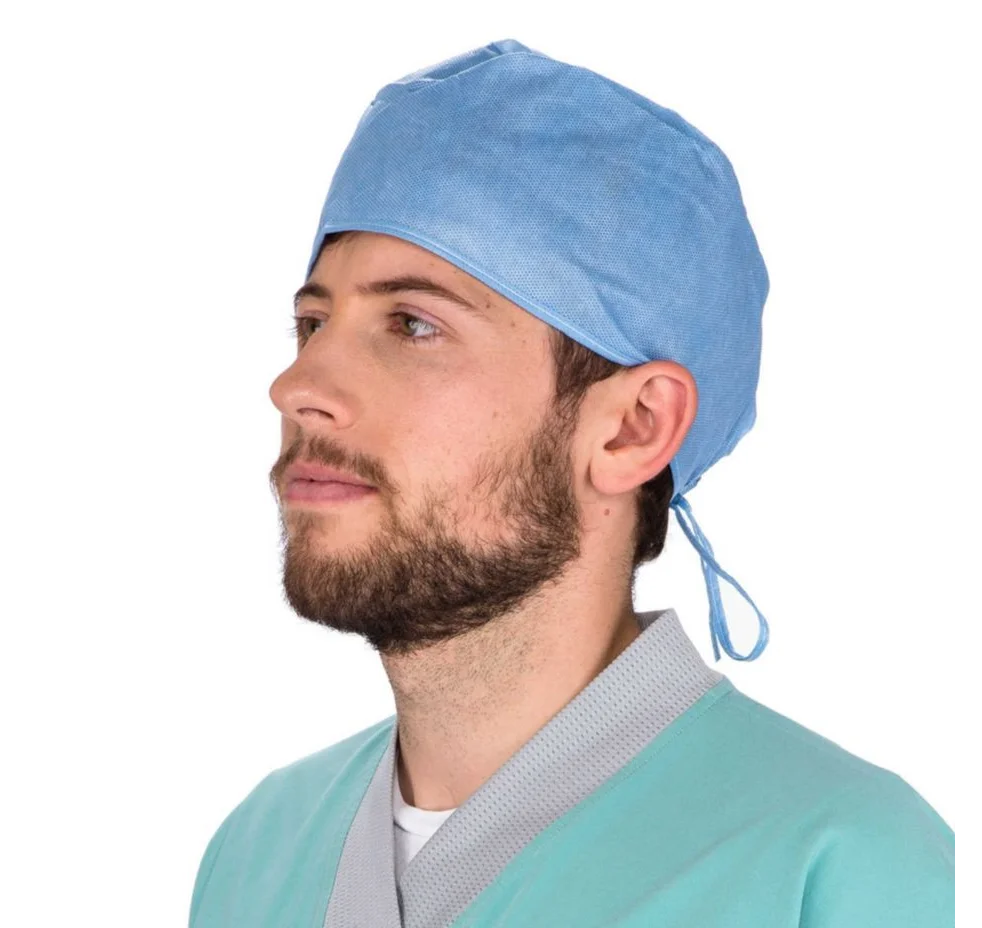
The medical fraternity has longstanding debate on the issue of reusable and disposable non woven attires. But to the majority of modern day hospitals, the balance is leaning strongly towards the latter. This is the problem: although cloth scrub hats are a way to provide some kind of personalization, they pose a logistical and sanitary problem to large establishments. In the case of a facility with thousands of employees, the hidden costs of reusable items start accumulating.
Industrial grade laundry services are expensive. It involves enormous volumes of water, special chemical cleansings, and high-energy sterilization regimes in order to comply with hygiene requirements. Although studies such as the Annals of Medical Research, 2021 indicate that reusables can potentially save about 33% in annual expenditures in certain localized circumstances the administrative load is considered to be prohibitive in many large-scale systems. Even then, the fibers of cloth scrub caps used by doctors can be ruined by repeated washing, which in the end will make them incapable of catching micro-particulates.
By contrast, disposable surgical caps options offer a “guaranteed sterile” starting point for every single procedure. To see the comparative breakdown on which procurement teams tend to rely to justify the switch, we can consider the following:
| Feature | Reusable Cloth Caps | Disposable Non-Woven Caps |
|---|---|---|
| Initial Cost | High per unit | Very low per unit |
| Maintenance | Requires laundering & sterilization | Zero maintenance |
| Infection Control | There is deterioration in performance. | Consistent barrier every use |
| Logistics | Complex tracking and sorting | Simple bulk storage and disposal |
| Hygiene Standards | Risk of cross-contamination | Minimal risk (Single-use) |
Studies published in the National Library of Medicine show the environmental aspect of disposables, showing that medical equipment is responsible for between 6 and 10 percent of the carbon footprint of health systems of nations. Nevertheless, this is being countered by most manufacturers who are using recyclable polypropylene. In the case of a large-volume facility, the speed at which a new doctor cap is pulled out of a dispenser is much more important than the chance of a supply shortage caused by the laundry.
Supply Chain Dynamics: Why China Remains the Global Hub.
China is the largest producer of medical consumables, yet factors run deeper than merely labor costs. The nation has created an ecosystem that is highly optimized and no other region has ever been able to emulate it on a large scale. This infrastructure starts at the raw material level. The majority of surgical caps are manufactured with polypropylene, and the petrochemical industry in China is enormous with a direct and uninterrupted supply of medical quality polymers.
This is because a wholesale doctor caps manufacturer can quickly switch production to global demand when the demand is high due to its proximity to raw materials. Moreover, the agglomeration of industrialization in provinces such as Hubei has a cluster effect. In these places, you do not simply locate the factory, you locate the specialized packaging plants, the sterilization plants, and the sophisticated logistics centers, all of them in a small area. According Texleader, China has achieved a high threshold in textile and apparel exports of a total of $31.22 billion in 2025, despite the global economic changes.
This dominance also relies on export logistics. Regardless of whether a shipment is directed to a New York or Rotterdam, the shipping routes established by China are the most frequent and economically efficient in the world. This translates into a shorter lead time and more predictable landed costs to a B2B buyer.
See, when a hospital or a non-governmental organization is ordering in bulk, they do not order a product; they order a supply chain. By selecting a wholesale doctor caps manufacturers hub with a strong infrastructure base, the flow of necessary medical headwear will not be affected by the world fluctuations. It is this stability that makes China still the main collaborator to the most needy sectors of healthcare in the world.
Why Do Doctors Wear Caps During Surgery?
The simple answer to this question is infection control. When entering a surgical suite, every piece of clothing has a biological function. The medical headwear may be considered by some as a mere tradition, but the clinical aspect of the matter is much more technical. The operating room is a very restricted space and the main aim is to reduce the entry of exogenous contaminants. The human body, as you know, is a never-ending source of microscopic debris, and unless the surgical team contains it, the surgical team itself can turn out to be the most dangerous risk factor to the patient.
Hair Shedding Statistics and micro-particulate risks.
Human heads carry an average of 100,000 to 150,000 hair follicles and shedding of 50 to 100 hairs each day is a normal occurrence. These figures are a great danger in a sterile environment, though. It has been found that a single human hair may host over 50,000 colony-forming units (CFUs) of bacteria. The most alarming of these is now Staphylococcus aureus, a pathogen that may be present on the skin or in the respiratory tracts of about 30% of the population as per the Journal of Pioneering Medical Sciences.
The point is: bacteria are not going to sit and wait; they ride on the scales of skin and hair. Every day humans lose about 10 million skin particles some of which are small enough to remain suspended in the air for a long time. These particles are emitted into the air when a surgeon or nurse moves. Studies published in the National Library of Medicine have shown that S. aureus is the most common microbial cause of infections acquired in a clinical setting. In the absence of a high quality surgical cap used by doctors, such particles that are filled with bacteria may fall into an open wound or even on sterile instruments.
Influence on Surgical Site Infections (SSI): The role of headwear in decreasing post-surgery complications.
The positive relation between appropriate clothing and patient outcomes has been documented. According to the CDC, the incidence of Surgical Site Infection (SSIs) is about 0.5 to 3 percent of all surgical patients resulting in more morbidity and prolonged hospitalization. In fact, the price of treating one SSI can be tens of thousands of dollars, so prevention is much more cost-effective than its treatment.
Healthcare facilities can develop a physical barrier by using effective surgical caps and this prevents the amount of viable bacteria that come into contact with the sterile field drastically. Clinical reviews have reported that though up to 95% of infections originate as part of the existing flora of the patient, the other 5 percent which are often the most resistant and dangerous originate either as an environmental introduction or as an introduction by the surgical team. We will examine the effect of strict headwearing policies:
- Colony-Forming Unit (CFUs) Reduction: The use of full-coverage caps has been found to reduce the number of bacteria around the wound more than 80 percent.
- Isolation of Drug-Meanwhile Strains: Worn doctor caps can stop the spread of Methicillin-resistant S. aureus (MRSA) between the scalp of medical care providers and the patient (AORN, 2025).
- Protection for the Surgeon: Headwear also protects the wearer from “strike-through” contamination by the patient’s blood or bodily fluids.
Operating Room Air Quality and Particulate Counts
Beyond direct contact, we have to take into consideration the air itself. The contemporary operating rooms depend on laminar air flow system, which forms a one way movement of filtered air to move contaminants out of the patient. But this system can only be effective when the obstacles (the surgical team) are not shedding excessive debris.
Today, when a medical personnell uses a loose-fitting scrub hat for doctors, the motion of the head produces the effect of a bellows, expelling the air–and all the dust that may be held in the hair–into the stream of sterile. According to research published in the National Library of Medicine, the number of bacteria in the air directly depends on how many people are present in the room and the quality of their clothes. Good quality surgical caps aid in ensuring the air remains pure through ensuring that hair and skin scales are confined to the scalp so that the ventilation system can operate as intended.
Bio-Burden Control of Sterile spaces.
Bio-burden management is the total bacteria that live on a surface that has not been sterilized. This is a process that is ongoing in the OR. Even a so-called clean individual carries a considerable load of microbes on his or her head, see. The technical standard needed to be able to avoid this load turning into a threat is total hair encapsulation.
The surgical caps doctor and medical staff use should be made out of such fabric as spunbond polypropylene that is easy to breathe through but has high filtration rates. For a facility such as BKAMED, the manufacturing of a surgical cap that covers 100 percent of the body, including the ears and the back of the neck, is a the-buck-stops-here requirement. This makes certain that the tiniest scales of the skin are captured during a procedure that takes several hours.
Finally, the technical specifications of the surgical caps lie in more than just covering the hair. It concerns the control of the microscopic bio-burden of the human body in order to make the so-called sterile field to be precisely so. It could be men surgical caps or women surgical caps, but the aim is the same, complete containment, complete safety.
Doctors Caps: Classification by Design and Function.
The decision to wear headwear in the professional medical setting is often not about style, but almost always about the need to do so. They may all fall under the umbrella of medical hats in the eyes of most laymen, but the procurement specialist is aware that the correct design can radically enhance safety and comfort of the staff. See, the microbial risks are significantly different in departments of hospitals. Making the wrong choice not only results in discomfort, but also shedding of hair in vital areas. And now we shall dissect the main types of medical headwear that are the dominant ones in the international market.
The Bouffant Cap: Maximum Volume for Long Hair
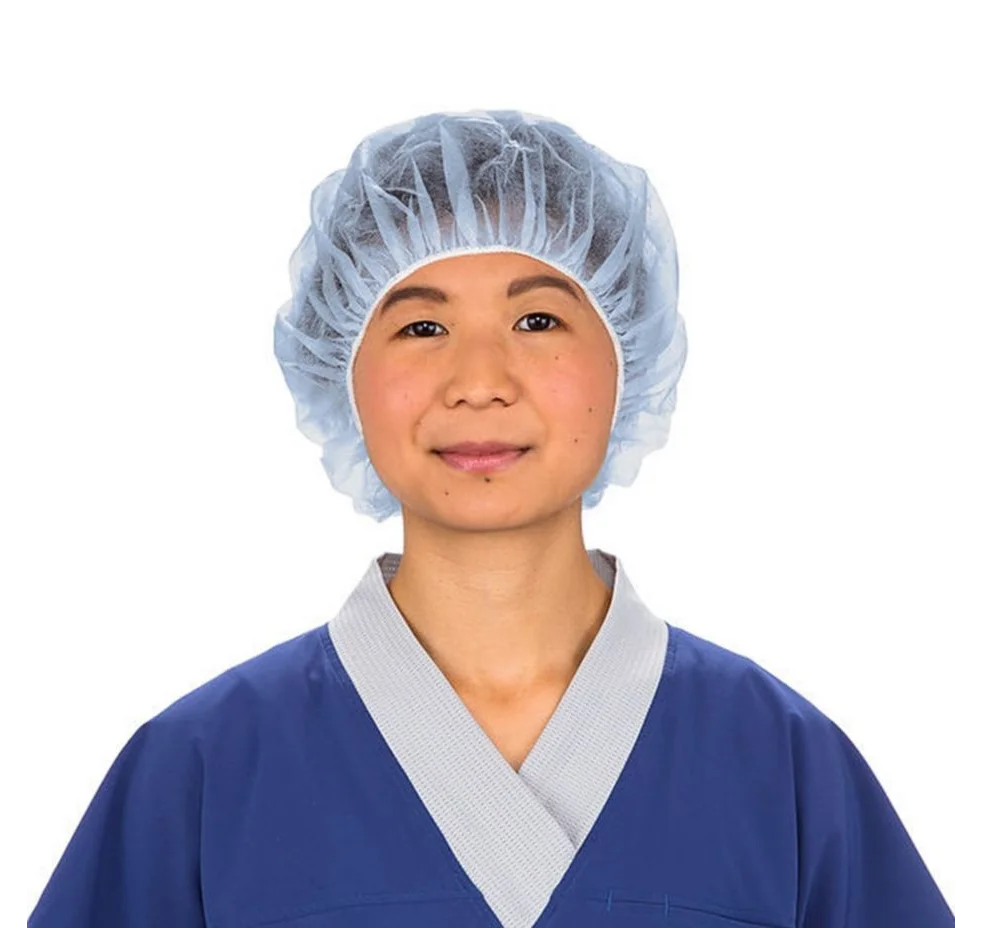
The most well-known piece of PPE in the clinical environment is likely the scrub caps for women bouffant style. They are specifically structured with a big, puffed form so that a lot of hair volume can be fitted without causing scalp pressure points. You see, in a case of a medical professional having thick hair, braids, or a bun, a tight-fitting cap is not going to be enough to completely cover it.
A bouffant cap has elasticized edges. A good quality doctor cap of this type consists of a latex-free, two stitched elastic that fits tightly around the forehead and the back of the neck. The majority of manufacturers use a lightweight, breathable spunbond polypropylene, which is usually between 10 and 14 GSM. This ensures that even when the wearer is on double-shift, he does not over heat. These caps usually have a size of 21 or 24 inches, as per industry standard requirement, to make sure that it can fit all the loose strands of hair.
The Mob Cap (Clip Cap): Small-sized Efficiency.
The mob cap (also known as a clip cap) is the smooth and compact version in case the bouffant is the “puffed” version. These are usually machine-compressed into a pleated “strip” for easy storage and dispensing. In the case of medical NGOs and hospitals with large volumes of non-invasive patients of interest (outpatient clinics or dental wings), the mob cap is the preferred option in terms of cost-effectiveness.
See, the mob cap is perfect in the case when a high hygiene level is demanded but the high sterility of the operating room is not the main priority. Although they usually are made of the same 1020 GSM of polypropylene as any other surgical cap, the pleated design enables them to be packed 70% smaller than pre-puffed bouffants. This renders them a logistics favorite when it comes to international shipping in large quantities. They are used as a scrub doctor cap by many facilities at the laboratory technician or the food service staff in the hospital complex.
Surgeon Hood (Astronaut Cap): Ultimate Protection.
In the case of high-risk and fluid-intensive operations, like orthopedic surgery or trauma, a regular surgical cap may not be adequate. The surgeon hood/astronaut cap comes in at this point. These designs provide 360 coverage that goes down to the ears, the neck and in many cases, the shoulders.
The technical requirements to these are now much higher. A high-quality surgical caps physician hood can be made out of SMS (Spunbond-Meltblown-Spunbond) fabric. The Meltblown layer, as you see, is a high-efficiency bacterial filter, fluid barrier, which is essential when there is the threat of splashing or spraying blood during a procedure. It has been found by NHS Scotland that these hoods are vital in the context of the procedures in which high-risk of Surgical Site Infection (SSI) is predicted and offers complete source control.
Specialized Design for Inclusivity: Men, Women, and Diverse Hair Types
One of the most common complaints of surgical personnel is the cap fatigue, that is, the headache because of tight elastics in 12 hour shift. Contemporary manufacturing has turned to respond to this by means of inclusive design. For a scrub cap doctor men typically use, the emphasis is a lower profile fit that does not hang on shorter hair or bald heads that lacks any unnecessary pieces of clothing.
Conversely, surgical caps for women are increasingly made with adjustable GSM (grams per square meter) to strike a balance between the thickness and breathability. The regular 12-GSM cap could be too thin, though, to fit a person with very dark, thick hair, as this could not give sufficient hold or coverage. Such manufacturers as BKAMED now provide tailored sizes and weights so that all members of the staff, irrespective of their hair type or cultural head wear requirements can wear comfortably and remain in compliance.
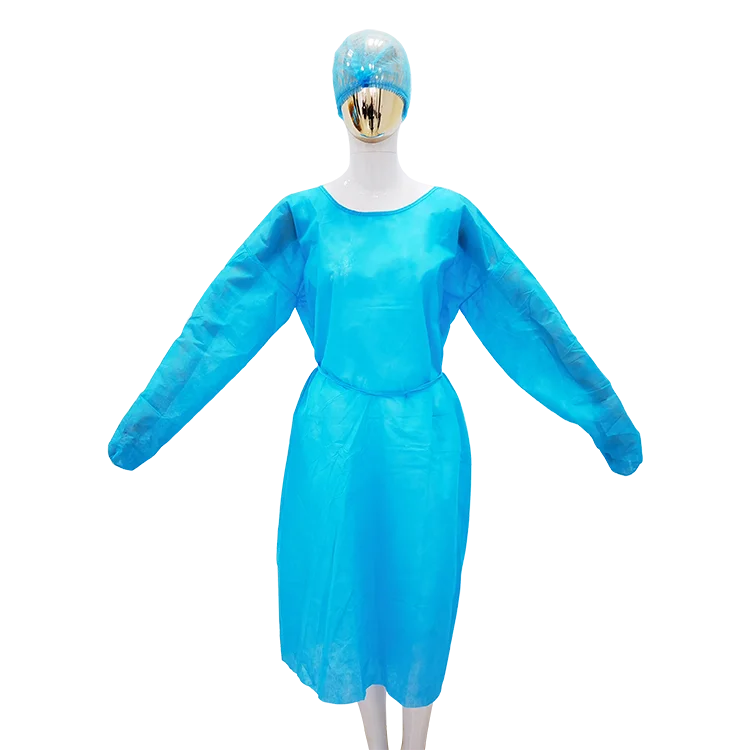
We will compare the standard specifications of the design:
| Feature | Standard Bouffant | Surgeon Hood (Astronaut) |
|---|---|---|
| Primary Use | General Surgery / Wards | High-risk / Orthopedic Surgery |
| Material Weight | 10–14 GSM | 20–35 GSM (SMS) |
| Coverage Area | Hairline to Nape | Full Head, Ears, & Neck |
| Secondary KWs | Doctor caps | Surgical caps disposable |
Wholesale Surgical Caps: The Technical Manufacturing Process, Supply and Quality Control
Facilities that source from a wholesale surgical caps doctor manufacturer tend to be cautious in their evaluation of production systems prior to giving long-term contracts. Scalability and reliability will ensure that protective inventory is available when needed during both the regular running and unexpected spikes of demand.
The production of the medical headwear is carried out in a well-organized workflow that ensures the consistency and safety of the products. These processes start with the sourcing of raw materials and continue with conversion to fabric, component assembly, inspection and supply coordination. Every operation is making a contribution towards the robustness and durability of the final product.
Step 1: Raw Material Selecting and Preparation
The manufacturing of any good surgical cap is based on the preparation of the raw materials. Non-woven textiles have to adhere to stringent requirements in terms of thickness, tensile strength, and filtration efficiency. These specifications define the level of performance of the end product in actual clinical environments.
Material consistency is an important aspect of predictability of performance. When the batches of raw materials are different, the completed doctor caps might not give the same containment or durability. This is the reason why manufacturers conduct thorough checks to materials coming into production lines before they are processed.
Examples of common material checks are:
- Thickness measurement
- Fiber density testing
- Filtration performance verification
- Tensile strength assessment
Even the best designed doctor surgical caps can never have a reliable protective performance without proper raw materials.
Step 2: Automated Fabric Cutting and Component Shaping.
After inspection, the process of production is transferred to the cutting stage. Large fabric rolls are cut into components of the exact shape through automated cutting systems. These are the structural components of surgical caps.
The most widespread items designed in this phase are:
- Crown panels
- Side panels
- Elastic channels
- Edge reinforcement sections
With automation, consistency is achieved on a thousand-unit basis. Finished surgical scrub caps may also be influenced by minor changes in size, which in turn may impact the performance of their fit and containment. Precision cutting is thus conducive to safety and comfort.
Waste of production is also minimized due to uniform cutting. Precise measurements can enable manufacturers to use the fabric optimally and at the same time produce the products with uniform quality.
Step 3: Assembly by bonding or stitching.
The second step after cutting is to assemble individual parts to come up with a functional product. In this stage, the materials are bonded by either thermal means or conventional stitching.
Modern manufacturing frequently employs the use of heat to bind materials together by the process of thermal bonding, in which needles do not form holes. This assists in keeping strength of barriers and enhancing resistance to contamination.
Conventional embroidery is still used in some areas where there must be flexibility. Nevertheless, bonding techniques are favored by most of the manufactures of **scrub hats** since they make the seams smooth and with less points of weakness.
Individual parts at this stage are transformed into a full-fledged, and capable of holding hair, and aiding in infection control practices, a system of scrub caps to doctors.
Step 4: Quality Control in the Production Process Continuously.
Quality is not controlled at the final production stage. Rather it works continuously during the manufacturing process. This multi-layered inspection plan will make sure that defects are detected at an early stage instead of being detected when the large number of units have been manufactured.
The facilities that deal with a manufacturer of wholesale doctors caps usually need to have an elaborate record of how checks are conducted at every level.
Common in-process quality inspections are:
- Seam strength testing
- Elastic stretch testing
- Visual defect inspection
- Dimensional accuracy verification
The idea behind this multi-level inspection method is simple, to ensure that faulty products do not find their way to the healthcare settings. Even the small structural defects may diminish the containment performance of the doctor surgical caps, when they are in use.
Early fault identification can also assist manufacturers to minimize waste and to maintain a stable production level.
Step 5: Final Check and Verification of the product.
Finished products are checked after assembly. This step validates that all units are in the performance and appearance standard before packaging.
The end inspection teams check:
- Structural integrity
- Fit consistency
- Surface cleanliness
- Elastic reliability
- Overall product shape
These checks have to make sure that every unit does what is expected. Consistent end inspection processes enhance trust in mass manufacturing of **surgical caps.
The inspection of products removes the batch of products that fail to pass inspection. This helps in avoiding faulty units to get into clinical supply chains.
Step 6: Supply Chain Coordination and Inventory Planning.
Production does not necessarily equate to quality delivery. The coordination of the supply chain is also vital in ensuring that the products arrive at the healthcare facilities in a timely manner.
The distribution timelines need to be similar to the production schedules. Delays and shortages may be faced when manufacturing and logistics are kept separate. The facilities, which collaborate with the manufacturers of experienced wholesale doctor caps, enjoy the advantage of well-organized inventory planning systems that help to avoid such disruptions.
Supply coordination entails:
- Production scheduling alignment
- Warehouse inventory tracking
- Shipment forecasting
- Delivery cycle planning
Effective logistics enable hospitals and distributors to have steady stocks without any emergencies.
Effective coordination also enhances the speed of response in case of sudden demand, like in cases of outbreaks or emergency response.
Raw Material Selection
One of the most crucial choices in the manufacture of surgical caps is its materials. All the performance properties, such as breathability, fluid resistance, etc., are based on the characteristics of the selected fabric. Even well planned headwear can not work in clinical conditions without proper material engineering.
The current protective doctor cap products are based on non-woven fabric as opposed to woven fabric. The non-woven technology enables the bonding of the fibers either by heat, pressure, or chemical. The approach yields light fabrics that are filtrated in a controlled manner.
The production of doctor surgical cap designs is dominated by three systems of materials:
- Polypropylene (PP)
- SMS (Spunbond-Meltblown-Spunbond)
- Spunlace fabric
Every type of material has its purpose of performance.
1. Polypropylene (PP)
Most of the doctor surgical caps used in healthcare facilities are made out of polypropylene, also known as PP. This thermoplastic polymer is very durable and lightweight making it wearable over a long period.
An important strength of polypropylene is that it does not absorb moisture. In contrast to cotton-based materials, PP fibers are not easy to store liquid. This attribute aids in fluid resistance that is vital in clinical procedures.
The other advantage is flexibility in structure. Polypropylene fabrics made with different levels of thickness do not compromise on the ability to breathe. This flexibility enables the manufactures to make surgical scrub caps that suit various clinical settings.
Mass production is also facilitated by PP materials. The ability to create large pieces of fabric in a consistent thickness and fiber location. This predictability assists in making sure that completed scrub hats have predictable performance properties.
The main advantages of polypropylene material are summarized in the following table:
| Property | Perfomance Benefit |
|---|---|
| Lightweight Structure | Comfortable long term wear |
| Moisture resistance | Reduced fluid penetration |
| Breathability | Improved temperature control |
| Production Scalability | Efficient large scale output |
Polypropylene has its benefits, but it might not be effective enough to offer adequate filtration in high-risk settings. This is why more sophisticated layered materials are frequently presented.
2. SMS (Spunbond-Meltblown-Spunbond) Fabric
SMS fabric is made up of three bonded layers; spunbond outer layers with a meltblown middle layer. This stratified arrangement enhances the filtration capacity and air movement.
The layer of meltblown serves as the first layer of filtration. Its thin strands are ultra fine and trap microscopic particles that otherwise would go through regular layers of fabric. This renders SMS materials very useful in protective scrub caps to doctors in surgical environments.
Spunbond outer layers are structural strength and durable. The outer layers shield the fragile filtration layer during manipulation.
The other benefit of SMS materials is that it has better resistance to fluids. Multi-layer construction retards the penetration of liquids, and there are low chances of contamination of the scalp surface.
Surgical caps that are based on SMS are commonly chosen in healthcare facilities when the added protection is required. These materials are applicable in processes in which exposure to biological fluids is increased.
3. Spunlace Fabric
Spunlace materials are not similar to PP and SMS fabrics in texture and flexibility. Spunlace fabrics are not thermally bonded but use jets of high-pressure water to entrap the fibers.
This process gives a cloth-like feel, which enhances comfort to the wearers. Spunlace is commonly found in specialty scrub caps that doctors need to wear over long periods of time.
Spunlace materials are helpful in areas where employees spend much of their time at work, due to comfort benefits. Less friction against the scalp promotes extended adherence to protective attire needs.
Nevertheless, compared to SMS materials, spunlace fabrics usually have lower fluid resistance. This is why they are rarely used in high-exposure surgical theaters but in moderate-risk clinical settings.
Fluid Resistance vs Breathability
The final step in material selection is to compromise two conflicting priorities:
- Fluid protection
- Airflow comfort
High filtration materials are good protection but can act as a hindrance to airflow. On the other hand, fabrics with high breathability might have lower barrier properties.
Manufacturers thus consider several performance measures prior to the choice of materials to be used in the production of surgical caps.
The comparison below explains the common materials performance in the main categories:
| Material Type | Fluid Resistance | Breathability | Typical Application |
|---|---|---|---|
| Polypropylene | Moderate | High | Standard Clinical Use |
| SMS | High | Moderate | Surgical procedures |
| Spunlace | Moderate | High | Long duration wear |
The right combination of materials will make sure that complete products operate in different healthcare settings.
The study of material science is constantly advancing with the introduction of new fiber technologies. When manufacturers invest into more sophisticated research, it is likely that they will create a better surgical cap that can provide a high level of filtration without compromising comfort.
Raw materials are now the keystone of performance and we would be more concerned with the mechanical operations which convert these materials into finished products.
Sterilization Procedures: ETO vs. Gamma Irradiation.
After assembling, completed surgical caps should be sterilized to remove any microorganisms that may have been used during the manufacturing process. This phase decides whether headwear is a medical grade equipment that can be used in sterile environments.
The sterilization is not a random process. Rather, it adheres to tested procedures that are aimed at destroying bacteria, viruses and fungal spores. These procedures make sure that protective headwear is taken to clinical environments without microbial contamination.
There are two major sterilization technologies that prevail in the production process of sterile medical headwear:
- Ethylene oxide (ETO) Sterilization.
- Gamma Irradiation
All the methods have performance benefits that are unique based on product needs.
Ethylene Oxide (ETO) Sterilization.
Ethylene oxide sterilization is based on the controlled exposure to the gas that pervades the packaging materials. The gas combines with the microbial cells, interfering with their internal structure and making them unable to reproduce.
ETO sterilization is prevalent in temperature sensitive goods. The process is also conducted at relatively low temperatures; hence it does not destroy the structural properties of fine materials used in surgical caps.
The process usually takes a number of regulated steps:
- Pre-conditioning phase
- Gas exposure phase
- Aeration phase
- Residual gas removal
Remaining gas molecules are eliminated during the aeration stage to make sure that the product is safe. This will ensure that the chemical residues do not influence the users.
Investigations of facilities that choose ETO sterilization usually focus on those materials that are to be processed gently. This technique is advantageous to products like advanced doctor surgical caps because of their layered design.
Gamma Irradiation Sterilization
Another sterilization technique, which is based on high-energy radiation, is gamma irradiation. This radiation passes through wrappings and kills bacterial DNA and effectively eliminates harmful organisms.
Compared to gas-based sterilization, gamma processing does not demand long aeration times. This enables to accommodate higher turnaround time, and it is applicable to large volume production cycles.
There is also good penetration ability offered by gamma sterilization. Thick packaging materials may be sterilized without internal integrity loss. This renders the process especially successful when it comes to volume deliveries of surgical caps disposable items.
Nonetheless, material properties can change as a result of gamma exposure. When choosing this method of particular products, manufacturers should pay much attention to compatibility.
In order to compare the two technologies of sterilization, the following table describes their main peculiarities:
| Sterilization Method | Primary Mechanism | Key Advantage | Typical Use |
|---|---|---|---|
| Ethylene Oxide (ETO) | Gas penetration | Gentle on materials | Multi layer headwear |
| Gamma Irradiation | Radiation exposure | Fast Processing | Bulk sterile |
Assuring Medical-Grade Export.
Sterilization does not in itself make the production cycle complete. Manufacturers should also ensure that sterilized products are not contaminated when storing and transporting them. This includes sterility preservation special packaging systems.
Multi-layer protective barriers that inhibit the entry of moisture are common to the packaging materials. After being sealed, a validation test is performed on every unit to ensure that they are strong enough to be packaged.
The facilities that are contracted with trusted wholesale surgical caps doctor manufacturer suppliers receive certification records that attest to sterilization. These records indicate that finished products are in line with international safety requirements.
Another critical requirement is shelf-life validation. The sterile products should be intact during the long storage periods. Stability testing is done to make sure that sealed surgical caps are not contaminated until they reach their specific expiration dates.
The reliability of sterilization is also affected by distribution logistics. The transportation conditions should be clean and temperature checked in order to avoid the degradation of the packaging. Absence of these safeguards can affect the effectiveness of sterilization.
Finally, sterilization is the ultimate guarantee of the protection of headwear to clinical standards. This step, together with accurate production and stringent inspection measures, will turn the raw material into a full-fledged protective gear.
Navigating Global Standards: A Guide for Medical Importers
The trust and proven conformity is the cornerstone of the supply importation process of any healthcare facility or medical NGO. Once a shipment of medical headwear arrives at a port, it is the documentation that will decide whether those goods will ever get to a functioning operating room or not. It is easy to get caught in the maze of international regulations, yet only by being aware of these standards one can provide patient safety and avoid expensive customs delays.
European Market: CE Marking and EU MDR (2017/745).
With the complete adoption of the Medical Device Regulation (EU MDR 2017/745), the regulatory environment in the European Union changed considerably. In this framework, the surgical caps fall under Class I Medical Devices. See, Class I is reserved for low-risk devices, but “low-risk” does not mean “low-standard.” Even in the case of such a simple doctor caps unit, the manufacturer has to create a complete Technical File and sign an EU Declaration of Conformity in order to be able to affix the CE mark.
As you are aware, the EU MDR has brought about increased post-market surveillance and transparency requirements. Among the most significant ones is that a Basic UDI-DI (Unique Device Identification) is now required that makes the traceability all along the supply chain more effective. Although the majority of the surgical caps do not need a third party audit of a so-called Notified Body (unless sold as sterile), the manufacturer still needs to have a registered Authorized Representative in the EU. This will make sure that in case of any quality problem with the surgical caps that the doctor staff is wearing then there is a line of responsibility that can be traced back to the factory.
North American Market: ASTM Standards and FDA Registration.
The United States is a different ball game to cross the Atlantic. Surgical caps used by doctors are regulated by the Food and Drug Administration (FDA) as Class I devices, which normally involves the manufacturer registering and the product being listed in the FDA database. The thing is that although not all Class I devices require the 510(k) premarket notification, they are still obliged to adhere to the General Controls, such as Good Manufacturing Practices (GMP).
In terms of the real performance of the fabric, the US market is heavily dependent on the ASTM International standards. Although ASTM F2100 is best known with face masks, the concepts of fluid resistance and bacterial filtration efficiency (BFE) are frequently applied to high-end surgical scrub caps. Knowledge of the protection levels is important to procurement:
- Level 1: These are used in low-risk areas with minimal fluid contact.
- Level 2: Ideal for moderate-risk clinical settings, offering a balance of breathability and barrier protection.
- Level 3: The highest level of barrier, and is tested to withstand high fluid splashes (160 mmHg) and is the level used in trauma and orthopedic surgeries.
To enter the US market, as a wholesale manufacturer of surgical caps doctors, having test reports that demonstrate that the fabric meets these particular ASTM levels is a significant competitive advantage.
Strategic Sourcing: Vetting a Medical Cap Supplier.
To a procurement officer in a large hospital or a buyer in an international NGO the stakes of sourcing extend way beyond the lowest price. Buying medical headwear in bulk, i.e. 500,000 pieces and above, one bad break in the supply chain may cost thousands of dollars in wasted capital or worse still, a lapse in infection control measures. The sourcing strategy in this industry needs a change of perspective: not that you are purchasing a consumable, but rather a manufacturing partner.
Assessing Technical Data Sheets (TDS) and Samples
A Technical Data Sheet (TDS) forms the initial level of protection in screening a wholesale doctor caps manufacturer. The thing is that, in this case, lots of buyers are ready to look at the product photo and the price and stop. However, a professional B2B relationship should start with a deep dive into the “DNA” of the product. An authentic TDS must also offer more than the size, it must specify the GSM (Grams per Square Meter) of the material, the type of polymer mixture employed, and the findings of standard stress tests.
A good surgical cap has to be of good quality to withstand a hard 12-hours operation. In a TDS, one should find the measures of Grab Strength and Elongation. These inform you of the strength that the fabric can withstand before tearing. When any manufacturer is reluctant to give such details, it is a big red flag. At BKAMED, as part of the standard onboarding process of any new hospital contract, a transparent TDS is required.
After the paperwork is satisfactory, the time to request samples is now. However, not merely look at them, but subject them to a “clinical stress test. Make a doctor caps sample one of the surgical staff wear a complete shift. You will wish to look after three things:
- The Elastic “Snap” Test: Does the elastic retain its tension even after it has been strained several times, or does it become slack?
- The Breathability Factor: Does the wearer experience a build-up of heat or moisture on their head?
- Fiber Shedding: Rub the cloth on a dark surface; does it leave any “lint”? That lint is a contaminant in a sterile OR.
Procurement experts claim that it is only through a physical sample that one can confirm whether the fabric that is referred to in the brochure as soft-touch, Spunlace, is actually what is in the box.
Assessment of Sustainability in Disposable Manufacturing.
Sustainability is no longer optional in the medical sector, but is increasingly being imposed as a condition to government contracts and European hospital chains. Now, one may ask how a surgical caps disposable product could be sustainable. The solution is in the production process, as well as in the circularity of the materials.
When vetting a wholesale doctor caps manufacturers hub, enquire about their garbage disposal. Does the factory recycle its off-cuts (the leftover fabric used to make the caps)? A closed-loop system has now been adopted where scrap polypropylene is recycled by pellets back into the non-medical grade product production. See, this drastically reduces the carbon footprint of the facility.
In addition, find a supplier that is leaving behind overpackaging. In case of a bulk order, there is no need to individually wrap each doctor cap in plastic wraps and this will generate mountains of waste that the hospital will have to deal with. Switching to packaging in high-count dispenser box eliminates up to 30% of plastic use. Research published by the Journal of Cleaner Production has also demonstrated that sustainable procurement could help to minimize the overall supply chain costs due to its efficiency in logistics.
Lastly, there is the material. Although it is a plastic, traditional polypropylene is very recycleable. There are even factories that are forward-looking and are experimenting with bio-based polymers. The questions you will ask now will guarantee that your facility is in tandem with the worldwide move towards the concept of a Green Healthcare, yet you will be protecting the sterile integrity of your surgical caps.
| Procurement Checkpoint | What to Look For | Why it Matters |
|---|---|---|
| TDS Verification | GSM, BFE %, and Tensile Strength | Confirms that the product is safe |
| Sample Stress Test | Elastic durability & linting | Prevents mid-surgery failures |
| Sustainability Audit | Scrap recycling & reduced packaging | Meets modern "Green" tender requirements |
| Factory Certs | ISO 13485 & Social Responsibility | Guarantees ethical and quality standards |
Why BKAMED Leads the Chinese Surgical Caps Manufacturing
Although China has thousands of PPE manufacturers, BKAMED has always stood out of the crowd, concentrating on the requirements of large-scale purchases. It can be a government contract to run a national hospital system or it can be a life-and-death NGO project in a developing economy, quality and speed are non-negotiable.
1. Unsurpassed Production Capacity and Lead Times.
BKAMED provides a wide and vertically integrated production model that reduces the use of third party suppliers. The facility already has a huge production capacity, having an ability to deliver 30-40 high-cube containers of medical disposables each and every month to more than 70 countries. In the case of surgical caps, the factory is working with high speed automated lines which can deliver 100-200 units per minute per machine.
The point is that there is no capacity without speed. The lead times are the bottom line of success in the bulk medical supply world. BKAMED has streamlined its internal logistics in such a way that it provides an exceptionally quick delivery period of between 15 to 17 days on a typical order. It is this flexibility that will make the company a sought after collaborator with NGOs that require mobilization of supplies within a short time to address a disaster or a sudden spike in the demand of a health care item.
The factory has a large inventory of raw non-woven materials the buffer of which guarantees that even an unexpected increase in the number of orders related to the doctor caps will not interrupt the production schedule.
2. Factory-Level QA: Extended of ISO 13485.
Although ISO 13485 is the international reference standard of medical device quality management, BKAMED considers it as a floor, rather than a ceiling. The technical testing provided by other labs to most factories can cause weeks of delay. In comparison, BKAMED has a modern and on-site laboratory, whereby all consignments of medical headwear are subjected to stringent internal verification. This factory-level QA will make sure that defects will be detected on-the-fly even before the goods gets into the packaging process.
As you may see, the internal testing protocol is devoted to two important aspects:
- Tensile Strength and Elastic Durability: Making sure that the ties and elastics on a doctor surgical cap will not be broken during the strain of a 12 hour surgical process.
- Fluid Barrier Efficiency: Evaluating the non-woven fabric in terms of synthetic blood and fluid penetration to meet the requirements of AAMI and ASTM.
This data-driven quality commitment is now applied to the hygiene of the environment itself. Its production is carried out in 100,000 cleanrooms and the number of particles is observed on a daily basis. This also makes sure that when a surgeon takes a surgical cap out of a box it is as clean as when the fibers were spun. This degree of recorded transparency, for the infection control department of a hospital, will give the peace of mind that is unavailable with a standard CE certificate.
3. Opportune Position in Hubei: The Medical Textiles Hub.
Everything in international trade is location. BKAMED is well placed in Hubei Province that is largely known as the world epicentric of the use of non-woven textile in the medical field. This place offers a twofold benefit; price and speed. As Hubei is the major manufacturer of raw polypropylene and spunbond fabrics, the factory is blessed with a first-mover supply chain, i.e. a direct source-to-line supply chain. This removes the middle man mark up on raw materials, an amount that is directly transferred to the B2B buyer.
Moreover, Hubei logistics is just so efficient. The region is based on the middle of the Yangtze River and is a huge transport center with direct rail and water connections with the large port cities in the coastal areas, such as Shanghai and Ningbo. In the case of shipments to North America, Europe or Africa, this would imply that wholesale surgical caps doctor manufacture goods could be transported off the factory floor to an ocean-bound ship with minimum transit time.
Why Quality Surgical Caps Matter
This guide has demonstrated that surgical caps lie on the border of science, production, and healthcare standards worldwide. What might appear to be a mere object is in fact a well-designed product that helps in dealing with microbial risk, facilitating the sterile airflow and safeguarding patients during surgery.
Starting with the choice of materials such as PP, SMS and spunlace, the process of sterilization and world certification, each specification creates an impact on performance. Europe, North America, and African regulatory systems also contribute to the significance of compliance in ensuring safe distribution of medicine.
Ultimately, doctor surgical caps are as reliable as their supply chain. Good clinical outcomes assure good manufacturing.
To achieve a uniform quality and quantity supply, submit a quote to BKAMED for the supply of surgical caps or doctor caps today.
