China is still one of the biggest producers and exporters of sterile gauze swabs and other medical consumables. It has a large manufacturing capacity, well-developed supply chains, and cost-effective production which makes it a popular supplier to healthcare buyers. Moreover, China suppliers can deliver high-volume output, customization options, and competitive pricing while maintaining essential quality standards.
Choosing the wrong sterile gauze swabs OEM manufacturer in China can cause serious problems. For example inconsistent product quality, delayed shipments, and compliance issues that can seriously impact business operations. It might also ruin customer confidence and cause increases in rework, returns or missed orders.
So, when selecting a dependable supplier for sterile gauze swabs from China., prioritize manufacturers that have robust certification programs, effective quality assurance, and have or matched good internal compliance to international standards. A manufacturer that meets the set requirements is much more likely to provide safe and reliable sterile and non-sterile gauze swabs bulk orders.
Keep reading to learn what to look for in a reliable sterile gauze swabs OEM manufacturer, China.
Understanding Sterile Gauze Swabs and Their Medical Applications
Sterile gauze swabs are one of the common medical consumables used in hospitals, clinics and surgical centers, emergency areas, etc. The demand for these products continues to rise worldwide as healthcare systems expand surgical capacity and strengthen infection control standards.
The overall market for the medical gauze and tapes is estimated to be valued at approximately USD 6.5 billion and is likely to ascend to USD 8.7 billion by the year 2027. This trend is indicative of continued compound annual growth of more than 4%, largely attributed to wound care, as well as growing volume of procedures. Sterile variants make up the majority — around 65% of overall use because they need to be treated with high hygiene — in health services.
For B2B buyers, this translates into a highly competitive sourcing where price pressure, regulatory compliance, and supply reliability directly impact procurement decisions. At the same time, rising surgical procedures and chronic wounds drive long-term demand upward, making supplier selection a strategic priority rather than a routine purchase.
What Are Sterile Gauze Swabs?
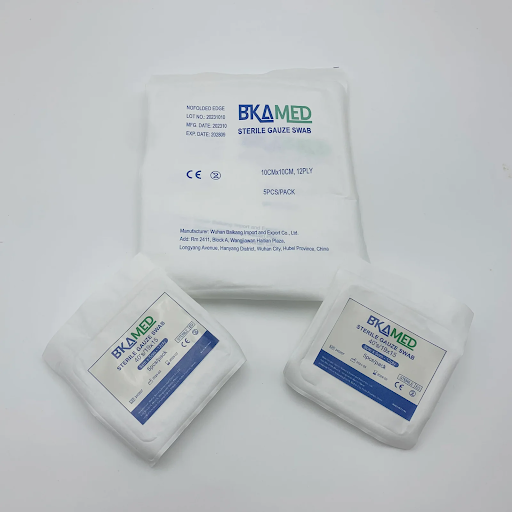
Sterile gauze swabs are single-use medical dressing materials manufactured under a controlled condition and sterilized in order to eliminate microorganisms that may still be present. Due to their absorbency and low risk of contamination, they’re regularly used in hospitals, clinics, emergency care and surgical settings.
The swabs are usually manufactured from medical-grade cotton or from a non-woven fabric, and shaped into square or rectangular pads. The woven or non woven structure allows effective absorption of blood, exudate, and other fluids while maintaining a soft, patient-safe texture.
Sterile gauze swabs are typically subjected to ethylene oxide (ETO) or Gamma, to ensure clinical safety. These techniques do not damage the material or leave behind microbial contaminants such as bacteria or fungi so the swabs are safe to use for direct contact with open wounds and invasive procedures where hygiene control is critical.
Material and Specs of Sterile Gauze Swabs
Either 100% woven cotton or a soft synthetic fiber blend is generally used to manufacture the sterile gauze swabs for use in clinical practice. These are selected for absorbency and breathability as well as their skin friendly characteristics, which help reduce irritation during wound care and dressing changes.
Swabs can be available in different sizes depending on the medical application such as 5 cm x 5 cm or 10 cm x 10 cm. They also have different levels of ply thickness which influences the amount of fluid it can hold, as well as its overall absorbence, ranging from 8-ply to 12-ply. More ply is usually recommended for processes that require more absorption and extra protection.
For Which Application Should Sterile Gauze Swabs be Used?
Effective use of sterile gauze swabs can prevent infection, which makes it suitable for open wounds, burns or surgical area. Sterile pads are required when the material is going to come in direct contact with the skin or an open wound. Unlike standard non-sterile gauze, which are generally used for cleaning intact skin or general wiping, sterile pads are mandatory any time the material will directly touch exposed tissue or an open cut.
In first aid and clinical settings these swabs have a variety of uses:
- Wound Cleansing: Can be placed in antiseptics or saline and gently cleansed to remove dirt, debris and dried blood from a wound.
- Absorption: They are highly porous and absorb blood, pus, or drainage of fluid (exudate).
- Direct Dressing: Used with direct application on a cut/burn sealed with medical tape or a bandage to protect the area from airborne bacteria.
- Compression: Can be folded and pressed onto a bleeding wound to apply gentle pressure and aid in clotting.
- Wound Debridement: Used in wet-to-dry dressing techniques where the dry gauze fuses with dead tissue and slough, allowing it to be safely lifted away from the wound bed when the dressing is changed.
- Application of Medications: Offers a hygienic application surface to apply topical medication, ointment or protective gel in an even manner on sensitive skin and open wounds.
- Surgical Assistance: Used in operating rooms for absorbing heavy fluids, maintaining a clear surgical field, and gently retracting delicate tissue.
- Protective Padding: Placed over wounds to provide a physical, sterile cushion against external trauma and environmental contaminants before being secured with bandages.
- Burn and Ulcer Management: Acts as a specialized dressing layer — often infused with petrolatum or silver — to prevent sticking and to soothe compromised skin.
- Oral Procedures: Used in the mouth to remove saliva, clean wounds and manage minimal bleeding after a tooth extraction.
Note: Because they directly contact open injuries and surgical sites, sterility is crucial. So it’s important to always ensure packaging is intact before use, and handle the swabs by the edges to prevent contamination.
Types of Sterile Gauze Swabs
Sterile gauze swabs are available in different types that are used for medical, surgical, and wound care applications. The appropriate one will vary based on:
- Absorbency
- Wound sensitivity
- Infection control requirements
- And clinical environment
Thus, identifying these differences is helpful in choosing the appropriate gauze swabs for healthcare buyers that align with their needs and patient care requirements.
Woven Sterile Gauze Swabs
A woven sterile gauze swab is a fabric woven from cotton threads that are sterile. They are widely used in hospitals and clinics, and are known for their high absorbency and cushioning properties.
These swabs are often used for:
- Surgical dressing
- Absorbing blood and an exudate
- Cleaning wounds
- General wound protection
A typical woven gauze is made from 100% cotton also with an assortment of ply variations, including 8-ply, 12-ply or 16-ply. The higher the ply, the better it will absorb and retain fluid and the more durable it will be.
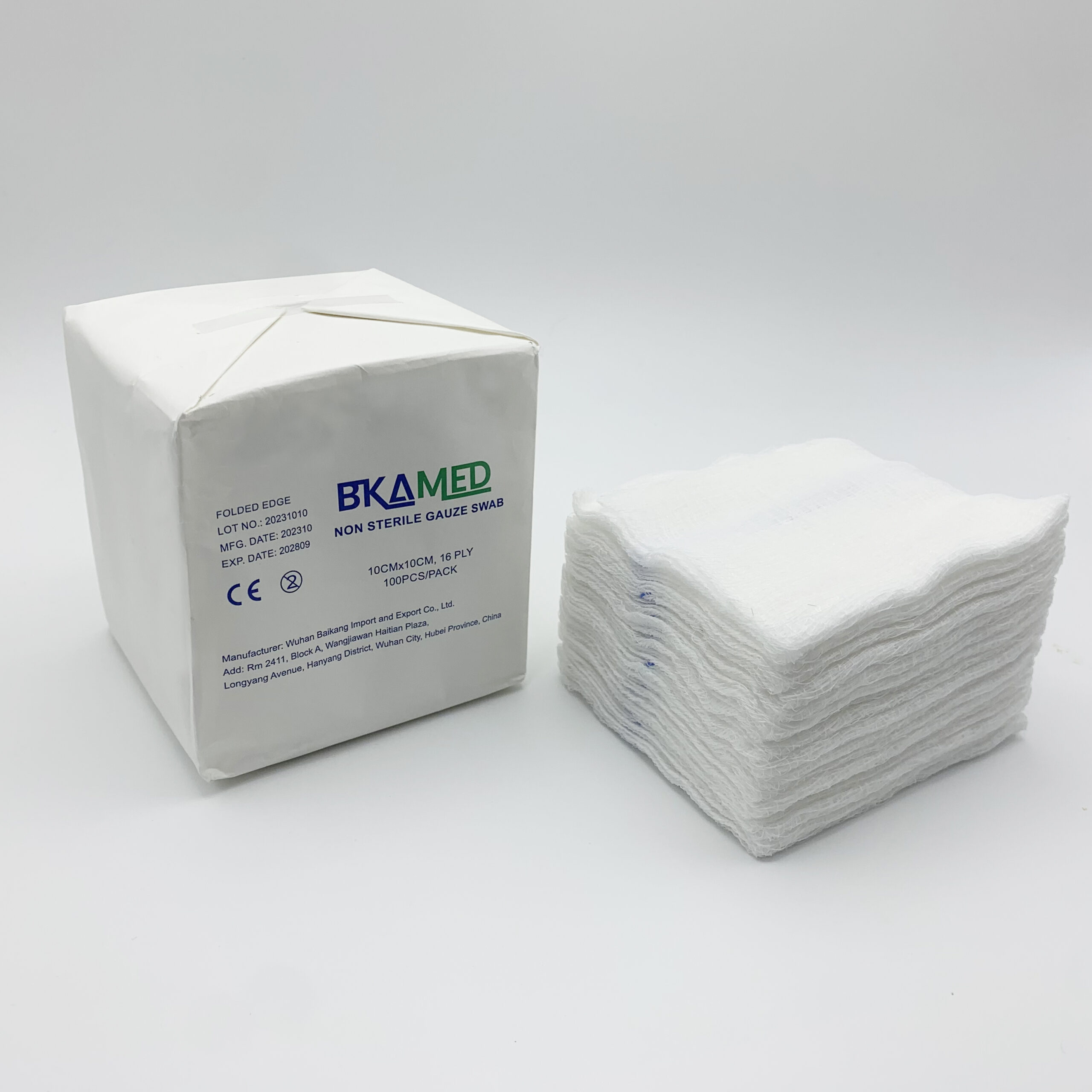
When cut or handled roughly, lint can sometimes be released from woven gauze swabs. Therefore, most manufacturers use the folded-edge design for reducing fiber shedding during medical procedures.
Non-Woven Sterile Gauze Swabs
Non-woven sterile gauze swabs are manufactured by mechanically, chemically, or thermally fusing fibers together rather than weaving them. They are typically composed of rayon, polyester, viscose or synthetic blends.
Non-woven gauze swabs offer:
- Lower lint production
- Softer surface texture
- Better patient comfort
- More uniform absorbency
They are preferred a lot in the modern wound care and surgery when the risks of contamination are of paramount significance. These non woven variations are also often applied to delicate wounds, cosmetic procedures, and post-operative care.
X-Ray Detectable Sterile Gauze Swabs
A radiopaque thread or strip that is visible on X-ray image is used in a gauze swab for visibility on X-rays. This helps surgical teams to locate all the retained swabs during the procedure, and enhances patient safety.
These medical gauze swabs with x-ray detectable thread are commonly used in:
- Operating rooms
- Deep surgical procedures
- Emergency trauma care
- Internal wound management
Hospitals often require medical gauze swabs with x-ray detectable thread to comply with surgical safety protocols and reduce the risk of retained surgical items.
Non-Adherent Sterile Gauze Swabs
Non-adherent sterile gauze swabs have a protective coating or layer so that the dressing doesn’t stick to the surface of the wound. They offer a number of advantages, especially useful for:
- Burns
- Skin grafts
- Surgical incisions
- Abrasions
- Sensitive wounds
Because they reduce trauma during dressing changes, non-adherent gauze swabs are helpful in improving patient comfort and supporting the healing tissue.
Cotton Sterile Gauze Swabs
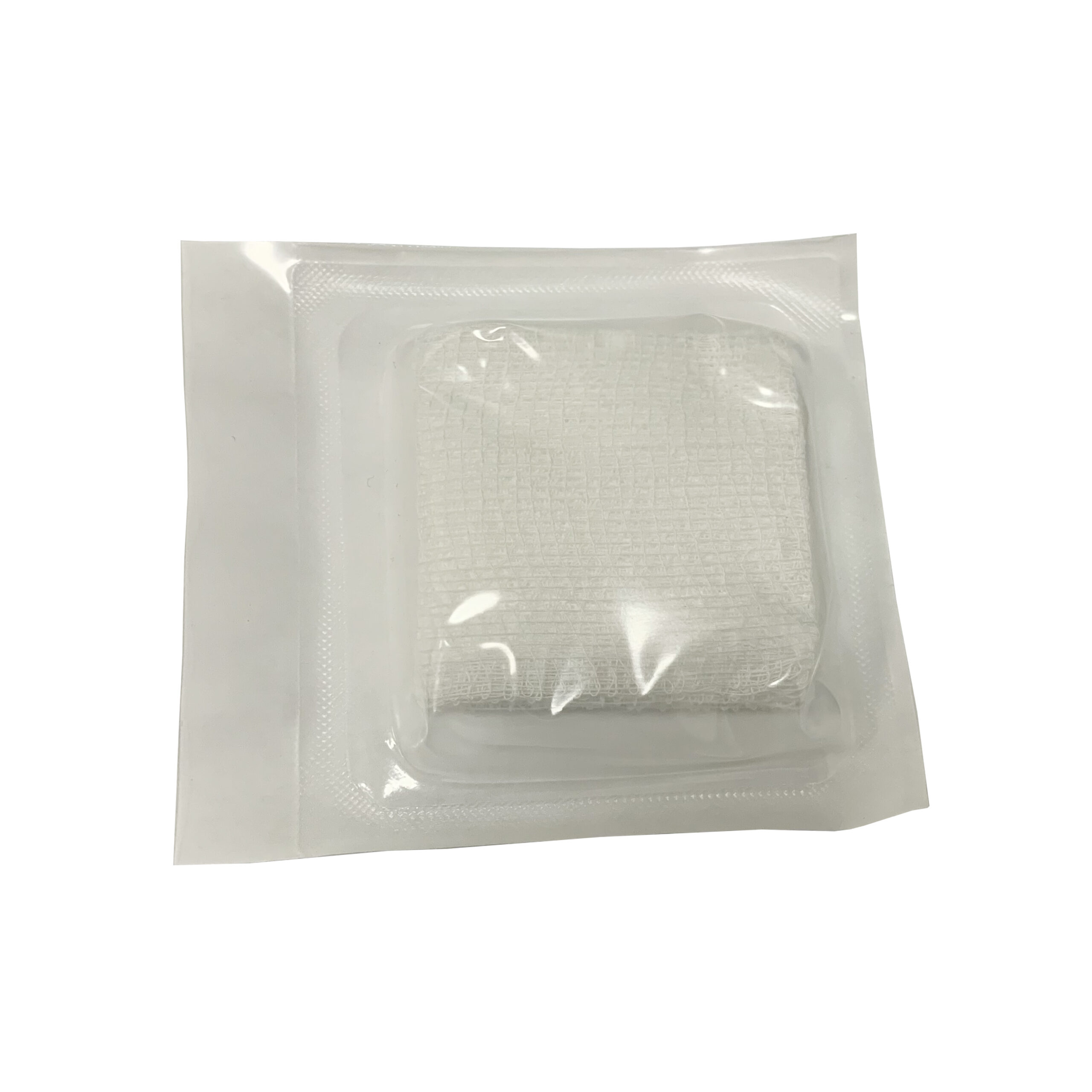
Cotton sterile gauze swabs are still used across the industry because they are soft, breathable, and highly absorbent. Many are produced from clean pure 100% cotton fibers, which are processed without using chlorine and sterilized using ethylene oxide or gamma radiation.
Cotton swabs are commonly used in:
- Hospitals
- Clinics
- First-aid kits
- Home healthcare
- Veterinary applications
Due to their versatility, they are suitable for usage for small wounds and surgery. Healthcare buyers can get 100% cotton gauze swab factory direct shipments from BKAMED.
Sterile Gauze Swabs by Ply Count
Sterile gauze swabs are also classified by the “ply” number. This means how many layers thick the gauze pad is folded. Common options include:
| Ply Count | Characteristics | Common Uses |
|---|---|---|
| 4-ply | Lightweight and thin | Minor cleaning tasks |
| 8-ply | Standard absorbency | General wound dressing |
| 12-ply | Higher absorbency | Moderate drainage wounds |
| 16-ply | Maximum thickness and absorption | Surgical and heavy exudate wounds |
The higher plies yield more cushion and fluid retention, but can cost more.
Sterile Gauze Swabs by Size
Surgical gauze swab manufacturer in China, BKAMED also make the sterile gauze swabs in many different dimensions, depending on the particular application. Common sizes include:
- 5 cm × 5 cm
- 7.5 cm × 7.5 cm
- 10 cm × 10 cm
Larger sizes are typically employed in a surgical context and high fluid wounds, and smaller swabs are appropriate for smaller injuries and for outpatient management.
Individually Packed vs Multi-Pack Sterile Gauze Swabs
Sterile gauze swabs may also vary in packaging configuration.
-
Individually Packed Swabs
These are prepared in such a way that the sealing is done one by one to ensure sterility until use. These are perfect for: operating theatres, first aid boxes, and single patient use.
-
Multi-Pack Sterile Swabs
Sterile swabs are packaged in multiple swabs within one container and are frequently utilized in hospitals and high volume healthcare settings for efficiency and minimal packaging waste.
Sterile gauze swabs are not one-size-fits-all products. There are several types of each: woven, non-woven, non-adherent, detectable with X-ray, and high ply — all serving different clinical purposes.
B2B buyers should evaluate material quality, absorbency, sterility method, ply count, and intended application before selecting a product line. Choosing the right type improves wound care efficiency, patient safety, and overall healthcare performance.
Sourcing Models for Sterile Gauze Swabs
There are various gauze swab sourcing models for various demands of volume, clinical specifications, and supply chain strategy. For example, it may involve choosing between:
- OEM (Original Equipment Manufacturer)
- White Label (Generic)
- Or, Private Label
These three gauze swab sourcing models dictate how healthcare buyers procure medical consumables. The frameworks are intended to achieve optimised costs, meet strict clinical standards (ISO 13485, CE) and to assure uninterrupted supply chains.
OEM vs White Label vs Private Label
If you are purchasing sterile gauze swabs from China, then you will typically have three different sourcing options.
OEM (Original Equipment Manufacturer)
In this case, you provide your own product specifications — gauze dimensions, ply count, packaging design, branding, etc. The chosen manufacturer then makes the exact product, according to your requirements. This gives you full control over every aspect of the swab (materials, functionality, branding).
The outcome is something that’s unmistakable, recognisable and branded, which sets your business apart. The compromise is normally:
- Higher cost
- Cost of tooling or design fees (higher value)
- Higher minimum order quantities
In most cases, OEM will be an ideal option when you know exactly what type of specialized gauze product you want, or if special features are desirable.
Private Label
Under this method, you use an existing design of gauze swab purchased from a manufacturer to which you brand/label. The gauze itself is not redesigned, but the following changes do occur: Name change, different packaging, and the marketing of the product as your gauze sponges, OEM private label.
This provides limited customisation options (for example the custom logo, packaging and minor specification changes) without a big investment in R&D. The chosen China sterile gauze swabs manufacturer continues to make the product but using your brand name.
You can also add a little exclusivity in gauze sponges OEM private label manufacturing, whereby nobody else in your market could use your label. This is a common tactic adopted by a distributor that would like to have their own brand without having to create a product from the ground up.
White Label (Generic)
You buy a standard, generic gauze swab product (already mass-produced) and brand it as you wish. Often these are sold to multiple B2B buyers with different labels. White label will have the lowest upfront costs and will be the fastest option because the products are already designed and require no specific modifications.
You just select sizes (makes it 2×2 inches, 4×4 inches, 8-ply etc.) and stick your label on these sterile or non-sterile gauze swabs bulk order. The downside is very little product differentiation — someone else could produce the exact same swabs and under another name. White-label can be beneficial for expanding a product line quickly and for market demand tests.
Which model to choose (OEM vs White Label vs Private Label) depends on your strategy:
- If you need full uniqueness and control (and have the volume to justify it), go OEM.
- If you want an established gauze swab that you brand, private-label is a middle ground.
- If cost and speed are top priorities and you don’t need exclusivity, white-label generic swabs are acceptable.
Some B2B buyers even start with white label to validate demand, then move to private label or OEM as they scale.
What to Look for Before Placing a Wholesale Order from China
Before placing a large order, it’s important to thoroughly vet the China sterile gauze swabs wholesale supplier:
1. Check Certifications and Compliance
Check to make sure the factory is audited and registered for ISO 13485 (medical device quality management), CE Mark and (where necessary) FDA. These validate if the company abides by international standards or not.
Request copies of any certificates and/or regulatory approvals and confirm these, if possible, with issuing authorities. If you use gauze, check for conforming to standards such as EN 14079 (cotton gauze standard) or pharmacopeia monographs.
2. Factory Audit or Visit
If possible, conduct an on-site audit of the factory or hire a professional inspection service. A factory audit (on site inspection), looks at the suppliers production line, equipment, staff and quality systems to meet your requirements.
Key areas include:
- The production flow for gauze (cleaning, weaving, cutting, folding, sterilization)
- Cleanliness of the facility (mainly sterile production areas)
- The quality control labs
Common elements of an audit checklist include number of machines, QC procedures, staff organization, ISO certificates on file, and business licenses. Apart from that, auditors will also be checking for medical devices, for compliance with ISO 13485 standard and traceability process.
3. Review Sample Testing and Quality Control
Always request representative product samples of the sterile gauze swabs. Test their absorbency, strength, sterility, and consistency (ply count & lint). Preferably get unbiased results from a third party lab.
Examine parameters such as pH, fibre count, and residue of chemicals on supplier Certificates of Analysis (CoAs) and in lab reports. In other words, never place a full order without pilot-testing samples to verify texture, absorbency time, and packaging integrity.
4. Examine Traceability and Labeling
Lot numbers, expiration dates, and clear labelling of contents (e.g., “Sterile 8-ply Cotton Gauze Swab, EO sterilized”) should be clearly labelled on each pouch of a proper gauze swab.
Be sure the supplier will ship this product in sterile barrier pouches (ISO 11607 certified) and have the system in place to track the product. Good suppliers will also supply you with batch records/COAs on each delivery.
5. Verify Production Capacity, and Experience
Check if the factory’s output can meet your volume needs. Most top Chinese gauze makers run multiple automated looms and packaging lines. Major producers like BKAMED report hundreds of tons per month of gauze output.
Ask for references or case studies. Companies with an export focus are generally more reliable (it shows experience with compliance and logistics). Check the supplier’s track record for length of time in business and their number of customers.
6. Communication and Audited Status
Evaluate the supplier’s quick response and English level in the pre-sales phrase. A quality OEM supplier will respond (in a timely fashion!) to questions regarding documents, processes and raw materials.
Look for “Audited Supplier” badges on B2B portals or whether they have been audited by Global Sources. These are the third-party authentications of the company’s validity.
A combination of certificate review, audits and sampling is best to avoid pitfalls. “ISO 13485 verification, sample testing and a 3rd-party pre-shipment inspection are all essentials when buying Class I medical supplies,” warns one of the sourcing guides.
Key Certifications to Demand from Any Supplier
Most markets consider sterile gauze swabs to be medical devices. So, it’s important to demand the following certifications and standards of compliance:
1. ISO 13485
The international standard for medical device manufacturers that ensures quality. ISO 13485 certification (from a reputable body like TUV or SGS) shows the factory has documented processes for design, production, testing, and corrective measures.
Many times, CE marking consists of a statement by a manufacturer that their production is in line with ISO 13485 standards. So, don’t accept a generic ISO 9001 as a substitute — insist on ISO 13485 certificate.
2. CE Mark (EU Medical Device Regulation)
The CE marking must be affixed to products being sold in Europe (or countries that recognise CE). For sterile gauze swabs, this simply implies compliance with EU MDR, including relevant standards.
For instance, EU Standards such as EN 14079:2003 apply in the case of absorbent cotton gauze. It specifies the minimum thread count (typically 19×15 per cm²), absorbency, pH range, and purity.
Almost all EU tender or hospital order sheets cite EN 14079 or pharmacopeia standards. Make sure the supplier provides a CE certificate and Declaration of Conformity for the above standard (EN 14079 — EN ISO 11607 for packets if applicable).
3. FDA Registration (U.S.)
Sterile gauze swabs are typically Class I (exempt from 510(k)), but the facility still needs to be registered with the U.S. FDA and adhere to QSR (21 CFR 820) if selling in the US. You should at least confirm that the factory is registered with FDA and listed with FDA as a device manufacturer.
4. British Pharmacopoeia (BP) & USP Monographs
Pharmacopeias contain monographs for medical gauze (including composition and, importantly, radiopaque markers). Not a “certificate,” this is just confirming that the gauze swab complies with the BP EN14079 standard, or the USP standard, for absorbency and fiber content respectively.
The BP guidelines specify how X-ray threads are attached and that the edges be folded to prevent loose fibers. If a sterile gauze swabs supplier claims BP/USP compliance, that indicates higher quality raw materials and processing.
5. Sterilization Standards (ISO 11135 / ISO 11137)
Make sure the EO or gamma sterilization process has been validated to ISO Standards. A reliable supplier will state the sterilisation process used such as:
- ISO 11135 (ethylene oxide)
- ISO 11137 (gamma)
Don’t forget to check for the expiration date based on that sterilization process; also any evidence of regular sterility testing if there is.
6. ISO 9001 and Other Audits
While the standard ISO 13485 focuses on the Medical Device Quality Management System, ISO 9001 (General Quality Management) is often a baseline for factories. If the supplier has ISO 9001:2015, that’s a positive pointer to formal processes.
Some buyers also look for ISO 14001 (environment) or ISO 45001 (safety). However, these are lower priority certifications compared to ISO 13485 certification for medical products.
7. Local Chinese Licenses (NMPA/GMP)
For China factories confirm that they hold a current license or GMP certificate issued by China’s NMPA (formerly CFDA) as a medical device factory. This may not be as easy to verify, but a seasoned exporter will have it and be willing to show it.
Pro tip: never accept any gauze swabs that are not certified as suitable for a regulated market. A set of certificate copies and test reports, including an audit report from a Notified Body or a TUV report (for CE) is required. As one sourcing guide notes, “certification is non-negotiable” for medical gauze.
Bulk Sourcing Considerations: Pricing, MOQs, Factory Capabilities
So, when it comes to bulk sourcing, there are numerous factors to consider. These include the prices, minimum order quantities, factories capabilities, etc.
-
Factory Pricing
Normally Chinese factories will have tiered factory rates. For example, one supplier listed 8-ply 2×2 inches sterile cotton gauze swabs at about $0.003–$0.004 each in the 5,000–10,000 piece range, dropping to $0.0025 each at over 100,000 pieces.
Keep in mind these prices assume factory-direct shipments (EXW), and you’ll need to add shipping, duties, and any inspection fees. It’s important to always ask for FOB or CIF quotes from the factory for your destination.
-
MOQ (Minimum Order Quantity)
Some medical gauze MOQs can be quite big. MOQs can generally range from a couple thousand for sterile gauze swabs upwards. For example, 50,000 packs can be included in the MOQ for sterile gauze swabs, while for non-sterile gauze swabs it may be as low as 2,000 packs.
Note: A “pack” can have multiple pieces based on how they pack them. If a lesser quantity is needed, ask them if they have an “in-stock” programme where a smaller size product can be purchased in bulk or allowing for purchase of a combination of products to assist with obtaining MOQ.
-
Factory Capacity
Generally, large gauze factories have automated looms, folding machines, and sterilization lines. For example, BKAMED’s facilities have a 100,000-class cleanroom facility and multiple automated packing lines.
When vetting, inquire about daily or monthly capacity. This guarantees they can scale if demand spikes. Also check whether they stock raw cotton (eg., 100% cotton yarn) or not, and their in-house processing (weaving/bleaching to quality control).
-
Packaging and Customization
Confirm what packaging options you need. Standard pouch packs are one thing, however you may need custom cartons, private-label pouches, or color-coded tabs.
Some sterile gauze swabs OEM manufacturer China factories will customize dimensions, logos, and carton design for an extra fee or higher MOQ. So, cllarify these costs early.
-
Payment and Lead Times
Factory terms often involve a 30% deposit and 70% balance against the shipping documents. Typical lead times for the first OEM production run can be 4–8 weeks (to accommodate mold/packaging setup), and 3–4 weeks for subsequent orders.
Plan for longer than you’d expect. Always put into consideration the factory’s lead times and sea freight (4–6 weeks) or air freight (1–2 weeks) including any customs clearance times as well.
-
Samples
Expect to pay for or reimburse prototype/sample costs (it could be anywhere around $0.50–$1 per gauze pad for a sample batch). Test for lab compliance using the samples; test the ability to absorb the water; test fiber purity; test packaging.
In other words, negotiate the best FOB (free on board) price you can, and confirm MOQs in writing. Avoid “too good to be true” low cost suppliers, stick to quality suppliers that have ISO/CE/FDA.
Note: an effective B2B sourcing strategy requires balancing the cheapest price with reliability; a slightly higher cost from a certified OEM can save huge headaches down the road.
How to Choose the Right Sterile Gauze Swabs OEM Manufacturer for Long Term Partnership
Purchasing sterile gauze swabs is not just a one time event but is an investment in the right OEM partner for success. For B2B buyers, the right supplier impacts the quality of the product, regulatory confidence, delivery stability, and customer trust.
A manufacturer may offer a low quote for a 100% cotton gauze swab factory direct order. However, that doesn’t necessarily mean that they immediately become the best and reliable partner. Good relationship with the supplier should result in quality, strong documentation, and good communication over time.
This is even more important when purchasing a gauze swab 8 ply, 12 ply, CE ISO medical product line supplies. The manufacturer should be able to meet the specification demands, support compliance, and scale with the demand, without compromising quality. A good OEM relationship should minimize risks.
1. Prioritizing Quality Over Price
When purchasing sterile gauze swabs, price must be considered but the quality should be most important. The products are used in clinical environments, thus the wrong product can have significant consequences. Weak absorbency, loose weave, poor sealing, or inconsistent sterilization can all lead to complaints, returns, and lost trust.
Most healthcare buyers focus on the lowest quote at the beginning. This method can be an expensive habit to get into. A supplier that offers a cheap gauze swab BP EN14079 standard product but fails to maintain consistency may end up costing more through rejected shipments, replacement orders, and operational delays.
This is best done by comparing the cost of the product with the reliability, documentation, and production discipline. Don’t purchase the cheapest gauze swab, but a swab that acts reliably in all shipments.
2. Building Reliable Supplier Relationships
Regular communication is one good way of ensuring supplier reliability. When the manufacturer’s information changes frequently, they don’t answer the direct questions or they are slower to respond, this is a red flag. Clear Communication can avoid the mistakes at minimum count before the production begins.
But if both parties know that reordering is an option, the manufacturer may be more inclined to put in the effort for production planning and quality control, as well as more flexible with customer needs. When getting a gauze swab 8 ply 12 ply CE ISO product for continuing distribution, this is particularly crucial.
Trust should be an integral part of a reliable supplier relationship. It’s important to be familiar with who is available to help, the response time, and their de-escalation approach.
3. Starting With Trial Orders
When it comes to ordering in bulk quantities, try ordering a trial first so to better assess the product’s suitability. This actually is a among the greatest ways to learn whether or not a supplier has the ability to meet your needs. Sample sheets and sales promises may be useful, but cannot necessarily be a reflection of mass production.
A trial order permits you to get a real experience of the gauze swab products. An evaluation of absorbency, stitching, packaging, labelling and shipment accuracy can be made. It’s also worth checking to see if the supplier is able to produce a gauze swab BP EN14079 to a consistent standard.
Use the trial order to check whether or not:
- There is no difference between the product and approved samples.
- Packaging is securely and professionally packed.
- The delivery time is realistic.
- The supplier attends to the feedback well.
- The quality remains the same in a batch.
Successful trial order builds confidence to scale. If not, you won’t risk costly mistakes upfront in case they aren’t the right products for your company.
4. Establishing Clear Product Specifications
Clear specifications protect both buyer and manufacturer. Many procurement problems arise when the B2B buyer wasn’t able to specify the product with enough detail. This is why technical documentation is very important.
Your specification sheet should clearly describe:
- Raw material details
- Size and dimensions
- Ply count
- Folding method
- Absorbency requirements
- Sterilization method
- Packaging format
- Labeling details
- Shelf life
- Carton configuration
This is particularly important when ordering a gauze swab 8 ply, 12 ply, CE, ISO certified product line. It is because the requirements of ply count, weave density, as well as the packaging requirement should be meeting the agreed standard.
When purchasing a 100% cotton gauze swab factory direct product, the cotton quality and finishing details should also be documented. All of the samples approved should now serve as a guide for future orders.
When both parties agree on the sample, it should be used to guide production. This helps to avoid confusion and provides you with an understanding of quality.
5. Creating a Supplier Evaluation Checklist
A supplier evaluation checklist aids in making a structured comparison of manufacturers. Making a decision is more about the same principles for all the suppliers, rather than relying on salesmanship. This is a way of making the decision objective, and easier to justify in your mind.
This checklist should cover the five elements below:
a). Quality
Ensure that there is a consistent quality control system from the manufacturer. Inspect samples of the product, defect percentage, batches, sterilisation and uniformity. A good gauze swab BP EN14079 standard supplier should be able to show quality discipline at every stage.
b). Compliance
Check with the manufacturer to see if it complies with the rules and paperwork required for the market. The supplier should have an understanding of the requirements associated with a gauze swab 8 ply 12 ply CE ISO certified product and be able to supply the appropriate paperwork.
c). Capacity
It’s important to check whether the manufacturer can handle your present order volume and future growth or not. A supplier that works well with small orders may struggle when the demand increases. A long term and reliable sterile gauze swabs partner must be able to help your business to grow.
d). Communication
Assess the responsiveness of the supplier, their clarity and professionalism. Errors and delays are minimized with good communication. It also demonstrates to the buyer exactly how the manufacturer will act once the contract is in effect.
e) Pricing
Compare quotations carefully, but do not evaluate price in isolation. A slightly higher price may be justified if the supplier offers stronger quality control, better packaging, and better long-term stability. A 100% cotton gauze swab factory direct price is only valuable if the supplier can maintain the same standard every time.
6. Choosing a Partner, Not Just a Vendor
The right sterile gauze swabs OEM manufacturer will assist you to grow with fewer risks and consistency. They should also understand your specific product requirements, support documentation process, and keep communication clear from the sample stage to full production.
Why BKAMED Is a Trusted Sterile Gauze Swab Supplier

BKAMED (Hubei Baikang Medical) ranks among the top 10 gauze swab manufacturers in China and is a trusted sterile gauze swabs supplier worldwide for the following reasons:
1. Scale and Capacity
BKAMED runs advanced facilities including a 100,000-class cleanroom, multiple packaging lines, and in-house sterilization labs. The company manufactures more than 200 tons of gauze per month — approximately millions of sterile gauze swabs.
It has vertically integrated factories (they have their own cotton weaving and bleaching plants). This vertical control (from raw cotton to sterile packaging) guarantees the same quality at each step. In essence, BKAMED can scale production rapidly and efficiently for large orders, a key need for B2B buyers.
2. Certifications and Quality
BKAMED holds all the major certifications, including ISO 13485, CE Mark and FDA registration. Their products also comply with EU’s EN 14079 requirements for the gauze thickness and Chinese’s YY/T standards. The factory publishes Certificates of Analysis and provides batch traceability.
They also put an emphasis on automated inspections, such as threads/defect inspection using automated vision systems, and sterility inspection of every batch. This rigorous QA is noted by buyers: “automated inspections and batch tracing help…ensure products are of good quality”.
3. OEM/Private Label Expertise
BKAMED provides OEM and private-label services. They can customize all dimensions, plies, and packaging (e.g., swab size, folded edges, X-ray inclusion, etc.).
They have an export-focused team to assist with branding, labeling, and regulatory documentation. Buyers appreciate that BKAMED can apply logos or design unique gauze sets at scale without sacrificing quality.
4. Global Reputation
The company distributes gauze swabs to more than 60 countries, such as Europe, the Middle East, Africa, and Asia. Most healthcare buyers trust BKAMED’s products because of consistent compliance and on-time delivery.
In industry rankings, BKAMED often appears as the “most reliable” or “leading” sterile gauze supplier in China. This reputation is backed by an over 20 year track record and real customer feedback.
5. Competitive Pricing
Thanks to its scale and vertical integration, BKAMED surgical gauze swab manufacturer, China offers competitive bulk sterile gauze pads factory price. While they may not be the absolute lowest-cost (since they invest in quality), they strike a balance — their bulk prices are typically in the mid-range, reflecting superior materials and service.
To sum up, BKAMED is what people would expect to see in a Chinese OEM gauze factory:
- Large output
- Full certifications (ISO/CE/FDA)
- Own high-end facilities
- Strong export experience
When you choose BKAMED, you’re choosing a supplier that can support strict hospital requirements and bulk delivery schedules while offering OEM flexibility. Their consistency and longevity make them a trusted partner for medical distributors worldwide.
Final Thoughts
China is an excellent place to order sterile gauze swabs in bulk, as long as careful vetting is done. B2B buyers must understand product specifications. For example; 100% cotton, ply count, sizes, medical gauze swab with x-ray detectable thread or without, and ensure the supplier can deliver exactly what’s ordered.
Deciding between OEM vs private-label vs white-label depends on your brand needs and budget. Always audit the manufacturer. That includes reviewing their ISO 13485/CE certificates, visiting the factory if possible, testing samples (for absorbency and sterility), and confirming clear batch labeling.
With due diligence, placing a bulk order for sterile gauze swabs can be smooth. Buying factory-direct means prices can be lower and customization options available.
A reputable sterile gauze swabs wholesale supplier like BKAMED (certified ISO/CE/FDA, vertically integrated, long experience) serves as an example. They can provide the high quality and service level you should demand from any gauze swab ETO sterilization supplier.
Partner With BKAMED OEM Manufacturer for Sterile Gauze Swabs Today
Purchase bulk sterile gauze pads factory price directly from a trusted OEM manufacturer in China and simplify your medical supply sourcing with confidence. BKAMED offers high quality sterile gauze swabs designed for hospitals, clinics, distributors, pharmacies, and medical wholesalers that need consistent product performance and reliable supply capacity.
Our products are made with the most rigorous quality control procedures and medical grade materials to ensure safety, absorbency and clinical reliability. Additionally, we provide private label packages, flexible OEM solutions and support large volume international orders, while also providing custom packages.
So, do you need 8-ply or 12-ply gauze swabs, different sizing options, or export-ready documentation? Well, our team is ready to support your business requirements. Contact us today to request samples, discuss customization options, or get a quotation for your next wholesale sterile gauze swab order.
