One surgical sponge that has been left-behind can cause irreversible harm to a patient and can lead to millions in litigation and regulatory investigation against the hospital. That risk traces back in part, to the sourcing decision long before the patient walks into the operating room.
Laparotomy sponges for use in abdominal surgery should be constructed in a way that complies with specific standards, and pass detectability and sterility standards. Not all suppliers meet all three.
For procurement teams that buy from China, they need to understand which manufacturers have the relevant certification, which manufacturers can customize OEM products and how to move from inquiry to approved product in an efficient manner.
This guide answers them all, in order, and provides with a practical detail the difference between a smooth supply process and a costly error. We discuss: the definition of a laparotomy sponge, the process of evaluating construction quality, why the capability to be detected by x-ray is a requirement, certifications needed for regulated markets, OEM and private label, order process and step by step, pricing and MOQ, and how BKA MED helps buyers worldwide with bulk and custom orders.
Why it is important to select the right supplier of lap sponges.
When it comes to selecting a laparotomy sponge supplier, it’s not the same as purchasing a regular pillow or sheet. It has consequences that are clinical in nature and most other procurement decisions do not have. In many regulated healthcare systems, retained surgical items such as sponges are defined as a ‘never event’ and thus are preventable. However, they still do happen and are a known patient safety issue.
The Joint Commission in the United States has tracked unintended retention of foreign objects as a sentinel event category for decades. Their data always indicate that surgical sponges make up the largest proportion of retained surgical items. According to research in the Annals of Surgery, retained sponges happen in about 5,000 to 18,000 surgeries out of every 100,000 surgeries. That’s not a hypothetical scenario in high-volume surgery.
The implications for procurement managers and distributors are clear. The lap sponge used in operating rooms should be constructed so that it will accommodate accurate counting, be detectable for radiographic identification if a count discrepancy does occur and satisfy sterilization standards to keep patients free from infection. If all these don’t work, the clinical team is unable to provide the last line of defense.
The technical specification that deals with the radiographic identification requirement is detectability by X-ray. If a laparotomy sponge is present in the abdomen, but not woven into or otherwise embedded in a radiopaque material, then it is impossible to confirm its removal with a post-operative scan. If the market is one that demands x-ray detectable sponges, then putting on the market a non detectable product is putting on the market a non compliant product. And in markets where it is not yet mandated, the surge of consensus in surgical safety literature is in favor of mandating it.
There is also a financial risk involved in the sourcing decision. The cost of a year’s supply of high quality detectable sponges is far less than the cost of litigation incurred from a retained sponge incident. But the direct legal expenses are compounded by insurance implications, regulatory reporting requirements and reputational damage. Even procurement managers who grasp this situation do not evaluate suppliers the same way as those who view it mostly as a cost optimization exercise.
China is the leading world supplier of surgical lap sponges. The medical textile production center in the country is mainly located in provinces such as Hubei, Shandong, Jiangsu, which have the scale, raw material resources and technical equipment to manufacture sponges that meet international standards. However, not every factory in this ecosystem is certified, has a quality management system, or has OEM capabilities to meet international buyers’ standards.
For this reason, supplier selection, with its built-in evaluation process is more important than the unit price on the first quotation. The sections to follow develop the knowledge base required to intelligently evaluate sourcing options from understanding the product itself, to verifying certifications, and working with OEM options to placing a compliant bulk order.
What is a Laparotomy Sponge? Clinical Overview
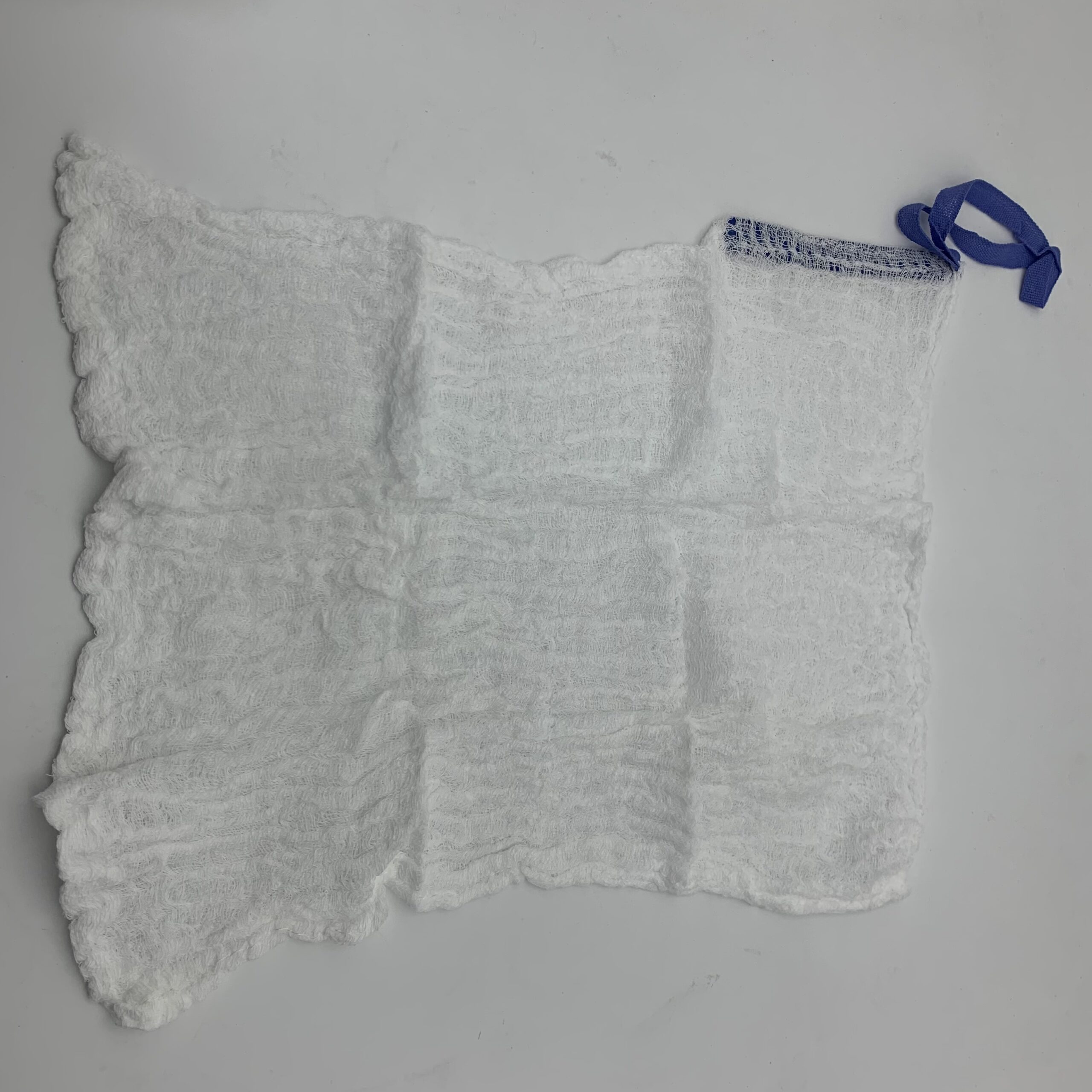
Laparotomy sponge is a large multi-layer gauze pad used in open surgeries. It is made specifically for body cavities, mainly in the abdominal cavity, but also in thoracic and other main surgeries. Its name is derived from its main use, laparotomy, the surgical procedure involving an incision into the abdominal cavity.
In the clinical setting, there are three primary functions of the lap sponge during surgery.
- One of its actions is that it absorbs the blood and other fluids in the surgical field. This is very important as it makes it impossible for the surgery team to see through it and gives an environment for infection to spread.
- Second, it reduces accidental injury to surrounding organs/tissues when retracting and manipulating.
- Third, it aids in keeping the surgical field clean and tidy.
A laparotomy sponge is very different from the small size gauze swabs in minor procedures or wound care, as it has a clinical profile that distinguishes it clearly. Lap sponges are large, with a standard size of 30cm x 30cm when flattened or 45cm x 45cm when folded, and are woven from several layers of cotton gauze and have a fluid capacity that is suitable for large surgery.
The amount used per procedure depends on the complexity of the surgery. An uncomplicated appendectomy may require 4 to 6 lap sponges. 20 or more are used for a major colorectal resection, liver procedure or trauma laparotomy. Scale these volumes up over a busy surgical department and the quantities of procured volumes mount up rapidly. Several thousand laparotomy sponges per month can be easily required by a hospital with 50 abdominal cases weekly.
With hospital systems or surgical centers, the volume arithmetic is even more important for distributors. A chain of intermediaries is avoided by buying from an intermediary who procures directly from a manufacturer, which impacts the margin structure in the supply relationship.
In the operating room, the laparotomy sponge also has to be well counted. Sponges are counted prior to incisions, at designated points in the surgical procedure, and at final close. If the counts are not equal a radiograph should be taken to verify that no sponge was retained. This is where the detectability by x-ray becomes crucial. The absence of a sponge on x-ray is not a proof of absence and the surgical team is left with a tricky clinical and legal position.
The procurement perspective of the surgical lap sponge should be based on the premise that it is not just another supply item but a safety-critical device. It has direct implications for sourcing criteria that should be applied, such as the role of certification, traceability and uniformity of production lots.
Anatomy of a Quality Laparotomy Sponge
The first step in knowing what makes a laparotomy sponge clinically suitable is to understand how it’s physically constructed. Not every sponges is created equal. The differences of material specification, thread count, plying and finishing process have tangible impact on surgery performance.

Material: 100% Cotton
The best lap sponge is 100% cotton gauze. For many reasons, cotton is the material of choice for surgical sponges: it is quick to absorb fluid, soft and non-abrasive to tissue and will not interfere with the standard sterilization methods. For medical-grade cotton for laparotomy sponges, the cotton has to be properly bleached and purified. When considering a supplier, buyers should ensure that their cotton is of the same quality as British Pharmacopoeia (BP) or equivalent international standards for medical absorbent cotton.
Thread Count
One of the most crucial structural properties of a laparotomy sponge is thread count. The term is used to describe the number of threads used per square centimetre of woven gauze fabric. There are three different thread count specifications that are used for making the BP compliant:
- BP 13 threads/cm² (coarser weave, higher porosity)
- BP 17 threads/cm² (medium density, versatile)
- BP 20 threads/cm² (denser weave, finer texture, better lint control)
The higher the weave the more tightly woven, the finer the texture the more strongly it will control lint, and the higher the number of threads per cm, the more tightly woven it will be.
The higher the thread count, the thicker and more even the fabric will be. In situations where lint release is an issue, such as intra-abdominal, a BP 17 or BP 20 specification may be desired. It’s also a standard due diligence process to ask for the thread count specification in the product documentation when the factory is found in the abdominal x-ray picture in China.
Ply Options
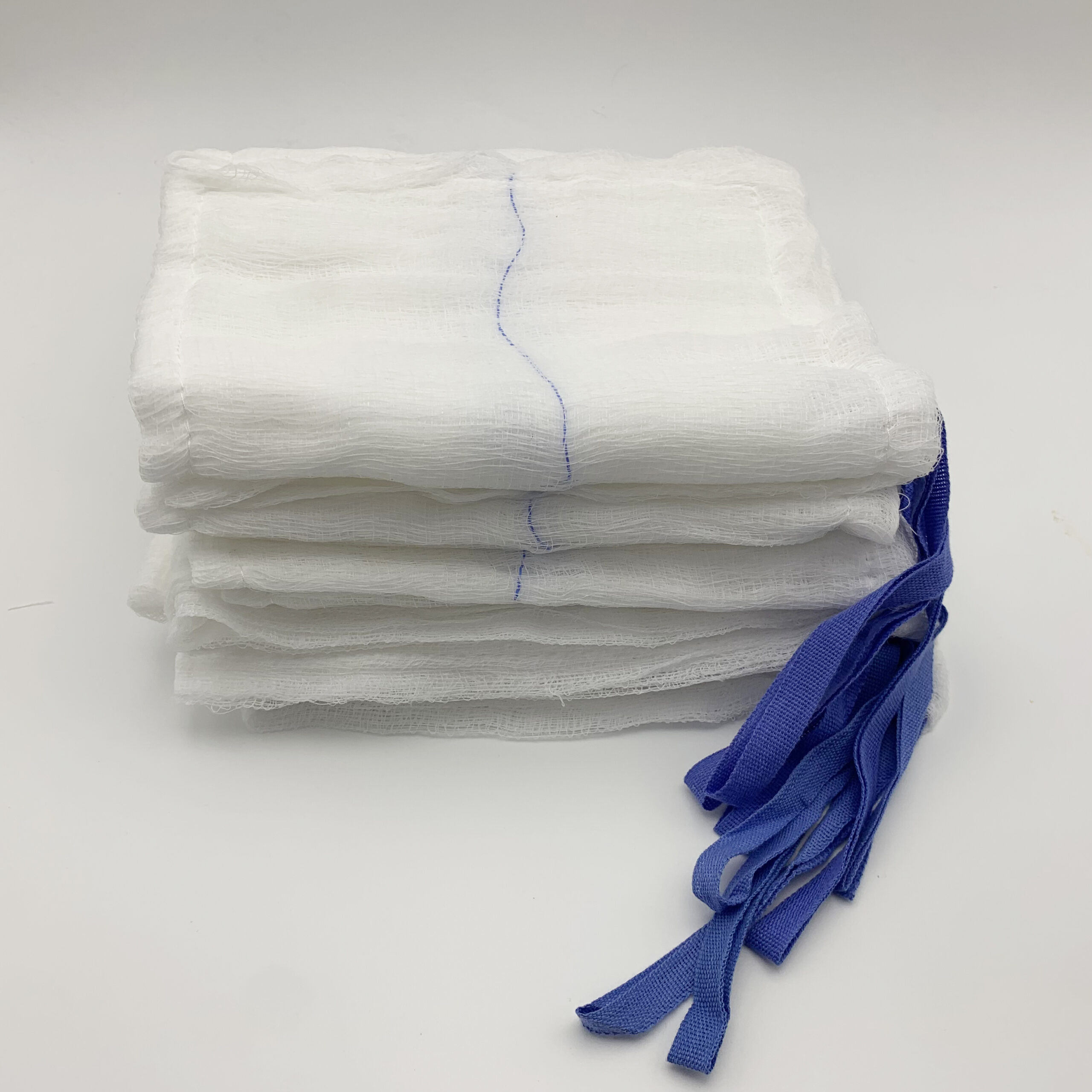
Ply – the number of layers of gauze in the sponge structure. Typical sponges used during laparotomy are 4 ply, 6 ply and 12 ply. The more plies the greater the capacity for fluid absorption and the more structure.
A 12 ply lap sponge in a high output abdominal case will contain much more fluid than that of a 4 plies thick lap sponge in a high output abdominal case. Depending on procedural needs and the buyer’s desired clinical segment, the appropriate ply is selected.
Pre-Washed Finish
The clinical importance of a pre washed surgical lap sponge with a manufacturer designation. The pre-washed sponges have undergone a processing stage after weaving to remove sizing chemicals, excess fiber and loose lint. This yields a more absorbent sponge with a much lower linting rate when used during surgery.
Lint release is a problem in intra-abdominal surgery. Any gauze lint that is left in the peritoneum can lead to a granulomatous reaction. BKA MED sterile latex free prewashed lap sponges are standard finished.
Blue Cotton Loop
Many markets will feature the lap sponge with blue cotton loop configuration as a standard safety feature. The loop, usually a piece of blue cotton tape, is used for two things.
First, it offers a visual handle for the scrub nurse when taking the sponges out and counting them. Secondly, the blue hue provides a good visual contrast to the red and pink hues of the abdominal tissues.
The loop needs to be fastened properly. If a loop gets dislodged while in use, it results in another free object in the operating area, presenting another safety hazard.
X-Ray Detectable Thread
It is usually a thread or strip embedded in the construction of the gauze which contains a radiopaque material like barium sulfate that can be seen on an x-ray after the laparotomy is performed.
There are two types of integration: woven-in thread, in which thread is visible while weaving and sewn-in thread, in which the thread is integrated as a post-weaving step. Woven-in detection elements tend to be more reliable since they are not easily separated from the body of the sponge during use.
Summary of important construction specifications and their clinical relevance:
| Feature | Specification Options | Clinical Implication |
|---|---|---|
| Material | 100% cotton gauze | BP-compliant absorbency and biocompatibility |
| Thread Count | BP 13 / BP 17 / BP 20 threads/cm² | Affects lint, density, and absorbency rate |
| Ply | 4, 6, or 12 ply | Determines fluid capacity per sponge |
| Finish | Pre-washed or unwashed | Pre-washed reduces lint and improves softness |
| Loop | Blue cotton loop or no loop | Safety counting and retrieval aid |
| Detectability | X-ray thread woven-in or chip | Enables radiographic identification post-operatively |
X-Ray Detectability: The Safety Standard Explained
The presence of x-ray in laparotomy sponges is not an optional “luxury” feature. It is a basic safety requirement in most regulated surgical environments. It is crucial for procurement teams to understand how it works, and why the evidence suggests it is significant, in order to specify the requirements of the products.
How Barium Sulfate Thread Works?
The x-ray detectable thread in surgical lap sponges has barium sulfate (BaSO4) as the radiopaque agent. Barium sulfate is a heavy metal compound that blocks more x-rays than does human tissue. If a sponge filled with barium sulfate thread is in the body, the thread will show up as a very bright and high-contrast marker on a plain film X-ray.
The thread is commonly interwoven in the sponge in a regular pattern either across or through the sponge. If the laparotomy sponge is folded, compressed or partially overlapping another structure, the entire sponge can be seen on one X-ray image. Thread woven in is more durable; if it is woven into a fabric, the detectable element cannot be separated from the fabric.
Radiographic Visibility
In markets such as EU or US, the radiopaque element needs to be clearly seen on a typical radiograph under “realistic” conditions in order to meet detectability requirements.
The factors which affect visibility are mass fraction of barium sulfate in the thread, number of threads and density in the weave, and kVp values of the imaging equipment.
Quality manufacturers validate their detection elements against accepted imaging protocols to ensure reliable detectability.
Procurement buyers should seek out sample imaging documentation from prospective suppliers. China will provide x-ray images of the sponge’s visibility under normal conditions with a credible x-ray detectable laparotomy sponge OEM manufacturer.
Retention Incident Context
The need for laparotomy sponges to be visible on x-ray is based on the reported incidence and outcomes of retained sponges. This study, published in the New England Journal of Medicine, examines retained surgical items, based on Medicare data, and finds that sponges are the biggest group. The repercussions are reoperation, sepsis, bowel obstruction, fistula, and, in some cases, death of the patient.
Emergency procedures and unplanned procedures are higher risk due to the disruption of the controlled counting environment of a planned case. There is also a higher risk for complex multi-specialty procedures. If manual counting protocols are not sufficient, x-ray detectability is the final line of defense in both situations.
Mandatory Requirements in Regulated Markets
The FDA mandates the use of a radiopaque marker on surgical sponges used in the intra-abdominal cavity per 21 CFR Part 880 and guidance. The classification of Class 1 surgical textiles in the European Union is in accordance with detectability requirements for surgical sponges placed inside body cavities.
For regulated markets, healthcare facilities purchasing laparotomy sponges from China should ensure that their products provided are compliant with these requirements. This is more of a documentation and testing question rather than product claim and procurement teams should ask for evidence of compliance testing during supplier qualification.
Sterile vs Non-Sterile Formats
Sterile and non-sterile laparotomy sponges have a proper role in procurement. Each format has its own clinical and operational context, which assist buyers in structuring orders appropriately.
When Each Format Is Used
Lap sponges are used as is in the surgical field, during open cavity surgery, such as intra-abdominal. They are packaged and delivered to the scrub table, opened aseptically and then placed on the sterile surgical field. Sterile product is needed when the sponge is in direct contact with open tissue or a body cavity for any application.
Non-sterile laparotomy sponges—when sterility is not needed: for cleaning and preparation of the external surgical site prior to the sterile field; as a source of laps that are to be sterilized in-house; in educational and training environments. The non-sterile lap sponges with x-ray detectability provide a more affordable option to the distributor market serving these applications.
Sterilization Methods
Sterile laparotomy sponges, which are manufactured by Chinese OEM, are available in two sterilization methods.
Ethylene oxide (ETO) sterilisation is a process of exposing the packaged product to ethylene oxide gas, which is controlled by temperature and humidity. ETO works on a wide variety of microorganisms and can be used on materials that cannot resist high temperatures such as multi-layer gauze. It is the most common single method of sterile packaged lap sponges. The requirement for an aeration period after the cycle for ETO sterilization is to dissipate the remaining gas so that the product can be used.
Gamma irradiation is a process to sterilize the product by irradiation with ionizing radiation. Gamma Sterilization is fast, penetrates through packaging, and has no chemical residue. Generally used in bulk-packaged sterile medical products. Gama sterilisable 100% cotton sponges are easily handled when formulated appropriately. Both types are common at qualified Chinese medical device manufacturers, so buyers need to indicate the preferred method of sterilization in their RFQ.
Packaging Formats
This packaging format is directly connected with sterile/non-sterile and end-use environment:
- Blister packs, either as single pieces or in a formed plastic tray, sealable with peel away film are frequently found in hospital supply systems. They can be presented at the scrub table in an aseptic manner.
- Sterile soft pack made of medical-grade paper or paper/film pouches, which are sometimes more cost-effective and less wasteful than the hard packs.
- Non-sterile bulk poly bags containing 50 or 100 sponges are standard for institutional processing or local sterilization.
Shelf Life Considerations
A certain shelf life is guaranteed for sterile laparotomy sponges manufactured by a certified manufacturer, depending on how they are sterilized and the packages’ integrity. ETO-sterilized product will have a shelf life of 3 to 5 years from the date sterilized, as long as the packaging is not damaged. Similar shelf life parameters can be considered for gamma-sterilised product. Order volumes should be matched to realistic throughput for procurement teams making large orders to prevent expiry risk.
Certifications Required for Hospital Supply
Some of the most important checks in certifying a lap sponge supplier for a hospital’s procurement or export to different countries are the checks for their certificate verification. The different certifications focus on various aspects of quality, safety or market access.
ISO 13485:2016
ISO 13485 is the international quality management systems standard that has been developed for medical device manufacturers. It establishes standards for a quality system which assures uniformity of design, development, manufacturing, installation and services of medical devices and related services. For laparotomy sponge ISO 13485 CE FDA compliance, ISO 13485 certification is the foundation. A manufacturer who has been certified to ISO 13485 has undergone a quality management system audit by a third-party certification body.
Confirm an ISO 13485 certificate by asking for the certificate itself from the manufacturer, verifying the certificate body issuing the certificate, the scope of certification (the types of products covered), and the certificate’s expiration date. Where available, certificates should be checked in the certification body’s public registry.
CE Marking (EU MDR Class I)
Medical devices sold in the EU must be CE marked. Surgical sponges, such as laparotomy sponges, are generally included in the lowest risk classification (Class I) of the EU Medical Device Regulation (EU MDR 2017/745). The CE-marking of class I medical devices can be performed in the manufacturer’s own declaration of conformity. But the manufacturer of sterile Class 1 devices must be audited by a notified body with regard to the manufacturer’s sterilization processes.
If a CE mark for the sterility aspect is requested, involvement of a notified body should be included in the CE marking process for a sterile laparotomy sponge for the EU market. When ordering for EU distribution, procurement should ask to view the CE Declaration of Conformity document and ensure that the product described is the same product they are ordering.
FDA Registration
Medical device manufacturers have to register their establishment with the FDA and list their devices on the FDA device listing database, for the U.S. market. The Chinese manufacturer with a valid FDA establishment registration has self-announced the facility and products to the FDA.
This can be checked by procurement teams on their own by using the FDA’s public device registration database, using the manufacturer’s name or the registration number. If the manufacturer is not registered or the product is not listed, the lap sponge should be classified in 21 CFR Part 880.
Biocompatibility Testing (ISO 10993)
The international standard series for the biological evaluation of medical devices is ISO 10993. Biocompatibility testing is required, for laparotomy sponges that come in contact with open surfaces and body cavities, to assure that there are no adverse biological reactions.
Usually, the tests relevant to the application are cytotoxicity tests and acute systemic toxicity tests. If the products contain x-ray detectable thread made of barium sulfate compounds, material-specific biocompatibility data should be available. It is advisable for the buyer to ask for the ISO 10993 test reports as pre-qualification documents.
Below is a quick reference guide to the important certifications and methods of checking each:
| Certification | What It Confirms | How to Verify |
|---|---|---|
| ISO 13485:2016 | Quality management system | Certificate + certification body registry |
| CE Marking | EU market compliance | Declaration of Conformity document |
| FDA Registration | US market legal status | FDA device registration database |
| ISO 10993 | Biocompatibility of materials | Test reports issued by an accredited laboratory. |
OEM Manufacturing Options
Procurement teams and distributors choose to buy laparotomy sponges from China manufacturers for one of the main reasons that they are capable of being manufactured as OEM products. Chinese medical textile factories, especially those that have vertically integrated production, are more flexible with customization than factories located in higher-cost areas.
What OEM Customization Covers
Size customization is common and practical. Most surgical uses require standard sizes of 20×30 cm, 30×30 cm and 45×45 cm, but there are markets or specialty surgical programs where other sizes are required. A laparotomy sponge 30×30 45×45 supplier that has the OEM capability can create non-standard sized sponges in addition to the standard size without a separate production facility.
Ply configuration can be customized to meet customer requirements. A person looking for a product for high acuity surgical areas may request the 12 plies as it will be most absorbent. General surgery supply users can take the initiative to adopt a 4-ply or 6-ply option to maximize value.
Thread count may be indicated as per the market needs of the buyer. When a distributor’s hospital customers have a certain clinical need for BP 20 thread count, it can be added to the product specification and be consistently met between production lots.
Loop configuration is another feature that can be customized . The standard is a blue cotton loop, although the loop color, loop width and the method of attachment to the product can be specified. There are certain markets that ask for specific colors or dimensions of the loops, as well as certain hospital procurement standards.
X-ray detectable thread type and placement can be customized. Single-thread or multi-thread configuration, as well as lengthwise or across-the-sponge direction of the thread run can be indicated in the OEM brief.
White-Label and Private Label Programs
White label programmes enable the buyer to resell the manufacturers’ standard laparotomy sponge as its own brand. The product specification will still comply with the manufacturer’s specification, however packaging, labelling and product identity will be tailored to the buyer’s brand. This is the fastest & cheapest way to private label surgical consumables OEM China supplier relationships.
Full product specification customization is taken one step further with private label programs. The buyer defines all the product’s dimensions and collaborates with the factory to produce samples, and retains a proprietary specification that other buyers cannot match. This will take longer to develop and comes with a higher MOQ, but will differentiate the product offering.
The following is a list of typical lead times for custom orders.
The lead time of custom OEM laparotomy sponge orders from a Chinese manufacturer is determined by the degree of customization:
- Packaging and Label changes: 15-25 days after artwork approval and sample sign off.
- Product specification changes (size, ply, thread count): Production will be complete from 30 to 45 days after finalizing the product specification.
- New product development – new materials or detection thread: Development, sample, testing to before production lead time – 45 to 60 days.
All lead time estimates should be extended by shipping transit time (20-35 days based on destination and shipping mode) and extended by any local regulatory clearance time.
BKA MED supports full OEM and private label programs for wholesale laparotomy sponge requirements, with customization available across size, ply, thread count, loop, packaging, and labeling.
How to Order from a China Manufacturer
Ordering a laparotomy sponge from a Chinese OEM manufacturer goes through a process. The stage follows in order with each stage being dependent on the prior stage and skipping the steps results in the potential for receiving non compliant or inappropriate product.
The process below is an example of how seasoned hospital lap sponge procurement China buyers and distributors conduct a new supplier relationship.
Step 1: Identify Requirements
The buyer should have a specification document before approaching any supplier. This covers:
- Type of product (sterile or non-sterile with or without x-ray detection)
- Size(s) needed and ply configuration.
- Whether a loop is required (blue cotton loop, no loop, or alternative).
- Sterilization method – ETO or gamma.
- Packaging type (blister pack, bulk poly bag or others)
- The following certifications are required: ISO 13485, CE, FDA, ISO 10993
- The country or countries where the product is sold.
- Approximate annual volume
Step 2: Send an RFQ (Request for Quotation)
The RFQ to a sterilized factory direct supplier of the abdominal pad should give the specification document and request unit price at 2/3 volume levels, MOQ, Production lead time, certifications offered, sample availability etc.
A good manufacturer response should contain the pricing details broken down, with a clear MOQ statement and lead time confirmation and include attached or included certification documents or a statement as to which certifications are held.
Step 3: Factory Evaluation
It is common to do some type of factory evaluation prior to placing a large order with a new supplier. An audit report from a third party inspection company is one of the options that may be requested by international buyers, as may be existing audit certificates such as a BSCI or Sedex certificate, or a video factory tour.
The following are important points to evaluate for the laparotomy sponge factory:
- Are the weaving, bleaching and finishing operations all owned vertically (VIP)?
- Do you have a cleanroom production area for sterile products?
- Are there any in-house quality control labs?
- How much is the total production?
- Is there a thread that is woven into the film or is it added to the film later?
Step 4: Sample Request
Prior to approving the new laparotomy sponge supplier, this is essential for samples to be evaluated. Ask for samples that are identical in specification to the one you are requesting, including the packaging and label.
For assessing samples, physically assess size, bulk, thread count, pre wash quality, loop attachment strength, x-ray check thread visibility and package seal strength.
Step 5: Sample Approval
Once the samples are to be approved, issue a formal sample approval document. This document documents what is being approved and is used as a standard for production quality control.
In a good manufacturing, the approved samples will be kept as a production reference standard for the duration of the supply contract.
Step 6: Contract
The supply contract shall include: Product specification (referring to approved sample and specification document), Price and payment condition, MOQ and delivery time, Quality requirements and inspection rights, Labeling and Packaging requirements, Intellectual Property rights for OEM / Private label work.
Step 7: Production
In the production of a substantial first order, visibility is a crucial point. Set up milestones with the manufacturer and ask for in-process quality reports or pictures at half way.
This is of special importance for bulk production of sterile laparotomy sponges, where the sterilization process needs to be documented.
Step 8: QC Inspection
For first order shipments and from time to time for continuing order/business, a pre-shipment inspection is strongly suggested by a third party quality inspection firm (SGS, Intertek, Bureau Veritas or otherwise).
The inspector verifies the amounts, product specification against approved product sample, packaging and labeling compliance. The fee for a pre-shipment inspection is quite low compared to the value of the medical product shipped in a shipping container.
Step 9: Shipment
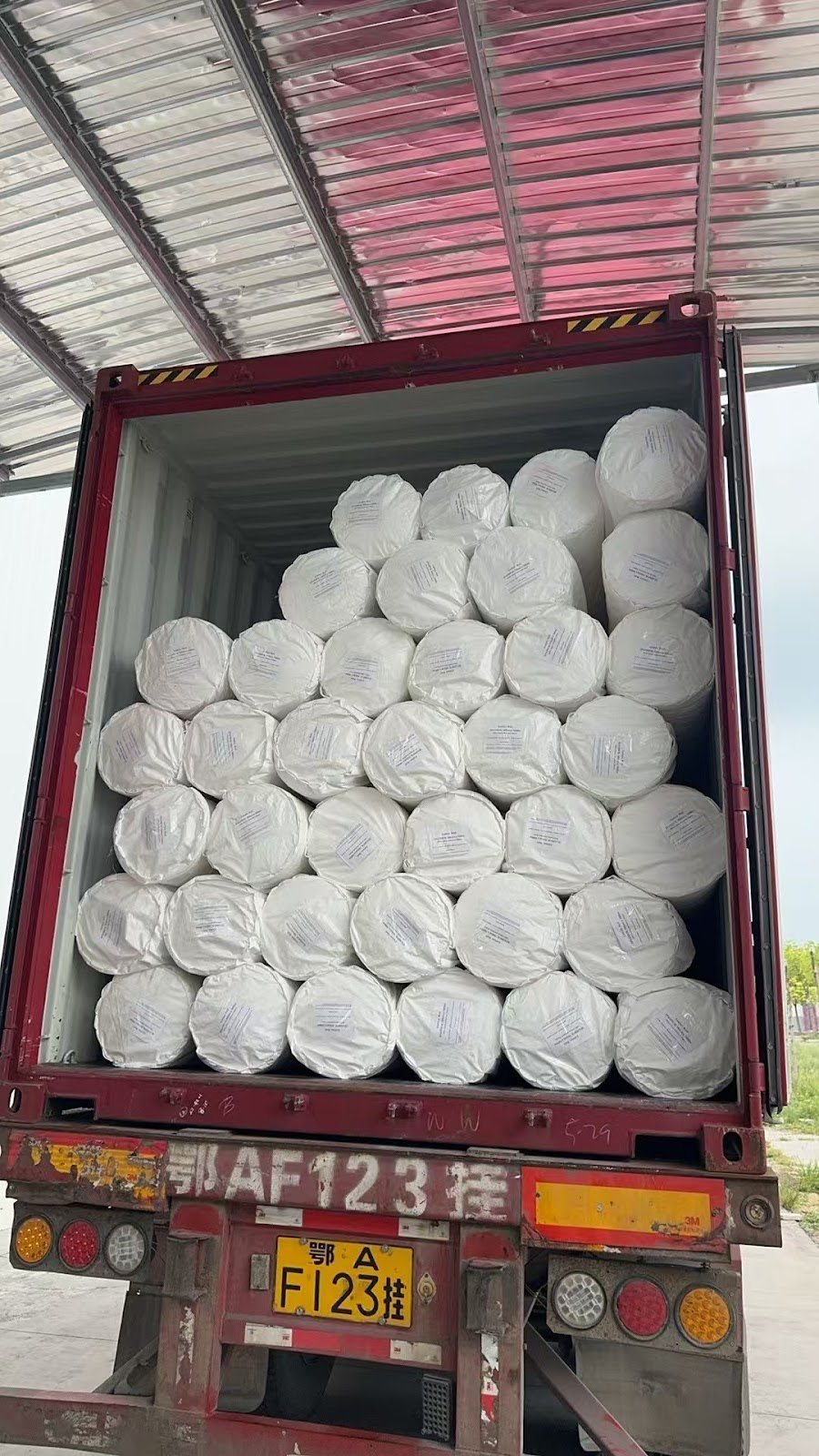
Documentation is checked and once it is passed, the manufacturer ships the order. Ocean freight may take 20-35 days to reach most markets. Make sure that the necessary export paperwork is complete: packing list, commercial invoice, bill of lading, certificate of origin and any import documents required by the market (free sale certificate).
Pricing and MOQ Guide
With the knowledge of pricing of laparotomy sponges from Chinese OEM, buyers can make well-informed assessment of their quotations and draw up accurate procurement budget.
There are a number of other variables besides unit price. The total landed cost is the result of product configuration, the volume and the packaging format.
Price Factors
There are a number of factors involved in a laparotomy sponge’s factory price:
- Size: Larger sponges have a higher raw material use—45×45 cm compared to 30×30 cm. The difference is proportional to content of material.
- Ply: The 12-ply sponge is three times the number of gauze layers in the 4-ply sponge. Ply is one of the biggest contributors to unit cost.
- Pre-washing: A small price premium is included for pre-washed sponges, as they have an extra production step – washing and drying. This cost difference is worthwhile for the majority of regulated market buyers.
- X-ray detectability: Adding x-ray detectable thread increases material costs. Woven-in thread is somewhat more expensive than a secondary-insertion chip. The premium is usually a small percentage of the cost of the total product.
- Sterilization: Sterile product is much more expensive than non-sterile product, due to the process cost of sterilization.
- Packaging: Cost of blister pack sterile format is higher than soft pouch format which is higher than bulk poly bag.
- Custom labelling: This requires some initial expense in preparing artwork and plate, but subsequent unit cost is relatively low for large quantities.
MOQ Ranges
The minimum order quantities (MOQ) are different for each product:
- Non-sterile bulk lap sponges (no sterilization) are generally considered to be MOQ of 5,000 to 20,000 pieces per SKU.
- Sterile laparotomy sponges (ETO or gamma, standard format) MOQ is from 500 to 2,000 packs depending on pack configuration.
- Custom OEM specification (Non-standard size, Custom ply, Private label packaging): Usually from 3,000 – 10,000 pieces per custom SKU.
Not all manufacturers have low MOQ for sample approval requests (100-500 pieces) but for first orders, some do. This lets buyers know beforehand if they are going to be buying the product when it is running in full production.
Volume Discount Tiers
Medical textile manufacturers in China usually price their products based on volume. Typically, the following discount levels can be expected:
- Tier 1: MOQ to 5,000 pieces (standard pricing)
- Tier 2: 5,000 to 20,000 pieces (5% to 10% discount from tier 1)
- Tier 3: 20,000 to 50,000 pieces (10% to 18% discount from tier 1)
- Tier 4: 50,000+ pieces (negotiated, can exceed 20% below tier 1)
Hospital systems or distributor networks that have a consistent annual volume should include that context in the RFQ to get improved pricing from the first order. Once the initial qualification process, an annual supply agreement exists, paying a fixed unit price for the total annual volume is worthwhile for a lap sponge wholesale supplier certified relationship.
BKA MED Laparotomy Sponge Capabilities

BKA MED (Hubei Baikang Medical Instrument Co., Ltd.) is a Chinese vertically-integrated medical consumables manufacturer based in Hubei Province, China.
The company is ISO 13485:2016 certified and CE marked, and is also FDA registered for exports. The medical gauze products line includes laparotomy sponges, which are manufactured in a controlled production process where all the necessary production processes are performed in-house, including weaving, bleaching and quality control.
Full Specification Range
BKA MED produces laparotomy sponges in the entire range of specifications needed by hospital procurement and OEM distribution customers.
Available options include:
- Sizes: 20x30cm, 30x30cm, 45x45cm and custom sizes can be requested.
- Ply: 4-ply, 6-ply, and 12-ply
- Thread count: BP 13, BP 17, and BP 20 threads/cm²
- Material: 100% cotton, either pre-washed or unwashed.
- Loop: Blue cotton loop or not.Loop: loop with or without blue cotton.
- X-ray detectability: X-ray Detectable woven-in thread which is available on all size and ply combinations.
- Sterilization : ETO option and gamma irradiation option.
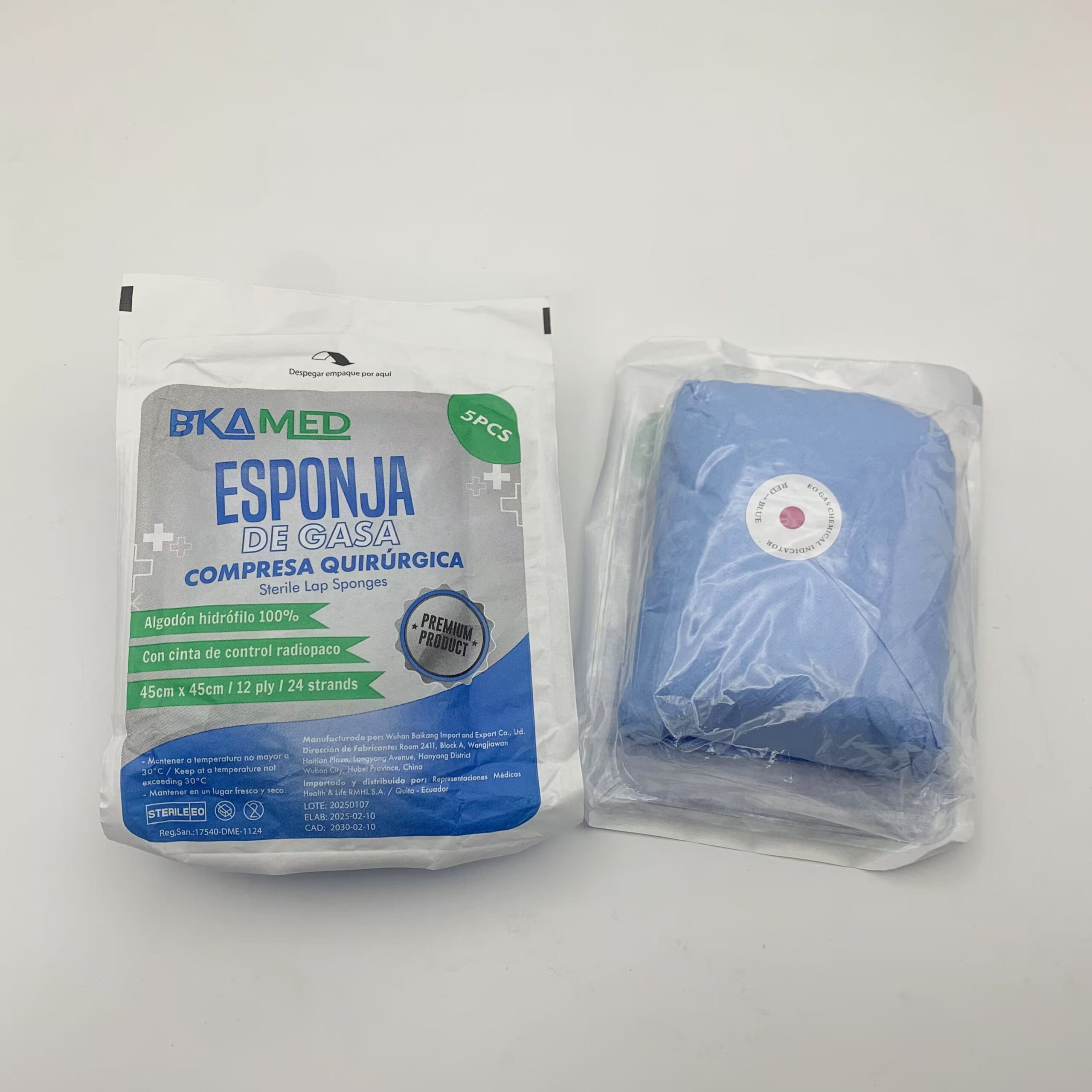
- Packaging: Blister pack (5 pcs), Bulk poly pack (100 pcs) custom packaging etc.
All of the lap sponge types are available for viewing in the BKA MED lap sponges product category.
Certifications
BKA MED is certified for the international procurement buyers’ requirements for the regulated market supply:
- ISO 13485:2016 (Quality Management System for medical device manufacturers) certification.
- CE Marking (EU market access D.o.C.)
- FDA Establishment Registration (US market access)
Qualified buyers can access documentation of biocompatibility testing (ISO 10993) as part of the pre-order documentation package.
OEM Options
The OEM program from BKA MED includes product customization (sizes, plies, thread count, loop colors), packaging design and private label branding.
By manufacturing their own fibers, weaving factory and bleaching facilities, the company is vertically integrated and can incorporate the OEM specifications from the fiber stage, instead of finishing steps.
It’s a decent chain that’s actually beneficial. The integration of detectability thread into the fabric during the manufacturing process is more reliable, and the documentation for that process is easier to follow when it comes to regulatory purposes.
Countries Served
BKA MED serves healthcare buyers and distributors in over 70 countries worldwide such as in Europe, the Middle East, Africa, Southeast Asia, and the Americas. The company has exported products to various countries, most of which have different import regulations, and the documentation team is aware of the import regulations of the major markets.
Buyers considering China options for hospital lap sponge procurement will find BKA MED to be a capable and credible OEM supply partner, as it is certified with quality management, has a vertically integrated manufacturing setup and has a robust export infrastructure.
Place Your Order or Request Samples
Establishing a new relationship with a laparotomy sponge supplier does not require a large financial commitment. The standard starting point is an inquiry, laying out requirements and asking for samples.
What to Include in an Inquiry
An initial inquiry to BKA MED should include:
- Size, ply, sterile vs. non-sterile, x-ray detectable vs. not, loop configuration.
- Required certifications: ISO 13485, CE, FDA (state which are required for the intended market)
- Estimate volume or initial order size
- The market or country that the product is going to.
- Whether OEM or private label is needed and if it is, a brief description of the requirements.
- Whether samples should be taken before committing to production..
Sample Request Process
BKA MED offers samples to the qualified buyers for the purpose of product evaluation. Generally, the sample process would include the following:
- Filling in an enquiry through the BKA MED enquiry form and a specification brief
- Attaining a sample confirmation and logistics arrangement (in most cases the samples are sent by express courier)
- Evaluating samples with the buyer’s clinical and specification requirements
- Providing feedback on the specification for any adjustment prior to approving the specification for production.
The sample stage is the ideal place to test detectability, pre-wash quality, loop integrity and packaging format with x-rays. It is also a good time to go through the certification materials and have technical questions prior to the commercial agreement.
The BKA MED medical gauze laparotomy sponge page offers more product information for the buyer’s specification brief.
24-Hour Response Commitment
BKA MED answers new requests within 24 hours. This responsiveness is significant to procurement teams that are in the midst of tendering or have time-sensitive procurement requirements.
With a mix of ISO 13485 certification, FDA registration, 100% OEM customization, and factory-direct pricing, BKA MED is a good choice when purchasing managers and distributors are looking to expand or add surgical consumables OEM China supplier relationships to their portfolios.
Contact the BKA MED team directly via the enquiry form to place an order for a quotation, sample pack or a technical consultation.
A Practical Guide for Smarter Lap Sponge Procurement
It may seem like a straightforward deal, but sourcing laparotomy sponges from a Certified Chinese OEM manufacturer is a structured process. The product has an actual clinical implication. The detectability of X-rays, pre-washed construction, thread count and proven certifications are not just nice to have, but prerequisites for a compliant and clinically safe supply.
A well-qualified supplier offers all of them, plus the OEM flexibility to match specific market requirements. BKA MED has it all: ISO 13485, CE, FDA certifications; vertically integrated manufacturing; and a complete line of sterile and non-sterile laparotomy sponge configurations that are available for bulk orders or private labels.
The next step is quite simple. Submit an inquiry, request samples, and start qualification process on a supplier designed for serious healthcare procurement.
