What does a small medical round plaster got to do with patient safety in bulk health procurement? Far more than most many purchasers realize. According to the World Health Organization, in acute care hospitals, out of every 100 patients, 7 in developed countries and 15 in developing countries will acquire at least one health care-associated infection during their stay.
That is why hospitals, NGOs, and distributors can not consider sterile wound care supplies as low-value items. A wholesale sterile adhesive plaster should be sourced with the same discipline as any other medical consumable. That is, having clear specifications, verified compliance, stable production, and reliable delivery.
WHO describes infection prevention and control (IPC) as a practical, evidence-based approach for protecting patients and health workers from avoidable infections. B2B buyers should understand this. It is helpful in making better purchasing decisions, reducing procurement risks, and choosing suppliers that balance quality and continuity on a large scale.
What Is a Medical Round Plaster and Why Does It Come in Sterile Form?
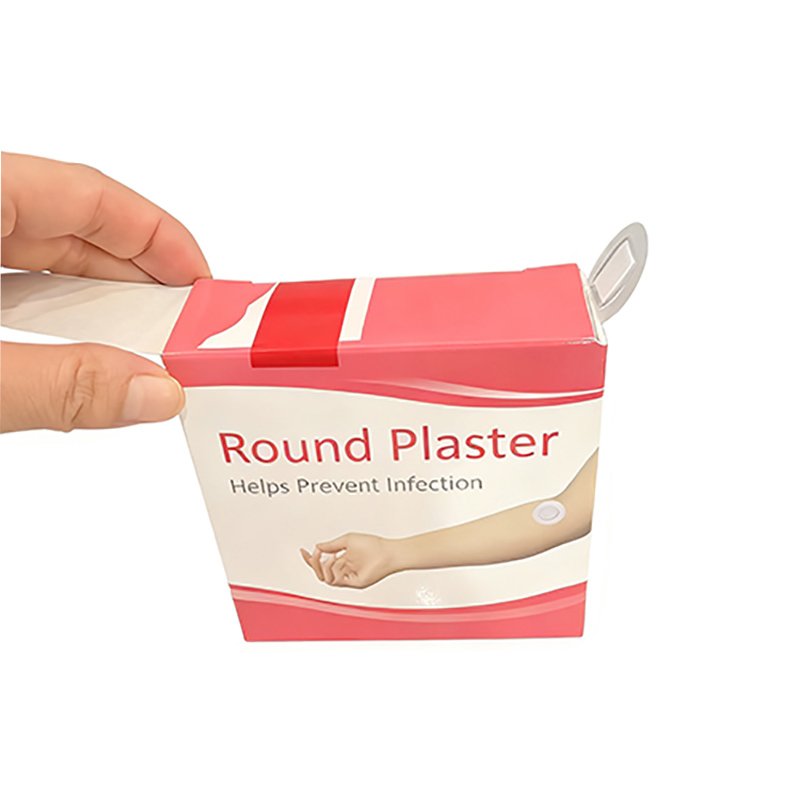
Medical round plaster, also called spot bandage or injection plaster is a small circular adhesive dressing that’s used for:
- Protecting minor wounds
- Injection or vaccination puncture
- Blood collection site, etc.
It’s usually comprised of a soft absorbent pad inside of a round adhesive backing.
Application protects the wound against dirt, rubbing and bacteria. And it also absorbs a small amounts of blood or wound exudate. Superficial cuts and abrasions can be easily covered with adhesive plasters.
A round plaster sticks properly from all directions, unlike the standard strip bandages. The circular shape prevents the bandage from lifting and allows it to be used in situations where there is the risks of rectangular bandages lifting.
Wholesale sterile adhesive plaster products are a daily necessity for a hospital, vaccination and blood donation centers, diagnostic laboratories, NGOs and emergency response agencies. They are low cost, easy to apply and can be used to treat millions of minor procedures per year.
Why Does a Medical Round Plaster Come in Sterile Form?
A medical round plaster is sterile because it is used directly over broken skin, like injection areas, blood collection puncturs, minor cuts and small surgical wounds. Once the skin is broken, it is no longer protected from invading bacteria and other microorganisms.
A sterile dressing is helpful in protecting the wound from contamination during early stages of healing. Usually, modern wound dressings are supplied in sealed sterile packaging to reduce the risks of infection when dressing the wound for the first time.
Reduces the Risks of Infections
The main reason for sterilization is reducing the chances of introducing bacteria, viruses, or fungi into an open wound. Even a small needle puncture can become infected if contaminated materials are in contact with it.
Sterile medical round plasters are manufactured and packaged under controlled conditions. This is helpful in ensuring that they are free of viable microorganisms until the package is opened.
Protects Fresh Injection and Blood Collection Sites

Medical round plasters are widely used after:
- Vaccinations
- Blood donation
- Blood sample collection
- Intravenous (IV) catheter removal
- Intramuscular injections
- Minor dermatological procedures
These leave tiny holes in the skin, and should be wrapped with a sterile dressing to prevent contamination from your hands, clothing, or the surrounding environment.
Supports Safe Clinical Practice
Hospitals, clinics, and laboratories follow strict infection prevention protocols. The use of sterile adhesive plasters aligns with these practices by ensuring that wound dressings do not introduce microorganisms into the treatment area. In other words, maintaining sterility is a fundamental part of reducing healthcare-associated infections.
Maintains Sterility Until Use
A medical round plaster is normally packaged in an individual peel pouch immediately after being sterilized. The packaging protects the dressing from dust, moisture, and microorganisms during storage and transportation. Once the package is opened, the product is no longer considered sterile. That is why each plaster is intended for single use only.
Suitable for High-Risk Healthcare Environments
Sterile medical round plasters are important in any setting where infection control measures are vital. For example in:
- Hospitals
- Outpatient clinics
- Emergency departments
- Blood banks
- Vaccination centers
- Surgical units
- Mobile healthcare clinics
Healthcare providers rely on wholesale sterile adhesive plaster products as they provide a consistent and hygienic solution for routine patient care.
Meets Regulatory and Procurement Requirements
Healthcare organizations specify sterile dressings in their procurement requirements. B2B buyers sourcing medical round plaster for tender procurement, CE certified round adhesive plaster wholesale, or products from a round plaster supplier for hospitals often require documentation confirming:
- Validated sterilization
- Individual sterile packaging
- Vompliance with applicable medical device regulations
These requirements are helpful in ensuring that the product is safe and consistent across large-volume purchases.
Extends Shelf Life and Product Integrity
Sterile packaging is also helpful in preserving the plaster’s quality during storage. The sealed pouch protects the adhesive, absorbent pad, and backing material from environmental contamination. This makes the product ready for use throughout its validated shelf life, as long as the packaging remains intact.
What Makes a Medical Round Plaster Different?
Even though a medical round plaster appears simple, it is carefully engineered to perform several functions simultaneously. A typical product will contain:
- A breathable adhesive backing
- A sterile absorbent wound pad
- Skin-friendly medical adhesive
- Protective release paper
- Individual sterile packaging
Its absorbent center cushions the wound, soaking up small amounts of blood and/or fluid. The adhesive border keeps the dressing securely attached without covering the wound itself.
Medical round plasters are available in different diameters. For example 20 mm, 22 mm, 25 mm, and 30 mm. The right size of the medical round plaster depends on its intended application.
Healthcare facilities frequently purchase these products through a round plaster supplier for hospitals. That is because they require consistent quality, standardized sizing, and reliable supply.
The Wholesale Market for Sterile Adhesive Plasters
Market Size and Growth
The wholesale market for sterile adhesive plasters (part of the larger adhesive bandage category) is continuously growing. The global adhesive bandages market is estimated at $3.46 billion in 2025 and is expected to reach $4.56 billion by 2031. According to a larger medical tapes and bandages report, it places the market at $8.73 billion and is estimated to reach $11.12 billion by 2031.
Why Demand Stays Stable
The demand is steady as sterile adhesive plasters are used in daily routine care. They are useful for injections, blood draws, vaccination follow-up, minor wounds, outpatient procedures, and home care. WHO reports that: in 2025 about 110 million infants worldwide, or 85%, received three doses of DTP vaccine. This keeps the demand high in public health supply chains.
Main Buyer Segments
Primary procurement agencies include laboratories, government procurement units, NGOs, vaccination programmes, hospitals, clinics, and others. They buy in volume as the product is low-cost, fast-moving, and consumed continuously. Such a market behavior is reflected by the magnitude of global chronic care demands such as the 589 million adults with diabetes.
What Buyers Look For
Typical factors that procurement will factor in are sterility, the ability of the adhesive, packaging quality, and documentation. In practice, a buyer comparing a wholesale sterile plaster manufacturer China or a round plaster OEM supplier will focus on the product’s:
- Consistency
- Certification
- Traceability
- Reliable lead times
These requirements are important because sterile dressings are used directly on broken skin. This is where packaging integrity and quality control are necessary.
Pricing and Order Structure
Usually, the price in this case is influenced by order quantity, format of packaging, method of sterilization, customization, etc. This is the reason why buyers often negotiate sterile round plaster MOQ and price before making repeat order. Also, bulk purchasing is common. Especially for distributors and NGOs as it is helpful in reducing unit cost and helps in maintaining supply continuity.
Export and OEM Opportunities
There are many markets in which sterile adhesive plasters are common consumables. Bulk adhesive plaster exporter for NGOs or a CE certified round adhesive plaster wholesale supplier attracts businesses by combining compliance, packaging flexibility, and dependable shipment capacity. OEM services are just as important as the product itself for many B2B buyers.
The wholesale sterile adhesive plaster market is stable, high volume, and procurement driven. Immunization campaigns, chronic care, outpatient services and humanitarian health care all contribute to growth. For B2B buyers, the best supplier is the one that can deliver sterile quality, consistent supply, and competitive pricing.
7 Key Specifications You Must Define Before Contacting a Wholesale Supplier
Purchasing a medical round plaster or buying a medical plaster in bulk adhesive sterile plaster is not a price discussion. It’s essential to have a clear spec sheet that outlines what it is you want, how you’ll use it, and the documents you’ll get with every delivery before you reach out to a supplier.
The procurement guidance in WHO says technical information, packaging, documentation and regulations need to be communicated before. It’s because specifics affect the value and functions of the final wholesale sterile adhesive plaster supplies. So, here are the 7 specifications you must define before contacting a wholesale supplier:
Product Size, Shape, and Application Use
The first specification to be determined is the specific format of the product. A medical round plaster may look simple. However, B2B buyers need to state the diameter, pad size, overall thickness, and the intended use case. A plaster for vaccination aftercare may not need the same dimensions as one for blood collection or routine outpatient care.
That simply means, the medical round plaster supplier should not guess the size on your behalf. The more precise your request, the easier it is for a round plaster supplier for hospitals or a round plaster OEM supplier to give a correct quote.
Material Construction and Skin Contact Components
The second specification is the material composition of the medical round plaster. Backing material, absorbent center pad, adhesion characteristics and any possible skin contact should be indicated. ISO 13485 is the basic quality management system that is employed in the production of medical devices.
Here it’s important that material consistency and documented process control is provided. For products intended to enter into clinical use, the healthcare purchaser should also find out how sensitive the adhesive is to human skin as well as if the wound pad is non adherent. That’s because these are the parameters that impact a patient’s comfort and their utilization throughout their day.
Sterility Requirements and Sterilization Method
Third specification is whether or not the product needs to be sterile when delivered. If so, how will the sterility be achieved?
It is a mandatory requirement in the RFQ that a wholesale sterile adhesive plaster be included. A medical device sterilized by ethylene oxide should be placed in a gas-permeable package, says FDA. It should permit passage of the sterilant, meaning there is a direct connection between the sterilization method and package design.
Note: WHO guidelines also stipulate that the packaging must be qualified for contamination control if the packaging is to be sterilized in a sealed package, and also that it is compatible with the sterilisation process selected.
Packaging Format and Sterile Barrier Integrity
Packaging system is the fourth Specification. It is important that buyers define whether they need individual peel pouches, bulk inner cartons, dispenser boxes, or hospital cartons. The packaging seal must preserve the sterile barrier until use if the products are sterile.
The WHO guidance states that:
- The sealing process should be validated.
- The package should be qualified for reducing microbial and chemical contamination.
- The integrity of the sterile protective barrier should be checked before use.
This is especially important for tender buyers and distributors because packaging failure can turn a compliant product into stock that can not be used.
Shelf Life, Storage Conditions, and Transit Requirements
Shelf life and storage and shipping requirements is the fifth specification. The guidance of WHO procurement clearly states that shelf life, transport, storage and labelling requirements should be specified when applicable. This is crucial, as sterile medical consumables are often transported over long distances (by sea, air and land).
This means that the packaging needs to be achieved to protect the goods during shipping and storage. The supplier is always required to inform you about the validated shelf life and recommended storage temperature. Similarly, it’s worth knowing carton strength before placing an order when you are sourcing for an NGO or hospital.
Regulatory Status and Compliance Documents
The sixth specification is regulatory compliance. If you are sourcing for the EU market, sterile medical devices must meet the Medical Device Regulation (MDR) requirements, bear the CE mark, and have the applicable technical documentation and declaration of conformity.
The EU guidance also notes that if a device is supplied sterile, involvement of a notified body is required. To the buyer, this means that the seller should be able to give the following information prior to shipment:
- Certificates
- Test reports
- Sterilization validation
- Quality system evidence
- Product classification information
For international procurement, this is where a CE certified round adhesive plaster wholesale offer becomes valuable. It provides a more transparent compliance journey for hospitals, tender teams and importers.
This is important particularly when the product is being reviewed for registration, import clearance, or public-sector purchasing. Also, WHO procurement guidance suggests that the regulatory approval and certification requirements (e.g., FDA approval, CE marking) should be specified in the technical specification itself.
Commercial Terms: MOQ, Lead Time, Customization, and Pricing Structure
The seventh specification is commercial, but it belongs in the technical brief. Before speaking with any wholesale sterile plaster manufacturer China or bulk adhesive plaster exporter for NGOs, it’s important to define:
- Minimum order quantity (MOQ)
- Target price band
- Lead time
- Branding needs
- Carton configuration
- Whether you require OEM or private-label services
This is important because the same factory may quote different prices depending on whether or not you need standard packaging, custom artwork, multilingual labels, barcode printing, or export cartons designed for long distance shipment. The actual sterile round plaster MOQ and price are directly related to the packaging complexity and volume of orders.
Why These Specifications Matter
Defining these 7 specs before contacting a supplier:
- Reduces back-and-forth
- Lowers the risks of receiving the wrong product
- Makes price comparisons more accurate
- It give the supplier a clearer basis for quoting a medical round plaster for tender procurement or a repeat hospital supply contract
This improves speed, helps prevent compliance errors, and makes it easier to ditch trading companies, which might not have the ability to support clinical supply needs.
A Simple RFQ Mindset
A strong RFQ for a sterile round plaster should be a procurement brief, not a casual inquiry. It should clearly specify the exact:
- Size
- Material
- Sterility requirement
- Packaging format
- Shelf life
- Regulatory expectation
- Commercial terms
It is the fastest way to get a useful quote from a round plaster supplier for hospitals. Furthermore, it is the cleanest way to compare medical round plaster suppliers on equal terms.
A medical round plaster looks simple. However, wholesale buying is not easy at all. Best performing suppliers like BKAMED can provide the right size, sterile barrier, compliance documents, and commercial terms without confusing buyers. Defining these specifications makes the sourcing process faster, accurate, and professional.
How to Find and Evaluate a Wholesale Sterile Round Plaster Supplier
Finding the right supplier for medical round plaster products is about much more than comparing prices. A good supplier should always be able to supply you with sterile quality products, comply with regulations and be able to assist you with your long term business objectives. The right manufacturing partner can reduce procurement risks and improve supply chain stability.
Here are the important steps on how to check a qualified wholesale sterile adhesive plaster supplier:
Define Your Purchasing Requirements First
Before contacting suppliers, you need to have a detailed purchasing specification. Your document should include:
- Product size and diameter
- Sterility requirements
- Packaging format
- Material specifications
- Required certifications
- Annual purchasing volume
- Delivery schedule
- Private-label or OEM requirements
Providing clear specifications helps suppliers prepare accurate quotations and reduces misunderstandings later in the procurement process.
Look for Manufacturers With Medical Device Experience
Experience is important when it comes to medical manufacturing. A supplier that has produced sterile adhesive plasters for long like BKAMED is more likely to have quality control processes in place and have mature production processes.
Ask questions such as:
- How long have you been manufacturing medical round plasters?
- Which countries do you currently export to?
- Do you supply hospitals, distributors, or NGO’s?
- Can you provide customer references?
A professional round plaster distributor for hospital will be aware of documentation requirements, shipping overseas and regulatory requirements.
Verify Quality Management Systems
Quality management is one of the most important evaluation criteria. Medical device manufacturers should operate under a recognized quality management system such as ISO 13485. This requires organizations to establish processes for supplier selection, evaluation, monitoring, and re-evaluation based on product risk.
Request copies of:
- ISO 13485 certificate
- Quality manual (if appropriate)
- Manufacturing process overview
- Internal quality procedures
Also verify that the certification scope covers the products you intend to purchase rather than assuming every product made at the facility is included.
Confirm Regulatory Compliance
If you are importing into regulated markets, ask the supplier for all relevant compliance documents before placing an order. Depending on your destination market, these may include:
- CE documentation
- Declaration of Conformity
- Sterilization validation
- Product specifications
- Technical documentation
- Test reports
When purchasing CE certified round adhesive plaster wholesale products, make sure that the vendor can provide an explanation on how the adhesive plaster meets regulatory requirements or standards, rather than just sending a certificate.
Evaluate Manufacturing Capacity
Production capacity determines whether the supplier can support your business as it grows or not. Ask about the:
- Monthly production capacity
- Production lead time
- Number of production lines
- Expansion capability
- Peak-season capacity
This is particularly important for organizations involved in medical round plaster for tender procurement. That is where large volumes must often be delivered within strict deadlines.
Assess Sterilization and Packaging Processes
Medical round plasters come into direct contact with broken skin. That means the sterilization and packaging should receive special attention. Ask suppliers:
- Which sterilization method is used?
- How is sterility validated?
- Is every plaster individually packaged?
- How is packaging integrity tested?
A professional wholesale sterile plaster manufacturer China should be able to explain the sterilization process and provide supporting documentation.
Review OEM and Customization Capabilities
Many distributors prefer selling products under their own brands. A good round plaster OEM supplier must be able to provide you with a wide range of services including:
- Private-label packaging
- Custom logo printing
- Multilingual labeling
- Custom carton design
- Barcode printing
- Product size customization
OEM capability allows distributors to build their own product portfolio without investing in manufacturing facilities and equipment.
Compare MOQ, Pricing, and Commercial Terms
Price should never be the only factor. When it comes to choosing wholesale sterile adhesive plaster suppliers, here are some of the points to take into consideration:
- Minimum order quantity (MOQ)
- Unit pricing
- Shipping terms
- Payment conditions
- Lead times
- Packaging options
- Warranty and replacement policies
Understanding sterile round plaster MOQ and price helps buyers estimate total procurement costs and compare quotations fairly.
Request Product Samples
Before committing to a large wholesale sterile adhesive plaster orders, request samples for evaluation. Inspect:
- Adhesive strength
- Pad absorbency
- Packaging quality
- Ease of opening
- Product appearance
- Label accuracy
Quality differences which cannot be identified from product catalogs are often discovered in samples during their evaluation.
Evaluate Communication and Customer Support
The responsiveness of a supplier is usually an indicator of how they will perform in the future. Consider:
- Response time
- Technical knowledge
- Willingness to answer questions
- Documentation quality
- English communication skills
- After-sales support
Effective communication is particularly crucial when it comes to managing repeat orders or resolving shipping problems.
Check Export Experience
International buyers benefit from suppliers with proven export experience. Check if the company can supply export documents, customs clearance formalities and logistics support, as well as experience in shipping to your target markets.
This is very useful when working with a bulk adhesive plaster exporter for NGOs. That is where shipments often need to reach multiple countries under tight timelines.
Consider Supplier Audits
For high volume wholesale sterile adhesive plaster purchases or long term partnerships, consider conducting a supplier audit. An audit should evaluate:
- Production processes
- Quality controls
- Warehouse management
- Traceability systems
- Corrective action procedures
- Employee training
The ISO 13485 industry guidance emphasizes on a continual evaluation, monitoring and supplier qualification process, rather than a single validation.
Build a Long-Term Partnership
The best wholesale partnerships include going beyond a single order. A good supplier will:
- Maintain consistent product quality
- Deliver orders on schedule
- Communicate proactively
- Support regulatory requirements
- Adapt to changing customer needs
Long term partnerships often lead to better pricing, priority production scheduling, and improved collaboration on new product development.
When selecting a sterile adhesive plaster manufacturer, it is important to consider these aspects of quality control, regulatory compliance, production capabilities, sterilization methods, and commercial reliability. Instead of getting the cheapest quotation, buyers should look for suppliers with a proven history of technical expertise, clear documentation, and reliable service.
Certifications and Compliance
Certifications and regulatory compliance are as crucial as the quality of medical round plaster. Manufacturers should provide evidence confirming their products conventionally conform to internationally verified standards in quality, safety, sterility, and regulatory requirements.
When choosing a wholesale sterile adhesive plaster supplier, make sure to ask to see all of the necessary certificates and confirm they are valid, current, and applicable to your product(s). So, the most crucial certifications and standards are:
- ISO 13485 (Quality Management System for Medical Devices): This shows that the manufacturing company has an in-line quality management system developed just for the medical device sector applying to design, manufacturing and shipment.
- CE Mark (European Union Medical Device Regulation): It shows the medical round plaster meets the applicable safety, performance, and regulatory requirements for sale in the European Economic Area.
- ISO 11135: Applies to medical products that are sterilised with ethylene oxide (EO). It defines criteria to be used to develop, validate and continuously control the EO sterilization process.
- ISO 11137: Applies to radiation sterilization — gamma and electron beam. It sets the quality and productivity requirements for the validation and control of radiation sterilisation processes of medical devices.
- ISO 11737: Microbiological methods to determine bioburden and to verify the efficacy of the sterilization process are defined, in addition to addressing specific microbiological control issues in the manufacturing of sterile products. It helps manufacturers to demonstrate the sterility of their products consistently meets the required level.
- Declaration of Conformity (DoC): A declaration issued by the manufacturer that the product meets all relevant standards and requirements of the applicable regulations for its intended use and application.
- Sterilization Validation Reports: Documents that the sterilisation process is validated and that sterile medical devices are consistently produced/supplied according to recognised international standards.
- Biocompatibility Testing (ISO 10993 Series): Verifies that it is safe to use the adhesive, wound pad and backing on skin.
- Free Sale Certificate (when applicable): Legal proof of the availability of a product in the manufacturer’s country of origin. This is a document that is normally required during the product registration or customs clearance process by many importing countries.
The Bulk Order Process
There’s more to bulk order medical round plaster than just a purchase order. Using a well-defined procurement process is important in ensuring buyers have the right product, comply with the required regulations, and prevent expensive delays. Whether you are sourcing from a wholesale sterile plaster manufacturer China or a round plaster OEM supplier, following these steps will ensure the purchasing process efficient.
Step 1: Define Your Product Requirements
Before getting in touch with suppliers, you should do a careful product specification first. Add the following pieces of information:
- The size and diameter of the product
- Sterility requirements
- Adhesive type
- Packaging configuration
- Required certifications
- Quantity required
- OEM or private label specifications
Clear specifications is helpful for suppliers to prepare accurate quotations and to minimise mistakes in production.
Step 2: Identify and Shortlist Qualified Suppliers
Search for manufacturers that specialize in sterile medical consumables rather than general trading companies. When evaluating suppliers, look for those who have:
- Experience in manufacturing medical round plasters.
- ISO 13485 certification.
- Export experience.
- OEM capabilities.
- Positive customer references.
- Stable production capacity.
Narrow down your options to three or five suppliers before sending out RFQs.
Step 3: Submit a Request for Quotation (RFQ)
In order to provide a level playing ground, serve each shortlisted supplier the same RFQ. A full RFQ will contain:
- Product specifications
- Estimated annual demand
- Packaging requirements
- Delivery destination
- Preferred shipping terms
- Required certifications
- Target delivery date
Full information enables suppliers to give an accurate quote and production schedules.
Step 4: Compare Quotations
Don’t just select the lowest price supplier! When comparing quotations consider:
- Unit price
- Minimum order quantity (MOQ)
- Production lead time
- Packaging options
- Certification status
- Payment terms
- Shipping terms
- Warranty and after-sales support
For many buyers, understanding the sterile round plaster MOQ and price is just as important as evaluating product quality.
Step 5: Request Product Samples
Before placing a bulk order, request samples for evaluation. Examine each sample for:
- Adhesive performance
- Pad absorbency
- Sterile packaging quality
- Product appearance
- Label accuracy
- Ease of application
Sample testing ensures that a product meets your technical specifications before it reaches mass production. This provides the added security of knowing the product will meet your requirements before commencement of manufacturing.
Step 6: Verify Certifications and Documentation
Always, don’t confirm the purchase until the supplier makes all the necessary documents of compliance available. These commonly include:
- ISO 13485 certificate
- CE documentation (where applicable)
- Sterilization validation reports
- Product specifications
- Declaration of Conformity
- Test reports
Analysis of documentation in the early stage is important to prevent regulatory problems on importation and procurement.
Step 7: Confirm the Purchase Order
Once a supplier has been chosen, a formal Purchase Order (PO) can be sent out. The PO should clearly specify:
- Product description
- Quantity
- Unit price
- Total order value
- Packaging requirements
- Delivery schedule
- Payment terms
- Shipping terms
- Inspection requirements
After the purchase order is accepted by both sides, the manufacturing process can start.
Step 8: Production and Quality Control
Good manufacturers carrying out quality checks at the production stage to ensure that the products correspond to the agreed quality specifications. Some good quality checking may encompass:
- Raw material inspection
- Adhesive testing
- Packaging inspection
- Sterility validation
- Final visual inspection
- Batch traceability
Many buyers also request production updates prior to shipping.
Step 9: Arrange Shipping and Logistics
When production is finished, double check shipping details. Discuss:
- Shipping method
- Incoterms (such as FOB, CIF, or EXW)
- Export documentation
- Insurance
- Estimated delivery date
- Customs requirements
Having the right shipping terms could make a huge difference when shipping internationally.
Step 10: Receive, Inspect, and Approve the Shipment
When the products arrive, inspect the shipment before accepting it. Verify:
- Product quantity
- Packaging condition
- Batch numbers
- Expiration dates
- Certification documents
- Product quality
Any discrepancies should be reported immediately so they can be resolved while supporting documentation is readily available.
Step 11: Build a Long-Term Supply Partnership
Procurement success doesn’t stop once products are delivered. Assess the supplier on the following:
- Product consistency
- On-time delivery
- Communication
- Responsiveness
- Documentation accuracy
- Ability to support future orders
Sustainable procurement can bring about more favorable prices, priority production agreements and stable supply chains.
The bulk ordering process must be well-run to minimise risks in procurement and ensure supply is reliable. Following a structured workflow — from defining specifications and evaluating suppliers to inspecting the final shipment — is important. It gives buyers the confidence in sourcing wholesale sterile adhesive plaster products.
How Hospitals and NGOs Structure Wholesale Plaster Procurement
Hospitals and NGO’s use a structured procurement system to buy medical consumable products, like a medical round plaster. The purpose of these systems is to assure product quality, regulatory compliance, cost and continuous supply.
While procurement procedures vary by country and organization, most follow internationally recognized public procurement principles based on transparency, competition, accountability, and value for money. These practices are encouraged by WHO and UNICEF in worldwide healthcare supply chains.
Demand Planning and Forecasting
Demand Planning is the first step in the procurement process. Hospitals forecast future consumption from historical purchasing data, patient volumes, inventory levels and projected clinical activity. NGO’s predict the demand according to the humanitarian programmes, vaccination campaigns, disaster response operations, and projects that are funded by donors.
Rather than purchasing supplies only when stock runs low, organisations create plans to buy ahead of time, months before supplies are needed, to minimise stock out situations and aid them in budgeting. UNICEF, for instance, employs state-of-the-art planning and forecasting to keep needed medicines in stock in over 160 countries.
Purchase Requisition and Product Specification
After demand is identified, a clinical department/program manager will prepare a formal purchase requisition. These requests contain detailed product specifications. For sterile round plasters, healthcare buyers typically specify:
- Product dimensions
- Sterility requirements
- Packaging configuration
- Shelf life
- Regulatory certifications
- Required quantity
- Delivery schedule
Creating standardized specifications gives procurement teams a level playing field. WHO recommends defining technical requirements before initiating the procurement process.
Competitive Supplier Solicitation
Once approved, procurement teams invite suppliers to bid. Depending on the organization policy and contract value, the buyer can issue the following:
- Requests for Quotations (RFQs)
- Invitations to Bid (ITBs)
- Requests for Proposals (RFPs)
According to WHO, competitive procurement helps to ensure openness and fairness to all qualified suppliers. Most organizations have well-defined evaluation criteria and ask for technical and commercial proposals from suppliers.
Supplier Evaluation and Contract Award
Price is not the only consideration for selecting a supplier. Typically, evaluation committees evaluate:
- Compliance with technical specifications
- Manufacturing quality systems
- Regulatory documentation
- Product quality
- Manufacturing capacity
- Delivery performance
- Financial stability
- Overall value for money
WHO also conducts due diligence of the supplier before contracting. That means checking back on their track record and ensuring that bidders are eligible.
Centralized Procurement Governance
There are many health care systems where procurement is centralized and not a part of individual departments or facilities. Centralized procurement provides organizations with the ability to:
- Standardize medical products across facilities.
- Consolidate purchasing volumes.
- Negotiate better contract terms.
- Improve inventory visibility.
- Reduce duplicate purchasing.
- Strengthen supplier oversight.
WHO has three levels of procurement: global, regional and country procurement offices. Similarly, many national health systems use similar centralized purchasing models.
Pooled Procurement for Greater Purchasing Power
Pooled procurement arrangements are conducted by many hospitals, ministries of health, UN agencies and NGOs.
Under this model, multiple organizations combine their purchasing requirements into one procurement program. A bigger purchasing volume creates stronger negotiating power, better pricing, and improved supply security.
WHO identifies several pooled procurement models, ranging from joint market research and group contracting to fully centralized procurement. These are controlled by organisations like UNICEF and International procurement agencies.
This is especially useful for high volume healthcare products such as sterile adhesive plasters. That is where lower unit costs can make a big difference in national health care and humanitarian programmes.
Compliance, Documentation, and Audit Controls
Hospitals and NGOs maintain detailed procurement records throughout the purchasing cycle. The documentation typically includes:
- Technical specifications
- Tender documents
- Supplier evaluations
- Contracts
- Delivery records
- Inspection reports
- Payment records
International NGOs comply with donor procurement requirements, which require transparent purchasing procedures and complete audit trails. UNICEF’s procurement policies emphasize fairness, transparency, effective competition, and best value for money throughout the procurement process.
Long-Term Supply Agreements
Instead of purchasing through one-off transactions, healthcare organizations establish long-term partnerships with approved suppliers. These contracts provide:
- Stable pricing
- Predictable delivery schedules
- Simplified purchasing
- Consistent product quality
- Improved supply continuity
WHO also uses long-term agreements for many other categories of goods and services. This is helpful in improving procurement efficiency and reducing administrative workload.
Strategic Procurement Focus
Hospitals and NGOs keep a record of procurement throughout the procurement cycle. The documentation will normally contain:
- Clinical performance
- Product quality
- Supplier reliability
- Regulatory compliance
- Total cost of ownership
- Supply chain resilience
WHO describes strategic purchasing as deciding what to buy, from whom to buy, and how to allocate resources efficiently to meet healthcare needs. Similarly, UNICEF evaluates offers based on the optimal combination of quality, cost, delivery time, and sustainability and not the price alone.
Private Label and OEM Options for Distributors
Private label and OEM programs provide the distribution channels with increased competitive power to compete in the medical round plaster market.
Distributors can build their own brand, control their packaging, and create a more recognizable offer for hospitals, clinics, pharmacies, and tender buyers. For many wholesale buyers, this is where a simple wholesale sterile adhesive plaster becomes a long term business asset.
Why Private Label Matters
Private label helps distributors stand out in a crowded market. A product like medical round plaster is useful, widely needed, and easy to compare across suppliers. That makes branding important.
When a distributor places its own name on the carton and outer packaging, the product becomes easier to position in the market and easier to repeat across sales channels. Private label also helps create customer loyalty because buyers start associating the product with the distributor, not just the factory behind it.
How OEM Supports Distributor Growth
OEM gives distributors more flexibility than simple resale. A round plaster OEM supplier can usually support custom carton design, branded labels, pack-count changes, barcode placement, and market-specific instructions.
This matters because different buyers want different formats. A hospital may prefer bulk cartons. A pharmacy chain may want shelf-ready retail packs. An NGO may need simple, durable packaging for field distribution. OEM allows the distributor to match the product to the channel instead of forcing every customer into the same format.
What Distributors Should Customize
Not every part of the product needs to change. In many cases, the best OEM strategy starts with a standard medical round plaster and then customizes the brand presentation around it.
Distributors often begin with outer carton design, logo placement, language changes, and pack count. Once the market responds well, they can expand into more advanced changes. This approach keeps the launch faster and reduces unnecessary cost.
For a wholesale sterile adhesive plaster, the most important customization points are usually:
- Brand name and logo
- Carton artwork
- Inner box layout
- Language and labeling
- Pack count per box
- Barcode and SKU structure
- Market-specific compliance text
These details may look small, but they affect how easily the product moves through distribution, retail shelves, and institutional procurement systems.
Why OEM Buyers Need a Reliable Supplier
A private label program is only as good as the factory behind it. Distributors need a supplier that can repeat the same product quality across every order. A weak supplier may make a good sample but struggle with consistency later.
That creates risk for the distributor’s brand. A reliable wholesale sterile adhesive plaster partner should be able to maintain product structure, packaging quality, and delivery timing across multiple production runs.
This is why OEM buyers should ask more than just price questions. They should ask whether the supplier can maintain:
- Stable color printing
- Consistent sealing
- Clear labeling
- And dependable lead times
They should also confirm whether the supplier can support repeat orders without changing specifications quietly between shipments. In private label work, consistency is part of the product itself.
OEM for Tender and Institutional Sales
OEM is especially useful when distributors sell into tenders or institutional accounts. A medical round plaster with the distributor’s brand can support better recognition in the market and a cleaner product portfolio. It also helps the distributor organize multiple sizes or pack formats under one family of products.
A good round plaster OEM supplier should understand that tender work requires discipline. The product description must match the sample. The carton must match the artwork approval. The packing list must match the purchase order. When those details are controlled properly, the distributor can present a more professional and dependable offer to the market.
Common Mistakes Wholesale Buyers Make
Weak buying process is a far more likely reason wholesale buyers may lose out on making a profit. This is particularly true for medical round plaster and wholesale sterile adhesive plaster orders, where small details in packaging, sterility, and documentation can cause bigger problems later.
A smart and experienced B2B buyer knows that the supplier quote is only one part of the decision. The real risks begins when there is a lack of clarity in the spec or when the sample is not adequately and correctly inspected, or when orders are not adequately controlled. Here are the most common mistakes wholesale buyers make:
Buying Before Defining the Product Clearly
One of the biggest mistakes is contacting suppliers with a generic request. Most buyers request a medical round plaster, but do not specify the size, sterile, adhesiveness, pack count or shelf life. That results, quotes that can not be fairly compared.
This also can raise the likelihood of getting the wrong product, the one that does not align with the buyer’s actual need. Any wholesale request needs to be clearly and succinctly spelled out in writing before any discussion about price starts.
Focusing Only on Price
Low price looks attractive at first, but it can hide serious weaknesses. Some buyers opt for the least expensive offer for sterile adhesive plaster, but do not review packaging quality, the documents of the supplier or its delivery reliability.
This can result in delays, as well as negatively impacting product consistency and shipments. The lowest unit price that is obtained in wholesale procurement is not necessarily the lowest overall cost. In wholesale procurement, the lowest unit price is not always the lowest total cost. Freight, defects, rework, stock loss, and tender failure can erase any early savings.
Ignoring Supplier Qualification
Another common mistake is skipping supplier verification. Buyers may take one of the company’s pictures or one of the product brochures as sufficient proof of capability. It is not.
A reliable round plaster supplier for hospitals or bulk adhesive plaster exporter for NGOs should be able to offer company information certificates, quality documentation and export experience. If a supplier can not clearly explain how the product is made, packaged, and controlled, then slow down and ask more questions.
Not Checking Samples Properly
Most buyers treat samples as a formality. However, they should be treated as a mandatory test. Sometimes, B2B buyers can approve a medical round plaster sample after a quick visual review, missing out on important issues like:
- Weak sealing
- Poor adhesive balance
- Difficult opening
- Or, inconsistent pad placement
For a wholesale sterile adhesive plaster, packaging integrity is just as important as the plaster itself. Samples must be tested rather than just visually inspected against the purchase specification.
Overlooking Compliance and Documentation
Wholesale buyers also fall into pitfalls when they presume one set of documents is applicable for all markets. That is not true. A medical round plaster for one country may need different labeling, conformity documents, or packaging statements in different market.
Buyers who fail to confirm this early can face customs delays, tender rejection, or internal compliance problems. The documentation should be confirmed before the order is finalized, and not after the production begins.
Failing to Plan for Repeat Orders
Some customers only consider the initial shipments. They don’t ask whether the supplier can repeat the order with the same quality, same packaging, and same lead time or not. This is a mistake. Especially for a product like medical round plaster, which is usually purchased regularly.
A one-time good sample does not guarantee long term supply performance. Therefore, buyers should think about continuity from the start, and not after the first order is already in transit.
Final Lesson
The best wholesale buyers are not in a hurry, they are careful. They clearly explain what they want, and consider information relevant to the product beyond its price. They also check the sample adequately, and make sure that the supplier complies with their requirements before ordering.
This approach protects the buyer, strengthens the supply chain, and makes every wholesale sterile adhesive plaster purchase more reliable. For wholesale sourcing: Discipline is always cheaper than mistakes.
What a Good Supplier Should Be Able to Answer Fast
A good reliable supplier should respond to the following questions quickly and clearly:
- What is the exact structure of the medical round plaster?
- What sterilization method is used?
- What is its shelf life?
- What is the MOQ and price by pack configuration?
- Can the supplier support a sterile adhesive round plaster bulk buy with the requested carton structure?
- Can the supplier provide samples, test reports, and compliance documents?
- Can the supplier support a CE certified round adhesive plaster wholesale offer for the target market?
- Can the supplier deliver as a medical round plaster for tender procurement with exact pack and document requirements?
Generally, a supplier who responds clearly is easier to work with during production and after shipment. However, suppliers who avoid them are not suitable for serious institutional sourcing.
Building a Better Buying Decision
The best procurement program takes medical round plaster as a controlled product, not a commodity. It simply:
- Defines the specifications
- Qualifies the supplier
- Validates the documents
- Tests the samples
- Controls the order through formal paperwork
The process takes more time at the start. However, it creates a smoother business partnership later on. It is helpful as it provides B2B buyers fewer surprises, quality disputes, and delays.
Additionally, a well-run wholesale sterile adhesive plaster procurement process creates room for growth. After buyers get one reliable product and factory, the same supplier can support more sizes, more pack formats, and more private label opportunities. It strengthens the distributor’s portfolio and improves the hospital buyer’s continuity of supply.
The best way to source a medical round plaster is to think in systems. The product is important. But the supplier system matters more. Bulk procurement is much easier to manage and scale when these pieces work together:
- The factory
- Documentation
- Packaging
- Sterilization process
- Contract terms
- And logistics
Why BKAMED Is a Trusted Manufacturer and Supplier of Medical Round Plaster

With manufacturing depth and export readiness, BKAMED is a good option for sourcing medical round plaster. The company is a manufacturer and exporter of first aid, medical, and healthcare products in China. Furthermore, BKAMED has over 30 years experience and multiple production bases in Hubei Province. Such long term operating history suggests process maturity, stable production capacity, and experience in handling international orders.
Built for Bulk and Export Orders
A reputable supplier should be able to supply products in bulk purchases without constant grips and challenges. This is where BKAMED excels. The company is an exporter, and not just a domestic seller. That is important for buyers sourcing a wholesale sterile adhesive plaster for overseas distribution, tender procurement, or private label programs.
The company also emphasizes CE-certified medical disposables and global export availability. This indicates that they are structured to serve institutional buyers that need documentation, packing control, and repeat supply. This makes BKAMED more relevant to wholesale procurement.
Relevant Product Coverage
BKAMED’s wound care products include medical round plasters, with secure wound protection, breathable adhesion, gentle skin contact, and easy removal. These are both practical aspects for hospitals and distributors that impact comfort, handling and end-user acceptance. When a supplier offers a product that is already aligned with clinical use cases, it becomes easier to evaluate that supplier as a round plaster supplier for hospitals or a bulk adhesive plaster exporter for NGOs.
Transparent Company Presence
Another trust signal is visibility. BKAMED publishes their information, including their contact information, and product access on its website. This gives B2B buyers a clearer path to verify the manufacturer before placing an order.
That kind of transparency is important in wholesale sourcing. That is because it’s helpful for the procurement to confirm the identity of a supplier, location, and communication responsiveness. For a medical round plaster, (buyers often need repeat orders and stable quality) visible company information is a practical advantage.
Useful for OEM and Tender Work
BKAMED’s disposable medical portfolio makes it suitable for OEM and tender sourcing. A supplier offering a defined medical round plaster line, export orientation, and multiple healthcare products is usually better positioned to support packaging changes, carton updates, and repeat order programs.
BKAMED is a reliable wholesale sterile adhesive plaster partner. That is because the company boasts manufacturing experience, export readiness, product relevance, and visible details. These are characteristics B2B buyers look for in a supplier.
Final Thoughts
When purchasing medical round plaster in bulk, don’t settle for the lowest quote. Start with the clearest spec, strongest supplier qualification, and the right compliance checks. The right wholesale sterile adhesive plaster supplier will not only sell you a product but also support a process that protects quality, traceability, and long term stability.
A serious buyer should know: what the product must do, how it is sterilized, how it is packaged, what documents it needs, and whether or not the supplier can repeat the result on a large scale. That is the difference between a basic purchase and a reliable wholesale program.
When your procurement team is ready to move, look for a supplier that can offer a clear specification, a stable MOQ, a transparent price structure, and documentation that matches the market. That is how you source a medical round plaster with confidence, creating a dependable supply chain.
Partner with BKAMED for Reliable Medical Round Plaster Supply
If you are looking for a dependable source of medical round plaster, BKAMED is ready to support your order with consistent quality, export experience, and wholesale supply capability. From private label projects to bulk hospital and NGO procurement, BKAMED helps buyers source a wholesale sterile adhesive plaster that matches their specifications and market needs.
Contact us today to request samples, discuss pricing, and confirm the right packaging, compliance documents, and order volume for your business. A reliable supply partner can make all the difference, and BKAMED is prepared to help you move forward with confidence for every wholesale demand you have.
