Injuries are part of life, someone might say, and as the human population continues to age, so does the global wound care market expand. Healthcare systems are also investing in better products that can manage wounds well, including post-surgery care. Among the medical products fueling this growing healthcare market is Zinc Oxide Plaster Tape. It has become a staple medical consumable, thanks to its strong adhesion, durability, and versatility across several clinical applications.
When it comes to sourcing high-quality wholesale Zinc Oxide Plaster Tape, procurement managers might be tempted to focus on pricing at the expense of equally important considerations such as supplier capability, product consistency, certifications, OEM services, and export experience. All these influence long-term procurement success.
This guide explains step by step how you can evaluate wholesale suppliers, understand product specifications, compare factory pricing, verify compliance, and establish reliable sourcing partnerships with manufacturers in China.
Zinc Oxide Tape vs. Zinc Oxide Plaster Tape
Although the terms “zinc oxide tape” and “zinc oxide plaster tape” are sometimes used interchangeably as though they mean the same thing, they do not always describe the same products. So understanding the differences will greatly help procurement managers to specify the correct product, compare supplier quotations accurately, and also avoid purchasing errors during bulk sourcing.
What Is Zinc Oxide Tape?
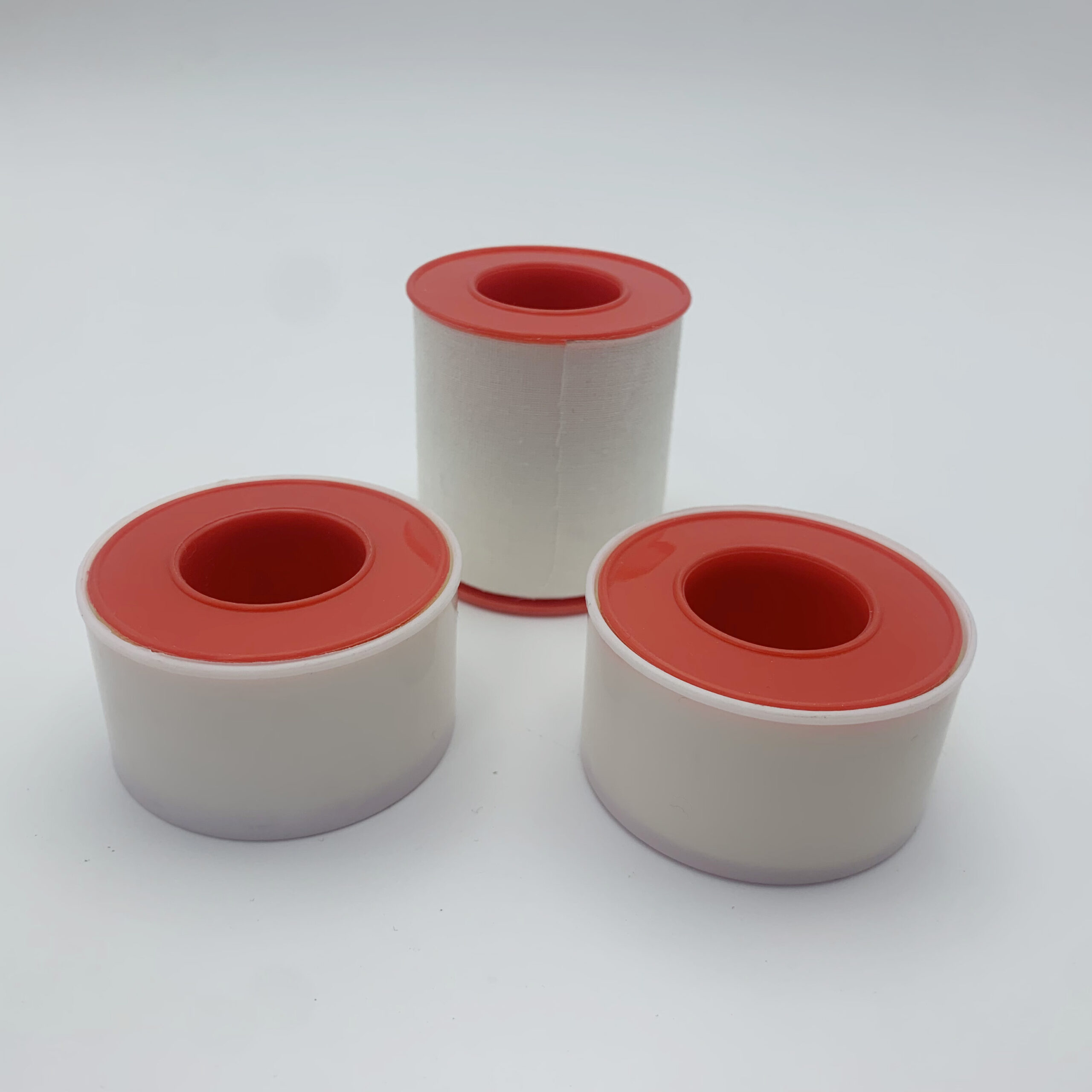
Zinc oxide tape is a kind of tape coated with a zinc oxide-based adhesive that is sensitive to pressure. So it is mostly used for securing dressings, stabilizing joints, supporting muscles, and protecting the skin during medical and sports situations.
Medical personnel like the tape because of its strong adhesion, flexibility, and ability to remain securely in place during movement. Depending on the manufacturer, it may be produced using cotton cloth, rayon, or other backing materials, which can balance strength with comfort.
It is because zinc oxide tape provides dependable fixation while remaining relatively easy to handle that you will find healthcare providers use it in hospitals, outpatient clinics, rehabilitation centers, and sports medicine facilities.
What Is Zinc Oxide Plaster Tape?

Zinc Oxide Plaster Tape is a medical adhesive tape designed to provide secure fixation for dressings, bandages, catheters, and orthopedic support. It achieves this because it combines a woven cotton backing with a zinc oxide adhesive layer.
Compared with standard adhesive tapes, it is designed to offer greater tensile strength and reliable adhesion, making it suitable for situations where dressings must remain firmly in place for extended periods.
Zinc oxide plaster tape also tears easily by hand while maintaining sufficient durability during clinical use, and it’s another reason many hospitals and distributors prefer it. It is one of the most widely stocked adhesive tapes in healthcare facilities since it offers a combination of convenience and performance.
Zinc Oxide Tape vs. Zinc Oxide Plaster Tape: Key Differences Procurement Managers Should Know
Although both zinc oxide tape and zinc oxide plaster tape are products serving similar purposes, procurement managers should understand the technical differences before requesting quotations or approving product specifications.
| Feature | Zinc Oxide Tape | Zinc Oxide Plaster Tape |
|---|---|---|
| Construction | Adhesive tape with zinc oxide coating | Cotton cloth tape with zinc oxide adhesive |
| Tensile strength | Moderate | Higher |
| Common use | General fixation and support | Dressing fixation, orthopedic support, surgical applications |
| Hand tearability | Depends on material | Typically, easy to tear |
| Typical users | Clinics, sports medicine | Hospitals, distributors, healthcare suppliers |
But not every zinc oxide plaster tape is of high quality. That’s why procurement managers should select the appropriate plaster tape by painstakingly evaluating not only adhesive performance but also the consistency of manufacturing and product quality.
When they compare suppliers, it is important that procurement managers verify that quotations refer to the same product specifications. This is because differences in backing material, adhesive formulation, roll dimensions, and packaging can significantly affect both performance and pricing.
Next, let’s explore the clinical and commercial applications that continue to drive global demand for Zinc Oxide Plaster Tape.
Clinical and Commercial Applications Driving Bulk Demand
The demand for Zinc Oxide Plaster Tape continues to grow because it serves a wide range of healthcare and commercial markets. Procurement managers need to understand where this product is used so that they can correctly forecast demand, identify target markets, and determine the most appropriate product specifications.
Here are the places where Zinc Oxide Plaster Tape is often used:
Hospital and Clinical Applications
As expected, the largest consumers of Zinc Oxide Plaster Tape have consistently been hospitals. They use it to secure wound dressings, intravenous lines, catheters, tubing, and medical devices, since it provides dependable adhesion throughout patient treatment.
But clinicians prefer not just any plaster tape but high-quality brands that can keep dressings firmly in place during the recovery period after surgery. For them, product consistency is also a critical consideration when purchasing because dressing failure can increase the risk of contamination or require unnecessary replacement.
In hospitals, Zinc Oxide Plaster Tape is commonly used to:
- Securing wound dressings.
- Post-operative dressing fixation.
- Catheter stabilization.
- IV-line fixation.
- Medical tubing support.
- Splint and bandage reinforcement.
Healthcare procurement teams would rather go for products that provide strong adhesion while minimizing skin irritation. They will also evaluate available packaging options, shelf life, and product traceability to support efficient inventory management across multiple departments.
For a zinc oxide plaster tape supplier seeking hospital contracts, maintaining consistent quality and uninterrupted supply is often just as important as offering competitive pricing.
Sports Medicine and Orthopedic Use
Apart from hospitals, Zinc Oxide Plaster Tape plays an important role in sports medicine and orthopedic care. Athletic trainers, physiotherapists, and orthopedic specialists use the tape to provide joint support, stabilize muscles, and help reduce the risk of injury during physical activity.
The product’s strong adhesive properties make it particularly suitable for situations where ordinary medical tapes may not bear the movement, perspiration, or extended wear.
Typical sports medicine applications include:
- Ankle taping.
- Wrist support.
- Finger stabilization.
- Shoulder strapping.
- Muscle support.
- Injury prevention during training and competition.
Orthopedic clinics also use this tape alongside casts, splints, and compression bandages to improve fixation and patient comfort.
As healthcare providers keep on emphasizing injury prevention and rehabilitation, the demand from sports medicine continues to complement traditional hospital procurement.
Distribution, Retail, and Government Procurement
Commercial demand for zinc oxide plaster tape extends well beyond direct healthcare providers. Medical distributors, wholesalers, government purchasing agencies, humanitarian organizations, and healthcare suppliers all also purchase this medical product in large volumes for redistribution or institutional use.
Many procurement teams prefer to buy zinc oxide plaster tape in bulk because larger purchase volumes generally reduce unit costs and also simplify inventory planning. Distributors also prefer working with a manufacturer who is able to supply consistent product quality across multiple shipments.
All in all, organizations that frequently procure the product include:
- Medical supply distributors.
- Healthcare wholesalers.
- Government procurement agencies.
- Military medical services.
- Humanitarian and disaster relief organizations.
- International NGOs.
- Pharmacy supply chains.
- Regional healthcare networks.
For a zinc oxide plaster tape distributor, essential selection criteria involve reliable production capacity, flexible packaging options, and dependable export support. These organizations usually deal with multiple customers with varying requirements. This alone makes consistency across production batches particularly important.
But which are the key product characteristics that should be evaluated before selecting a wholesale supplier or approving a bulk purchase order? Let’s explore that in the next section.
Complete Specification Checklist for Procurement Managers
You cannot select the right Zinc Oxide Plaster Tape if you don’t understand the product specifications that directly influence performance, usability, and regulatory compliance. Product evaluation is not all about finding the most affordable supplier, as some procurement teams may assume. Some other procurement managers also only evaluate the tape width while ignoring other critical factors that all contribute to the overall value of the product and the reliability of the supplier.
That said, a proper zinc oxide plaster tape evaluation should consider:
Backing Material and Adhesive Quality
The quality of Zinc Oxide Plaster Tape largely depends on two components: the backing material and the adhesive coating. Both of the components determine how the tape performs during clinical use and how well it withstands handling, movement, and environmental conditions.
Manufacturers often use 100% cotton cloth as the backing material to make high-quality plaster tapes. Cotton is preferred because it provides strong tensile strength while also remaining flexible enough to conform to different body contours. You can also easily tear it by hand, a characteristic which allows healthcare professionals to apply the tape quickly without scissors.
The zinc oxide adhesive used should provide firm fixation without excessive residue after removal. Manufacturers often formulate their adhesives to balance strong initial adhesion with patient comfort, particularly when the tape is worn for an extended duration.
As a procurement manager, these are the product specifications to verify when evaluating a Zinc Oxide Plaster Tape:
- Backing material composition.
- Tensile strength.
- Adhesive consistency.
- Hand tearability.
- Breathability.
- Skin compatibility.
- Moisture resistance.
The only way the procurement teams can be able to assess these characteristics under actual working conditions is by requesting product samples before placing a commercial order.
Available Sizes, Roll Lengths, and Packaging
Zinc Oxide Plaster Tape comes in various sizes. Each size suits a particular clinical requirement. So, hospitals, distributors, and wholesalers usually stock multiple widths to support different medical procedures and customer preferences.
That said, common specifications include:
- Widths ranging from 1.25 cm to 10 cm.
- Roll lengths of 5 m, 10 m, or customized options.
- Individual roll packaging.
- Multipack retail packaging.
- Bulk cartons for institutional procurement.
That notwithstanding, manufacturers that offer OEM services may additionally produce custom dimensions to meet specific market demands or customer branding requirements.
As a procurement manager, you should ensure that all product dimensions, packaging configurations, and labeling details are clearly stated in supplier quotations. This will reduce the possibility of misunderstandings that may arise during production and shipment.
Sterility, Shelf Life, and Storage Requirements
Zinc Oxide Plaster Tape is usually supplied as a non-sterile product. But procurement managers should confirm whether sterile versions are available if their facilities require them.
Conducting stability testing is also important to determine the product’s longevity or shelf life under recommended storage conditions. When the expiry dates and storage instructions are clear, distributors and healthcare facilities are able to effectively manage inventory while minimizing product waste. Indeed, proper storage helps preserve adhesive performance and prevents deterioration before the product reaches end users.
For sterility, longevity, and storage requirements, factors to verify include:
- Sterile or non-sterile status.
- Shelf-life validation.
- Recommended storage temperature.
- Humidity requirements.
- Packaging integrity.
- Expiry date labeling.
Product Labeling and Traceability
Labeling products accurately plays a big role in quality assurance and supply chain management. The result should be that each roll and shipping carton contains sufficient information to support inventory control, regulatory compliance, and product traceability.
A well-labeled product should at least include:
- Product name.
- Dimensions.
- Lot or batch number.
- Manufacturing date.
- Expiry date.
- Manufacturer details.
- Storage instructions.
- Regulatory symbols where applicable.
Distributors often manage more than one warehouse. They also supply several healthcare institutions. That’s why traceability is particularly important for them. Being able to identify a particular batch makes it easy to track products throughout the supply chain. In case of a quality investigation, batch identification also simplifies the process.
Typical Zinc Oxide Plaster Tape Specifications:
| pecification | Typical Options |
|---|---|
| Backing Material | 100% cotton cloth |
| Adhesive | Zinc oxide adhesive |
| Width | 1.25 cm, 2.5 cm, 5 cm, 7.5 cm, 10 cm |
| Roll Length | 5 m, 10 m, or customized |
| Color | White or skin-colored (depending on product) |
| Packaging | Individual roll, multipack, export carton |
| Shelf Life | Typically 3–5 years |
| OEM Availability | Yes |
These product specifications help procurement managers to compare quotations using the right yardstick. However, even the best specifications offered are of little use if the supplier is not able to consistently deliver them. So, the next section explains to you how to identify and evaluate a reliable Zinc Oxide Plaster Tape wholesale supplier before committing to a long-term sourcing partnership.
How to Find and Vet a Zinc Oxide Plaster Tape Wholesale Supplier
There are thousands of zinc oxide plaster tape wholesale suppliers out there. Which ones are suitable? Choosing the right supplier is one of the most important decisions a procurement team can make in the sourcing process.
While product specifications determine whether a tape is suitable for clinical use, the chosen manufacturer’s capabilities determine whether those specifications can be delivered consistently over months or even years. That’s why procurement managers should evaluate suppliers using objective criteria instead of relying just on pricing or claims posted on a website.
An experienced supplier needs to demonstrate the following qualities that reduce operational risks and help ensure uninterrupted supply:
Manufacturing Capability
A worthy manufacturer should be able to produce Zinc Oxide Plaster Tape that always meets agreed specifications. To achieve this, the manufacturer must have manufacturing capability determined by the availability of modern production equipment, standardized operating procedures, experienced technical personnel, among other determinants.
During the evaluation process, the procurement managers sourcing from China should begin by understanding a given company’s production infrastructure by reviewing its manufacturing facilities, equipment, workforce, and experience producing medical adhesive products.
Some important questions to ask the potential supplier include:
- How long has the company consistently manufactured medical products?
- Does it specialize in adhesive medical tapes or produce a broader range of wound care products?
- Are production lines dedicated to medical products, or are there other non-medical products as well?
- Is manufacturing carried out in controlled environments?
- What production technologies are used to ensure consistency?
A manufacturer who has rich experience usually has better process controls in place to reduce inconsistency between production batches.
Production Capacity and Lead Times
Healthcare organizations frequently purchase Zinc Oxide Plaster Tape through scheduled procurement contracts that require reliable monthly or quarterly deliveries. Distributors may also need manufacturers who will respond quickly to seasonal demand or emergency replenishment of a product.
But sometimes it happens that a manufacturer is able to produce the highest-quality products but, unfortunately, is not always able to deliver them on time when an order is placed, or during an emergency. That’s why production capacity should be given as much attention as product quality.
So procurement managers should request information about:
- Monthly production capacity.
- Average production lead time.
- Peak production capability.
- Capacity reserved for OEM customers.
- Inventory management practices.
- Ability to handle urgent orders.
When it comes to lead times, several factors come into play, including order size, raw material availability, production scheduling, and customization requirements.
For example, standard catalog products may be available much sooner than private label orders that require custom packaging or printed cartons. So, understanding these differences will help procurement teams to more effectively plan inventory.
Export Experience
Suppliers should also properly understand the procedures used when exporting products, the requirements of various destination markets, and international logistics.
A manufacturer who has exported products for several years is usually familiar with these. This knowledge reduces the likelihood of shipment delays and administrative complications.
To figure out if the export experience is extensive enough, the procurement managers should determine:
- Which countries the manufacturer currently exports to.
- How many years of export experience the company has.
- Whether it has experience serving hospitals, distributors, or government procurement agencies.
- Which international certifications it maintains.
- Whether dedicated export staff supports overseas customers.
An experienced zinc oxide plaster tape manufacturer export partner should be able to anticipate regulatory requirements even before problems arise. Such anticipation makes the whole process of international sourcing considerably smoother.
Quality Management Systems
A quality management system is put in place by every well-meaning manufacturer to ensure that every production stage follows laid-down procedures rather than relying just on operator experience or skills.
Therefore, procurement managers should evaluate whether manufacturers actually implement systematic controls from raw material inspection all the way to the finished product release.
Some manufacturers rely primarily on final inspections, while others conduct in-process quality checks throughout production, from section to section of production. The latter generally provides greater assurance that problems are identified and corrected before products reach customers. So, procurement teams should ask how exactly quality inspections are performed.
All in all, a comprehensive quality management system generally includes:
- Incoming raw material inspection.
- Adhesive formulation verification.
- Backing material inspection.
- Process monitoring during coating and converting.
- Finished product inspection.
- Packaging inspection.
- Batch identification and traceability.
- Corrective and preventive action procedures.
Manufacturers who operate under recognized quality systems are generally in a better position to deliver consistent products over long-term procurement agreements.
Many procurement organizations will also ask for copies of quality manuals, inspection procedures, or sample inspection reports before they can approve new suppliers. While not every manufacturer is willing to share internal documents, being willing to discuss quality procedures openly is taken as confidence in their manufacturing processes.
Suppliers that never stop investing in employee training, equipment maintenance, and process improvement are also more likely to maintain consistent product quality over time.
Pricing Structure for Wholesale Zinc Oxide Plaster Tape
Many procurement managers have nothing in mind but pricing as they evaluate suppliers. They want to work with the most affordable supplier available. However, this is the wrong mindset. The lowest quotation does not necessarily represent the best value.
Cheap might mean that product quality, lead times, certifications, or after-sales support are compromised. The procurement teams should ask how a manufacturer calculates pricing. This enables procurement teams to compare quotations fairly and negotiate more effectively.
Rather than focusing solely on unit cost, procurement managers should evaluate the total cost of ownership. This takes into account the manufacturing quality, packaging, logistics, documentation, and supplier reliability over the life of the procurement contract.
So, What Determines Factory Pricing?
The price that a manufacturer quotes is a reflection of several production and commercial factors. While raw materials contribute significantly to manufacturing costs, there are other variables such as customization, production efficiency, and packaging that also influence the final quotation.
Some of the primary factors that determine pricing include:
| Pricing Factor | Effect on Cost |
|---|---|
| Cotton cloth quality | Higher-quality cotton improves durability but increases material costs. |
| Zinc oxide adhesive formulation | Premium adhesive systems improve performance and consistency. |
| Tape width and roll length | Larger dimensions require more raw materials. |
| Packaging configuration | Customized retail packaging generally costs more than standard export cartons. |
| Printing and labeling | Private label branding increases setup and production costs. |
| Production volume | Larger production runs often reduce the cost per roll. |
| Export documentation | Specialized documentation may increase administrative costs. |
| Shipping terms | Incoterms influence the overall landed cost of the product. |
Procurement managers should compare quotations only after confirming that all suppliers are pricing the same product specifications. Where there are differences in backing material, adhesive formulation, or packaging, there can be significant price variations.
MOQ and Volume Discounts
Minimum Order Quantity (MOQ) refers to the smallest quantity a manufacturer can comfortably produce or supply for a single order. MOQs vary depending on whether the product is a standard catalog item or a customized OEM project.
Factors that commonly influence MOQ requirements are:
- Standard versus customized products.
- Packaging customization.
- Private label branding.
- Printed cartons and labels.
- Production scheduling.
- Raw material procurement.
For example, a standard product from an existing production line may require a relatively low MOQ because no additional production setup is needed. On the other hand, customized products usually require higher minimum quantities to offset tooling, artwork preparation, and packaging setup costs.
An organization planning a zinc oxide plaster tape bulk order should hold a discussion on their annual purchasing forecasts with the supplier rather than focusing only on the first shipment. Manufacturers are often more willing to offer competitive pricing and flexible production schedules when they understand the potential for ongoing business or long-term engagement.
Larger orders or ongoing business generally reduce manufacturing costs by improving production efficiency and spreading fixed setup costs across more units. Where larger volume is involved, the supplier is more than willing to offer discounts. That’s how volume discounts become an important consideration.
Procurement managers should therefore compare suppliers based on both current pricing and their willingness to support long-term purchasing agreements.
For a business looking to buy zinc oxide plaster tape in bulk, negotiating framework agreements or annual supply contracts may produce better commercial terms than placing multiple small orders throughout the year.
Suppliers may also offer improved payment terms or priority production scheduling to customers with consistent purchasing volumes.
| Order Type | MOQ | Customization | Typical Lead Time |
|---|---|---|---|
| Standard Product | Low | None | Short |
| OEM Product | Medium | Packaging | Medium |
| Private Label | Higher | Full | Longer |
How to Request an Accurate Factory Quotation
Manufacturers can only prepare reliable pricing when procurement managers provide sufficient technical and commercial information. An accurate quotation begins with a complete inquiry, so the inquiry should be as informative as possible.
Before requesting a quotation, prepare the following details:
- Required tape width and roll length.
- Quantity required for the initial order.
- Estimated annual purchasing volume.
- Standard product or OEM project.
- Packaging requirements.
- Private label branding requirements.
- Destination country.
- Required certifications.
- Preferred Incoterm (FOB, CIF, etc.).
- Expected delivery schedule.
By providing complete information the first time, unnecessary revisions will be reduced, and manufacturers can then calculate pricing more accurately from the outset.
When comparing quotations, procurement managers should also evaluate what is included in the price. One supplier may include export cartons, documentation, and labeling within the quoted price, while another may treat these as additional charges. So understanding these differences prevents unexpected costs or hidden charges later in the procurement process.
In the next section, let’s explore the certifications, quality records, and export documents that should be reviewed before placing a commercial order.
Compliance, Certifications, and Import Documentation
As already noted, medical adhesive tapes are used in environments where product quality and patient safety are critical. As a result, procurement managers should verify that manufacturers comply with all the applicable international standards and can readily provide complete documentation for every shipment.
When manufacturers can demonstrate their regulatory compliance, they in essence show they can manufacture the products in question. Regulatory compliance also simplifies customs clearance, product registration, and quality audits.
When sourcing from overseas suppliers, enough time should be taken to review all the documents before a purchase order is placed. One mistake some procurement teams make is to review these documents after production has begun. Belated review of the documents may lead to delays and compliance risks.
ISO 13485 and CE Compliance
ISO 13485 is the internationally recognized quality management system standard for medical device manufacturers. The system establishes requirements for consistent manufacturing, quality assurance, risk management, and product traceability throughout the production process.
Procurement managers usually check the ISO 13485 certification as an initial indicator that a manufacturer operates under documented quality procedures. However, this certification is not the only deciding factor, so it should be viewed as just one component of supplier evaluation.
An ISO 13485-certified manufacturer typically demonstrates:
- Documented quality management procedures.
- Controlled manufacturing processes.
- Risk-based quality management.
- Employee training programs.
- Product traceability.
- Corrective and preventive action (CAPA) systems.
- Internal quality audits.
- Continuous process improvement.
For organizations that import products into European markets, CE compliance is another important consideration.
Manufacturers should be able to provide documentation that demonstrates their products conform with European requirements. The documentation required depends on the product classification and applicable regulations.
It’s up to the procurement managers to verify the scope of the manufacturer’s certification and ensure that it covers the specific Zinc Oxide Plaster Tape being purchased. Working with an experienced CE ISO zinc oxide plaster tape supplier can simplify procurement by reducing regulatory uncertainty and supporting smoother access to the destination market.
So before approving a supplier, request copies of relevant certificates and also confirm that they remain valid. Unknowingly approving expired or incomplete certifications may create unnecessary regulatory challenges later in the procurement process.
Product Testing and Quality Documentation
While certification demonstrates that a quality management system exists, it’s the product documentation that provides evidence that individual production batches have been manufactured as per the specification.
A reliable manufacturer should maintain comprehensive quality records throughout production. Such a manufacturer is also prepared to share appropriate documentation with any customer who requests it.
Procurement managers should ask whether the manufacturer can provide:
- Product Specification Sheet.
- Certificate of Analysis (COA).
- Material Safety Information where applicable.
- Quality inspection reports.
- Batch inspection records.
- Adhesive performance test results.
- Shelf-life validation data.
- Packaging validation records.
These documents help verify that products always meet the agreed specifications before shipment.
In addition to laboratory testing, manufacturers should perform routine inspections throughout production rather than relying exclusively on final product inspection.
Some typical in-process quality checks include:
- Raw material inspection.
- Cotton backing verification.
- Adhesive coating consistency.
- Roll width measurement.
- Roll length verification.
- Adhesion testing.
- Packaging inspection.
- Final visual inspection.
This tight quality control approach leads to rare cases of production defects. It also supports greater consistency between batches.
Export Documents Procurement Managers Should Request
International procurement requires accuracy in shipping documentation. Product quality records are another important requirement. Any missing or incorrect paperwork can delay customs clearance, increase administrative costs, or even prevent products from entering the destination country.
So, an experienced manufacturer should prepare export documentation before shipment. All records should also be verified to ensure they match the purchase order and commercial invoice.
Common export documents include:
- Commercial Invoice.
- Packing List.
- Bill of Lading or Air Waybill.
- Certificate of Origin.
- Certificate of Analysis (COA).
- Product Specification Sheet.
- ISO 13485 Certificate.
- CE documentation, where applicable.
- Inspection reports, if requested.
- Fumigation certificate for wooden pallets, where applicable.
OEM and Private Label Options
Many healthcare distributors, importers, and medical brands prefer to sell products under their own labels instead of the manufacturer’s brand. But how can they do that when they don’t have manufacturing capabilities?
OEM (Original Equipment Manufacturer) and private label services make this possible while allowing procurement managers to source products from an experienced manufacturer with established production capabilities.
By choosing a supplier with flexible OEM services, opportunities to differentiate products in competitive markets are created. So instead of purchasing identical catalog products available to every distributor, organizations have the option to customize packaging, labeling, and specifications, all of which work to strengthen their own brand identity.
So here are the types of OEM and Private Label Options:
Product Customization
OEM manufacturing is much more than simply printing a customer’s logo on the product packaging. Experienced manufacturers can customize many product characteristics while maintaining compliance with agreed technical specifications and quality standards.
Depending on a manufacturer’s production capability, customization options for zinc oxide plaster tape may include:
- Tape width and roll length.
- Adhesive strength.
- Cotton backing material.
- Core size.
- Color options where applicable.
- Packaging dimensions.
- Carton configuration.
- Product labeling.
Some procurement organizations also request customized packaging quantities that match their warehouse operations or retail distribution strategy. For example, one customer may require individually packed rolls for hospital procurement, while another may prefer multipacks for pharmacy distribution.
Manufacturers should clearly explain which specifications can be customized and whether these changes affect production lead times or minimum order quantities. Before approving customized production, procurement managers should request confirmation samples to ensure that product performance matches the approved specifications.
Private Label Branding
Private label manufacturing enables healthcare distributors to develop their own product portfolio without having to invest in production facilities. This approach allows companies to strengthen customer loyalty while focusing their resources on sales, marketing, and distribution instead of production.
A manufacturer that offers these private label services should support customers throughout the branding process, including artwork review and packaging approval.
Typical private label services include:
- Company logo printing.
- Custom product labels.
- Multilingual packaging.
- Private label carton printing.
- Barcode integration.
- QR code printing.
- Custom Instructions for Use (IFU).
- Brand-specific packaging design.
Procurement managers should also confirm in advance whether graphic design support is available for customers developing new product lines. For the distributors entering new international markets, multilingual labeling can improve regulatory compliance while making products more accessible to local healthcare providers.
A manufacturer that has sufficient experience in private label production will typically put in place an artwork approval process before commercial production begins. This reduces the chances of printing errors while ensuring that packaging accurately reflects customer requirements.
Organizations that source wholesale medical plaster tape from China and are after increasing market competitiveness without complicating the procurement process often see private label manufacturing as an effective strategy.
Customized Packaging and Documentation
Packaging is not always about protecting the products during transportation and storage. While that’s its primary function, packaging can also be used in this case to communicate important information to healthcare professionals, distributors, and regulatory authorities.
Therefore, manufacturers should offer packaging solutions that satisfy both logistical and marketing objectives.
Packaging customization may include:
- Individual retail packaging.
- Hospital bulk packaging.
- Custom export cartons.
- Printed shipping marks.
- Multilingual labels.
- Customer-specific carton dimensions.
- Retail-ready display packaging.
- Tamper-evident packaging where required.
Documentation should also be tailored to customer requirements.
Depending on the destination market, manufacturers may provide:
- Product Specification Sheets.
- Certificates of Analysis (COA).
- Commercial Invoices.
- Packing Lists.
- Certificates of Origin.
- Product catalogs.
- Marketing brochures.
- Regulatory documentation.
Procurement managers should discuss documentation requirements before production begins. This discussion must not be after shipment has been scheduled, as some procurement managers do. Early planning allows manufacturers enough time to prepare any customer-specific paperwork while avoiding unnecessary shipping delays.
The next section walks through the wholesale purchase process step by step, highlighting the best practices used in successful international sourcing.
The Wholesale Purchase Process
It’s good to identify a qualified manufacturer when sourcing zinc oxide plaster tape, but that’s not the end of the story as far as successful sourcing is concerned. Procurement managers should next follow a structured purchasing process that verifies product quality, aligns commercial expectations, and minimizes supply chain risks before placing large-volume orders.
As you have realized, each stage of the procurement cycle builds on the previous one and leads to the next. Skipping any of the important steps may lead to serious quality issues, delayed shipments, or unnecessary costs. But following a systematic approach will allow the procurement teams to establish reliable long-term supplier relationships while maintaining consistent product quality and supply.
That said, here is the wholesale purchase process to follow as part of sourcing zinc oxide plaster tape:
Sample Evaluation
Requesting product samples is one of the most important steps before committing to a commercial order. While product catalogs and technical specifications provide useful information, they cannot fully demonstrate how the tape performs under real-world conditions. The same applies to any claim you read on the supplier’s website. They are just claims.
But sample evaluation allows procurement managers and clinical teams to verify that the product meets their technical, operational, and quality expectations.
During the sample evaluation process, assess the following characteristics carefully:
- Adhesive strength.
- Cotton backing quality.
- Flexibility and conformability.
- Ease of hand tearing.
- Adhesive residue after removal.
- Skin compatibility.
- Roll consistency.
- Packaging quality.
- Product labeling.
- Overall workmanship.
To get accurate reports, most hospitals and healthcare organizations usually conduct practical evaluations involving clinicians who will use the product regularly. Their honest, unbiased feedback provides valuable insight that may not be apparent during a technical specification review.
Distributors should also go a step further to examine packaging durability, barcode readability, and carton quality because these factors affect warehousing, transportation, and retail presentation. Nothing should be left to chance.
If the product is being developed under an OEM agreement, procurement managers should request pre-production samples showing the approved packaging, labeling, and branding before they authorize mass production.
It is at this review stage that the procurement teams can verify whether the manufacturer’s product specifications accurately reflect the actual product received.
Order Confirmation and Production
Once the product has been approved, procurement managers should now formally confirm all technical and commercial requirements before manufacturing begins. Every purchase order should clearly outline the agreed specifications so as to avoid misunderstandings later in the production process.
Essential information includes:
- Product dimensions.
- Roll length.
- Backing material.
- Adhesive specification.
- Packaging configuration.
- Private label requirements.
- Carton markings.
- Quantity ordered.
- Delivery schedule.
- Shipping terms.
- Payment terms.
- Documentation requirements.
Before production starts, many manufacturers issue a Proforma Invoice (PI) summarizing the agreed commercial terms. Procurement managers should review every detail carefully, ensuring that product descriptions, quantities, prices, delivery terms, and payment conditions match the purchase agreement.
For OEM projects, artwork approval is another critical milestone. Labels, cartons, Instructions for Use (IFU), and branding elements should be reviewed thoroughly before printing begins. It is more expensive to correct packaging errors after production than taking the time to identify them during the approval stage.
During production, experienced manufacturers usually provide progress updates from time to time. These may be in the form of production schedules, packaging photographs, or inspection reports that are meant to help customers monitor project status.
While at it, maintaining open communication throughout production will reduce uncertainty and enable procurement teams to respond quickly if adjustments are deemed necessary.
Quality Inspection, Shipping, and After-Sales Support
The procurement process does not end even when production is completed. There is still the final inspection, shipment preparation, and post-delivery support, all which contribute to the overall success of a sourcing program.
So before shipment, manufacturers should perform final quality inspections to verify that finished products comply with agreed specifications.
Typically, pre-shipment inspections include:
- Product appearance inspection.
- Roll dimension verification.
- Adhesive performance testing.
- Packaging inspection.
- Label verification.
- Carton inspection.
- Quantity verification.
- Documentation review.
Some procurement organizations also go further to arrange independent third-party inspections before authorizing shipment. This is particularly for large commercial orders or government procurement contracts.
By following a well-laid down purchasing process, procurement teams can reduce sourcing risks while building dependable supplier relationships. One question, however, still influences many purchasing decisions: Does Zinc Oxide Plaster Tape manufactured in China meet international quality standards?
The next section addresses this common concern by examining China’s medical manufacturing industry, current quality practices, and the factors procurement managers should consider when evaluating Chinese suppliers.
Does Zinc Oxide Plaster Tape Made in China Meet Quality Standards?
The short answer is yes. Zinc Oxide Plaster Tape manufactured in China can meet international quality standards when it is produced by certified manufacturers operating under ISO 13485 quality management systems and complying with applicable regulatory requirements. The key is evaluating the manufacturer rather than judging products solely by their country of origin.
China has become one of the world’s leading manufacturing centers for medical consumables, supplying hospitals, distributors, and healthcare organizations across every major region. Despite this, some procurement managers still question whether products manufactured in China consistently meet international quality expectations.
China’s medical manufacturing industry includes both world-class facilities operating under internationally recognized quality systems and lower-tier producers with limited quality controls.
Why China Has Become a Leading Medical Manufacturing Hub
Over the past two decades, China has invested heavily in manufacturing technology, automation, logistics infrastructure, and regulatory oversight. It’s one reason why today, many Chinese manufacturers are able to produce medical consumables for some of the world’s largest healthcare brands.
In fact, China’s manufacturing industry is rising fast, supported by continuous investment in advanced production equipment, skilled technical personnel, and export-oriented industrial development.
All in all, several factors contribute to China’s competitiveness:
- Large-scale manufacturing capacity.
- Well-developed supply chains.
- Access to high-quality raw materials.
- Modern automated production equipment.
- Skilled manufacturing workforce.
- Strong export logistics network.
- Competitive production costs.
- Continuous investment in quality systems.
For procurement managers, these advantages translate into greater production flexibility, shorter lead times, and competitive pricing for bulk procurement projects.
Another important advantage is manufacturing specialization. Many factories focus exclusively on wound care products, medical tapes, gauze products, or surgical consumables. This specialization allows manufacturers to refine production techniques, improve efficiency, and maintain higher quality standards through accumulated expertise.
How Manufacturers Maintain International Quality Standards
Many highly reputable Chinese manufacturers well understand that international customers expect products to meet strict quality and regulatory requirements. As a result, many invest heavily in quality management systems, process validation, and continuous improvement.
They build quality into every stage of production instead waiting to inspect the finished products after production is complete.
A standard quality management process involves:
- Qualification of raw material suppliers.
- Incoming material inspection.
- Production process monitoring.
- Adhesive consistency testing.
- Dimensional verification.
- Packaging inspection.
- Final product inspection.
- Batch documentation and traceability.
Manufacturers who export to Europe, North America, the Middle East, Africa, and other international markets also maintain documentation that support regulatory compliance where applicable.
Many established suppliers regularly undergo:
- Internal quality audits.
- Customer audits.
- Third-party inspections.
- Certification audits.
- Process validation reviews.
A reliable zinc oxide plaster tape manufacturer export partner should willingly discuss its quality systems and provide documentation that supports its manufacturing claims.
How Procurement Managers Can Verify Product Quality
The best way out of this debate is for the procurement managers to conduct a structured supplier evaluation before approving any manufacturer, instead of making biased assumptions based on country of origin.
An objective assessment reduces procurement risk while ensuring suppliers can meet technical and commercial expectations every time.
A practical supplier verification checklist includes:
Manufacturing Assessment
- Confirm the supplier is a genuine manufacturer.
- Review factory experience producing medical consumables.
- Evaluate production capacity.
- Verify manufacturing equipment.
- Assess workforce experience.
Quality Verification
- Request ISO 13485 certification.
- Verify CE documentation where applicable.
- Review Product Specification Sheets.
- Request Certificates of Analysis.
- Examine quality inspection procedures.
- Confirm batch traceability systems.
Commercial Evaluation
- Request product samples.
- Compare quotations using identical specifications.
- Review lead times.
- Evaluate MOQ flexibility.
- Assess communication responsiveness.
- Verify export experience.
Customer Support
- Determine whether technical support is available.
- Evaluate response times.
- Ask about complaint handling procedures.
- Review after-sales service.
- Confirm availability of dedicated account managers.
In the final section, we highlight how BKAMED supports international procurement teams through reliable manufacturing, flexible OEM services, comprehensive quality assurance, and global export experience.
BKAMED’s Zinc Oxide Plaster Tape Solutions
Finding the right manufacturing partner to deliver Zinc Oxide Plaster Tape involves more than comparing product catalogs or negotiating prices. Procurement managers need a supplier that can always deliver quality products, supports OEM manufacturing requirements, comply with international standards, and provide dependable customer service throughout the procurement cycle.
BKAMED can do all these, and more. The company combines manufacturing expertise, quality management, and export experience to help healthcare organizations build reliable and sustainable supply chains.
Whether supplying hospitals, medical distributors, wholesalers, or government procurement agencies, BKAMED focuses on producing medical consumables that meet the performance, quality, and documentation requirements of international markets.
Here are the reasons why BKAMED is your right supplier of Zinc Oxide Plaster Tape:
Manufacturing Capabilities
BKAMED manufactures a broad range of wound care and medical consumable products using standardized production processes that are designed to ensure consistency from one production batch to the next.
The company’s manufacturing facilities emphasize process control, quality monitoring, and efficient production planning to support both standard product lines and customized OEM projects.
Manufacturing strengths include:
- Modern production equipment.
- Standardized manufacturing procedures.
- Controlled production environments.
- Consistent raw material inspection.
- Stable production scheduling.
- Batch traceability systems.
- Scalable manufacturing capacity.
- Experienced technical personnel.
These capabilities have enabled BKAMED to support procurement projects ranging from routine distributor orders to large supply contracts.
As an experienced zinc oxide plaster tape manufacturer export partner, BKAMED also understands the commercial and regulatory requirements associated with international procurement, so it is in a better position to help customers to streamline sourcing while maintaining consistent product quality.
OEM and Private Label Services
Many healthcare distributors and medical brands seek products that reflect their own corporate identity. BKAMED readily supports these requirements through comprehensive OEM and private label manufacturing services.
Therefore, customers can customize products to align with their market positioning while continuing to benefit from BKAMED’s manufacturing expertise and quality management systems.
The OEM services provided by BKAMED include:
- Custom tape widths and roll lengths.
- Private label branding.
- Customized pouch design.
- Retail and hospital packaging.
- Printed cartons.
- Multilingual labeling.
- Barcode and QR code integration.
- Customer-specific packaging configurations.
Throughout each project, BKAMED works closely with customers to review product specifications, approve artwork, and confirm packaging details before the beginning of production. This collaborative approach minimizes errors as much as it helps procurement managers receive products that match their commercial requirements with accuracy.
Organizations that are launching new product lines find these services useful in reducing development time while allowing them to focus on sales, distribution, and customer support, instead of focusing on manufacturing.
Quality Assurance
BKAMED follows structured quality control procedures throughout the manufacturing process to ensure products consistently meet agreed specifications. The company understands that reliable product quality begins long before the finished tape reaches the packaging line.
Quality assurance activities include:
- Raw material qualification.
- Incoming material inspection.
- Production process monitoring.
- Adhesive consistency verification.
- Dimensional inspection.
- Packaging quality inspection.
- Finished product verification.
- Batch documentation and traceability.
As pointed out previously, continuous monitoring at each production stage helps identify potential issues early, reducing variation between batches and improving overall manufacturing consistency.
BKAMED also maintains comprehensive production records that support traceability and provide procurement managers with greater confidence in product quality.
Why Procurement Managers Choose BKAMED
Organizations choose BKAMED because of its commitment to:
- Consistent product quality.
- Flexible OEM and private label services.
- Competitive factory pricing.
- Reliable production capacity.
- International export experience.
- Comprehensive quality documentation.
- Responsive customer service.
- Long-term partnership support.
Rather than offering a one-size-fits-all solution as some manufacturers do, BKAMED works with procurement teams to understand their specific sourcing needs, whether they involve hospital procurement, wholesale distribution, government tenders, or private label product development.
This customer-focused approach helps organizations reduce procurement risks while building stable supply chains that can support future business growth.
All in all, selecting the right supplier ultimately comes down to balancing quality, compliance, manufacturing capability, commercial value, and long-term reliability.
Conclusion: Build a Reliable Wholesale Partnership for Long-Term Success
Successful sourcing of Zinc Oxide Plaster Tape involves much more than securing a competitive price. That’s why experienced procurement managers go past pricing to other factors such as product specifications, manufacturing capability, quality management systems, certifications, OEM services, export experience, and supplier responsiveness before making a purchasing decision.
According to the World Health Organization (WHO), safe and quality-assured medical devices are fundamental to effective healthcare delivery, making supplier selection a critical part of procurement planning.
So, by partnering with an experienced manufacturer, healthcare organizations can improve product consistency, strengthen supply chain resilience, and support better clinical outcomes. If you are looking for a dependable manufacturing partner for Zinc Oxide Plaster Tape, contact BKAMED to discuss your sourcing requirements, request product samples, or receive a customized factory quotation tailored to your procurement needs.
