
Purchasing medical tape in bulk may seem like a simple task, but when quality is not consistent, the MOQ is too high, documentation is missing, or delivery is unreliable, it becomes a problem in the supply chain. Transparent PE Surgical Tape isn’t just another item of use in the hospital; it can be used for wound care, dressing retention, IV fixation, and more common tasks in the day-to-day clinical environment.
The challenge lies in locating a supplier with the ability to provide the right specification, quality controls, documentation, and commercial terms at scale. Whether you’re searching for a clear PE surgical tape bulk supplier, a transparent polyethylene tape manufacturer in China, or buying transparent surgical tape in bulk, it is important to verify your supplier.
This guide will explain what to look for, how to assess a manufacturer, which documents you need for compliance, and how to move from sampling to a long-term OEM sourcing partnership.
What Is Transparent PE Surgical Tape and Why Do Hospitals Prefer It?
Hospitals don’t look for a product that just “sticks” when they consider fixation tape. They require a medical consumable that works every time during application, that is comfortable on the skin, and that fits into rapid clinical workflows. That is where Transparent PE Surgical Tape can provide a practical blend of visibility, flexibility, and ease-of-use.
What Is Transparent PE Surgical Tape?
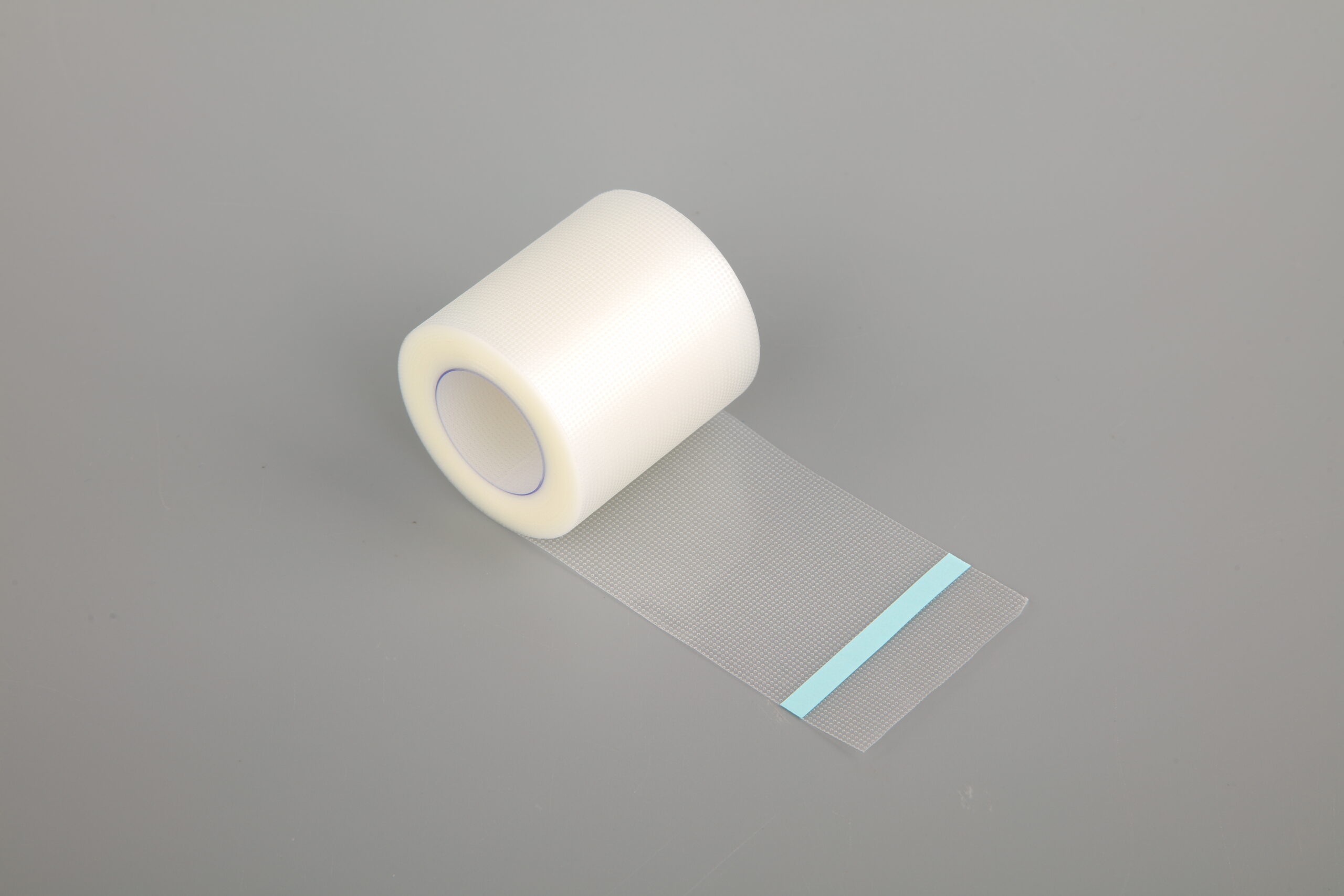
Transparent PE Surgical Tape is a medical fixation tape consisting primarily of a pressure-sensitive adhesive coated on a polyethylene (PE) film backing. The adhesive used may be in the form of a hot-melt rubber-based or acrylic formulation, depending on the product design and intended application.
The PE film produces the clear appearance of the tape and acts as a flexible backing that can conform to different parts of the body. For hospitals and distributors, this makes transparent PE tape a flexible choice for cases where clinicians need both fixation and visibility of the area underneath the tape.
Several medical PE tapes are also designed with perforations or a micro-porous structure. These characteristics can allow for better air and moisture circulation and enable easier manual tearing of the tape. Having to reach for scissors can be unhelpful in a busy clinical setting, and small workflow improvements can be significant for a product used multiple times throughout the day.
The exact construction, adhesive chemistry, perforation pattern, adhesion performance, and thickness should always be verified through the manufacturer’s technical documentation and not by the product name alone.
Key Functional Properties of Transparent PE Surgical Tape
For buyers purchasing surgical tape for B2B use, the functional properties are more important than product names. A procurement team or hospital distributor should understand the tape’s handling characteristics when applied, worn, and removed.
- Transparency is one of the most apparent benefits. Since the backing is clear, the clinician is able to see the area covered by the tape without having to remove it. This is helpful when the tape is applied around a dressing, tubing, or fixation point where visual access is desired.
- Hand-tearability is another handy characteristic. Perforated PE tape can be torn in different directions, enabling healthcare professionals to cut a proper length without using scissors. This can make routine application easier and reduce the number of items required at the point of care.
- Water resistance is an important consideration. PE film can be waterproof or water-repellent depending on construction, but buyers should note the difference between splash resistance and full waterproof performance. If waterproof performance is critical for a specific application, ask the manufacturer for test data on the product, not a generic description.
- Conformability matters because the human body is not flat. Tape may need to wrap around curves, joints, limbs, or areas where movement occurs. A soft PE backing may assist the tape in conforming to these contours while maintaining contact with the skin or dressing.
- Adhesive performance is also essential. When buying, initial tack, adhesion strength, wear, residue, and removal should all be considered. The adhesive should also be tested for skin compatibility and compliance with requirements for the intended market when the product is used frequently in practice.
For hospitals and distributors, these properties should ultimately be translated into measurable values described in the technical data sheet.
Why Hospitals Use Transparent PE Tape for Different Applications
Transparent PE Surgical Tape is appealing because several characteristics work together effectively in clinical settings.
First, transparency can aid in visual monitoring. If a clinician can assess an area without removing the fixation tape, routine checks become more convenient. This can be especially helpful when it is desirable to retain an existing dressing or fixation.
Second, PE tape can facilitate effective clinical workflows. A hand-tearable product can be quickly measured, torn, and applied. For hospitals buying thousands of rolls over time, ease of application becomes part of the overall value of the product.
Third, skin comfort is an important procurement consideration. Fixation tape is used on patients with various skin types, including the elderly, children, and patients with weaker skin. When purchasing, buyers should consider the adhesive formulation, latex-free status, removal characteristics, and skin sensitivity testing.
Fourth, Transparent PE Surgical Tape can simplify inventory when one product configuration can serve multiple common fixation scenarios. Rather than stocking a host of highly application-specific products, a hospital can standardize some uses and consolidate inventory around a single product.
However, standardization should not imply indiscriminate use of the same tape for every situation. The appropriate fixation product depends on the clinical application, patient skin condition, desired adhesion, exposure to moisture, movement, and applicable institutional procedures.
What Clinicians and Procurement Teams Should Look For
One good method for assessing Transparent PE Surgical Tape is to distinguish the clinical needs from the purchasing needs. Clinicians are likely to focus on questions such as:
- Is the initial tack of the tape adequate?
- Does it stay firmly in place during normal movement?
- Will it tear easily and cleanly?
- Does it fit snugly and smoothly around curves and moving parts?
- Is there easy access to monitor the application site?
- Does removal cause any undue discomfort?
- Does the adhesive leave excessive residue?
Procurement teams, however, should ask a whole host of additional questions:
- What PE thickness is being provided?
- What adhesive chemistry is being used?
- Is the adhesive latex-free?
- What widths and lengths are available?
- Is the product sterile or non-sterile?
- What are the packaging options?
- What test results support the manufacturer’s performance claims?
- What certifications and regulatory documentation for the destination market are available?
- Can the supplier deliver repeat orders with consistent quality?
- Can the manufacturer meet the required volume and delivery schedule?
This distinction matters when dealing with a clear PE surgical tape bulk supplier. A product suitable for a sample might not meet the requirements for institutional procurement if the supplier cannot deliver the required specifications, documentation, or production capacity consistently.
Transparent PE Tape vs. Other Medical Tape Backings
PE is only one of several materials used for medical fixation tape.
- Paper tape is generally used for lightweight applications and can be chosen when a more breathable backing is desired.
- Cloth or silk-type tapes may offer more conformability and mechanical support for applications requiring movement, depending on construction.
- Non-woven tape can offer a soft and comfortable alternative and is available in numerous medical configurations.
- Silicone tape is often considered when atraumatic removal and gentle adhesion are important, particularly for patients with fragile or sensitive skin.
That doesn’t mean one backing is superior to another. The right choice will vary depending on the application. A more useful question for buyers is not just “Which tape is best?” but “Which tape has the performance needed for this specific application?”
This is also a good approach for distributors looking to develop a more valuable product line. Rather than competing on unit price alone, they can provide healthcare customers with options that meet distinct clinical needs.
Clinician’s Perspective: What Matters Most?
A clinician assessing a fixation tape focuses on what happens when the product is actually used, not on marketing language.
- Tack: Does the tape adhere as expected on first application?
- Conformability: Does it follow the patient’s skin and the contours of the application site?
- Tear strength: Can the required length be obtained quickly without compromising control?
- Performance: Does the tape remain securely fastened under anticipated conditions?
- Removal: Can it be removed without causing unnecessary trauma or excessive discomfort?
- Residue: Does the adhesive leave an unwanted residue?
For B2B buyers, these functional features need to be considered as part of the sample-evaluation process before moving into wholesale buying.
In summary, Transparent PE Surgical Tape is appealing to hospitals because it merges several helpful properties in one product: transparency, flexibility, hand-tearability, and fixation performance. However, these benefits can only be realized as procurement value when the underlying specifications, quality controls, and regulatory documentation are verified.
Clinical Settings Driving Bulk Demand
The clinical scope of transparent PE surgical tape is wide but its unit cost is low. Unlike equipment that can be bought once and used for years, surgical tape is applied, removed, opened, and replaced across different departments throughout the year. This makes it a regular procurement requirement and provides a clear operational reason for hospitals to place planned bulk orders.
Consumption varies significantly depending on patient acuity, number of procedures performed, frequency of dressing changes, product width and roll length, and whether the tape is also used to secure catheters or tubing. Institutional demand is substantial at scale: for example, World Bank WITS trade data shows that 194,496 kg of surgical tape was imported into Kenya in 2024, valued at approximately US$1.81 million.
This constant demand comes from a number of clinical situations.
Surgical and Operating Room Settings
The operating room is one of the most significant users of surgical tape. Procedure teams require tape to secure surgical drapes, dressings, drains, tubing, and other temporary materials.
Several procedures may take place in a single operating theatre in a day, and each procedure can involve multiple fixation applications. Even if the quantity used per patient is not large, it adds up quickly in a busy surgical department.
The benefits of bulk purchasing for procurement teams include reduced emergency supply orders, less stock fluctuation, consistent product across all operating rooms, and reduced administrative burden from repetitive purchasing.
Transparent PE tape may be especially helpful when clinicians need visibility of the underlying area while securing materials in place.
Wound Care and Dressing Retention Departments
Wound-care departments have constant demand for tape as dressings are changed regularly. This applies to both postoperative wound monitoring and chronic wound management.
Patients recovering from surgery may have multiple dressing changes, and patients with chronic wounds can be treated for weeks or months. Sterile fixation material may be needed at each dressing change.
This sets surgical tape apart from many durable medical products: its use is directly tied to the number of patients being treated and the frequency of treatment. Hospitals with an active wound-care service can therefore have a clear case for maintaining higher safety stock levels.
Where multiple wound sizes and dressing configurations are required, procurement teams should also consider buying tape in multiple widths, as different sizes will require different fixation approaches.
IV Therapy and Vascular Access Teams
Another high-frequency application is IV therapy and vascular access. Depending on hospital-approved clinical protocols and product specifications, surgical tape can be used for the securement of medical tubing, IV lines, and catheters.
Because IV access is used throughout the hospital — including inpatient wards, emergency departments, oncology units, and infusion centres — demand extends well beyond the operating theatre.
This creates a significant volume consideration: one hospital could be managing dozens or hundreds of patients requiring vascular access support at any given time. Tape is therefore not just an occasional surgical product but a consumable that must be continuously available.
Emergency Departments and Trauma Centers
In emergency and trauma settings, time is critical. Clinicians may need to prepare dressings and secure tubing while simultaneously managing immediate wounds and interventions.
A hand-tearable tape that can be torn cleanly in either direction can be beneficial, saving time compared to applications that require scissors. For example, published Medical Supplies Authorities procurement documentation specifies that surgical adhesive tape should be easy to handle with gloves and easy to tear straight.
For high-acuity departments operating around the clock, maintaining adequate stock is particularly crucial as demand can be unpredictable.
Pediatric and Neonatal Units
Younger patients may have more sensitive or fragile skin, which creates a need for more careful adhesive selection in pediatric and neonatal care settings.
Hospitals should therefore investigate the following parameters before approving a tape for use in these units: adhesive formulation, skin compatibility, backing material, latex status where applicable, and removal characteristics.
This can result in a different procurement need rather than a single generic tape being used across all departments. A supplier who can consistently deliver the same specification with the correct documentation over repeated orders can therefore be more valuable than a supplier who only bids competitively when approached.
Home Healthcare and Long-Term Care Facilities
After hospital discharge, demand for medical tape continues. Tape can be used for dressing retention and routine medical-device fixation in home healthcare settings, nursing facilities, rehabilitation facilities, and other long-term care environments.
This gives distributors an expanded addressable market. Hospital-grade products can also be supplied through home-care, institutional-care, and DME channels, depending on the relevant regulatory and clinical requirements.
A distributor purchasing in bulk can therefore serve multiple customer groups with one procurement contract, rather than relying solely on hospital contracts.
Ambulatory Surgical Centers and Outpatient Clinics
Ambulatory surgical centers and outpatient clinics conduct procedures at a high rate and typically have less storage space than large hospitals. Reliable replenishment is especially important in this context. Facilities can implement scheduled deliveries based on past usage patterns rather than carrying excessive inventory. A just-in-time replenishment approach can achieve a reasonable balance between bulk buying and inventory management.
Why Bulk Purchasing Makes Sense
The best justification for buying in bulk is not a fixed number of tape rolls per hospital bed — no single consistent number represents the entire facility. Instead, the case for bulk purchasing rests on repeated use across multiple departments.
Demand for surgical tape across operating rooms, wound care, IV therapy, emergency, and inpatient wards can be significantly higher than usage in any single department would suggest. Using their own monthly issue records, procurement teams can calculate how many rolls or meters of product are being used per occupied bed and set a realistic reorder level.
This is also why institutional buyers prioritize competitive unit cost, consistent quality, reliable lead times, standardized packaging, and predictable pricing from their suppliers. The scale of demand is inherently institutional — for example, NHS Scotland has entered into a multi-supplier framework for the procurement of permeable plastic surgical adhesive tape for its health boards.
Knowing where the tape will be used is only part of the sourcing equation — the second part is knowing exactly what to specify when requesting a quotation.
Complete Product Specifications
When purchasing transparent surgical tape in bulk, hospitals and distributors consider much more than price alone. The specification determines whether the tape is appropriate for the intended use, whether it will satisfy internal quality requirements, and whether the supplier can produce the same product consistently across every shipment.
It is therefore important for a B2B buyer to establish a clear product specification before requesting a quotation. Parameters such as material, adhesive system, dimensions, tear properties, packaging, sterility, and shelf life can all influence the final purchasing decision. The specification framework below is a useful tool for buyers who want to compare quotations from different manufacturers on an equal basis.
Master Specification Table
The ranges below represent typical wholesale configurations. Always verify actual figures with the manufacturer’s latest technical data sheet and the specific product being quoted.
| Attribute | Standard Range | Notes |
|---|---|---|
| Material | PE (polyethylene) film | Transparent PE offers a solid backing with flexibility. |
| Adhesive type | Hot-melt rubber-based or acrylic | Pay special attention to hypoallergenic and latex-free options where needed. |
| Film thickness | Approximately 40–100 microns | Actual thickness depends on the product design and intended use. |
| Width options | 1.25 cm, 2.5 cm, 5 cm, 7.5 cm, 10 cm, 15 cm | Equivalent common sizes: 1/2″, 1″, 2″, 3″, 4″, 6″. |
| Length options | 4.5 m, 5 m, 9.1 m (10 yd) | Jumbo rolls can be provided for downstream converting or private labelling. |
| Color | Transparent/clear, skin-tone, white | Custom colors (pink, blue, or black) may be available subject to agreement. |
| Perforation | Micro-perforated / bidirectional tear | Provides convenient hand tearing and ventilation depending on construction. |
| Adhesion | Supplier-specific tested value | Ask for peel adhesion results and the test method used (e.g. ASTM D3330, where appropriate). |
| Water resistance | Product-specific | Verify whether the requirement is water resistance, splash resistance, or another specified performance level. |
| Sterility | Sterile or non-sterile | Choose according to the intended application, market, and clinical needs. |
| Packaging | Individually rolled, boxed, bulk carton, or jumbo roll | Typical inner cartons contain 6, 12, or 24 rolls. |
| Shelf life | Manufacturer-validated period | Verify expiration date format, storage instructions, and requirements for unopened packages. |
| Storage | Cool, dry conditions away from excessive heat and humidity | Store according to the manufacturer’s approved instructions. |
The first specification to confirm is material. Transparent PE surgical tape features a polyethylene film backing. Buyers should not presume that products labelled “clear surgical tape” will always use the same backing materials. Flexibility, handling, transparency, and tear performance can all vary depending on the exact polymer, film construction, thickness, and manufacturing process.
The adhesive is also a critical factor. Hot-melt rubber-based or acrylic adhesive systems can both be found in wholesale products. For hospital procurement, it is helpful to ask whether the adhesive is latex-free and, if so, whether the product has been tested for skin-contact requirements for the intended use.
Dimensions and Roll Configuration
Specific dimensions must be clearly stated in all purchase orders. For instance, a request for “2-inch transparent tape” should also specify the roll length, not just the width.
Common widths include 1.25 cm, 2.5 cm, 5 cm, 7.5 cm, 10 cm, and 15 cm, corresponding approximately to 1/2″, 1″, 2″, 3″, 4″, and 6″. Hospitals may need to purchase several widths because different departments and applications have different fixation requirements.
Roll length is another key purchasing factor. Typical sizes are 4.5 m, 5 m, and 9.1 m (10 yd) rolls, with manufacturers also offering larger jumbo rolls for converters and private-label distributors.
When sourcing from a transparent polyethylene tape manufacturer in China, distributors must distinguish between finished retail rolls and jumbo roll material. A jumbo roll may be cheaper per unit, but the buyer needs to have — or contract — the necessary converting, slitting, rewinding, and packaging facilities.
Adhesion and Tear Performance
Adhesion strength should not be assessed with vague terms like “weak” or “strong.” The buyer should ask for measurable test results and confirmation of the test method used.
Peel adhesion testing can be compared against standards such as ASTM D3330, as applicable to the product and test configuration. But test results alone are not the full picture. Buyers should also note the substrate used for testing, peel angle, dwell time, temperature, and other applicable test conditions.
Very high adhesion is not always desirable for clinical products. The goal is a balance between stability during use and ease of removal.
Tear characteristics should also be documented. Micro-perforation and bi-directional tear properties can enhance product usability without scissors, which is particularly valuable in busy clinical settings.
Water Resistance and Sterility
The term “PE” should not be used as an automatic assumption of water resistance — performance must be specified explicitly. Buyers should ask whether the manufacturer is claiming splash resistance, moisture resistance, or resistance to a specific defined test condition.
Sterility is another key specification decision. Sterile transparent PE surgical tape may be required for particular applications or markets, while non-sterile tape may be appropriate for other uses. Buyers should know in advance how the product will be used before placing an order.
Packaging, validation, labelling, and regulatory requirements can differ between sterile and non-sterile products. No distributor should assume that a non-sterile product can be represented as sterile after purchase without a validated process and the appropriate regulatory approval.
Available Formats for Distributors
There are typically three formats through which distributors purchase PE surgical tape.
Retail-ready boxed rolls suit buyers who want finished products for delivery directly to hospitals, pharmacies, clinics, or other healthcare customers. The manufacturer can supply individual labelling, cartons, barcodes, and private-label packaging per the agreed specification.
Bulk and jumbo rolls are better suited for converters, large distributors, and private-label operations with downstream processing capabilities. These formats can help minimize packaging costs and offer greater flexibility in selecting the final roll size.
Manufacturers may also offer custom die-cut pieces, pre-cut tape strips, custom roll lengths, dispenser-compatible cores, private-label packaging, customized carton configurations, and OEM or ODM formats.
The ideal format for a distributor depends on the downstream business model. For companies selling directly to hospitals, finished boxed rolls are often the more practical choice. For importers supplying regional distributors, jumbo rolls or bulk packaging may be more commercially attractive.
How to Read a Technical Data Sheet (TDS)
Before accepting a quotation, a professional buyer should request documentation beyond photographs or a supplier’s stated specifications.
At minimum, request the TDS and SDS/MSDS if applicable, along with relevant test reports and any regulatory or conformity documentation required by the destination market and intended product classification.
Technical documentation should answer the following basic questions:
- What materials are used to make the product? Verify the backing material, adhesive, dimensions, and construction.
- How does the product perform? Look for adhesion, tear, thickness, tensile, moisture, or other relevant performance data.
- What is the packaging configuration? Verify roll size, number of rolls per box, carton count, core requirements, and labelling.
- What are the storage and shelf-life requirements? Check the validated shelf life, recommended storage conditions, and expiry date format.
- What data supports the supplier’s claims? Request relevant test reports, quality certificates, regulatory documents, and conformity documents for the specific market.
This documentation review matters when evaluating a clear PE surgical tape bulk supplier against multiple manufacturers. Two quotations at the same price per carton can represent vastly different specifications.
For buyers seeking CE-certified transparent PE tape wholesale, the same rule applies: do not trust a supplier’s product title alone. Request the supporting paperwork and confirm it applies to the specific product, manufacturer, destination market, and regulatory environment.
A comprehensive specification sheet benefits both parties. The buyer gets a clearly defined product, and the manufacturer has a production and quality-control reference. This is particularly valuable when discussing repeat orders, OEM production, or private-label programs.
The TDS should therefore not be viewed as a document requested after an order has been placed, but as part of the commercial qualification process when evaluating any PE medical tape OEM exporter.
Once the technical specification is agreed, the next stage is to assess the manufacturer: certifications, manufacturing capability, quality systems, MOQ, pricing, and export experience should all be reviewed before committing to a wholesale order.
How to Source Transparent PE Surgical Tape from a Wholesale Manufacturer
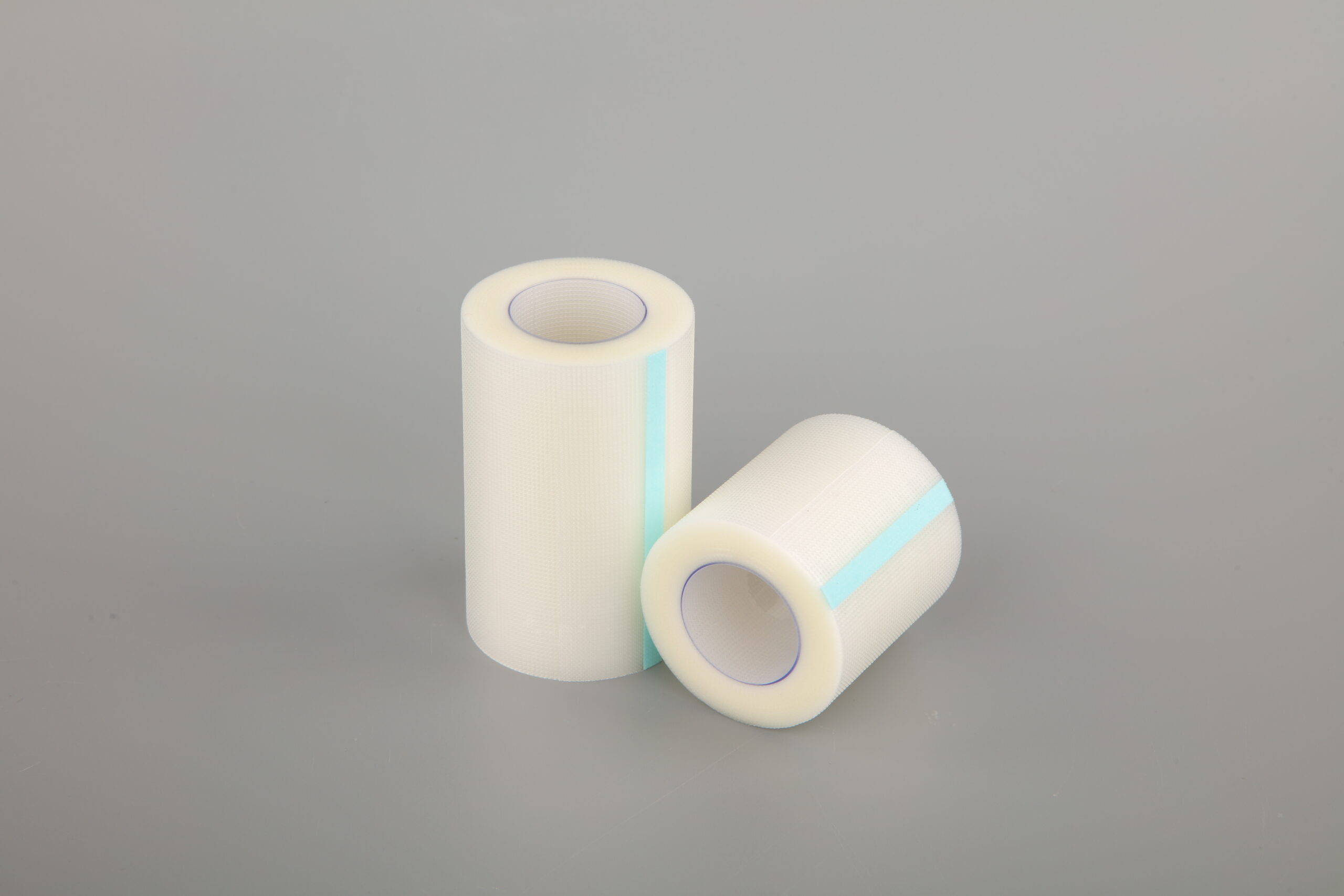
When ordering Transparent PE Surgical Tape in bulk, it’s not just about getting the lowest price per roll. Both hospitals and distributors must determine whether a supplier can deliver the required specification consistently, maintain quality across production batches, provide proper product documentation, and support repeat orders.
A reliable sourcing process should therefore consider both the product and the manufacturer behind it. The following step-by-step approach can help procurement teams reduce supplier risk while building a stronger long-term purchasing relationship.
1. Define Your Specifications and Volume
Before talking to manufacturers, develop a clear purchase specification. This eliminates the risk of suppliers quoting against different products and enables meaningful price comparisons.
Identify the main requirements including roll width and length, transparency or color requirements, adhesive characteristics, sterile or non-sterile configuration, packaging and labelling, single rolls or cartons or jumbo rolls, and the necessary certifications and requirements for the destination market.
Additionally, estimate your expected purchase volumes. Rather than quoting on 1,000 rolls, consider how many rolls you need per shipment and per year. A manufacturer may offer different pricing at 1,000, 5,000, 10,000, or 50,000 rolls. A clear understanding of your potential volume allows the supplier to provide a suitable quotation and MOQ.
2. Shortlist Manufacturers vs. Trading Companies
One of the most important decisions is determining whether you are buying from a manufacturer or a trading company. A direct manufacturer may be able to exercise more control over production specifications, quality control, OEM and private-label development, production scheduling, technical communication, and batch-to-batch consistency.
A trading company can still be useful and legitimate, particularly if it manages several complementary medical products. But an extra entity between the buyer and the actual production unit adds a layer of distance.
For large recurring orders, buyers should ask directly: who is the actual manufacturer of the tape? If the answer is unclear, ask for the legal name of the factory, the place of manufacture, their certifications, and confirmation that the factory is authorized to produce the product.
This is particularly important when searching for a transparent polyethylene tape manufacturer in China. A supplier’s website may describe itself as a manufacturer when it is in fact a trading or export brokerage business.
3. Verify Certification and Compliance Documentation
Certificates should be checked before a large order is placed — not after goods are manufactured.
Depending on the product, market, and regulatory classification, buyers may need to review ISO 13485 quality-management certification, CE conformity documentation where applicable, FDA registration and listing or other U.S. requirements where applicable, product test reports, declaration of conformity, manufacturer licences and registrations, and sterilization documentation for sterile products.
Specific requirements vary according to the market and application. Verify each certificate with reference to the manufacturer and the specific product, and do not rely solely on a salesperson sharing an image of a certificate.
4. Request Samples Before Committing
One of the most effective ways to reduce purchasing risk is to evaluate a sample before ordering in bulk. Assess samples for film thickness and flexibility, transparency, adhesion, ease of tearing, residue after removal, roll construction, packaging quality, and label accuracy.
If a tape is already approved from another supplier, submit it as a reference sample where applicable. A manufacturer can then understand the performance standard you are targeting.
A reputable manufacturer may charge for samples, particularly if the product is custom-made, but should generally be able to explain their sampling process clearly. Be cautious of a supplier who refuses to offer any product sample but asks for a large first order upfront.
5. Evaluate Factory Capability, Not Just the Sales Pitch
A well-designed website does not demonstrate manufacturing capability.
When qualifying a supplier, research what is actually happening at the manufacturing level. Ask about production capacity, converting equipment, slitting and rewinding capabilities, packaging, quality-control procedures, and production scheduling.
For example, if you need special-width rolls, the manufacturer should be able to slit and convert in-house, not subcontract all processing to other facilities without informing you.
Where possible, request photographs or video of the factory, a virtual factory tour, a factory audit report, production-line information, quality-control workflow details, and relevant equipment information. An independent factory audit can provide significantly more confidence on larger contracts than sales materials alone.
6. Negotiate Pricing Tiers and MOQ Structure
Once the supplier has demonstrated it can meet your specification, negotiate pricing.
Never assess the PE surgical tape MOQ price without understanding what is included. Ask whether the quotation includes packaging, labelling, testing, documentation, or custom printing.
Where possible, request pricing across a range of quantities — for example: trial quantity → standard MOQ → larger recurring order → annual volume commitment. This reveals where the manufacturer’s economies of scale start to become significant.
Also distinguish between MOQs for standard products and MOQs for customized OEM products. Higher minimum quantities may apply for custom packaging, colors, dimensions, and labels, as their production and setup costs add to the overall expense.
7. Clarify Logistics, Incoterms, and Lead Times
A good product price is of limited value if logistics costs or production time make the landed cost undesirable.
When requesting a quotation, specify the Incoterm to be used (e.g. FOB or CIF) and the destination port or delivery point. Also request production lead time, sample lead time, shipping method, carton dimensions and gross weight, packing list format, commercial invoice requirements, certificate of origin where needed, and any other documents required for the destination market.
A typical production lead time of 15–17 days can serve as a general reference point for standard products, though this varies according to order quantity, customization, production planning, packaging requirements, and manufacturer capacity. Do not assume a quoted lead time will be met unless it is confirmed in the commercial agreement.
8. Establish Quality Agreements and Inspection Rights
For repeat B2B orders, quality standards should be defined before manufacturing begins.
A quality agreement or purchase specification can establish acceptable product characteristics, packaging requirements, inspection criteria, and procedures for handling non-conforming goods.
Pre-shipment inspection is also available for larger orders and can be conducted by the buyer’s quality team or an independent inspection company.
A sample retention policy is also helpful. Retaining approved production samples enables both parties to compare future production against a mutually agreed reference.
9. Start With a Trial Order Before Scaling
Even with a highly qualified manufacturer, some uncertainty exists in the first transaction.
A trial order allows the buyer to experience the full supplier process: order confirmation → production → inspection → documentation → shipment → delivery → product performance.
Pay attention not only to whether the tape meets specifications but also to how the supplier communicates when issues arise. If the trial shipment is successful, increase order volumes gradually rather than making an immediate long-term commitment at scale.
10. Establish a Repeat-Order and OEM Roadmap
The ultimate goal for many distributors is not to continuously search for a new clear PE surgical tape bulk supplier. It is to build a stable supply relationship.
Once a manufacturer has established a proven track record of quality and delivery, buyers can consider annual supply agreements, forecast-based production, private-label packaging, customized roll sizes, custom cartons, OEM product development, and reserved production capacity.
This can shift the supplier relationship from transactional to a genuine sourcing partnership.
An OEM roadmap is especially useful for distributors looking to buy transparent surgical tape in bulk at scale. Rather than purchasing generic products indefinitely, the distributor can gradually build a standardized product specification and packaging system consistent with its brand and regional distribution model.
Red Flags When Vetting a “Certified” Manufacturer
Exercise caution when a supplier does not have verifiable certificate numbers or supporting documentation, refuses to provide product samples, will not disclose its manufacturing location, provides inconsistent factory information, quotes an unusually low price compared to comparable market quotations, cannot connect you with production or quality-control personnel, or makes generic certification statements that do not specify the product or regulatory basis.
None of these is an automatic indicator of fraud, but each warrants further investigation before cash or purchase orders are committed.
From Supplier Search to Qualified Source
The cheapest roll does not always come from the best supplier. For hospitals and distributors, the value proposition lies with a manufacturer that offers a consistent product specification, verified compliance, reliable production, competitive pricing, and dependable logistics.
After narrowing down a list of qualified manufacturers, review certification and regulatory documentation carefully. This is where buyers can distinguish between a supplier that meets the stated standards and one that only claims to in its marketing.
When preparing to source Transparent PE Surgical Tape for hospital supply, distribution, or private label, define your required specifications and target volume before requesting a quotation. A detailed RFQ enables manufacturers to provide a much more accurate commercial offer.
Regulatory and Compliance Requirements
Regulatory compliance is as critical as price and product specifications when a hospital or distributor is buying Transparent PE Surgical Tape in bulk. A supplier may offer competitive wholesale rates, but if their documentation is incomplete, it can cause problems at customs clearance, hospital tender evaluation, or product registration.
Requirements vary depending on the destination country, intended use, and regulatory classification of the specific product. Buyers should verify the current requirements before ordering.
Why Compliance Matters for Bulk Buyers
A documentation issue can be a minor inconvenience on a small purchase. The impact can be far more severe on a container-scale order.
Incomplete or incorrect compliance documentation can lead to customs clearance delays, tender disqualification, hospital procurement rejection, product registration problems, increased liability exposure, and additional testing or documentation costs.
That’s why a professional clear PE surgical tape bulk supplier should be able to explain what documentation accompanies their products and which documentation is relevant for the target market.
Key Certifications and Standards to Require
ISO 13485:2016 is one of the most important standards buyers should be aware of. It specifies requirements for a quality management system used by organizations involved in the medical-device lifecycle. Importantly, ISO 13485 certification does not mean a particular roll of tape is itself “ISO certified.” Instead, it reflects that the quality-management system of the relevant organization has been evaluated against the standard.
Buyers should therefore confirm that the certificate is issued to the same manufacturing organization and that its scope covers the activities related to the relevant medical devices.
For buyers in European markets, the EU Medical Device Regulation (EU MDR) and CE marking requirements are also important. Medical tapes are not all classified the same way for regulatory purposes, and buyers should not assume any one classification applies to all medical tape products. Where CE marking is applicable, the manufacturer should be able to supply appropriate supporting documentation, including the relevant EU Declaration of Conformity and any required technical or conformity assessment documentation.
Buyers in the U.S. should verify specific FDA requirements rather than relying on broad terms like “FDA approved.” Some basic medical tapes and wound-care products may be exempt from premarket notification (510(k)) while registration and listing requirements can still apply. Specific requirements vary according to the product and the applicable FDA classification and product code. The FDA advises that companies check the applicable device requirements and not presume a product is FDA “approved” merely because it is registered, listed, or exempt.
Other Regional Requirements
International distributors should also consider destination-specific requirements. Products registered for one market may need separate registration, conformity assessment, labelling, or importer arrangements in another market.
Depending on the export destination, buyers may need to research requirements in markets such as the United Kingdom (UKCA and UK MDR arrangements), Australia (TGA requirements and the Australian Register of Therapeutic Goods where applicable), GCC markets (country-specific registration and Gulf regulatory requirements), African markets (national medical-device registration and import requirements), and South American markets (country-specific regulatory authorities and registration systems).
Export experience may therefore be an important supplier selection criterion when evaluating a transparent polyethylene tape manufacturer in China that exports to multiple markets.
Documentation a Hospital or Distributor Should Request
When ordering large quantities, obtain a documentation package suited to the intended market and product. Common documents include a Certificate of Analysis (CoA) providing batch-specific or product-specific quality information where available; a Certificate of Free Sale (CFS) that some importing markets require to confirm a product is legally marketed in the country of origin or another recognized market; test reports covering adhesion, biocompatibility, breathability, physical performance, or other applicable characteristics; an SDS/MSDS providing relevant safety and handling information; and factory registration and business licence documents to verify the identity and legitimacy of the manufacturing organization.
The documentation package must be tailored to the product’s regulatory status and destination country. A buyer seeking CE-certified transparent PE tape wholesale should also confirm that each document relates to the specific product being purchased and not a different product from the same manufacturer.
Tender and GPO Considerations
For healthcare systems and hospitals, the volume of documentation required during supplier qualification can be substantial. Group purchasing organizations (GPOs) and institutional procurement teams may consider the product’s regulatory status, quality systems, product specifications, and supplier credentials before approving a product or supplier.
Preparing documentation in advance can streamline the qualification process and reduce back-and-forth between procurement, regulatory, and quality teams.
This represents an additional value proposition for distributors. A hospital supply distributor with a well-documented supply chain makes it significantly easier for downstream hospital customers to evaluate and approve the product, compared to one simply offering bulk clear surgical tape without supporting documentation.
A manufacturer that consistently provides accurate technical and regulatory documentation is therefore more valuable for long-term B2B sourcing than one that only competes on pricing.
Regulatory requirements differ according to country, product classification, and intended use. Before importing, registering, or marketing a medical device, buyers should check with the local regulatory authority or a qualified regulatory professional for current requirements.
Pricing and MOQ Structure
The quantity of rolls purchased is not the only factor determining the wholesale price of Transparent PE Surgical Tape. Whether ordering 10 or 10,000 rolls, hospitals and distributors must understand the full specification, customization needs, packaging, and logistics involved before deciding which quotation represents the best value.
What Actually Drives PE Surgical Tape Pricing
Several factors can cause the final wholesale price to rise or fall:
- Raw material costs: Product cost can vary with raw material markets, as PE resin and adhesive costs are significant. Long-term buyers may benefit from discussing price-review mechanisms with their suppliers.
- Width, length, and thickness: A 5 cm × 5 m roll requires different material input than a 10 cm × 10 m roll. Non-standard dimensions or unusual thicknesses may require different production conditions, which can affect the quotation.
- Color and printing: Standard transparent tape is typically easier to produce than products with custom colors, logos, patterns, or printed surfaces. Artwork, cylinder, plate, or setup costs may be added for custom printing.
- Packaging complexity: Individual retail boxes, printed wrap, multilingual labels, barcodes, and custom cartons are more complex and costly to produce than bulk packaging. Distributors should clarify their packaging needs before comparing prices.
- Order volume and shipping method: Larger orders tend to benefit from better economies of scale as production and packaging costs are spread across more units. Sea freight is generally more cost-effective than air freight for larger volumes, though air freight may be justified when timing is more critical than cost.
- Sterile vs. non-sterile processing: Sterile products can involve additional packaging, sterilization, validation, testing, and documentation requirements. Buyers should compare quotations only with equivalent sterile products.
Typical MOQ Tiers Explained
The minimum order quantity, or MOQ, should be understood as a commercial position of the supplier rather than an industry standard rule.
- Entry-level, sample, or trial orders allow buyers to test the tape’s performance, packaging, documentation, and supplier reliability before committing to a larger order. These typically carry a higher per-unit cost as the manufacturer cannot spread setup and handling expenses across fewer units.
- Mid-tier standard wholesale orders suit healthcare suppliers and distributors managing ongoing supply relationships. Standard carton orders may offer a more cost-effective unit rate without the risk and capital commitment of a container purchase.
- High-volume orders such as container loads or large recurring commitments can benefit from better volume pricing as production and logistics become more efficient at scale. Buyers are urged to agree on volume tiers based on anticipated annual requirements rather than buying excess stock purely to access a lower unit price.
- OEM and private-label orders can carry varying MOQs when custom packaging, printing, special dimensions, or artwork are produced specifically for a given production run. Do not assume a low MOQ for a standard product will also apply to a fully customized OEM program.
BKAMED’s flexible MOQ positioning can be helpful for buyers who wish to sample before scaling. This can provide a practical advantage over suppliers that set very high minimum quantities on specific configurations.
Building an Accurate RFQ
A detailed request for quotation helps manufacturers provide an accurate offer without requiring repeated follow-up for missing information. When creating an RFQ, include the following:
- Product: Transparent PE Surgical Tape
- Width and roll length: Give specific measurements, not just “surgical tape”
- Thickness: Include a target thickness or acceptable range if this is relevant to the application
- Adhesive: Specify type, including acrylic, hot-melt rubber-based, hypoallergenic, or latex-free as required
- Sterility: Indicate whether the order calls for sterile or non-sterile tape
- Quantity: Give the initial order quantity and estimated annual usage if available
- Packaging: Individual rolls, boxes, bulk, or jumbo rolls
- Branding: Indicate whether OEM/private-label packaging or manufacturer packaging is required
- Destination: Give the destination country and preferably the destination port to accurately calculate freight
- Timeline: Provide a required delivery date and indicate whether the timeframe is flexible
- Certifications: Specify what documentation is needed for your market
- Incoterm: Request quotes on FOB, CIF, or another agreed basis to ensure consistency across offers
Total Landed Cost: Beyond Unit Price
Factory price is only one component of what the buyer ultimately pays. The final cost can vary considerably once freight, insurance, duties and customs, inspection fees, port handling, and local transportation are included. A useful approximation is:
Landed cost = Product cost + Packaging + Inspection + Freight + Insurance + Duties/Taxes + Local charges
A supplier quoting a slightly lower roll price could prove more expensive overall due to carton size inefficiencies or longer lead times that require faster, more costly air freight.
Transparent PE Tape vs. Other Surgical Fixation Tapes
There is no single tape substrate that serves all clinical applications. Procurement teams should understand the differences so they can select the right product rather than defaulting to the cheapest option.
- Transparent PE tape: Offers a clear backing where visibility of the area beneath the tape is important, along with a functional balance of flexibility, water resistance, and handling.
- Paper tape: Preferred when breathability and soft fixation are more relevant than water resistance. Suitable for dressing retention and other uses where a conformable transparent backing is not required.
- Cloth or silk tape: Offers greater stability and support for applications subject to movement. May be better suited where secure retention is more critical than transparency.
- Non-woven tape: Typically soft and conformable, suitable for various applications including dressing and device fixation. Helpful when a softer backing is desired.
- Silicone tape: Recommended when atraumatic removal is a primary concern, especially for delicate or sensitive skin. Generally more expensive than standard medical tapes.
This comparison also provides an opportunity for distributors to expand their fixation offering. BKAMED can serve as a broader sourcing partner rather than a single-SKU supplier, enabling buyers to compare PE, non-woven, gauze, wound-dressing, and other related products based on their customers’ specific requirements.
OEM and Private Label PE Tape
OEM and private-label programmes enable distributors to move from a generic product orientation to a portfolio of their own branded medical consumables.
What OEM/ODM Means
OEM: The manufacturer produces the product to the buyer’s specification, and the buyer markets it under its own brand name. This can encompass customized dimensions, packaging, labelling, and other agreed requirements.
ODM: The manufacturer contributes more significantly to product design or development in addition to manufacturing. This is useful when the buyer requires technical assistance to create a differentiated product.
Private label: Products are sold under the distributor’s own brand, with the degree of customization varying by agreement. Private-label programs can range from simple brand packaging to full product customization.
What Can Be Customized?
- Packaging design: Boxes, wrappers, labels, and cartons can be designed to reflect the distributor’s brand identity, contributing to a consistent product range.
- Roll sizes: Buyers can specify particular roll lengths, widths, and configurations provided the manufacturer can produce them. This can help distributors meet specific hospital requirements.
- Language and regulatory labelling: Packaging can be prepared for destination-market language and labelling requirements. Buyers must review final artwork for regulatory compliance before production begins.
- Custom printed patterns: Printed patterns may be acceptable in some programs, with special consideration for pediatric-friendly designs where technically and commercially appropriate. Customization should be assessed based on the intended clinical use.
- Product bundling: Tape may be bundled with gauze, wound dressings, bandages, or other products to expand a private-label wound-care product line.
The OEM Process Step-by-Step
- Initial consultation and NDA: The buyer discusses required components, target market, projected volumes, and customization requirements. Where confidential specifications or commercial information must be protected, an NDA can be used.
- Specification and artwork development: Technical specifications and packaging artwork are finalized. Both parties must agree on exactly what is to be produced before manufacturing begins.
- Sample and proof approval: Packaging proofs and product samples are reviewed before mass production. This stage is used to identify errors in specification or artwork.
- Compliance and labelling review: Documentation and labelling are verified against destination-market requirements. This is particularly important when the product will be marketed under a new brand.
- Trial production: A controlled production run confirms that the approved specifications can be reliably repeated. This is the appropriate stage for buyers to establish their final reference sample.
- Full production and QC sign-off: Following trial approval, larger-scale production begins under defined quality requirements. Inspection and release procedures should be agreed in advance.
- Shipment and reorder cycle: Once goods are dispatched, the customer can review the actual shipment against expectations and plan the reorder schedule based on consumption forecasts.
OEM Requirements and Timelines
OEM programs typically require more preparation than standard wholesale orders, involving artwork approval, packaging approval, specification sign-off, and regulatory review. The overall timeline can include design, sampling, approval, production, inspection, and shipment phases, with duration varying based on the degree of customization, order quantity, packaging requirements, and destination market.
Why Distributors Build Private-Label Medical Tape Lines
Private labelling can improve margin control because a distributor is no longer competing solely on the manufacturer’s generic product price. A recognizable brand can also help build customer relationships and improve retention.
A branded product line may also support longer-term institutional contracts if approved specifications and consistent supply are important purchasing criteria for the customer.
For buyers seeking to become a PE medical tape OEM exporter, the first step is to work with a manufacturer that can provide both technical support and consistent repeat production.
Hospital Procurement Strategy for PE Surgical Tape
A well-designed procurement strategy helps a hospital achieve balance between price, quality, availability, and supplier risk.
Building a Supplier Evaluation Scorecard
Hospitals can evaluate potential suppliers across multiple parameters without allowing price to be the sole deciding factor.
- Certification status: Confirm that certificates are current, authentic, and applicable to the manufacturer and product. This helps minimize compliance risks in the procurement and regulatory process.
- Sample quality: Test samples against the required specification before approving a supplier. A low quotation is of limited value if the product does not meet clinical and quality requirements.
- Price competitiveness: Compare equivalent specifications and landed costs, not headline prices across different product configurations.
- Lead-time reliability: Suppliers should demonstrate consistent production and delivery to agreed timelines. Even a good product becomes a supply risk if deliveries are repeatedly delayed.
- Communication responsiveness: Becomes especially important when specifications change, documentation needs updating, or replenishment is required urgently.
- Production capacity: Confirm with the manufacturer whether they can meet expected order quantities without extending lead times or compromising quality.
- Financial stability: A financially stable supplier will be able to maintain production, secure raw materials, and honor long-term contracts.
- Export experience: A demonstrated track record of documentation, packaging, logistics, and knowledge of destination-market requirements.
Single-Source vs. Dual-Source Strategy
While a single supplier may simplify purchasing and increase volume leverage, it can also create dependency. A factory shutdown, shipping delay, or unexpected quality issue can affect the entire supply chain.
A primary-and-backup supplier model provides greater resilience. The secondary supplier does not need to carry the same order volume but should be qualified and capable of supplying the required product if needed.
Inventory Planning and Reorder Cadence
Hospitals should set par levels for high-turnover consumables based on actual historical usage data, allowing departments to avoid reactive ordering when supplies run low. The basic planning formula is:
Average consumption during lead time + safety stock = reorder point
Procurement teams setting buffer stock for imported products must account for both manufacturing time and international shipping time.
Contract and SLA Considerations
Long-term supply agreements should establish expectations in advance of problems arising. Important provisions can include quality agreements defining allowed product specifications and quality requirements so both parties share a common standard; non-conformance and return procedures when delivered products do not meet agreed specifications; price-lock periods defining how long quoted prices remain valid and when raw-material or freight changes can be considered; and volume rebates for higher-volume purchases, providing rewards for repeat business without requiring buyers to overstock.
Strategic Partnership vs. Transactional Buying
Frequently changing suppliers can appear competitive but may increase qualification, testing, and administration costs.
When a manufacturer demonstrates consistent quality, reliable delivery, and responsive service, consolidating a portion of purchasing with that supplier can lead to better forecasting, easier quality management, and a natural pathway into OEM and private-label production.
Sustainability and Innovation in Medical Tape Manufacturing
Sustainability is gaining more traction in institutional purchasing, particularly as the healthcare sector works to reduce packaging waste and improve supply-chain efficiency.
- Latex-free adhesive systems: Where latex avoidance is required, latex-free formulations help manufacturers meet customer needs. Buyers should verify actual product composition through documentation rather than relying on marketing copy.
- Solvent-conscious adhesive production: Some manufacturers are prioritizing environmentally considerate adhesive processes while maintaining product performance. Any environmental claim should be supported by specific product or manufacturing information.
- Reduced packaging waste: Bulk and jumbo-roll packaging can lower packaging consumption per unit, provided the distributor has appropriate converting and repackaging equipment. This can also improve shipping efficiency for high-volume customers.
- Automated quality control: Automated processes for coating, slitting, rewinding, and inspection can support production consistency when implemented effectively. For manufacturers producing large recurring orders, greater process control provides predictability that benefits B2B buyers.
- Manufacturing efficiency: Improved production planning, material usage, and automated inspection can reduce waste and help manufacturers maintain a consistent specification. The benefit for B2B buyers is greater operational efficiency and product quality predictability.
The most useful way to evaluate sustainability claims is through measurable practices rather than broad statements. Buyers should ask manufacturers which specific materials, packaging approaches, production controls, and environmental considerations actually apply to the product being purchased.
Conclusion
When sourcing Transparent PE Surgical Tape, the decision involves much more than finding the lowest price. Hospitals and distributors should understand the clinical uses of the product, establish precise specifications, evaluate manufacturers carefully, review compliance documentation, compare MOQ and landed cost, and build a stable procurement strategy.
The opportunity is even greater for distributors. A successful wholesale relationship can evolve into private labelling, OEM/ODM production, recurring orders, and expanded sourcing across wound care and related categories.
BKAMED brings over 30 years of manufacturing experience, an ISO 13485-certified quality-management system, CE and FDA-compliant capabilities, flexible MOQ positioning, OEM/ODM support, and export experience across more than 70 countries. Whether you’re looking for clear surgical tape hospital supply in bulk, custom packaging, or a long-term OEM program, the goal is to build a supply relationship based on consistent quality and reliable delivery.
Ready to place your next order? Get a free sample and a formal quotation from BKAMED, or discuss your product specifications, packaging requirements, and target market with the team.
