The global demand for pain-management products like capsicum pain relief plasters is increasing. This alone continues to create a great opportunity for pharmacies, distributors, and healthcare retailers. The broader global topical pain-relief market was valued at approximately USD 11.6 billion in 2025 and is projected to reach USD 18.1 billion by 2034, at a 4.89% CAGR during 2026–2034, according to IMARC Group.
According to the World Health Organization (WHO), approximately 1.71 billion people worldwide live with musculoskeletal conditions, including low back pain, osteoarthritis, and other conditions associated with pain and impaired mobility.
For procurement teams, however, finding the right capsicum pain relief plaster wholesale suppliers for medical products such as capsicum pain relief plaster is about more than finding a low-cost manufacturer. Products like capsicum pain relief plaster can differ significantly in formulation, plaster construction, adhesive performance, packaging, and regulatory status.
This guide explains what procurement managers should evaluate when sourcing Capsicum Pain Relief Plasters in bulk. It covers product specifications, regulatory considerations, manufacturer qualification, OEM and private-label options, pricing, distribution, and common sourcing mistakes, helping buyers move from supplier discovery to a more structured and informed purchasing decision.
What Is a Capsicum Pain Relief Plaster and How Does It Work?
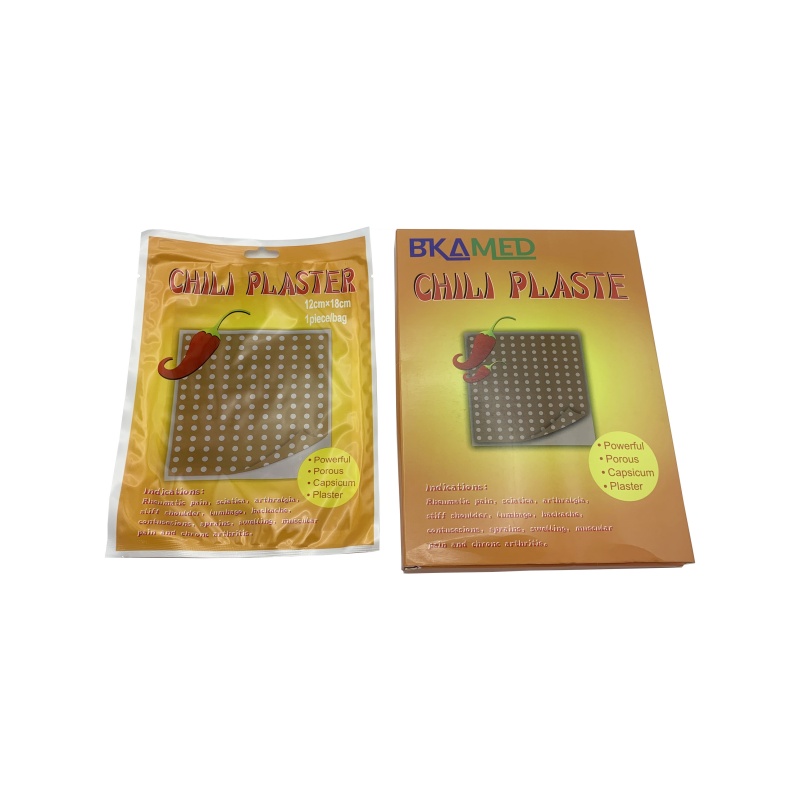
A capsicum plaster is a topical plaster that contains capsicum or an ingredient derived from capsicum, commonly associated with capsaicin. The formulation is applied to an adhesive plaster designed to remain in contact with the skin during use.
Product Overview
The format of the plaster gives manufacturers several options for product design, including different sizes, backing materials, adhesive systems, and packaging configurations. But for procurement teams, these specifications mean they have to be keen because two products described as capsicum plasters may not be identical.
Capsicum plasters are generally grouped within the topical pain-relief category. Their intended applications and permitted claims, however, depend on the formulation and the regulatory requirements of the destination market.
That is why a proper product specification should be in place before comparing manufacturers. A clear specification allows procurement teams to compare like-for-like quotations instead of selecting a capsicum pain relief plaster wholesale supplier based on an incomplete product description or exaggerated claims.
How Does Capsicum Provide a Warming Sensation?
Capsaicin is associated with the characteristic warming sensation of capsicum-based topical products. It interacts with sensory nerve receptors in the skin, including TRPV1 receptors, which are involved in detecting heat and other stimuli.
This interaction can create a sensation of warmth or heat at the application site. However, the sensation should not be confused with a plaster physically generating heat.
For procurement teams, the more important consideration is formulation consistency. Variations in the active ingredient or other formulation components can affect the finished product from one production batch to another.
Common Applications
Capsicum plasters may be positioned for localized applications associated with:
- Muscle aches
- Joint discomfort
- Back and shoulder discomfort
- Minor sports-related aches
From a commercial perspective, these products can fit into pharmacy and healthcare retail portfolios where the product classification and claims are permitted.
However, the procurement team should distinguish between the manufacturer’s intended product positioning and the claims that can legally be made in the destination market. This is particularly important when preparing private-label packaging or marketing materials.
Capsicum Plaster vs. Other Topical Pain-Relief Products
Capsicum plasters compete with other topical formats, including creams and gels. The main difference is in the delivery format.
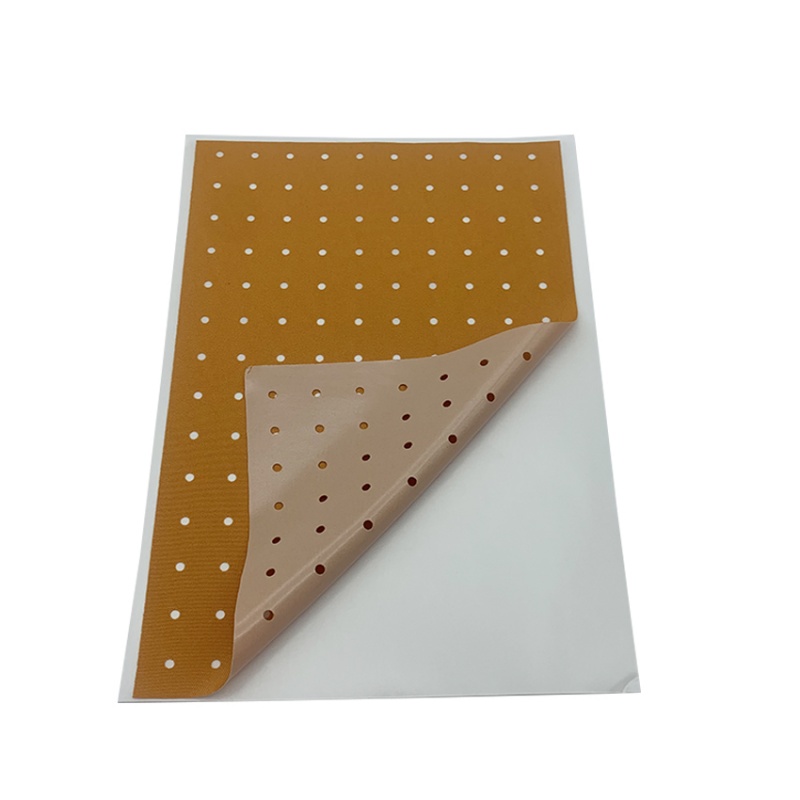
An adhesive plaster provides a pre-measured, portable unit that can be applied directly to the intended area. Individual packaging can also make the product convenient to store, transport, display, and count in wholesale inventory.
For distributors, this format can simplify packaging and inventory management. Products can be supplied as individual sachets, retail boxes, and master cartons, depending on the manufacturer’s configuration.
That said, the plaster format also introduces requirements that do not apply in exactly the same way to creams and gels. Adhesion, backing material, packaging integrity, and shelf stability all need to be considered when qualifying a capsicum pain relief plaster wholesale supplier.
Why Capsicum Plasters Are a High-Volume SKU for Distributors
A product may have a suitable formulation, but procurement teams still need to consider whether it fits existing distribution channels, inventory systems, and customer demand.
For distributors, the appeal of capsicum plasters can come from their compact format, retail-friendly packaging, and potential for repeat purchasing.
Demand Across Pharmacies and Healthcare Retail
Capsicum plasters can fit within the broader topical pain-relief category served by pharmacies and healthcare retailers. Depending on local rules, additional channels may include selected general retail and sports-related businesses.
For procurement teams, the key question is whether the product matches the needs of the intended customer base.
Pharmacy chains may give priority to consistent supply, appropriate labeling, retail packaging, competitive pricing, and reliable replenishment. On the other hand, distributors who serve healthcare retailers may place greater emphasis on carton quantities, shelf life, documentation, and logistics.
Repeat purchasing is another factor that has to be considered.
A product that moves consistently through retail outlets can create recurring wholesale demand, as long as the distributor can maintain availability.
This makes supplier reliability important from the beginning. A low-priced capsicum plaster has limited commercial value if production delays keep resulting in stock shortages.
Why the Plaster Format Works for Distribution
The physical format of a plaster offers several practical distribution advantages.
Key benefits include:
- Individual packaging: Each unit can be sealed separately for storage and distribution.
- Compact storage: Plasters generally require relatively little warehouse space.
- Simple transportation: Retail boxes and master cartons can be configured for efficient shipment.
- Shelf presentation: Individual boxes can be designed for pharmacy and healthcare retail environments.
- Inventory control: Units can be tracked by box, carton, lot, and expiry date.
These characteristics can make the product easy to integrate into an existing distribution operation.
However, procurement teams need to ask for and obtain carton dimensions, weights, and packing quantities before they calculate logistics costs. This is because packaging configuration can affect the actual landed cost of the product.
Potential Customers for Wholesale Distributors
Depending on the product’s classification and permitted applications, potential customer groups can include:
- Pharmacies and pharmacy chains
- Hospital pharmacies
- Medical supply distributors
- Healthcare retailers
- Supermarkets, where permitted
- Sports and rehabilitation businesses
Each channel can have different purchasing requirements.
For example, pharmacy chains may require retail-ready packaging and consistent replenishment, while institutional customers may place greater emphasis on documentation, traceability, and supplier qualification.
The distribution strategy should therefore be established before the product specification and packaging are finalized.
What Makes a Product Commercially Attractive?
A commercially attractive wholesale product needs more than a competitive factory price. Procurement teams should consider the complete supply proposition.
The main factors include:
- Packaging: Is it suitable for the intended retail or institutional channel?
- Price: Does the product leave sufficient room for distribution margins?
- Product consistency: Can the manufacturer maintain the approved specification?
- Shelf life: Is there enough time to distribute and sell the inventory?
- MOQ: Is the minimum order practical for the distributor’s demand?
- Brand positioning: Does the product fit the intended market?
- Regulatory status: Can it legally be sold in the target market?
These factors are connected. For instance, a very low MOQ may not compensate for poor shelf life, while an attractive unit price may not remain competitive after transport and other costs are included.
Product Specifications to Define for a Wholesale Order
It is the detailed specification within the Request for Quotation (RFQ) that allows procurement teams to request comparable quotations while giving the manufacturer a clear production target. It also provides a reference for sample approval, quality inspection, and repeat orders.
Before sending an RFQ, define the following product requirements:
Active Ingredient and Concentration
The RFQ should clearly identify the required active ingredient and its specification. Where the product uses capsicum or capsaicin, it is the procurement team’s duty to establish the applicable concentration or strength. They should not rely on the generic term “capsicum plaster.”
Formulation consistency is equally important. The manufacturer should be able to explain how the formulation is controlled during production and what documentation is available to demonstrate consistency with the agreed specification.
Depending on the product and market, useful documents may include the following:
- Specification of the product
- Reports of the test
- Certificate of Analysis (where applicable)
- Information on the raw material
- Batch or lot information
The actual documentation to be produced should be determined according to the destination market and the classification of the product.
Size and Shape of Plaster
Size directly affects coverage, material usage, packaging, and cost of the product.
Therefore, the RFQ should specify these:
- Length and width
- Shape
- Required coverage area
- Acceptable dimensional tolerance
- Whether custom sizes are required
If the manufacturer is offering several standard sizes, procurement teams should request separate quotations for each option. For a customized product, the supplier should also confirm whether tooling or other setup costs will apply.
Adhesive Performance
How suitable a plaster is to its function depends more on how adhesive it is. The product needs to stick on the area it is placed on, even during normal movement.
Procurement teams should evaluate the following:
- Adhesion
- Skin-contact characteristics
- How easy it is to remove the plaster
- Performance during normal movement
- Consistency between batches
How a product’s adhesive performs cannot always be assessed adequately from a written specification. For this reason, procurement teams should require sample evaluation.
The approved sample should be retained as a reference for future production. If the manufacturer later proposes a different adhesive system, the change should be reviewed before production.
Backing Material and Formulation
The backing is what provides the structure that carries or holds the formulation and adhesive. Manufacturers may use fabric, nonwoven, or other backing materials.
The procurement specification should indicate any required characteristics of the backing material, such as:
- Flexibility
- Thickness
- Breathability
- Strength
- Compatibility with the formulation
The backing, formulation, and adhesive should all be considered as one finished-product system. A change to any of these components can affect the product’s performance.
Packaging and Labeling
Packaging affects both regulatory compliance and logistics, so it should be defined even before production begins.
A typical wholesale configuration may include the following:
- Individual sachets
- Retail or inner boxes
- Master cartons
Where known, the RFQ should state the required number of units per box and boxes per carton. Carton dimensions and weight should also be requested because they are relevant to freight calculations.
The labeling requirements may include these:
- Name of the product
- Ingredient information
- Instructions
- Warnings where required
- Storage information
- Lot or batch number
- Expiry date
- Manufacturer details
- Importer or distributor information where required
- Destination-market language
- Barcode or product identification
Where private-label orders are involved, artwork should be formally approved before mass printing.
Shelf Life and Storage
Shelf life is the length of time a product will last without deteriorating or losing its performance requirements when stored under the recommended conditions before it is sold. Shelf life affects both purchasing decisions and inventory risk.
Procurement teams should confirm the following:
- Verified shelf life
- Storage temperature
- Humidity requirements
- Packaging requirements
- Expiry-date marking
- Batch traceability
Warehouse planning should also account for expiry dates. Applying FEFO or “first-expired first-out” principles can help distributors move stock according to remaining shelf life.
This is particularly important when negotiating large MOQs. A lower unit price may not provide a real advantage if the distributor cannot sell the inventory within the available shelf life.
That is, if a product has a very short shelf life, it doesn’t matter how low the unit price is in the store if it cannot be sold sooner.
Wholesale Product Specification Checklist
| Specification | What to Confirm |
|---|---|
| Active ingredient | Exact ingredient and specification |
| Concentration | Required strength or concentration |
| Plaster size | Dimensions, shape, and tolerance |
| Backing | Material and required characteristics |
| Adhesive | Adhesion, removal, and performance |
| Formulation | Required composition and consistency |
| Packaging | Sachet, box, and carton configuration |
| Labeling | Required information and language |
| Traceability | Lot or batch identification |
| Shelf life | Duration and expiry marking |
| Storage | Temperature and humidity requirements |
Using this checklist when preparing an RFQ makes capsicum pain relief plaster wholesale supplier comparisons more reliable because each manufacturer is responding to the same basic requirements.
Regulatory Classification and Compliance by Country
Regulatory classification is one of the areas procurement teams should not forget to verify before committing to a wholesale order. A topical plaster may be subject to different requirements depending on its formulation, intended use, claims, and destination market.
While the manufacturer can provide technical documentation, it is up to the importer or distributor to verify the rules that apply in its own market.
Why Does Regulatory Classification Matter?
A capsicum plaster may fall under different regulatory frameworks depending on the product and jurisdiction. For example, requirements can differ between products regulated as medical devices and those regulated as medicinal or OTC products.
Intended use and product claims are important considerations. Statements made on packaging and marketing materials can affect how the product is classified or regulated.
So before placing an order, procurement teams should establish:
- Product classification
- Intended use
- Permitted claims
- Registration requirements
- Labeling requirements
- Import requirements
- Applicable testing or conformity requirements
The classification should be confirmed for the specific destination market rather than assumed from the product’s classification in another country.
That said, here are some of the common regulatory requirements to check:
European Market and CE Considerations
For the European market, procurement teams should first determine whether the product falls under legislation that requires CE marking and what conformity requirements apply.
CE marking is not a general indication that a product has been “approved” for every purpose. Its relevance depends on the applicable legislation and product classification.
Where CE requirements apply, the buyer should find out what conformity assessment has been completed and whether the available technical documentation is related to the actual product being purchased.
Packaging and labeling should also be reviewed before production. This is especially important for private-label products because changing printed packaging after manufacturing can create unnecessary costs and delays.
That’s why the procurement team should ask the manufacturer to provide relevant conformity and technical documentation and then verify the requirements applicable to the destination market.
United States and FDA Considerations
The U.S. market also requires product-specific regulatory assessment.
FDA requirements can depend on the product’s formulation, intended use, claims, and applicable classification. A product needs to be properly verified if it’s indeed in line with these requirements where applicable. Therefore, a capsicum pain relief plaster wholesale supplier’s statement that a product is “FDA approved” should not be accepted as a substitute for proper verification.
So, procurement teams should determine:
- How the product is classified in the United States
- What FDA requirements apply
- Whether registration or listing is required
- What labeling requirements apply
- What responsibilities fall on the importer or other responsible party
The manufacturer can support the process by readily supplying accurate product specifications, manufacturing information, test reports, and other relevant documents. However, it is still up to the importer or distributor to verify the requirements that apply to its intended U.S. market.
Other International Markets
The same approach should be used when sourcing for markets in:
- Asia
- The Middle East
- Africa
- Latin America
Requirements can differ between countries, even where the products and intended uses are similar. Procurement teams should therefore avoid using one regulatory package for every market without first verifying. A product may require different registration, labeling, language, import, or conformity documentation depending on where it will be sold.
For distributors who operate across multiple countries, setting up a simple country-by-country compliance matrix can help identify these differences before production begins.
Documentation Procurement Teams Should Request
The exact documentation to request will depend on the product’s category and destination market. However, procurement teams should consider requesting the following where applicable:
- Product specification
- Test reports
- Certificate of Analysis
- Declaration of Conformity
- Manufacturing certifications
- Quality-management documentation
- Batch or lot traceability records
- Shelf-life or stability information
- Relevant labeling information
The key point is not to collect certificates simply for the sake of having certificates at hand. Each document should have a clear purpose in demonstrating product quality, manufacturing control, or regulatory compliance. It should be relevant.
The buyer should also confirm that the documents relate to the actual product, formulation, manufacturing facility, and production arrangement being purchased.
Regulatory and Documentation Checklist
| Area | Procurement Question |
|---|---|
| Classification | How is the product classified in the target market? |
| Intended use | What use is stated for the product? |
| Claims | Which claims are permitted? |
| Conformity | Is conformity assessment required? |
| Testing | What applicable test reports are available? |
| Quality | What manufacturing certifications apply? |
| Traceability | Can production batches be traced? |
| Labeling | Does the artwork meet local requirements? |
| Import | What documentation is required for import? |
| OEM packaging | Can market-specific artwork be supported? |
All in all, the objective is straightforward: verify the regulatory pathway before production, not after the goods have been manufactured and shipped.
How to Find and Vet a Capsicum Plaster Wholesale Manufacturer
There are thousands of manufacturers looking for customers, so finding them is not usually the most difficult part of international sourcing. The greater challenge is determining which manufacturer can consistently meet the required product specification, quality standards, documentation requirements, delivery schedule, and order volume.
For pharmacies, distributors, and healthcare retailers, supplier qualification should therefore take place before commercial terms are finalized. While a competitive quotation is useful, it should be only one part of the evaluation.
That said, here is how to find and vet a capsicum plaster wholesale manufacturer:
Manufacturer vs. Trading Company
One of the first questions to establish is whether the capsicum pain relief plaster wholesale supplier is the actual manufacturer or a trading company that only represents one or more factories.
There is nothing really problematic with purchasing through a trading company. A trading company may provide useful sourcing, communication, export, and consolidation services. However, the buyer needs to know who actually manufactures the product and who is responsible for quality control.
If a capsicum pain relief plaster wholesale supplier presents itself as a factory, procurement teams should verify that claim through available company information, manufacturing documentation, factory details, product range, and other appropriate evidence.
Useful questions to ask the capsicum pain relief plaster wholesale supplier include:
- What is the location of the manufacturing facility?
- What products are manufactured at the facility?
- Does the facility produce capsicum plasters directly?
- What quality certifications does the facility hold?
- Does the factory support OEM production?
- What markets does it currently supply?
- Can the supplier provide relevant manufacturing and product documentation?
The purpose is not simply to determine whether the capsicum pain relief plaster wholesale supplier is a factory. It is to understand the supply chain clearly enough to identify who controls the product specification and quality.
Manufacturing Capacity
Manufacturing capacity becomes particularly important when a distributor expects recurring orders.
A manufacturer may be capable of producing a small initial order only to be unable to increase output when demand grows. If this happens, the distributor may experience stock shortages, delayed deliveries, or inconsistent production schedules. Again, can the capsicum pain relief plaster wholesale supplier meet emergency orders?
So, before agreeing to a long-term supply arrangement, ask the manufacturer about its production capacity and normal lead times.
Important areas to seek clarification on include:
- Production lines
- Estimated monthly capacity
- Current production commitments
- Standard production lead time
- Capacity for larger repeat orders
- Availability of key raw materials
- Ability to support seasonal increases in demand
While clarifying these, the manufacturer does not necessarily need to disclose commercially sensitive information. The objective is to determine whether the supplier has sufficient capacity for the buyer’s expected purchasing pattern.
Procurement teams should also distinguish between the manufacturer’s maximum theoretical capacity and its practical capacity available to a new customer. A capsicum pain relief plaster wholesale supplier may have large production capacity but be unable to serve new customers because existing customers already occupy much of its schedule.
Quality Management
When assessing quality, the focus should not be solely on the finished products that are ready for shipping. This is because quality is about a production system, not a ritual restricted to the final inspection.
A reliable manufacturer should have quality controls covering raw materials, production processes, finished products, packaging, and traceability.
Concerning quality, ask the capsicum pain relief plaster wholesale supplier how they handles:
- Incoming raw-material inspection
- Formulation controls
- In-process quality checks
- Finished-product inspection
- Packaging inspection
- Batch records
- Nonconforming products
- Customer complaints
- Corrective and preventive actions
- Batch traceability
This information can reveal how seriously the manufacturer manages consistency.
For a topical plaster, quality control should go beyond the active ingredient. The adhesive, backing material, dimensions, packaging seals, printing, and other components can all affect the finished product.
A documented quality system also gives distributors a better basis for investigating problems if a customer complaint occurs.
Factory Audit and Sample Evaluation
Samples should be an important part of capsicum pain relief plaster wholesale supplier qualification. A sample allows the buyer to assess the actual product instead of relying entirely on claims posted on a website, catalogue photographs, or written specifications.
The evaluation should cover:
- Dimensions of the plaster
- Appearance
- Backing material
- Performance of the adhesive
- Packaging
- Sachet sealing
- Quality of the printing
- Label information
- Consistency of the product
- Available documentation
The sample should then be compared against the written specification. This is particularly important for OEM projects because the approved sample can become the reference point for mass production.
For larger orders, a factory audit may provide additional assurance on top of the samples. If the buyer cannot visit the facility in person, an independent inspection company may be considered.
An inspection should be based on an agreed checklist. It may examine production conditions, finished goods, packaging, quantity, labeling, and other requirements relevant to the purchase order.
All said, the objective is not to eliminate every possible supply risk. It is to identify significant problems before a large order has been paid for and shipped.
Export Experience
Sufficient international export experience can make the procurement process more efficient. That is, a manufacturer that regularly supplies international customers may already understand common requirements involving commercial invoices, packing lists, carton markings, shipping arrangements, and export documentation.
Ask the capsicum pain relief plaster wholesale supplier whether they have experience with the destination market and whether it has previously handled similar products for international customers.
However, export experience should not be treated as proof of regulatory compliance. A factory may have successfully exported one product to a country without having the exact formulation, packaging, classification, or documentation required for a new order. That’s why the buyer should evaluate export experience and regulatory compliance as separate criteria.
Communication and Technical Support
A well-meaning manufacturer should be able to respond clearly to questions about product specifications, samples, packaging, artwork, testing, production schedules, and documentation. Communication becomes especially important when the order involves customization.
During the quotation stage, pay attention to how the supplier handles technical questions. If basic specifications are misunderstood before the purchase order is issued, more complex problems may arise during production. Is the capsicum pain relief plaster wholesale supplier responsive enough, offering sufficient explanations to whatever they are asked?
Useful indicators include:
- Response time
- Accuracy of technical answers
- Ability to explain specifications
- Artwork support
- Sample coordination
- Documentation support
- Production updates
- Complaint handling
- Availability of a dedicated contact
A supplier that communicates clearly can reduce delays and misunderstandings throughout the purchasing process.
Capsicum Plaster Supplier Qualification Scorecard
| Evaluation Area | What to Check |
|---|---|
| Manufacturing | Is the supplier the actual manufacturer or a disclosed sourcing partner? |
| Capacity | Can production support current and future demand? |
| Quality | Are quality controls documented and consistently applied? |
| Samples | Can samples be supplied before bulk production? |
| Documentation | Can relevant technical and compliance documents be provided? |
| Export | Does the supplier have international shipping experience? |
| OEM | Can the manufacturer support required customization? |
| Communication | Are technical questions answered clearly and promptly? |
| Lead time | Can agreed production schedules be maintained? |
| Traceability | Can batches be identified and traced? |
A scorecard helps procurement teams make a balanced decision. It prevents a supplier from being selected simply because it offers the lowest initial quotation.
OEM and Private Label Capsicum Plasters
OEM, or Original Equipment Manufacturing, and private-label manufacturing can be useful for distributors that want to establish their own brand rather than resell a manufacturer’s standard product.
The advantage is greater control over product presentation and, depending on the manufacturer’s capabilities, certain product specifications. The trade-off is that customization usually requires more planning and may involve higher MOQs, additional development work, and longer lead times.
What OEM Manufacturing Offers
OEM production allows a buyer to provide specific requirements for a product manufactured under its own brand.
Depending on the supplier, customization may include:
- Brand name
- Product name
- Packaging
- Plaster dimensions
- Unit quantity
- Sachet design
- Retail box design
- Master-carton configuration
- Selected formulation specifications
Not every manufacturer will offer the same level of customization. For this reason, procurement teams should establish the scope of OEM support before requesting a final quotation.
The buyer should also distinguish between standard factory options and custom-developed specifications. Using an existing plaster size and standard packaging may allow a lower MOQ and shorter lead time than developing a completely customized product.
Private Label Packaging
Packaging is often the most visible element of a private-label product that customers see. So the manufacturer should make good use of the packaging to provide the distributor with clear artwork requirements for individual sachets, retail boxes, and shipping cartons.
The artwork may need to include:
- Brand and product name
- Ingredient information where required
- Directions or instructions
- Warnings and precautions where required
- Storage information
- Batch or lot number
- Expiry information
- Manufacturer details
- Importer or distributor information where required
- Barcode
- Required regulatory information
The exact requirements depend on the destination market. For products intended for several countries, separate packaging versions may sometimes be necessary. This should be determined before large quantities of printed packaging are ordered.
Custom Product Specifications
OEM customization may go beyond branding. A distributor may say they require a specific plaster size, backing material, adhesive specification, packaging quantity, or formulation.
But each change can affect production costs and lead times. For this reason, the buyer should create an approved product specification that identifies every customized element. This document can then be used when reviewing samples and inspecting finished goods.
If the manufacturer later proposes a change to the formulation, backing, adhesive, packaging, or another significant component, the buyer should review and approve the change before production starts. This is particularly important for repeat orders. A distributor’s customers may expect the same product each time they purchase it.
OEM MOQ and Lead Times
OEM projects generally require more planning than standard products. This is because the manufacturer may need more time to review artwork, source packaging materials, produce samples, schedule production, and complete quality checks.
MOQ can also be higher because customized packaging may need to be produced in larger quantities.
Before approving an OEM order, ask for:
- Sample development time
- Artwork approval timeline
- Packaging production time
- Bulk production lead time
- MOQ
- Reorder MOQ
- Estimated lead time for repeat orders
The reorder process is particularly important. A distributor may be satisfied with the first order but later discover that the original packaging materials are no longer available or that the manufacturer has changed a production specification. A clear written specification usually helps reduce this risk.
Protecting Brand Reputation
Private-label manufacturing puts the distributor’s brand directly on the product. As a result, supplier quality can have a direct effect on the distributor’s reputation. The buyer should maintain an approved product specification, approved artwork, sample, and relevant quality requirements. Any changes should be documented and approved rather than made informally.
For recurring orders, procurement teams should also monitor whether the capsicum pain relief plaster wholesale supplier continues to meet the original requirements.
A strong OEM relationship is based on more than price. It depends on communication, documented specifications, consistent manufacturing, quality control, and reliable delivery.
Pricing, MOQ, and Commercial Terms
Price will always remain an important part of wholesale procurement, but it should be evaluated alongside the other costs and conditions attached to the order.
What Determines Factory Pricing of a Capsicum Plaster?
The factory price of a capsicum plaster can depend on:
- Active ingredient and formulation
- Plaster dimensions
- Backing material
- Adhesive
- Packaging
- Printing
- Order quantity
- OEM customization
- Testing requirements
- Labor and production costs
This is why two quotations for “capsicum plasters” may differ significantly. One capsicum pain relief plaster wholesale supplier may be quoting a standard product in standard packaging, while another may be quoting a customized formulation and private-label packaging.
Therefore, the procurement team should compare quotations against the same specification.
MOQ Considerations
Minimum Order Quantity (MOQ) can have a major effect on the commercial viability of a new product. For instance, a large MOQ may provide a lower unit price but require a greater upfront investment. It can also create storage and inventory risks.
So a distributor should consider:
- Forecast demand
- Available working capital
- Warehouse capacity
- Shelf life
- Expected sales rate
- Reorder frequency
- Supplier lead time
For a new market, an easy-to-manage MOQ can sometimes be more useful than the lowest possible unit price. Once demand is established, larger orders may provide greater purchasing efficiency.
Comparing Capsicum Pain Relief Plaster Wholesale Supplier Quotations
Supplier quotations should be compared using equivalent specifications, as shown in the table below:
| Commercial Item | Supplier A | Supplier B | Supplier C |
|---|---|---|---|
| Unit price | |||
| MOQ | |||
| Units per box | |||
| Boxes per carton | |||
| Lead time | |||
| Packaging | |||
| Testing | |||
| Documentation | |||
| Payment terms | |||
| Shipping terms | |||
| Sample cost |
This type of comparison can reveal differences that are not obvious from the unit price. For example, a supplier who offers a lower unit price may require a substantially larger MOQ or exclude customized packaging from the quoted price.
Total Cost of Procurement
The actual cost of sourcing is normally higher than the factory price.
A useful basic calculation is:
Total landed cost = Product cost + packaging + inspection + freight + customs duties or taxes + local handling + storage and related costs.
However, the exact calculation will depend on the destination country and shipping arrangement.
Terms of payment should also be considered. For instance, a supplier who is offering a slightly higher price but more suitable payment terms may have a different impact on the buyer’s working capital than a supplier requiring a larger upfront payment.
For this reason, procurement teams should compare the complete commercial proposal rather than focusing on the unit price alone.
Distribution Channels for Capsicum Plasters
Capsicum plasters can be distributed through several healthcare and retail channels. The most suitable channel one chooses depends on the target market, product classification, packaging, and the distributor’s existing customer network.
Pharmacies and Pharmacy Chains
Pharmacies and pharmacy chains are a natural distribution channel for capsicum plasters because they already serve customers who seek topical pain-relief products. For this channel, distributors should give priority to retail-ready packaging, clear product information, competitive wholesale pricing, consistent supply, and sufficient shelf life.
Larger pharmacy chains may also require standardized product documentation and reliable replenishment.
Medical and Institutional Distribution
Medical distributors can supply capsicum plasters to hospitals, clinics, rehabilitation facilities, and other healthcare institutions, where local regulations and purchasing policies permit.
Institutional buyers may place greater emphasis on product specifications, quality documentation, traceability, packaging configuration, and dependable delivery. Manufacturers that can support consistent bulk production and provide appropriate documentation may therefore be better suited to this channel.
Healthcare Retailers
Healthcare retailers and specialized medical-supply stores provide another route to market, particularly for distributors serving independent retailers or regional healthcare networks.
Products supplied through this channel should have practical retail packaging, clear labeling, appropriate shelf life, and pricing that allows the retailer and distributor to maintain sustainable margins. Carton quantities should also be suited to the retailer’s expected sales volume.
E-Commerce and Online Distribution
E-commerce can expand the reach of capsicum plasters beyond physical pharmacies and healthcare retailers. Online distributors should ensure that product descriptions, claims, images, labeling information, and advertising comply with the requirements of the target market and the platform being used.
From a procurement perspective, individually packaged units, barcode-ready retail packaging, reliable inventory, and consistent product information can make the product easier to manage across online sales channels.
Common Mistakes Wholesale Procurement Teams Make in This Category
Sourcing a topical healthcare product involves several decisions that go beyond the factory quotation. The most common procurement mistakes occur when teams move too quickly from supplier discovery to purchase without first defining the product, verifying compliance, or assessing the manufacturer’s capabilities.
That said, these are the common mistakes a capsicum plaster bulk order distributor can make during the procurement process:
Choosing a Supplier Based Only on Unit Price
It’s always tempting to go for the lowest price, so much that one can forget about the supplier-selection criteria.
But a low quotation may reflect a different plaster size, simpler packaging, a different formulation, a higher MOQ, or fewer included services. It may also exclude testing, inspection, customized packaging, or other costs that appear later in the procurement process.
As already stated, the better approach is to compare suppliers using the same product specification and calculate the expected total landed cost.
Quality of the products and reliability of the supplier should also be considered beyond the price. A supplier that offers a slightly higher unit price but consistently delivers the approved specification may provide better commercial value than a cheaper supplier with inconsistent production.
Using a Vague Product Specification
A request such as “capsicum pain plaster, 100,000 pieces” does not provide enough information for a meaningful quotation. The supplier needs to know the required formulation, dimensions, backing material, adhesive characteristics, packaging configuration, labeling requirements, and destination market.
A vague RFQ can result in several suppliers quoting different products. The procurement team may then believe it is comparing prices when it is actually comparing different specifications.
A detailed RFQ should therefore be prepared before supplier comparison begins.
Skipping Sample Evaluation
Samples provide an opportunity to evaluate the actual product before committing to buy in a large quantity. Procurement teams should assess the sample against the approved specification and pay attention to the plaster construction, adhesive, packaging, printing, dimensions, and documentation.
For a private-label project, the approved sample should also be retained as a reference for future production. Where the order is large, or the product is subject to specific regulatory requirements, additional laboratory testing or third-party inspection may also be appropriate.
Treating Certificates as a Substitute for Due Diligence
Certificates are important, and a supplier may readily present several certificates, but procurement teams should still establish what those documents demonstrate.
A certification may apply to a manufacturing facility, a quality-management system, a particular product, or a specific scope of activity. But it should not automatically be interpreted as proof that the finished product meets every requirement of the destination market.
Instead, the buyer should verify the scope and validity of relevant documents and determine whether they apply to the exact product and facility involved in the order.
Underestimating Packaging Requirements
Packaging problems can be expensive because they are mostly discovered after artwork has been finalized or production has already started. Requirements of the destination market should therefore be established before packaging is printed.
This includes required languages, product information, warnings, storage instructions, batch identification, expiry information, barcodes, and importer or manufacturer details where applicable.
For OEM orders, procurement teams should use a formal artwork approval process and keep the final approved files on record.
Ignoring Lead Times and Inventory Planning
A distributor should know how long it takes to manufacture, inspect, ship, clear, and receive a new order. If the procurement team waits until inventory is nearly exhausted before placing a repeat order, even a reliable manufacturer may not be able to prevent a stockout.
Lead time should therefore be considered when establishing reorder points and safety stock.
Shelf life should be considered at the same time. Ordering more stock than the business can reasonably sell may create unnecessary inventory risk, such as products expiring before they are sold.
Failing to Assess Supplier Capacity
A supplier may be able to handle an initial order but struggle when the distributor’s demand increases. So before establishing a long-term relationship, procurement teams should discuss expected order volumes and determine whether the manufacturer can comfortably support recurring production.
This is particularly important when a distributor intends to promote the product aggressively or supply a large pharmacy chain.
Not Defining Responsibility for Quality Problems
The purchase agreement should establish what happens if delivered goods do not meet the approved specification. The commercial terms should address matters such as inspection, defective products, replacement, rework, documentation, and complaint handling.
Clear responsibilities make it easier to resolve problems without lengthy disputes.
Common Sourcing Mistakes and Better Approaches
| Common Mistake | Better Procurement Approach |
|---|---|
| Selecting only by price | Compare total landed cost |
| Using a vague RFQ | Define the complete product specification |
| Skipping samples | Approve and retain a reference sample |
| Assuming certificates prove everything | Verify document scope and applicability |
| Approving packaging too quickly | Complete regulatory and artwork review first |
| Ignoring lead times | Plan replenishment and safety stock |
| Assuming capacity | Confirm recurring production capability |
| No quality-dispute process | Define inspection and corrective procedures |
Being cautious so as to avoid these mistakes does not need to make procurement unnecessarily slow.
Misconceptions About China-Made Capsicum Plasters
China has become a major manufacturing hub for healthcare and medical products, but country of origin alone does not provide enough information for judging the quality of a particular product or supplier.
Procurement managers who are considering a capsicum heat plaster manufacturer in China should adopt the more useful approach, which is evaluating the individual factory, its processes, documentation, and ability to meet the required specification. This is much better than making a decision based just on country of origin.
The following are three common misconceptions about capsicum plasters that are made in China:
- “Made-in-China Means Low Quality” — The quality of a product is not determined by which country it is made. The quality of a capsicum plaster depends on many of the factors already discussed, no matter where it is made. Chinese manufacturers can differ significantly from one another. That’s why a procurement team should assess the individual supplier instead of making a decision based on a blanket assumption about Chinese manufacturing. The same principle applies to other manufacturing countries. A product made in any country can be either suitable or unsuitable depending on the manufacturer and the controls applied during production.
- “The Cheapest Factory Is the Best Supplier” — The lowest factory quotation may be hard to resist, but it does not necessarily represent the lowest overall procurement cost. A supplier with a lower unit price may have a higher MOQ, longer lead time, weaker packaging options, limited documentation, or inconsistent quality. Reliability should also be considered. A supplier that consistently meets specifications and delivery schedules can provide greater value to a distributor than a supplier whose lower price comes with frequent production or quality problems. Therefore, procurement teams should consider the complete commercial proposal, not just the pricing at face value. A useful comparison includes product price, MOQ, packaging, quality requirements, documentation, lead time, payment terms, freight, inspection, and other relevant costs.
- “All Chinese Manufacturers Offer the Same Product” — Manufacturers can differ much even when they seem to offer the same type of plaster. These differences can affect both the physical product and the procurement experience. That’s why a distributor looking to buy capsicum pain plaster in bulk should compare manufacturers against a defined specification instead of just relying on catalogue photographs or generic product descriptions.
Why Supplier Due Diligence Matters More Than Country of Origin
The country where products are made is just one factor in a sourcing decision. For medical and healthcare products, the more important question is whether the specific manufacturer has the facilities, quality systems, technical capabilities, documentation, and production capacity needed to meet the buyer’s requirements.
Chinese manufacturers who make medical products can vary considerably in their capabilities. So procurement teams should assess the supplier itself without assuming that all manufacturers offer the same level of quality or that a lower price automatically means the product is of low quality.
That said, a supplier due-diligence process should examine the following:
Manufacturing Capability
Is the company operating its own production facilities and have sufficient capacity for the required volumes?
Quality Management
Are there established controls for raw materials, production, testing, packaging, and batch traceability?
Product and Regulatory Documentation
Can the manufacturer provide appropriate specifications, test reports, certifications, and other documents relevant to the destination market?
OEM Capability
Can the supplier always produce customized products, packaging, and specifications under the buyer’s brand?
Export Experience
Does the manufacturer have experience supplying international markets and handling the documentation and logistics involved?
Production Consistency
Can the manufacturer maintain the approved specification across repeat orders?
Why BKAMED Is Worth Considering as a Chinese Medical Products Manufacturer
B2B buyers who are evaluating a Chinese medical-products supplier should check these several characteristics that make BKAMED worth considering:
More Than 30 Years of Industry Experience
BKAMED states that it has more than three decades of experience in medical and healthcare product manufacturing, giving it an established manufacturing background rather than being a newly established trading operation.
It also has multiple production bases in Hubei, and exports to more than 60 countries and regions.
Broad Manufacturing Capabilities
Its product portfolio covers wound care, first-aid products, medical consumables, sports and home healthcare products, and other medical supplies. This breadth can be valuable to distributors looking for a supplier capable of supporting multiple wound care product categories.
International OEM/ODM and Export Experience
BKAMED identifies itself as an OEM/ODM manufacturer and states that its products are exported to more than 60 countries and regions. For distributors developing private-label products, established export and customization capabilities can be important supplier-selection factors.
Established Production and Quality Infrastructure
BKAMED reports multiple production bases. For its gauze manufacturing operations, it has several facilities including a 100,000-class cleanroom, packaging lines, sterilization laboratories, and vertically integrated weaving and bleaching operations. These capabilities place BKAMED in the league of established medical products Chinese manufacturers worth considering for B2B sourcing.
Its published materials also showcase ISO 13485, CE, and FDA-related credentials for relevant product lines. But buyers should still take the time to verify the exact certification scope and how they are applicable to the specific product being purchased.
For a distributor sourcing capsicum plasters, the appropriate approach is to assess BKAMED, or any competing manufacturer, against the same criteria we have explored: product specification, quality controls, regulatory documentation, OEM capability, MOQ, production capacity, lead time, and total landed cost.
Conclusion: Making the Right Capsicum Plaster Sourcing Decision
A successful wholesale sourcing begins with a clear product specification, and then followed by regulatory verification, supplier qualification, sample evaluation, and a realistic assessment of MOQ, lead time, quality, documentation, and total landed cost. For distributors, OEM and private-label programs can provide additional opportunities when the manufacturing partner can consistently meet the approved requirements.
If you are evaluating a supplier for your next capsicum plaster order, contact BKAMED to discuss your product specifications, packaging requirements, MOQ, and target market. It can also be appropriate to request a quotation based on your procurement needs.
