
Surgical gauze rolls are a low-profile item for many hospital supply chain managers. They are routinely reordered and seldom scrutinised. But when a batch is delivered without radiopaque threads, or a supplier can’t provide an up-to-date ISO 13485 certificate, that line item becomes a serious compliance issue.
With the medical gauze market, which includes surgical gauze rolls projected to reach USD 7.4 billion by 2035 at a 4.7% CAGR, the number of suppliers is increasing rapidly and not all of these suppliers are meeting the documentation and quality control standards required by hospital GPO systems.
This is a guide for procurement and supply chain managers. It includes a review of product types and surgical gauze roll specifications, quality metrics, supplier comparison framework, and a guide to develop a compliant bulk procurement contract. In the end, there’s a process for comparing and contracting with suppliers for surgical gauze rolls.
Why the Surgical Gauze Roll Decision Matters for Hospitals
Surgical gauze rolls aren’t usually high on the agenda for discussions with hospital procurement committees about their supplier contracts. They’re considered basic. Routine. Even commodity-level.
And that’s a problem.
Gauze rolls are involved in almost every type of medical procedure that is performed; from simple dressings following surgery, to trauma and burns. The decision making of the procurement department has direct implications in the OR. And when it’s a poor decision, it’s not only the process that is jeopardised.
What Goes Wrong When Gauze Quality Fails
First, the obvious: infection.
According to the studies published in the National Library of Medicine, 2-5% of patients in high-income countries and 20% in low- or middle-income countries are affected by surgical site infections (SSIs). SSIs are no small issue. A study by Cambridge University Press found SSIs reported by hospitals to be associated with an incremental hospital cost of $30,689 per admission and an 11.6-day increase in hospital stay compared to non-SSI cases.
Gauze quality is in the middle of this.
Linting is a crucial factor for gauze rolls used for post-surgery dressings, wound packing and surgery. Low-lint is not a nice-to-have, but essential. When gauze lints into a surgery or wound, the fibres are a source of contamination and a foreign body.
In fact, scientific studies published in the National Institute of Health have shown that 90% of all foreign bodies left in surgery are soft (gauze and sponges). One episode of retained surgical items can cost $200,000 or more in medical and legal fees and the hospital is not reimbursed for the extra costs.
This is the cost of poor surgical gauze rolls not being halted by procurement.
Then there is accreditation. We track, we report, we even pay for infection control. According to Pubmed reports, large hospitals that changed from sterile gauze to antimicrobial gauze dressings to cover post-surgical wounds achieved a 24% decrease in the number of SSIs and nearly a 48% decrease in the number of MRSA infections. Choosing wound dressings is no longer separate from monitoring clinical performance – it is part of it.
For procurement this means that the gauze, which is defined in the supply contract, is not just a procurement decision. It’s a clinical governance decision.
What Makes Surgical Gauze Rolls a High-Priority Category
Surgical gauze rolls are not only a clinical risk, but they are a big operational risk within a hospital.
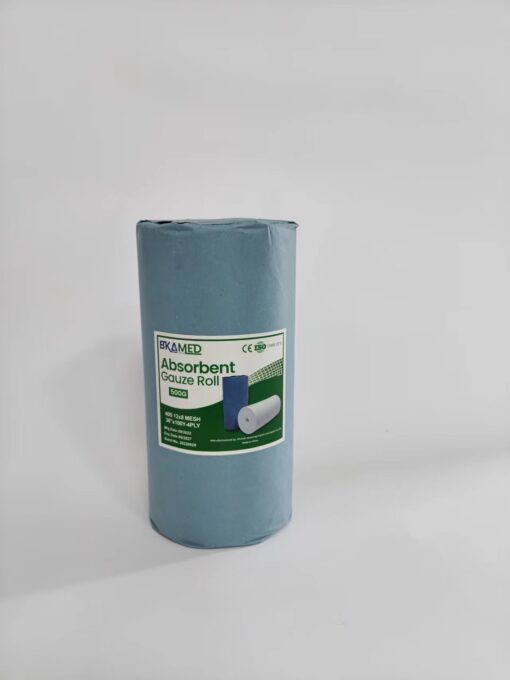
In 2024, a total of more than 92.3 million surgical procedures were performed in the U.S. in major medtech categories, according to Life Science Intelligence and it’s increasing year-on-year. All of these surgeries use some sort of absorbent gauze product, either during the surgery or after for wound dressings. At this volume, surgical gauze rolls are fast-moving. They are the high use items in the hospital.
What does this mean? For instance, the flow-on effect of a major sourcing event:
| Risk Event | Operational Consequence |
|---|---|
| Incoming inspection supplier quality rejection | Risk of an out-of-stock in surgery |
| Wrong ply, wrong mesh; specification error | Costly emergency re-order; practice disruption |
| Failed sterility documentation | Regulatory audit, drug quarantine, GPO audit risk |
| Foreign body from a high-lint gauze | Adverse event, lawsuit, unreimbursed costs of care |
The cost of each of these scenarios is much higher than the cost of the cheapest supplier. Procurement strategies focusing on price detect these costs, sooner or later.
The cost of care of gauze rolls also extends to staff time. Nursing time is required to change dressings when gauze is poor quality or has a low absorbency. Time spent by people at supply chain management to deal with rejections, returns and expedited orders is an indirect cost, not included in the procurement quote.
Hospital Medical Supply Procurement vs Buying Medical Supplies
Let’s be clear: buying bulk surgical gauze rolls for a hospital is not the same as purchasing medical supplies for a clinic or first aid supply company.
Hospitals operate in a thicket of compliance requirements that affect the sourcing, documentation and storage of medical consumables. Hospitals must meet the Joint Commission, Centers for Medicare & Medicaid Services (CMS) and local health authority documentation and quality systems requirements on the vendors they use. A surgical gauze roll manufacturer that isn’t able to provide current ISO 13485 certification, lot traceability documentation or sterility validation reports is not only a quality issue, it is a compliance issue.
Then there is the Group Purchasing Organization (GPO) factor. Nearly all of the 7,000+ U.S. hospitals and most of the 68,000 non-acute care facilities are members of one or more GPO. One study in 2009 reported that hospitals in the U.S. purchase 72% of their goods through GPO contracts. GPO qualification is not automatic. Suppliers of bulk surgical gauze rolls must be capable of providing the documentation from these processes, product test reports, company registration, quality systems and market-specific regulatory approvals in order to be considered for a contracted supply relationship.
That’s why the move from commodity to performance procurement is important. Hospitals are shifting from price-based to total cost of ownership in the evaluation of medical consumables. GPO contracts come with full documentation and audit trails, which allows procurement officers to show inspectors that they’re working within guidelines. Suppliers unable to provide that information place their hospital clients at risk of non-compliance.
In summary, which surgical gauze rolls a hospital buys, and from whom, has simultaneous implications for patient safety indicator scores, SSI rates, accreditation and procurement compliance. And that is not a level of impact that a hospital procurement team should take lightly, or without a process for making informed decisions.
Types of Surgical Gauze Rolls Hospitals Should Stock
There are different types of surgical gauze rolls, all with different uses. So not all of them are the same. This may seem like a no-brainer, but in reality many hospital procurement departments opt for a single SKU (stock keeping unit) or rely on the distributor to determine specifications. This can lead to formulary that is either more highly specified (and costly) or less, and the risk of clinical issues in departments that use them.
Knowing the key types of surgical gauze rolls, and the features that make one or another more appropriate for a given setting, are at the root of a smart purchasing decision. That’s what this section does.
Sterile vs Non-Sterile Surgical Gauze Rolls
Sterility is the key characteristic in any gauze roll formulary. It is important to do this right, both ways.
Sterile surgical gauze rolls are manufactured under clean conditions and then sterilized. The sterilization processes of choice are ethylene oxide (EO) gas sterilization and gamma irradiation in large-scale manufacturing. Both involve killing microorganisms to a stated Sterility Assurance Level (SAL) of 10⁻⁶ (there is less than one chance of a microorganism surviving in a million).
Sterile surgical gauze rolls are used for:
- Primary dressings directly applied to wounds
- During surgery in open wounds
- Packing of cavities
- Dressings for fresh wounds
In contrast, non-sterile surgical gauze rolls are not sterilised and packaged. They are clean, but not sterile. The appropriate clinical uses are different:
- Secondary dressings over a sterile primary dressing
- Bandaging and securing with no open wound contact
- General padding and cushioning, compression
- High volume/low risk institutional stock
For procurement purposes, it’s important to note this distinction. The CDC’s guidelines for sterile storage includes controlled temperature (75°F) and relative humidity (70%), so sterile SKUs need to be stored in separate facilities, strict stock rotation measures and frequent management of shelf life. Guidelines suggest facilities adopt a First-In-First-Out (FIFO) rotation, perform weekly or monthly checks and ensure that the remaining shelf life of a product is at least 75% when it arrives.
Hospitals that stock sterile surgical gauze rolls in bulk without a rotation system will have to waste products. Procurement teams should collaborate with supply chain and materials management to ensure the frequency of orders for sterile gauze is aligned to consumption, and not as large safety stock of a perishable item.
Woven vs Non-Woven Surgical Gauze Rolls
This is an important clinical consideration, and it’s one that procurement teams should be aware of, rather than leaving it up to the nurses to figure out on a case-by-case basis.
Woven cotton gauze rolls are made of cotton threads woven together in a classic open weave pattern. They have an open weave, which is very porous, letting air and fluid through, and are ideal for packing, cleaning and debriding wounds. Woven cotton gauze has been the dressings of choice for more than 100 years because it’s strong, cheap, and widely available in standard sizes.
Because woven gauze leaves lint in the wound, particularly when cut, it can be problematic when applied to deep wounds or deep incisions as it can hinder wound healing or cause complications. So, woven gauze is generally only used as a secondary dressing or for packing a wound, rather than directly on the wound. Kongeemed
Non-woven surgical gauze rolls are produced from fibers (often rayon, polyester or a blend of synthetic materials) that are pressed and glued together. This type of gauze is less likely to leave lint in the wound than woven gauze. It’s also less abrasive and less likely to adhere to the wound bed, which offers greater comfort and less risk of damaging the wound during dressing changes.
Non-woven gauze has improved absorbency, less linting and is suitable for highly exudative wounds or areas of the body where the skin is sensitive, whereas woven gauze is stronger and more durable and can be used to pack wounds and provide pressure.
The hospital advice is not to use one or the other – but to have both. In the clinical setting where money and time are important, both are included in procedure packs. Woven gauze can be used in bulk for cleaning, padding, and non-woven gauze can be used directly on wounds. The combination strikes a balance between performance and cost.
For procurement, this means having two items in the formulary and making sure the surgical department is not using one or the other depending on what is in stock.
Formats: What They Are and How They’re Used
In addition to sterility and materials used, surgical gauze rolls are also classified by configuration. These are configured for different clinical applications and a formulary will contain multiple configurations.
| Configuration | Description | Primary Use Case |
|---|---|---|
| Cylindrical rolls | Tightly wound roll format | Fixing dressings, bandaging, secondary dressings – most common format in most hospitals |
| Zig zag (2-fold / 4-fold) | Stack of layered gauze | Large wards, quicker dressing application, dispensing |
| Jumbo rolls | Big rolls (up to 125cm wide, 3000m long) | Cutting and configurer of gauze, or second manufacturers |
| Pillow rolls | Cylindrical shape, cushioning effect | Lightly conforming dressings, padding around vulnerable areas |
The zig zag configuration is worth highlighting in hospitals. In busy clinical settings (post-operative, emergency, burn units), the rapidity of dispensing that a zig zag configuration offers contributes to nursing efficiency in dressing preparation. It’s not a small time savings. If we are talking about hundreds of dressing changes each day using gauze rolls, then how the gauze is configured will affect nursing time.
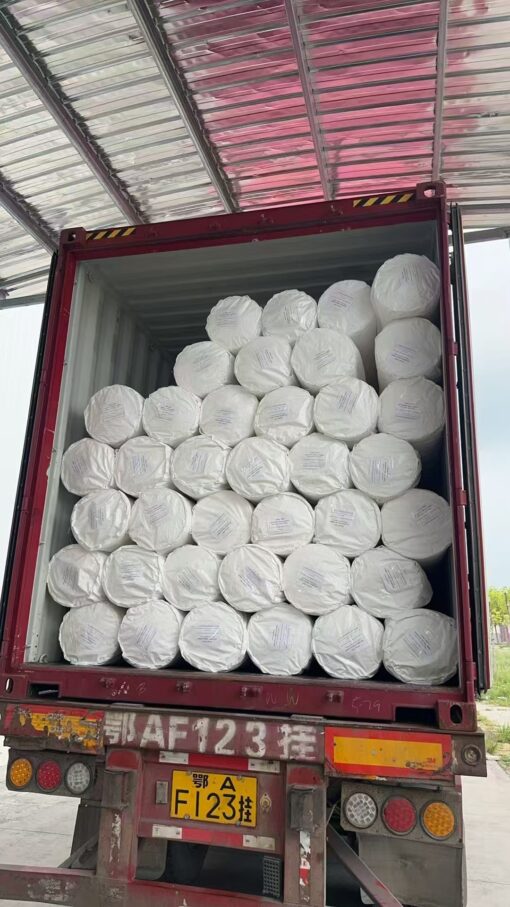
Jumbo rolls are another matter. These are generally bought by organisations running gauze-cutting and packaging departments, or distributors who make their own gauze products. They should not be used directly in the medical setting.
Surgical Gauze Roll Specifications Procurement Should Know
This is where the procurement mistakes are made. Gauze manufacturers offer a variety of specifications, and unless procurement teams understand the clinical implications of each specification, they tend to either order excessive high-end specifications they don’t need or accept low-grade specifications that cause problems down the track.
Here are the five key specification parameters to be included in a surgical gauze roll procurement brief:
Ply count is the number of layers of gauze folds in the finished product. The most common choices are 1-ply, 2-ply and 4-ply, although higher ply gauze may be required for specialised uses. Increasing the ply increases absorbency and cushioning, but also the cost per unit and storage space required. The ply should be chosen according to the intended use: 4-ply for intraoperative absorbency, 2-ply for dressings on secondary wounds and general wards.
Mesh count is the density of the weave of the gauze, expressed as threads per inch for the warp (length) and weft (width) threads – for instance, 19×15 or 26×18. The higher the mesh count, the tighter the weave. Tight weaves are suitable for surgical gauze where fiber integrity and low-lint are important. Lower mesh counts are appropriate for wound dressing and packing.
Yarn count refers to the size of the cotton yarn used in the gauze, measured in the S (English count) system – generally from 21s to 40s. The higher the yarn count, the finer and softer the yarn and the softer the product. Surgical gauze rolls that will be used directly on a wound or on sensitive areas should list a higher yarn count. Lower yarn counts can be used in products for general wound dressings.
Standardised width sizes for finished surgical gauze rolls include 2 inch, 3 inch and 4 inch for clinical sizes, and 90cm and 125cm for jumbo supply. Clinical departments should specify the appropriate width for their procedure types – and procurement contracts should clarify exact sizes to avoid variable sizes from one order to another.
The specification most commonly missed by procurement staff and the most important to get right is radiopaque thread. In medicine, it is common practice to have a radiopaque marker on all surgical sponges and gauze used in open surgical fields, so that the presence or absence of gauze in a patient can be confirmed by X-ray rather than having to reopen the wound. The most common method is a heat bonded barium sulfate (BaSO₄) marker embedded within the gauze to allow it to be seen by X-ray machines, and contain more than 55% BaSO₄.
Any surgical gauze rolls that are specified for use during surgery (i.e. gauze that is open to the surgical field) must contain a radiopaque thread with a validated BaSO₄ content of 55% or more. This is not optional. It is a critical patient safety factor that impacts the risk of retained surgical items, regulatory compliance and the hospital’s risk of liability.
The procurement of the right specifications is not just a technical exercise. It is the backbone of a surgical supply chain delivering what surgeons and nurses need – in the right format, right specification and right documentation.
BKA MED Surgical Gauze Rolls
BKA MED is a factory direct gauze manufacturer, founded in 1998 and now exporting to more than 70 countries. The product range, product specifications and factory details below are not a sales pitch, but rather an example of a fully documented and compliant surgical gauze roll supply chain. This can be used by procurement as a benchmark for any supplier.
Product Range Overview
BKA MED produces the entire range of surgical gauze rolls that medical distributors or hospitals would need. Our product range includes:
- Sterile and non-sterile surgical gauze rolls – for primary contact and secondary dressings
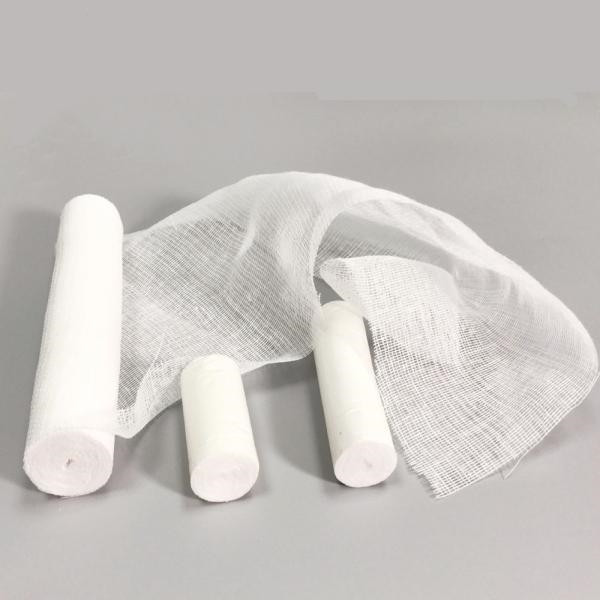
2. Jumbo gauze rolls – for high-volume use in institutional settings and for custom-cutting and packaging gauze
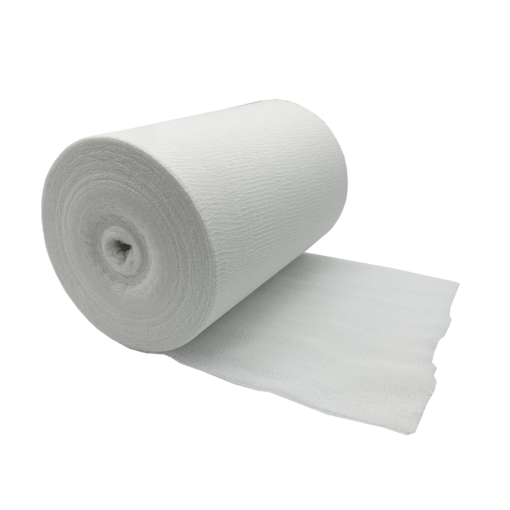
3. Zig zag rolls (2-fold and 4-fold) – for easy-dispensing formats for high-usage hospital departments
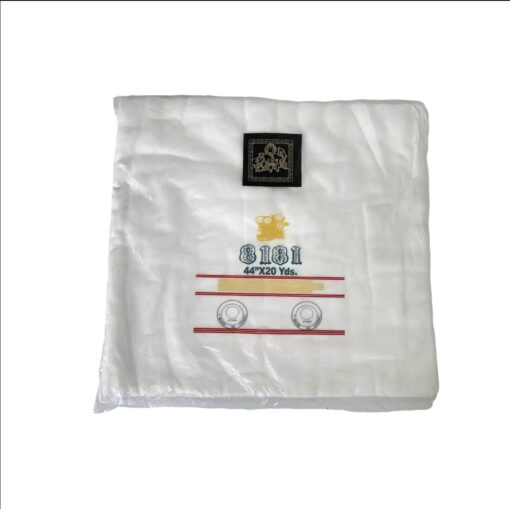
4. Pillow rolls – for dressing with cushion and mild compression

5. Cylinders – the classic wound securing and bandaging type
All of BKA MED’s surgical gauze rolls are made from 100% USP-grade bleached absorbent cotton, which is soft, white, odourless and free of foreign matter. The quality of the raw material is not a claim. USP-grade cotton has pharmacopoeial standards for whiteness, purity and absorbency that are tested and documented at BKA MED.
The key aspect for procurement teams is vertical integration. BKA MED has its own weaving and bleaching plants – the gauze is not purchased from a textile mill. The control of quality is from raw cotton through to the surgical gauze roll. For hospital buyers, that level of traceability is part of their GPO qualification and hospital supplier audits.
Specification Options Available to Hospital Buyers
This is where the advantage of buying from a manufacturer shines. A trading company or distributor can only offer what’s included in their inventory. A direct from the factory manufacturer such as BKA MED can customise surgical gauze rolls to the clinical and logistical requirements of the hospital or trading company.
The table below lists the major configuration options:
| Specification Parameter | Options Available |
|---|---|
| Roll width (finished) | 5cm, 10cm – and other sizes |
| Roll width (jumbo) | 90cm, 125cm |
| Roll length (jumbo) | 800m, 1,000m, 2,000m, 2,500m, 3,000m |
| Mesh count | 12×8 to 45×30 – determined by use |
| Ply count | 1-ply, 2-ply, 4-ply – and more |
| Yarn count | 21s, 32s, 36s, 40s |
| Radiopaque option | X-ray detectable thread (BaSO₄ ≥55%) – on request |
| Sterility | Sterile (EO or gamma) or non-sterile |
| Packaging | Separately packed, peel-pouch, canister, OEM label |
A couple of points for procurement officers putting together the tender documents:
The mesh count range (coarse mesh 12×8 to fine mesh 45×30) means that both dressing gauze and precision surgical gauze rolls can be purchased from one and the same, certified, factory. The supply contract can be awarded to a single supplier.
The radiopaque option is worth noting. As mentioned before any surgical gauze roll used in an open surgical field needs to have a radiopaque marker. BKA MED’s radiopaque gauze rolls contain BaSO₄ at a minimum of 55% content, the standard marker for intraoperative use, which helps to prevent the occurrence of a retained surgical item.
The compliance specification on all BKA MED gauze rolls is fluorescent whitening agent (FWA) free – the gauze is free of fluorescent agents, non-toxic, non-irritating and non-sensitising. This is for clinical safety, not cosmetic. The presence of FWA in gauze used to cover wounds is a compliance issue in hospital and GPO supplier qualification and certifications.
Why Factory-Direct is a Procurement Issue
The hospital procurement process doesn’t always appreciate the difference between purchasing surgical gauze rolls from a factory-direct manufacturer, versus purchasing them from a trading company or distributor. There are four key areas of operational difference.
- Price and cost control. Factory-direct imports don’t include the intermediary’s markup. For institutional orders of surgical gauze rolls in large quantities (container loads, multi-year contracts), the price difference between factory and trading company is substantial. This grows appreciably with a long-term supply agreement.
- Customization depth. Only manufacturers can fulfil medical gauze OEM or private label hospital supply contracts. Trading companies cannot change mesh factor, ply structures, or make private-labelled product packaging for a distributor. BKA MED offers full OEM services – roll size, mesh count, ply, fold, package size, private brand labelling – an important consideration for distributors developing their own gauze product ranges for hospitals.
- Production lead time. BKA MED’s production lead time for full container loads is 10-15 days; it has weaving and bleaching within its manufacturing facility. This is due to vertical integration – no wait for an external textile supplier. For procurement managers who need to manage stock levels and reorder points, knowing they can consistently expect 10-15 days to production is a major benefit.
- Compliance documentation. BKA MED is ISO 13485 certified, CE Mark and Forest Stewardship Council (FSC) certified. These are not only quality marks, but also the documents that hospital GPO qualification teams and procurement compliance officers request from vendors during qualification. The paperwork is available for hospital and GPO qualification packs. Sterile surgical gauze rolls are produced in a 100,000-level cleanroom with an on-site microbiology lab – the same kind of production capability that institutional buyers and third-party inspectors look for when gauging a supplier’s capacity to deliver sterile surgical gauze rolls on a large scale.
How to Evaluate Surgical Gauze Roll Quality
Selecting a supplier based on a certificate is a common error in medical procurement. A certificate shows that a quality system is in place. It does not mean that the batch of product delivered will meet the clinical needs of a hospital.
Surgical gauze rolls, while classified as a Class I medical device in most countries, can pose a risk to patient safety if quality is not assured. This chapter outlines the decision-making guide that should be considered before procurement teams accept any supplier and before they enter volume contracts.
The Five Quality Metrics Hospital Procurement Teams Should Use
These are the five performance parameters that distinguish clinically safe surgical gauze rolls from the bad ones.
1. Absorbency rate
Gauze’s primary function is absorbency. It’s expressed in seconds – that is, the time taken for a set amount of gauze to absorb a given volume of fluid, according to the United States Pharmacopeia (USP) and British Pharmacopoeia (BP) standards. Test reports should be made available by suppliers demonstrating absorbency to these standards. A supplier unable to provide such a report is not of visible quality.
2. Lint and linting control
Surgical gauze rolls must be low-lint for use in the operating room. Shedding lint in the operating room is a source of contamination. Lint can become embedded in wound tissue, cause irritation and delay wound healing, and contribute to post-surgical infection. For procurement, the question to ask a supplier is not “is it low-lint?” but rather “what is your lint test method and what are the test and pass thresholds in your Quality Control protocol?”
3. Tensile strength
Tensile strength is the measure of the ability of the gauze to maintain its integrity during handling, wrapping and removal. If a gauze roll tears in an irregular way when being handled in clinical use (for wound packing and conforming, for instance), that is a quality failure that generates delays and potential patient safety risks. The technical data sheet for the product must specify the tensile strength and this should be confirmed in the incoming inspection process.
4. Weave uniformity
Any irregularity in edge profile, winding consistency, dyeing consistency or weave consistency is an indicator of quality control problems during the manufacturing process. These are not superficial problems, as weave uniformity impacts absorbency uniformity and performance of the gauze roll. Consistency in size should be part of the pre-shipment inspection.
5. Fluorescent whitening agent (FWA) content
This is the most overlooked specification by procurement and the one that poses the greatest compliance risk. FWAs are chemicals used to whiten textiles. They are not permitted in clinical gauze. FWA-laden gauze used in contact with the wound bed is a risk for sensitisation. Clinical surgical gauze rolls must be FWA-free and that must be reported on a laboratory report, not a supplier declaration.
Certifications Decoded: What Hospital Buyers Must Require
Terms can be misleading in supplier certifications. Here’s what the different accreditations mean – and what buyers need to check.
| Certification | What It Covers | Who Requires It |
|---|---|---|
| ISO 13485 | Specifies medical device manufacturer’s QM system | EU, UK, Canada, Australia, Japan – and now part of US FDA QMSR (effective Feb 2026) |
| CE Mark | Compliance with EU MDR 2017/745 for safety, sterility, labelling and packaging | Mandatory for EU and most Middle East markets |
| FDA Registration / 510(k) | Product clearance for US market entry | Mandatory for all gauze marketed in the USA |
| FSC Certification | Sustainable raw material sourcing | Growing demand from hospital ESG sourcing standards |
| USP / BP Compliance | Cotton purity – whiteness ≥80 degrees, absence of foreign matter, specified absorbency | Official material standard for medical absorbent cotton |
The FDA adopted ISO 13485:2016 into its Quality Management System Regulation (QMSR) on February 2 2026. This means ISO 13485 certification is now equivalent to FDA compliant certification, making it the most critical certification to check when sourcing any surgical gauze roll manufacturer for US hospital supply.
ISO 13485 is a prerequisite for compliance with most medical device regulations in the EU, UK, Canada, Japan, Australia and other countries. For hospital procurement teams looking to source multi-market medical devices, an up-to-date ISO 13485 certification offers the broadest market coverage of any single quality certificate.
In terms of CE marking, sterile gauze is a Class Is device under EU MDR (a product delivered sterile) and requires Notified Body involvement in the conformity assessment procedures. So, sterile surgical gauze rolls that are CE marked are third party verified, not simply self-certified by the company.
What to Look for in Supplier QC Documentation
Requesting a certificate is the first step. Grilling the quality system is step two. Here’s what a savvy procurement team asks to see before signing off on a supplier of surgical gauze rolls:
- Lot traceability data: Each lot needs to be traced back to the raw material inputs, date of manufacture, equipment used, operator logs and finished product test results. This is key to a recall strategy. A supplier who cannot deliver lot traceability data within 24-48 hours of an enquiry is not audit compliant – nor are the hospitals procuring their products.
- In-process QC records: QC done on final product is a lagging indicator. Hospital procurement officers should ask for evidence of in-process QC – weight per meter, lint shedding tests during manufacturing, absorbency spot-checks and dimension checks on specified time points during the production run.
- Microbiology lab or third-party testing: For sterile surgical gauze rolls, the supplier should have an in-house or accredited third-party microbiology laboratory for testing. Sterility is not a finished product attribute – it’s a lot control. See the lab’s accreditation certificate and bioburden test reports.
- History of non-conformance and batch rejection: A good manufacturer should know their non-conformance rate and be able to talk about it. If a supplier is claiming zero rejections or cannot provide corrective action reports, they are either not measuring quality with rigorous standards or are opaque. Both are risk indicators.
How to Compare Surgical Gauze Roll Suppliers
Quality is the entry ticket. If the supplier passes the quality and certification test, the procurement challenge starts. This section offers a framework for comparing hospital gauze rolls suppliers based on the criteria that affect the long term performance of supply, not just the first quotation price.
Six Dimensions for Supplier Comparison
When a hospital procurement team compares suppliers of hospital-grade gauze rolls these six criteria should be scored to determine which suppliers should be shortlisted for negotiation.
1. Quality systems depth
ISO 13485 certification assures a quality system is in place. The next questions are: when was the last surveillance audit; by whom; and can the supplier provide the audit report? If a supplier hasn’t had their last surveillance audit by an independent third party within the past 18 months, or they can’t provide it if requested, they have a credentialing gap. Procurement professionals should also ask if the supplier can supply a Certificate of Conformance (CoC) for each batch, which assures that a particular batch meets all the requirements and is expected in institutional medical supply contracts.
2. Certification coverage by target market
A hospital gauze roll supplier with EU CE mark may not be registered with the FDA. A supplier that holds EU certification may not have Middle East Gulf health authority certification. Procurement managers must ensure that before sourcing any gauze their supplier is certified for all markets where the gauze will be sold or used. Post-signature changes in certification are costly and disruptive.
3. Scale and capacity
This is a problem where suppliers tend to overestimate. It’s not how much a supplier’s plant can produce, but how much they can produce at the contract volume without compromises in quality. Ask for certificates of production capacity, and for the supplier’s current utilization rate. A manufacturer at 95% capacity with existing orders cannot take on a large contract without impacting lead time or quality.
4. Lead time reliability – what’s promised, and what happens
Lead time average figures in supplier bids are sales data. Procurement managers should look for on-time delivery figures for the previous 12 months – % orders delivered on time. A China-based wholesale gauze roll manufacturer with high degree of vertical integration (weaving and bleaching in-house) will have better performance than a trading company purchasing supplies from multiple sub-suppliers due to fewer handoffs in the production process.
5. Transparency in supply chain and vertical integration
Is the manufacturer vertically integrated, or does it rely on cotton brokers and textile mills? Vertical integration is one of the best indicators of price and quality stability for surgical gauze rolls. If the manufacturer owns its own cotton supply, weaving and bleaching, then price fluctuations in the raw cotton market will be more predictable in terms of their pricing – and quality is controlled from start to finish.
6. Response time and speed of documentation
This can be checked in the sourcing process. Make a documentation request – request an ISO certificate, sample CoC, and a product test report. The response time and the content of the response is a good predictor of how they will respond to documentation requests during the contract. In medical procurement, a delay or partial response to a basic documentation request is a leading indicator of trouble in the future.
Factory Direct vs Trading vs Distributor
A hospital procurement team’s choice of supply model also constrains them to the selected model throughout the contract period. Here’s a comparison of the three primary choices:
| Supply Model | Advantages | Limitations | Best For |
|---|---|---|---|
| Factory-direct (e.g. BKA MED) | Best unit pricing, full specification options, direct access to QC; OEM capability, full traceability chain | More initial procurement work; longer lead times for initial orders | Volume core contracts, GPO tenders, OEM/own labels |
| Trading company | Broad range of products, shorter lead times for small orders | No control over manufacturing, quality is unknown, difficult to audit, no specification control | Low or trial orders, no commitment to volume |
| Distributor | Shortest lead time from local stock, quickest delivery | Most expensive per unit, no specification changes, no access to manufacturer | Top-up stock in case of disruption of main supply |
The procurement recommendation for hospital surgical gauze roll contracts is: factory direct for primary, volume contracts; distributor for buffer stock only. Wholesale gauze roll manufacturers in China with CE and ISO 13485 certification and export experience (10+ years) are the best value opportunity for institutional buyers, assuming they do the supplier due-diligence work up-front.
Total cost of ownership vs unit price
Unit price is the number on the quotation. Total cost of ownership is the number that appears on the hospital’s supply chain audit.
And the difference between them is where procurement goes astray. Here’s how the maths work:
TCO = (unit cost x annual consumption) + (rejection probability x rework/reorder cost) + (stock-out probability x emergency order premium) + (clinical incident cost due to quality failure)
To illustrate: a surgical gauze rolls supplier quoting 15% cheaper unit cost than the market-leading supplier looks like a bargain until the initial stock lot fails a lint test. The price of rejected material – waste, emergency re-order at prevailing market price, airfreight premium, stock-out – is typically 3-5× the unit price difference. If that happens twice in an annual contract, the total cost of ownership medical gauze equation tips in favour of the higher-priced supplier.
Procurement administrators should ask suppliers to supply batch rejection rates from current hospital customers in the supplier qualification process. That’s the best predictor of total cost of ownership.
Supplier Red Flags: When to Walk Away
These red flags, which may be encountered when evaluating suppliers, are signs of impending contract relationship issues:
- Fails to provide current (last 12 months) ISO 13485 certificate – the quality management system may not have been maintained or certification never obtained
- Will not allow pre-shipment inspection or restricts access – a manufacturer with confidence in its product doesn’t restrict inspection
- Rates are significantly different between enquiries without clear justification – this means no basis for costing, which means no basis for cost control
- Lacking lot-level traceability documentation within 48 hours – not audit-ready documentation system
- No QC team and no in-house microbiology test lab – quality of sterile products cannot be controlled without them
Each of these issues should be investigated. And the presence of two or more should exclude the supplier from the shortlist.
Creating a Compliant Bulk Procurement Contract
After the supplier has been assessed and appointed, the contract is what will either execute procurement decisions or expose vulnerabilities. The majority of supply chain disputes in the medical device industry (including surgical gauze rolls) are not a result of malicious intent but of unclear contractual obligations. Apparently simple obligations when spoken, become areas of contention when batches are rejected, lead times are exceeded, or certifications are changed.
This section outlines what to include in a compliant medical gauze roll bulk procurement contract – one that will stand to scrutiny at a GPO audit, hospital compliance audit or regulatory audit.
What a Surgical Gauze Roll Procurement Contract Must Include
1. Product specification annex (mandatory)
The key document in a hospital medical procurement contract is not the contract schedule of charges; it’s the product specification annex. This annex shall specify the specific SKU: material (100% cotton, USP grade), ply count, mesh density, roll width, roll length, sterility, radiopaque thread (where applicable), packaging format and labelling requirements. This annex must be binding – any non-conformance by the supplier to this annex must be notifiable. Ambiguous specifications (“gauze roll, surgical, standard quality”) provide the supplier with an opportunity to use inferior material.
2. Quality warranty clause
The supplier should provide written warranty that each batch complies to the product specification annex. This clause should specify the inspection protocol on receipt (the AQL level, the sample size and methods of test), responsibility for the cost of inspection and what makes an accepted or rejected batch.
3. Batch rejection and return clause
This clause outlines conditions for rejection of a batch on receipt. It should state: the timeframe for rejection notification (usually 5-10 working days from time of receipt), the supplier’s responsibility to replace the rejected batch within a specified time, who bears responsibility for replacement shipping costs, and the credit or replacement method for confirmed non-conforming stock.
4. Regulatory change notification
The supplier should be required to notify the hospital or GPO within 30 days of any changes to their quality management system, manufacturing site, sterilization process, source of raw materials or certifications. A certification expiration or site change that can only be discovered at the next audit is a compliance failure that reflects on the hospital as well as the supplier.
5. Traceability obligation
The supplier needs to retain all batch data – raw material certificates, manufacturing data, in-process QC reports, final product test reports – for at least five years and release it to the buyer within 72 hours of receipt of a written request. This is not a bureaucratic requirement. It is the paper trail required for a hospital to respond to a product recall, an inspection visit or an adverse event investigation.
Supply Chain Continuity and Risk Management
A hospital’s surgical gauze roll supply chain is only as good as the weakest link between the manufacturer’s factory and the hospital’s departmental storeroom.
Supply Continuity: The Hidden Cost of Buying Gauze
Most cost calculations of medical supply procurement typically involve unit cost and contract value. The risk of supply continuity is not often part of that analysis but, when it enters the equation, it becomes the cost of all costs.
The vast majority of medical supplies, especially those originating from Asia, expose hospitals to geopolitical and other risks. According to Boise State University studies, 20% of hospitals sourced locally to reduce global risk. The reasons for this are well documented; Houthi attacks on merchant vessels in the Red Sea affected six of the world’s ten largest container shipping companies, representing 62% of the world’s shipping capacity. Alternate routes, such as the Cape of Good Hope, add 4,000 nautical miles (10-14 days) to transit times.
For surgical gauze rolls travelling from China to European or US hospital distribution centres, this translates into stock levels in the wards. If you ship a product with a 6-week safety stock level and it’s delayed 10 days, it’s no problem. For a 2-week safety stock, that’s a humanitarian crisis.
The main reasons for surgical gauze rolls supply failure in institutional supply chain, other than transportation issues, are:
- Suppliers’ quality control problems causing rejects at point of delivery (no back-up stock in the supply chain)
- Cotton price surges upstream of supplier causing production slow-downs or product substitution
- Origin or destination port congestion leading to effective lead time increase
- GMP supplier certification expiry not recognised until the next audit date – making stock in transit unusable
Dual Sourcing Strategy
Structural mitigation of the risk of supply continuity is provided by dual sourcing – having two independently qualified, independently contracted suppliers of surgical gauze rolls, as opposed to sourcing all orders from one supplier.
The recommended model:
- First supplier: Supplies 70-80% of annual surgical gauze roll volume. This is the supplier that has the strongest relationship, lowest price and highest compliance with specification. All the main contract, KPI and pricing conditions apply.
- Secondary supplier: The remaining 20-30% of the annual volume. Qualified to the same documentation as primary – ISO 13485, CE marked (or FDA registered) and with a current and active inspection history. The secondary supplier is contracted at a slightly higher per-unit cost to account for lower volume but with active contract and quarterly orders to maintain the relationship.
The key point: the secondary must be qualified. Nominating a secondary supplier by name without going through the qualification process – review of their documentation, samples, and pre-shipment inspection – offers no guarantee of supply continuity. When the primary supplier fails, procurement managers learn that the secondary supplier is not qualified to supply at specification.
Surgical Gauze Rolls Safety Stock Policies
Safety stock provides the buffer stock to absorb supply chain variability – shipments behind schedule, batch fails, spikes in demand. The safety stock for surgical gauze rolls should be 6-8 weeks’ worth of average usage, based on departmental or hospital needs, not just the central warehouse.
The formula for reorder point is:
Reorder point = (average daily usage × supplier lead time in days) + safety stock
If a hospital uses 500 rolls a day, has a supplier lead time of 30 days and wants 45 days of safety stock, then the reorder point is:
(500 × 30) + (500 × 45) = 15,000 + 22,500 = 37,500 rolls
A new order needs to be placed when inventory reaches 37,500 rolls, regardless of whether there are quality problems with the batch, or the supplier is foreseeing longer lead times.
A supplier with a shorter, more consistent lead time decreases the reorder point and therefore the amount of safety stock capital needed. A factory-direct, vertically integrated supplier with a 10-15 day lead time to produce and ship product needs far less safety stock investment than a merchant with a 45 day lead time: the reorder point is lower.
Monitoring Supplier Health
Supply continuity risk management is not a one-off at contract award. It is an ongoing supplier monitoring programme that identifies early signs of supply issues affecting procurement before they become clinical supply issues.
A monthly supplier health scorecard for surgical gauze roll contracts could measure:
| Metric | Measurement | Trigger Threshold |
|---|---|---|
| On-time delivery rate | % of orders delivered in contracted delivery period | Below 95% for two months in a row |
| Incoming inspection acceptance rate | % of batches passing first-time inspection | Less than 98% for any batch |
| Documentation turnaround time | Hours to answer CoC or traceability questions | Exceeding 48 hours |
| Lead time variance | Actual vs contracted order lead times | Variance exceeding ±5 days |
Signs that something worse may be brewing include:
- A trend in increased lead time variance
- Poor quality or completeness of batch records
- Change in the supplier’s quality control (QC) leadership (this can be tracked on LinkedIn or by asking the supplier)
- Change in the supplier’s site or sourcing of raw materials (which should trigger a change notification from the supplier per the contract)
Supply chain is a strategic, not a transactional process. Hospitals that have elevated the supply chain to a strategic position with visibility into supplier health metrics and the power to act on early warning signs are better equipped to handle supply chain disruptions.
A minimum requirement of core surgical gauze roll suppliers is an annual audit. This should include QC record review, production capacity utilisation, raw material sourcing documents and tour of the cleanroom and microbiology lab. The audit inputs are used in the annual contract review and determine the contract status as “renew”, “renegotiate” or “transition”.
Three Decisions That Define a Smarter Gauze Procurement Strategy
Every hospital procurement team makes three key decisions on surgical gauze rolls: specification, source and contract security.
Make the right choices, and gauze procurement shifts from being a constant headache to being a reliable, traceable supply chain.
BKA MED’s surgical gauze roll product range, produced in a 100,000-level cleanroom, ISO 13485 and CE certified, and exported to more than 70 countries, is designed to support this kind of institutional supply.
Contact the BKA MED team for a surgical gauze roll specification quote or download the BKA MED 2026 Product Catalogue here to get started.
Whether building a new bulk procurement contract or reviewing an existing surgical gauze roll supply arrangement, BKA MED is ready to support hospital requirements.
