Even though an alcohol prep swab is one of the smallest items in a healthcare facility, it carries a significant procurement responsibility. These individually packed swabs are used in hospitals and clinics every day for injections, blood collection, IV procedures, and basic skin preparation. Any interruptions in the supply chain can slow routine care. And poor quality products can create packaging, sterility, and compliance concerns.
For procurement teams, buying these items at wholesale involves more than comparing the lowest unit prices. Buyers should confirm alcohol concentration, swab material, pouch integrity, sterilization method, labeling, shelf life, production capacity, and import documentation. Also, they should understand minimum order quantities, landed costs, lead times, and the performance of a alcohol prep swab wholesale manufacturer .
This guide explains how to source from an alcohol prep swab wholesale manufacturer, evaluate manufacturers, and establish repeat order deliveries. Furthermore, we explore how B2B buyers can create OEM and private label products for their healthcare markets.
Alcohol Prep Swab Vs. Alcohol Prep Pad
Sometimes, the terms “alcohol prep swab” and “alcohol prep pad” are used interchangeably in product catalogs, hospital inventories, and supplier quotations. However, in many cases, these refer to a small piece of absorbent material that is saturated with alcohol solution and sealed inside an individual pouch.

However, when you’re trying to source these from overseas, the wording can get confusing. A company may refer to a 30 mm by 30 mm folded nonwoven sheet as an alcohol swab, others list the same item as an alcohol prep pad. Some alcohol prep swab wholesale manufacturers even use “alcohol swab” to mean a cotton-tipped applicator attached to a stick.
Therefore, it’s important for B2B buyers to avoid relying on the name of the product alone. The purchase order should state the physical construction, dimensions, solution, packaging format, and its intended use.
Alcohol Prep Swab
An alcohol prep swab is basically a small, single-use piece of cotton, gauze, or nonwoven material soaked in an antiseptic alcohol solution. Most medical prep swabs use 70% isopropyl alcohol, although ethanol-based products are also available.
These swabs are typically folded and sealed in an airtight foil or paper-foil pouches. The packaging is helpful in keeping them moist and protected until you open them.
Generally, healthcare professionals use an alcohol prep swab to clean a small area of intact skin before:
- An injection
- A blood draw
- An IV insertion
- A lancet procedure
- A minor outpatient procedure
- Applying certain medical devices
Because each swab is individually packed, it is easy to distribute across hospital departments, vaccination stations, mobile clinics, laboratory collection points, and emergency kits.
Alcohol Prep Pad
Alcohol prep pad performs the same function. In many markets, “prep pad” simply refers to the flat, folded shape of the product and not a different medical product category.
Some suppliers might use “prep pad” for bigger or thicker versions. These might cover a larger area of skin or have more liquid. For example, a distributor can describe a small injection-site product as an “alcohol prep swab” and a larger 4-ply an “alcohol prep pad”.
The difference is not universal. It is important for B2B buyers to request a technical data sheet before assuming that one name represents a particular size or absorbency level.
Why the Difference Matters in Bulk Procurement
Hospitals can approve a specific size because nurses need enough material to clean an injection site — avoiding direct contact with the patient’s skin. Diagnostic centers can choose a smaller swab as it is used primarily before finger-prick testing. But distributors require different sizes for their diverse customers.
If your purchase order states “alcohol swab” only, a supplier might deliver products that don’t match your expectations. The most common mismatches can include:
- A smaller unfolded size
- A thinner fabric
- Less alcohol solution
- A different fold configuration
- Nonsterile instead of sterile packaging
- One swab per pouch instead of two
- A different number of pouches per box
The safest approach is always to describe the product by its specs. Include the open size, folded size, material, ply, alcohol type and concentration, saturation levels, sterility status, pouch dimensions, and box and carton quantity.
Swabsticks Are a Separate Product
It’s also important for B2B buyers to know that an alcohol prep swab is not the same as an alcohol swabstick. A swabstick usually has an absorbent tip attached to a plastic or wooden stick. It might come individually wrapped or in packs.
Swabsticks are handy when staff need to apply antiseptic without actually touching the area they’re treating. They’re often used for wound care, preparing for surgery, or cleaning around medical equipment.
A regular alcohol prep swab, on the other hand, is typically a folded pad without a handle. Because it uses less material and is more compact, it’s great for high-volume uses like injections and blood draws.
When you’re sending a request for quotations, send the alcohol prep swab wholesale manufacturer a reference image, technical drawing, or a sample you’ve already approved. This one simple step can prevent an expensive product misunderstanding.
Top Use Cases Driving High-Volume Bulk Demand
Demand for alcohol prep swabs comes from repetitive clinical procedures. A hospital can use thousands of units weekly, and vaccination programs, diagnostic centers, and medical distributors can procure up to millions over a contract period.
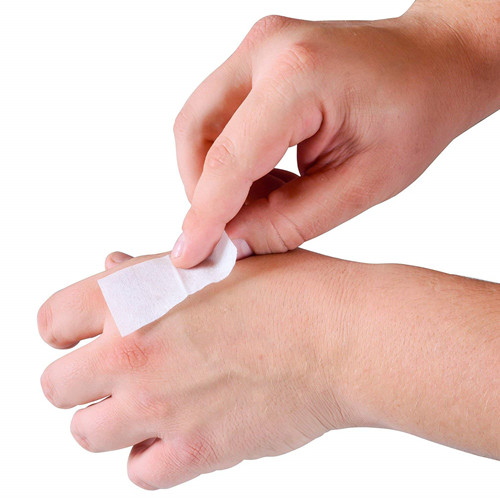
Understanding where consumption occurs is important for B2B buyers. It helps them prepare realistic forecasts and select the right alcohol prep swab packaging configurations.
Hospitals and Health Systems
Hospitals use alcohol prep swabs across many departments. Emergency rooms, inpatient wards, outpatient units, laboratories, pharmacies, dialysis centers, and operating departments all need these single use skin preparation products.
Common alcohol prep swab applications include:
- Preparing the skin before injections
- Cleaning the skin before venipuncture
- Preparing IV insertion sites
- Cleaning vial stoppers where required by protocol
- Supporting blood glucose testing
- Preparing the skin for minor procedures
- Stocking treatment carts and emergency kits
The demand for alcohol prep swabs in hospitals is usually continuous and not on a seasonal basis. Even when admissions change, core activities such as medication administration, blood collection, and IV therapy continue.
Large healthcare systems can centralize purchasing, distributing products to several hospitals. This structure creates a high alcohol prep swab hospital supply MOQ — especially when B2B buyers want standardized products across all facilities.
The procurement team must consider more than annual consumption. It must also examine warehouse capacity, departmental issue rates, emergency stock requirements, and the time needed to move goods from the central store to individual facilities.
Clinics and Outpatient Centers
Alcohol prep swabs are used in smaller amounts per location in private clinics, community health centers, dental practices, urgent care, and specialty offices. However, a clinic group with different branches can create substantial combined demand.
A bulk alcohol prep swab for clinics may be packed in boxes of 100 or 200 units. This is to help staff store it near treatment areas without opening large transport cartons. Distributors serving clinics prefer manageable box sizes, because smaller facilities can order by the box rather than the pallet.
It’s important for B2B buyers to prioritize:
- Easy-open pouches
- Reliable saturation
- Compact storage
- Clear expiration dates
- Consistent box counts
- Competitive unit pricing
The product should also be moist throughout shelf life. A lower priced swab that dries out before use causes waste, staff complaints, and customer returns.
Vaccination and Immunization Programs
Vaccination campaigns can generate high levels of demand in a short time. A national program, school vaccination project, or private immunization providers usually need large quantities within a short delivery period.
So, the procurement teams should calculate the requirements based on planned vaccinations, expected wastage, buffer stock, and distribution points. Also, it’s important to consider whether local clinical guidelines dictate alcohol skin preparation for the particular vaccination procedure.
For programs using alcohol prep swab, the supply plan should align with vaccine delivery, syringes, safety boxes, gloves, and other materials. Swabs that arrive after the vaccination supplies offer little value.
A sterile alcohol prep swab bulk order for a campaign needs deliveries to be done in stages. Shipping the entire quantity at once can overwhelm local warehouses — particularly if the program is distributed across multiple regions.
Laboratories and Diagnostic Centers
Medical labs use alcohol prep swabs during blood collection, finger prick testing, sample collection, and other diagnostic procedures. Some laboratories, especially those with high throughput, need to be regularly replenished throughout.
Diagnostic centers usually standardize alcohol prep swab supplies across multiple branches. They may also want the same barcode, lot number, brand, and product description placed on each box.
Unreliable pouches create a practical problem at the collection point. A swab that does not have sufficient moisture or is difficult to open or too small is discarded and replaced with another swab. A small percentage of faulty units is a significant problem if there are millions of units in the network.
That’s why it’s important for laboratory buyers to test pouch opening, moisture retention, fabric strength, and alcohol odor upfront during sample approval.
Blood Banks and Donation Programs
Organized preparation of collection sites and reliable access to consumables is important for the development and running of blood donation activities. Alcohol swabs can be a part of skin preparation protocol or support related procedures depending on the approved skin preparation protocol.
Mobile blood donation programs usually create additional packaging needs. That means the products need to remain organized during transport, tolerate normal handling, and fit into portable supply kits.
Blood banks usually prefer the swabs to be packaged in cartons that are easy to count and issue. Clear box labeling is also helpful for teams tracking lot numbers when supplies move between fixed facilities and mobile collection centers.
Pharmacies and Home Care Supply Channels
Retail and hospital pharmacies distribute alcohol prep swabs along with injectable medicines, diabetes supplies, fertility treatments, or home care kits. Home users need pouches that open easily and include clear warnings for external use.
A medical distributor serving pharmacies can buy one standard product and supply it under several pack configurations. For example, the distributor might sell full boxes to clinics while including smaller quantities in procedure kits.
This market creates opportunities for private labeling. However, packaging for the consumer will need much more detailed artwork, barcodes, instructions, and local language details than basic institutional cartons.
Dialysis and Long Term Treatment Programs
Dialysis centers, infusion clinics, oncology centers, and chronic disease programs perform repetitive procedures on a regular basis. Here, the consumption rate of alcohol prep swab supplies is easier to forecast, because patient schedules are relatively stable.
These facilities cannot tolerate stockouts frequently. That means missed deliveries can disrupt a large number of planned treatments.
To minimize inventory risk, procurement teams should rely on building recurring orders around actual procedure volumes, maintain safety stock, and monitor consumption changes when the center opens new branches or expands operating hours.
NGOs and Humanitarian Health Programs
International organizations may need an alcohol prep swab wholesale manufacturer for NGO projects in different countries. Typically, these programs operate under strict donor budgets, documentation requirements, and delivery deadlines.
It’s important for an NGO supplier to provide the following:
- Detailed technical specifications
- Certificates of analysis
- Sterility documentation
- Manufacturer authorization
- Country-of-origin information
- Packing lists by project
- Long remaining shelf life
- Multilingual labels
- Inspection access
- Export documentation
Humanitarian programs face difficult delivery conditions. The products travel through hot climates, rough roads, temporary warehouses, and regional distribution hubs. Here, packaging strength and moisture retention matter as much as factory prices.
It is important for the alcohol prep swab wholesale manufacturer to understand tender procedures and document control. A manufacturer who can make a good swab but cannot prepare accurate shipping documents can still create major delays.
First Aid Kit and Procedure Pack Manufacturers
Companies assembling first aid kits, injection kits, testing kits, and procedure trays procure alcohol prep swabs as components. Their demand is tied to finished kit production.
These B2B buyers need a specific pouch size so the swab fits inside a compact kit. They may also request custom printing, lot traceability, or bulk packaging without a retail box.
It’s important for kit manufacturers to confirm whether or not the alcohol prep swab remains individually labeled after it is removed from the original secondary packaging. Local regulations or customer specs may require individual pouches to show the product name, concentration, lot number, and expiration dates.
Product Specifications to Include in Your Purchase Order
A detailed purchase order is helpful in protecting buyers and suppliers. It provides the factory with a clear production target and gives the buyer measurable acceptance criteria.
A general description like “70% alcohol swab, 100 pieces per box” is not enough for a serious bulk purchase. There are many products that can match that description but differ in material quality, pouch construction, size, moisture level, sterilization status, and shelf life.
Product Name and Intended Use
It’s important to start with a clear product description. For example: “Sterile, single-use alcohol prep swab, saturated with 70% v/v isopropyl alcohol, intended for external skin preparation before injections and minor percutaneous procedures.”
The intended use statement is helpful for suppliers in identifying the appropriate regulatory category and labeling. It also prevents the manufacturer from quoting a general use cleaning wipe instead of a product for medical skin preparation.
Alcohol Type
Most medical buyers request swabs saturated in isopropyl alcohol (IPA). Ethyl alcohol or ethanol products are also available, but they should not be substituted without proper approval.
The purchase order should clearly state the following:
- Alcohol type
- Required pharmacopoeia or grade
- Concentration
- Allowed concentration tolerance
- Test method
- Whether purified water is required
For a standard isopropyl alcohol prep swab bulk buy, the specification often calls for 70% v/v IPA. It’s important for B2B buyers to confirm the certificate of analysis to verify the actual concentration of each production lot.
Note: Do not accept vague wording such as “contains alcohol” or “70% solution” without identifying the alcohol type.
Alcohol Concentration
Alcohol concentration in the swabs should appear on individual pouches, secondary boxes, technical data sheets, and the certificate of analysis. All documents should use the same basis of measurement, for example volume by volume.
If B2B buyers need 70% v/v, the alcohol prep swab wholesale manufacturer should disclose manufacturing tolerance and the testing method for the finished product. Concentration falling outside the approved range can affect product performance and regulatory compliance.
B2B buyers should also verify whether the stated percentage refers to the solution before application to the fabric, or the finished swab when testing for shelf life.
Swab Material
Common materials include:
- Non-woven fabric
- Cotton
- Cotton-blend fabric
- Gauze
- Spunlace nonwoven material
Non-woven fabric is widely used as it can provide consistent thickness, low lint, good absorbency, and high speed production. However, the quality varies by fiber composition, fabric weight, and the manufacturing process.
The purchase order must include the following:
- Material type
- Fiber composition
- Fabric weight in grams per square meter, where relevant
- Number of plies
- Linting expectations
- Latex status
- Color
- Odor requirements
- Strength when wet
A thin swab can fold or tear during use. A rough fabric can also be subject to complaints from clinical professionals. Samples should be evaluated prior to approval.
Open and Folded Dimensions
Always indicate the dimensions in millimeters (mm) and explain if the measurements refer to the opened sheet or folded swab. For example:
- Open size: 60 mm × 30 mm
- Folded size: 30 mm × 30 mm
- Ply: 2-ply or 4-ply
The same product could be sold by different suppliers with open or closed measurements. Without clear wording, B2B buyers can receive a swab that is half the expected size, unintentionally.
Include an acceptable dimensional tolerance. For high volume contracts, B2B buyers can also approve a technical drawing with the purchase order.
Saturation and Liquid Content
The alcohol prep swab must contain enough solution to wet the intended skin area without dripping excessively. Too little solution will result in a dry swab. Too much can weaken the pouch, increase the risk of leaking, or create an unpleasant user experience.
B2B buyers can specify saturation levels in several ways, including:
- Minimum weight of the solution per swab
- Solution-to-fabric weight ratio
- Finished swab weight range
- The area of wet space needed during a specified test
- Moisture-retention performance over shelf life
The factory should control the dosing during production and verify it through in-process checks. It’s important to ask how frequently the line measures fill weight and how it handles units outside the target range.
Sterility Status
Not all alcohol wipes sold worldwide are sterile. The purchase order should state clearly whether sterility is required or not. For a sterile product, request the following:
- Sterilization method
- Sterility assurance documentation
- Sterilization validation
- Biological indicator information where applicable
- Maximum sterilization residual limits if ethylene oxide is used
- Sterile barrier packaging validation
The most common sterilization methods are ethylene oxide or radiation, depending on the product and manufacturer.
A label should not claim sterility of the alcohol prep swab unless the product, process, and packaging support that claim. It’s important for B2B buyers placing a sterile alcohol prep swab bulk order to verify the documentation and not just rely on the word “sterile” printed on a sample pouch.
Individual Pouch Construction
The pouch plays a major role in the quality of the product. It must prevent alcohol evaporation, resist leakage, protect the swab, and open without excessive force.
Specify:
- Pouch material
- Foil or laminate structure
- Pouch dimensions
- Seal width
- Peel-open design
- Printing method
- Required barrier performance
- Leak-test requirements
- Seal-integrity test
- Minimum opening performance
A weak seal can break during transportation. And an overly strong seal can cause users to tear the pouch incorrectly or touch the swab while opening it. Testing the samples should include opening the pouches with dry hands and with gloved hands.
Primary Labeling
The individual pouches need to display the following:
- The name of the product
- Alcohol type and concentration
- Sterile status
- Single-use statement
- External-use warning
- The name of the manufacturer
- Lot or batch number
- Manufacture and expiration date
- Storage instructions
- Regulatory symbols
- Instructions not to use damaged packaging
The exact requirements depend on the destination market and classification of the product. B2B buyers should provide approved artwork and require written approval before printing.
Box and Carton Configuration
Specify the complete packaging structure of the alcohol prep swab. For example:
- Swabs per box
- Boxes per inner carton
- Boxes per master carton
- Total swabs per carton
- Carton dimensions
- Gross and net weight
- Pallet configuration
- Maximum stacking height
- Barcode requirements
Swabs are packaged in common retail boxes or in clinical boxes, which contain 100 or 200 swabs. The export cartons can contain dozens of boxes. The best configuration depends on the customer. Hospitals prefer compact boxes that fit supply carts, while distributors can prioritize transport efficiency and pallet density.
Shelf Life
Many healthcare buyers request alcohol prep swabs with 2–3 years of shelf life — although the available period depends on product validation and manufacturer documentation. The manufacturer should state the minimum remaining shelf life required at delivery.
This is helpful in protecting buyers from receiving older stock. It is particularly important for international shipments that can spend up to several weeks in transit and customs clearance. The alcohol prep swab wholesale manufacturer should support the expiration period with stability and package-integrity data.
Storage Conditions
Alcohol-based products need controlled storage — away from excessive heat, flames, and ignition sources. The labeling and transport cartons should state the storage conditions that have been approved.
It’s important for the purchase order to specify:
- Temperature range
- Humidity limits, where relevant
- Protection from sunlight
- Flammable product handling
- Warehouse ventilation
- Carton stacking limits
B2B buyers operating in hot climates should ask whether the packaging has been tested under elevated-temperature conditions. Pouches that perform well in controlled warehouses can lose moisture faster in hot distribution environments.
Quality Documentation
Ask the alcohol prep swab wholesale manufacturer to submit quality documentation before shipment. These documents include the following:
- Certificate of analysis
- Certificate of conformity
- Sterility certificate
- Alcohol concentration test
- Pouch integrity test
- Material specification
- Safety data sheet
- ISO certificate
- Regulatory registration documents
How to Find and Evaluate a Alcohol Prep Swab Wholesale Manufacturer
Getting alcohol prep swab wholesale is easy. But finding one who can deliver a consistent, compliant prep swab for several years can be a daunting task — it takes more work.
B2B buyers can identify potential factories through medical trade shows, industry directories, sourcing platforms, referrals, independent sourcing agents, and similar channels. The acquisition process is supposed to generate a short-list, not an instant decision.
Decide Whether You Need a Manufacturer or Trading Company
A direct manufacturer oversees the entire production, quality, materials, packaging, and scheduling process. It may also be able to provide more pricing flexibility and customization for larger orders.
A trading firm purchases from one or several factories and then sells the product. It may offer lower MOQs, mixed product orders, broader export support, and easier communication.
Neither sourcing model is automatically better. If a distributor is interested in getting one million units custom printed, they may need a direct factory. A smaller importer looking to buy several medical products in one order may choose an established trading company.
Ask each supplier:
- Are you the legal manufacturer?
- Where is the production facility?
- Who owns the product registration?
- Who performs sterilization?
- Can the factory appear on the commercial documents?
- Can we audit the manufacturing site?
- Do you subcontract any production steps?
This information also outlines the alcohol prep swab manufacturer export structure. Some factories export directly, while others rely on a separate licensed exporter.
Review the Product Focus of the Supplier
A factory specializing in alcohol swabs, antiseptic wipes, and related disposables has stronger process control compared to a general supplier listing hundreds of unrelated product lines. Review the company’s:
- Main product categories
- Years in operation
- Export markets
- Major customer types
- Production lines
- Sterilization partners
- Quality-control laboratory
- Packaging capabilities
- Private label experience
Ask about the percentage of annual production attributed to alcohol prep swabs. Products representing a core business line receive more technical attention than side products sourced only when customers request them.
Verify the Company’s Legal Identity
Before discussing a large deposit, confirm the supplier’s legal company name, registration address, bank account, export license, and factory address. The beneficiary name on the bank account should match the contracting entity or have a clear legal relationship.
B2B buyers can also request:
- Business registration
- Tax registration
- Export registration
- Manufacturer license
- Authorized signatory information
- References from established customers
Verification reduces the risk of fraud and helps the buyer understand who is legally responsible for the product they are purchasing.
Examine Certifications Carefully
Some suppliers may display certification logos on their websites without providing full proof. Request full copies of the certificate — not screenshots. Check:
- Certificate holder name
- Factory address
- Scope of certification
- Product category
- Standard version
- Issue date
- Expiration date
- Certification body
- Certificate number
The scope matters. An ISO 13485 certificate for surgical instruments does not automatically confirm that alcohol swab manufacturing falls within the approved scope of quality management.
A claimed CE certified prep swab exporter should be able to provide details about the product classification, conformity route, declaration of conformity, authorized representative (if applicable), and applicable labeling requirements. Certifications should also, where possible, be cross-checked with the issuing body or relevant regulatory database.
Request Technical Documents Before Pricing Negotiations
Many B2B buyers ask about prices first. Instead, the best approach is confirming technical suitability before comparing quotations. Request:
- Technical data sheet
- Product drawing
- Material specification
- Label artwork
- Sterilization method
- Shelf-life statement
- Certificate of analysis template
- Packaging details
- Product registration
- Quality certificates
Suppliers who cannot provide basic documentation will also struggle with tender submissions, customs questions, and quality investigations.
Order Production-Representative Samples
A sales sample may not represent routine production. Check if the sample is from a current commercial batch and obtain the batch number. Evaluate:
- Pouch appearance
- Print clarity
- Seal consistency
- Ease of opening
- Swab size
- Fabric thickness
- Wet strength
- Alcohol odor
- Moisture level
- Visible contamination
- Box quality
- Label accuracy
Open several units. The sample should be consistent from pouch to pouch. For a high value contract, send some samples to an independent laboratory to test alcohol concentration, microbial content, material, and packaging.
Conduct a Factory Audit
A factory audit provides information that certificates alone cannot show. Audits can be done by the buyer, by a local agent, or by an independent audit company. It should review:
- Incoming material controls
- Supplier qualification
- Production area hygiene
- Environmental controls
- Pouch sealing
- Printing controls
- Batch traceability
- Nonconforming product handling
- Calibration
- Complaint management
- Corrective actions
- Warehouse conditions
- Sterilization controls
During the production process, note how the factory prevents the loss of alcohol. Additionally, check if printed packaging materials are securely controlled to prevent brand misuse.
Confirm Production Capacity
Ask for information about current monthly capacity, normal utilization, peak-season capacity, number of production lines, shift patterns, and maintenance schedules. Capacity claims should be specific — “We can produce large quantities” is not sufficient.
The supplier should explain the following:
- Daily output per line
- Current committed volume
- Time required for raw materials
- Standard production lead time
- Capacity for urgent orders
- Maximum monthly private-label output
- Backup arrangements during equipment failure
A factory can have high production capacity in theory, but may have limited capacity available because other customers have already occupied the production schedule.
Highlight Quality Control Procedures
A good supplier will test raw materials, monitor manufacturing, inspect finished products, and release every batch via an approved quality function. Ask about:
- Fabric inspection
- Alcohol identity and concentration testing
- Dosing checks
- Seal-strength testing
- Leak testing
- Print inspection
- Weight checks
- Sterility testing
- Retained samples
- Shelf life monitoring
The factory should retain samples from each lot for investigation in case B2B buyers report a defect several months later.
Evaluate Export and Logistics Experience
A factory could produce great products but lack experience in exporting alcoholic goods to foreign countries. Strict transportation restrictions, special carrier requirements, and documentation may apply to alcohol products.
Inquire about their regular markets and freight routes. Check whether they can provide:
- Safety data sheet
- Dangerous goods classification where applicable
- Transport test documents
- Export packing
- Customs documentation
- Certificate of origin
- Bill of lading instructions
- Cargo insurance support
A supplier with export experience should provide accurate carton measurements and weights before booking freight.
Check Communication Quality
Communication problems usually become production problems. When evaluating providers, assess whether their sales and technical staff are able to:
- Directly respond to every question
- Provide consistent information
- Meet agreed deadlines
- Understand medical terminology
- Correct mistakes openly
- Maintain version control
- Confirm changes in writing
A supplier who gives vague responses before receiving a deposit is unlikely to become more transparent after payment.
Compliance and Import Regulations
Regulations vary for different countries, intended use, product claims, alcohol formulation, and sterility status. B2B buyers must verify the applicable rules with the destination market’s regulatory body or a competent compliance expert before ordering any goods.
Even though a product can be accepted in one country, it may need additional registration, labeling, or importer licensing in another country.
Product Classification
The same physical product can be regulated differently based on its claims. An alcohol prep swab (medical skin preparation product) can be classified as a medical device, medicinal product, antiseptic product, biocidal product, or a combination product.
It’s up to the B2B buyer to determine the following:
- Intended use
- Product classification
- Risk class
- Registration route
- Responsible economic operator
- Importer obligations
- Post-market duties
- Labeling requirements
Do not assume that CE marking or FDA approval automatically means products can be imported into all markets.
United States Requirements
B2B buyers for the US market are advised to review the FDA regulatory pathway, establishment registration, device listing requirements, drug or medical claims, labeling, and product import documentation for the alcohol prep swab.
Product claims and configuration can dictate the correct route. The importer must determine the current requirements before shipment instead of relying on the supplier’s statement that the product is “FDA approved.”
Ask the supplier to give you the complete registration or listing information and ensure that:
- The legal manufacturer matches the records
- The product description matches the alcohol prep swab
- The registration remains active
- The label is in line with the claim
- The foreign manufacturer has completed required establishment obligations
- The U.S. importer understands its responsibilities
Do not use the term “FDA approved” as a general marketing phrase unless the specific regulatory status supports it.
European Union Requirements
For the European Union markets, it’s important for B2B buyers to confirm classification and compliance under the current medical device and any other applicable regulations. Documentation may include:
- EU Declaration of Conformity
- Technical documentation
- Quality management certification
- Notified body involvement where required
- Authorized representative information
- CE marking
- Unique device identification requirements
- Importer information
- Language-specific labeling
Additional conformity requirements for sterile products may be needed compared to non-sterile products. The importer and distributor also have obligations. They should check labeling, storage, traceability, registration, complaint handling, and corrective action procedures.
ISO 13485 Certification
ISO 13485 provides the quality management system framework for medical device manufacturers. It covers areas such as document control, risk management, supplier controls, production, traceability, complaint handling, and corrective action.
Although an ISO 13485 certificate is extremely useful, it is not a substitute for product registration or regulatory approval. The buyer should check that the certificate covers the required facility and product scope. The best suppliers can provide an explanation of how the quality system applies over the life of the alcohol prep swab — from receipt of raw materials to batch release.
Sterile Packaging Standards
Sterile products require packaging that maintains the sterile barrier until use. The manufacturer should validate the packaging material, sealing process, transportation resistance, and shelf life performance.
Procurement teams can request evidence covering the following aspects:
- Seal strength
- Package integrity
- Accelerated aging
- Real-time aging
- Distribution simulation
- Sterilization compatibility
- Dye penetration or leak testing
- Peel performance
The pouch is a component of the product. A non-sterile swab in a poorly sealed pouch is not an acceptable finished product.
Labeling and Language
The destination market may require labels in one or more official languages. It’s important for B2B buyers to confirm which information must appear on:
- Individual pouches
- Inner box
- Master carton
- Instructions for use
- Importer label
- Distributor label
Private label buyers should not remove legal information placed by the manufacturer to create a cleaner design. Artwork approval should involve regulatory, quality, procurement, and marketing teams. Any slight error in labeling can cause an entire shipment to be held at customs.
Importer and Distributor Responsibilities
The importer needs to keep records linking each shipment to the manufacturer, batch number, quantity, customer, and complaint history. They may also need procedures for:
- Receiving inspection
- Storage
- Traceability
- Complaint handling
- Field safety corrective action
- Product recall
A distributor should be able to determine the distribution history of a particular lot. This is particularly useful when action needs to be taken in the market due to a pouch defect, label error, or sterility issue.
Transport of Alcohol Containing Products
Because the swabs contain alcohol, freight classification needs careful review. The requirements can vary depending on the quantity of alcohol per inner package, total quantity, mode of transport, and applicable exemptions.
Don’t assume all individually packed swabs can move as ordinary cargo. Ask a qualified freight forwarder to confirm air, sea, road, and courier requirements. The supplier should provide accurate information about:
- Alcohol type
- Concentration
- Quantity per pouch
- Quantity per carton
- Flash point
- Safety data
- Packaging method
- Transport classification
Wrong declaration can lead to shipment rejection, delays, fines, or safety risks.
Country-Specific Import Controls
Some markets require:
- Medical device registration
- Import permits
- Product samples
- Local testing
- Free-sale certificates
- Manufacturer authorization letters
- Local representative appointments
- Pre-shipment inspection
- Conformity certification
- Special labeling
- Batch certificates
It’s important for B2B buyers to prepare a compliance checklist for each destination country. An NGO shipping the same alcohol prep swab to five countries may need five different documentation packages.
Pricing and MOQ Structure
When B2B buyers procure alcohol prep swab wholesale, the unit price is just one part of the commercial decision. Lower factory prices become expensive after packaging changes, inspections, freight, duties, storage, financing, and quality failures. Quotes should be based on the same product specification and Incoterm.
Factors That Affect Unit Price
The factory price may change as a result of:
- Swab dimensions
- Fabric material
- Fabric weight
- Number of plies
- Alcohol type
- Alcohol concentration
- Solution dosage
- Sterility
- Pouch material
- Printing colors
- Box quantity
- Carton configuration
- Order volume
- Regulatory documentation
- Inspection requirements
- Payment terms
- Delivery schedule
Generally, larger, thicker, and more absorbent alcohol prep swabs will be more expensive than smaller economy prep swabs. Methods such as using high barrier materials and sterilization will also add to the cost.
Standard Product MOQ
Suppliers can offer a lower MOQ for an existing design because the pouch film, box, and raw materials are already in stock. B2B buyers may only need to order a few cartons or pallets. Standard products may be helpful for:
- Trial orders
- Small clinics
- New distributors
- Emergency replenishment
- Market testing
- Buyers without private-label requirements
However, stock products can provide limited control over branding, language, carton configuration, and remaining shelf life.
Custom Product MOQ
OEM products generally need a higher MOQ because the factory has to purchase custom printed film, boxes, cartons, and labels. Printing suppliers may impose their own minimum production runs.
The private label MOQ can be determined by:
- Number of pouches
- Number of boxes
- Printed-film length
- Full pallet
- Production batch
- 20-foot container
- Mixed container volume
Ask the supplier to differentiate the product MOQ from the packaging MOQ. A factory may be willing to produce 100,000 swabs, but the packaging vendor requires enough printed film for 500,000.
Price Tiers
Ask for quotes at a number of quantities, including:
- 50,000 units
- 100,000 units
- 250,000 units
- 500,000 units
- 1,000,000 units
- Full-container quantity
Price tiers reveal where production efficiency improves. They also help B2B buyers compare the savings from a larger order against inventory holding costs.
Picking a large quantity is not automatically the best decision. Lower unit prices can create a larger financial loss if the alcohol prep swab expires in storage or the market changes.
Understanding the Hospital Supply MOQ
The alcohol prep swab hospital supply MOQ should match the consumption and storage capacity of the hospital. A factory MOQ designed for exporters can be too high for a single facility.
Hospitals can solve this problem by:
- Buying through a local distributor
- Combining demand across a health system
- Signing a call-off contract
- Using scheduled partial deliveries
- Purchasing a standard unbranded product
- Joining a group purchasing arrangement
The contract can commit B2B buyers to an annual volume with monthly or quarterly releases. This approach gives the supplier volume certainty without forcing the hospital to store the entire alcohol prep swab order.
Landed Cost
Calculate the cost of getting the product into usable inventory. A landed-cost model should incorporate the following elements:
- Factory unit price
- Custom printing
- Mold or plate charges
- Export packing
- Inland transport
- Port charges
- Freight
- Dangerous goods charges
- Insurance
- Import duty
- Value-added tax
- Customs brokerage
- Port storage
- Local delivery
- Inspection
- Laboratory testing
- Financing
- Warehouse handling
- Expected defects
Compare alcohol prep swab suppliers using the cost per accepted swab delivered to the warehouse, not the cost per swab at the factory gate.
Incoterms
Common quotation terms include EXW, FOB, CIF, or DDP. Each term assigns the buyer and seller different responsibilities. The quotation should identify the following:
- Named location or port
- Incoterm version
- Included charges
- Excluded charges
- Freight validity
- Insurance responsibility
- Customs responsibility
A vague “FOB price” without a named port is incomplete. It is also important for B2B buyers to confirm whether hazardous or restricted cargo fees are included. Low freight quotes might change after the forwarder reviews the alcohol content in the swabs.
Payment Terms
When dealing with new suppliers, a deposit before shipment may be required. Payment should be tied to measurable milestones. Possible terms include:
- Deposit after contract signing
- Balance after passed inspection
- Balance against shipping documents
- Letter of credit
- Documentary collection
- Open-account terms for established relationships
When ordering for the first time, without strong financial protections, don’t pay the total price before production. The contract should also address bank fees, currency, exchange rate risks, late payment, rejected goods, and refund procedures.
Pricing Validity
Alcohol, nonwoven fabric, packaging film, freight, and currency rates can change at any time. Request the supplier to specify the duration of validity of the quotation. With recurring contracts, opt for a price review mechanism rather than leaving future changes undefined.
The agreement may allow for reviewing every six months or when a documented raw material index changes beyond an agreed threshold. Significant price increases should be accompanied by evidence from the supplier.
Setting Up a Recurring Supply Agreement
A supply agreement can minimize emergency purchases, improve prices, and provide the supplier with production visibility. It also establishes a formal quality management and performance evaluation system. The agreement should be used in conjunction with the technical specification, approved sample, quality agreement, and individual purchase orders.
Forecast Annual Demand
Start with historical usage of the alcohol prep swab and expected growth. Review:
- Monthly consumption
- Seasonal changes
- Planned vaccination programs
- Customer contracts
- Tender commitments
- Safety-stock targets
- Lead times
Forecasts should be updated on a regular basis. A 12-month forecast gives the supplier visibility while allowing the buyer to adjust later delivery quantities.
Separate Forecasts From Firm Orders
The contract needs to specify whether the forecast period is binding or not. For example:
- Weeks 1–8: Firm and noncancelable
- Weeks 9–16: Adjustable within an agreed range
- Later months: Planning forecast only
This structure helps the factory purchase materials without forcing B2B buyers to commit to distant demand.
Set Reorder Points and Safety Stock
Reorder points should account for production, inspection, shipment, customs clearance, local transport, and internal receiving. A distributor with a 90-day total replenishment cycle cannot safely reorder when only 30 days of stock remain.
Safety stock should account for:
- Demand variation
- Delivery risk
- Supplier reliability
- Customs delays
- Seasonal demand
- Emergency requirements
- Availability of backup suppliers
Important healthcare products usually need more protection than ordinary commercial inventory.
Use Scheduled or Call-Off Deliveries
A buyer may commit to one million swabs a year but request four quarterly shipments. This gives the supplier an annual volume while reducing the buyer’s warehouse burden.
The agreement should state:
- Minimum release quantity
- Delivery frequency
- Required notice
- Maximum annual variation
- Storage responsibility
- Remaining shelf life
- Freight responsibility
- Consequences of delayed releases
If using private label products, the supplier can construct the packaging materials in advance and manufacture swabs based on release orders.
Define Service Levels
Add measurable performance indicators including:
- On-time delivery rate
- Accepted quantity
- Packaging defect rate
- Document accuracy
- Complaint response time
- Corrective-action closure time
- Minimum remaining shelf life
- Order-confirmation time
- Shipping-update frequency
An undefined expectation is something a supplier cannot manage to. Clear service levels make quarterly performance reviews more objective.
Establish Quality Acceptance Criteria
The agreement should reference the approved specifications and state how B2B buyers will inspect deliveries. The contract should explain the sampling methods, testing responsibility, which laboratories will be used for testing, and the process for rejected goods.
Include Change-Control Requirements
The supplier should not change the materials, alcohol source, pouch structure, sterilization provider, factory location, production process, artwork, or testing method without written approval. A change that seems minor to the supplier can affect registration, stability, transport, or customer acceptance. Expected or upcoming changes should be announced in advance and backed up with supporting documentation.
Establish Complaint and Corrective-Action Process
Any complaint must be acknowledged promptly and addressed via retained samples and batch records. No supplier should attribute pouch leakage or dry swab complaints to normal variation without investigating the nature of the problem.
Plan for Supply Interruptions
The agreement should require early notification of:
- Raw-material shortages
- Equipment failure
- Sterilization delays
- Regulatory action
- Labor disruption
- Port closure
- Capacity constraints
- Quality holds
Discuss whether the supplier maintains a safety stock of raw materials or finished products. It’s also important for B2B buyers to qualify a backup source for critical products and not depend on a single factory indefinitely.
OEM and Private Label Alcohol Prep Swabs
Private labeling enables distributors, pharmacies, hospitals, and kit manufacturers to sell alcohol prep swabs under their own name. The commercial prospects may be appealing, but the brand owner takes on greater responsibility in artwork, claims, traceability, compliance, and customer complaints.
Select the Private Label Model
Common models include:
- Factory brand with distributor sticker
- Neutral pouch with custom box
- Fully custom pouch, box, and carton
- Contract-manufactured product with buyer-owned specification
- Custom swab size or material
- Custom kit packaging
Custom printed boxes are normally more affordable than fully custom printed foil pouches. This can be a practical starting point for a new distributor. Fully branded pouches offer greater market visibility but require more packaging inventory and artwork control.
Define Brand Ownership
The contract should specify that the buyer owns its trademarks, artwork, barcodes, and approved packaging designs. The supplier should not:
- Sell the buyer’s branded product to another customer
- Use the artwork in marketing without permission
- Produce excess branded inventory without authorization
- Disclose confidential pricing or specifications
- Register the buyer’s brand in another market
B2B buyers should also consider trademark registration in countries of manufacture and destination.
Develop Compliant Artwork
The artwork must balance brand presentation with the necessary information. Individual pouches and boxes need to show:
- Brand name
- Alcohol concentration
- Storage conditions
- Sterile status
- Lot number
- Manufacture and expiration dates
- Regulatory symbols
- Barcode
Never have a designer delete legal information from artwork for visual reasons. All text must be carefully proofread. If the alcohol concentration, warning, or manufacturer information is misspelled, the entire batch may need to be destroyed or re-labeled.
Confirm Regulatory Roles
Private labeling does not exempt users from obligations and requirements. Depending on the market, the brand owner, legal manufacturer, importer, or authorized representative may each have specific responsibilities. The brand owner should maintain complete documentation relative to its product.
Protect Product Consistency
Once customers approve the private label alcohol prep swab, the factory should not quietly change the fabric, pouch, alcohol source, or dimensions to reduce cost. Use a controlled specification with written change approval. Make periodic comparisons to the original approved sample.
Distributors should also pay attention to market feedback. If users report that the product is dry, difficult to open, overly fragrant, or thinner than expected, the product may have drifted from the approved standard.
Plan Reorders Before Packaging Runs Out
There can be extended lead times if materials are custom printed. The distributor should place orders in time to allow for film printing, box production, manufacturing, sterilization, internal inspection, and international shipment.
A recurring private label agreement can reserve packaging materials and production capacity. It may also provide for a minimum annual volume that permits multiple shipment releases.
Final Thoughts
Alcohol prep swabs are a high-volume, low-unit-cost product, but procuring them incorrectly can have significant financial and operational consequences. Unclear specifications can lead to undersized swabs. Poorly constructed packaging may result in dry product. Missing documentation may cause customs delays. An unrealistic MOQ can tie up cash in slow-moving inventory.
Hospitals should focus on clinical suitability, continuity, traceability, and total delivered cost. Distributors also need to account for customer packaging preferences, private label needs, market registration, and resale margins. For NGOs, reliable suppliers with compliant products, accurate tender documents, and international logistics capabilities can be essential.
Prior to placing a large alcohol prep swab order, approve a production-representative sample, verify certifications, review regulatory requirements, audit the supplier where practical, and define acceptance criteria in writing. Compare quotations using the same product specification and calculate the full landed cost.
A reliable wholesale relationship is not built on price alone. It depends on a manufacturer’s ability to produce the same alcohol prep swab — with the same material, saturation, seal integrity, labeling, and documentation — across every batch. When procurement teams control these details from the beginning, they can build a safer and more predictable supply chain for hospitals, clinics, laboratories, distributors, and public health programs.
Partner with BKAMED for Reliable Alcohol Prep Swab Wholesale Supply Today
BKAMED supplies high quality alcohol prep swabs for hospitals, clinics, laboratories, distributors, pharmacies, and public health programs worldwide. Whether you need a sterile alcohol prep swab bulk order, a bulk alcohol prep swab for clinics, or custom OEM and private-label solutions, BKAMED offers flexible manufacturing, strict quality control, and responsive export support for B2B buyers.
Looking to source Alcohol Prep Swab at wholesale for hospitals and distributors? Contact us today to discuss your specifications, request product samples, receive a competitive quotation, or develop a long-term supply program tailored to your purchasing volume and market requirements. Our team can assist you in building a solid and cost-effective procurement approach.
