
The global wound care market was valued at USD 24.9 billion in 2024 and projected to continue growing at a rate of 5.4%. That said, one product that is consumed widely, yet rarely receives a second look in procurement discussions is the absorbent cotton gauze ball.
Absorbent cotton gauze balls are essential items to be found in any hospital, pharmacy, dental office and first aid room or kits. Although it is a simple process, sourcing it incorrectly can be expensive particularly for distributors and procurement teams in terms of lost shipments, missed regulatory audits, and lost confidence from buyers.
Whether you’re filling the shelves at your pharmacy, handling bulk inventory for a distributor or first aid kit manufacturers who have hit their minimum order quantity, the quality of each absorbent cotton gauze ball is important. Blended products that do not meet the absorbency standard are a liability.
This guide addresses all the information that a B2B buyer should consider before ordering cotton gauze balls wholesale, including the different types of cotton gauze balls, what standards should be used for materials, the difference between sterile and non-sterile uses, OEM and private label options, packaging choices, certifications for key markets, pricing at the factory, and how to properly vet a supplier.
Types of Cotton Gauze Balls
There are different types of cotton gauze balls. Knowing the distinctions is the initial step to finding the best product for each buyer channel.
Woven vs Non-Woven Construction.
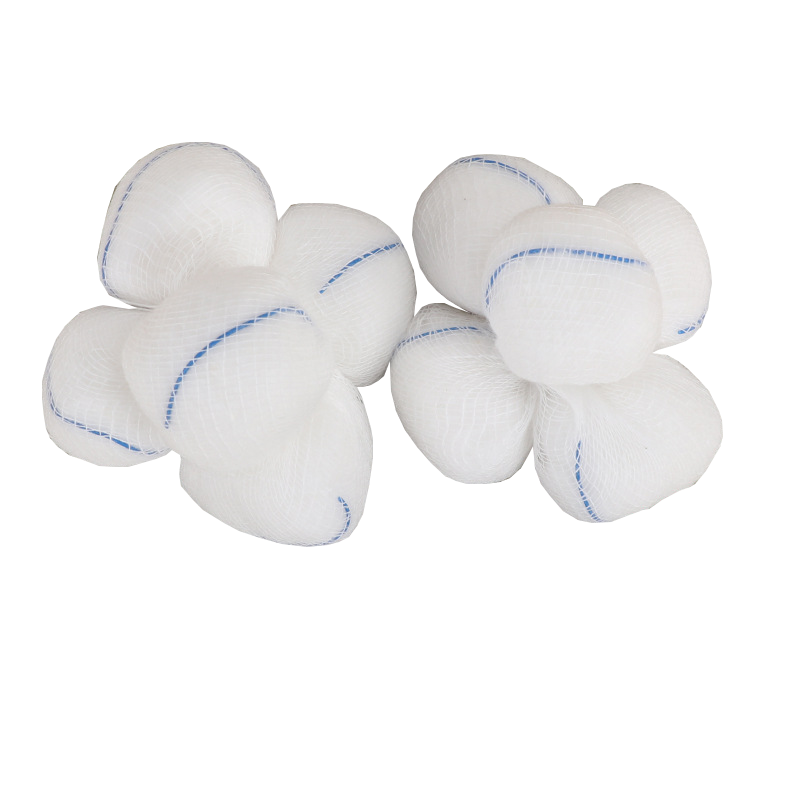
This type of woven gauze ball is created by cutting, folding and shaping cotton cloth into a round ball. These are woven and have a stronger tensile strength, making them the preferred type of ball for use in clinical settings where the ball will be under pressure and needs to maintain its shape.
Non-woven cotton balls, however, are made by stacking un-knitted cotton fibers together. On the whole, they are softer and are extensively utilized in shaving products, retail stores for medicines, first aid kits where clinical grade structure is not required.
The main difference for procurement: woven absorbent cotton balls tend to be more effective in surgical and dental use as they have a controlled shape and fibre integrity. For general healthcare and retail purposes, non-woven types are economical and are manufactured in high volumes.
Plain Cotton Balls vs Gauze Balls
A plain cotton ball is made from loose cotton fibres or cotton wool to be soft and fluffy. They exist in retail pharmacies, cosmetics and home care. Gauze ball is an indispensable product of woven or folded gauze fabric, which is compact and absorbent, used to treat wounds, for dental purposes, and in clinical treatment.
Practical difference is absorbency and durability. Absorbent cotton balls do not break apart or lose shape when saturated with fluids, whereas plain cotton balls will lose shape and break apart when saturated with fluids. This is crucial to product performance for medical and dental buyers.
With X-ray Detectable Thread and Without X-ray Detectable Thread.
Gauze balls with x-ray detectable thread are another category for surgery. These include barium sulfate or metallic thread embedded in the ball’s composition which can be seen on x-rays. A patient safety feature that helps prevent the retention of foreign body after surgery.
Buyers who provide operating rooms or surgical suites should inquire for x-ray detectable variants. In the case of pharmacy retail, dental supply or first aid kits, standard absorbent cotton balls without x-ray thread are adequate and more economical.
With and Without Elastic Ring
Some cotton gauze balls are produced with a small elastic ring to keep the ball round and uniform during production and use. This is especially critical for dental cotton balls bulk order, where uniformity is essential for accurate placement in dental procedures.
Size Range
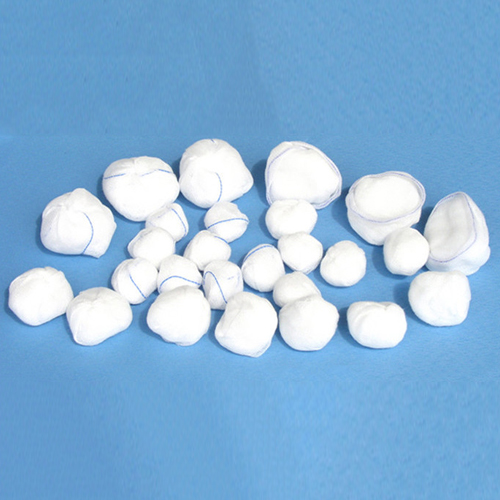
The diameter of standard gauze balls vary from 10mm to 40mm. The most frequently required sizes are 10mm, 20mm and 30mm across all markets. Usually, the size of the balls applied in dental use is 10mm-20mm. The 20mm to 30mm are typically used in hospital and wound care applications. The standard size of a first aid kit is 20mm.
A written confirmation of the size specifications is the best way to avoid the most common sourcing mismatch, when ordering in bulk amounts. Some 20mm absorbent cotton gauze balls from a single manufacturer may differ slightly from those of another because of variation in compression of the gauze in the forming process, so please ask for a pre-shipment sample.
Material Standards: 100% Cotton vs Blended
A 100% absorbent cotton gauze ball works quite a bit differently from the blended products and often it is not easily discernible to the naked eye.
Why 100% Bleached Absorbent Cotton Matters
Medical grade absorbent cotton gauze balls are made from 100% bleached, hydrophilic cotton. The bleaching action removes the natural fats, waxes and sizing from the raw cotton fibre, rendering it hydrophilic or water-hungry.
If blended fibres (e.g. polyester, viscose or synthetic fill) are used, the absorbency will be reduced and the product may not meet Pharmacopoeia requirements.
When buying a blended product and the cotton would be used in clinical or regulated markets, it would be a compliance and liability risk.
After the purification process, the product is called ‘absorbent cotton’ or ‘hydrophilic cotton’ by the surgical cotton ball manufacturer community. This is in contrast to raw cotton which is water-repellent.
How do you know if a product is a blended or an inferior product?
The fastest field test is the sink test or sink time test. Place the absorbent cotton gauze ball on the surface of clean water and see how fast it absorbs the water and sinks. The more hydrophilic the cotton the quicker the sink time.
Pharmacopoeia Test Guidelines require a sinking time of no more than 5 seconds (BP 10 seconds). The products that do not pass the sinking time test may be mixed or under processed.
Before placing a large order, make sure to always request a Certificate of Analysis (COA) from a supplier that has been done in absorbency testing.
A few signs of below standard blended products are:
- Synthetic fibres: A slubbed texture or stiffness that can’t be found in pure cotton
- Even texture: pure cotton gauze balls surface is consistent and uniform
- Poor retention: Blended products absorb readily, but release fluid when light pressure applied.
- Chemical smell: non-medical grade products may have a faint smell from residual sizing agents or synthetic binders.
Sorbent Standards: USP and BP Absorbency Standards
USP (United States Pharmacopeia) is the compliance requirement for buyers in the US market. BP (British Pharmacopoeia) is applicable for EU, UK and many commonwealth markets. Both standards specify the acceptable absorbency performance of an absorbent cotton gauze ball in the clinical environment.
A sterile gauze balls 100% cotton manufacturer at an export ready facility will be able to present a document to demonstrate compliance with one or both of the standards.
Consumers should request this information before ordering, particularly when ordering to pharmacy chains or hospital procurement services.
Sterile vs Non-Sterile: Applications and Market Preferences,
The most commercially important difference between the absorbent cotton gauze ball category is whether it is sterile or not. This one variable determines the Price, Packaging, Shelf Life, Certifications needed, Buyer Segments served and much more.
Which Buyers Need Sterile
In places where the product would come in contact with open wounds, surgical areas, or sensitive tissue, sterile absorbent cotton gauze balls are necessary. The critical segments of buyers are:
- Surgical suites and hospital: Gauze balls are routinely provided in surgery for post-surgical wounds and minor surgeries.
- Wound management in dental clinics: sterile cotton balls are used for wound management after extraction to avoid bleeding and for isolation purposes.
- Any place that comes in direct contact with wounds will usually require a sterile product, such as outpatient clinics and wound care centres
- Emergency medical services (EMS): parameDIC kits may include sterile wound management kits for working in the field
Such buyers require the sterile absorbent cotton gauze ball to be packaged separately or in batches in a sterile barrier system which will achieve sterility at the time of use. The packaging should also comply with regulatory requirements as per the markets.
Which buyers use non-sterile?
The absorbent cotton gauze balls represent a much greater volume of the market than do the sterile ones. This includes:
- Pharmacy retail: non-sterile cotton balls are kept in the pharmacy to use as wound care, antiseptic application and general hygiene for consumers
- First aid kit manufacturers: Most first aid boxes on the commercial market contain non-sterile cotton balls that can be used for everyday purposes.
- Cosmetics distributors: Non-sterile cotton balls are a common cosmetic/personal care product used in cosmetics supply chains.
- Veterinary supply: There are non-sterile variants commonly used in animal care products.
The segment of non-sterile cottons sold in bulk by the pharmacy is relatively high-volume and price-sensitive. Consistent quality, reliable lead time and competitive pricing are more important to the buyers in this segment than sterility documentation.
Sterilisation Methods: ETO vs Gamma
The two major methods of sterilisation used by the manufacturers of sterile absorbent cotton gauze balls are Ethylene Oxide (ETO) and gamma irradiation.
According to the NCBI, about 50% of medical device sterilisation uses ETO while 40% relies on gamma radiation. Both methods produce a Sterility Assurance Level (SAL) of 10⁻⁶, the international standard for sterile medical devices.
Use of ETO sterilisers is appropriate for cotton products because the process takes place at low temperatures, maintaining the integrity of the product. Gamma irradiation is quicker and can be used directly on sealed final packaging with a longer guaranteed shelf life. Both are suitable for sterile gauze balls 100% cotton which are intended for clinical markets.
Shelf Life Considerations
Sterile absorbent cotton balls have a finite shelf life, depending on the type of sterilisation process used, the seal of the packaging and the storage conditions.
ETO sterile products have a typical shelf life of 3 to 5 years, when stored under the right conditions. The deep penetration of gamma-sterilised products and higher assurance sterile barrier can be used for shelf lives of 5 years or more.
Shelf life is a variable of procurement that is directly linked with the rotation of stock and the working capital of the distributors with extensive stock. Before committing to a bulk cotton gauze balls bulk wholesale supplier agreement, always check on the product packaging the stated shelf life and sterilisation date.
OEM and Private Label Manufacturing
OEM (Original Equipment Manufacturer) and private label are excellent business prospects for distributors and pharmacy chains who want to create their own brand in the absorbent cotton gauze ball market. When you know how this works in practice, you can obtain the best estimates and establish realistic timeframes.
How OEM Works for Cotton Gauze Balls.
With an OEM design, the buyer gives the manufacturer the specifications for the absorbent cotton gauze ball which is then manufactured to meet those requirements. That includes ball size, yarn counts, woven or non-woven, sterile or not sterile and packaging design.
Cotton gauze ball OEM private label producing enables customers to promote as their own brand name with customized packaging and labelling in their desired language and regulatory markings for their targeted market.
Manufacture and quality control are undertaken by the manufacturer, while distribution and the ownership of the brand is the responsibility of the buyer.
Yarn Count and Its Impact on Quality
One of the specifications which has a great influence on the quality and price of absorbent cotton gauze ball is the yarn count.
Typically, 21s and 32s are common yarn counts for gauze balls. The finer the yarn count (32s), the more fine and even the texture will be, which will result in a better surface integrity. The lower count (21s) yields a coarser product for general use applications.
The standard specification for clinical and pharmaceutical grade absorbent cotton gauze balls is 32’s. In the case of general pharmacy retail and first aid kit supply, 21s is preferred. If using a yarn for OEM requirements, be sure to mention the yarn count, in addition to size and construction type.
Packaging Design for Original Equipment Manufacturers (OEM) Runs.
The OEM process emerges into public view at packaging design. Usually, the standard requirements for OEM cotton gauze balls packaging are: the buyer’s logo, the brand colours, the product specification in the specified language, the batch number, the expiration date, the barcode, and the required regulatory marks.
There are different channels and different packaging formats. Usually, retail pharmacy packaging is done with a printed poly bag with a display carton. Plain poly bags or kraft paper packaging are used for hospital bulk supply. The packaging for exports must meet the labelling requirements of the importing country.
MOQ for Custom OEM Runs
The minimum order quantity for Custom OEM Runs.
Each manufacturer and the complexity of the specification will have varying Minimum Order Quantities (MOQs) for custom OEM absorbent cotton gauze ball runs. Generally speaking:
- Standard cotton balls (Non-sterile Non-woven): MOQ: 50,000 to 100,000 units.
- Absorbent cotton balls (woven, medical grade): the number of balls can be found in the medical unit or 20,000 to 50,000 balls per order.
- Sterile individually labeled gauze balls: MOQ range is usually 10,000 – 20,000 units per order, because of the cost of production, each ball is individually packaged.
- Customized sizes or specifications: MOQ may be increased due to tooling needs.
One of the key points to note here is that MOQ can be discussed in the initial stages of a supplier relationship, especially with new OEM buyers. For first-time customers, many experienced surgical cotton ball manufacturers may offer lower MOQs as a way to establish the relationship, hoping for increased orders in the future.
Packaging Options by Market & Channel
Packaging is not about presentation. For absorbent cotton gauze balls, the packaging format plays a role in product protection, shelf life, regulatory compliance and channel suitability. There are a variety of packaging needs across various markets and channels.
Retail Pharmacy Packaging
Cotton gauze balls are generally used in the retail sale of pharmaceuticals and are usually packaged in sets of 50 – 100 balls in a polybag, which is frequently further wrapped in a printed display carton. The outer box enables stacking on the shelves and product visibility, the inner polybag prevents the product from getting dirty and is protected.
Absorbent cotton gauze balls should be clearly identified on the retail packaging, which should also include the number of balls, the type of cotton (100% cotton), CE or regulatory marking as appropriate, batch number and manufacturer information. In the case of EU markets, the label needs to meet the EU MDR labelling requirements for class I medical devices.
Hospital Bulk Packaging
Absorbent cotton gauze balls are usually purchased in bulk quantities by the hospital procurement departments and the clinical supply managers. Typical seal packaging sizes are 200 to 500 pieces per sealed poly bag. These bags are simple, practical packaging items, without any retail display features, with a primary purpose of ensuring cleanliness and efficient dispensing.
The hospital grade sterile absorbent cotton balls are usually packed individually or in small groups in a sealed, sterile bag in the outer bag. The two-layer packaging system is both sterile and conveniently dispenseable at the ward level.
Packaging for First Aid Kits.
There are certain requirements medical cotton ball first aid kit supplier manufacturers need to pack their first aid kit products.
The absorbent cotton balls are usually arranged in a foil-sealed pouch containing 10-20 balls, or in a small, heat-sealed poly bag. The small format fits easily into first aid kit assembly lines and quite closely the most common specifications on the market for content of a first aid kit.
In addition to the above, the packaging should comply with the labelling requirements of the country of export for first aid kit supply. In some markets, such as the Middle East and parts of Africa, Arabic labels are mandatory on first aid kit parts that would be used by consumers.
Export Packaging Compliance
Absorbent cotton gauze balls should be packaged for export in advance with the manufacturer. There are key compliance points to consider:
- CE my of origin (China) and manufacturers information on the outer carton.
Certifications Required for Key Markets
Certifications are not optional extras for absorbent cotton gauze balls CE ISO certified procurement. They are the data that shows the product safety, quality, and compliance with regulations to end-user, regulators and buyers.
Table 1: Key Market Certifications for Absorbent Cotton Gauze Balls
| Market | Certification Required | Governing Body | Key Requirement |
| European Union | CE Marking (EU MDR 2017/745) | European Commission / Notified Body | Technical documentation, Declaration of Conformity |
| United States | FDA Establishment Registration + Device Listing | US FDA | Class I device registration; majority of non-sterile cotton are exempt from 510(k) |
| Saudi Arabia / GCC | SFDA Registration | Saudi Food & Drug Authority | They are registered as a product with Arabic labels |
| Global (Manufacturing QMS) | ISO 13485:2016 | ISO / Accredited Certification Body | A system of quality management for medical device manufacturing. |
Compliant with EU Regulation for Markets (CE)
Absorbent cotton gauze balls are regulated under the EU Medical Device Regulation (EU MDR 2017/745) for the EU market. The manufacturer may self certify Non-sterile Class I gauze products without the need for an audit by a Notified Body. Sterile gauze products, however, are classified as Class Is and the sterilisation part of the conformity assessment has to be carried out by a Notified Body.
When importing absorbent cotton balls CE ISO certified products into the EU, the buyer shall ensure that the product is both sterile and non-sterile or only sterile. If there is a CE certificate for one variant, this does not imply a certificate for the other.
FDA Registration for US Markets
The FDA considers that most non-sterile gauze and cotton balls are Class I medical devices and therefore are under general controls. While many devices are not subject to 510(k) premarket notification, they must still be registered with FDA under the FDA Establishment Registration and Device Listing.
Distributors of absorbent cotton gauze balls who are importing them from China should check to see if the manufacturer is registered with FDA. This can be verified on FDA’s online establishment registration database.
ISO 13485:2016: Quality Management System
Medical device manufacturers have the internationally recognised quality management system standard, ISO 13485:2016.
Absorbent cotton gauze ball suppliers with the ISO 13485 certificate are proving to be able to produce absorbent cotton balls that satisfy the internationally benchmarked requirements in their production processes, quality control procedures, documentation and risk management systems.
The ISO 13485 does not certify a product, but certifies the system. It informs the buyer that the surgical cotton ball manufacturer’s entire operation is geared towards the production of compliant surgical devices at each and every instance. It is the first most crucial quality parameter when assessing a new supplier.
How to Verify Certifications Before Ordering
It’s also a vital procurement process: certificate verification. The way to do it is to:
- ISO 13485: Ask to see the original certificate, which includes the certifying body, scope of certification and the expiration date. Verify the accreditation of the certifying body with IAF (International Accreditation Forum) database
- Check for CE marking: Ask for Declaration of Conformity (DoC) and, in the case of steriles for example, Notified Body certificate. Check the Notified Body’s designation status on the NANDO database
- Please visit FDA’s online database by manufacturer name or establishment registration number.
- SFDA: Ask for SFDA registration certificate and check on product registration portal of SFDA.
How to Calculate Factory Pricing for Absorbent Cotton Gauze Balls
When making a deal with a factory, it is beneficial to know the costs involved in absorbent cotton gauze ball factory price so that you can negotiate better, budget accordingly and determine if the quotation from the supplier is a factory price or a trader’s mark up.
Key Cost Drivers
There are a few factors that affect the ex-factory price of absorbent cotton gauze balls.
- Yarn count: In 32s yarn, the count is finer than 21s and comes with a premium of around 10-20%, owing to the finer quality of fibres and better control of weaving.
- Sample Size: the size of the batch of items can affect the cost per unit due to economies of scale in production set-up and raw material sourcing
- Sterile vs non-sterile: ETO or gamma sterilisation – there is a processing cost per unit which increases the product cost by 30-60% per unit compared to the non-sterile equivalent of the same size.
- Packaging complexity: custom-printed retail packaging will cost more than plain poly bags and foil-sealed individual pouches will cost more than bulk poly bags
- Shipping and Incoterms: FOB (Free on Board) from a Chinese port means that freight, insurance, import duties are on the buyer. CIF (Cost, Insurance and Freight) stipulates that the costs are passed on to the seller until the goods reach the destination port.
Typical Price Ranges for Bulk Orders
The price of absorbent cotton gauze balls is dependent on the specification. These are examples of forward looking price benchmarks for your reference:
Table 2: indicative FOB price ranges for Absorbent Cotton Gauze Balls
| Product Type | Size | Approximate FOB Price | Notes |
| Non-sterile, non-woven cotton balls | 20mm | USD 0.003 – 0.008 per unit | A large quantity of supplies for the pharmacy/first aid box |
| Non-sterile woven gauze balls (21s) | 20mm – 30mm | USD 0.008 – 0.018 per unit | Uses of general medical and dental equipment |
| Non-sterile woven gauze balls (32s) | 20mm – 30mm | USD 0.015 – 0.028 per unit | Clinical/pharmacy grade |
| Sterile woven gauze balls (ETO) | 20mm | USD 0.05 – 0.12 per unit | Hospital/surgical use |
| Sterile gauze balls with x-ray thread | 20mm – 30mm | USD 0.12 – 0.25 per unit | For use in a surgical suite; visible during x-rays |
Please note: Prices are indicative benchmarks and can vary depending on the cost of raw materials, order size and market conditions. Never take anything on faith—always ask for a written price estimate.
OEM Pricing Premium
The custom OEM absorbent cotton gauze ball runs come with a one-time setup or tooling fee, as well as unit pricing. This usually includes setup of the packaging dies, printing plates for labels and any custom forming tooling for other sizes. This is typically covered on the initial production lot and is not charged on subsequent orders.
How to Vet a Cotton Gauze Ball Supplier
Choosing a cotton gauze balls bulk wholesale supplier is a choice that can have a significant impact on the reliability of the supply chain, the quality of the products, and the regulatory compliance. The structured vetting process is a lot safer on the risk front.
Factory Audit Points
The following are important considerations when assessing a surgical cotton ball manufacturer, both in person and remotely:
- Raw material sourcing: verify that all absorbent cotton used in the factory comes from 100% bleached raw material suppliers. Request raw material specifications, supplier audit records
- Production capacity: Check production capacity on a monthly basis to be able to meet the target order volumes without compromising the lead times within the factory.
- QC process: Question about in-process QC tests: absorbency, size check, and visual check. Ask for information about applicable AQL (Acceptable Quality Level) for outgoing shipments
- Sample turnaround: A good factory will be able to deliver pre-production samples within 7-14 days of confirmation of the specification. A slow sample turnaround can be a sign of capacity problems or organizational issues.
- Customer references: ask for customer references from any customers who have purchased from them and are in a similar market. A manufacturing company that has active EU, US, or GCC export customers will have more experience with the regulatory requirements for documentation.
- Export documentation: ensure that the factory can provide all the necessary documents for the import clearance process, such as the commercial invoice, packing list, COA, and necessary certifications
- Certification currency: Ensure that ISO 13485, CE and other certifications are up to date and have not expired. An expired certificate is no proof of compliance today
Red Flags to Watch For
While selecting a medical cotton ball first aid kit supplier or any gauze ball factory there are some indicators that should make you take precautions:
- Failure or refusal to submit original certificate documents
- Suspiciously low or high quotes without justification
- The absence of a consistent production address or factory data will bring delays.
- Return samples that are not within the specified size, yarn count or absorbency.
- Too much pressure to move to full production without taking time for the sample stage
The Value of a Long-Term Supplier Relationship
If you’re a distributor and/or procurement team that requires a continuous absorbent cotton gauze ball supply, the focus is not just to get the lowest bid, but on establishing a relationship with the supplier.
This is because factories that respond quickly, are aware of the market needs, and can produce a consistent product over a long period of time will help lower total procurement costs more effectively, than switching to a supplier for a minor price difference.
BKAMED’s Absorbent Cotton Gauze Ball Range and OEM Offer
BKAMED is a professional manufacturer of medical consumables such as Gauze Products, Non-woven Products, Cotton, Bandages, Wound Care products, Surgical tapes and First Aid products. The company is dedicated to factory direct supply to B2B customers around the world.
Available Specifications
BKAMED’s range of Absorbent Cotton Gauzes spans the entire range of specifications demanded by the buyers of Cotton Gauze from Pharmacy, Hospital, Dental, and First Aid Kits.
- Sizes available: 10mm, 15mm, 20mm, 25mm, 30mm, 35mm, 40mm
- Construction types: woven gauze balls and non-woven cotton balls.
- Yarn count: 21s and 32s are available
- Sterile and non-sterile: both available for ETO sterilisation, for sterile range
- Thread option visible on x-ray: comes on some surgical thread balls
- Both options are possible: with and without elastic ring.
Certifications Held
BKAMED’s absorbent cotton gauze balls CE ISO certified product range is backed by:
- The ISO 13485:2016 certification is a quality management system for medical devices and comes with a number of requirements.
- The most significant specialisation is in the field of CE marking, which is required for all products seeking to reach the EU market, with particular reference to key gauze and cotton products.
- The FDA establishment registration allows food to be supplied to the US market buyers.
OEM/Private Label Capabilities
BKAMED can provide fully OEM and private label manufacturing of Absorbent Cotton Gauze balls. This involves custom sizing, specification of yarn count, packaging design, brand labelling in buyer-specified languages, and export packaging, which conforms to the regulations in the target market. Both sterile and non-sterile customized OEM runs are offered with competitive MOQs.
Sample Request Process
They can ask for pre-production samples to Test the specifications of the range of Absorbent Cotton Gauze BKAMED before taking any order. 7-14 working days after confirmation of specimen specification, sample requests are processed.
Request a Free Sample and Quote
For pharmacies, distributors, first aid kit manufacturers, and dental supply companies looking to source absorbent cotton gauze balls at factory prices, BKAMED offers a straightforward inquiry and sampling process.
What to Include in a Request for Quote (RFQ)
The following information must be provided when requesting an absorbent cotton gauze ball supply to get a valid and comparable quote:
- Price: $3.00 per roll or by the bundle.Packaging: Roll or pack by the bundle.
- Sterile or non-sterile: indicate how the product is to be sterilised (ETO or gamma) if it is required to be sterile.
- Packaging specifications include pieces per bag, bag material (poly, foil), display carton and OEM/private label packaging.
- Estimate the annual volume, and the first order quantity.
- Port of call: destination port and any special requirements for shipping; e.g., standards for exporting to the United States.
- Deliverable Date or Lead Time: the desired time frame to receive the product.
A professional absorbent cotton gauze ball manufacturer can give the factory price within 24 hours, confirm the certification for the intended market, and introduce OEM customisation content.
BKAMED’s Commitment

BKAMED will reply to every qualified enquiry within 24 hours. The team can offer suggestions regarding the product’s specifications, have the buyer choose the most appropriate absorbent cotton gauze ball configuration for their intended market, and provide free samples for testing.
Sourcing Smarter Starts with the Right Supplier
The absorbent cotton gauze ball is a small product yet possesses a giant part in the healthcare supply chain. Correct sourcing requires an understanding of material standards, matching sterile or non-sterile to buyer channels and engaging with a manufacturer with the proper certifications for each market.
All the details of the procurement process, from the size of the gauze ball to the yarn count, impact the product performance, market acceptance and commercial success.
Pharmacy chains, distributors and first aid kit manufacturers that source in bulk are looking for the right long-term partner, and the factories that can deliver ISO 13485 quality systems, backed by CE and FDA certification and a true OEM capability are the right ones.
BKAMED’s entire line of absorbent cotton gauze balls is backed by internationally recognised standards, and includes a responsive OEM service. If the buyers are ready to proceed from research to procurement, the next step is sending for a sample and factory price quotation.
