The first step in proper hygiene in healthcare facilities, laboratories, and food-processing plants is paying attention to the little things. One such detail is hair containment, which is why Non-Woven Bouffant Caps are an integral part of many personal protective equipment (PPE) and workplace hygiene programmes. Selecting the right caps for a facility, however, goes beyond the price comparison. When buying, it is important to take into account the material composition, sizing, elasticity, packaging, and consistency of the supplier.
For procurement teams and distributors, the key to choosing a reliable bouffant caps bulk supplier is to find the right blend of suitability, quality, and price. BKAMED recognizes these needs.
This guide covers cap sizes, PP vs SMS materials, purchasing considerations, and sourcing options to help you make informed bouffant cap wholesale purchases.
What Is a Bouffant Cap?

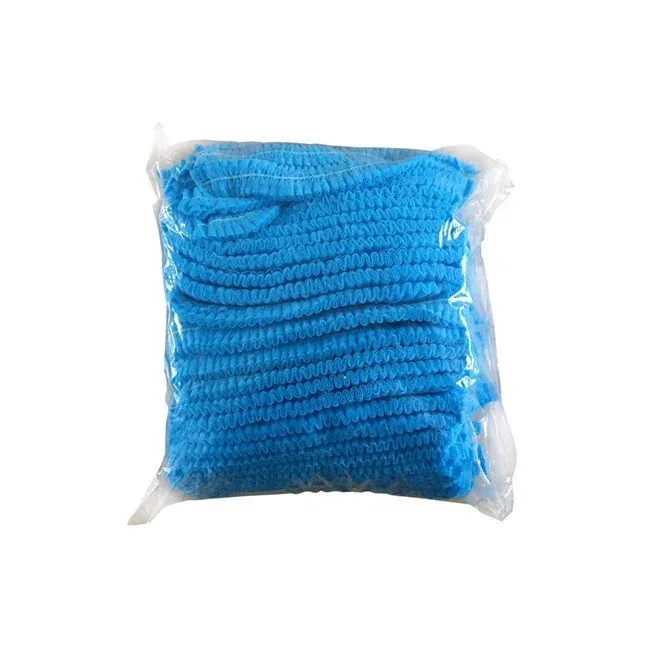
A bouffant cap is a lightweight disposable hat used to secure hair in the workplace where hygiene and cleanliness are a matter of concern. It is usually produced from a non-woven polypropylene (PP) fiber membrane and bound with an elastic edge, which is used to keep the cap on the head. The comfortable, voluminous design allows for various hair lengths and fullness, as well as the prevention of loose hair from falling onto work surfaces, equipment, or products.
How Does a Bouffant Cap Work?
The cap consists of a circular piece of non-woven fabric gathered around the circumference and secured with elastic. When in use, the elastic endows the cap with enough holding power around the hairline, and the fabric covers the scalp and traps hair inside.
This simple design makes bouffant caps easy for everyday use in the workplace. They are easily put on and taken off by employees, and their disposable construction means they can be replaced if necessary following the hygiene procedures for the facility.
Materials Used in Bouffant Caps
The majority of disposable Non-Woven Bouffant Caps are produced with a polypropylene-based non-woven fabric. PP spunbond is popular due to its light weight and its disposable head covering applications. SMS (spunbond-meltblown-spunbond) is also used as a multi-layered non-woven material in some products.
The material used affects the weight, feel, and breathability of the cap. Therefore, it is advisable for the buyer to take into account the intended use and to confirm the product specifications before assuming that all disposable caps are equal.
Bouffant Caps In Comparison To Other Head Coverings
The bouffant cap is different from other disposable headwear items because of its design and application. A hairnet is usually constructed of mesh fabric to secure the hair, and a surgical cap or scrub cap may be tighter. Beard covers are designed to cover facial hair.
Regular disposable bouffants are not usually sterile and are primarily used to contain hair. They do not necessarily form a sterile barrier and cannot replace other essential PPE. Head coverings should be chosen based on the hygiene procedures and needs of the workplace.
Where Bouffant Caps Are Used
Non-Woven Bouffant Caps are used in the workplace where hair containment helps maintain hygiene, cleanliness, and control of contamination. They are widely used in hospitals but also in many other industries, including laboratory, pharmaceutical production, food production, and other hygienic production areas. Specific requirements depend on the working setting as well as the procedures of the facility.
Hospitals and Healthcare Facilities
The disposable bouffant caps are used in hospital settings in particular departments where employees must cover their hair to adhere to the infection prevention and control precautions set out. These can be treatment rooms, examination areas, selected procedure rooms, and laboratories.
Comfort, sufficient hair coverage, and compatibility with other PPE are key factors for healthcare procurement teams. Staff can wear head coverings in addition to masks, protective gowns and goggles, so a practical fit is essential.
In the case of bulk purchases, the number of staff and the pattern of their shifts and daily consumption should also be considered. If a specific procedure requires sterility, the buyer must ensure that the product purchased is sterile and fulfills the clinical requirements of the procedure.
Diagnostic and Research Laboratories
Samples, reagent and equipment used in diagnostic and research laboratories may be susceptible to unwanted contamination. Disposable caps serve to keep long hair off the work surface and as a reinforcement of existing laboratory hygiene practices.
In some controlled areas, specific properties of the fabric might be necessary, including low-lint or a fabric that is compatible with cleanroom processes. When purchasing a cleanroom bouffant cap supply, buyers should verify the classification, product specifications, and documentation as opposed to assuming that every disposable bouffant cap is applicable within a cleanroom.
Pharmaceutical and Medical Manufacturing
Industrial pharmaceutical production and medical manufacturing frequently have controlled hygiene and quality-management procedures. Hair coverings may be included as part of the gowning requirements for employees in workplaces where products and production materials require protection from unnecessary contamination.
Any procurement team should take into account the facility’s gowning procedure, consistency of material, lint properties, fit, and compatibility with other protective apparel. General-purpose disposable caps should not be used as an alternative to specialized cleanroom garments in specialized cleanroom applications.
Food Processing and Packaging Facilities
Food-processing plants use disposable hair coverings to help prevent loose hair from coming into contact with food products, equipment, and production surfaces. Employees involved in food preparation, handling, processing and packaging may be required to wear bouffant caps under the facility’s hygiene procedures.
For these workplaces, important purchasing considerations include comfortable sizing, secure elastic, suitable packaging and sufficient stock for daily operations. Other facilities choose to use a different cap colour to identify their departments; however, the colour codes should be defined within the facility.
Other Industrial and Hygiene-Sensitive Environments
In addition to the healthcare sector, Non-Woven Bouffant Caps can be utilized in the manufacturing of cosmetics, electronics assembly, and other workplaces where hair containment is required to keep a workplace clean.
The correct product will vary depending on the use and the degree of environmental control needed. Prior to ordering, buyers should take into consideration the intended use, material and fit, and the relevant workplace standards.
By understanding where the caps are being worn, organizations can make informed decisions about which caps to use and ensure they are consistently available for their activities.
Bouffant Cap Sizes
Choosing the correct size is important when purchasing Non-Woven Bouffant Caps for hospitals, laboratories, food-processing plants, and other workplaces. A cap that’s too small won’t offer enough hair coverage, and a cap that’s too big will drop out of place. Therefore, before making a bulk purchase, buyers should take employee needs and hair volume as well as the manufacturer’s actual dimensions into consideration.
Bouffant caps are commonly available in 18-inch, 21-inch, 24-inch, and 28-inch diameters. These are general market sizes, which may vary by manufacturer.
Common Bouffant Cap Sizes: 18″, 21″, 24″ and 28″
Bouffant cap sizes generally refer to the diameter of the cap when laid flat. The following table provides a general purchasing guide.
| Cap size | General characteristics | Purchasing considerations |
|---|---|---|
| 18 inches | Smaller, more compact diameter | May suit users requiring less hair coverage |
| 21 inches | Common general-purpose size | A practical solution for regular working conditions |
| 24 inches | Provides additional fabric coverage | May suit longer or fuller hair |
| 28 inches | Larger diameter | May be considered for specialised coverage requirements |
Understanding Cap Diameter and Measurements
Buyers need to know the difference between the diameter and circumference when comparing Non-Woven Bouffant Caps. Diameter is the length of the straight line across the widest part of a circular cap, through its centre, when the cap is flattened. Circumference is the distance around its edge.
The distinction is important when comparing your supplier quotes since various measurement methods may have different products looking alike but are actually different sizes.
When ordering caps in bulk for 21 inches, ask the seller to confirm how the size is measured and, if possible, get a sample cap. This is used to ensure that the product is consistent with the agreed specification.
How to Choose Sizes Based on Head Coverage and Hair Volume
The most suitable size depends on the people wearing the caps and the coverage required. Employees with longer, thicker or fuller hair may need more fabric space than those with shorter hair.
Procurement teams should consider:
- Hair length and volume: Ensure the cap accommodates the hair comfortably.
- Head coverage: Check that loose hair is adequately contained.
- Elastic tension: The cap should not be too tight or too loose.
- Workplace activities: It should stay in position during normal movement.
- PPE compatibility: Ensure the size fits well with masks, goggles and protective clothing.
Before buying in bulk, testing samples with representative employees may help determine the most appropriate sizes.
Selecting Size Combinations for Bulk Orders
Different workforces may require different sizes of caps to meet individual needs. A specific fit evaluation can be conducted in a small group of departments to find out if a single “standard” size or multiple sizes is most suitable.
Once appropriate sizes have been determined, record the approved dimensions and product specifications. This is especially helpful if you’re working with a bouffant caps bulk supplier, as it will guarantee uniformity in repeat orders.
Prior to finalizing the purchase, make sure that the supplier has clearly stated the dimensions of the cap diameter, material, elastic construction, colour, and packaging configuration. These details help to make more accurate comparisons and avoid misunderstandings when ordering Non-Woven Bouffant Caps wholesale.
Materials: PP Spunbond vs SMS
One of the key decisions for a procurement team when ordering Non-Woven Bouffant Caps wholesale is the type of material to choose. Two popular choices of non-wovens are polypropylene (PP) spunbond and SMS fabrics, which have different constructions. The knowledge of these differences is crucial in choosing the right product for a hospital, a laboratory, a food-processing plant or a distributor that will perform according to their specific needs without being unnecessarily expensive to specify.
Both materials are used in Disposable Protective Clothing, but they are not the same material. Their structure, weight, texture, and breathability can influence the comfort and suitability of the finished cap. The final decision depends on the application and the manufacturer’s product specifications.
Understanding PP Spunbond Non-Woven Fabric
Polypropylene(PP) is a thermoplastic polymer that is used in a broad range of disposable hygiene and protective products. PP spunbond fabric is produced by extruding melted polypropylene into continuous fine filaments, laying them into a web and bonding the fibres together, commonly through heat.
The resulting fabric is lightweight, flexible and suitable for manufacturing disposable head coverings. Its practical characteristics make it a popular option for PP bouffant caps used in healthcare facilities, food-processing plants and other workplaces where routine hair containment is required.
Some of its important characteristics include:
- Lightweight construction: Suitable for disposable head coverings that need to remain comfortable during normal working activities.
- Breathability: Allows air to pass through, although the actual level depends on fabric weight and construction.
- Flexibility: Can be gathered and fitted around the head using an elasticated edge.
- Disposable convenience: Supports facilities that replace head coverings according to established hygiene procedures.
However, not all PP fabrics have identical characteristics. The end product may be affected by factors such as fabric weight, fibre quality, bonding, and manufacturing consistency. Purchasers must therefore evaluate the full specification and not just the name of the material used for a cap.
Understanding SMS Non-Woven Fabric
SMS stands for spunbond-meltblown-spunbond. It is a multi-layered non-woven fabric created through three interconnected layers, all playing a role in the overall structure of the fabric.
The outer spunbond layers provide structure, while the middle meltblown layer consists of finer fibres. This combination gives SMS different characteristics from conventional single-layer spunbond polypropylene.
SMS is used in various disposable medical and protective products. For bouffant caps, it is used when the buyers’ specifications request a non-woven, multi-layered construction.
However, it is crucial to remember that not all SMS bouffant caps equal better protection. The performance of the finished product depends on its actual construction, fabric weight, manufacturing quality, and intended application. SMS should not be considered automatically waterproof or sterile either.
PP Spunbond vs SMS: What Should Buyers Consider?
Before choosing a material, buyers should take into account the following characteristics.
| Feature | PP Spunbond | SMS |
|---|---|---|
| Construction | Spunbond polypropylene fabric | Three-layer spunbond-meltblown-spunbond fabric |
| Structure | Single spunbond layer | Multilayer construction |
| Weight | Available in different GSM specifications | Available in different GSM specifications |
| Breathability | Generally suitable for lightweight disposable applications | Depends on the layer composition and fabric weight |
| Typical use | General-purpose disposable head coverings | Selected applications requiring SMS construction |
| Purchasing consideration | Fabric weight, flexibility and workmanship | Layer construction, weight and specified performance |
PP spunbond is suitable for many general-purpose use applications where lightweight construction and convenience are needed. SMS might be suitable if the buyer has a specific need for the multi-layer nature of SMS.
Neither material is the best choice for every hospital, laboratory, or food-processing facility. The choice of purchase must be based on the specific work environment needs.
Relevant ISO Standards for Bouffant Caps
International standards facilitate the development of consistent practices for material testing, cleanliness control, and protective clothing in specialised environments. There is no universal ISO standard that explicitly addresses all disposable bouffant caps, but there are a number of standards that are applicable to the materials and applications of these caps.
The ISO 14644 series is about cleanrooms and controlled environments. ISO 14644-1 provides classification methods for the cleanliness of the air in cleanrooms with regard to the number of airborne particles present, and ISO 14644-5:2025 contains requirements for cleanroom operational controls such as personnel management and gowning procedures. These standards are particularly relevant when selecting head coverings for pharmaceutical production, laboratories, and other controlled environments.
The ISO 9073 series offers testing procedures for nonwoven fabrics. These include measurements of mass per unit area, as well as tensile strength, which will contribute to the assessment of material properties that affect product uniformity and function.
Importantly, these standards do not mean that a disposable head cover is automatically certified, nor does it mean that any disposable types of head coverings are appropriate to wear in a cleanroom. The buyer should ask for the relevant test reports and product documentation to ensure that the chosen cap is suitable for the application.
Understanding GSM When Purchasing Bouffant Caps
GSM means grams per square metre. It is the measurement of the weight of a fabric over a given area and is typically used to compare non-woven fabrics.
When sourcing Non-Woven Bouffant Caps, GSM can help procurement teams understand differences in fabric weight. It must not be the sole quality indicator, however. Two fabrics with the same GSM may differ in fibre characteristics, bonding, flexibility and overall consistency.
Likewise, a higher GSM does not necessarily mean higher protection, protection level, or durability and comfort. The GSM should be taken into account along with the material structure, dimensions, elastic quality, and use of the product by the buyer.
Which Material Is Suitable for Different Applications?
The most appropriate material depends on how and where the caps will be used.
For day-to-day food handling or general hospital uses, buyers might want to consider PP spunbond that offers adequate coverage and comfort. Facilities requiring a multilayer construction may evaluate SMS products against their specifications.
Other verification is required for cleanroom bouffant caps supply. The buyer needs to define the cleanroom requirements and solicit product documentation as appropriate. The fact that a cleanroom is built using either PP or SMS does not necessarily indicate suitability for a specific cleanroom classification.
At BKAMED, we offer PP and SMS options within our bouffant cap range. Wholesale buyers are encouraged to specify their intended application and requirements for material; the available specifications will be confirmed prior to order. This helps to ensure that the purchase of the product is based on the actual operational requirements and not based on assumptions of fabric type.
Elastic Bands and Latex-Free Options
The elastic band is a small but important component of Non-Woven Bouffant Caps. The cap offers hair coverage and the elastic keeps the cap in place during regular working tasks. In high volume applications, such as hospitals, laboratories, and food-processing plants, elastic quality may affect employee comfort, product usability, and satisfaction.
Buyers need to consider more than just the fabric specification when buying disposable head coverings in bulk. The elastic’s flexibility, attachment, recovery, and consistency are equally important considerations. A cap that covers sufficiently but frequently slips or doesn’t fit well may not be appropriate for such employees who have to wear it for the entire day.
The Role of Elastic in Bouffant Cap Fit
The bouffant cap usually has an elasticized edge which encircles the head. This enables the cap to fit a variety of head sizes and assists in keeping the hair inside the gathered fabric.
The tension of the elastic band should be adequate to secure the cap but not cause pressure around the hairline or forehead. Its performance also depends on the quality of the attachment to the non-woven fabric.
Bulk buyers should consider the following characteristics:
- Flexibility: The elastic should stretch sufficiently to accommodate the intended range of users.
- Recovery: It should return towards its original shape after stretching rather than remaining excessively loose.
- Attachment quality: The elastic should be securely and consistently attached to the fabric.
- Uniformity: Caps within the same order should have reasonably consistent elastic tension and construction.
- Comfort: The finished cap should remain comfortable during its intended period of use.
These are important considerations to review before approving a bulk order, especially when assessing samples. A simple fit assessment involving different employees can help identify potential problems before the product is introduced across an entire facility.
Single and Double Elastic Construction
Bouffant caps may feature different elastic arrangements depending on the manufacturer’s design and product specification. Single-elastic construction is made with one elastic band around the circumference of the cap and two elastic bands in double-elastic construction.
These arrangements should be selected not because one is always better but based on the finished product fit, construction, and the intended use.
Procurement teams should look for comfortable fit, proper positioning of fabric, and secure cap-holding ability. Where a particular elastic arrangement is required, it should be clearly stated in the purchasing specification.
Why Choose Latex-Free Bouffant Caps?
Latex-free products are an important consideration for organisations seeking to minimise exposure to natural rubber latex among employees and other users who may have latex sensitivities.
Natural rubber latex is used in various products, including some elastic components. However, do not assume that all disposable caps are made from latex or that all elastic bands are latex-free.
If purchasing bulk bouffant caps latex free, buyers should ask the supplier to provide proof of the latex used in the caps as well as product declarations. This is particularly relevant for hospitals and clinics as different personnel and patients can use these products.
A latex-free specification should also be well documented, and not just verbal or based on a product description. If the requirement is considered essential, the Buyer should ensure that the accepted specification is for the product actually supplied.
What Should Buyers Check Before Placing a Bulk Order?
When ordering in bulk, order samples of the product, test the elastic with the fabric and the construction of the cap. Examine the band for proper fit, consistent fit between and among samples, and attachment.
It is also important to check if the supplier is able to repeat the same elastic specification on subsequent orders. Variability between batches can impact comfort and consistency, especially for repeat orders from distributors and facilities.
Our published bouffant cap collection at BKAMED offers a selection of latex-free elastic caps. Buyers can contact us to confirm the relevant specifications and discuss their requirements before placing an order. This helps ensure that the selected product meets the facility’s expectations for fit, comfort and material composition.
BKAMED Bouffant Cap Range
Selecting the right disposable head covering requires selecting a product that fits workplace needs, as well as providing practical bulk purchasing solutions. At BKAMED, we understand that hospitals, laboratories, food-processing facilities and distributors have different purchasing priorities. Some require lightweight head coverings for routine use, while others have specific preferences concerning material, dimensions, colours and packaging.
Our Non-Woven Bouffant Caps range provides buyers with options designed for different workplace applications. We offer PP and SMS material options, several size choices, different colours, and latex-free elastic. The specifications help procurement teams to select appropriate products based on their operational needs and purchasing requirements.
Material Options: PP and SMS
We offer polypropylene (PP) and SMS options for buyers looking for disposable non-woven head coverings. For general-purpose applications where lightweight construction and comfortable hair covering are important, PP spunbond is a practical choice. SMS offers a multi-layer fabric option for customers who require that type of construction.
Depending on the environment and on the needs of the purchasing organization, different materials can be used. Therefore, we ask customers to include the preferred material and use when requesting a quotation.
Ordering with material specification confirmation will ensure that the caps supplied meet your expectations, whether you are placing an order for a healthcare facility or food-processing operation, or distribution business.
Available Sizes and Fit Options
Different workplaces have different head-covering requirements. In addition, employees have different hair lengths and volumes; hence, size selection becomes important for bulk procurement.
Our published bouffant cap specifications include the following sizes:
- 18 inches: An option for buyers requiring a smaller cap diameter.
- 21 inches: A commonly requested size for general-purpose applications.
- 24 inches: Offers a wider diameter for those who need more hair coverage.
- Other sizes: Additional size requirements can be discussed when making an enquiry.
If you are considering ordering a bulk quantity of 21-inch bouffant caps, then it is recommended that you confirm the size and measurement before ordering. This helps avoid differences in expectations when comparing samples, quotations and repeat orders.
Colour Options for Different Workplaces
Colour selection can be important for organisations that use internal identification systems or prefer particular colours for their staff uniforms. Our published range includes white, blue, green, yellow and pink, with other colour requirements subject to confirmation.
Different departments may choose colours according to their own workplace procedures. For example, a facility may use separate colours to distinguish production areas, departments or employee groups. However, the use of colour does not have a universal meaning and organisations should get their own identification systems.
When discussing bouffant cap MOQ and colours, buyers should confirm the available colour options, order quantities and whether their preferred combination can be supplied. This is particularly useful for distributors serving customers with different requirements.
Latex-Free Elastic and Product Construction
Our published bouffant cap specifications include a latex-free elastic headband. The elasticated construction helps keep the cap positioned around the head while the gathered non-woven fabric provides hair coverage.
When purchasing, it is crucial for buyers who have particular material needs to check the elastic specification. Customers are encouraged to specify any latex-related requirements in their enquiries to ensure that product information is confirmed prior to ordering.
The completed cap should also be evaluated for uniform size, secure holding of the elastic, and workmanship. These factors are important when buying in bulk for regular use in the workplace.
Packaging Options for Wholesale Buyers
Another factor for organisations to consider when bulk buying Non-Woven Bouffant Caps is packaging. Our published product information lists the following configurations:
- Inner packaging: 100 pieces per bag or 100 pieces per box.
- Carton quantities: 1,000 or 2,000 pieces per carton.
These options can help customers optimize their inventory, storage, and distribution to best match their consumption. The packaging of the selected product and order should, however, be confirmed.
Discuss Your Requirements with BKAMED
At BKAMED, we aim to make product enquiries straightforward for international wholesale buyers. When contacting us, provide your preferred material, size, colour, elastic requirements and estimated order quantity. From there, our team can validate the necessary specifications and packaging possibilities.
To explore our product details, visit the BKAMED Non-Woven Products page. You can also contact us for a quotation based on your purchasing requirements. If you are placing orders for a single facility or providing for multiple customers, clear specifications set expectations on the product right from the start.
Packaging, Dispensers and Colours
When purchasing Non-Woven Bouffant Caps in bulk, packaging and colour options influence stock management, workplace organisation and product distribution. Buyers must verify these with material, size and quantity so that the order is in line with their operational needs.
Packaging Options for Bulk Bouffant Caps
The bouffant caps are often packaged in inner bags or boxes, and then several packs are placed in larger cartons. The appropriate configuration depends on the buyer’s storage, distribution, and consumption needs.
At BKAMED, our published packaging options include:
- Inner packaging: 100 pieces per bag or box.
- Carton quantities: 1,000 or 2,000 pieces.
These configurations allow hospitals, distributors and other bulk buyers to plan inventory and organise supplies. Before ordering, confirm the number of pieces per pack and carton, product labelling, and whether the preferred packaging can be maintained for repeat purchases.
Choosing a Bouffant Cap Dispenser Box Supplier
Facilities with high daily consumption may use dispensers to make disposable head coverings accessible at entrances, changing rooms or designated workstations.
Buyers need to confirm that the packaging that is supplied from a bouffant cap dispenser box supplier is compatible with their dispensing arrangements. Important details include box dimensions, opening design, and compatibility with the intended dispenser.
Not all product boxes are suitable for use in specialised or wall-mounted dispensing units. Verifying these prior to ordering can prevent ordering packaging which does not meet the facility’s needs.
Colour Options for Different Workplaces
Colour selection can be used to help with internal identification systems, departmental organisation and/or preferences for uniform. BKAMED’s published product range includes white, blue, green, yellow and pink bouffant caps.
Some companies designate particular colours for departments or production areas; others prescribe colours per employee uniform needs. However, there is no universal colour-coding system for disposable bouffant caps. Each organisation should establish and communicate its own arrangements.
When it comes to bouffant cap MOQ and colours, buyers should verify what colours are available, what quantities are acceptable as orders, and if the colours they want can be supplied.
Planning Packaging and Colours for Wholesale Orders
Estimate expected consumption, considering pack size, carton quantity, and colour combinations before placing a bulk order. Distributors should also consider the needs of their different customers when selecting product configurations.
At BKAMED, we encourage buyers to provide these details when requesting quotations. Clear requirements ensure that when the order is placed, our team can verify the packaging and colour options available for Non-Woven Bouffant Caps, allowing for more organised procurement of the product.
Buying Bouffant Caps in Bulk
When it comes to buying Non-Woven Bouffant Caps wholesale, it’s not just about finding a supplier and getting the best price. Hospitals, laboratories, food-processing facilities and medical distributors require products that meet their specifications, offer appropriate coverage in the workplace and are consistent with repeat orders.
A good procurement process can help organisations manage their purchases, ensure they have sufficient stock and not end up with a product that does not meet their operational needs. Knowing some of the considerations can make wholesale sourcing easier, whether you are buying for one facility or several customers.
Establish Your Requirements Before Ordering
Before approaching suppliers, identify how and where the bouffant caps will be used. A hospital that buys head coverings for several departments could have different needs than a food-processing business providing head coverings to the staff who work in a variety of production lines.
Start by establishing the following details:
- Application: Determine whether the caps are intended for healthcare, laboratory, food-processing or other workplace use.
- Material: Decide whether PP spunbond or SMS is more appropriate for the intended application.
- Size: Identify the required diameters based on employee needs and hair coverage.
- Elastic: Specify any requirements concerning elastic construction, comfort and latex-free materials.
- Colour: Establish whether one colour or several colours are required.
- Packaging: Confirm the preferred number of pieces per bag, box and carton.
- Quantity: Estimate the number of caps required for the initial purchase and future replenishment.
These details are helpful when comparing quotes from various suppliers.
Calculate Your Bulk Purchasing Requirements
An essential part of wholesale procurement is figuring out the quantity of caps you actually need. Insufficient ordering may result in too many restockings, and ordering too many may result in inventory and storage costs.
One useful approach is to work out the average daily use. Consider the number of employees who require head coverings, the number of shifts, and the facility’s replacement procedures.
For instance, an establishment with 120 workers working daily with one disposable cap per day would need about 2640 caps for 22 working days.
This is an estimated planning rate and not a standard consumption rate. Actual requirements may be higher where caps need to be replaced more frequently or where additional staff and visitors require head coverings.
Procurement teams should also consider:
- Changes in workforce numbers.
- Differences in consumption between departments.
- Expected delivery and replenishment periods.
- Available storage capacity.
- An adequate stock margin for unforeseen demand.
These factors facilitate the determination of a purchasing quantity that is in line with current operation requirements.
Compare the Disposable Bouffant Caps Wholesale Price
When considering suppliers, price is a key factor, but it is not always the lowest quotation that is the best deal. Two suppliers can offer products labeled “disposable” bouffant caps with varying material weights, dimensions, elastic construction, and quantities in the packaging.
When comparing the disposable bouffant caps wholesale price, ensure that the quotations cover equivalent product specifications.
Important cost considerations include the price per piece, the number of pieces per bag or box, carton quantities, minimum order requirements, and transportation costs. Additionally, import fees such as freight and insurance costs and customs duties may impact the landed cost for international buyers.
The quotation must be explicit in clarifying the item being supplied. This makes it easier to determine whether a supplier offers a lower price or if it is just the differences in the specifications.
Request Samples Before Confirming Large Orders
Samples allow you to test their actual product before you make your bulk purchase. This is especially crucial for distributors and facilities looking to secure long-term supply deals.
When assessing samples, examine the fabric, cap dimensions, elastic attachment, overall workmanship, and packaging. Test the product in the target environment if possible and obtain feedback from typical users.
On bulk latex-free bouffant caps, make sure that the supplier has verified the corresponding elastic specification. If a particular material weight, size or construction has been agreed, compare the sample against those requirements.
Keep the product specification and sample reference, if available, after approval. This is a handy reference point when assessing future deliveries.
How to Evaluate a Bouffant Caps Bulk Supplier
A key aspect of procurement consistency is sourcing from a trusted bouffant caps bulk supplier. In addition to price, buyers should look at the supplier’s communication capabilities and their capability to offer correct product information and adhere to the agreed specifications.
Ask potential suppliers about their available materials, sizes, colours, packaging configurations, and order requirements. Request relevant product documentation and clarify which specifications they can maintain for repeat purchases.
It is also beneficial to evaluate how quickly the supplier responds, the clarity of the quotations, and the handling of questions or product discrepancies. These factors can influence the overall purchasing experience, especially when dealing with international suppliers.
Common Mistakes to Avoid When Buying in Bulk
- Choosing the supplier solely for the lowest price quotation.
- Not verifying the actual cap diameter and material specification.
- Assuming all PP or SMS products have identical characteristics.
- Failure to consider elastic quality and latex requirements.
- Failure to consider packaging quantities when comparing quotations.
- Purchasing in bulk before sample testing.
- Not documenting specifications for repeat purchases.
When seeking quotations, wholesale buyers are advised to clearly communicate their product needs. The supplier can discuss the options available and set clear expectations about the order if material, size, colour, elastic preference, and packaging preference are confirmed in advance.
This careful purchasing process enables organisations to make informed decisions about the sourcing of Non-Woven Bouffant Caps, manage inventory efficiently, and establish consistent purchase arrangements.
Importing Bouffant Caps from China
China is a major source for disposable non-woven materials such as protective garments and medical supplies. In the case of international hospitals, distributors, wholesalers, or food-processing companies, importing Non-Woven Bouffant Caps from China may give you an opportunity to source of different material options, product specifications, and bulk purchasing arrangements.
However, attracting an appealing quotation is only a part of successful importing. Buyers must assess the suppliers’ reliability, validate product specifications, and be aware of minimum order quantities and shipping and destination-market considerations. These measures help to mitigate procurement risks and facilitate smoother procurement processes before an order is placed.
Why Source Bouffant Caps from China?
China has established a non-woven products industry serving domestic and international markets. Buyers can find suppliers offering disposable head coverings in different materials, dimensions, colours, and packaging configurations.
This variety of choices can be helpful for distributors and bulk buyers looking to meet varying customer demand. For instance, a distributor may want multiple cap sizes and colours, and a hospital group may demand a standard for all facilities.
Buyers need to go beyond the pictures and general description of products when assessing a nonwoven bouffant cap manufacturer in China. Verify the actual product specifications, documentation, production arrangements, and the supplier’s ability to meet order quantities.
What to Check Before Placing an Import Order
Develop a clear product specification before making a wholesale purchase, and communicate it to the potential supplier. This helps ensure that quotations are based on the same requirements, and minimises the risk of obtaining a product different to that approved.
Pay particular attention to the following:
- Material: Determine if you need PP spunbond material or SMS construction.
- Dimensions: Set the desired cap diameter and measurement type.
- Fabric weight: If this is a requirement for purchase, specify the preferred GSM.
- Elastic: Confirm construction and need for latex free elastic.
- Colours: Identify the preferred colours and confirm their availability.
- Packaging: Agree on the number of pieces per bag, box and carton.
- Quantity: Set order volume and minimum order quantity if applicable.
Purchasers are also encouraged to ask for samples if possible. By testing the actual product, construction, fit, fabric, and workmanship are verified prior to arranging a larger shipment.
Understanding MOQ, Lead Times and Shipping Costs
Minimum order quantity (MOQ) refers to the smallest quantity a supplier is willing to accept for a particular order. It may vary according to material, size, colour, packaging, and any customisation requirements.
Buyers need to confirm whether the bouffant cap MOQ and colour apply to the entire order or a single product variation when talking about colors and bouffant cap MOQ. This is particularly important when ordering several colours or sizes.
Prior to entering into a purchase agreement, lead times must also be verified. Inquire about the standard preparation time, the order process, and the estimated shipping time. Don’t assume delivery dates without checking for any specific delivery arrangements for your product.
Another factor to consider is shipping costs. Depending on the commercial terms negotiated, buyers should consider freight and insurance, customs duties, taxes, port/terminal and local transportation. A total landed cost comparison is the best way to understand the all-in cost compared to product price.
Documentation and Import Requirements
Documentation of imports should be considered early on in the purchase process. Depending on the country of destination and applicable product classification and regulations, commercial invoice, packing list, transport documents, certificate of origin, or relevant product conformity documentation may be required.
In medical or healthcare-related procurement, check if there are additional product declarations, test reports, or regulatory documents needed in the destination market. Requirements shouldn’t be assumed to be the same in different countries and should be verified with the appropriate authorities or a customs expert.
Working with BKAMED for Wholesale Sourcing
At BKAMED, we serve international buyers looking for disposable non-woven products, including Non-Woven Bouffant Caps. When enquiring, we welcome distributors, importers and institutional buyers to provide information on material, dimensions, colours, packaging and estimated quantities.
In wholesale purchasing arrangements, we understand the importance of clear product specifications. Our range of non-woven products is available for buyers to explore, and our team is available to discuss the possibilities.
The very first step into a well-prepared import order is to have well-defined requirements, sensible cost estimation, and communication with the supplier. These measures enable international customers to make more informed sourcing arrangements and provide greater confidence in future sourcing.
Complete Your PPE Order
While Non-Woven Bouffant Caps are an important part of workplace hair-containment procedures, many healthcare facilities, laboratories and food-processing businesses require additional disposable PPE to support their hygiene programmes. Purchasing related products from one supplier can help simplify procurement, coordinate stock requirements and reduce the administrative work involved in managing multiple orders.
At BKAMED, we offer a range of non-woven disposable products that buyers can explore alongside our bouffant caps. Depending on your operational requirements, these include disposable face masks, protective gowns, beard covers and shoe covers.
Medical distributors and hospitals can find it easier to plan more predictable consumable orders with these products. Complementary protective items for employees working in production, handling and packaging areas can also be sourced for food-processing facilities.
When preparing a consolidated order, consider the quantities, specifications, and packaging requirements of each product separately. This helps ensure that every item is appropriate for its intended application and that the overall purchase aligns with your facility’s procurement plan.
Explore the BKAMED non-woven product range to learn more about our available options. When ordering Non-Woven Bouffant Caps in addition to other disposable PPE, reach out to our team and request a wholesale quote for your needs.
Conclusion
When it comes to picking the best Non-Woven Bouffant Caps, it’s not just about the price. Purchasers should take into account material, size, elasticity, packaging, and working environment. A reliable supply arrangement is essential for maintaining hygiene practices and facilitating procurement wherever purchasing is involved, whether for a hospital, laboratory, food processing unit, or distribution business. At BKAMED, we offer a variety of options for non-woven products, catering to various professional requirements. Contact our team, discuss your needs, and verify available options for your next bulk order.
