A low quotation is not always the same as a good deal when sourcing respiratory protective equipment. The differences in standards of testing, product documentation, fit, packaging, and the destination market can affect whether a shipment is suitable for its intended use.
For procurement teams who are comparing an N95 Face Mask with a KN95, the real challenge is not simply choosing between two familiar labels. It is confirming what each of these standards means, checking whether the claims by the KN95 face masks wholesale supplier are supported by evidence, and understanding the requirements that apply to the intended market.
This guide explains the GB 2626 standard, compares KN95 and N95 respirators, and outlines practical steps for evaluating manufacturers, quotations, bulk orders, packaging, shipping, and storage when sourcing from China.
What, exactly, is a KN95 Mask?
A KN95 can be described as a filtering facepiece respirator that fits tightly when being used and is disposed of after use. It is designed to reduce the level to which the wearer is exposed to airborne particles. It is mostly associated with China’s GB 2626 respiratory protection standard and is intended to form a tight seal around the nose and mouth when it is worn correctly. GB 2626 is China’s national standard for non-powered air-purifying particle respirators.
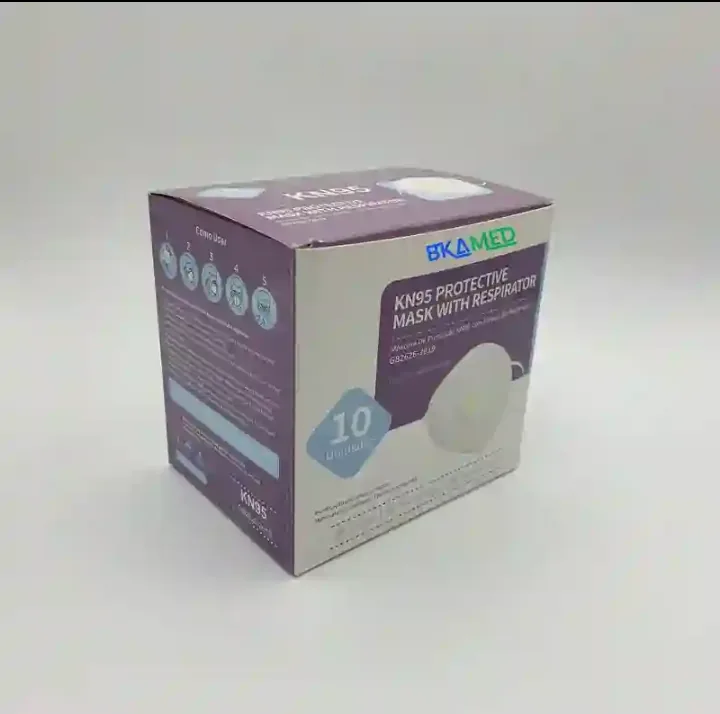
Unlike a typical loose-fitting disposable surgical mask, a KN95 respirator relies on both its filter material and its tight-fit ability to provide the intended level of protection.
At the US Centers for Disease Control and Prevention (CDC), KN95 is identified as an example of an international filtering facepiece respirator.
Understanding the KN95 Designation
KN95 is a label that shows a respirator type according to China’s rules. The letters and numbers in KN95 identify a respirator classification. The number 95 shows that KN95 can filter at least 95 percent of particles when tested under the right conditions.
But this does not mean that the respirator blocks 95% of every possible hazard. Furthermore, it is no guarantee that anyone who wears it will always receive the same level of protection.
Again, the “KN” classification is not the same as the US N95 designation. Although both classifications say that they have at least 95% filtration efficiency according to their own rules, it is worth noting that they come from different systems and have different testing rules.
Therefore, a KN95 product should be evaluated against the Chinese standard that applies to it instead of being assumed to have NIOSH approval.
This difference matters when a procurement team is drafting technical specifications, comparing quotes, or supplying a customer who needs a particular certification. A KN95 face masks wholesale supplier should identify the exact model, standard, manufacturer, and documentation that supports testing. A product title that simply says “KN95” should not be relied on.
Common Design Features
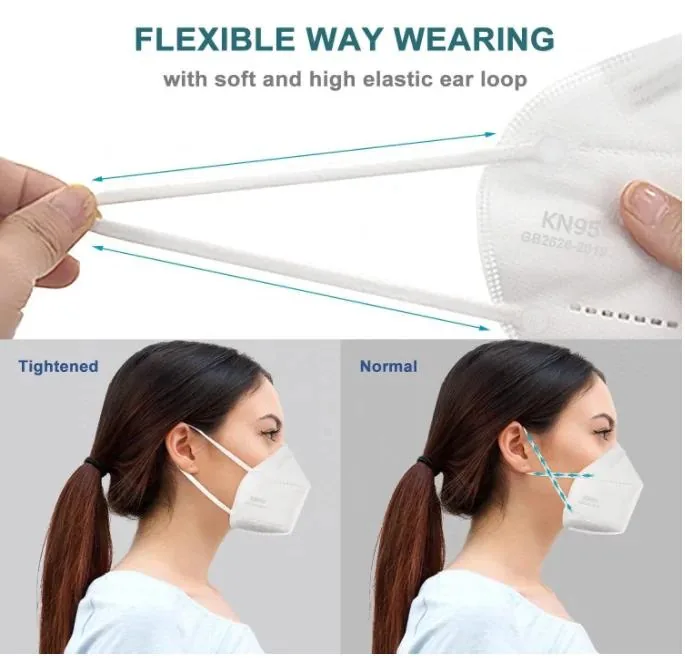
Generally, KN95 respirators use a folded or cup-shaped design, a nose clip, and straps that are intended to keep the respirator close to the face. Some of those KN95 respirators have ear loops, while others use head straps.
Shape, sizes, nose-bridge construction, and strap tension can differ, depending on the manufacturer and model.
The filter media is made to catch particles in the air as the air goes through it. But even the best filter material can’t completely stop air from getting in around the edges of the face.
That’s why how completely the respirator fits is as important as how well the filter material performs.
CDC guidance explains that filtering facepiece respirators made to international standards are designed to seal around the nose and mouth, but may not fit every wearer the way a NIOSH-approved respirator does.
For those who are purchasing in bulk, these features need to be checked on samples before the final design is approved. A respirator that looks similar to a well-known model may still have different strap tension, sizes, breathing resistance, or sealing performance.
Comparing KN95 Respirators to Ordinary Disposable Masks
KN95 respirators and ordinary face masks thrown away after use are made to serve different purposes. A standard disposable mask is usually made to stop the spread of germs or to block droplets, depending on how it’s designed and what standard it follows. A KN95, on the other hand, is a tight-fitting respirator that is made to reduce the amount of airborne particles that someone breathes in.
This means these two types of products should not be treated as similar or direct substitutes in a quotation simply because they both cover the nose and mouth.
A hospital, industrial distributor, or public procurement department should first of all come up with the level of protection they require, together with what they intend to use the product for, then specify the product type that matches the use.
The teams doing procurement should not, for instance, mistake the disposable three-ply nonwoven surgical masks for a KN95 respirator. Again, the technical specifications of one should not be used to make claims about the other.
The Main Differences Between KN95 and N95
KN95 and N95 respirators are often compared to each other because both of their classifications state a filtration efficiency of 95% under their own standards. However, they are not the same certification.
While KN95 is associated with China’s GB 2626 standard, N95 is a classification that follows the US NIOSH respirator approval system. A product’s classification is there to tell the purchaser which requirements it is intended to meet, not simply how a product compares in a headline filtration percentage.
The big concern to the procurement teams is not which label sounds better. It is which product meets the specification, intended use, and legal requirements for the market where it will be supplied.
What KN95 and N95 Respirators Have in Common
Both KN95 and N95 respirators are designed to catch airborne particles and form a close-fitting seal around the nose and mouth. Both are generally filtering facepiece respirators disposed of after use, and neither is designed to protect the user against harmful gases or vapours.
How well they perform depends on them meeting their set standard and the wearer using them correctly.
Standards and Certification: GB 2626 Versus NIOSH
As already stated, GB 2626 is China’s national standard for non-powered air-purifying particle respirators. The current listing for GB 2626-2019 identifies it as an active standard titled “Respiratory protection: Non-powered air-purifying particle respirator.”
The standard covers the classification and marking of respirators, technical requirements, and methods used to test how efficient they are.
N95, on the other hand, is part of the NIOSH approval system in the United States. A real NIOSH-approved respirator should carry the required markings, including the approval holder or manufacturer’s name, model or part number, NIOSH designation, and a TC approval number.
Procurement teams can check to verify that number against the official NIOSH Certified Equipment List to make sure the respirator is genuine, not a counterfeit.
A mere KN95 certificate does not make a product NIOSH-approved, and a general statement by the KN95 face masks wholesale supplier that a product is “N95 quality” does not in itself prove the case. Similarly, a NIOSH certificate for one model cannot automatically be applied to another model from the same manufacturer.
Before ordering, the product marking, model number, manufacturer, test report, and certificate should be matched. If the destination market requires specific approval, the product should be verified through the relevant official system instead of relying only on unreliable data, such as a PDF sent by the KN95 face masks wholesale supplier.
Filtration, Fit, and Quality Assurance
A headline filtration percentage is only one part of respirator performance. Factors such as design, breathing resistance, leakage, fit, and manufacturing consistency also matter.
The CDC says that international filtering facepiece respirators, like KN95s, are tested based on the standards they are supposed to meet. The quality-assurance rules for these respirators might not be the same as the ones for NIOSH-approved respirators.
KN95 vs N95 for Hospitals
When evaluating KN95 vs N95 for hospitals, the decision should start with the clinical task the product is needed for. What kind of work are the staff doing? Is there a risk of particles or infectious agents?
The infection-control policy in place should then be checked, as well as the regulations that govern respiratory protective equipment.
A hospital may be in need of a particular respirator approval for specific clinical activities or under its occupational respiratory protection programme. In the United States, workplace respirator rules may require NIOSH-approved respirators, so a KN95 should not be assumed to satisfy the same requirement merely because both classifications state 95% filtration.
Hospitals should also be able to know the difference between respiratory protection and surgical barrier performance. A filtering facepiece respirator is designed to reduce the wearer’s exposure to particles.
A surgical mask may be evaluated for how well it blocks bacteria and how much it stops fluid from passing through. A product should not be called a respirator unless its specs and the proper authorizations indicate that it is meant for that use.
For hospital procurement, a proper check covers the required classification, the approved model, how well it fits, user instructions, product traceability, packaging, shelf life, and the related paperwork.
Clinical teams and regulatory staff should play a role in the evaluation process where needed.
Identifying the Destination Market
The market the products are destined for should be identified before a bulk order is placed. A respirator that is acceptable in one country might not be acceptable in another.
The claims about medical use, workplace safety rules, labelling, import declarations, and local product registration requirements can all affect whether the respirators can be legally imported or used as intended.
Importers should confirm these requirements with the relevant regulator, customs broker, or a qualified professional in charge of compliance, before production is approved. For example, the US Food and Drug Administration (FDA) explains that the rules for importing medical devices differ from those for products which are intended only for general, non-medical purposes.
Its guidance also notes that several enforcement policies which were used during the COVID-19 period ended in 2023, so importers should not rely on those outdated emergency-era assumptions.
The GB 2626 Standard Explained in Simple Terms
When one is buying KN95 respirators from China, GB 2626 becomes a very important reference. This standard covers non-powered respirators that are used to protect against airborne particles.
The purpose of this standard is more than setting a filtration figure, since it also sets the requirements for classification, marking, technical performance, and testing. In the official Chinese national standards database, the GB 2626-2019 is listed as an active standard.
But the procurement teams do not need to memorise every word in this standard. All they need to do is understand what the supplier at hand is claiming and which documents can prove that claim.
The Scope of the Standard
GB 2626 applies to air-purifying particle respirators which are not powered. These products’ functionality depends on the wearer’s breathing to draw air through filter material.
They are not designed to guard against every kind of danger in the workplace. So they should not be used to protect the wearer against harmful gases or vapours unless a separate, correct system is set up.
The scope of the standard matters because product descriptions can sometimes exaggerate what the respirator can really protect against. For example, a KN95 face masks wholesale supplier might describe a KN95 as suitable for dust, pollution, or other air particles.
The KN and KP Classifications
GB 2626 includes different classifications for respirators that filter particles. The KN series is associated with particles that have no oils, while the KP series is made for particles that may contain oily aerosols.
Those numbers show classes of filtration. In that case, a KN95 designation means it filters at least 95 per cent of the airborne particles under the right test conditions.
The selection of classification should be according to the type of hazards and safety requirements at the place of use. It should not be chosen simply because the procurement team is more familiar with it, or it is more widely marketed.
If the purchaser is not so sure whether the hazard includes the oily aerosols or requires a different form of respiratory protection, a qualified occupational health and safety professional should check the application.
For the importer, the valuable lesson is straightforward: the product’s marked classification, technical file, and test report should agree. If a KN95 face masks wholesale supplier quotes a KN95 but ends up sending documentation for a totally different classification or model, the discrepancy should be resolved before the start of production or shipment.
Testing and Performance Requirements
The standards for respirator use clearly defined laboratory methods to check the actual performance of the products. These may include filtration efficiency and breathing resistance. Also, leakage, and other performance measures can be assessed. It all depends on the standard and product class.
The purpose of this is to check whether the respirator really meets the technical requirements under controlled conditions.
That’s why a report stating “95% filtration” should be reviewed in context. The procurement team needs to ask questions like: Which standard and test method were used? Which product model was tested? Who conducted the test, and when was it performed?
It is not easy to use as evidence a report that has no identifiable model or manufacturer for the product in the quotation.
Product Marking and Documentation
The product marking helps to link the physical respirator to the standard and the manufacturer. The documents should be all the same. Any inconsistency in these may be a sign of a documentation gap that needs to be resolved.
So the KN95 face masks wholesale supplier should be asked to provide the documents before final approval, not after the shipment has left the factory. This allows the buyer to check that the product matches the purchase specification. Issues that need correction can also be dealt with when there is still time.
How to Assess Claims About GB 2626 Conformity
A statement by the supplier that it is a KN95 mask manufacturer in China and GB2626 should be just a starting point for due diligence, not the conclusion of assessment.
So this KN95 face masks wholesale supplier should next be asked to identify where their production site is located in China, the exact model they intend to supply, and the evidence that supports the claim that the product meets the needed standard. The prcurement team should confirm that the documents submitted refer to the same item that is to be purchased.
Also to be checked are warning signs, such as certificates issued to a different company. There can also be expired documents, test reports that do not identify the model, or product photos that do not match the submitted packaging.
And if anything is unclear, a written clarification should be requested and, where appropriate, also an independent verification.
A worthy procurement process should be able to answer three questions: What exactly is being supplied? What evidence supports the stated classification? Does the product meet the requirements of the destination market?
If any answer remains unclear, the final approval should be delayed until the issue is resolved.
Inside a 5-Ply KN95 Mask
A five-ply KN95 is usually described as a respirator that has been made from five layers of material. However, this term “five-ply” alone does not prove that a respirator meets GB 2626 or readily achieves a stated filtration result.
A layer count is just a description of the construction or design, while how it conforms to the standard depends on how the finished product performs against the stated requirements.
For this reason, the procurement teams should analyze the complete respirator instead of just using only the number of layers to decide if the product meets quality standards.
Understanding the Filter Layers
A filtering facepiece may be made using different materials and layer arrangements so that it meets the right performance. In many respirators disposed of after use, the filtration system has a special filter medium made for capturing particles as air passes through it.
Other layers may work to support the filter, provide structure, or protect the inner and outer surfaces.
The exact construction can be different from manufacturer to manufacturer. But a KN95 face masks wholesale supplier should not be allowed to substitute a different layer arrangement or material without approval simply because the finished mask still looks similar.
This is because changing the materials or manufacturing process may affect how the product performs. Any change should be assessed against the product requirements that have been set.
For bulk orders, the KN95 face masks wholesale supplier should be asked for the approved product specification and to make clear which design characteristics are fixed.
If the material used is found to be commercially sensitive, the supplier should still be able to provide enough technical documentation to show that the product really meets the required standard.
Nose Bridge, Straps, and Facial Seal
The nose bridge and straps help to hold the respirator in place. The nose clip should be adjustable enough to help the wearer shape the respirator around the nose, while the straps should provide suitable retention without breaking or loosening during normal use. The shape of the respirator should also align well with the shape or size of the wearer’s face.
These seemingly small details mean so much because air can leak through gaps around the mask edges. Even a filter that performs highly cannot deliver fully the protection it should give if the respirator does not fit the wearer properly.
Respirators for filtering facepieces are supposed to seal against the face, and that fit can differ among models, according to CDC guidance.
Before placing a large order, how the product fits and is comfortable should be checked with representative users where it’s appropriate. For workplace use, the respiratory protection programme and fit-testing requirements in place should be followed.
Keeping Construction Consistent From Batch to Batch
A purchase order should clearly identify the approved model and its specification, including the features that should not change without written consent. These features may include dimensions, layer arrangement, strap design, nose clip, markings, individual packaging, and carton configuration.
An inspection that is carried out before shipment can help confirm that the delivered product matches the approved sample. Depending on the size of the order and the level of risk, the buyer may also require that the quantities, packaging, visible defects, batch identification, and relevant documents be checked as well.
If a test to check how the product performs is needed, the buyer and supplier should agree on the best method and acceptance criteria before production begins.
The important point is that “five-ply” should not end up as a substitute for a complete technical specification. A consistent product is one that continues to meet the agreed requirements from one batch to the next.
Where KN95 Masks Are Used
The right respirator to buy should always depend on the hazard the wearer is facing, the task to be done, and the stated safety requirements right where it will be worn. That applies even to the KN95 respirators.

Here are the places or settings where KN95 Masks are usually used:
Healthcare and Clinics
Healthcare organisations will procure filtering facepiece respirators for tasks where respiratory protection is required. The product they choose has to match the organisation’s policies concerning infection control, occupational safety requirements, and local regulations.
A hospital should not assume that a KN95 can be used in every clinical situation where only NIOSH-approved respirator or a surgical respirator is required.
When defining product requirements, the procurement teams should work hand in hand with the staff handling infection prevention, occupational health, and regulations. They should also confirm how the respirator will be distributed, stored, and tracked once received.
In a case where the product will be used in surgical settings, buyers should review the specific requirements for medical devices and performance of the surgical barrier. Claims such as “the respirator has high filtration” are not enough to establish that it can resist fluids or is suitable for a surgical procedure.
Industrial and Workplace Use
In industrial settings such as a factory, respirators may be needed to reduce the wearer’s exposure to dust and other particles in the air. But selecting the right product should be after the actual hazard has been assessed, because different environments may involve different particles, gases, vapours, or combinations of hazards.
Remember that a KN95 that filters particles is not necessarily designed to also protect against gases or vapours.
For the distributors who serve industrial customers, it is useful to record the intended use on the quotation or order form. That helps to prevent a product selected for one type of particle exposure from being marketed for a totally different hazard without being assessed well.
BKAMED KN95 Face Mask: Specifications to Confirm
BKAMED’s website lists a number of medical disposables, with three-ply surgical face masks being one.
But before placing an order, the procurement teams should confirm the following directly with BKAMED:
Exact Product and Configuration
The procurement team should start by asking for the current product datasheet and a sample of the exact KN95 model it is considering. The team should confirm the design, sizes, strap type, nose-clip construction, stated layer count, colour, individual packaging, and carton configuration.
If more than one model is available, the team should make sure the quotation identifies the correct one.
Specifications that Matter
A helpful product specification should cover more than the business name of the product. It should give the procurement team enough information to compare offers and confirm that the product matches the intended use.
So the following checklist can be included in a request for quotation:
- The product classification and the standard that applies.
- The name of the manufacturer and exact model or reference number.
- Technical datasheet and relevant test reports.
- The product markings and individual packaging details.
- Strap type, nose clip, dimensions, and other agreed design features.
- Batch identification and traceability information.
- The stated shelf life, manufacture date, and expiry-date format.
- Carton quantity, carton dimensions, and gross and net weight.
- Available custom packaging or private-label options.
- The documents that are needed for the destination market.
If a KN95 face masks wholesale supplier is not able to provide a document before an order is confirmed, they should be asked when it will be available and whether this missing document is necessary for the product to be approved by the regulators.
The procurement team should not blindly accept a vague assurance that “all certificates are available” when the specific documents have not been reviewed.
Request a Quotation Based on an Approved Specification
Once the product and documents have been reviewed, ask for a quotation that identifies the exact model and agreed configuration.
To compare easily, request the same information from each shortlisted KN95 face masks wholesale supplier. Otherwise, a quotation for a basic bulk carton may appear cheaper than a quotation that includes individual retail packs, custom artwork, and inspection, even though the two offers are not equal.
All in all, contacting BKAMED is the best way to enquire about the current product availability and specifications. Go ahead and ask the sales team to confirm in writing whether it can supply the exact KN95 model and documentation that is required for the destination market.
KN95 Product Specification Checklist
| Specification | What to Record Before Approval |
|---|---|
| Model and standard | The exact model, classification, and applicable standard. |
| Performance evidence | The test report and relevant conformity documents. |
| Construction | Approved design, dimensions, straps, nose clip, and layer details. |
| Packaging | Individual pack, inner box, carton quantity, and artwork. |
| Traceability | Batch or lot identification and manufacturer details. |
| Shelf life | Manufacturer’s stated shelf life and date coding. |
| Delivery | Lead time, shipping terms, and carton measurements. |
| Market requirements | The documents, labelling, and approvals needed at destination. |
How to Spot Fake or Misrepresented KN95 Masks
A product can be misrepresented even when its packaging looks professional. Some products may carry a classification that has not been properly proven, while others may be accompanied by documents that refer to a different manufacturer or model.
That’s why the procurement teams should go out of their way to follow these guidelines to spot fake or misrepresented KN95 masks:
Examine the Markings and Packaging
Start by checking the markings on the respirator and its packaging. Compare the manufacturer name, model number, standard, classification, batch information, and other required details with the product datasheet and test documents. Do they match?
While at it, look for inconsistent spellings, missing model identifiers, or packaging that appears to refer to a different product.
But packaging is only one part of the check. A well-designed box does not by itself prove that the contents meet the claimed standard. Likewise, plain packaging does not automatically mean a product is counterfeit. The important factor is whether the physical product can be traced to credible evidence that the product meets the standard.
For those buying US N95, NIOSH gives specific approval-marking requirements and recommends checking the product against its Certified Equipment List. A respirator that does not have the required NIOSH markings should not be treated as a NIOSH-approved just because the supplier has said it is a N95.
Check the Reports and Certificates
Ask for the relevant test report and any certificate that proves the exact model conforms with the rules. Check the name of the organisation that issues these. Also, check the report or certificate number, date, scope, and product description.
Where there is an official verification database, it should be used to confirm the details instead of relying only on a scanned document.
The procurement team should be cautious if the KN95 face masks wholesale supplier sends a certificate for a different product category, a document with no clear issuing body, or a report that omits the model number.
This is not to say that these gaps automatically mean there is fraud. They just prevent the purchaser from confirming the claim and should be resolved before payment or shipment.
Verify the Manufacturer’s Identity
Ask for the manufacturer’s full legal name, factory address, business details, and the identity of the company that is named on the documents accompanying the shipment. If the seller is a trading company, they should clarify which factory will manufacture the goods and who is responsible for quality control.
This is so important when the quotation, bank beneficiary, certificate, and packaging are showing different company names. There may be a good explanation, such as a trading company handling exports for a factory, but this relationship should be clear and documented.
Request Samples and Check Batch Consistency
Samples are there to help purchasers to physically check the respirator’s sizes, finish, strap strength, nose clip, packaging, and general comfort. They can also help confirm that the KN95 face masks wholesale supplier understands the design of what was requested.
For larger orders, there should be an agreement on the sample approval process before production. A record of the approved model and specification should be kept, and the supplier is required to notify the procurement manager before making changes to materials, production sites, or packaging.
The procurement manager should consider doing inspection before shipment and additional testing when it is necessary.
Watch for Documents that Don’t Match and Claims not Supported
There are usually common warning signs to keep an eye on, such as a test report for a different model, an expired or unverifiable certificate, or inconsistent company names. Other warning signs can be unsupported claims of NIOSH approval, or the supplier refusing to provide the documents needed to check conformity.
A KN95 face masks wholesale supplier may also throw around terms like “medical grade,” “hospital quality,” or “internationally certified” without caring to explain well what the claims mean, or if they really apply.
So, ask them straight questions instead of just relying on the marketing language. Ask questions like: Which standard does the product meet? Which model was tested? Which organisation issued the report? What is the certificate’s scope? Can the product be verified through an official database where one exists?
If a KN95 face masks wholesale supplier cannot give satisfying answers to these questions, it’s time to consider another supplier. But the aim is not to reject a company just because of a minor administrative error, but to avoid committing funds to a product whose identity and conformity to requirements cannot be established.
Buying KN95 Masks in Bulk
When they purchase in bulk, the distributors and institutions can easily manage unit costs and maintain stock, but the order needs to be planned carefully. A good purchasing process begins with a clear specification, then continues with KN95 face masks wholesale supplier and quote checks, and then ends with inspection and traceable receiving records.
Searching for bulk KN95 masks for sale is only the first step. The goal is to secure the right product at an acceptable total cost and risk level.
Follow these steps when buying KN95 masks in bulk:
Define your Order Requirements First
Before the KN95 face masks wholesale suppliers are approached, decide how the respirators will be used and where they will be sold or distributed. Have in place the required classification, product design, packaging format, quantity, delivery location, and documentation.
If a customer has issued a tender or technical specification, use it as the basis for the request for quotation.
Next, estimate demand and decide whether the order should be delivered in one shipment or several. Large orders may reduce the unit price but they can also increase storage needs, working capital, and the risk of holding stock that expires before it is used.
For distributors, the order quantity should be based on realistic sales forecasts and replenishment times.
A written specification that can be sent to every shortlisted KN95 face masks wholesale supplier should be prepared. This makes it easier to compare similar products and reduces the chance of a supplier substituting a different model to meet the target price.
Evaluate a KN95 Face Mask Wholesale Supplier
A KN95 masks bulk wholesale supplier should be able to clearly explain what it supplies, and identify the manufacturer. They should also provide relevant product documents, and answer practical questions about production and shipping.
The procurement team should only base their assessment of the KN95 face masks wholesale supplier on evidence, not on how appealing their website is or the speed of their replies alone.
If the seller is not the manufacturer, ask how it handles communication with the factory and who is responsible for issues to do with quality. A trading company can be a legitimate supply partner, yes, but the purchaser still needs to know a clear line of accountability.
For the repeat orders, review how the KN95 face masks wholesale supplier has performed with other buyers over time. Record whether past shipments to other buyers arrived as promised, whether documents were complete, and whether product quality remained consistent.
Such evidence is more useful for KN95 face masks wholesale supplier selection than a one-time promise of low pricing.
Compare Total Landed Cost, Not Just Unit Price
The unit price is only one part of the final cost. A supplier who is quoting a lower unit price may offer a less favourable total deal if freight costs are higher, packaging is unsuitable, or additional inspections and document corrections are required.
On the other hand, a higher unit price may be reasonable if it includes the exact packaging, traceability, or inspection services the buyer needs. So it’s best to know what the cost covers.
The trick is to ask every KN95 face masks wholesale supplier to quote against the same specification and shipping basis. If different Incoterms are used, make sure the comparison accounts for which party pays for each part of the shipment and when risk transfers. All the assumptions should be confirmed in writing before approving the order.
Understand the KN95 Mask MOQ and Lead Time
The KN95 mask MOQ and lead time should be confirmed directly with the KN95 face masks wholesale supplier because the models can differ; also packaging, production schedule, and order requirements.
MOQ means “Minimum Order Quantity.” A standard product may have a different minimum from a product that requires custom printing, private-label packaging, or a special configuration.
Lead time should also be defined clearly. Does it start after the deposit has been made, or after artwork approval, sample approval, or completion of another step? Confirm whether the stated time covers production only or includes even inspection and preparation for dispatch.
The shipping transit time should be considered separately, unless the supplier has clearly stated otherwise.
All in all, avoid choosing a KN95 face masks wholesale supplier solely because it promises the shortest lead time. Is the lead time realistic and supported by a clear production plan?
Plan KN95 Face Mask OEM Packaging
The KN95 face mask OEM packaging can be useful for distributors and organisations that sell products under their own brand or require a particular presentation.
OEM arrangements may involve custom artwork, branding, language, individual packs, inner boxes, or master cartons. The available options should be confirmed with the manufacturer before the order is approved.
Ask the KN95 face masks wholesale supplier to confirm which packaging elements can be customised and whether there are additional costs or minimum quantities. Then approve a final artwork proof before printing.
When to Choose KN95 Mask 10 Pack Wholesale
A KN95 mask 10 pack wholesale option may be suitable for the retail distributors, pharmacies, small institutions, or other customers who prefer smaller packs ready for retail customers. It can also make stock allocation easier where the end user needs a defined number of respirators per pack.
However, the pack size should be chosen according to the sales channel and destination requirements. Individual packaging, ten-piece packs, inner cartons, and master cartons all affect the total packing configuration and may affect unit cost, carton volume, and handling.
Confirm the number of masks in each pack and the total number of packs per carton.
Importing KN95 Masks from China
China is an important KN95 face masks wholesale supplier of medical and protective products, but importing respirators successfully requires more than just finding a manufacturer and arranging transport.
Here are the steps to take when importing KN95 masks from China:
Choose the Right Manufacturer/Exporter
When evaluating a KN95 mask manufacturer in China (GB2626, confirm the identity of the manufacturer; find out where their factory is located in China, how much they produce, and their ability to provide the necessary documents for the needed model.
If it turns out the supplier is an exporter or trading company and not the factory, ask it to identify the actual manufacturer as well as explain how product quality and tracking of products are managed.
A visit to this factory or an independent audit may be useful if the order is large and recurring. But where smaller orders are involved, the buyers may begin with document checks, samples, and a video meeting. The level of verification can always be increased if the value or risk of the transaction justifies it.
It should not be assumed that a company manufacturing other medical supplies also has to be manufacturing KN95 respirators. Product categories and production capabilities differ.
So ask the KN95 face masks wholesale supplier to confirm its role in writing and provide the current documents for the item being quoted.
Confirm Export and Documentation Capability of the KN95 face masks wholesale Supplier
A supplier should be able to explain which documents it can provide and which other ones have to be arranged by the importer or another party. Depending on the destination, classification of the product, and transaction, these documents may include the commercial invoice, packing list, and transport document.
Additionally, there can be a certificate of origin where required, product test reports, and the regulatory documents that apply.
Check the Requirements of the Destination Market
Requirements may differ depending on whether the respirators are being imported for medical use, workplace protection, general distribution, or for another purpose. It doesn’t mean that if a product meets GB 2626, then it expressly satisfies every requirement in any country it is shipped
In the United States, for example, NIOSH approval is required where workplace rules require NIOSH-approved respirators. A KN95 classification alone does not establish that approval.
The FDA also separates medical devices from products that are meant only for general, non-medical purposes, so importers should identify the product’s intended use and check the current rules that apply.
Plan Shipping, Customs, and Incoterms
The shipping agreed has a direct effect on both cost and responsibility. Incoterms are internationally recognised trade terms that allocate specified responsibilities between seller and buyer, including aspects of delivery, cost, and risk. The agreed incoterms should be written into the sales contract or purchase order along with the named place or port.
For example, under a suitable agreed arrangement, the KN95 face masks wholesale supplier may organise some transport activities as the importer handles others. The exact responsibilities depend on the Incoterms the two parties have agreed on.
Buyers should not assume that a quoted price includes every freight, customs, tax, or delivery charge.
Before confirming the order, ask the KN95 face masks wholesale supplier or freight forwarder for an estimate of freight costs, transit time, cargo dimensions, gross weight, and required shipping documents. Also find out who will arrange export clearance, who will act as importer of record, and who will pay duties and taxes.
What to Look for in a Certified KN95 Mask Exporter
When searching for a certified KN95 mask exporter, be clear about what “certified” means. An export company may have business or quality-system credentials, but this doesn’t mean the company makes a respirator that meets the requirements. These are different matters and should not be treated as if they are the same.

So ask which organisation issued each of the certificates, what product or activity a certificate covers, and whether it is current. Confirm that the certificate identifies the relevant company and that the product documents refer to the actual respirator being purchased.
If an official verification system exists, it should be used to check the information.
Inspect Before Dispatch and on Arrival
For a big order, an inspection before the products leave the factory for shipment should be considered. The inspection should be based on agreed acceptance criteria. The inspection may check quantity, packaging, labelling, carton condition, batch identification, and conformity with the approved sample.
Any performance testing should use an appropriate method and laboratory where required.
Agree with the supplier on the inspection process before production begins. Specify who will arrange it, who will pay, what happens if the goods fail, and whether the supplier must correct the issue before shipment. If the order requires third-party testing, allow enough time for the results to be reviewed.
When those goods finally arrive, check them against the purchase order, packing list, and approved specification. While at it, promptly take a record of any shortages, damaged cartons, inconsistent labels, or other mismatches.
Retain copies of the documents, inspection results, and batch information so that stock can easily be traced later.
The KN95 Import Checklist
| Stage | Key action |
|---|---|
| Before ordering | Confirm product standard, intended use, and destination-market requirements |
| Supplier review | Verify manufacturer or exporter identity and product documentation |
| Quotation | Agree on model, quantity, packaging, price, and delivery terms |
| Production | Approve the sample and final packaging artwork |
| Before dispatch | Check documents and arrange inspection or testing if required |
| Shipping | Confirm Incoterms, freight, insurance arrangements, and customs responsibilities |
| On arrival | Check quantity, condition, batch details, and conformity with the order |
| After receiving | File documents and retain traceability and stock records |
Storage and Shelf Life
Even when respirators arrive while in good condition, a poor storage can damage the packaging or make stock harder to manage. That’s why bulk purchasers should set up suitable storage conditions and stock rotation procedures before the first shipment arrives. Here, the manufacturer’s instructions should be the main reference for shelf life and storage requirements.
Here are the best ways to go about the storage of KN95 face masks:
Check the Expiry Date and Shelf Life
The shelf life of a respirator should be based on the manufacturer’s stated period and the conditions under which the product is packaged and stored. Do not assume that every KN95 has the same shelf life or use a date taken from another model’s datasheet.
Before placing an order, ask for the stated shelf life and the expected remaining shelf life at dispatch and delivery. If the order is intended for resale or emergency stock, confirm that the remaining period will meet customer or tender requirements.
Check the manufacture and expiry dates on the actual shipment. If date coding is unclear or differs between the packaging and documents, ask the KN95 face masks wholesale supplier to resolve the issue before releasing the stock for distribution.
Store Products According to the Manufacturer’s Instructions
Follow the storage instructions as provided for the exact product. Protect stock from conditions that may damage the packaging or respirator, and avoid placing cartons where they may be crushed, exposed to moisture, or contaminated.
Keep products in their original packaging until they are issued or distributed, unless the manufacturer’s instructions state otherwise.
The storage area should also be a place that can support orderly stock management. Use clean, dry, organised shelving or pallets as appropriate, and keep cartons away from sources of damage. Follow any temperature, humidity, or other conditions that have been specified by the manufacturer.
If goods are stored in a warehouse which is operated by a third-party logistics provider, include the storage requirements in the handling instructions. This helps to ensure that the product is managed consistently after it leaves the KN95 face masks wholesale supplier’s premises.
Rotate Stock and Manage Inventory
Use a stock rotation method that gives priority to products with the earliest expiry dates, as long as they remain suitable for use and meet the requirements of the customer. Record each incoming batch, its quantity, expiry date, storage location, and distribution details.
For wholesalers, inventory planning should consider sales rates, seasonal demand, replenishment times, and minimum remaining shelf-life requirements imposed by customers. Ordering more than the business can sell before goods expire may erase the savings from a bulk discount.
Also, review stock regularly and investigate any damaged packaging, unclear labels, or missing information meant to help in traceability. Do not distribute products that cannot be confirmed as suitable under the applicable requirements.
Parting Shot: Time to Buy KN95 Masks
As seen over and over, buying KN95 masks wholesale requires more than just comparing unit prices. The procurement teams should confirm the GB 2626 classification that applies, even as they review documents for the exact model, assess fit and construction, and verify that the product meets the requirements of its destination market.
If you are considering sourcing from BKAMED, go ahead and contact the team to confirm current KN95 availability, product specifications, supporting documentation, packaging options, and quotation terms for your destination market.
