
Even the smallest details are important in the operating room. Each component, from surgical gowns and masks to protective headwear, helps to create a well-prepared clinical environment. The disposable surgical cap allows healthcare workers to keep their hair covered to complement their surgical attire and infection-prevention practices. Selecting the right headwear is not just about the cost for hospitals, distributors, and medical procurement teams; it’s about fit, comfort, quality, and reliable supply.
This is why it is crucial to consider disposable surgical caps wholesale when you have a regular need for disposable surgical caps wholesale. Whether you’re looking for surgeon caps disposable wholesale or a reliable bulk supplier of surgical caps, this guide covers the various styles, materials, product selection, and bulk purchasing, focusing on the practical and convenient options of tie-back surgical caps.
What Is a Disposable Surgical Cap?
A Disposable Surgical Cap is a single-use cap worn by health-care workers and other personnel in clinical settings to prevent scalp hair from falling into the work area and to ensure proper hygiene practices. It is used widely in operating rooms, surgical units, dental offices, laboratories, and places other than operating rooms and surgical units where controlled cleanliness is a factor.
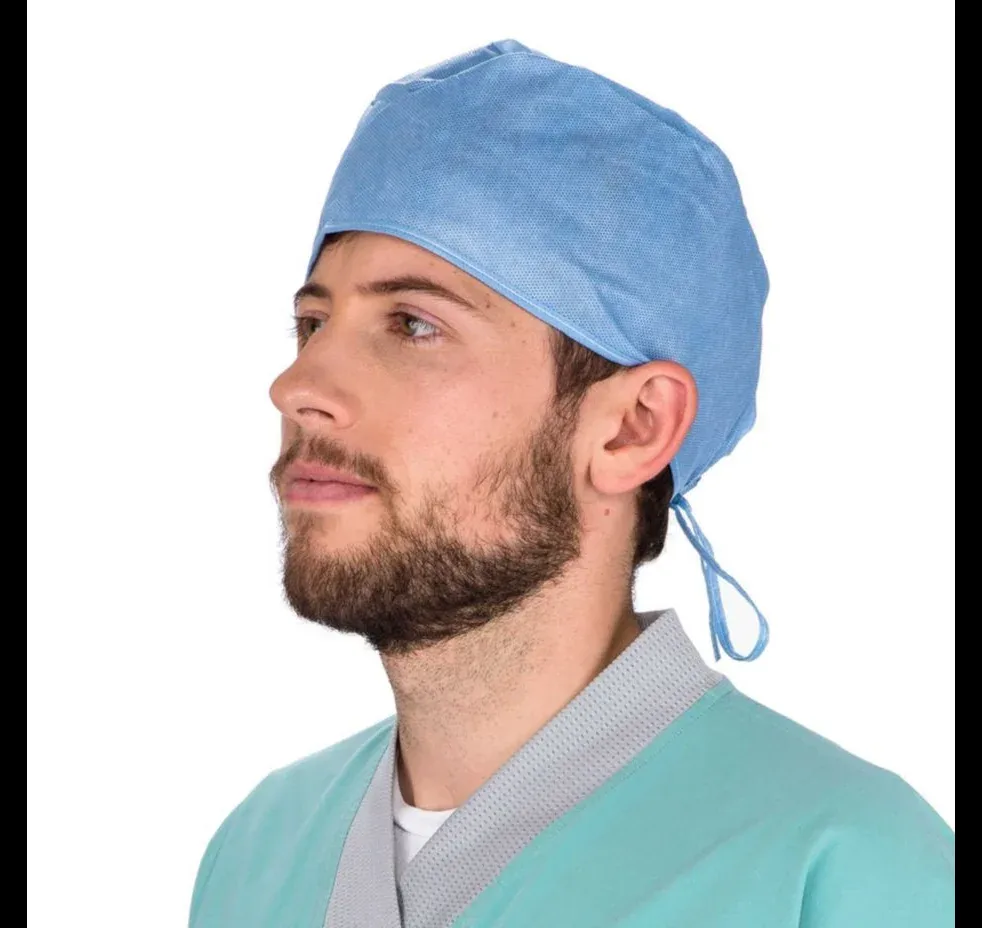
A Disposable Surgical Cap is different from regular caps in that it is meant for clinical use. It should provide adequate hair coverage, remain securely in place during work, and feel comfortable throughout a procedure or shift. Depending on its design, it may have elastic edges, adjustable ties, or a bouffant shape to accommodate different head sizes and hair volumes.
These caps are generally made from lightweight nonwoven materials and are supplied for single use. However, their suitability depends on factors such as fit, construction, coverage, and the facility’s infection-prevention policies.
Common types of surgical headwear
Although the terms are sometimes used interchangeably, surgical headwear comes in several designs:
- Tie-back caps: Have adjustable fabric ties at the back, allowing the wearer to secure the cap comfortably. They work well for staff who like the flexibility of a fit that is adjustable.
- Bouffant caps: Have a loose, gathered shape that provides additional room for longer or fuller hair.
- Fitted skull caps: They sit closer to the head and are usually chosen by those who prefer a smaller size.
- Hairnets: Lightweight mesh-style coverings used in certain food-handling, laboratory, and healthcare environments. They may not provide the level of coverage required by a particular operating-room policy.
| Headwear type | Main design feature | Typical consideration |
|---|---|---|
| Tie-back cap | Adjustable ties | Fit can be adjusted |
| Bouffant cap | Loose, gathered shape | Accommodates fuller hair |
| Fitted skull cap | Close-fitting design | Check that all hair is contained |
| Hairnet | Mesh construction | The suitability depends on the facility’s policy. |
In hospitals that buy disposable medical caps, the decision should be based on the hair coverage needed, comfort, and institutional dress code.
According to the Association of Perioperative Registered Nurses (AORN), scalp and hair should be covered when personnel enter semi-restricted and restricted operating-room areas. AORN also highlights the importance of correct sizing and comfort when selecting head coverings. Importantly, it doesn’t define any one particular cap as the best.
Knowing these distinctions enables procurement teams to choose a Disposable Surgical Cap that suits the requirements of their staff and aligns with existing policies in the operating room.
Why Hair Coverage Matters in the Operating Room
Operating rooms require careful attention to cleanliness, staff attire, and infection-prevention practices. One aspect of this holistic strategy is hair coverage. A properly fitted Disposable Surgical Cap helps contain scalp hair and reduces the likelihood of loose hair coming into contact with the surgical environment, equipment, or sterile work areas.
Particles naturally fall off the human scalp and hair. While not a complete measure to kill microorganisms or provide absolute protection against surgical site infection, proper clothing helps maintain a controlled operating room environment. This is why hospitals have surgical attire policies that outline when a head covering should be worn and how it is to be worn.
Supporting a hygienically clean surgical environment
To enter semi-restricted and restricted operating-room areas, the 2025 AORN surgical attire guidance states that the scalp and hair must be covered. It states that hair and bacteria released by perioperative personnel can be contained by wearing head coverings, which can decrease contamination of the sterile field.
This makes appropriate headwear an important consideration when hospitals develop and implement their surgical attire policies. A suitable Disposable Surgical Cap should:
- Cover the head and secure loose hair.
- Fit comfortably without slipping on movement.
- Stay in place when staff bend, turn, or perform procedures.
- Should not leave unnecessary gaps around the hairline.
- Be changed when contaminated, in line with facility policy.
Why fit and hair containment matter
If the cap is too small, it may not fit properly or lock in all the hair, and if it is too large, it can move during the procedure. If a staff member has long or fuller hair, a design with more room or more secure fastening is necessary. This is why it is essential for procurement teams to take into account various head sizes, hairstyles, and preferences among the staff before ordering in bulk.
It is important to also look at facial hair. AORN suggests using beard covers when in restricted areas or during certain sterile-processing tasks. Hospitals should therefore consider appropriate facial-hair coverings alongside scalp headwear when planning their surgical attire supplies.
Does wearing a surgical cap prevent surgical site infections?
Supporting hygiene is different from ensuring outcomes for patients. A Disposable Surgical Cap is one component of appropriate surgical attire and is not a stand-alone procedure for controlling surgical site infections.
AORN notes that available evidence does not establish that one particular head-covering type or material, or a greater extent of hair coverage, produces better surgical site infection outcomes. When choosing head coverings, the organisation suggests that healthcare facilities should have an interdisciplinary team which includes perioperative staff members and infection prevention professionals. Also, comfort and correct fit must be taken into account.
A practical consideration for hospitals is the choice of headwear that offers appropriate coverage, fits properly, and meets hospital policies. Together with hand hygiene, suitable protective clothing, environmental cleaning and sterile procedures, the consistent use contributes to the overall strategy of safety in the operating room.
Disposable vs Reusable Scrub Caps
When purchasing surgical headwear, hospitals must consider more than the initial purchase price. Disposable scrub caps and reusable scrub caps are both acceptable head coverings, but there are distinct differences in the cost structure, cleaning needs, and convenience and environmental impact of each. The right option will vary based on the facility’s policy, available resources, and daily operational requirements.
Disposable surgical caps
A Disposable Surgical Cap is designed for single use and is normally discarded after use according to the facility’s waste-management procedures. A large number of the disposable choices are lightweight and non-woven, which makes them convenient for medical centers that require a consistent supply of ready-to-use head coverings.
Their main advantages include:
- Convenience: Staff can use fresh caps without having to wait for laundry processing.
- Hygiene management: Single-use products avoid the need to collect and reprocess used caps.
- Stock control: Hospitals can monitor consumption and replenish supplies according to demand.
- Standardisation: Facilities can purchase consistent designs, sizes and colours for different departments.
- Bulk purchasing: Purchase teams can negotiate purchase arrangements based on estimated consumption.
In environments where there is a high turnover of staff members, or where there is a heavy load on surgical time, the purchasing of disposable surgical caps wholesale may make inventory management easier, making it easier to ensure that caps are always available.
Reusable surgical scrub caps
Scrub caps that can be reused are often made from cotton or other washable materials. They are designed to be worn repeatedly and, after proper cleaning and processing, reused unlike disposable ones.
Their main advantages include:
- Repeated use: One cap may be used for multiple shifts, depending on the staff member, and must be cleaned accordingly.
- Decreased routine purchasing: Facilities may not require as many replacement caps after a sufficient stock is in place.
- Staff preference: Some healthcare professionals prefer the feel, fit, and personalisation options available with fabric scrub caps.
- Reducing waste: Reusing headwear can help minimize waste.
But the reusable caps do need a dependable laundering system. Hospitals must establish procedures for collecting, transporting, cleaning, drying, and storing them. In the absence of controls, the intended benefits of the reuse may be undermined.
AORN’s surgical attire guidelines suggest that healthcare organizations should decide if reusable head coverings are allowed and how and when they will be laundered.
Cost, hygiene and environmental considerations
The first quoted price is not necessarily the total cost of either option. Disposable products involve continuous replacement, and reusable caps require the cost of purchasing, laundering, labour, utilities, and replacement.
There’s also environmental impact to take into account. In a 2024 life cycle assessment published in the Journal of Surgical Research, it is found that in the study model, the carbon emissions of disposable bouffant caps were found to be higher than those of the reusable cotton caps. However, reusable caps required more water.
Importantly, a 2024 systematic review and meta-analysis revealed no significant difference in the hazard of surgical site infection (SSI) for reusable or disposable surgical headwear. This implies that hospitals should not presume that one choice provides more patient protection.
| Procurement consideration | Disposable caps | Reusable caps |
|---|---|---|
| Usage | Single use | Multiple uses |
| Cleaning | No laundering required | Requires appropriate laundering |
| Initial purchasing | Requires regular replenishment | May require higher initial stock |
| Waste | More frequent disposal | Less frequent disposal |
| Stock management | Monitor ongoing consumption | Keep track of inventory and laundry runs |
Which option should hospitals choose?
There is no right or wrong answer. A hospital that already has a laundry system may consider using reusable caps; one that emphasizes ready-to-use supplies might consider disposable caps.
At BKAMED, we recognise that procurement decisions must reflect actual hospital requirements. We aim to assist healthcare buyers in determining appropriate headwear solutions, product consistency & purchase requirements prior to bulk purchasing.
When using single-use products, it’s essential to find a reliable bulk surgical caps supplier to ensure a steady supply of caps.
Surgical Cap Materials
The material used to manufacture a Disposable Surgical Cap affects its comfort, fit, durability, and suitability for different healthcare environments. Hospitals and medical distributors need to know about these materials when selecting products and assessing suppliers. The cap might resemble a different product but have a different performance due to the fabric construction, weight, breathability, and finishing.
Polypropylene nonwoven fabric
Polypropylene is a commonly used material in disposable medical headwear due to its lightweight characteristics and its ability to be molded into a non-woven fabric. It’s often chosen because of its affordability, versatility, and breadth of coverage.
Polypropylene is used to make nonwoven surgical caps, which can be used for many routine healthcare applications. However, buyers should consider other factors besides the name of the fabric, such as fabric consistency, linting, seam quality, and tearing resistance.

Spunbond and SMS materials
Spunbond polypropylene is made by bonding together continuous filaments to create a fabric structure. It is widely employed in disposable medical products due to its lightweight construction and its properties of useful strength for everyday use.
SMS stands for Spunbond-Meltblown-Spunbond. It consists of spunbond and meltblown layers. The structure is designed to provide a combination of strength and barrier performance, although the actual performance depends on the product’s construction and testing.
Hospitals that are considering these materials should ask whether or not the final product has been tested if the material is to be used as headwear. The description of a material does not imply a specific protection level for a cap.
Spunlace fabric
Spunlace is another nonwoven material produced by entangling fibres using high-pressure water jets. Depending on its fibre composition and manufacturing process, it can offer a soft fabric feel and flexibility.
When softness and fabric feel are key requirements for buyers, a spunlace surgical cap exporter might be worth considering as an alternative supplier. But before ordering in bulk, procurement should ask for samples and evaluate the final product.
Understanding GSM and fabric weight
GSM means grams per square metre. It is a measure of the mass of a fabric per unit area and is often used when selecting nonwoven materials.
It is important to understand that a higher GSM doesn’t necessarily indicate a better Disposable Surgical Cap. Although a heavier fabric will often be more substantial, comfort is also dependent on fibre structure, breathability, finishing, and cap design. Purchasers should choose a product by comparing the samples and not by the GSM value only.
What should procurement teams evaluate?
Before choosing a material, hospitals and distributors should consider:
- Breathability: Is it comfortable to wear for long periods of time?
- Softness: Is it comfortable against the forehead and scalp?
- Strength: Can it withstand normal handling without tearing?
- Linting: Does the finished product shed visible fibres?
- Construction: Are seams, edges and fastening components consistently finished?
- Consistency – Does the supplier use the same specifications in each production batch?
At BKAMED, we encourage the buyer to look at the overall product rather than just a single material specification. Procurement teams can make informed decisions by requesting samples, looking at technical information, and confirming intended applications.
Choosing the right material is an important step towards sourcing reliable disposable medical caps for different healthcare departments.
Surgical Cap Styles
Healthcare professionals have different headwear requirements depending on their hairstyles, head sizes, comfort preferences, and departmental responsibilities. When purchasing a Disposable Surgical Cap, hospitals should consider the available designs to ensure that staff receive suitable coverage and a secure fit. Three common styles are tie-back caps, bouffant caps, and fitted skull caps.
Tie-back surgical caps
Tie-back surgical caps have adjustable fabric ties at the back, which a wearer can use to fasten the cap to fit their head. This design is especially beneficial for healthcare workers who need flexibility in their headwear adjustments.
Tie-back surgical caps are commonly considered for operating-room personnel because they can accommodate different head sizes. However, procurement teams should evaluate the length and strength of the ties, stitching quality, and overall hair coverage.
The term surgeon caps with ties is used when referring to this adjustable type of caps. Hospitals should ask for samples to determine the ease of tying and the stability of the cap when used during routine hospital procedures.
Bouffant surgical caps
Bouffant caps are loose and gather in, which helps to hold longer or more full hair in place. They usually feature an elastic edge that helps keep the covering in position.
These caps are commonly used in hospitals, laboratories, pharmaceutical facilities, and other environments where hair containment is required. They are also larger in build, which is suitable for staff with more space requirements than fitted options.
When purchasing bouffant caps, hospitals should consider the cap’s depth, elastic quality, and ability to contain different hairstyles without slipping.
Fitted skull caps
Fitted skull caps have a closer-fitting design that follows the shape of the head. They’re usually favored by healthcare professionals who wish for a compact head covering without the extra material of bouffant designs.
They are appropriate based on hair volume and coverage needs of the facility. Staff with longer hair may require a different design to ensure that all hair is properly contained.
Comparing common surgical cap styles
| Cap style | Main feature | Important purchasing consideration |
|---|---|---|
| Tie-back | Adjustable rear ties | Tie strength and fit |
| Bouffant | Gathered, spacious design | Hair volume and coverage |
| Fitted skull | Close-fitting construction | Head size and containment of the hair. |
How should hospitals select a suitable design?
Hospitals should consider the needs of different departments before standardising their purchases. Operating-room teams may prefer adjustable designs, while departments with staff who have different hair lengths may require a combination of styles.
A suitable Disposable Surgical Cap should offer adequate cover, be secure in normal working conditions, and be comfortable for the intended use.
For distributors and procurement managers, working with a tie-back surgical cap manufacturer in China can also provide an opportunity to discuss product designs, specifications and potential customisation. However, manufacturing capability, samples and quality documentation should always be verified before placing an order.
At BKAMED, we recognise that selecting the right design is an important part of meeting healthcare buyers’ requirements. We aim to educate buyers about product choices and to help them determine headgear that is appropriate for their uses.
BKAMED Disposable Surgical Cap with Tie: Specifications
At BKAMED, we realize that hospitals require surgical headwear that meets the needs of hair coverage, comfort for the staff, and practical bulk packaging. Our Disposable Surgical Cap with ties is designed for healthcare professionals who prefer an adjustable fit, particularly in operating rooms and other clinical environments.
Adjustable design and anti-sweat insert
One of the product’s key features is its adjustable tie-back design. The ties at the back allow healthcare professionals to adjust the fit according to their head size and hair volume. The cap also has a full circumference anti-sweat insert to absorb perspiration around the forehead for comfort during long procedures.
Material options
Our product range offers three material options, each with different characteristics:
- MC20PP – PP Nonwoven: Lightweight and affordable for general hair containment.
- MC20SMS – SMS Nonwoven: A three-layer material option offering additional durability and some fluid repellency.
- MC20SPP – Spunlace and polypropylene: A composite material that is soft and has the properties of polypropylene fabric.
The given material weight is 20g/m2, which is ideal for lightweight construction for comfortable wear.
Product specifications
| Specification | BKAMED product details |
|---|---|
| Product | Disposable medical cap with tie |
| Material weight | 20 g/m² |
| Material options | PP, SMS and spunlace/PP |
| Design | Adjustable tie-back |
| Additional feature | Full-circumference anti-sweat insert |
| Standard colour | Blue |
| Packaging | 100 pieces per pack |
| Use | Single-use |
| Sterility | Non-sterile |
| Product references | MC20PP, MC20SMS, MC20SPP |
Packaging and wholesale supply
The caps are supplied in cardboard dispensing boxes, with 100 pieces per pack. This packaging format is designed to allow healthcare facilities to distribute and stock it more easily.
These specifications serve as a basis for comparison of material options, packaging needs, and quantity to be purchased by distributors and medical procurement teams for hospitals.
At BKAMED, we invite wholesale buyers to explore our disposable medical caps with tie and contact our team for product enquiries and purchasing information.
Choosing the Right Surgical Cap for Different Hospital Departments
Different hospital departments have different headwear needs. Operating rooms, intensive care units, emergency departments, and laboratories have different working conditions and hygiene protocols. As a procurement manager, it is important to understand these differences before making your purchasing decisions and determining quantities.
Operating rooms and surgical departments
Surgical attire requires extra attention in the operating room due to the sterile fields and controlled environment of the procedure. Healthcare professionals need head coverings that contain their hair, remain securely in place, and comply with the facility’s surgical attire policy.
For surgical teams, tie-back designs may be a good option as they can be easily fastened and adjusted for a more personalised fit. BKAMED’s disposable medical cap with tie is available in PP, SMS, and spunlace/PP material options, giving buyers alternatives to evaluate against their departmental requirements.
Intensive care units and emergency departments
The staff of ICUs and emergency departments operate in environments where it is common to have to move from one place to another, monitor patients, and intervene in emergencies. Headwear should therefore be comfortable, functional, and easily replaceable when needed.
Hospitals can opt for lightweight disposable styles that are easy to get to and handle as part of everyday protective clothing. Procurement teams should also consider staff numbers and consumption rates to avoid shortages during busy periods.
Dental clinics and outpatient departments
Many of the jobs in the dental industry require the dentist to come into close contact with patients, so having the right clinical attire and hair containment is vital. Standardised disposable headwear that is easy to store and distribute could be useful in outpatient departments.
For these departments, the buyer should not automatically assume the same specifications used in the operating rooms, but should take into account comfort, fit, material, and frequency of use when purchasing a Disposable Surgical Cap.
Laboratories and diagnostic facilities
Head coverings may be required by laboratories and diagnostic departments as part of their workplace hygiene and contamination control practices. Requirements are dependent on the type of activity carried out and the risk assessment of the facility.
A cap that is suitable for general use in a clinical setting may not be assumed to be suitable for specialised cleanrooms or laboratory use. It is the buyer’s responsibility to check the applicable standards and technical specifications prior to placing the order.
Department-based purchasing considerations
| Hospital department | Important consideration | Suitable purchasing approach |
|---|---|---|
| Operating rooms | Secure fit and adequate hair coverage | Evaluate adjustable tie-back designs |
| ICU | Comfort and convenient replacement | Plan regular stock replenishment |
| Emergency | Accessibility and availability | Maintain readily accessible supplies |
| Dental clinics | Fit and practical daily use | Select suitable lightweight options |
| Laboratories | Department-specific hygiene requirements | Verify technical specifications |
Working with the right supplier
Standardizing headwear purchases by departments makes purchasing, inventory, and supplier evaluation easier. Standardisation, however, should not be at the expense of individual unit requirements.
At BKAMED, we recognise that hospitals need dependable product information when evaluating their options. As a disposable surgical caps wholesale supplier for hospitals, our product range includes tie-back disposable medical caps with different material options.
The aim of procurement staff is to locate appropriate products, verify specifications, and set up an arrangement that provides regular supply of the needed products without excessive buying expenses.
Buying disposable surgical caps wholesale
When it comes to surgical headwear, bulk buying isn’t just about finding the best price; it’s about securing the right product. Product quality, material specifications, packaging, supplier reliability, and availability are all factors to consider for hospitals, healthcare distributors, and medical wholesalers. The effective use of a purchasing plan allows organisations to manage spending and ensure that healthcare workers have access to appropriate head coverings.
Whether you are sourcing products for one hospital or distributing to multiple healthcare facilities, choosing the right bulk surgical caps supplier can make a significant difference to your procurement operations.
Assess your hospital’s consumption requirements
Before asking for quotes, determine the number of surgical caps that your organisation requires during a certain period of time. Consider the number of healthcare professionals, daily shifts, operating-room schedules, and other departments that require disposable headwear.
A hospital with several surgical teams, for instance, may use a lot more caps than a small outpatient facility. By calculating the monthly and annual needs, procurement managers can make informed decisions about the quantity of orders to place and prevent overstocking.
When calculating demand, consider:
- Number of healthcare professionals requiring head coverings.
- Average daily consumption per department.
- Number of working days and shifts.
- Additional stock required for unexpected demand.
- Space available and, if applicable, the shelf life of the products.
These are useful benchmarks to use when asking for quotes for disposable surgeons caps wholesale.
Compare product specifications before prices
Two surgical caps may look similar but differ in material, construction, fastening, and packaging. Procurement should always look at the actual product specifications, even when products are similar in price.
For BKAMED’s disposable medical cap with tie, buyers can evaluate three listed material options: PP nonwoven, SMS nonwoven and spunlace/PP. The product has a listed material weight of 20 g/m², an adjustable tie-back design, and a full-circumference anti-sweat insert.
When evaluating a Disposable Surgical Cap, request information covering:
- Fabric weight and material type.
- Cap dimensions and available sizes.
- Tie length, strength, and construction.
- Hair coverage and overall design.
- Packaging quantity and carton format.
- Intended application, sterility status.
- Available colours and customisation options.
Clear specifications help to compare quotations and minimize misunderstandings between buyers and manufacturers.
Understand surgical cap bulk price per box
Price is an important consideration in wholesale purchasing, but the cheapest quotation does not always represent the best value. It is crucial for the buyer to determine what exactly is covered by the quoted price.
The surgical cap bulk price per box may depend on material selection, product design, order volume, packaging, customisation and shipping arrangements. For example, the unit cost from one quotation of 100 caps per dispensing box should not be compared with another quotation that includes a different number of caps per box.
Procurement managers should ask for quotations that specify:
- Price per individual cap.
- Price per pack or dispensing box.
- Number of packs per carton.
- Minimum order quantity.
- Customisation charges, if applicable.
- Shipping and other applicable costs.
This helps to bring transparency when comparing disposable surgical caps wholesale suppliers and helps to achieve accurate budgeting.
Check the disposable surgical cap MOQ
The disposable surgical cap MOQ refers to the minimum order quantity a disposable surgical caps wholesale supplier is willing to accept for a particular product. It is an important consideration for both large hospitals and smaller distributors.
The minimum order quantity can be different depending on material, colour, packing, and whether the order is for customised production. Buyers should be aware of whether the MOQ is per design, colour, carton, or overall quantity.
For smaller healthcare facilities, an excessively high MOQ may create storage and cash-flow challenges. Distributors, however, can gain from larger orders when there’s proven demand.
At BKAMED, buyers can contact our team to discuss product requirements and obtain purchasing information for their intended order.
Request samples and evaluate product quality
If possible, request samples of products before making large purchases. A sample provides the opportunity for the procurement team to review the material, fastening, stitching, dimensions, and comfort.
Feedback from staff might also be helpful when evaluating the feasibility of using the design in daily clinical activities. Ensure that the product specifications are compatible with the operating room requirements for surgical attire when intended for OR use.
Technical documentation and, if applicable, test reports should complement a supplier’s product description.
Evaluate supplier reliability
A reliable disposable surgical caps wholesale supplier should be able to offer clear information about their products, regular communication, and reasonable delivery promises. Procurement teams should also determine if the supplier can meet the same specifications with repeat orders.
Consider the following questions:
- Is the supplier’s technical information clearly defined?
- Can it provide samples prior to a bulk order?
- Are relevant quality documents available for review?
- Is it able to handle repeat orders?
- Are packaging and delivery terms clearly explained?
- Is there a process for handling defective or non-conforming products?
The International Organization for Standardization (ISO) provides information on international standards that buyers can use when assessing relevant quality-management requirements.
Build a long-term purchasing relationship
Access to appropriate surgical headwear on a consistent basis is more important for hospitals and distributors than obtaining a single low quote. A trusted disposable surgical caps wholesale supplier can ease repeat buying, streamline demand forecasting, and enable effective dialogue regarding product needs.
At BKAMED, we encourage healthcare buyers to share their required specifications, estimated quantities, and packaging preferences so that suitable purchasing options can be discussed. We aim to facilitate an informed sourcing decision for organisations seeking reliable medical disposable surgical caps wholesale solutions.
Importing disposable surgical caps wholesale from China
China is an important sourcing destination for medical consumables, including disposable headwear, protective clothing and other healthcare supplies. Importing directly can offer hospitals, distributors and medical wholesalers alternative product designs, material choices and bulk purchasing options.
But finding an appealing quotation is not the only part of successful sourcing. Before ordering, buyers should review the Disposable Surgical Cap specifications, check the disposable surgical caps wholesale supplier, familiarize themselves with the import requirements, and calculate the total landed cost.
Identify a suitable manufacturer or exporter
The first step is to identify disposable surgical caps wholesale suppliers who have experience in disposable medical products. A tie-back surgical cap manufacturer in China should be able to provide clear information about its manufacturing arrangements, available materials, product specifications, and quality-control procedures.
Never judge a book by its cover, don’t just look at photos of products online or in a catalogue. Ask for company information, product samples, technical specifications, and quality documentation, if applicable. If you’re ordering for a hospital or distribution company, ask the disposable surgical caps wholesale supplier if they can handle repeat orders and provide consistent product specifications.
Verify product quality and manufacturing capability
Get samples before placing an order, and compare them with agreed specifications. Check the fabric, stitching, fastening, dimensions, packaging, and overall finish. When it comes to spunlace surgical cap exporter, check the actual fibre content, as spunlace products might come in a variety of material combinations.
You should also request relevant quality-management certificates, product test reports and manufacturing information. Ensure that documents are from the supplier and that they pertain to the goods being supplied. Never assume a certificate will provide complete documentation that all products satisfy all destination-market specification requirements.
Understand shipping terms and landed costs
International orders may be quoted under different Incoterms. These terms clarify the responsibilities of buyers and sellers regarding transportation, costs, and transfer of risk.
The International Chamber of Commerce (ICC) explains the Incoterms® 2020 rules, which are widely used in international trade.
Common terms include:
- EXW (Ex Works): The buyer takes responsibility for arranging collection and transportation from the agreed seller’s premises.
- FOB (Free On Board): Goods are delivered by the seller to the vessel in the named port of shipment, at which time the risk passes to the buyer.
- CIF (Cost, Insurance and Freight): The seller makes all arrangements and is responsible for the insurance and freight to the named port of destination, but the risk passes when the goods are loaded on board.
These terms are not synonymous, and buyers need to be familiar with the obligations of each before entering into a purchase contract.
Calculate the landed cost by considering the product price, international freight, insurance, applicable duties, taxes, customs clearance, and local transportation.
Work with a supplier that understands wholesale requirements
At BKAMED, we offer disposable medical caps with tie-back designs and different material options, including PP, SMS, and spunlace/PP. For international buyers, our product information offers a point of reference to compare specifications and packaging.
Whether you are a hospital buyer, distributor, or importer, we encourage you to review the BKAMED disposable medical cap with tie and contact our team to discuss your purchasing requirements.
The key to a successful import arrangement is verified specifications, transparent costs, and clear communication. These factors enable buyers to make more informed decisions about sourcing and build reliable supply relationships.
Colour-Coding and Private Label
Hospitals may order headwear for various departments, each of which will have specific operating needs. Using different cap colours can help healthcare facilities organise supplies, distinguish staff groups, and establish consistent departmental attire policies. Customization can also be an opportunity for distributors and medical wholesalers to meet customers’ branding and buying needs.
This is where colour-coded disposable surgical caps wholesale private label solutions become relevant.
Why colour-coding matters in hospitals
Using different colours to identify departments or staff groups can help to distinguish them, especially in large healthcare settings. For instance, a healthcare institution can assign various colours to the operating room staff, nurses, lab personnel, and other clinical teams.
However, there is no universal colour-coding system followed by every hospital. Every facility should develop its own program in accordance with its operational requirements and internal policies.
The purchasing process for disposable surgical caps wholesale should take into account:
- Available colours and consistency between production batches.
- Whether the colours support the hospital’s departmental identification system.
- Staff preferences and workplace dress-code requirements.
- Availability of sufficient quantities in each selected colour.
- Whether customised packaging is needed.
When hospitals desire to keep the departments uniform in colour, a consistent supply of the selected colours is particularly significant.
Private-label opportunities for distributors
Private labelling enables a distributor or a healthcare company to market its products using its own brand name. Depending on the manufacturer’s capabilities and agreement, this may involve customised packaging, printed labels, logos, or product identification details.
Private labelling can be useful when a company is buying disposable surgeons caps wholesale, as it can help to develop their product lineup and stand out in the medical-supply sector.
The buyers should first clarify:
- Whether or not the manufacturer supports private-label production.
- Available packaging and labelling options.
- Logo artwork and printing requirements.
- Minimum order quantities for customised products.
- Production and delivery lead times.
- Approval procedures for packaging designs.
OEM and ODM considerations
International manufacturing is usually done through OEM and ODM agreements. OEM involves creating products based on a customer’s specifications or brand requirements, while ODM is modifying or providing an existing design for a manufacturer as part of an agreement.
When considering private label disposable surgical caps wholesale for purchase, it is crucial to understand what services the manufacturer offers. Not every disposable surgical caps wholesale supplier offers customised product construction, printing, or packaging.
At BKAMED, we encourage distributors and wholesale buyers to discuss their requirements with our team before assuming that a particular customisation option is available. Our disposable medical cap with tie provides different material options that buyers can evaluate when considering their product requirements.
Successful customization requires detailed specifications, achievable quantities, and consensus on manufacturing details. These measures assist hospitals and distributors in obtaining headwear products that satisfy their operational needs without compromising product presentation.
Quality Control, Certifications and Supplier Evaluation
When buying medical supplies wholesale, quality must be taken into account along with price and delivery dates. Hospitals and distributors must be assured that each batch conforms to the specified requirements and is appropriate for the application. Despite its simplicity, the Disposable Surgical Cap can vary in consistency and ease of use based on material, stitching, fastening, and packaging.
It is important that procurement teams consider the finished product and the supplier’s quality management system prior to placing large orders for this reason.
Important quality-control checks
A reliable manufacturer should have procedures for checking raw materials, production processes and finished products. It is important for the buyer to ask about the method of conducting these checks and if supporting records are available.
Key areas to evaluate include:
- Material consistency: Ensure that the cloth is consistent in terms of the material composition and weight agreed upon.
- Dimensions: Check that the cap provides the intended coverage and fits the specified size range.
- Stitching and finishing: Examine seams, edges and other joining points for defects.
- Tie strength: If tie-back design, check to see if ties are well attached and easy to tie.
- Comfort: Check the fabric texture and anti-sweat insert (if any).
- Packaging: Confirm that packs and cartons contain the agreed quantities and are properly labelled.
Buyers can seek samples prior to bulk production to detect issues early. They should also set out the procedures the supplier will use for repeat orders to ensure the consistency of batches.
Understanding relevant certifications
Certifications and regulatory documents enable buyers to determine if a manufacturer is part of a recognised quality-management or regulatory system. However, procurement teams must check the scope, validity and issuing organisation of all documents submitted.
One important standard is ISO 13485, which specifies quality-management system requirements for organisations involved in medical devices and related services. Purchasers are advised to establish whether a supplier’s certification covers the manufacturing activities that are relevant to the purchase.
The requirements of the EU Medical Device Regulation (MDR 2017/745) may also apply for products destined for the European market. Not all disposable surgical caps wholesale are regulated as the same type, and buyers should determine the regulatory requirements for their specific product and market.
Importantly, a general certification by a manufacturer should not be taken as a certification of every product in the manufacturer’s catalogue.
Assessing disposable surgical caps wholesale supplier
Before placing a large order, ask potential suppliers for:
- Company and manufacturing information.
- Product specifications and material details.
- Relevant quality-management certificates.
- Available test reports and inspection records.
- Sample products for evaluation.
- Batch identification and traceability information.
- Procedures for handling defective products and customer complaints.
A supplier should be able to describe its method of detecting non-conforming products and its corrective action process in the event of a quality problem.
Maintaining quality across repeat orders
The work of quality evaluation doesn’t stop with the first shipment. Hospitals and distributors should compare subsequent deliveries to the specifications of the approved product and keep records of any discrepancies.
When ordering our Disposable Medical Cap with Tie, we encourage our buyers to go through the information available and ask for clarification of technical requirements. Our product options include PP, SMS, and spunlace/PP materials, allowing buyers to assess different constructions against their purchasing needs.
Choosing a Disposable Surgical Cap supplier should not be limited to simply looking at the price quotes. Verified documentation, consistent manufacturing processes, transparent communication, and reliable product specifications are essential considerations for long-term wholesale purchasing.
Complete the Operating Room Set
An operating room requires a coordinated range of medical consumables to support surgical procedures, staff protection, and appropriate infection-prevention practices. For hospital and medical distributors, procuring multiple key products from a reliable supplier can make ordering, inventory, and order management easier.
Other common operating-room supplies include the following:
- Surgical gowns: Gowns worn by surgical staff during surgery to protect them.
- Surgical masks: Help reduce the spread of respiratory droplets and support appropriate surgical attire.
- Surgical gloves: Offer protection in clinical procedures.
- Shoe covers: Worn when needed based on the facility’s hygiene and dress code.
- Drapes: Help establish and maintain the sterile field.
- Gauze and dressings: Used for wound care and managing blood and other fluids.
- Medical tapes: Help secure dressings and other medical materials.
At BKAMED, we recognise that hospitals and distributors often need more than one category of medical consumables. Exploring our medical product range can help buyers identify products relevant to their procurement requirements.
Working with a supplier that understands wholesale purchasing can make it easier to coordinate product enquiries, evaluate specifications and plan repeat orders.
Conclusion
Choosing the right Disposable Surgical Cap involves balancing product quality, staff comfort, reliable supply, and purchasing costs. Hospitals, distributors and medical wholesalers have an easier time ordering in bulk when they have knowledge of the material options, caps and supplier capabilities.
At BKAMED, we provide disposable medical caps with adjustable ties and different material options to meet varying buyer requirements. We are here to help with your enquiries, whether you’re sourcing for a healthcare institution or establishing a medical distribution business.
Explore our disposable medical cap with tie and contact BKAMED to discuss your wholesale requirements.
