Hospitals, clinics, laboratories, healthcare distributors, and humanitarian organizations have to regularly procure medical face masks. They just can’t do without these essential items. Many manufacturers also make them, so they are widely available. But that alone creates the first procurement challenge: choosing the best face mask.
This is because products sold under similar names may differ in filtration performance, fluid resistance, construction, labeling, and regulatory documentation. But for the experienced procurement teams, choosing a suitable product means looking beyond the number of layers and the quoted unit price.
One type of face mask, best known as a 3-Ply Non-woven Medical Face Mask, typically uses three layers of synthetic non-woven material, with a filtration layer between the outer and inner layers. Indeed, the World Health Organization (WHO) describes medical masks as products commonly constructed this way. WHO further notes that masks differ in thickness, filtration, and fluid resistance.
Manufacturers usually use polypropylene in making medical masks because it is suitable for producing lightweight non-woven products. However, the material name alone is not enough to establish how well a finished mask performs. Filtration, breathability, fluid resistance, and overall quality depend on the material quality, manufacturing process, mask design, and relevant test results. This means the procurement teams have so much to look into.
This guide explains the main specifications to check, how to assess standards and supplier documents, and how to compare bulk quotations. It also covers minimum order quantities (MOQs), importing from China, private-label packaging, and stock planning. The aim is to help procurement teams make informed decisions.
What Is a 3-Ply Non-Woven Medical Face Mask?
A 3-ply non-woven medical face mask is a disposable face covering that is made from three layers of material that are joined into one product. “Three-ply” refers to the number of layers, while “non-woven” describes how the fabric is made. Instead of weaving yarns together, manufacturers form and bond fibers into a sheet.
The Main Components
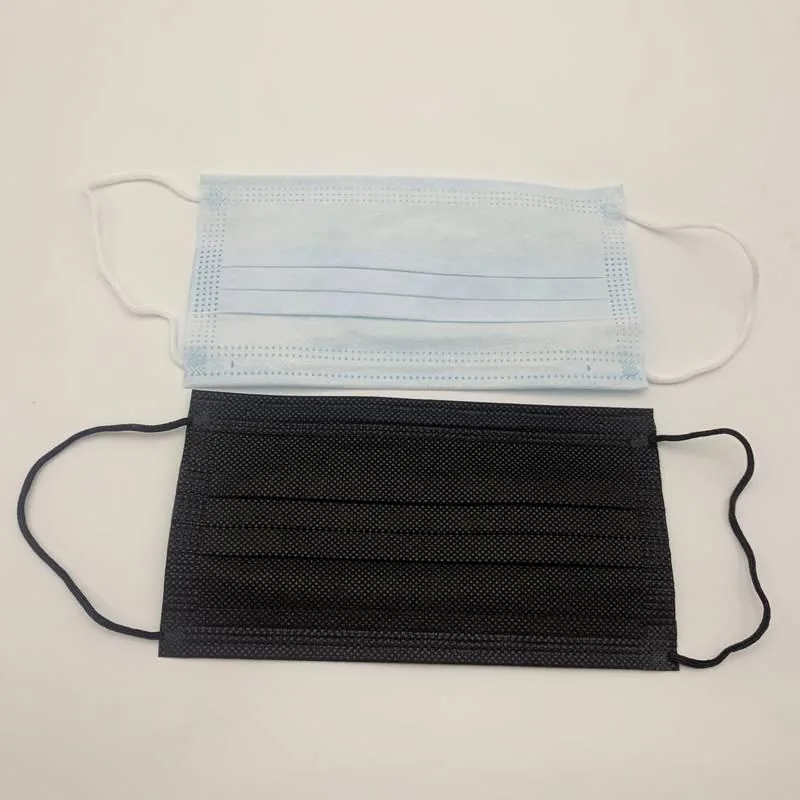
A typical three-layer mask has an outer layer, a middle filtration layer, and an inner layer. Each contributes to the overall performance of the mask, although the exact material composition can vary between products.
The outer layer may be designed to resist moisture from splashes, while the middle layer helps filter particles. The inner layer faces the wearer and is selected with factors such as comfort and moisture management in mind. The layers work together, so procurement teams should evaluate the complete mask, and not judge one component in isolation.
Other components can affect usability. A nose bridge helps the wearer adjust the mask around the nose, while pleats allow the material to unfold and cover the nose, mouth, and chin. Ear loops and tie-on straps are two common fastening options. Their suitability depends on the intended environment and the facility’s preferred procedures.
Medical Masks v. Respirators
Procurement teams should be able to distinguish medical masks from respirators. A medical or surgical mask is generally intended to help limit the spread of respiratory droplets and provide a barrier against larger droplets, splashes, or sprays, depending on its design and tested performance. It is not designed to provide the same type of tight-fitting respiratory protection as a respirator.
Respirators, such as N95 or FFP2 models, are designed to filter airborne particles when used as part of an appropriate respiratory protection program. So a three-ply medical mask, though it has great capabilities, should not be treated as a substitute for a respirator when the clinical task or applicable infection-control guidance calls for one.
The US Food and Drug Administration (FDA) explains the differences between surgical masks, other face masks, and respirators. It is up to the healthcare facilities to use their infection-prevention policies and local regulations to decide which product is appropriate for each task.
Why the Term “Three-Ply” Is Not Enough
Two products can both be described as three-ply masks yet have different performance results. One may have documentation for bacterial filtration and differential pressure, while another may have little evidence beyond a product description. A mask’s appearance or layer count cannot confirm its performance against a recognized standard.
So when comparing products, procurement managers should request the exact model or product reference, material details, test reports, and applicable conformity documents. They should also check whether the documents identify the same product being quoted. This is particularly important when buying large quantities or supplying healthcare institutions with formal procurement requirements.
A useful first step is to define the intended use before asking suppliers for prices. Having this criterion in place prevents the team from comparing a general medical mask with a product designed and tested for a more demanding clinical application.
How the Three Layers Work
These three layers are designed to work as one system. Although how they are constructed varies by manufacturer, there is usually a protective outer layer and a wearer-facing inner layer around a central filtration layer.
The materials used must allow air to pass through easily while meeting the expected performance requirements that apply to the product.
The Outer Layer
The outer layer is the part facing the surrounding environment. This layer, depending on the mask’s design, may help resist moisture and reduce the penetration of droplets or splashes. This feature is especially essential where staff may encounter fluid exposure when caring for a patient or during procedures.
However, not every three-ply mask is able to resist fluid at the same level. If the intention is to reduce penetration of splashes of blood or other body fluids, the purchaser should check that the product meets all the applicable fluid-resistance requirements plus supporting test documentation.
A general claim that a mask is “water-resistant” should not be relied on too much on since it is not enough to establish that it complies with a particular medical mask standard.
The Middle Filtration Layer
The middle layer is usually the main component that does the filtration. Medical masks commonly use a melt-blown non-woven material in this position, although the exact construction must be confirmed with the manufacturer.
The only way to gauge how well the filtration performs is through testing, not by simply identifying the material used to make it. The relevant test may measure bacterial filtration efficiency (BFE), submicron particulate filtration efficiency (PFE), or other performance characteristics that have been specified by the applicable standard.
These tests use defined methods and conditions, so the results should be read in the context of the standard and test report.
Procurement teams should assess the complete set of requirements for their intended use.
The Inner Layer
The inner layer is that part touching the wearer’s face. It is usually selected with comfort and moisture management in mind. Since healthcare workers may have to wear masks for long periods, softness, fit, and ease of breathing can affect whether the product is really practical for daily use.
But comfort should not replace performance testing as a purchasing criterion. This is because a mask may feel soft but still fail to meet the required filtration or fluid-resistance specification.
Performance Measures Procurement Teams Should Understand
A number of terms frequently appear in medical mask specifications. Taking the time to know what they mean helps procurement teams to more carefully compare supplier claims.
| Measure | What it indicates | What procurement should verify |
|---|---|---|
| Bacterial filtration efficiency (BFE) | The result of a specified test measuring bacterial filtration performance | Test method, reported result, laboratory and product model |
| Particulate filtration efficiency (PFE) | Performance against particles under a defined test method | Particle size, test conditions and the standard being claimed |
| Differential pressure (Delta P) | A measure associated with airflow resistance through the mask material | Test method, units and the applicable acceptance limit |
| Fluid resistance | Resistance to penetration by a specified liquid challenge | Test standard, pressure or challenge level, and reported result |
| Fit and coverage | Whether the mask can cover the nose, mouth and chin appropriately | Dimensions, fastening design and sample assessment |
| Material and construction | The materials and design used in the finished product | Manufacturer’s specification and consistency with the tested model |
While the explanation provided by the FDA about the surgical masks and respirators is useful background on intended use and performance limitations, procurement teams should rely on the specific standard, test report, and regulatory requirements that apply to the destination market when they make formal purchasing decisions.
Why Breathability and Filtration Must Be Considered Together
Filtration is important for face masks, but a mask also needs to allow air to pass through at an acceptable level so that it properly fulfils its intended use.
The goal is to select a mask that meets the complete specification in place, not one that optimizes just one characteristic in isolation. So the procurement teams should avoid making the mistake of selecting a product based on one attractive feature they like.
A supplier might advertise high BFE, but the purchasing team still needs to carefully review how breathable the mask is, plus any required fluid-resistance results. They also need to review the applicable standard and product documentation.
Differential pressure is one measure used to assess how resistant the mask material is to airflow across it. The results should only be compared when the test method and units are understood and found to be compatible.
What These Layers Cannot Guarantee
A three-layer construction is essential, but it does not automatically mean that a mask is suitable for every medical environment. Furthermore, it does not mean the product will prevent all exposure to infectious agents.
Performance will always depend on the tested characteristics of the mask, in addition to how it fits, the way it is worn, and the conditions in which it is used.
Masks, though essential, should not be over-relied on. They should only be used as part of the facility’s wider infection-prevention practices. Masks are not supposed to replace hand hygiene, appropriate ventilation, eye protection, or other protective equipment when those measures are required.
The medical mask guidance by WHO and local clinical protocols can help facilities determine the right approach for specific situations.
Standards and Certifications Procurement Teams Must Check
The standards help procurement teams define the performance expected from a medical face mask. The standards also provide a common basis for reviewing product claims from different manufacturers.
However, no standard or certificate should be accepted at face value without checking its scope, validity, and connection to the product being purchased.
That said, here are the main standards worth checking by the procurement teams:
ASTM F2100
ASTM F2100 is a standard that specifies performance requirements and test methods for materials used in medical face masks. Because ASTM F2100 editions can change, procurement teams should verify the applicable edition, required performance level, and supporting test reports before approving a product.
This standard classifies mask material performance into levels. Procurement teams should find out and confirm which level is required for their particular application. They should not assume that any product claiming ASTM compliance will meet their needs.
Here are some useful questions to ask the supplier concerning this standard:
- Which edition of ASTM F2100 is referenced in the documentation?
- Which performance level does the product meet?
- Are the test results for the exact model being quoted?
- Is the supporting report available for review?
- Does the product meet any additional requirements in the destination market?
EN 14683
EN 14683 is a European standard for medical face masks. It covers requirements and test methods that are used to assess characteristics such as bacterial filtration, breathability, and splash resistance, where applicable. This standard helps distinguish between different mask types according to their performance and intended use.
The guidance on regulatory requirements for medical face masks by the European Commission explains the European regulatory context.
Type I masks are generally intended for use by patients and other people to reduce the risk of spreading infection. They are not for healthcare professionals in operating rooms. On the other hand, Type II masks have higher specified bacterial filtration performance, while Type IIR masks also meet splash-resistance requirements.
So the exact classification and regulatory documents required should be checked against the current rules for the intended market. Procurement teams should not rely only on a supplier’s statement that a mask is “European standard” or “CE certified.”
Such statements can be misleading.
Instead, they should insist on checking the relevant declaration, test report, and other documents required for that product and market.
FDA Requirements in the United States
In the United States, the FDA is the agency that controls masks under the US medical-device rules. A product entering the US may need FDA approval. This depends on the product’s classification, its intended use and the rules that apply.
A statement by a supplier that it exports to the United States does not prove that every mask in its catalogue is cleared or authorized for every intended use in the US. Likewise, a mention of FDA registration is no proof that the product is cleared or approved.
For orders that are destined for the US, procurement teams should check the exact regulatory status that are required for the product, then verify the documentation against official FDA information.
For instance, if a supplier claims that a mask has a 510(k) clearance, they should ask for the relevant reference and confirm that it indeed applies to the very model and intended use that is being purchased.
ISO 13485 and Quality Management
ISO 13485 is a quality management system standard that is used to check quality of medical devices. It outlines requirements for organizations that design and manufacture medical devices. This system also defines controls intended to support consistent production and compliance with applicable requirements.
A valid ISO 13485 certificate can be relevant when evaluating a manufacturer. However, it does not prove by itself that every product made by that company meets a particular mask standard.
That’s why the procurement teams should check the certificate’s issuing body, validity, scope, named organization, and relevant manufacturing site.
A Practical Documentation Checklist
Before they approve a supplier, procurement teams can use the following checklist:
| Document or Evidence | Why it Matters | What to Check |
|---|---|---|
| Product specification sheet | Defines the mask being offered | Model, dimensions, materials, fastening, packaging and intended use |
| Performance test report | Supports technical claims | Test method, results, date, laboratory and model identification |
| Declaration of conformity, where applicable | States conformity with specified requirements | Product identity, regulations or standards cited, responsible organization |
| Regulatory authorization, where required | Supports legal market access | Whether it applies to the exact product and intended use |
| Quality management certificate | Provides evidence of a quality system | Validity, scope, certificate holder and site |
| Label and packaging artwork | Helps verify product information before shipment | Required claims, symbols, manufacturer details, lot information and language |
| Batch or lot traceability information | Helps identify the supplied production batch | Lot identification and how it links to production or quality records |
The exact documents required will depend on the product and the country where it is sold. Do not assume that every document here is needed in every country.
Instead, create a written compliance checklist that matches the destination market and the requirements of the purchasing organization. If a document is missing or unclear, the problem must be solved before the product is made or shipped.
How to Choose Masks for Different Healthcare Settings
The appropriate mask to use is based on the task, the level of exposure risk, the clinical policy, and the standards that apply. A product that is suitable for routine patient interactions may not meet the requirements for a procedure that involves potential fluid splashes.
So the procurement team should clearly know what is needed before asking for a quote.
Here are the different healthcare settings and the suitable type of masks:
Hospitals and Surgical Departments
The hospitals may use different types of masks in wards, outpatient departments, operating rooms, and other clinical areas. For instance, surgical and procedural settings may need specific levels of filtration or resistance to fluid.
Therefore, specification given by the procurement should reflect the infection-prevention policies laid down by the hospital and the requirements of the procedure.
For activities which have higher infection risks, a medical mask may not be what is needed. Where airborne hazards or procedures that generate aerosol require a respirator, the facility should follow the guidance it has in place for respiratory protection and infection-control instead of relying on a three-ply mask.
Clinics and Dental Practices
Clinics may need masks for day to day patient care, examinations, and other procedures. Dental practices can have additional requirements because some procedures may generate splashes or sprays.
So the facility should choose products that meet its requirements and ensure staff understand when a different type of protection is needed.
In busy settings, it helps to have models that are comfortable when worn and can be fastened easily. In settings where frequent changes are a necessity, the ear-loop models may be convenient. On the other hand, the tie-on models may be preferred for some clinical routines.
The final purchasing decision should be based on the performance that is required and actual workflow, not convenience alone.
NGOs and Humanitarian Programs
The NGOs usually have to distribute masks to several facilities, regions, or temporary healthcare sites. That’s why their procurement priorities can include consistency between batches, practical packaging, clear labeling, reliable delivery, and documentation that fully satisfies donor or government requirements.
Distributors and Medical Supply Wholesalers
For the distributors, there’s a need to strike the right balance between product suitability for market demand, stock turnover, and customer requirements. A single mask specification may not meet the needs of every customer, so much so if the distributor supplies hospitals, clinics, laboratories and general medical retailers.
So a helpful approach is to separate product lines by verified performance and intended use. The distributor can then communicate the differences clearly and avoid making claims that cannot be supported.
Match the Specification to the Setting
| Purchasing Environment | Key Considerations | Recommended Procurement Action |
|---|---|---|
| General patient care | Required medical mask standard, fit, comfort, and routine use | Confirm the facility’s specification and review supporting test documents |
| Operating or procedural rooms | Required filtration and any fluid-resistance requirements | Check the applicable mask type or performance level and relevant test reports |
| Dental practice | Potential splash exposure, fit and frequent changes | Confirm the required fluid resistance and product performance |
| NGO or emergency distribution | Consistent specifications, packaging, traceability and delivery | Use a standard specification and verify destination-market requirements |
| Medical supply distributor | Customer requirements, reliable replenishment and accurate claims | Maintain clear product documentation and avoid treating all three-ply masks as equivalent |
This table is a procurement guide. It is not meant as a substitute for clinical risk assessment. The infection-prevention policies of an organization and local regulations should determine the final selection.
How to Evaluate a 3-Ply Non-Woven Face Mask Manufacturer or Supplier
When choosing the right supplier, the procurement team should not just focus on the lowest price, as is sometimes the case. This is because a manufacturer eager for a deal may readily offer an attractive quotation but still be unsuitable if it cannot provide the required documentation, maintain consistent product quality, or meet the delivery schedule.
Therefore, when evaluating a supplier, factors such as product compliance, manufacturing capability, communication, order terms, and supply reliability should be covered.
This principle should apply whether the procurement team is sourcing from a 3 ply face mask manufacturer in China or another country. The country of origin alone does not prove product quality.
That said, the following are the steps to follow when evaluating a 3-ply non-woven medical face mask manufacturer or supplier:
Confirm Who is Supplying the Product
First, the procurement team should establish whether they are really dealing directly with a manufacturer, or just a trading company or a distributor. Each type of supplier may have a role in the supply chain, but the distinction affects how the team verifies production, quality control, and traceability.
So they need to ask for details like the supplier’s legal business name, registered address, and details of the entity responsible for manufacturing. If another company produces the mask, the team should ask who controls the product specification and handles quality complaints.
These details should be consistent across the quotation, contract and relevant documentation.
Review Product-specific Evidence
When they are evaluating a 3 ply mask bulk supplier, the procurement teams should request the specification sheet and relevant test reports for the exact mask being quoted. They should then check that the model, construction, and stated performance match the requirements that are in their Request For Quotation (RFQ).
A report for another product in the supplier’s catalogue is not enough. Similarly, a general company certificate should not be taken as proof that a particular mask meets a given filtration or fluid-resistance requirement.
If the report is not easy to interpret, the procurement team should ask the supplier to identify the applicable test method, results, and product reference.
Check Consistency and Quality Controls
A reliable supplier should be able to clearly explain how it controls the materials, production process, finished product, and packaging. Such a supplier should also elaborate on how it identifies batches, records inspections, and handles products that fail quality checks.
For recurring orders, the procurement team should want to know how the supplier manages changes to raw materials, production sites, specifications, or packaging. The unannounced changes can create problems when the buyer expects repeat orders to match an approved sample or specification.
Evaluate Communication and Delivery Capability
The supplier should be able to respond timely and clearly to questions about specifications, pricing, documentation, and delivery. When the supplier gives vague answers or keeps changing the quotation, it can be an indication that the requirements have not been properly understood by the supplier.
That’s why the procurement team should ask for a realistic production schedule and confirm which events determine the delivery date. These may include approval of samples, artwork, payment, production, inspection, and shipping arrangements.
The quotation or contract should make clear whether the stated lead time begins when the order is placed, when payment is received, or after another approval milestone.
Watch for Common Warning Signs
There are some warning signs the procurement manager should not overlook, no matter how sweet the deal is. The following warning signs should prompt further checks before an order is approved:
- If the supplier will not identify the exact product model.
- If test reports do not match the quoted product.
- If the certificates are expired, incomplete, or outside their stated scope.
- If the supplier makes broad claims such as “100% protection” without appropriate evidence.
- If product specifications change between the quotation and final order.
- If the supplier refuses to clarify packaging, lot identification, or acceptance criteria.
- If the payment, delivery, or inspection terms remain unclear.
But just one of these warning signs should not mean that a supplier is unsuitable. However, it should be resolved before the buyer commits to a significant order.
Use a Supplier Evaluation Scorecard
If they put a scorecard in place, the purchasing team can easily compare suppliers using the same criteria. A scorecard also makes the final decision easier to explain to the management or a tender committee. Here is a standard scorecard:
| Evaluation area | Suggested weight | Evidence to review |
|---|---|---|
| Product compliance and documentation | 30% | Applicable standards, test reports and required regulatory documents |
| Quality management and traceability | 20% | Quality system, batch records and handling of non-conforming goods |
| Product consistency and sample approval | 15% | Approved sample, written specification and change-control process |
| Price and total landed cost | 15% | Unit price, packaging, freight, insurance, duties and other costs |
| Delivery and supply capacity | 10% | Production schedule, shipment plan and ability to support repeat orders |
| Communication and service | 10% | Clarity, response times and handling of technical questions |
These weights are just an example, not a universal formula.
Pricing and MOQ When Buying 3-ply Non-woven Medical Face Mask in Bulk
Purchasing in bulk can help hospitals, NGOs and distributors to coordinate orders, standardize products and reduce the administrative work they have to indulge in when they have to reorder frequently.
However, a large order is not automatically the most economical choice. The purchasing team needs to compare the full cost, the expected usage by the organization, and the risks of holding excess stock.
What Affects Wholesale Price?
A 3ply face mask wholesale price can vary according to product specification, order quantity, packaging, customization, and delivery terms. That’s why masks that appear to be similar in a catalogue may not be comparable if they meet different performance requirements or they use different packaging configurations.
Common factors that affect pricing include:
- Performance requirements: A product that has to meet a specified standard or additional requirement to resist fluid may have a different cost from a basic model.
- Material and construction: The chosen materials, design, and manufacturing controls can affect the quotation.
- Order volume: Larger orders may change the unit price, but the effect depends on the supplier and order configuration.
- Packaging: Wrapping each product in its own packet, the quantity of the box, arrangement of the carton, and custom labels can affect the total.
- Customization: The OEM packaging, approval of artwork, or a special configuration may bring in extra costs or minimum quantities.
- Terms of shipping: The landed cost is usually affected by factors like freight, insurance, duties, handling, and delivery to the final location.
What Does MOQ Mean?
MOQ stands for minimum order quantity.
The 3 ply medical mask MOQ means the minimum or smallest quantity that a supplier is willing or ready to accept to produce or supply for a specified order. The MOQ amount usually varies depending on whether the buyer has chosen a standard product, custom packaging, or a private-label arrangement. So the supplier needs to be asked to specify the MOQ in clear units.
They should also clarify if this MOQ is per design, color, packaging, or per the whole order. If a supplier lists two different products with different packaging options, there may be different minimum order quantities for each.
That’s why it should not be assumed that if there is a minimum for one configuration, it should also apply to another.
When placing a first order, it can be worth discussing with the supplier if there is an option of ordering a smaller trial amount to begin with. Doing this allows an organization to check that the documentation, packaging, delivery time, and product matches are all OK before placing a larger order that will be repeated regularly.
The procurement team should keep in mind that even trial purchases still need to adhere to the buying and compliance standards the organization has in place.
Send the Same RFQ To Every Supplier
To be able to compare quotes apples to apples, the procurement team should send every supplier the same RFQ. They should ensure they include the expected use, the standard required, dimensions, fastening type, package quantity, shipping destination, and whether they need documentation or not.
If the procurement team needs customized packaging, they should provide each supplier with the same specifications.
A table comparing quotations can make it easier to point out the differences:
| Cost or requirement | Supplier A | Supplier B | Supplier C |
|---|---|---|---|
| Exact product model | Confirm | Confirm | Confirm |
| Required standard and test evidence | Review | Review | Review |
| Unit price and currency | Record | Record | Record |
| Packaging and customization | Record | Record | Record |
| MOQ | Record | Record | Record |
| Production lead time | Record | Record | Record |
| Freight and insurance | Record | Record | Record |
| Duties and local charges | Estimate or confirm | Estimate or confirm | Estimate or confirm |
| Total landed cost | Calculate | Calculate | Calculate |
The order should not be awarded based on the table until the suppliers’ offers are the same, in terms of technical details. A quote that leaves out a necessary test, package type, or shipping fee must not be compared directly with one that has all of those things.
Calculate Total Landed Cost
Total Landed Cost is the cost of moving the purchased goods to the agreed destination that was agreed on. This includes the price of the product and all the costs related to moving it.
Depending on the contract and country, this can include the product price, packaging, freight, insurance, customs duties, taxes, broker charges, inspection fees, and local transport.
A simple working formula is:
Total landed cost = product cost + packaging or customization + freight and insurance + duties and taxes + handling and local delivery costs
The purchasing team should check which costs are part of the supplier’s quote and which will be paid separately. This is so important when comparing offers under different delivery terms.
For example, a supplier may quote a lower product price that excludes international freight, while another may quote a higher price but that covers delivery to a cross-country destination.
These two prices can’t be compared properly until the extra costs are considered. The procurement manager should use current shipping quotes and customs information that applies instead of relying on an old guess.
Plan Order Quantities Around Real Demand
A bulk order is supposed to match the amount of expected usage, lead time, and the organization’s available storage. Hospitals with predictable consumption may look at past usage records to guess how much they will need. As for the NGOs, they may need to consider project duration, distribution plans, and how uncertain the next resupply might be.
The procurement team can use a simple planning method: First, estimate the amount used each day or each week. Then multiply that number by the number of days or weeks they need to cover. Finally, they add a buffer that matches the risk of delivery delays and the local policy.
The buffer should not be picked at random. The buffer must show the impact of running out of stock, the reliability of the supplier, the storage the organization has, and the risk of expiry.
The procurement manager must not order more than what the organization can store and use before the product’s shelf life ends.
How to Import 3-Ply Non-woven Medical Face Masks from China
China has a large medical manufacturing sector. This includes suppliers of disposable non-woven products. For buyers from other countries turning to China for medical products, the important task is to check each individual supplier carefully and confirm that the product fits the requirements of the market it is heading to.
One should follow the careful steps they would use when importing from any other country. It’s not about China. The process should be the same no matter where the products are being supplied from.
So before arranging shipment, the procurement team should do the following:
Confirm the Requirements of the Destination Market First
Face masks for medical use may need different requirements depending on the destination country and their intended use once there. These requirements may cover classification, registration or authorization, labeling, conformity documents and language.
So the importer should confirm these requirements with the relevant regulator, customs authority or qualified local adviser before ordering. One should not assume that a product accepted in one market can automatically be imported into another.
It is helpful to deal with a supplier with experience in exporting to a particular country, but this experience does not replace the importer’s responsibility to take the time to confirm the rules for the current shipment.
Prepare a Clear Purchase Order
Once the supplier has been evaluated, the purchase order should describe the product and the agreed commercial terms. The procurement team should avoid relying on a general description, such as “three-ply medical masks,” when the purchase depends on a particular model or performance level.
The order should identify the product reference, quantity, unit price, currency, packaging, required documents, delivery terms and expected schedule.
Where relevant, it should also reference the approved specification and sample. Additionally, any permitted substitutions or changes should be agreed in writing.
If the order includes OEM packaging, the approved artwork should be attached and the party which is responsible for checking the final version specified. This reduces the risk of receiving goods with incorrect labeling or an outdated design.
Understand Common Shipping Documents
Common documents in international trade may include the following:
| Document | Typical purpose | What the importer should check |
|---|---|---|
| Commercial invoice | Records the sale and transaction value | Product description, quantities, prices, currency and seller/buyer details |
| Packing list | Describes the shipment’s packaging and contents | Carton count, quantities, weights and package dimensions |
| Bill of lading or air waybill | Provides transport documentation | Consignee, shipment details and consistency with the order |
| Certificate of origin, where required | Identifies the goods’ country of origin | Whether it is needed and whether the details are correct |
| Product test and conformity documents | Support the product’s claimed performance or compliance | Product identity, applicable standard and destination requirements |
| Other permits or regulatory documents, where required | Support import clearance or legal market access | Exact requirements from the relevant authorities |
But this is a general checklist, not a statement that every listed document is mandatory for every shipment. It is best to confirm the actual requirements with the customs broker and relevant authorities. The exact documents needed will vary by transaction, shipping method, and destination.
Choose the Shipping Method Carefully
The best shipping option depends on the shipment’s size, urgency, budget, route, and delivery requirements.
In that case, air freight can be useful when time is critical or the shipment is relatively small, while sea freight may be more economical for larger consignments that can tolerate a longer transit time.
Clarify Incoterms and Responsibilities
It is the international commercial terms, commonly called Incoterms, that help define the responsibilities of buyers and sellers for delivery, costs and risk under the chosen rule. The parties should specify the agreed Incoterm and named place or port in the contract, instead of using a vague phrase such as “shipping included.”
The selected rule can affect who arranges transport, who pays particular costs and when the risk transfers. It may also affect which party handles export or import formalities under the relevant rule. The buyer should understand these responsibilities before comparing quotations.
The procurement manager can check Incoterms information with the International Chamber of Commerce for advice from a freight forwarder or trade professional if the allocation of responsibilities is not clear.
Inspect Before Dispatch When Appropriate
For an order that’s large, it’s best that the buyer arranges an inspection before shipment or other independent checks. The scope of inspection should be agreed in advance and might include quantity, packaging, labeling, product identity and selected visual characteristics.
Where testing is needed to verify performance against a technical standard, a routine visual inspection is not a substitute for the appropriate laboratory evidence.
The contract should explain how the inspection findings will be handled. For example, the parties can agree on how discrepancies are documented, whether corrective action is required and whether shipment approval depends on resolving specified issues.
These arrangements are easier to manage when agreed before production.
Prepare for Receiving and Traceability
Before the goods arrive, the procurement team should ensure that the receiving team has the purchase order, packing list and agreed acceptance criteria. On receipt, the purchaser should check quantities, packaging condition, product identification and lot information.
Any damage, shortage or discrepancy should be recorded promptly and then the contract’s process for raising a claim should be followed.
The documentation linked to the relevant shipment and inventory records should be kept for future reference. This way, if the organization needs to investigate a quality issue later, it should be possible to identify which lot was received, where it was distributed and which supplier documents applied to it.
OEM and Private-Label 3-Ply Masks
OEM, or Original Equipment Manufacturing arrangements can help medical distributors and healthcare suppliers sell masks under their own brand. Depending on the manufacturer’s capabilities, a buyer may be able to request custom packaging, branding, or other agreed product configurations.
The available options and minimum quantities must be confirmed directly with the supplier.
For organizations that are searching for wholesale face masks OEM packaging, the main priority should be ensuring that customization does not compromise the product specification or create compliance problems.
What can be customized?
Possible customization options may include:
- Brand name and logo on the retail box.
- Box design, colors, and printed artwork.
- Quantity of masks per box or carton, where available.
- Product labeling and required language.
- Carton markings for warehouse handling and distribution.
- Selected product configurations, subject to manufacturer capability.
Not every manufacturer offers every customization option. Customization may also affect the MOQ, production schedule, and unit price. That’s why procurement teams should ask the supplier to confirm what is available for the specific mask model.
Here are the main steps during OEM and Private-Label:
Approve Packaging Before Production
Before production begins, the supplier should be provided with the approved logo, artwork, product description, and labeling requirements. Who will prepare the final artwork and who is responsible for checking it should also be confirmed.
The final review should cover spelling, dimensions, product identification, required symbols, manufacturer details, lot information, and any destination-market requirements. The claims printed on the package should match the evidence available for the product.
While at it, adding performance statements or certification marks that have not been verified and authorized for use should be avoided.
A copy of the approved artwork with the purchase order should be kept. If the order is repeated, the supplier should confirm whether the same artwork and specification will be used or whether any changes are proposed.
Confirm Ownership and Commercial Terms
For private-label orders, who owns the artwork should be clarified, whether it may be reused, and how the supplier will handle unused packaging.
There should also be an agreement on the MOQ, payment terms, lead time, quality checks, and process for approving changes.
These details matter when a distributor is building a long-term brand. A low initial quotation may be less attractive if the packaging terms are restrictive or repeat orders are difficult to manage.
Storage, Shelf Life and Stock Planning
The correct storage and inventory control help organizations maintain usable stock and reduce waste. The medical masks should be stored according to the manufacturer’s instructions and the conditions stated on the product packaging.
The buyers should not assume that all disposable masks have the same shelf life or storage requirements.
That said, take these steps during storage, shelf life, and stock planning:
Confirm the Shelf Life
Before placing a disposable 3 ply face masks bulk buy, the supplier has to state the product’s shelf life and explain how it is determined. The buyer should confirm how the manufacturing date, expiry date, or other relevant date information will appear on the packaging, where required.
For a shipment that will be stored before distribution, the remaining shelf life on arrival should be considered rather than relying only on the total shelf life from the date of manufacture.
The organization should establish a minimum acceptable remaining shelf life if its purchasing policy or distribution plan requires one.
This requirement should be included in the RFQ and purchase order so the supplier understands it before dispatch.
Store Masks According to the Instructions
Masks should be kept in their original packaging until they are needed, unless the manufacturer’s instructions specify otherwise. The storage area should meet the conditions stated by the manufacturer and should protect stock from moisture, contamination, damage, and other conditions that may affect the packaging or product.
The procurement team should advise against storing cartons where they may be crushed, exposed to water, or placed in unsuitable conditions. The warehouse staff should also be able to identify stock without opening packages unnecessarily.
Should the shipment arrive with damaged packaging or other signs of deterioration, the issue should be recorded and the organization’s receiving and quality procedures followed before the stock is released for use.
Use a Simple Stock-control System
With a stock register, the purchasing and warehouse teams can easily monitor quantities, expiry dates and reorder needs. At a minimum, records should include the product name or reference, batch or lot number, quantity received, date received, expiry information where applicable, quantity issued and current balance.
When handling multiple batches, a first-expiry-first-out approach should be used where appropriate: that is, the stock with the earliest expiry date should be issued first, provided it remains suitable for use. Doing this lowers the risk that older stock will be left behind newer deliveries.
The reorder point needs to show how much is being consumed, how long it takes to get more, and the extra amount the company wants to keep as a buffer. Inventory levels must be checked often and new predictions made when demand changes.
Avoid Overstocking
Large orders can bring commercial benefits. But too much stock can tie up money and the space for storage. Too much stock can also increase the risk of expiry or damage. Overstocking can also be a problem if the organization has to make changes to its requirements.
The procurement team should predict usage from actual issue records where possible. For new programs, the team should use a documented forecast and review it as real usage data becomes available.
The order quantity should match expected demand, remaining shelf life, and the supplier’s replenishment schedule.
The 3-Ply Non-Woven Medical Face Mask Listed By BKAMED
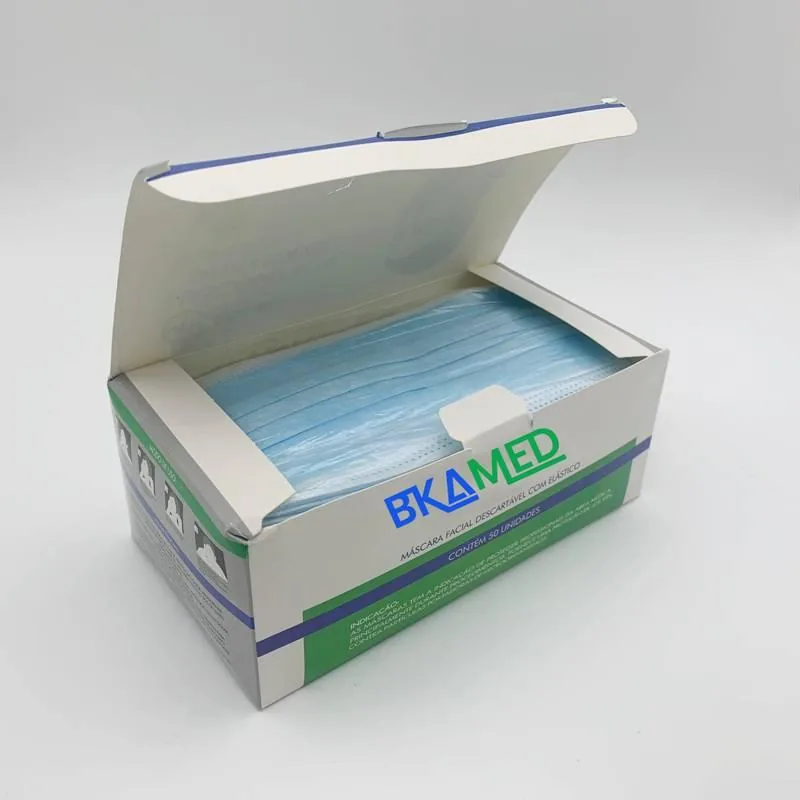
BKAMED offers three-ply medical face mask products that can be purchased on a wholesale basis. These listings provide a starting point for buyers who want to compare the available configurations and request documentation for an intended order.
One listed option is the tie-on 3-ply surgical face mask, with a bacterial filtration efficiency (BFE) above 98% and a differential pressure (Delta P) below 30, and dimensions of 17.5 cm by 9.5 cm.
The BKAMED’s non-woven disposables category provides an overview of related products. Buyers who are considering an order of various products can also review the company’s medical consumables information, then confirm product-specific details directly before purchase.
Buying Face Masks with Other PPE Purchases
The hospitals, NGOs, and distributors usually procure medical masks together with other disposable protective products. Combining purchasing activities usually helps coordinate shipments and simplify supplier communication. But each product still needs its own specification and a review of how it complies with the requirements.
BKAMED also lists other non-woven products, including disposable medical gowns and products in its non-woven disposables range.
Buyers who plan a combined order should confirm the specifications, documentation, packaging, quantities, and delivery schedule for each item.
A coordinated order can be useful when the products meet the organization’s requirements, and the commercial terms are clear. However, the purchasing team should compare the combined landed cost with alternatives and avoid adding unnecessary items simply to reach a supplier’s MOQ.
Parting Shot: Bulk Mask Procurement Should be Based on Evidence
As seen, buying 3-ply non-woven medical face masks in bulk should go beyond comparing unit prices. That’s why procurement teams should first define the intended use, identify the standards that apply, review product-specific test reports, and confirm the ability of the supplier to deliver consistent goods.
Also affecting the total cost of a purchase are the MOQ, packaging, shipping terms, shelf life, and storage.
BKAMED lists several three-ply medical mask options for wholesale procurement. The procurement teams should contact BKAMED to discuss their requirements and request a quotation.
