A resilient PPE supply chain is not only an operational requirement in a post-pandemic world, but also a key boardroom requirement. To most suppliers, it can be challenging for hospital executives, procurement officers, and bulk importers to find a trustworthy nonwoven medical mask factory in China. The international market is marred by inconsistent quality, varying weights of fabric and unverified credentials.
The ultimate solution is the nonwoven medical face mask, which is the gold standard in infection control and first-line protection. But what makes these masks superior in structure and how to distinguish the tier one manufacturers from the others?
This detailed guide explains all the advanced materials, processes, and in-depth factory checks. So, whether you’re looking to place a disposable non-woven medical face masks in bulk or want to secure an elite OEM/ODM supplier like Bkamed to protect your supply chain, this roadmap ensures that your procurement strategy never faces quality compromise.
What “Non-Woven” Means in a Medical Face Mask
Comparing PPE standards globally can sometimes be confusing, depending on the terms used by a non-woven medical mask factory in China or another manufacturer. First, though, it is important to understand the science behind the fabric itself, so that you can better appreciate how these particular textiles are used in modern healthcare.
According to EDANA (the European Disposables and Nonwovens Association), a non-woven material is an “engineered fibrous assembly” that is given structural integrity through physical, chemical, or thermal means. Non-woven fabrics are not woven in a specific or regular pattern like your cotton T-shirt or a regular cloth mask. Instead, they are created by taking polypropylene polymers, melting them down, and extruding them into millions of microscopic fibers. These fibers are then blasted into a random, web-like sheet and bonded together, usually by heat or ultrasonic welding.
It is this particular engineering process that imparts the special and life-saving filtration properties to Non-woven Medical Face Masks.
Woven vs. Knit vs. Non-Woven: Why Healthcare Chose Non-Woven
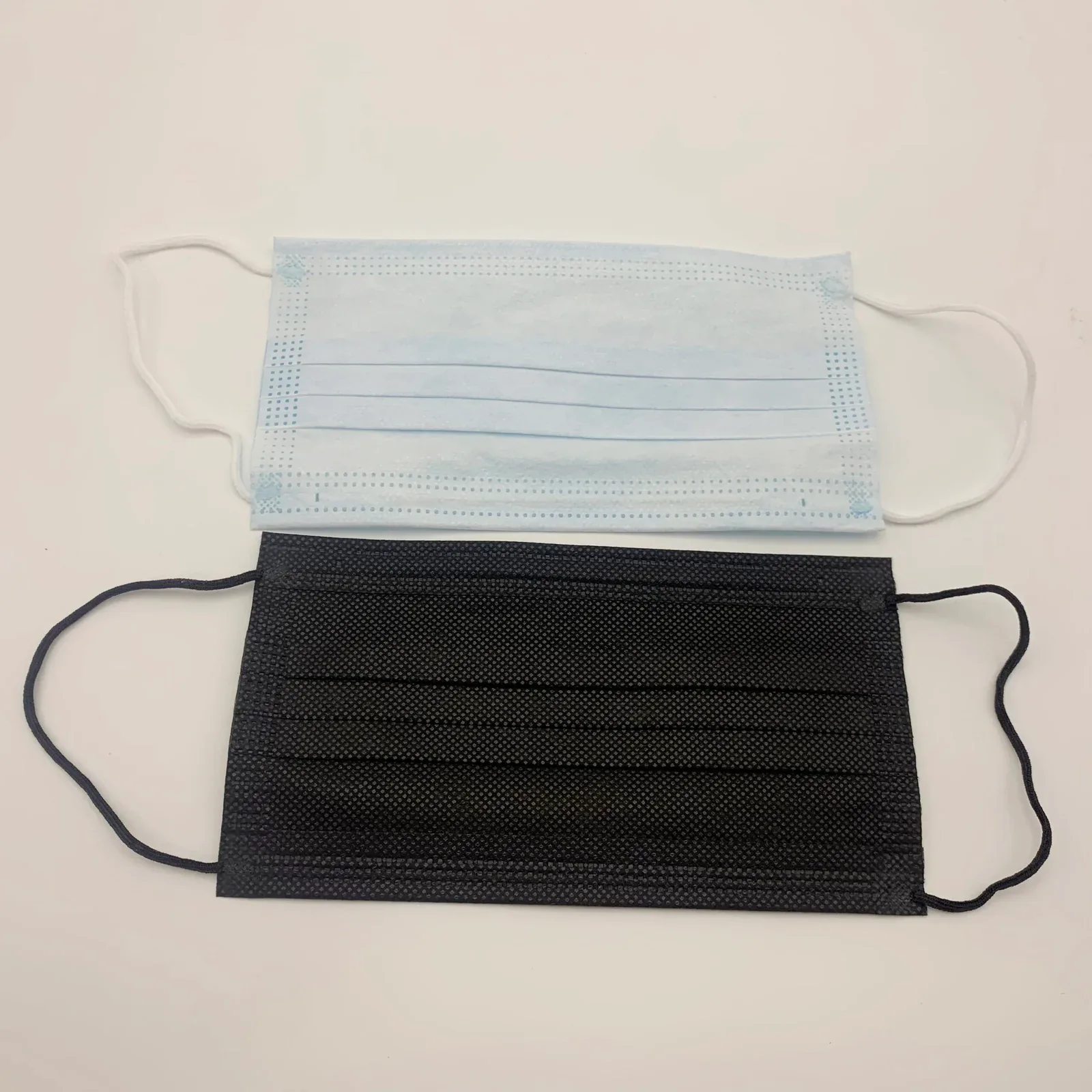
When faced with a disposable medical face mask bulk order, one may ask why the medical industry switched from woven and knit textiles to surgical face masks decades ago. It is the geometry on a microscopic scale, along with cost efficiency, that makes the answer.
- Traditional Textiles: Woven and Knit Fabrics are traditional textiles that use a grid-like structure of interlaced threads. Regardless of how closely the cotton or polyester is woven together, the universally tiny holes between the threads form open highways for bacteria and viruses. Woven fabrics are also extremely absorptive and can absorb blood or liquid splashes, bringing potentially dangerous pathogens into the wearer’s face.
- Non-Woven Fabrics: Because a non-woven face mask manufacturer utilizes a randomized web of fibers, there are no straight paths through the material. This produces a “tortuous path,” as it is known in the filtration engineering field. A tiny droplet or aerosolized particle trying to penetrate the mask is forced to take a random path through a maze of random polypropylene fibers. It inevitably crashes into a fiber and gets stuck.
Besides that, non-woven fabrics are generally less expensive to produce on an industrial scale. This manufacturing efficiency is the reason why a quality bulk supply partner for polypropylene face masks can manufacture millions of disposable, highly sterile face masks at a lower cost than conventional textile products. For hospital systems and bulk importers, it means finding a product that is not only vastly superior in infection control, but it’s also economically feasible for single-shift disposability.
The Materials Inside a Non-Woven Mask
Tear and open a high-quality non-woven medical face mask, and there will be no single block of material. Rather, you will find a very engineered, multi-layered filtration architecture, which is known in the textile industry as SMS (Spunbond-Meltblown-Spunbond).
This sandwich-like structure is the key to a true nonwoven medical face mask’s greater Bacterial Filtration Efficiency (BFE) over standard, single-layered masks. To get a polypropylene face mask bulk supply, it is important to know the exact specifications of each of the layers, so that you can be sure to obtain the correct type of PPE, not a cheap fake.
The 3-Ply Architecture (SMS) Explained
The SMS configuration is manufactured in a unique manner for each layer, resulting in the optimum blend of mechanical durability and microscopic filtration.
The Outer Layer: Spunbond Polypropylene (The Shield)
The outermost layer of the mask is the first line of defense for the wearer’s body. Made from spunbond polypropylene, this layer is intentionally manufactured to be hydrophobic (water-repellent). Healthcare workers are always at risk of encountering uncontrollable bodily fluids, both during surgery and in patient care. The spunbond outer layer is specifically engineered to resist airborne droplets, blood splashes, and other dangerous liquids from entering the mask. In addition, it offers the rigidity to maintain the mask’s shape for hours of use.
The Middle Layer: Meltblown Polypropylene (The Engine)
The middle layer is the mask’s undisputed filtering mechanism. The best meltblown mask fabric supplier employs a highly advanced process in which molten polypropylene is extruded through extremely fine orifices and immediately subjected to a high-speed hot air blast. This forms a very fine, complex network of fibers which have only a few microns in diameter.
However, there is more to physical density. This critical meltblown layer is treated during the manufacturing process to give it an “electret treatment”. This highly specialized process puts a permanent electrostatic charge on the microfibers. These electrostatically charged fibers are like a strong magnet and actively attract and trap sub-micron particles, viruses, and bacteria before they can enter the wearer’s airways, in the same way that a balloon rubs on your hair and attracts lint. But if a factory fails to do this important step to reduce expenses, the protective function of the mask is significantly lowered.
The Inner Layer: Spunbond Polypropylene (The Comfort Zone)
The layer immediately adjacent to the wearer’s face is also spunbond polypropylene, but with an important difference: it is hydrophilic (absorbs water). These masks are often used by healthcare workers for prolonged and stressful working hours. The inner layer is engineered to collect moisture, sweat, and condensation that is released from the wearer’s body. It’s actually hypoallergenic and ultra-soft to avoid facial skin irritation and contact dermatitis.
Auxiliary Components: More Than Just Fabric
In the process of establishing the customized non-woven mask OEM private label manufacturing contract, buyers should also pay attention to the quality of the auxiliary parts and carefully stipulate the requirements. The best fabric in the world is not a good enough substitute for a proper physical fit.
- The Nose Wire: Premium Non-woven Medical Face Masks feature an embedded, malleable nose bridge strip—usually made of pliable aluminum or a plastic-coated double wire. This enables the clinical user to safely press the mask tightly against the bridge of their nose, thus closing the top exhaust path. A poor seal causes extremely foggy surgical glasses and reduces inhalation protection.
- Ear Loops and Ties: A good mask will feature ultrasonically welded ear loops or surgical ties. The loops need to be composed of 100% latex-free materials (such as high-quality elastane and polyester mixtures) to completely remove the chance of serious latex allergic reactions in a clinical setting. The elasticity needs to be just right–not too loose to cause side-gaping at the cheeks, but not so tight that it will cause discomfort to the skin at the back of the ears during a 12-hour day.
Fabric Weight (gsm) and Why It Matters
With a disposable medical face mask bulk order, the procurement team tends to pay attention solely to the final price of the unit. The actual indication of the integrity and protection of a mask depends on fabric weight, which is measured in Grams per Square Meter (GSM). GSM is a critical factor in the medical textile sector, influencing everything from durability to moisture resistance as well as comfort.
When performing a 3-ply mask factory audit just before launching a long-term contract, it is essential to test the actual GSM of each layer. A good nonwoven medical mask factory china or worldwide supplier will be 100% transparent regarding these figures, while cut-rate factories will likely try to use lighter fabrics to reduce manufacturing costs.
The Ideal GSM Ratio for a 3-Ply Surgical Mask
The proper weight balance in Non-woven Medical Face Masks requires the fabric Spunbond-Meltblown-Spunbond (SMS) to be precisely graded. This is the standard breakdown you can look for from a high-quality polypropylene face mask bulk supply partner, like Bkamed:
- Outer Layer (Spunbond): Typically 20–25 GSM. The layer should be at least dense enough to physically prevent blood spurts and hazardous fluids from permeating it. This barrier should withstand different rates of synthetic blood pressure, as per ASTM F2100 and EN 14683 standards, without affecting the inner layers. 25 GSM gives good resistance to tearing and permeation by fluids.
- Middle Layer (Meltblown): Typically 25 GSM. The middle layer is the most important layer for filtration and must have a very specific density. This 25 GSM meltblown mask fabric is engineered by a dedicated meltblown mask fabric supplier to achieve a high Bacterial Filtration Efficiency >98% while allowing air to pass through the mask at the same time.
- Inner Layer (Spunbond): Typically 20–25 GSM. The layer is right next to the skin. The spunbond polypropylene is sufficiently durable to stop the mask from collapsing when the wearer breathes but is soft and absorbent enough to pull sweat away from the wearer’s face during extended shifts.
The Trade-off: Protection vs. Breathability (Delta P)
One of the most common mistakes novice buyers make when entering a nonwoven mask OEM private-label agreement is believing that the thicker the mask, the better it is. It may be tempting to ask for 40 GSM meltblown for the best protection, but that is not the case. You may want to say, “Please give me a 40 GSM layer of meltblown for extra protection.” But no!
The solution is a critical measurement: Differential Pressure (Delta P, ΔP). Delta P reflects the resistance to airflow through the mask — that is, it is a reflection of the effort the clinical worker must exert to breathe through the mask. If a nonwoven face mask manufacturer arbitrarily increases the GSM of the meltblown layer, the Delta P skyrockets.
If the mask is difficult to inhale through, the air will go around it. Instead of passing through the filtration layer, the exhaled and inhaled air will simply blow out or leak in from the sides, top, and bottom of the mask. This completely bypasses the protective properties of the nonwoven medical face mask, endangering the healthcare worker.
Therefore, when evaluating a factory’s face mask production capacity per day, do not just ask how many masks they can produce. Request their specific GSM breakdowns and their Delta P test reports. A world-class manufacturer guarantees high filtration efficiency without compromising on the dangerous part, that is, breathability.
How Non-Woven Face Masks Are Made
When evaluating a non-woven face mask manufacturer for a lucrative disposable medical face mask bulk order, a virtual or physical tour of their production floor is incredibly revealing. Manual work in modern medical fabric production has almost become a thing of the past. The entire process of creating Non-woven Medical Face Masks is highly automated, utilizing advanced robotics and precision machinery to eliminate human contamination and dramatically increase the face mask production capacity per day.
A step-by-step explanation of the process by which raw materials become clinical-grade PPE;

Step 1: Raw Material Feeding and Alignment
The raw fabric comes in large rolls. A premier polypropylene face mask bulk supply partner will load rolls of spunbond and meltblown fabric onto a multi-roller machine. These machines include a high-resolution tension control system to feed the three layers (outer spunbond, middle meltblown, and inner spunbond) at the same time. The correct tension is essential: when the fabric is too tight, the small pores in the meltblown layer of the mask will stretch and open, making the mask ineffective at filtering.
Step 2: Inserting the Nose Wire
The three layers of fabric come together, and an automatic dispenser releases a roll of malleable nose wire (usually a plastic-covered double metal wire or aluminium strip). The machine precisely cuts the wire to the standard length (usually around 9 cm) and feeds it directly between the top edges of the outer and inner spunbond layers. This allows for the wire to be centered at all times and permanently secured, which helps the clinician form the mask properly over the bridge of the nose.
Step 3: Pleating for Expansion
A flat surface that is meant to fit a human face must be able to conform to a three-dimensional shape. For this, the continuous three-ply sheet is fed into a mechanical folding apparatus. This machine folds fabric into traditional pleats. The pleats are very useful features that enable the nonwoven medical face mask to expand vertically from the bridge of the nose to the lower edge of the chin, thus covering the entire area without causing tension in the fabric structure.
Step 4: Ultrasonic Welding
It’s probably the most important step in the current mask-making process. Traditional sewing is completely forbidden in the assembly of genuine Non-woven Medical Face Masks. Why? A sewing needle penetrates the fabric, forming small holes through which viruses and bacteria can easily pass, and this makes it possible for microscopic tunnels to form through the meltblown filter.
Instead, a top-tier nonwoven face mask manufacturer utilizes ultrasonic welding. High-frequency vibrations are applied to the fabric under pressure. This localized frictional heat melts the thermoplastic polypropylene fibers and immediately welds them together. This technology is used to seal the pleated edges of the mask and to securely attach the latex-free ear loops. The result is an incredibly strong, completely hermetic seal with zero perforations.
Step 5: Cleanroom Assembly and Packaging
The manufacturing process must take place in a very controlled environment since these masks are to be used in a surgical theatre, in ICUs, and in sterile clinical environments. To meet international regulatory requirements like ISO 13485, medical device manufacturing facilities must operate within an ISO Class 8 Cleanroom (historically referred to as Class 100,000).
An ISO Class 8 environment is an environment where high-efficiency particulate air (HEPA) filters are constantly filtering the room so that the amount of particles that can be present in the air (m3) is strictly limited. Gowning procedures are strict; workers should wear full anti-static cleanroom gowns, hairnets, and booties to ensure that no flakes of hair or lint from the staff enter the production line.
After ultrasonic welding, automatic optical sensors are used to measure optical defects in the masks. Once approved, good masks are mechanically counted, stacked, and then packaged in sterile packaging before leaving the cleanroom floor. This rigorous protocol ensures the high level of hygiene and reliability of your disposable medical face mask bulk order.
Quality Tests and Global Standards for Non-Woven Masks
Whenever you are considering a non-woven face mask manufacturer, it is a huge risk to just take their word for product effectiveness. When it comes to clinical procurement, there’s only one currency: the empirical. A quality supplier will have Non-woven Medical Face Masks in stock sent to different independent third-party laboratories for rigorous testing before a single carton leaves the dock.
For a serious 3-ply mask factory audit, you must insist on the actual reports of the following 5 essential performance characteristics.
Bacterial Filtration Efficiency (BFE) & Particulate Filtration Efficiency (PFE)
The determining factor for any medical mask is its efficiency at filtering.
- BFE (Bacterial Filtration Efficiency): This test measures the percentage of bacteria (typically using an aerosolized Staphylococcus aureus suspension of around 3.0 microns in size) that the mask successfully blocks. For clinical use, a premium mask must achieve a BFE of 95% to greater than 98%.
- PFE (Particulate Filtration Efficiency): PFE evaluates the mask’s ability to filter out sub-micron, non-viable particles (usually measuring around 0.1 microns). This is mostly due to electrostatic charge imparted by the mask fabric supplier of the meltblown mask. High-tier masks provide a PFE of ≥ 98% consistently.
Breathability Testing (Differential Pressure / Delta P)
A mask won’t help if a doctor can’t breathe through it, as outlined in our fabric weights breakdown. Differential pressure (Delta P) testing measures the exact airflow resistance of the nonwoven medical face mask. It calculates the pressure drop across the mask at a given flow rate of air. A smaller Delta P value will reflect better breathability, which reduces user fatigue and still provides a critical seal against the user’s face.
Synthetic Blood Penetration (Fluid Resistance)
Arterial spurts and fluid splashes are not uncommon occurrences in the operating room and emergency room. During this test, Non-woven Medical Face Masks are blasted with high-velocity synthetic blood at varying pressures—typically 80 mmHg, 120 mmHg, and 160 mmHg (simulating different levels of human blood pressure). A mask meets this criterion only when there is no visible penetration of fluid on the inside of the mask, where it comes in contact with the wearer’s face.
Flammability and Microbial Cleanliness (Bioburden)
- Highly flame resistant: Medical masks should be highly flame resistant given the high oxygen use and laser and electrosurgical cautery equipment in the operating room. Test standards classify masks based on how long it takes a flame to spread across the fabric.
- Microbial Cleanliness (Bioburden): This tests the total number of viable microorganisms present on the mask immediately after production, prior to use. It provides proof of the effectiveness of the cleanroom environment of the factory, as well as that the mask itself is not a source of contamination.
Comparing EN 14683 (Europe) vs. ASTM F2100 (USA)
Depending on your regional market, your disposable medical face mask bulk order will need to conform to specific international standards. The two “gold standard” regulatory criteria are the European EN 14683 and the American ASTM F2100.
Below is a simplified comparison for procurement officers that can be used to match the level of protection to the clinical environment:
European Standard (EN 14683):
- Type I: BFE ≥ 95%. Mainly intended for patients and low-risk clinical settings.
- Type II: BFE ≥ 98%. The standard for the healthcare worker in the general medical setting where a primary risk of fluid exposure does not exist.
- Type IIR: BFE ≥ 98% with an added requirement for strict splash resistance (≥ 120 mmHg). The “R” signifies fluid resistance, making it ideal for surgery and trauma units.
American Standard (ASTM F2100):
- Level 1 (Low Barrier): BFE/PFE ≥ 95%. Resistant to fluids at 80mmHg. For normal tests and low-risk procedures.
- Level 2 (Moderate Barrier): BFE/PFE ≥ 98%. Fluid resistance at 120 mmHg. Used in areas where there is a mild to moderate risk of splattering fluids.
- Level 3 (High Barrier): BFE/PFE ≥ 98%. Fluid resistance at 160 mmHg.Required for high-risk surgical procedures where there is a high level of fluid risk.
In negotiating a nonwoven mask OEM private label agreement, make sure your manufacturing partner can clearly state their SMS layers are able to meet the specific EN/ASTM testing requirements of your local health authorities.
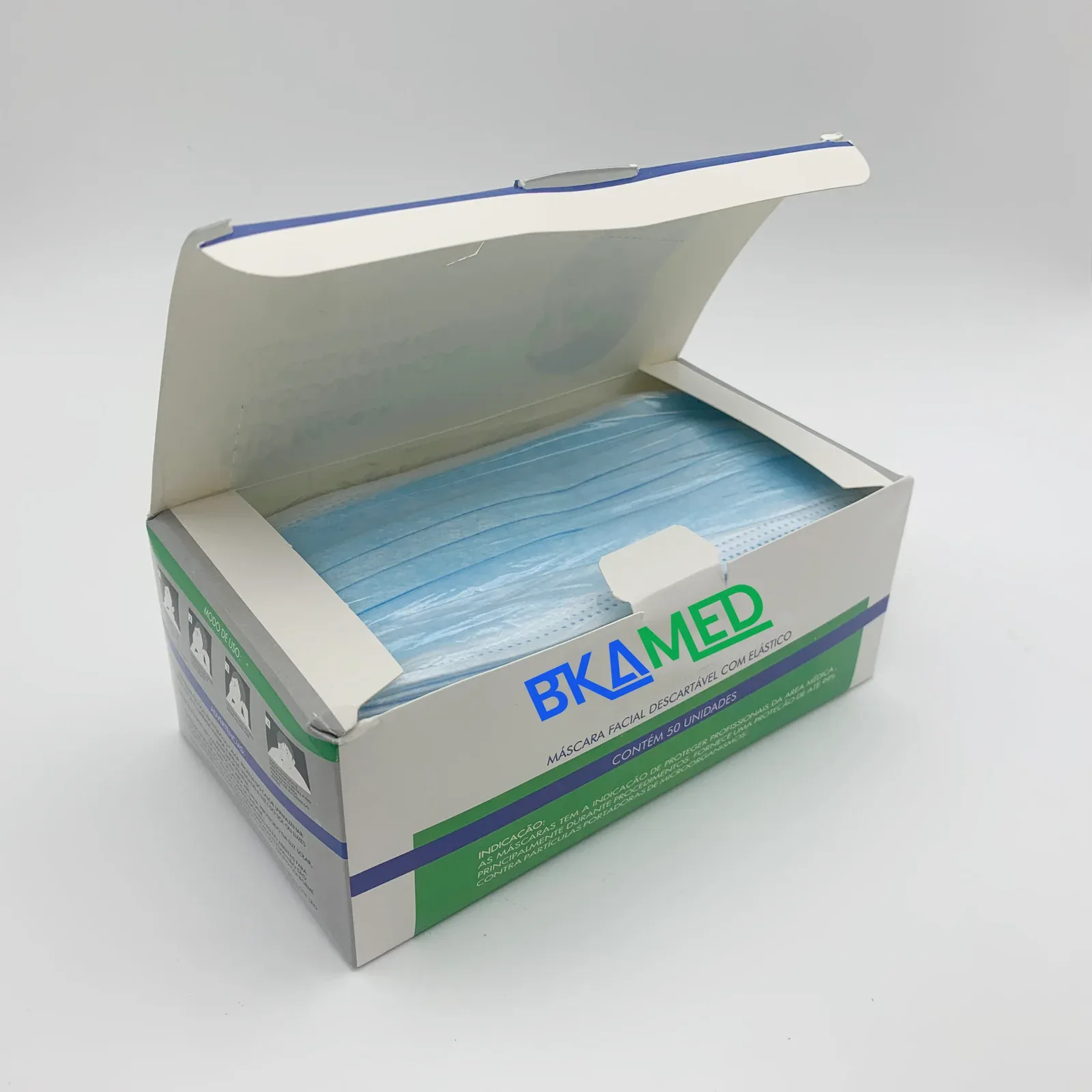
Bkamed Disposable Non-Woven Medical Face Mask Type II
Once you’ve reached the point of ordering disposable medical face masks in bulk, the challenge is to move from theory to product, from ideal to real. The Bkamed Type II Non-woven Medical Face Mask is a clinical masterpiece and an engineering achievement in the fiercely competitive medical supplies market worldwide.
Let’s examine Bkamed’s flagship nonwoven Type II mask to see what you can expect from a tier-one manufacturing partner.

Technical Specifications: designed to deliver Clinical Excellence
The Bkamed Type II mask is meticulously crafted to meet and exceed the stringent requirements of the European EN 14683 standard. It’s not simply a face covering; it’s a highly regulated medical device. It has several key features that make it a hospital administrator’s favorite:
- Bacterial Filtration Efficiency (BFE) of ≥ 98%: By sourcing premium electrostatic microfibers from an elite meltblown mask fabric supplier, the Bkamed Type II achieves an exceptional BFE. This ensures maximum containment of exhaled droplets, safeguarding the sterile surgical environment and protecting vulnerable patients.
- Advanced 3-Ply Architecture: The mask is constructed using a proven SMS (Spunbond-Meltblown-Spunbond) architecture. The hydrophilic inner layer is super soft and hypoallergenic, which helps to reduce contact dermatitis during long hours of work. The hydrophobic outer layer, on the other hand, provides a tough barrier against water and airborne particles.
- Optimal Breathability (Delta P): Some manufacturers attempt to achieve high filtration by simply stacking thick, heavy fabrics. Bkamed, however, designs its layers to ensure that it is always within strict Differential Pressure (Delta P) compliance. This way, healthcare professionals can breathe without causing any side leakage that might be dangerous around the cheeks.
- 100% Latex-Free Construction: To completely eliminate the risk of severe Type I hypersensitivity allergic reactions among medical staff and patients, the ultrasonically welded ear loops and surgical ties are entirely devoid of latex
Why Hospitals and Importers Trust Bkamed
Trust in the medical supply chain is not handed out; it is earned through consistent, relentless efforts and transparency in the supply chain. When compliance officers conduct a rigorous 3-ply mask factory audit, they frequently highlight Bkamed’s uncompromising Quality Assurance and Quality Control (QA/QC) protocols.
Bkamed flatly refuses to cut corners. They do NOT use low-cost, non-charged materials in place of high-quality electrostatic meltblown fabric. Furthermore, their massive face mask production capacity per day is supported by fully automated, ISO Class 8 cleanrooms. This ensures that each individual mask in a multimillion-unit polypropylene face mask bulk supply container is exactly the same as the very mask produced in the lab for testing purposes. This ironclad batch-to-batch consistency is what makes it possible for major hospital networks to confidently back their reputation on Bkamed.
Bkamed’s OEM and ODM Capabilities
Bkamed understands that global distributors often require more than just a generic product—they need a strategic manufacturing partner capable of scaling with their business. If you are a B2B buyer looking to establish a lucrative nonwoven mask OEM private label, Bkamed offers comprehensive Original Equipment Manufacturing (OEM) and Original Design Manufacturing (ODM) services.
- OEM (Custom Branding): You can leverage Bkamed’s proven Type II nonwoven medical face mask architecture while completely customizing the packaging. This implies that your brand logo, company colors, and regional regulatory logos (CE mark or UKCA) are expertly printed straight onto the dispenser boxes and master shipping boxes!
- Bkamed’s engineering team can make highly specific changes to their automated manufacturing lines if your regional market requires it, for instance, custom fabric colors for pediatric wards, specialized ear loop elasticity, and even custom GSM weights, depending on your blueprint.
When a bulk buyer works with an elite nonwoven face mask company such as Bkamed, they can obtain not only an elite-level face mask for protection but also a long-term asset that can help build their brand and maximize their profits.
How to Evaluate a Non-Woven Face Mask Factory
One of the most critical choices a healthcare procurement executive will make is picking a manufacturing partner for medical PPE. One batch of faulty masks can be dangerous for patients, result in expensive recalls, and tarnish your organization’s reputation.
When considering a nonwoven medical mask factory in China or a local supplier, you should not only consider slick marketing brochures and sample boxes. For your brand’s long-term supply resilience and to protect your brand integrity, your procurement team should perform a thorough 3-ply mask factory audit based on four key evaluation pillars.
1. Verifying Medical Device Certifications and Regulatory Legitimacy
Beware of any certification claims that are given at face value. It is quite common to find fraudulent CE marks and invalid FDA registration numbers on the global market. When evaluating a potential nonwoven face mask manufacturer, demand original documentation for:
- ISO 13485 Certification: Unlike standard ISO 9001, ISO 13485 specifies strict Quality Management System (QMS) requirements specifically for medical devices. Ensure the face mask certification covers surgical and medical face masks.
- CE Marking (EU MDR 2017/745): For European distribution, ensure the manufacturer has declared conformity under the latest Medical Device Regulation (MDR). Directly check their Notified Body’s ID on the official European Commission NANDO database.
- FDA Registration and 510(k) Clearance: If importing into the United States, verify the factory’s Owner/Operator Number directly on the FDA Establishment Registration Database.
2. Cleanroom Validation and Environmental Controls
The assembly of a true nonwoven medical face mask is not possible in a traditional factory warehouse. Bioburden must be kept below hazardous levels with strict environmental controls.
During your audit, inspect the factory’s ISO Class 8 (Class 100,000) cleanroom environment. Ask for their monthly Environmental Monitoring Logs that record the number of particles, microbial bioburden, air differential pressure, and humidity. Make sure the facility has mandatory HEPA filtration scrubbers, positive pressure ventilation, and an automatic airlock entry system. Take any supplier who is reluctant to provide logs from their clean room as a red flag.
3. Evaluation of Day-to-Day Production Capacity and Scalability
A frequent cause of a supply chain bottleneck is when a factory promises more than it can deliver. Prior to placing disposable medical face masks bulk order, it is important to thoroughly inspect their face mask manufacturing capacity per day.
Use this simple framework to determine their feasible operating capacity:
Daily Capacity = (Active Automated Production Lines × Masks per Minute × 60 min) × Operating Hours × Overall Equipment Effectiveness (OEE)
Multiple, fully automated ultrasonic lines at a premier facility are capable of producing between 500,000 and more than 2,000,000 face masks per day. Furthermore, check their machine redundancy. If one ultrasonic welding machine breaks down, does the factory have idle backup lines to prevent shipping delays on your order?
4. Supply Chain Transparency and Raw Material Sourcing
The performance of a Non-woven Medical Face Mask is only as good as the raw materials fed into the machine. An unscrupulous factory may opt to use a good quality fabric for third-party testing, but then, when you place a bulk order, they could change what they used to a low-cost non-electret meltblown.
The raw materials need to be traced back in your audit. Ask the factory:
- Who is their main supplier of meltblown mask fabric?
- Are they doing incoming quality control (IQC) on each batch of the polypropylene face mask bulk supply, ensuring the GSM weight and electrostatic charge are correct before they get to the production floor?
- Do they have a system to ensure traceability of raw materials for the batch you need?
With comprehensive vetting processes covering regulatory compliance, cleanroom hygiene, daily production capacity, and raw material integrity, bulk buyers can rest assured when collaborating with the best manufacturers and ensure their supply chain is entirely shielded from risk.
Strategic OEM/ODM Partnerships for Medical Supplies
If you are a medical supply distributor or a hospital buying syndicate, it is more than just a single shipment of PPE that you’re looking for; it is scaling an enterprise by forming a strategic manufacturing partnership. Dealing directly with a top-tier nonwoven face mask supplier unlocks the possibilities for customization, product engineering, and market dominance.
Going beyond spot-market buying to a custom-made nonwoven mask OEM private label agreement converts basic PPE into a high-margin, brand-building corporate tool. How the top distributors use OEM and ODM partnerships to stay ahead in international markets.
White Labeling vs Custom Manufacturing (OEM vs ODM)
It’s important to recognize the difference between OEM and ODM when determining the scope of a long-term manufacturing contract:
- OEM (Original Equipment Manufacturing): You use the factory’s proven product architecture based on their standard non-woven medical mask product (Bkamed’s EN 14683 Type II Non-woven Medical Face Mask) and add your own corporate logo and artwork to the mask dispenser boxes and shipping cartons. This means being able to launch on the market within a matter of months without having to invest in research and development and taking full advantage of the factory’s existing regulatory approvals.
- ODM (Original Design Manufacturing): When your intended market has specific physical requirements, like pediatric wards, a different colour of spunbond, or high-tensile ear loops, you can co-engineer a customised product from scratch with an ODM arrangement. The factory customises the automatic lines to produce a mask that is specifically designed to your own technical blueprint.
Creating Custom Packaging Solutions for the local market
Localized packaging can often be underestimated by procurement officers. For a brand to succeed in global markets, it is essential that its boxes are customized to convey its identity at the local level in a meaningful way.
When finalizing a disposable medical face mask bulk order under a private label agreement, an experienced manufacturer like Bkamed assists with:
- Multi-Language Translation: Ensuring user instructions, storage conditions, and safety warnings are accurately translated into the destination country’s native language.
- Regulatory Symbol Accuracy: Accurately labeling mandatory regulatory symbols in compliance with rigorous international labelling requirements such as ISO 15223-1, including ISO single-use graphic, lot numbers, manufacturing dates, CE marking, and UKCA marks.
- Custom GS1 Barcode Printing: Printing custom barcodes, QR codes, and Master carton serial numbers directly on the packaging, which facilitates warehouse management for bulk importers.
Protection of Intellectual Property and securing Regional Exclusivity
Scaling a medical brand is a process where preserving market share is crucial. A decent non-woven medical mask factory in China or a worldwide production company will promptly be able to sign legally binding Non-Disclosure Agreements (NDAs) and Non-Circumvention Agreements before discussing technical blueprints or market entry strategies.
In addition, top-tier manufacturers may have clauses in their agreements that grant an exclusive right to distribute their product in a particular area to high-volume distributors who are placing recurring bulk orders. This ensures that your private-labeled Non-woven Medical Face Mask line will continue to be the only one in your region and prevents your brand from being saturated and undercut by local brands.
Ordering, Logistics, and Importing Non-Woven Masks
When clinical standards of your Non-woven Medical Face Mask have been verified, and your factory audit was successful, the final step is dealing with global logistics. If your shipment goes astray in the customs queue or if your freight-to-unit ratio is incorrect, you won’t get any benefit from a great disposable medical face mask bulk order.
To ensure you retain your margins, it is essential to know the quantities to be shipped, the Incoterms, and all the necessary import papers for your first shipment with a leader in nonwoven face masks manufacturer such as Bkamed.
Understanding Incoterms for Bulk Orders
The precise moment at which the risk and cost of a B2B transaction is shifted from the seller to the buyer is crucial in international B2B deals. The most common Incoterms you will negotiate for your polypropylene face mask bulk supply include:
- EXW (Ex Works): The buyer assumes maximum responsibility. The masks are manufactured and packed by Bkamed, but you are responsible for arranging the cargo pickup, inland transport to the port, export clearance, ocean freight, and final delivery. This provides the buyer complete authority over shipping costs, but calls for a very skilled logistics staff.
- FOB (Free on Board): This is the standard used by the industry for bulk imports. Bkamed is responsible for the cost and risk of transporting the masks from their factory to the port of departure, where they are loaded safely onto your designated vessel. After goods clear the ship’s rail, you are responsible for the ocean freight and import tax.
- CIF (Cost, Insurance, and Freight): Bkamed arranges the manufacturing, the ocean freight, and the marine insurance to deliver your goods to your destination port. The buyer is only responsible for the customs clearance and final inland delivery when the container is received.
Optimizing shipping volume and containers
Optimizing your shipping container is a key component to lowering your landed cost per unit because Non-woven Medical Face Mask is extremely light, yet relatively bulky, when boxed!
Standard Logistics Configuration of Medical PPEs:
- 20-Foot Standard Container (20GP): Offers approximately 30 cubic meters (CBM) of practical loading space. The number of 3-ply masks that can be packed into a standard 20ft container is typically in the range of 800,000 to 900,000.
- 40-Foot High Cube Container (40HQ): The preferred choice for a massive disposable medical face mask bulk order. A 40HQ will have approximately 70 CBM of loading space, which covers about 2.2 million masks. The 40HQ is the preferred choice as the ocean freight difference between 20ft / 40HQ is often fairly negligible when compared with the huge difference in volume of product that the mask can carry.
Customs Clearance and Import Duties
The level of documentation required for importing Class I or Class II medical devices is critical. The authorities can keep your shipment in their custody for an unlimited period if one test report is missing. When working with Bkamed, your shipping packet will proactively include:
- Commercial Invoice & Packing List: Accurately detailing the unit count, carton weight, and HS Code (Harmonized System code) for medical masks.
- Bill of Lading (B/L): The shipping line’s official contract of carriage.
- Certificate of Origin (CO): Required by customs to determine your specific import tariff rates.
- Compliance and Regulatory Certificates: Always required for medical clearance. This includes the CE Declaration of Conformity (for the EU market), FDA Registration/510(k) summary (for the US market), and the factory’s ISO 13485 certification.
Disposal and Sustainability
Environmental, social, and governance (ESG) considerations are the new driver for healthcare procurement decision-making, and hospital boards need to take into account the ecological life cycle of their PPE inventory in addition to unit cost and filtration efficiency. Despite its critical role in infection control, the nonwoven medical face mask is a real environmental challenge because millions of tons of single-use synthetic plastic waste go to landfills and medical waste each year.
As procurement executives are required to comprehend the environmental footprint of a massive polypropylene face mask bulk supply and embrace sustainable waste management, it has become an integral part of their operational duties.
Environmental Impact and Hospital Disposal Protocols
Most conventional medical face masks are made from petroleum-based synthetic polymers (polypropylene) designed to be worn once and then discarded. In a clinical setting, after a mask becomes contaminated with pathogens, blood, or bodily fluids, it becomes regulated biohazardous medical waste.
The World Health Organization (WHO) Guidelines for Safe Management of Healthcare Waste state that biohazardous waste must be properly segregated at the point of care and treated specially:
- The standard of contaminated clinical waste is High-Temperature Incineration. Today, medical waste incinerators use high-temperature combustion (above 850°C or 1,562°F) to completely destroy pathogens and employ flue-gas cleaning systems to reduce the amounts of harmful gases emitted.
- Autoclaving and Mechanical Shredding: A non-burn technology that uses high-pressure steam to sterilize bio-contaminants prior to safe transfer to regulated sanitary landfills.
The growth of Eco-Friendly Non-Woven Innovation
The medical textiles industry is at the heart of a major green transformation to close the gap between clinical protection and corporate sustainability objectives. The visionary purchasing agents are pushing their non-woven face mask supplier to engage in advanced sustainable materials.
Key technological innovations shaping the future of non-woven PPE include:
- BioBased Polymers (PLA Spunbond): BioBased Polymers is currently being used by manufacturers to create a non-woven spunbond layer from PLA, a bioBased polymer that is produced from renewable resources of plant starch such as corn or sugarcane. PLA non-wovens offer very good tensile strength and liquid repellency, but decompose much quicker in industrial composting conditions than petroleum-based plastics.
- Recycled Polypropylene Integration: Using post-industrial recycled polypropylene (PIR) in non-critical layers to lower virgin fossil-fuel usage without impacting the middle filtration layer.
- Specialized material research efforts are underway to develop bio-based meltblown layers that will retain a permanent electrostatic charge to meet future benchmark standards of BFE ≥98% while maintaining clinical safety.
Bulk Buyers can ensure that their investment in Non-woven Medical Face Masks provides protection to the frontline healthcare workers and contributes to the long-term care of the environment by partnering with an innovative company such as Bkamed.
Ready to Safeguard Your Medical Supply Chain?
Do not allow uncertainty of supply to impact your clinical practice. For your next face mask bulk order, work with Bkamed to order certified Type II medical masks, custom white labels, and enjoy direct factory pricing.
- Request Product Samples & Lab Test Reports: Test our BFE ≥ 98% filtration efficiency for yourself.
- Discuss OEM/ODM Customization: Explore custom branding, box designs, and technical specifications tailored to your local market.
- Get a Custom Bulk Quote: Connect directly with our international B2B procurement specialists.
Conclusion & Call to Action
One of the most important decisions today for modern healthcare executives is to maintain a robust, high-quality supply chain for PPE. Choosing the right Non-woven Medical Face Mask calls for an in-depth knowledge of raw material physics, ranging from the spunbond layers that resist fluids to the electrostatically charged microfibers that come from an elite raw material supplier of spunbonded mask fabric. With a comprehensive audit of the 3-ply mask factory and a focus on those validated as ISO 13485 cleanrooms, procurement teams can effectively isolate their organizations from quality risk and supply chain issues.
Whether you are looking to place an urgent disposable medical face mask bulk order or seeking an established nonwoven face mask manufacturer to build a long-term nonwoven mask OEM private label brand, Bkamed delivers the technical excellence, regulatory compliance, and massive face mask production capacity per day your enterprise needs.
Explore the official Bkamed Medical Supplies Portal today, and take your medical supply sourcing to the next level with a consultation meeting with our sales team.
