Surgical interventions account for an estimated 13% of the world’s total disability-adjusted life years (DALYs), according to the WHO. This statistic highlights the scale of healthcare activity in which products for wound care play an important role. For hospitals, surgical centers, NGOs, and healthcare distributors, sourcing sterile non-woven wound dressing wholesale in sufficient quantities is therefore not just a matter of finding the lowest unit price. Procurement teams need consistent specifications, reliable sterility, suitable packaging, regulatory documentation, and dependable supply.
One product that hospitals and other healthcare facilities may need to keep consistently available is sterile non-woven wound dressing. This product can be used to serve many types of wound-care and surgical requirements. However, products from different manufacturers may vary in material, size, absorbency, packaging, sterilization, and quality controls. So how do procurement teams maintain consistent quality no matter which supplier they choose?
This guide explains how procurement managers can evaluate specifications, qualify suppliers, assess compliance, compare MOQ and pricing, and build a reliable bulk-sourcing strategy.
What Is a Sterile Non-Woven Wound Dressing?
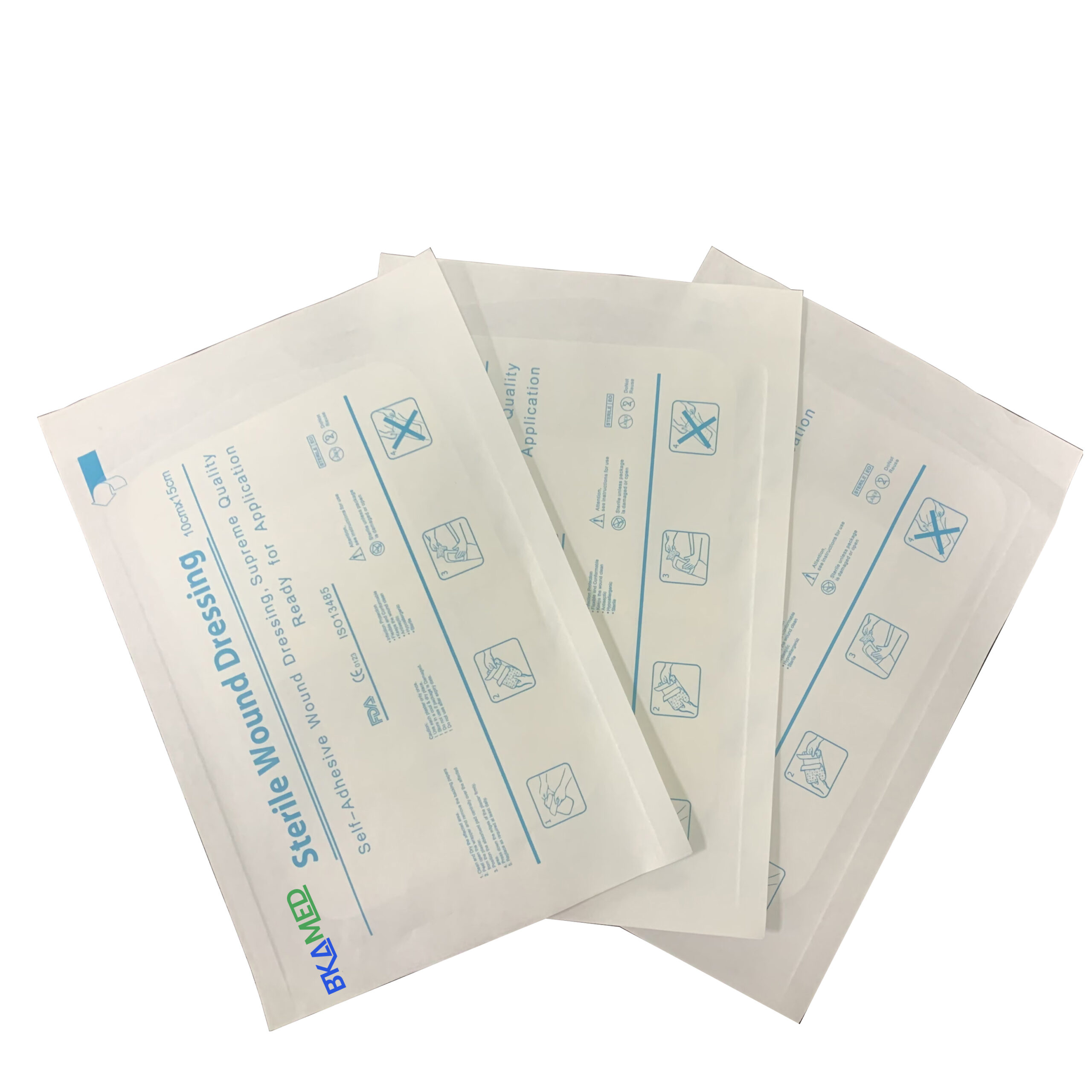
A sterile non-woven wound dressing is a medical product for caring for wounds that is made from non-woven material and is supplied in a sterile package for applications where protection and contamination control are important. Unlike traditional woven gauze, non-woven materials are manufactured by bonding or mechanically processing fibers, and not by weaving them into a conventional fabric structure.
It is important that the procurement teams understand these basic characteristics because the term “non-woven dressing” does not describe one standardized product. Manufacturers can offer the same product but of different materials, dimensions, folds, absorbency levels, packaging configurations, and sterilization methods.
Product Definition and Construction
Non-woven wound dressings are commonly manufactured using materials such as rayon, polyester, polypropylene, or blends of different fibers. The material is formed into a sheet or pad with a structure that is designed to suit it for taking care of wounds.
Once the dressing is finished, it may be folded into a given configuration and packaged individually before it is sterilized. This then gives hospitals and other healthcare facilities a ready-to-use product that can be opened when required.
The procurement manager must not assume the manufacturer will ship the dressing made of the required material composition and construction if this is not specified. That’s why a supplier quotation should clearly identify the material, dimensions, number of layers or folds where relevant, and other characteristics which are required by the healthcare facility.
The dressing may be used as a primary or secondary wound-care component depending on its design and the clinical application.
How Sterile Non-Woven Dressings Are Used
Sterile non-woven dressings can be used in various healthcare situations. Hospitals and surgical centers may use them to manage wounds, care after surgery, procedures, and dressing changes, while NGOs and emergency programs may procure them as part of broader medical supply kits.
Their applications can include the following:
- Surgical and post-operative wound care.
- Absorption of wound exudate.
- Covering and protecting wounds.
- Cleaning or dressing wounds where appropriate.
- General clinical and first-aid applications.
How it is used depends on the product’s design, labeling, and intended purpose. That is why procurement teams should not treat every sterile dressing as interchangeable.
For example, a hospital that is purchasing dressings for surgical use may require particular dimensions, absorbency characteristics, packaging, and sterility documentation. On the other hand, an NGO assembling standardized emergency medical kits may instead give priority to consistent pack sizes, shelf life, carton configuration, and high-volume availability.
With all these in mind, the procurement specification needs to start with the intended use and then work backward to the required product characteristics.
Why Sterility and Packaging Matter
Sterility should be given much consideration when a dressing is intended to be supplied as a sterile medical product. The sterile barrier system in place should be able to protect the product from contamination until the package is opened under the intended conditions.
This means procurement teams should look beyond the dressing itself and evaluate the packaging system. Individual sterile packaging, sealing quality, labeling, batch identification, and expiry information all contribute to effective inventory and product management.
Packaging also affects logistics. For example, a hospital may require individual packs that can be opened when needed, while a distributor may need specific inner-box and master-carton configurations for efficient storage and transportation.
Additionally, the procurement teams should ensure they verify how the manufacturer manages sterilization and the related documentation. The type of sterilization method, validation, labeling, and other requirements related to sterility should be assessed according to the product and destination market.
So rather than simply quoting a price per unit, a reliable sterile non-woven wound dressing wholesale supplier should be able to provide a clear product specification and appropriate documentation.
Key Characteristics of Sterile Non-Woven Wound Dressings
| Specification | What Procurement Teams Should Confirm |
|---|---|
| Material | Fiber type and material composition |
| Construction | Layers, folds, and overall structure |
| Size | Finished dimensions and tolerances |
| Absorbency | Required performance for the intended application |
| Sterility | Sterilization method and applicable documentation |
| Packaging | Individual pack, inner box, and carton configuration |
| Labeling | Product information, lot number, expiry, and other requirements |
| Shelf life | Approved shelf life and storage conditions |
| Traceability | Batch or lot identification |
| Intended use | Clinical or wound-care application |
Non-Woven Dressings vs. Traditional Gauze
Traditional woven gauze is very common in many healthcare facilities. However, even non-woven dressings have also become an important alternative when caring for wounds. The two formats differ in how their fibers are arranged and how the finished material behaves when it is being handled or used.
Non-Woven vs. Woven Gauze
To produce a woven gauze, threads are interlaced in a conventional woven structure. Non-woven materials, by contrast, are produced by arranging and bonding fibers without the same weaving process.
This difference can affect the dressing’s texture, structure, absorbency, drape, and tendency to release loose fibers. But the actual performance depends on the material and manufacturing process used by the specific supplier.
The non-woven dressings are commonly designed to provide a soft, uniform surface that can be suitable for taking care of wounds. Woven gauze, meanwhile, remains a familiar and versatile option across hospitals and clinics.
That’s why the procurement teams should not compare the products just by name. The actual specifications and performance requirements should determine which product will serve the intended purpose well.
Advantages of Non-Woven Dressings
One reason healthcare facilities would rather use non-woven dressings is because of their combination of softness, flexibility, and uniform surface.
Other potential advantages include the following:
- Soft contact with the surrounding area.
- Flexible construction.
- Convenient folding and packaging.
- Consistent dimensions.
- Suitable absorbency for specified applications.
- Individual sterile packaging options.
These characteristics can be highly useful in environments where standardized dressing products are required across large numbers of procedures.
However, procurement teams should avoid relying on general claims about how good the product is at absorbing fluid, or how well it performs. They should instead check if the product meets the specification. Additionally, where appropriate, product testing should establish whether a particular dressing meets the required standard.
For a hospital placing a large order, this distinction matters and should not be overlooked. A dressing may look suitable during a basic visual inspection but may still fail to meet the facility’s requirements for absorbency, dimensions, packaging integrity, or consistency.
When Hospitals May Prefer One Format Over Another
What to choose between non-woven and woven gauze can depend on the procedure it is required for, what the clinic prefers, purchasing policy, and budget.
Dressings that are non-woven may be attractive where hospitals want standardized sterile packs, consistent dimensions, and a particular material profile. Woven gauze may remain the better option for uses where its established characteristics and availability make it the preferred choice.
The cost of the product is another factor that is worth considering. Procurement managers should compare the total cost of supplying the required product instead of just comparing the price of one dressing against another.
For instance, a non-woven dressing may have a higher unit price but offer packaging or handling characteristics that better suit a particular hospital’s workflow. Conversely, a standard woven product may provide a more economical solution for high-volume applications where its characteristics are sufficient.
Non-Woven Dressing vs. Traditional Woven Gauze
| Factor | Non-Woven Dressing | Woven Gauze |
|---|---|---|
| Construction | Fibers bonded or mechanically formed | Interlaced woven threads |
| Surface | Generally uniform | Woven texture |
| Flexibility | Depends on material and construction | Depends on weave and material |
| Lint characteristics | Often designed for reduced linting | Varies by construction |
| Sterile packaging | Commonly available | Commonly available |
| Custom sizing | Available from many manufacturers | Available from many manufacturers |
| Typical applications | Wound care, surgical and clinical use | Broad wound-care and clinical applications |
| Procurement priority | Specification and intended use | Specification and intended use |
Ultimately, neither of the two products should be selected merely because it is described as “better.” The procurement team should be ready to identify the clinical and operational requirements first, then evaluate which dressing format meets them most effectively.
Complete Product Specifications for Bulk Orders
Now that the dressing format has been selected, the next step is to define exactly what the procurement team needs. It is a detailed specification that helps manufacturers quote accurately, while allowing procurement managers to compare suppliers on a like-for-like basis. A clear specification also provides the manufacturer with a reference for quality control during production.
Here are the main specifications the procurement teams should define before they request a bulk quotation:
Material and Fabric Specifications
They should start by identifying the required non-woven material and its relevant characteristics. Depending on the product, specifications may include the fiber composition, fabric weight, softness, structure, and required capacity to absorb wound fluid.
Procurement teams should also state any quality or performance requirements that apply to the dressing they want to purchase rather than leaving these details for the manufacturer to decide.
Size and Dressing Configuration
The size of each unit is another specification that should be defined before suppliers submit quotations. Sterile dressings may be available in several standard dimensions, while hospitals and surgical centers may require specific sizes for particular procedures.
The RFQ should therefore state at least the following:
- Finished dressing dimensions.
- Folded and unfolded dimensions, where relevant.
- Number of layers or folds.
- The shape.
- Acceptable dimensional tolerance.
- Number of pieces per sterile pack.
Custom sizing may also be available for larger orders. However, procurement teams should ask whether customized dimensions will affect MOQ, tooling, production time, or pricing before approving the specification.
Sterilization Requirements
For a sterile product, the procurement specification should define the expected sterilization method. The appropriate method depends on the product, packaging system, manufacturing process, and applicable regulatory requirements.
Procurement managers should ask the manufacturer to identify the sterilization method used and provide relevant documentation. Where applicable, this may include sterilization records, validation information, or other evidence required by the destination market.
The sterile barrier system should also be considered since a dressing cannot remain sterile in practical storage and distribution if its packaging is damaged or compromised.
This means packaging integrity, sealing, labeling, and handling should be assessed at the same time the sterilization process is being assessed. They should not be treated as separate issues.
Packaging and Labeling
Requirements for packaging should be established before production begins because they can affect the logistics and how the shipping complies with the regulations. Where a bulk order is involved, procurement teams may need to specify individual sterile packs, inner boxes, and master-carton configurations.
The RFQ should clarify requirements such as:
- The number of units per sterile pack
- The number of packs per box
- The number of boxes per master carton
- Carton dimensions and weight
- Individual and outer packaging materials
- Labeling language
- Lot or batch number
- Manufacturing and expiry dates
- Barcode requirements
- Storage instructions
For hospitals and NGOs, standardized packaging can also make inventory control and distribution easy. For distributors and importers, the dimensions and weight of a carton are important when they calculate freight and landed cost.
Shelf Life and Storage
The procurement team needs to confirm the shelf life before they commit to a large order. This is especially important for hospitals and NGOs that have to hold inventory for extended periods or gradually distribute products across multiple locations.
Procurement managers should confirm:
- Manufacturer’s stated shelf life.
- Storage conditions.
- Expiry-date format.
- Batch traceability.
- Packaging requirements for maintaining product integrity.
After shelf life is ascertained, the warehouse teams should then plan stock rotation around expiry dates. For large institutional orders, the FEFO plan can help reduce the risk of receiving or holding inventory with insufficient remaining shelf life.
Quality and Testing Requirements
The specification of the product should also identify the quality checks expected before shipment. The exact tests will depend on the product and the standard that applies, but procurement teams may need to consider dimensions, material characteristics, absorbency, packaging integrity, and sterility-related requirements.
If it is a first order, requesting samples before the start of mass production is particularly useful. The approved sample can then serve as a reference against which subsequent production is assessed.
Where repeat orders are involved, the manufacturer should also have a process for controlling changes to materials, production methods, packaging, or other specifications. This helps ensure that the product supplied six months later remains consistent with the product originally approved.
Bulk Order Specification Checklist
| Specification | What Procurement Teams Should Confirm |
|---|---|
| Material | Fiber composition and material type |
| Fabric | Weight, structure, softness, and required characteristics |
| Size | Dimensions and acceptable tolerance |
| Configuration | Folds, layers, and pieces per pack |
| Sterilization | Method and applicable documentation |
| Packaging | Sterile pack, box, and carton configuration |
| Labeling | Language, batch, expiry, and required information |
| Shelf life | Duration and storage requirements |
| Quality control | Required inspections and tests |
| Traceability | Batch or lot identification |
There is more to a clear specification than just helping a sterile non-woven wound dressing wholesale supplier prepare a quotation. A clear specification creates a common reference for sampling, production, inspection, shipping, and future repeat orders. That becomes particularly important when many manufacturers are being evaluated.
How to Find and Qualify a Sterile Non-Woven Wound Dressing Wholesale Supplier
Because there are several manufacturers ready to do business, finding manufacturers is relatively easy. The big task for the procurement team is to determine which one can reliably produce the required sterile dressing at the required volume.
Here are the key factors procurement teams should consider when qualifying a sterile non-woven wound dressing wholesale supplier:
Manufacturer vs. Trading Company
The first question to consider is whether the company quoting for the product is the actual manufacturer or a trading company that is sourcing it from another factory.
This is not to say that a trading company is automatically unsuitable to work with. However, procurement managers should understand who exactly controls production, where the product is manufactured, and who is responsible for quality if something goes wrong. Knowing with whom the buck stops is especially important where medical products like sterile non-woven wound dressings are involved.
When working directly with a manufacturer, there can be more transparency in specifications, production processes, customization, and quality control. It may also make communication about OEM requirements more straightforward.
That’s why, for a long-term supply arrangement, it’s prudent that the procurement teams verify the manufacturer’s facility, company information, product range, and actual production capabilities rather than relying only on a supplier’s catalogue.
Manufacturing Capacity and Lead Time
It can be so easy for a manufacturer to be able to quickly produce a sample or small shipment, only to struggle to support a large hospital tender or recurring NGO program. So, capacity should be assessed before the first major purchase is placed.
The procurement teams should ask about:
- Current production capacity
- Standard and customized MOQs
- Typical production lead time
- Peak-season capacity
- Raw-material availability
- Ability to support repeat orders
Lead time should also be separated into production time and total supply-chain time. Freight, inspection, customs clearance, and local delivery can add considerably to the period between placing an order and receiving usable inventory.
For a hospital or emergency program with a fixed delivery deadline, this distinction is especially important.
Quality Management and Traceability
Some manufacturers only practice quality management at the tail-end of production. But quality management should be evaluated at several stages, starting with raw materials and continuing through production and final packaging.
A procurement team should establish whether the manufacturer has procedures for:
- Incoming material inspection
- Production controls
- Finished-product inspection
- Packaging checks
- Batch identification
- Complaint management
- Corrective and preventive actions
Being able to trace and locate any production batch is particularly important for sterile medical products. In case of a quality issue, the manufacturer should be able to pinpoint which production batch is affected and then provide the relevant records.
With a tight traceability procedure in place, the procurement managers have a much stronger basis for managing quality issues instead of relying wholly on a supplier’s assurance that every product or shipment has been inspected.
Sample Evaluation
Before they place a large order, procurement teams should evaluate a production sample against the agreed specification.
The evaluation can cover the following:
- Material and appearance
- Dimensions
- Folding and configuration
- Absorbency requirements
- Packaging
- Labeling
- Seal integrity
- Documentation
For a hospital or distributor, the approved sample should be retained as a reference. The final purchase order should also identify the agreed specification so that both sides have a clear production target.
Factory Audit and Third-Party Inspection
Where large or recurring orders are involved, a factory audit can provide additional information about the manufacturer’s operations. The audit can examine production areas, quality-control procedures, storage, packaging, documentation, and traceability.
An independent, in-person pre-shipment inspection can also be useful where the order value or operational risk justifies the additional cost. Inspectors can check quantities, packaging, dimensions, labeling, and other agreed specifications before the shipment leaves the factory.
This is not to say that either of the approaches needs to be used for every order. However, for a large non-woven dressing hospital tender bulk order, an additional verification may provide useful protection against costly quality or delivery problems.
Export and Documentation Experience
International procurement is more than just manufacturing the product. The supplier should also understand the documentation and logistics that are required to ship medical products to the destination market.
So the procurement managers should find out the manufacturer’s experience with:
- Commercial invoices and packing lists
- Export documentation
- Product documentation
- Shipping arrangements
- International customers
- Destination-market requirements
A supplier with established export experience may be in a better position to support recurring international orders. More importantly, the procurement team should know exactly which documents the supplier will provide and which responsibilities remain with the importer.
Sterile Non-Woven Wound Dressing Wholesale Supplier Qualification Scorecard
| Evaluation Area | Questions for Procurement Teams |
|---|---|
| Manufacturing | Does the company operate or control the production facility? |
| Capacity | Can it support the required volume and repeat orders? |
| Quality | What quality controls are used throughout production? |
| Traceability | Can products be traced by batch or lot? |
| Samples | Can the manufacturer provide samples before mass production? |
| Compliance | Can it provide relevant product and regulatory documentation? |
| OEM | Can it support custom sizes and private-label packaging? |
| Lead time | Can it meet the required production schedule? |
| Export | Does it have experience with international shipments? |
| Inspection | Can third-party inspection or factory audits be arranged? |
The above makes it clear that the strongest sterile non-woven dressing bulk supplier is not necessarily the one offering the lowest quotation. Instead, it is the supplier that can consistently meet the approved specification, maintain quality, provide the required documentation, and deliver the required volume on schedule.
Regulatory Compliance for Import
The matter of regulatory compliance should be addressed before a procurement team places a large order, not after the products arrive at the destination port. A sterile dressing may be subject to different requirements depending on its intended use, classification, labeling, sterilization method, and destination country.
The procurement managers should give priority to establishing which rules apply to the product in question and then confirm that the manufacturer can provide the documentation needed to support import and distribution.
Why Product Classification Matters
Regulations for medical products are not necessarily the same in every market. A sterile non-woven dressing may be regulated under a given medical-device framework in one jurisdiction, while other requirements can apply depending on its intended purpose and claims.
This means procurement teams should not assume that a product’s classification in the manufacturing country will automatically determine its classification in the destination market.
So, before placing an order, confirm these:
- Product classification
- Intended use
- Permitted product claims
- Registration or listing requirements
- Labeling requirements
- Applicable standards
- Import documentation
- Requirements for the responsible importer or distributor
Product claims by the manufacturer deserve particular attention. The language used on packaging, product literature, and online listings can influence how a product is viewed by regulators. Sometimes the description is exaggerated or quite misleading and may influence how the product is classified. Wrong classification is a problem usually encountered in international procurement.
Documentation Procurement Teams Should Request
A procurement team should have a clear understanding of which documents the manufacturer can provide before committing to a bulk order. The documents required vary according to the product and destination market, so it’s good to know early enough.
Depending on the applicable requirements, these may include:
- Specifications of the product
- Quality-management certificates
- Test reports
- Sterilization documentation
- Declaration of Conformity, where applicable
- Product labeling information
- Batch or lot records
- Shelf-life information
- Other regulatory or technical documentation
The important point is to verify what each document actually covers. A certificate may apply to a particular facility, product category, or quality-management system, so it should not automatically be treated as evidence that every product manufactured by the company meets every regulatory requirement.
For a CE-certified non-woven wound dressing exporter, for example, procurement teams should confirm the applicable CE requirements and the scope of the manufacturer’s supporting documentation. This approach is much better than relying on the phrase “CE certified” alone.
CE and European Market Considerations
For procurement teams who are importing sterile dressings into European markets, the first step is determining which EU regulatory framework applies to the specific product.
Where CE marking is applicable, the manufacturer must meet the relevant conformity requirements to the letter before the product is placed on the market. The procurement team should therefore establish what conformity assessment has been completed and whether the supporting documentation corresponds to the actual product being purchased.
Labeling and packaging should also be reviewed before mass production begins. This is especially important for private-label orders because having to change already printed packaging after production can create additional costs and delays.
U.S. FDA Considerations
The U.S. market has its own regulatory requirements in place, and the applicable pathway depends on the product’s classification, intended use, claims, and other characteristics.
Procurement managers should determine what FDA requirements apply before importing the product. Depending on the product and circumstances, these may involve establishment registration, device listing, labeling requirements, or other obligations.
It is also important to avoid treating terms such as “FDA registered” or “FDA compliant” as equivalent to FDA approval. These terms can refer to different regulatory concepts, so they should be verified in the context of the actual product being imported.
While the manufacturer should support the procurement process by supplying accurate product specifications, manufacturing information, testing records, and other technical documents, the importer or responsible party still has to verify its own obligations under U.S. regulations.
Other International Markets
The same principle applies when importing sterile dressings into Africa, the Middle East, Asia, or Latin America. Regulatory requirements can vary considerably between countries, even when the products have similar intended uses.
For procurement teams serving several markets, it can be useful to maintain a country-specific compliance matrix covering:
- Product classification
- Registration requirements
- Labeling and language
- Import permits
- Required certificates
- Testing requirements
- Responsible-party obligations
All in all, this approach prevents a common procurement problem: completing production according to the requirements of one market and then discovering that the same packaging or documentation cannot be used in another.
Regulatory and Import Documentation Checklist
| Area | What Procurement Teams Should Confirm |
|---|---|
| Classification | How is the product regulated in the destination market? |
| Intended use | What use is stated for the dressing? |
| Claims | Are the proposed claims permitted? |
| Conformity | Is conformity assessment required? |
| Sterilization | What method and supporting documentation apply? |
| Testing | What product or material testing is required? |
| Labeling | Does the packaging meet local requirements? |
| Registration | Is product or establishment registration required? |
| Import | What documents must accompany the shipment? |
| Traceability | Can batches be identified and documented? |
Sterile Wound Dressing Pricing and MOQ
Usually, price is one of the first figures a procurement manager will want to examine, but the unit price alone does not tell the full story. For sterile dressings, material, size, sterilization, packaging, order volume, customization, and shipping requirements can all influence the final procurement cost.
That is why a useful quotation should be evaluated against the complete specification and total landed cost. Going ahead to select the sterile non-woven wound dressing wholesale supplier with the lowest unit price without considering the other factors already discussed is not the right way.
What Determines Wholesale Pricing?
The price of a sterile non-woven dressing can vary according to several product and commercial factors, many of which have been discussed already.
The main considerations include:
- Material type and fabric weight
- Dressing dimensions
- Number of layers or folds
- Sterilization requirements
- Individual packaging
- Printing and labeling
- Testing and inspection
- Order quantity
- OEM customization
For example, a standard dressing supplied in the manufacturer’s existing packaging may have a different price from a custom-sized product requiring private-label packaging.
Similarly, a larger order may reduce the unit cost, but the procurement team should consider whether the organization can use the additional inventory within the product’s shelf life.
This means the right question is not just, “What is the price per dressing?” Instead, it should be, “What will this specification cost us to receive, store, and distribute?”
Understanding MOQ
Minimum order quantity, or MOQ, is another important consideration when sourcing directly from a manufacturer.
A standard product that the sterile non-woven wound dressing wholesale supplier is used to producing may have a relatively manageable MOQ because the setup has long been established, while a customized product may require a higher quantity because the manufacturer needs to purchase dedicated packaging materials or schedule a specific production run.
Procurement teams should ask whether the quoted MOQ applies to:
- Individual product units
- Retail boxes
- Master cartons
- Custom packaging
- Custom sizes
- Printed artwork
It is also worth asking whether the manufacturer offers different pricing tiers based on volume. A procurement manager may find that increasing an order moderately can result in a meaningful reduction in unit cost. But it should be noted that a very large order increase creates unnecessary inventory that may be costly to manage.
For NGOs and hospitals that work with fixed budgets, the ideal MOQ is therefore one that balances unit economics with realistic consumption and storage capacity.
Calculating Total Landed Cost
The factory price of a product is just one aspect of the actual procurement cost. For imported medical supplies, the total landed cost can include the following:
- Product cost
- Custom packaging or printing
- Quality inspection
- Freight
- Insurance where applicable
- Customs duties and taxes
- Port or handling charges
- Local transportation
- Warehousing
The exact costs depend on the shipment and destination. For example, a supplier with a slightly higher factory price may still offer a more competitive overall arrangement if its packaging is better suited to the shipment, its carton configuration reduces freight requirements, or its quality consistency reduces costly rejects.
Therefore, procurement teams should calculate the expected landed cost before making a final supplier decision.
Comparing Sterile Non-Woven Wound Dressing Wholesale Supplier Quotations
Supplier quotations should only be compared when they cover substantially the same specification.
That said, the procurement comparison should include at least:
| Factor | Supplier A | Supplier B | Supplier C |
|---|---|---|---|
| Product size | Confirm | Confirm | Confirm |
| Material specification | Confirm | Confirm | Confirm |
| Sterilization | Confirm | Confirm | Confirm |
| Units per pack | Confirm | Confirm | Confirm |
| MOQ | Confirm | Confirm | Confirm |
| Unit price | Confirm | Confirm | Confirm |
| Packaging | Confirm | Confirm | Confirm |
| Lead time | Confirm | Confirm | Confirm |
| Payment terms | Confirm | Confirm | Confirm |
| Incoterm | Confirm | Confirm | Confirm |
| Documentation | Confirm | Confirm | Confirm |
| Estimated landed cost | Calculate | Calculate | Calculate |
This approach prevents a common sourcing mistake where one manufacturer quotes a basic standard product while another quotes a customized, fully packaged version. These are two different things.
So, when procurement teams buy sterile non-woven dressing in bulk, the comparison should be based on equivalent specifications and the complete cost of getting compliant, usable inventory into the warehouse.
Procurement for NGOs and Emergency Medical Programs
NGOs and emergency medical programs usually operate under tighter procurement conditions than commercial distributors. They may need large quantities within a fixed budget and delivery window, while also meeting donor, tender, quality, and documentation requirements.
For procurement teams working in these environments, the main focus should not be how to secure the lowest price. The supplier must be able to provide products that are uniform in quality and size, documents that are reliable, appropriate shelf life, and dependable delivery when the supplies are needed.
What Makes NGO Procurement Different?
NGO procurement usually involves defined project budgets, formal quotations, competitive tenders, and specific technical specifications. A procurement team may also need to show how the selected sterile non-woven wound dressing wholesale supplier meets internal procurement policies or donor requirements.
The volume of production can be another important factor to consider. An organization that supports several clinics or a large emergency response may require thousands of sterile dressings within a relatively short period.
This means the sterile non-woven wound dressing wholesale supplier who delivers to such an organization should be assessed for both its ability to supply at short notice and to support repeat/recurring deliveries. A manufacturer that can comfortably handle one shipment but cannot maintain supply for the duration of a program may create operational problems later.
Emergency Medical Supply Requirements
The emergency programs place additional pressure on the supply chain because demand can increase quickly and delivery deadlines may be less flexible.
Procurement teams should therefore consider the following:
- Available production capacity.
- Current finished-goods inventory.
- Production lead time.
- Packaging configuration.
- Remaining shelf life.
- Shipping options.
- Batch traceability.
- Ability to handle repeat or urgent orders.
The shelf life also deserves to be given particular attention. If supplies are being sent to locations where it may take several months to distribute everything, it is risky to receive products with limited remaining shelf life because by the time they are distributed, their practical value has reduced.
The packaging also matters because medical supplies may pass through several stages of transportation and storage before reaching the final facility. The individual sterile packaging should remain intact throughout the supply chain.
All in all, emergency procurement should begin with realistic demand forecasting whenever possible. Even where demand is difficult to predict, establishing an agreed supply arrangement with a qualified manufacturer who is able to deliver at short notice can make future replenishment faster.
Tender and Donor Requirements
Many NGOs purchase medical supplies through formal tenders or structured procurement procedures. In these situations, the technical specification should be clear enough that suppliers are quoting against the same requirements.
A tender specification may cover:
- Product dimensions
- Material requirements
- Sterility
- Packaging
- Shelf life
- Labeling
- Quality standards
- Required documentation
- Delivery requirements
Procurement teams should also find out whether the donor or project requires particular certifications or standards. These requirements should be communicated to the manufacturer before the quotation is finalized.
This is especially important when the tender involves a sterile wound pad wholesale NGO order. A sterile non-woven wound dressing wholesale supplier may offer a product at an attractive price only for it to fail to meet one of the tender’s technical or documentation requirements.
As a result, technical compliance should be evaluated before price becomes the deciding factor.
Building a Reliable NGO Supply Arrangement
Where recurring programs are involved, procurement teams should think beyond a single purchase order. It is a longer-term supply arrangement that can provide greater predictability when the organization has recurring requirements.
Being able to forecast future demand can help the manufacturer plan raw materials and production capacity. In return, the procurement team may be able to negotiate more predictable pricing, production schedules, and replenishment arrangements.
Framework agreements in place can also be useful where the organization expects to place multiple orders over a given period. The agreement can establish product specifications, pricing principles, quality requirements, lead times, and ordering procedures.
Buffer inventory may also be appropriate for programs where supply interruptions would have significant consequences. However, the quantity should be balanced against shelf life, storage capacity, and projected consumption.
NGO and Emergency Procurement Checklist
| Procurement Area | What to Confirm |
|---|---|
| Product specification | Exact technical requirements |
| Quantity | Initial and projected requirements |
| MOQ | Minimum order and volume pricing |
| Shelf life | Minimum remaining shelf life at delivery |
| Documentation | Required certificates and product records |
| Packaging | Sterile and transport-ready configuration |
| Capacity | Ability to meet current and future demand |
| Lead time | Production and shipping schedule |
| Traceability | Batch or lot identification |
| Emergency supply | Ability to support urgent replenishment |
For NGOs, hospitals, and humanitarian programs, a qualified manufacturer can therefore become more than just a product supplier. The right partner can support forecasting, repeat orders, customized packaging, documentation, and planned replenishment, all of which help procurement teams maintain continuity when medical supplies are needed most.
OEM and Custom Sizing
The standard sterile dressings are usually the simplest option for procurement teams that need a proven specification and relatively fast ordering process. However, distributors, hospital networks, and medical-supply organizations with specific requirements may benefit from Original Equipment Manufacturing (OEM) production and custom sizing.
Customization can cover the physical dressing, packaging, labeling, or a combination of these elements. That said, every additional customization can affect MOQ, lead time, and cost, so the commercial benefit should be assessed before proceeding.
Custom Sizes and Configurations
Manufacturers may be able to produce dressings in customized sizes or configurations based on the procurement team’s requirements.
Customization may involve:
- Dressing sizes.
- Number of folds.
- Number of pieces per pack.
- Packaging configuration.
- Individual or multi-piece sterile packs.
For a non-woven dressing surgical use bulk order, custom sizing may make sense where the healthcare facility has established procedural requirements that are not adequately served by standard sizes.
However, before considering custom sizing, the procurement teams should first determine whether a standard product can meet the requirement. Standard specifications can often reduce MOQ and shorten production lead times.
Private-Label Packaging
OEM procurement can also allow distributors to sell sterile dressings under their own brand. This can include customized sachets, retail boxes, master cartons, labels, and barcodes.
The procurement team should provide the manufacturer with approved artwork and clearly identify the required information for the destination market. Regulatory and labeling requirements should be reviewed before artwork is finalized.
The process of approving artwork is especially important because correcting the packaging errors can be expensive once printing and production have started.
Where there will be repeat orders, the final approved artwork and product specification should be held back as controlled references to be used for future orders. This helps ensure that subsequent production remains consistent with the original order.
OEM MOQ and Lead Time
More planning is often required for OEM orders than for standard products. For one, the custom packaging materials may need to be produced specifically for the order, while custom sizes may require additional production preparation.
Procurement managers should therefore ask the manufacturer to confirm the following:
- OEM MOQ
- Packaging MOQ
- Sample development time
- Artwork approval process
- Production lead time
- Additional setup or tooling costs
The larger the customization, the more important it becomes to establish these details before placing the purchase order.
Maintaining Consistency Across Repeat Orders
The reason for OEM sourcing is not simply to produce a customized product once. For distributors and healthcare suppliers, the real value comes from maintaining the same specification across future orders.
Therefore, the approved product specification needs to cover the material, dimensions, configuration, packaging, labeling, and other critical characteristics. Any change that has been proposed should be communicated and reviewed before it is implemented.
An approved production sample can also provide a useful physical reference, while batch and quality records provide additional traceability.
This approach helps procurement teams to avoid a common problem in repeat sourcing: receiving a product that carries the same product name but differs in material, size, packaging, or other important characteristics.
For organizations planning recurring demand, a manufacturer with established OEM capabilities can therefore provide greater control over both product presentation and supply consistency.
Can China Manufacturers Be Trusted to Make Medical Products?
For procurement managers who source medical products across nations or regional markets, the question is understandable: Can a Chinese manufacturer consistently produce medical products to the required quality and regulatory standards? The answer should not depend on the country of origin alone.
China has grown over time, and it now has a large and diverse medical manufacturing sector, which means there are both highly established manufacturers and suppliers on one hand, and upcoming ones on the other hand, whose capabilities may be more limited.
That’s why the important task is to assess the individual manufacturer, its quality systems, production facilities, documentation, and ability to meet the agreed specification.
Country of Origin Is Not a Quality System
A product’s country of origin does not, by itself, determine its quality. The more relevant question is how the specific manufacturer controls materials, production, sterilization, packaging, testing, and traceability.
For procurement teams, this clarification matters because two manufacturers in the same country can have very different production capabilities and quality systems, depending on how they approach quality measures. One may be operating established facilities with documented processes and international export experience, while another may be relying heavily on external suppliers or provide limited documentation.
So procurement managers should evaluate the manufacturer against defined criteria instead of making a decision that focuses just on location.
Why Supplier Due Diligence Matters
When the order involves a large hospital tender, NGO program, or recurring distribution contract, supplier due diligence becomes particularly important, and should be done regardless of country of origin. This is because the consequences of selecting an unsuitable supplier can extend past the cost of one shipment.
Hospital inventory can be affected by a delayed production run, for instance. When the product quality is not consistent, the result can be the rejection of goods. Import problems can be the result when there is incorrect documentation or labeling. Therefore, supplier qualification is a critical matter that should be completed before the procurement team commits to a major order.
A practical due-diligence process can include reviewing the documents, evaluating the sample, verifying if the factory is indeed in place, and carrying out an independent inspection before shipment if that is possible. Such measures will provide a stronger basis for managing the supplier relationship because both parties can now understand what is expected before production begins.
The bottom line is that Chinese manufacturers should be evaluated individually, using the same objective procurement standards that are applied to manufacturers anywhere else in the world. Any manufacturer that can demonstrate established production controls, appropriate documentation, consistent quality, and reliable international supply may be a suitable long-term partner regardless of its country of origin.
Why BKAMED?
Here are reasons why procurement teams sourcing sterile non-woven wound dressing should consider BKAMED:
Established Medical Manufacturing Experience
BKAMED has been in the medical and healthcare products industry for more than three decades. The experience gathered is therefore vast. This rich experience provides procurement teams with an established manufacturing background when evaluating a supplier for recurring medical-product requirements.
Having long-term manufacturing experience can be of high value because procurement that involves medical products usually entails more than producing the initial order. Hospitals and distributors seek suppliers that can support ongoing supply.
Product Range and Manufacturing Capability
BKAMED’s product portfolio covers many types of medical and healthcare products, including those for caring for wounds and medical consumables. This collection of so many medical products can be useful for distributors and healthcare suppliers that want to create relationships with manufacturers who can support many categories of medical products.
Quality and International Market Support
Having all the documents for all the quality management processes is an important part of international medical-product procurement. BKAMED has established quality-management and product certifications for relevant product lines, including ISO 13485 and CE-related credentials.
However, procurement teams should still verify the exact extent of certification in place and confirm that the documentation applies to the specific product, facility, and destination market involved in the order.
BKAMED has sufficient international export experience across multiple markets. This can be relevant to importers and distributors that require a manufacturer who is familiar with international documentation and shipping processes.
OEM and Bulk Supply Support
OEM capability can be really valuable when a distributor, hospital network, or healthcare supplier requires custom sizes or private-label packaging. Instead of sourcing a standard product and adapting it independently, procurement teams can discuss the required specification directly with the manufacturer.
For a bulk order, the discussion should cover product dimensions, material, sterile packaging, labeling, carton configuration, MOQ, production lead time, and destination-market requirements.
For an organization that is looking to buy sterile non-woven dressing in bulk, the next step is to provide the manufacturer with the required specifications, quantity, packaging requirements, and destination market. BKAMED can then assess the requirements and provide a quotation based on the requested configuration.
Conclusion: Choosing the Right Sterile Non-Woven Dressing Wholesale Supplier
This guide has shown that sourcing sterile non-woven dressings in bulk requires much more than just comparing unit prices and choosing the lowest quote. Procurement teams should first have in place the required material, dimensions, packaging, sterility, shelf life, and documentation, then evaluate manufacturers based on quality systems, production capacity, regulatory support, and supply reliability.
For hospitals, NGOs, surgical centers, and distributors, the right supplier should be in a position to always meet the approved specification across both initial and repeat orders. Where customization is required, OEM capability and realistic MOQ and lead-time expectations should also be considered.
If your organization is planning a bulk order, contact BKAMED with your required specifications, quantity, packaging requirements, and destination market. The team can help assess your requirements and provide a quotation for the appropriate sterile non-woven wound dressing configuration.
