
Vaseline gauze is one of the most reliable quality primary wound contact products used in burn care and wound management. For burn care distributors, pharmacies, and hospital procurement it is not just another low cost medical consumable. It is a high rotation product that has to perform consistently, get through supply chains without quality issues, and meet the right regulatory expectations in all the markets.
The demand for vaseline gauze is high because it addresses a simple but important clinical need: it creates a low-adherence contact layer that helps protect fragile tissue during dressing changes. That matters in superficial burns, donor sites, abrasions, graft protection, and other wounds where tissue trauma from dressing removal can slow healing and increase pain.
For B2B buyers, sourcing decisions go beyond the unit price. The right vaseline gauze dressing wholesale supplier must deliver reliable mesh quality, controlled petrolatum loading, clean packaging, documentation, and the ability to support private label or OEM. That is especially important for burn units, hospital tenders, and pharmacy chains that can not afford inconsistent product performance or compliance gaps.
What Is Vaseline (Petrolatum) Gauze?
Vaseline gauze (also called petrolatum gauze, paraffin gauze, or petroleum jelly gauze) is a sterile, fine weave cotton-gauze dressing impregnated with white petrolatum (petroleum jelly). Following USP monographs, the petrolatum content contained in it is at least 70.0 per cent and at most 80.0 per cent by weight. It is designed to act as a non-adherent primary wound contact layer, meaning it protects the wound without sticking to newly formed tissue during dressing changes.
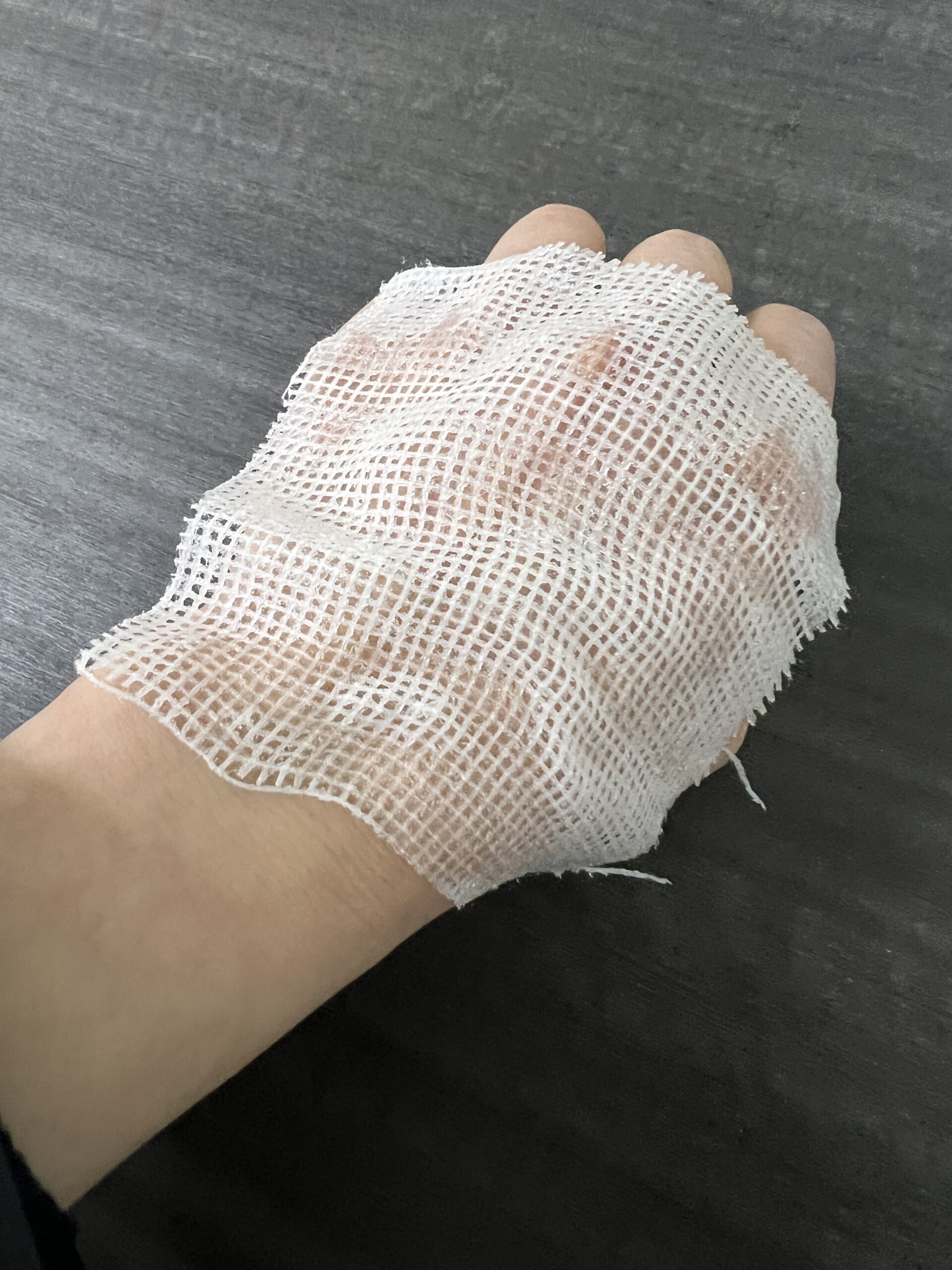
Vaseline gauze is commonly used as the first dressing layer for:
- Minor burns and superficial wounds
- Skin grafts and donor sites
- Surgical incisions
- Abrasions and lacerations
- Skin tears
- Around drains, tubes, and stomas where tissue protection is needed
The dressing is not highly absorbent, so it is typically covered with a secondary absorbent dressing. For example, a sterile gauze pad or an absorbent pad, to manage wound exudate and secure the dressing in place.
For burn care distributors, pharmacies, and hospital procurement, vaseline gauze remains a high demand wound care consumable for a good reason. That is, it combines simplicity, clinical effectiveness, and cost efficiency across a wide range of acute wound management applications.
What Is Vaseline Gauze Made Of?
A normal vaseline gauze dressing has three major ingredients:
- 100% absorbent cotton gauze with an open-weave construction.
- Medical-grade white petrolatum evenly impregnated throughout the gauze.
- Sterile individual packaging for single-patient use.
Some manufacturers also produce non-sterile versions for applications where sterility is not needed. However, sterile products remain the standard for hospitals and surgical facilities.
Remember, B2B buyers may use different product names for essentially the same category. A paraffin gauze wound dressing supplier may describe the same item as paraffin gauze, vaseline gauze, petrolatum gauze, or impregnated gauze dressing.
That is why the procurement team should not rely on the marketing name alone. They should confirm the base gauze composition, the ointment base, sterile status, size, wrapping format, and standard claimed by the manufacturer.
How Vaseline (Petrolatum) Gauze Works
Unlike ordinary dry gauze, vaseline gauze serves as a primary wound contact layer. The protective barrier the petroleum creates between the wound itself and the subsequent absorbent material decreases trauma and pain upon removal. Because it does not adhere to the wound bed, it helps preserve fragile granulation tissue and supports faster healing.
Its benefits include:
- Maintaining a moist wound environment
- Preventing the dressing from sticking to the wound bed
- Reducing pain during dressing removal
- Protecting fragile granulation tissue
- Allowing wound drainage to pass into a secondary absorbent dressing
- Supporting faster and less traumatic healing
Standard Sizes Available
Manufacturers produce vaseline gauze in multiple sizes to accommodate different wound types. Popular options include:
- Vaseline gauze dressing 5×5 10×10 cm
- 7.5 × 7.5 cm
- 7.5 × 20 cm
- 10 × 20 cm
- Roll formats for larger wounds
OEM manufacturers can also make customized vaseline gauze sizes for distributors and private label brands.
Product Standards and Certifications
When sourcing from a petrolatum gauze dressing bulk manufacturer, buyers should verify compliance with internationally recognized quality standards. There is a general rule that good quality products are the ones that are made using:
- Vaseline gauze BP EUP USP standard
- ISO 13485 Quality Management System
- CE certification (where applicable)
- FDA registration for U.S. market access
- Sterility validation documentation
- Biocompatibility testing
The certifications contribute to ensuring uniform manufacturing quality and compliance to the regulations across the globe.
Vaseline Gauze vs Regular Gauze
| Feature | Vaseline Gauze | Regular Dry Gauze |
|---|---|---|
| Surface | Petrolatum coated | Dry cotton |
| Wound adherence | Non-adherent | May stick to a patient’s wound |
| Moisture retention | Excellent | Limited |
| Dressing removal | Less painful | Can damage the healing tissue |
| Primary function | Wound contact layer | Absorption and coverage |
| Typical use | Burns, grafts, donor sites, surgical wounds | General wounds |
Typically, vaseline gauze is a cotton-gauze wound barrier coated with white petrolatum and it is sterile as well. It prevents wound contamination, keeps the wound in optimal healing conditions and minimises wound trauma when changing dressings. Due to its effectiveness in treating burns, skin grafts, donor sites, surgical wounds and general superficial injuries, it is still a vital product in wound care today.
For burn care distributors, pharmacies, and hospital procurement, partnering with a trusted vaseline gauze dressing wholesale supplier like BKAMED is important. It ensures reliable access to the highest quality products that meet international medical standards while supporting long term supply chain stability.
Why Vaseline Gauze Is a Core Product for Burn and Wound Care Supply Chains
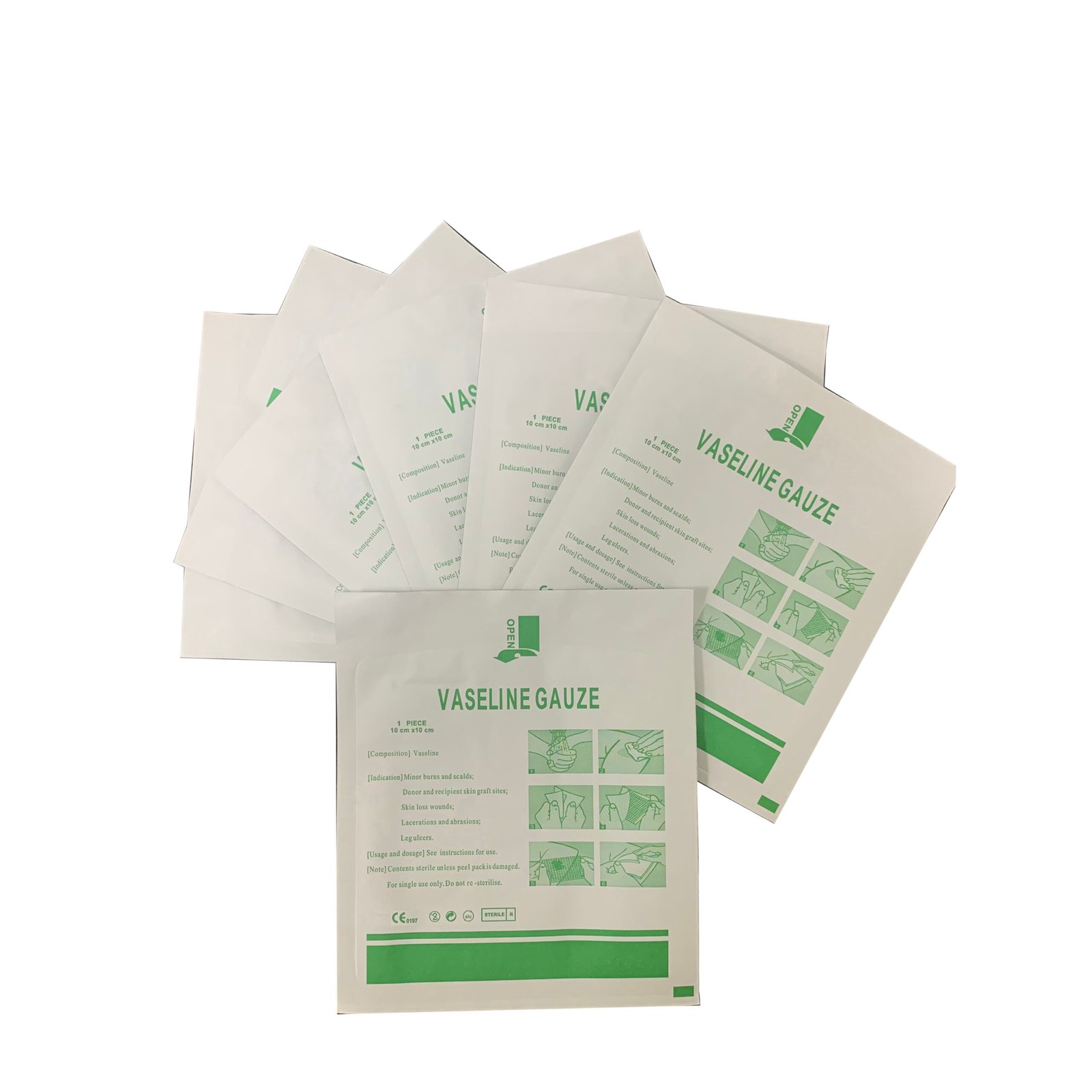
A wound dressing is needed for burns and acute wounds to protect the fragile tissues while not interfering with the wound-healing process. Among the many wound care products available on the market today, vaseline gauze remains one of the most trusted and widely used.
Hospitals, burn centers, surgical units, emergency departments, and outpatient clinics continue to rely on it because it provides a simple, effective, and affordable solution for managing a broad range of wounds. B2B buyers recognize that vaseline gauze delivers dependable performance while supporting efficient supply chain operations.
1. High Demand Across Multiple Healthcare Settings
Unlike specialized wound dressings that serve only specific clinical situations, Vaseline gauze has applications across numerous departments. It is routinely kept in hospitals and other health centres for use in the following situations:
- Burn units
- Emergency departments
- Operating rooms
- Plastic surgery centers
- General surgery wards
- Outpatient wound care clinics
- Community healthcare centers
- Home healthcare providers
The widespread clinical use of vaseline gauze creates a steady purchasing demand throughout the year. That means it is an essential product for every burn care dressing distributor wholesale business.
Hospitals rarely purchase petrolatum gauze for a single department. Instead, they maintain inventory for multiple clinical specialties, increasing repeat orders and long term procurement contracts.
2. Essential for Burn Management
One of the main reasons why vaseline gauze is still considered an essential medical supply is because it is effective in treating burns. Burn wounds are highly sensitive. Meaning, any new tissue formed from a burn is susceptible to damage during dressing
Dry gauze sticks to the wound surface and it gives a painful sensation and prolongs the healing process. Vaseline gauze is used to prevent this by separating the wound and secondary dressing. Consequently, vaseline gauze for burns skin grafts has become a standard dressing choice for:
- Superficial burns
- Partial-thickness burns
- Minor thermal injuries
- Friction burns
- Chemical burns after appropriate decontamination
The petrolatum coating on the vaseline gauze is helpful in preserving moisture, reducing trauma during the removal of the dressing. This is helpful in improving patient comfort and protecting the fragile healing tissue.
3. Supports Modern Moist Wound Healing
Modern wound care is based on maintaining an optimal moist healing environment rather than allowing wounds to dry out. Therefore, vaseline gauze supports this principle by simply:
- Reducing moisture loss
- Preventing wound desiccation
- Supporting epithelial cell migration
- Protecting granulation tissue
- Reducing dressing-related trauma
Maintaining moisture encourages faster re-epithelialization while reducing the likelihood of disrupting newly formed tissue during dressing changes. These characteristics explain why petrolatum dressings continue to be recommended for many superficial wounds.
4. Ideal for Skin Grafts and Donor Sites
Skin graft procedures require dressings that remain in close contact with delicate tissue without sticking to it.
Consequently, vaseline gauze for donor site wound care is commonly used for:
- Split-thickness skin graft donor sites
- Skin graft recipient sites
- Plastic surgery wounds
- Reconstructive surgery
- Dermatological procedures
The dressing protects the wound while allowing secondary absorbent dressings to manage exudate. Because dressing changes are less traumatic, patients generally experience greater comfort throughout recovery.
5. Cost-Effective for High-Volume Procurement
Hospitals consume thousands of wound dressings every month. Procurement teams must balance clinical performance with budget considerations. Compared with advanced wound care products, petrolatum gauze provides reliable performance at a significantly lower cost.
For this reason, buyers frequently source from a non-adherent vaseline gauze factory price supplier that can offer:
- Competitive bulk pricing
- Stable manufacturing capacity
- Consistent product quality
- Reliable international shipping
- Long shelf life
The combination of affordability and dependable clinical performance makes petrolatum gauze one of the highest-volume products in wound care purchasing.
6. Reliable Product Standardization
Healthcare procurement depends heavily on product consistency. Whether sourcing locally or internationally, buyers expect every shipment to meet identical specifications. Leading manufacturers therefore produce products according to recognized quality systems, including:
- Vaseline gauze BP EUP USP standard
- ISO 13485 Quality Management System
- Sterility validation
- Biocompatibility testing
- CE or FDA regulatory requirements, depending on the target market
These standards simplify regulatory approval while giving hospitals confidence that every dressing performs consistently.
7. Suitable for OEM and Private Label Supply
The global medical supply industry increasingly relies on OEM manufacturing. Many distributors partner with a petroleum jelly gauze OEM China manufacturer to develop private-label wound care products. OEM services commonly include:
- Customized packaging
- Brand logo printing
- Multiple dressing sizes
- Private labeling
- Multilingual packaging
- Customized carton designs
These capabilities allow distributors to expand their product portfolios while maintaining consistent product quality.
8. Multiple Sizes Meet Diverse Clinical Needs
Different wound types require different dressing dimensions..Manufacturers therefore produce petrolatum gauze in several standard sizes, including:
- Vaseline gauze dressing 5×5 10×10 cm
- Narrow strips for packing applications
- Larger sheets for burns
- Roll formats for extensive wound coverage
Offering multiple sizes enables hospitals to standardize purchasing while ensuring clinicians always have the appropriate dressing available.
9. Stable Demand Creates Reliable Supply Chains
Unlike seasonal healthcare products, Vaseline gauze is required throughout the year. Every healthcare system treats patients with:
- Burns
- Surgical wounds
- Skin grafts
- Abrasions
- Lacerations
- Skin tears
Because these conditions occur continuously, distributors experience stable purchasing patterns rather than unpredictable demand spikes. This steady consumption benefits every participant in the supply chain:
- Manufacturers maintain continuous production.
- Distributors manage inventory more efficiently.
- Pharmacies reduce stock shortages.
- Hospitals secure uninterrupted patient care.
For wholesalers, this predictable demand supports long term customer relationships and recurring purchase orders.
Clinical Applications Driving Demand
The main clinical demand drivers for vaseline gauze come from wounds where the contact layer must protect tissue and minimize trauma during dressing removal.
1. Burn Care
Burn care is the first major driver. Vaseline gauze is commonly used for superficial and partial-thickness burns as a contact layer that helps keep the wound covered without bonding aggressively to the surface. Clinical burn-care references identify Vaseline gauze as a basic component of burn dressings, typically followed by a secondary gauze or protective outer layer.
2. Skin Graft Donor Site
Skin graft donor sites are the second major driver. Donor sites are painful and highly sensitive because the epidermis has been removed. Studies comparing petrolatum gauze with other dressings show that it remains an established donor site option, even though newer materials may offer faster healing or less pain in some trials. That means the product has staying power in surgical and burn centers that still rely on traditional donor site protocols.
3. Abrasions, Lacerations, & Superficial Wounds
Abrasions, lacerations, and superficial wounds also generate steady use. In these settings, the dressing’s role is to protect the wound bed, reduce sticking, and allow exudate to pass into a secondary dressing. That combination makes it useful in both hospital and pharmacy channels, especially where clinicians want a simple wound contact layer rather than a fully advanced dressing system.
4. Post-Operative & Reconstructed Skin Surfaces
Post-operative and reconstructed skin surfaces are another reason procurement teams keep vaseline gauze in stock. The product is often selected where newly healing tissue should not be disrupted by adhesive or dry dressings. This is especially relevant in procedures with fragile epithelial surfaces, graft edges, or donor areas.
For wholesalers, these applications create multiple order streams. A single item can serve emergency departments, surgical wards, burn units, outpatient pharmacies, and home-care channels. That broad utility is what makes vaseline gauze for burns skin grafts a dependable category in long term supply planning.
Specifications for B2B Buyers
Wholesale buyers should treat vaseline gauze as a technical product, not a commodity they can source only by price. The important specification points are straightforward, but each one affects performance, compliance, and customer satisfaction.
-
Base Gauze Quality
The fabric should be of good quality, clean, medical grade, absorbent gauze, consistent weave and low linting. If the underlying gauze is poorly made, the product may shed fibers, tear under handling, or absorb the petrolatum unevenly. That affects both clinical performance and its appearance.
-
Ointment Loading
The petrolatum or paraffin loading should be regulated and even. Less amount of ointment leads to decreased adherence. If there is too much, the product will be greasy, unstable or not be possible to handle.
USP petrolatum gauze sets a clear range of weight for the petrolatum content. That is why healthcare buyers should ask suppliers for product-specific formulation data and not just a generic claim of “impregnated gauze.”
-
Sterility Status
Sterile and non-sterile variants serve different channels. Sterile products are in demand for open wounds and donor sites at hospitals and burn units. Sterile packs may be kept in the pharmacy ready for use. Non-sterile items are sometimes used in general wound care supply or for secondary clinical packaging where sterilization is done later in the workflow.
-
Packaging Format
The packaging should match channel use. Individual sachets, peel pouches, or carton-packed strips all serve different procurement needs. A healthcare buyer may want an easy control over the inventory and clean opening. A distributor may need retail-ready packs. And, a private label buyer may want custom printed carton sleeves or barcodes.
-
Standard Size Options
Common procurement demand includes vaseline gauze dressing 5×5 10×10 cm as well as larger strips and rolls. B2B buyers should verify whether the supplier offers cut pieces, folded pads, long strips, or custom dimensions.
Size selection is important since burn and donor site areas are frequently filled with products of a smaller size to reduce waste and dressing overlap. For example commercial listings show common formats like 10 x 10 cm, and other retail and hospital listings include longer size strips for larger wounds.
-
Secondary Dressing Compatibility
A good vaseline gauze should work with the dressing system around it. It should pair well with absorbent pads, conforming gauze, fixation bandages and tape or retention system. This is important in burn care where the vaseline layer is rarely used alone.
-
Documentation
B2B buyers should always ask for:
- Certificate of analysis
- Sterilization records (where applicable)
- Batch traceability
- Shelf-life data
- Proof of compliance with the claimed standard
For burn care distributors, pharmacies, and hospital procurement, this documentation is part of the product, and not just an after-thought.
BP, EUP, and USP Compliance; What Each Standard Requires
Most healthcare buyers often ask for BP, EUP, and USP compliance as if they were interchangeable. They are not. The labels refer to different pharmacopoeial or regional quality expectations, and the supplier should know exactly which one the customer needs.
1. BP Compliance
The British Pharmacopoeia or BP is generally applied in procurement circles that are based outside of the Commonwealth and in the UK. Public references from the gauze safety literature note that BP monographs historically covered gauze fabrics and x-ray detectable components. However, modern European gauze compliance is often referenced through harmonized performance standards such as BS EN 14079.
For B2B sourcing, BP claims should be supported by documentation that shows the base gauze and impregnating material meet the required quality expectations. Also, it should show the relevant sterility and packaging controls when the product is sold as a sterile dressing.
In practical terms, B2B buyers are usually looking for several things. That includes consistency, traceability, and evidence that the product matches the relevant national or regional monograph expectations.
2. EUP / EP Compliance
European Pharmacopoeia could also be abbreviated as EUP. The European Pharmacopoeia has harmonized monographs for paraffin, including white soft paraffin. This is the ointment base that sits behind many paraffin and petrolatum gauze products. The EDQM notes that the Ph. Eur. includes revised harmonized monographs for paraffin, white soft, and paraffin, yellow soft.
In practice, an EP/Ph. Eur. claim should inform buyers that the formulation and raw materials align with European pharmacopoeia expectations. For a petrolatum gauze dressing bulk manufacturer, this means traceable paraffin quality, controlled manufacturing, and consistent base fabric performance.
3. USP Compliance
USP petrolatum gauze is a sterile absorbent gauze that is impregnated with white petrolatum in concentrations of 70.0 and 80.0 percent by weight. The monograph also outlines a sterilization method with use of a sterile absorbent gauze and a sterile white petrolatum in an aseptic environment.
For B2B buyers, that means a genuine vaseline gauze BP EUP USP standard claim should never be vague. The supplier should be able to demonstrate that the product complies with the intended range of composition, sterility criteria, as well as package expectations described in the USP monograph.
What B2B Buyers Should Actually Verify
Regardless of whether the label reads BP, EUP/EP or USP, these are the same practical considerations that should be taken into account by a healthcare buyer:
- Base gauze composition
- Ointment composition
- Sterile or non-sterile state
- Packaging integrity
- Shelf life
- Batch traceability
Note: When the supplier cannot provide an explanation of the difference between the standards, or cannot submit evidence of the claim, the compliance language should be interpreted as a sales language, rather than evidence.
Sterile vs Non-Sterile Vaseline Gauze
The choice between sterile vs non-sterile vaseline gauze affects cost, channel fit, and clinical use.
- Sterile vaseline gauze: This one is most commonly used for open wounds, burns, skin graft donor sites and surgery. It is the more conservative choice for hospital or burn-center use. The gauze is packaged to minimize the risk of contamination as it is used directly against the wound. USP specifically defines petrolatum gauze as sterile.
- Non-sterile vaseline gauze: This is typically targeted for more general usage, bulk secondary packaging, or market where subsequent sterilization or local protocols do not consider it necessary. It can be cheap going but a buyer will have to be certain that intended use will permit this. Non-sterile product should not be sold as a sterile wound contact dressing for a clinical situation that demands sterility.
Sourcing decision would depend on a couple of factors — risk, use case. A burn unit or surgical ward or the hospital procurement team will typically be interested in a sterile product due to minimised downstream handling concerns. A pharmacy that offers mixed distribution might have both versions to meet various distributive requirements and clinical needs.
For wholesalers, it is simple: “do not let packaging convenience drive the decision, but the wound type and the customer’s protocol decide.” This is important for sterile paraffin gauze dressing manufacturer sourcing, where the sterile claim is often the difference between a first moving product and one that can not be tendered into hospital use.
What Burn Care Distributors Need from Their Supplier
Burn care distributors work in a high-urgency environment. Their suppliers need to be speedy, consistent and reliable rather than flashy marketers.
First, they require a guaranteed supply of vaseline gauze. Burn care demand can increase with seasonal injuries, emergency admissions, or public tenders. A distributor cannot afford a supplier that is always out of stock on a specific size and package that the market requires.
Secondly, burn care distributors need clinical uniformity. Burn units do not need changes batch-to-batch in terms of the texture, grease level, or opening behavior. If a product feels different from one shipment to the next, it triggers complaints and returns even if the item technically meets a spec sheet.
Thirdly, they need channel support. Burn care distributors often need carton labeling, retail packs, shelf-barcode formats, multilingual instructions, and export documents. A solid vaseline gauze dressing wholesale supplier ought to be capable of giving support to all these while maintaining the speed of shipment.
Fourth, burn care distributors need fixing that is cost-efficient. Typical distributors model is based upon repeat orders and margins. A supplier that offers stable pricing on bulk orders, with clear lead times and MOQ structure, is far more useful than a low-priced supplier that can not maintain production continuity.
Fifth, they require flexibility of competition. Typical burn care distributors sell to hospitals, pharmacies, emergency kits, NGOs, and home care channels. That means they need multiple sizes, sterile and non-sterile options, and the ability to private label products for different customers. A supplier that handles only one format limits the growth of the burn care distributor.
What Pharmacies Need
Pharmacies purchase the vaseline gauze differently than burn care distributors or hospitals. They are more focused on retail ready, shelf turnover, customer clarity and manageable stocking risk.
Pharmacies simply need:
- Easy to explain and use products: When the users can easily determine the size of the product, what it is used for and whether it is sterile or not, it reduces confusion at the counter. The lack of product labeling results in needless product returns and customer dissatisfaction.
- Formats to suit smaller inventory spaces: A pharmacy might not want to stock 10 different types of dressings. It usually prefers a narrow but reliable mix. For example, a few standard sizes, one sterile option, and packaging that is easy to display or store.
- While price sensitivity is important, there is also a perception of quality: Some customers expect to be treated to a product that they feel is clinically sound and trustworthy even when it costs little. This is where ‘private label’ can come in. A clean, pharmacy-branded carton can improve trust and help the product sit more naturally beside other wound-care SKUs.
- Repeat order cycles: Vaseline gauze is not a “use it and lose it” item. It is a replenishment item. A supplier should be able to keep the product available throughout the year, not during promotional periods only.
For pharmacies, the best supplier is one that can act like a retail partner, not just a factory. That means clear barcoding, stable pack design, consistent lead times, and a product line that aligns with daily wound care demand.
What Hospital Procurement Teams Need
Hospital procurement teams are usually the most demanding buyers, and for a good reason. They simply need quality, documentation, and supply certainty of the vaseline gauze.
Hospital procurement teams simply need:
- Precise specification control: Hospital procurement teams need precise dimensions, sterile status, packing quantity, and compliance language. A vague response does not get a PO. The procurement teams want to compare the products on a product-by-product basis using measurable criteria, not just brand names.
- Documentation readiness: The paperwork generally includes certificates of conformity, batch records and sterilisation proof (where applicable), as well as evidence of the quality system. They also might ask for samples of the product before handing out a tender.
- Supply continuity: A hospital cannot afford to have a low supply of common wound contact products. The procurement prefers suppliers who can maintain production planning, safety stock, and emergency replenishment.
- Tender discipline: In most markets, the winning bid is not the cheapest item on line. It is the item that balances cost, compliance, and reliable delivery best. That is why a vaseline gauze for donor site wound care may win procurement even when a cheap and less documented alternative exists.
- Familiarity with internal guidelines: Some hospitals will only accept sterile packages. Some go for unit dose packages. Others still desire exact numbers of cartoons when handling stores. A hospital supplies vendor, who has the idea of how to handle hospital supplies, can make the job of the buyer much simpler.
OEM and Private Label Manufacturing for Vaseline Gauze
OEM and private label programs are a big opportunity in this segment, particularly for those distributors and chains who desire brand control.
The success of an OEM program begins with the basic formulation. The buyer should verify the:
- Gauze mesh
- Petrolatum or paraffin base
- Loading range
- Whether the product is sterile or non-sterile
That is basically the right foundation of a successful OEM program. Without it, the packaging improvements of the vaseline gauze would not matter.
Packaging is next in the series. OEM buyers might be interested in branded sachets or cartons, multilingual IFUs, bar code labels, or shelf ready boxes. This is significant when products are being exported, often more so than the contents of the product itself.
Private label also aids the process of market differentiation. Branded packaging can provide credibility and repeat orders to an otherwise simple product. It can also help improve margin as the buyer is not just selling a generic product.
When choosing a petroleum jelly gauze OEM China, there are three points to note. That is, Quality control, Regulatory documentation, and Packaging accuracy. Being a good product manufacturer does not automatically qualify a factory for the job on the private label front either — the cartons can be misprinted, fail to have consistent labels or may have poor batch traceability, etc.
Customisation by use-cases is another OEM benefit. A manufacturer can tailor a product line for burn care, donor sites, emergency care, or general wound contact applications. That makes it easier to serve different buyer groups without changing suppliers.
Useful tip: The best OEM supplier is not the cheapest one. It is a manufacturer that can make the same product, same pack, and same documents every time.
How to Evaluate a Supplier Before Placing a Wholesale Order
Buyers should have a structured checklist when considering a vaseline gauze supplier. It should involve vetting their regulatory compliance, manufacturing quality, and product consistency. Since vaseline gauze is a medical product that is applied directly to wounds, thorough evaluation is helpful in preventing supply chain disruptions and ensuring patient safety.
In earlier days, the decision over purchasing meant making sure to get the cheapest package of vaseline gauze. Yet in today’s procurement, the buyer has a much more active part in the evaluations of the suppliers. As such, understanding how they can best perform these is crucial for success.
So, here are 6 useful tips to consider the next time you perform your next vaseline gauze supplier evaluation:
1. Verify Batch-to-Batch Product Consistency
Vaseline gauzes must retain the optimal moist environment to that wound in order to prevent sticking. Request samples from 2-3 different production lots to determine its consistency. Make sure the dressing is uniformly translucent, without any white/dry/patchy areas at the corners/edges, and has a smooth low-drag feel.
2. Confirm Regulatory and Quality Certifications
For medical use, the vaseline gauze needs to comply with all global regulations such as FDA or equivalent local/regional ones (medical device classification I, II etc.). Check that supplier has a good quality management system, including ISO 13485 2013, specifically designed for medical devices.
3. Check Base Cotton Purity and Specifications
The gauze substrate should be pure cotton material with highly absorbent fibers, no additives in the materials such as starch and optical whitening agents. Examine the critical values like number of threads per square inch, g/m2, absorbency percentage (sinking time < 10 seconds, according to EN14079 standards).
4. Assess Biocompatibility and pH Levels
As this is in direct contact with sensitive and/or damaged skin, it is important to ensure the product has been confirmed as being biocompatible according to ISO 10993 (cytotoxicity and sensitization). Ask for a Certificate of Analysis (CoA) to ensure the Ph of the water extract is neutral (Ph 6.0 – 8.0). That proves the manufacturer thoroughly washed the gauze of residual bleaching chemicals.
5. Review Packaging, Sterility, and Shelf Life
Correct packaging is essential to maintain petrolatum saturation and prevent it from contamination. Ensure the supplier uses reliable individual peel-pouches and validates their sterilization method (Ethylene Oxide or Gamma irradiation). Confirm the shelf life as stated and inquire about their packaging durability to avoid leaks during transit.
6. Evaluate Total Cost of Ownership (TCO) and Production Capacity
Cheap vaseline gauze pricing can be deceptive if the supplier has high minimum order quantities (MOQs), inconsistent lead times, or poor contingency planning. Confirm the daily production capacity of the manufacturer in handling rush orders. Similarly, it’s important to evaluate how their geographical location can affect the shipping times and logistical costs.
Common Buyer Mistakes to Avoid
The most common pitfall is purchasing the cheapest vaseline gauze. In wound-care supply, the low-priced item can in practice be the most expensive. Especially if it tears, sticks, smells, ships inconsistently, or fails documentation review.
Understanding these common mistakes can save you from delayed wound healing, wasted materials, and delays in the procurement process.
-
The “Sterile vs. Non-Sterile” Confusion
Application of the standard, non-sterile petroleum jelly to an open wound/cut is one of the most frequent errors. Can cause bacteria and dirt to become trapped in the wound, significantly adding to the risk of infection. Medical grade, sterile gauze or sometimes called paraffin gauze or petrolatum dressing should always be used for wound care.
-
Failing to Verify Terminology (Procurement)
Are you purchasing vaseline gauze for clinical use or ordering in bulk? Well, confusing regional terminology can lead to rejected tenders or the wrong product arriving. It’s important to always ensure your ordering specifications match across the certificate of analysis and tender submission. Note that “paraffin gauze” and “petrolatum gauze” refer to the same formulation but are used differently around the world.
-
Buying Weak or Cheap Packaging
Purchasing low-quality vaseline gauze pads with poor packaging specifications results in predictable “dry-out waste,”. That is, where the petroleum jelly dries up before you can use the product. Purchase vaseline gauze from trusted suppliers like BKAMED. They use specialized, airtight packaging to maintain the moisture and sterility of the dressing until the point of use.
-
Overlooking the Gauze Weave & Adhesion
Not all vaseline/paraffin gauzes are woven equal. Purchasing gauze with excessive loose cotton threads or the wrong mesh size can complicate healing, as fibers get trapped in the wound bed. Instead, opt for a fine, evenly coated mesh that allows exudate (wound fluids) to pass through to a secondary dressing without shedding.
-
Assuming All Gauzes are Highly Absorbent
One major pitfall healthcare buyers fall into is using plain petrolatum gauze on heavily draining wounds. Petroleum coated gauzes do not have a natural wicking ability.
These dressings are designed for non-adherent, low-drainage, or healing environments. For heavily weeping wounds, it’s important to pair the paraffin gauze with a highly absorbent secondary dressing.
Positioning Vaseline Gauze in the Modern Wound Care Market
Many options are available for modern wound care including silicone dressings, hydrofiber, foams and more advanced occlusive systems. Some of these can outperform petrolatum gauze in donor site pain reduction or healing outcomes.
Despite this, vaseline gauze remains relevant as it is easy, familiar and inexpensive. Not every wound needs an advanced dressing and not every B2B buyer wants the highest cost option. In many systems the objective is to:
- Cover a wound safely
- Reduce adherence
- Protect tissue
- Keep the supply costs manageable
For that reason, vaseline gauze remains an important product to burn care distributors, pharmacies, and hospital procurement. However, it is not a replacement for every dressing category. It is a dependable medical consumable product that belongs in almost every wound care portfolio.
For distributors, the opportunity is good as vaseline gauze can be conveniently bundled along with the products. For pharmacies, the product moves steadily and fits daily demand. For hospitals, the product can be standardized across wards and tendered with clear specifications.
Final Thoughts
Vaseline gauze is still a core product in burn and wound care supply chains because it solves a practical problem very well. It shields the delicate tissue, lowers the likelihood of adherence, helps burn and donor site management and conforms with diverse procurement paths. Clinical references and comparative studies continue to prove it plays an important role in burn wounds and skin graft donor sites.
For wholesale buyers, the real value is not simply the product itself. It is the supplier behind it. The right vaseline gauze dressing wholesale supplier should offer consistent quality, standard-controlled production, reliable documentation, and packaging. Before purchasing bulk orders, B2B buyers should check the sterility, size, loading of ointment, integrity of packages and claims of compliance.
For burn care distributors, the focus should be on stock reliability and channel flexibility. For pharmacies, the focus should be on retail readiness and repeat sales. For hospital procurement teams, the focus should be on documentation, sterility, and tender fit.
Vaseline gauze is simple, but sourcing it well is not. The buyer who understands the product, the standards, and the supply chain will always make better decisions than the buyer who treats it like a generic commodity.
Partner with BKAMED for Reliable Vaseline Gauze Wholesale Supply Today
Looking for a reliable partner for vaseline gauze and other wound care products? BKAMED produces and sells a wide range of medical dressings for burn care distributors, pharmacies, and hospital procurement. The company boasts over 30 years experience, ISO 13485-certified production, and CE and FDA certifications. Similarly, we support bulk orders, OEM/ODM projects, and customized packaging solutions for all market requirements.
Whether you need a vaseline gauze dressing wholesale supplier, a petrolatum gauze dressing bulk manufacturer, or a trusted petroleum jelly gauze OEM China partner, BKAMED can help. We offer competitive pricing, consistent product quality, flexible private-label solutions, and reliable global delivery. Contact us today to discuss your sourcing requirements, request samples, or receive a customized quotation for your next wholesale order.
