Retained surgical sponges can cost hospital systems hundreds of thousands of dollars each year, and the sponge itself is often the overlooked variable. When procurement teams are evaluating pre washed lap sponges surgical supplier options, most of the focus goes to price and lead time. There’s very little that goes into the specifications that actually establish what’s going on in the operating room.
That deficit costs a lot of money. Compliance exposure, clinical risk and supplier management headaches far exceed any short term cost saving due to a poorly sourced lap sponge, which may be the wrong ply, have no x-ray detectability or fail to meet certifications.
This guide is designed for the hospital procurement officer, surgical distributors and OR supply managers who want to get this decision right. It includes information on specifications, certifications, factory pricing, OEM options and the process of assessing a supplier prior to signing a contract.
What Is a Pre Washed Lap Sponge?
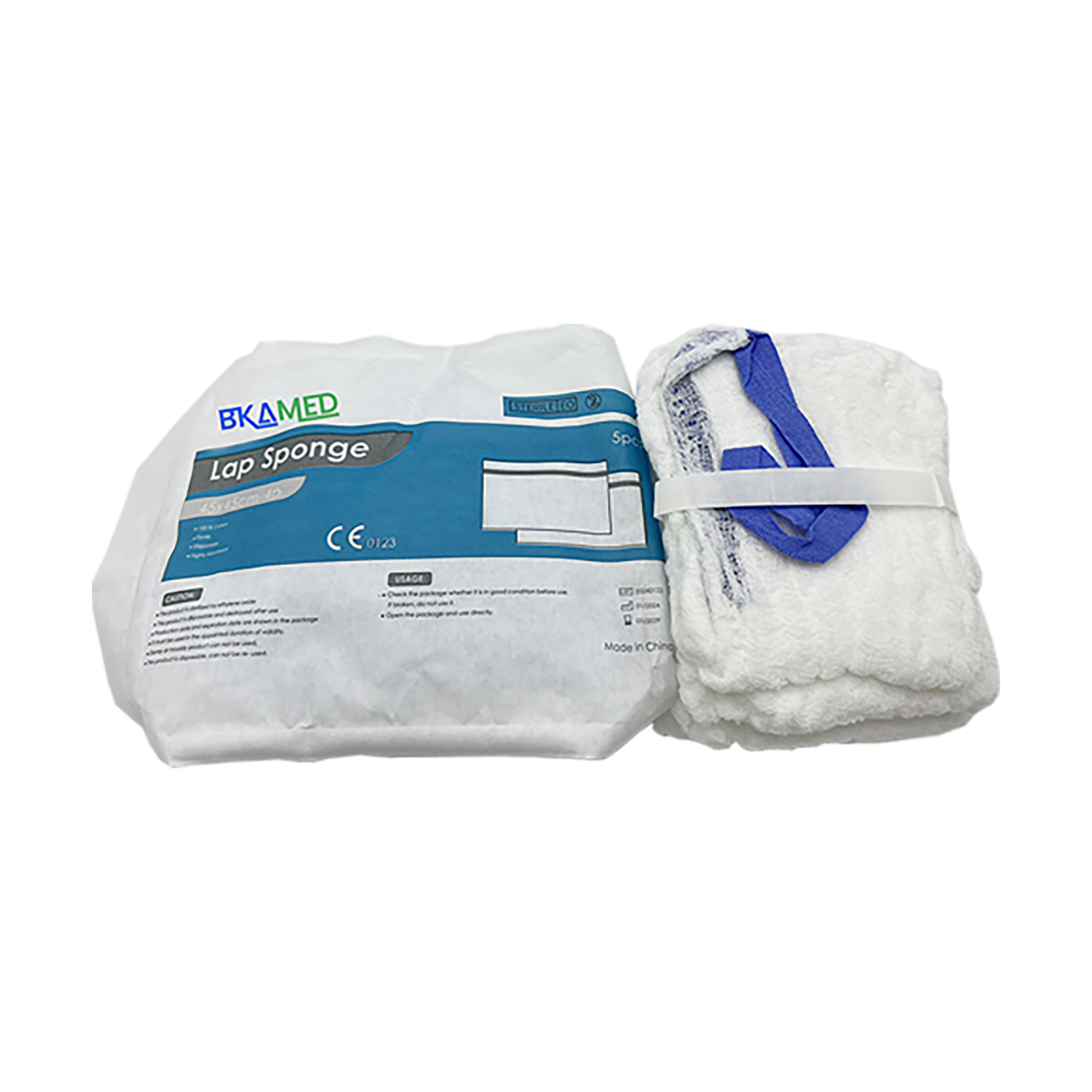
The laparotomy sponge, sometimes called a lap sponge or abdominal pad, is a large, highly absorbent cotton gauze pad that is used during open surgical procedures. It absorbs, protects organs during retraction, and assists in maintaining an operative field free from blood and fluids. It’s simply a piece of woven cotton gauze folded up in the most basic form.
The difference between a normal sponge and a pre washed laparotomy sponge bulk product starts in the manufacturing process. Even after weaving, raw cotton gauze will have spinning oils, sizing agents and loose fibres left over from the production process. Those contaminants end up in the sterile field when a sponge is not washed before being packaged.
Pre-washing removes all that. The sponge is washed in a controlled environment with pharmaceutical grade water and it is washed free from lint, chemicals and cotton dust and then dried, folded and packaged either in bulk (not sterilized) or in a sterilized pack for ready to use supply.
So what exactly does Pre-Washing do?
When a sponge is pre washed three things must change in a clinically meaningful way:
- Shedding of fibres: Unwashed sponges release loose fibres in body cavities. Lint particles can cause inflammatory responses in tissue and make wounds difficult to heal. This is greatly diminished in pre-washed sponges.
- Softness and pliability: Washing eliminates some of the sizing which is stiff, making the cotton softer and more pliable. The soft sponge is easier to work with and less likely to grab on delicate tissue with gloves.
- Absorbent consistency: Residual layers from manufacturing may result in hydrophobic surface layers on unwashed gauze. Water-cleaned fibres will be completely water-loving and will take in water from the first contact.
The difference in clinical outcome with the pre washed lap sponges vs unwashed lap sponge will be determined by those three factors. Those differences are not inconsequential in procedures where precision and cleanliness are important, such as laparotomies, abdominal surgeries and large wound care procedures.
For Whom This Is a Purchase Decision?
Lap sponges for sale are not pre washed. Buyers include hospital procurement managers, surgical supply chain managers, medical distributors and OR managers who buy for a whole hospital or distribution system.
The amounts involved are considerable. A middle size hospital conducting hundreds of abdominal operations every year will use hundreds of thousands of sponges. Specifications (washed or unwashed, sterile or non-sterile, bulk or peel-pack) become immediately clear to the clinician or the procurement economics.
Distributors who are buying pre washed laparotomy sponge bulk from manufacturers should be familiar with these specifications as well – not just to ensure that they can supply it to their hospital customers, but to confirm that the manufacturer can consistently supply it that way on a large scale.
Standard Specifications
Lap sponge spec sheets can be a daunting sight of numbers. But knowing what each variable is and what those variables are that matter to procurement is what turns an informed purchase into a risky guess.
Size
Pre washed lap sponges are available in various sizes and the appropriate size is determined by the type of procedure and the surgeon’s preference. As a lap sponge 30×30 45×45 manufacturer, BKAMED offers the full standard range:
- 18 x 18 cm: For smaller field procedures or to use as a second sponge in larger surgeries.
- 20 x 20 cm: A regular size for most surgical applications in the various markets.
- 24 × 24 cm: Standard size in the United States.20 × 20 cm: Standard size in Canada. Ideal for most open abdominal and thoracic surgery.
- 45 × 45 cm: Larger organ retraction is required or for high bleed procedures.
Most manufacturers will offer custom sizes, but the unit price is usually higher and lead time longer.
Ply Count
Ply is the number of times the gauze is folded into the sponge. The most popular types are surgical lap sponge 4ply 8ply 12ply configurations.
- 4-ply: Lightest option. Reduce unit costs. Used when a moderate amount of fluid absorption is needed.
- 8ply: A typical surgical grade. Balances in terms of absorptivity, thickness and cost.
- 12-ply: High absorption for those procedures requiring a high fluid volume. More expensive, more weight, larger size.
The majority of hospital tender specs are 8 ply. If procurement is controlling a formulary that has multiple sponge types, it is good practice to have both 4-ply and 8-ply on the approved supplier list for flexibility.
Yarn Count
Yarn count (in the cotton count or ‘s’ system) indicates the fineness of the cotton thread used:
- 21s: Coarser yarn. Lower cost. Increased Porosity of the Gauze Structure.
- 32s: Mid-range. For the majority of surgical sponge use.
- 40s: Finer yarn. Denser weave. Better lint control. Recommended in high specification surgical applications.
The higher the yarn count, the finer the fibres, and the better the lint performance of pre-washed products. If you need low lint specification (regulated markets), request 32s or 40s.
Mesh Count
Mesh count is the number of threads per square cm of the woven gauze fabric. Options available include the 13, 17 or 19 threads/cm2.
The higher the mesh, the closer together the fabric threads. The standard surgical size for lap sponges is 17 threads/cm². There is a 13 mesh size gauze which is more open than 19, and is more affordable, and a 19 mesh size gauze used in higher quality or specialty applications.
Loop Options
Most surgical lap sponges have a loop sewn to one edge, usually a piece of fabric measuring 10-15 cm. The purpose of this loop is to aid the scrub tech in tracking sponges and to make them more easily found during surgery.
The most prevalent in regulated markets is the cotton loop lap sponge blue loop. The colour blue clearly distinguishes the loop from a blood-soaked operative area and the softness of the cotton construction keeps the loop soft and not irritating.
There are also green loops present for the same purpose. There may also be a colour preference for some markets or hospital groups, usually based on the existing colour-coding system for hospital operating rooms. OEM runs can be customized with loop colours.
Sterile vs. Non-Sterile
This is the procurement decision that will have the greatest impact on costs. Sterile sponges are more expensive than non-sterile bulk products, and are generally peel-packed and sterilized using ethylene oxide (EO).
Non-sterile pre washed lap sponges are provided to facilities which have their own sterilization. In Asia, Africa, and Latin America, many hospital systems have central sterilization departments and favor the purchase of non-sterile bulk and to be sterile in the hospital. In general, markets in the EU, US, Australia and the Gulf demand sterile product, or sterile product from the manufacturer.
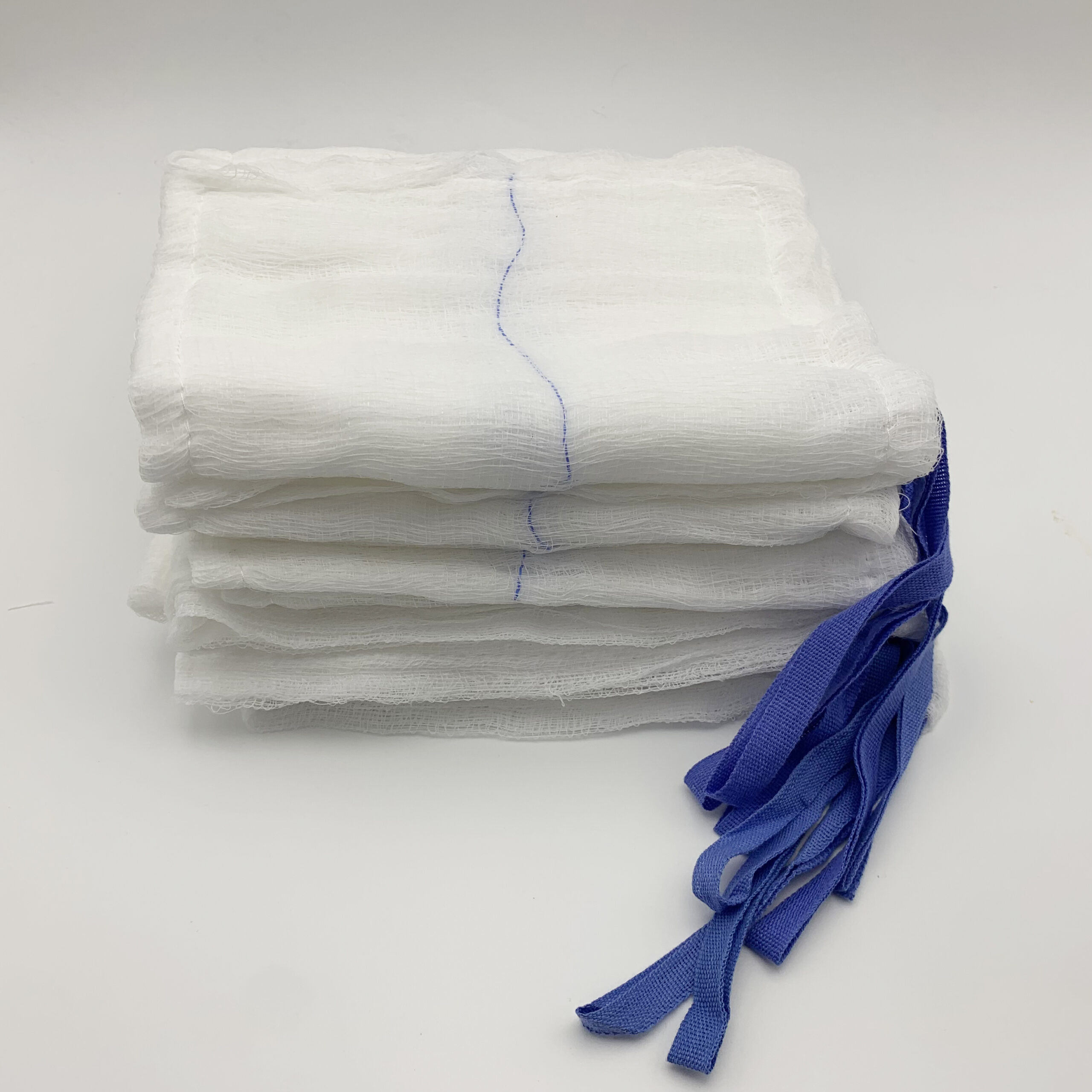
Table 1: Standard lap sponge specification matrix table
| Size (cm) | Ply Options | Yarn Count | Mesh (threads/cm²) | Loop Options | Sterile / Non-Sterile |
|---|---|---|---|---|---|
| 18 × 18 | 4-ply | 21s (coarser) | 13 | No loop | Both available |
| 20 × 20 | 8-ply | 32s (standard) | 17 | Cotton loop | Both available |
| 30 × 30 | 12-ply | 40s (fine) | 19 | Blue loop (x-ray) | Both available |
| 45 × 45 | 8-ply (standard) | 21s / 32s / 40s | 13 / 17 / 19 | Green loop | Both available |
X-Ray Detectability: Why It’s Non-Negotiable
Unfortunately, the most preventable surgical complication still occurs. Sponges continue to be the most frequently reported retained surgical item (RSI), making up 34% of all RSI reports to The Joint Commission during the last reporting period, according to AORN.
According to the Urology Times, the average indemnity amount for retained surgical items claims was around $473,000, and the average amount for permanent major damage claims was $2 million. Retained sponges are now considered a ‘never event’ by Medicare and Medicaid, and will no longer cover the expense of corrective treatment. The entire expense is borne by the facility.
That’s why in most regulated procurement situations there’s no choice but to order an ‘abdominal sponge x-ray detectable’, it’s the standard.
X-Ray Detection
An x-ray detectable sponge is an x-ray radiopaque material, which almost always is a thread or strip packed with barium sulfate. Barium sulfate is used to absorb the X-ray radiation and becomes a high-contrast, bright marker on the X-ray imaging. The barium thread will show through in any folded or over-soaked sponge or even under an organ.
From the US patent literature and several manufacturer specifications, the typical amount of barium sulfate in an x-ray detectable thread is 60% on a weight basis. This concentration results in a consistently good visualization via fluoroscopy or by standard radiographic imaging without causing tissue damage if a fragment is left behind.
Woven-In vs Sewn-In Thread – the difference.
There are two possible approaches to incorporating the radiopaque element:
- Woven-in thread: The barium sulfate thread is woven into the gauze in the same way it is woven. This creates a long-lasting, even mark which can’t be removed from the textile. It will remain in place regardless of the fact that the sponge is ripped. This is the best way to use top quality surgical sponges.
- Sewn in strip—radiopaque tape or strip that is stitched to the sponge after weaving. This is more easy to customise, but may separate slightly if stitching fails. It is widely employed in less expensive goods.
For procurement teams, the bottom line is always to use woven-in thread on any sponge that will be used in an open body cavity. There is a possibility to use sew-in strips in surface wound packing provided the risk of separation is reduced.
The regulatory requirement for the detection of X-rays.
Under EU MDR 2017/745 General Safety and Performance Requirements, surgical sponges supplied as sterile lap sponge ISO 13485 certified products are expected to include as a standard safety feature x-ray detectability. The technical documentation to be submitted for CE marking should make reference to the relevant European standard (EN 13795 series refers to surgical drapes, gowns, clean air suits and surgical gauze requirements; see EN 14079).
Most surgical sponge types have 510(k) clearance specifications that require the presence of x-ray detectable elements as a standard ingredient of sterile surgical sponges in the United States.
Procurement Tip
When considering any surgical supplier for pre washed lap sponges, always ask for a test certificate that is specifically for x-ray detectability. A reputable manufacturer will be able to perform imaging tests and demonstrate that the thread can be seen on typical radiography equipment at different orientations of the sponges.
Inquire if x-ray thread is in the loop or woven into the body of the pad or both. The clinically important area is the pad body – a thread only offers partial, not complete, detectability.
Certifications Required for Surgical Use
A surgical sponge lacking documentation is not a low cost item: it’s a liability in regulated healthcare markets. Certifications are a way for the procurement team to guarantee that a manufacturer is working within controlled and audited conditions.
This is what’s really important and how to check:
ISO 13485:2016 Quality Management Foundation.
ISO 13485 is the international standard for quality management systems specifically developed for medical device manufacturing. ISO 13485 goes beyond general quality requirements to specify requirements for design controls, production monitoring, post-market surveillance and risk management during the product life cycle.
A sterile lap sponge ISO 13485 certified supply chain is one that has been independently audited by a recognised third-party certification body, for example, TÜV, SGS, BSI or DNV, and found to be compliant with all the standards. Certification is renewed every three years, and is supported by annual surveillance audits.
Along with growing regulatory requirements and buyer scrutiny, ISO 13485 has grown by 33.1% annually in the number of certified organisations worldwide, as revealed by the ISO Survey of Certifications. In fact, for hospital procurement managers who buy in gauze sponges, it is a good idea to establish the ISO 13485 as a minimum standard.
CE Marking Under EU MDR 2017/745
Product markings in EU markets are required for sponges to be compliant with the CE marking. Sterile surgical sponges are considered under the EU MDR 2017/745 as Class I (Sterility Sub-Classification). This implies that their partnership with a Notified Body is needed for the sterility part of the conformity evaluation.
The CE mark on the product label indicates that the manufacturer has carried out a comprehensive conformity assessment for design controls, risk management, clinical evaluation, labelling and post market obligations. It cannot be self-declared for sterile devices – needs to be validated by an independent Notified Body.
For checking on CE status, specify the EU Declaration of Conformity (DoC) and the Notified Body certificate number. Check the certificate number on EUDAMED (European database for medical devices) for authenticity.
FDA Registration (United States)
Surgical gauze sponges are considered to be Class I Medical Devices in accordance with FDA regulations. Any manufacturers who want to market products in the United States are subject to FDA Establishment Registration and Device Listing, which are processed by the FDA under 510(k) or exempt as Class I device.
To verify FDA status, request the manufacturer’s FDA Establishment Registration Number. It can be cross checked in the FDA’s public Access to Beneficial Innovation (ABILITI) database. If the number of the establishment is not indicated, it means that the factory is not registered for supplying the US market.
Certificate of Analysis (COA)
In addition to the company-level certificate, a Certificate of Analysis for the product level should be requested for each batch of product. A COA should include a record of:
- Soak rate test (time to absorb/absorbed weight)
- Lint test result (according to EN 14079 or similar)
- X-ray detectability confirmation
- Sterility assurance level (SAL) of sterile products.
- Batch/lot number and production date.
A big red flag for hospital gauze sponge procurement managers is if a supplier can’t provide batch-specific COAs. These records are kept by the manufacturer who is compliant and are produced regularly as part of ISO 13485.
Table 2: Certification Quick Reference for Surgical Lap Sponge Procurement table
| Certification | Issuing Body | What It Covers | How to Verify |
|---|---|---|---|
| ISO 13485:2016 | Accredited third-party CB (e.g., TÜV, SGS, BSI) | A medical device design, production and post-market surveillance quality management system. | Ask for certified copy of certificate + scope; check from the online register of the issuing body |
| CE Marking (EU MDR 2017/745) | Notified Body (for sterile Class Is devices) | Safety, performance, and labelling requirements for EU market access; sterile lap sponges are Class Is | Ask for EU Declaration of Conformity & Notified Body Certificate number, check on EUDAMED; |
| FDA Registration (USA) | U.S. Food & Drug Administration | Establishment registration and device listing for Class I medical devices exported to US | Ask for FDA establishment registration number; check on FDA’s public device database (accessdata.fda.gov) |
| Certificate of Analysis (COA) | Manufacturer’s QC lab or third-party lab | Product-level confirmation of specs: absorbency, lint, sterility, x-ray visibility | Ask for batch specific COA and test method reference (e.g. EN 14079 or reference). |
BKAMED is ISO 13485, CE marked and FDA registered for the EU and USA markets respectively. Verified procurement contacts will be able to receive certificate copies upon request.
Pre Washed vs Unwashed: Clinical and Procurement Comparison
The pre washed vs unwashed lap sponge question comes up in almost every tender specification exercise. For most regulated markets, pre-washed is the superior solution for the clinic, and for all of them, it is the necessary solution. However, the extent to which everything depends on the market being catered to, the procedures being backed, and the overall cost dynamics.
Clinical Differences
The primary clinical hazards with unwashed sponges are lint and the presence of chemicals in the wound field. Any lint particles that enter the body cavity may cause foreign body reactions in tissue, which can cause post-operative inflammation and complications.
These particulates are virtually removed from the product before it even reaches the OR with pre washing. It is important in abdominal and thoracic procedures, where a sponge could be in contact with organ tissue for long periods.
Market Preference by Region
Pre washed laparotomy sponge bulk is the default for the EU, US, Australia, New Zealand, Canada and GCC (Gulf Cooperation Council) markets. In these areas, the consumer is required to ensure that the product is low in lint and low in contamination and pre-washed products are much easier to satisfy this requirement.
In Southeast Asia, sub-Saharan Africa, and Latin America some markets routinely use unwashed sponges, which can be attributed to the price sensitivity and a pre-wash step in the in-house sterilization process.
The Cost Argument
A pre washed sponge is 5-15% higher in cost than an unwashed sponge of a similar spec to the pre washed sponge. The total difference in cost for a hospital with 1,000 abdominal cases annually and 10 sponges per case, at the $0.015 per unit premium (mid-range estimate) equals approximately $150 for the year’s supply.
The incremental cost per unit from pre-washing is economically insignificant, given the typical cost of a retained sponge incident (which is almost $500,000 per incident, according to Harvard data). All the arguments about unwashed sponges as a possible significant cost saving are not convincing here.
The following table illustrates the cost comparison between table procured with lap sponges that were pre washed and table procured with lap sponges that were not pre washed.
Table 3: Pre Washed vs Unwashed Lap Sponge: Full Procurement Comparison table
| Feature | Pre Washed | Unwashed | Procurement Recommendation |
|---|---|---|---|
| Lint Level | Low — residual fibres which are taken out during the washing process | Very high — raw fibres are likely to shed in wound | For all open cavity procedures specify pre-washed. |
| Softness | Significantly less stiff and more flexible | Tighter, can be irritating to sensitive tissue | Pre-washed preferred for longer procedures. |
| Particulate Contamination Risk | Significantly reduced | Elevated — sizing agents and cotton dust present | Pre-washed is required for sterility according to the FDA. |
| Sterilization Compatibility | Excellent — clean base for EO or gamma present | Possible residue interference in EO sterilization | Pre-washed reduces sterilization rejection risk |
| Infection Risk | Lower — cleaner surface, less microbial load risk | Higher baseline contamination potential | Pre-washed standard in EU, US, ANZ markets |
| FOB Cost Difference | Approx. 5–15% higher per unit | Baseline pricing | Cost that is clinically justified |
| Regulatory Acceptance | Preferred in EU MDR, US FDA-registered markets | Accepted in some developing markets | Be sure to indicate pre-washed on regulated markets |
| Market Preference | European, American, Australian, NZ, Canadian | Certain markets in Asia and Africa | It’s essential to match the destination market’s regulatory expectation. |
Specifying Pre-Washed in Contracts
When preparing for a tenders for the supply of new gauze laparotomy sponges, the words to use are: “Pre-washed, 100% cotton gauze laparotomy sponge, low-lint, x-ray detectable, compliant with EN 14079. That one line takes care of the compliance ambiguity. It combines with the ISO 13485 supplier requirement to provide a specification framework which consistently provides clinical grade product.
How Factory Pricing Is Calculated
Understanding the manufacturing process of lap sponge enables procurement teams to negotiate better, prevent the middlemen from adding up the prices and compare the quotes from various lap sponge factory price China sources on a level playing ground.
Raw Cotton Cost
The raw cotton is the biggest input cost for a lap sponge. Cotton prices move with the world’s commodity markets that are influenced by weather, US and China crop projections, and currency changes. When Chinese and other producing countries’ FOB factory prices of cotton rise, the prices in the factories follow, generally within 4-8 weeks.
There are times when buyers with large forward orders can secure cotton prices that are contracted. Ownership or direct control over cotton supply are more likely to provide price stability for manufacturers with vertically integrated supply chains.
Yarn Count Impact on Price
The more the yarn count the more expensive it is to make. A simple change from 21s to 40s yarn on a similar base material size and ply can actually lead to an increase in base material cost of 10-20% which gets passed on to the FOB price. The 32s is the ideal combination of performance and cost for most hospital procurements.
Ply Count and Fabric Weight
The higher the ply, the more fabric on a sponge and the more expensive and heavier it will be — and the price will be higher. The price difference between 4 plies and 8 plies and 12 plies is more or less in proportion with the weight of fabric and the labor involved in its manufacture is not as great. The price will go up about 30-50% from 4 ply to 8 ply and 20-35% from 8 to 12 ply.
Sterilization Add-On
The unit economics are considerably different in the event of sterilization. The two main ways to wholesale OEM products for surgical sponges are:
- Ethylene Oxide (EO) sterilisations: The most common sterilisations for cotton gauze products. EO is able to go through the fabric well. Aerates gases after sterilization requiring a “quarantine” period of time, increasing lead time. Increases the per peel-packed unit costs by about $0.04–$0.10, depending on pack volume and configuration.
- Gamma irradiation: Rapid and without the need for aeration. Usually used on a plastic or composite product, but sometimes used on gauze. May damage cotton fibres at high doses if not set properly. Not very common for lap sponges, but some will have these.
Non-sterile bulk product does not incur this expense, making it 40-60% more cost effective than its individually-sterile counterparts.
Packaging and its cost implications
Many people underestimate the role packaging plays as a cost driver in procurement:
- Peel-pack (single sterile pouch): Most expensive cost per unit. Needs for ready-to-use supplies that are sterile. Includes film, sealing and sterilization indicator label costs.
- Bulk non-sterile (polybag, inner pack): Least expensive. Not uncommon in central sterilization facilities.
- Shipping pack (5 or 10): Normal for product to ship. Moderate packaging cost.
Standard for OEM and private label contracts is custom packaging, which involves the use of branded boxes, dual language labelling, and bilingual IFU inserts, and increases lead time, as well as cost.
Volume Discounts
China price structure for lap sponge is generally not without the large step down levels, such as:
- 50,000–100,000 units: Baseline FOB pricing applies.
- 500,000–1,000,000 units: Typically 10–15% below baseline.
- 1,000,000+: Best rate, may involve dedicated production scheduling.
Typical ranges for FOB prices.
From current market data from verified Chinese manufacturers of pre washed lap sponge surgical supplier grade product, typical FOB China prices are:
- Non-sterile pre-washed, standard 8-ply, 30×30 cm, no loop: USD $0.08–$0.13 per piece at 100,000+ unit orders
- Non sterile with cotton loop – 8 ply – x-ray detectable – USD $0.10 – $0.16 per piece
- Sterile peel-pack, EO sterilized, ISO 13485: USD $0.28-$0.50 per piece, according to spec. and MOQ.
These ranges are based on direct and actual surgical sponges wholesale OEM factory prices and not the Distributor resale prices. Direct sales of surgical supplies like lap sponges to the end user are usually 20–35% below the price of those same supplies sold through intermediaries.
OEM and Private Label Options.
The surgical sponge wholesale OEM route provides many benefits for distributors, hospital group purchasing organisations (GPOs) or medical suppliers in a region who wish to establish their own medical product brand — not just the obvious benefits of brand control and pricing exclusivity, but also product differentiation from catalogue products.
What Can Be Customized
One of the best lap sponge manufacturers is able to provide you with the various kinds of customisations:
- Size: Any dimension, small gauze pads to extra large abdominal pads.
- Ply: Any number of plies from 4 to 16+ layers.
- Loop colour: Additional loop colours, other than blue/green, for OR colour-coding systems.
- Yarn count and mesh: As specified by tender or formulary.
- Type of X-ray placement: woven in pad body, loop only or woven in pad body and loop.
- Packaging: Custom box, bilingual labelling, private brand name, barcode.
- Sterility: EO sterile peel-pack, gamma or non-sterile with your sterilisation instructions.
MOQ for Custom OEM Runs
The minimum order quantity (MOQ) for custom lap sponge factory price China OEM production is different based on the customisation level:
- MOQ is 50,000-100,000 units for custom labelling / private brand (only). Short lead time (4-6 weeks post artwork approval).
- Custom size or ply (standard yarn/mesh): MOQ 100,000–200,000 units. Lead time 6–8 weeks.
- Full Customization Specification (Size, Ply, Yarn, Mesh, Loop): MOQ – 200,000+ pieces. Sample approval required prior to lead time of 8-12 weeks.
These are typical industry ranges. Based on specific requirements (see contact details below), BKAMED’s OEM team will be able to confirm exact MOQ and lead time.
Brand Exclusivity Programs
Some manufacturers have regional exclusivity programmes with OEM clients – that is, the same product configuration is not offered by any other brand in a specific region. The benefit of these arrangements is that the customer should be able to commit to a volume, in return for which they gain the exclusive right to purchase the products, and the customer should keep a formal OEM contract detailing this.
This kind of partnership can offer a form of market protection for distributors who launch a proprietary product line in a certain country, or health system.
What to Include in an OEM RFQ
If you’re asking a factory for an OEM quote you need to provide them with the following to receive a correct and comparable quote:
- The name of the product and its intended application.Name of product and intended use.
- Size (cm × cm)
- Yarn count and Ply count (if known)
- Take X-ray: yes/no; woven or sewn
- Loop: yes/no; colour; material
- The product is either sterile or non-sterile; if sterile: EO or gamma
- Pack configuration (individually-peeled, bulk polybag, box)
- Once a year estimate and order frequency
- The destination country and necessary certifications are listed.The destination country and necessary certifications are indicated.
- Private label / brand name and labelling language
In general, a factory that is asking these questions proactively, instead of having to be prompted, is going to be more experienced in international OEM procurement.
Assessing a Lap Sponge Factory: A Procurement Checklist.
Not every manufacturer that is ISO 13485 certified and CE marked is working at the same standard. What is written on the paper may not be what the factory actually produces. The following list of 10 points gives hospital gauze sponge procurement teams with a step-by-step process for reviewing any supplier before ordering any inventory.
The following checkpoints are a series of questions to ask and documents or actions to check. A factory which cannot answer any of these questions satisfactorily is a factory to look at again.
- ISO 13485 Certification: Ask to see the current certificate, scope covers gauze / surgical sponges and date of expiration. Match up the certificate number with the register of the issuing body.
- CE Marking/ FDA Registration: For EU or US supply: request EU Declaration of Conformity or FDA establishment registration number. These markets are only available for non-certified factories.
- A cleanroom or controlled manufacturing environment is needed for this: Request a photoshoot or virtual tour of the production line. Sponges must be manufactured in a controlled area, with a low particulate count, rather than in an open warehouse.
- Quality Control Process and AQL Standards: Ask the factory for its Acceptable Quality Level (AQL) document. AQL is at industry standard level 2.5 for critical surgical supplies. Request recent QCs.
- Traceability System: Discuss with students how lots are traced from raw cotton to finished goods. A good traceability system is vital to post market surveillance and recall.
- Production Capacity: Verify monthly/annual production capacity. Will the factory be able to upscale to meet big size tender? An understatement of capacity results in delivery delays.
- Sample Response Time: A good and reliable factory will send samples within 5-10 working days. Refusals or delays to samples are red flags.
- Export Track Record: Request existing distributors/hospital networks to provide references and list of countries supplied. Proven compliance is achieved with 60+ country reach signals.
- Complaint Handling Process. Ask the factory for their CAPA (Corrective and Preventive Action) policy. What do they do with products that are not as expected and with customer grievances?
- Flexibility with packaging line and labelling. Ensure the factory is able to do custom labelling, private label, and peel-pack/bulk packaging. Understand the Minimum Order Quants (MOQ) for custom runs.
How to Use the Checklist
Use this checklist at three points of the supplier relationship: at the first sample order, at the first commercial order and when reviewing suppliers annually.
A factory may be receiving 8 of 10 points in a first evaluation, but may have trouble with traceability or complaints, something that only comes into light when things go wrong. These (and other issues) are addressed during the annual review, which stops them from impacting supply continuity.
Red Flags in Supplier Evaluation
The following responses from a potential supplier should cause the buyer to proceed further in his investigation or to reject that supplier:
- Does not have copies of the original certificates (only photocopies without issuing body details)
- Declines audit requests at the factory or video walk-throughs
- Does not have batch specific COAs
- Has claimed compliance with ISO 13485 but is unable to state which certification body they are compliant with
- In the absence of a justification for the lead time, it should be more than 3-4 weeks.
- No export experience to countries that must be regulated.
A pre-qualification audit, on site or by video, for any pre washed lap sponge surgical supplier that has been shortlisted for a major order is well worth the investment. It is much more expensive to discover a compliance issue only after 200,000 units have been shipped to the warehouse versus prior to the PO.
Working with BKAMED on Pre-Qualification
Hospital purchasing departments, hospital GPO representatives, and regulatory affairs consultants are all invited to do a pre-qualification audit at BKAMED. Upon request, the factory team can provide the following: live video factory tours, certificate packages, and QC documentation..
Why BKAMED Lap Sponges Stand Out
With hundreds of gauze manufacturers from China claiming the same standards, the real differentiating factors to consider for serious procurement teams are measurable, not sales-driven. Here’s why you should choose BKAMED.
The ISO 13485 Certification and Regulatory Credentials.
BKAMED has current sterile lap sponge ISO 13485 certificate, CE marking according to EU MDR 2017/745 and FDA establishment registration for the US market. All certificates available for verified procurement contacts. Surgical products like lap sponges and abdominal pads made of gauze are covered by the scope of the ISO 13485.
Where procurement teams are responsible for sourcing a range of products across various markets including European, US, Gulf and Asian surgical markets, it is significantly easier for them to qualify a single supplier if that same supplier holds multi-jurisdiction credentials for a pre washed lap sponges product.
Vertically Integrated Manufacturing
BKAMED has a vertically integrated production model, from raw cotton to yarn spinning, weaving, pre-washing, quality control, to final packaging, all operates under a manufacturing umbrella. This is important to procurement for three practical reasons:
- Stable prices: No need to depend on external fabric suppliers for prices as input prices will be controlled.
- Traceability: Internal traceability of every production stage makes lot traceability and recall easier.
- Quality consistency: Vertical integration means that the quality of the production is controlled at all stages not only when receiving external fabric, but throughout the entire process.
Over 30 years of Manufacturing Experience.
The years of expertise in making medical gauze are not in the marketing claims, but in the details: process stability, the knowledge of how to manage each type of cotton and various sterilization processes, the ability to troubleshoot issues before they become shipping issues.
New entry manufacturers frequently fight on the front end price, while not factoring in maintaining the quality at volume. These problems have been faced by established manufacturers.
60+ Countries Served
BKAMED’s global export footprint of 60 countries and more already has compliance frameworks in place for various regulatory markets. The documentation for EU, US, Gulf, and ASEAN market needs doesn’t have to be created afresh by each and every new purchaser.
When distributors are going into new markets, it takes less time to get to market and the risk associated with regulatory compliance is greatly reduced when a supplier is familiar with those requirements.
Factory-Direct Pricing
By purchasing lap sponge from a price China manufacturer such as BKAMED directly from the factory, the mark up that you must pay to a trading company or a lap sponge distributor is avoided which is usually between 15-30%. This can have a significant impact on the economics of big contracts.
Custom specifications, sample development, and QC questions are also available with direct access to the production team, not via a middleman in the communication chain, as in factory-direct.
Free Samples Available
BKAMED provides free products samples for verified procurement contacts and distributors. This is a common practice of legitimate manufacturers and it is a sign of trust and commitment to sustaining supply agreements.
For procurement teams who are looking to buy a large quantity of any item, it is always best to see a sample before ordering in quantity. There are many aspects of specification compliance, packaging quality and tactile product feel that can’t be judged based on a data sheet.
Bottom Line: What Every Procurement Team Needs to Know About Pre Washed Lap Sponges
Pre washed lap sponges are not a homogeneous product — and the difference between a well specified and a poorly sourced product is apparent in the operating room. Throughout this guide, it has covered the entire procurement decision-making process starting from the understanding of what pre-washing actually means at the fibre level, down to the decoding of pre-washing specifications, to the checking of factory prices and OEM pre-washing solutions.
The procurement teams’ lessons are simple: always ask for product that has been pre-washed for open cavity surgery, and ask for the product to be x-ray detectable; insist on ISO 13485 certification from all suppliers and market appropriate regulatory documentation; and assess factories on their documented evidence and not claims.
BKAMED provides a manufacturing partnership to facilities and distributors who are looking to take action: certified, experienced, and free samples, industry transparency in pricing, full documentation support.
Request a Free Sample and Factory Quote
The selection of surgical products for a health system, hospital, or distribution network has real clinical impact. The right pre washed lap sponges surgical supplier should be able to demonstrate, not promise, compliance, quality control, and regulatory requirements.
BKAMED is ready to give free samples to the verified procurement team, provide full certificate documentation and provide a factory direct FOB quotation. Please give us the following information for a proper quote:
- The size, ply, yarn count, x-ray thread and loop preference are all features of the product specification.
- Sterile or non-sterile; if sterile, is pack configuration preferred;
- Estimate and/or frequency of yearly volumes
- The country to which you are traveling and any specific regulatory requirements for that country.
- Private Label or OEM will be covered (where applicable)
For teams making use of specifications that are proprietary, BKAMED also has an NDA to be bought. Quotes are usually issued in 24-48 hours. Whether it be a small or large hospital procurement of gauze sponges, BKAMED can supply the documentation trail, product quality and pricing structure that will allow you to make the supplier choice within the hospital with confidence.
Fill out the BKAMED inquiry form to get started.
