
The medical gauze swab market is growing quickly as hospitals and healthcare facilities continue demanding for sterile, reliable, and affordable surgical dressings. China is a popular manufacturing hub for medical gauze swabs, thanks to its large-scale production, competitive pricing, and strict quality control. WITS (World Integrated Trade Solutions) reports that China is the world’s largest exporter of medical gauze swabs, bandages, and other medical consumables.
Gauze swabs made in China come in many forms. Buyers can choose from sterile and non-sterile options made from 100% cotton or non-woven materials, depending on the intended use. These products are designed for strong fluid absorption and come in common sizes such as 5 × 5 cm and 10 × 10 cm, with 8, 12, or 16-ply options available.
In this article, we look at the top 10 medical gauze swab types made in China. Also, we’ll give information on their material composition, quality standards, and common procurement mistakes B2B buyers should avoid.
Key Takeaways
- Medical gauze swab manufacturers in China offer a wide range of products to meet different clinical needs, including variations in size, weave, and sterility.
- The performance of a medical gauze swab depends on several factors, including the base material, ply count, weave type, and packaging. Cotton and synthetic materials perform differently, and woven and non-woven swabs also vary in absorbency, linting, and strength.
- Quality control matters just as much as price. Buyers should look for suppliers with recognized certifications such as ISO 13485, CE, or FDA registration, and they should ask for proof of absorbency and sterility testing.
- Healthcare buyers should also look for consistency from batch to batch, clear labeling with expiry dates and batch numbers, and sterile packaging. Reliable supplier support for testing and documentation is equally important.
- When sourcing medical gauze swabs from China, B2B buyers should avoid common mistakes such as choosing based on price alone, ignoring sterility, and overlooking labeling or traceability.
Top 10 Medical Gauze Swab Manufacturers in China
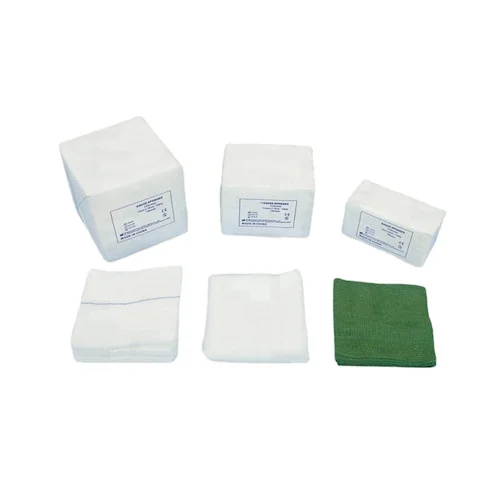
When it comes to the medical gauze swab in China, there is no real need to seek the greatest name in the market. It is important to identify the supplier which fits your order quantity, compliance requirements, a private-label objective and risk tolerance. All of the companies below are involved in making medical dressing/wound-care, but in a slightly different manner.
1) BKAMED (Hubei Baikang Medical Instrument Co., Ltd.)
BKAMED is a large-volume manufacturer of medical gauze swabs in China. The company operates a 100,000 cleanroom, packaging facility, microbiology laboratory, and quality control unit. Moreover, it is ISO and CE certified.
BKAMED manufactures gauze pads, swabs, bandages, lap sponges and vaseline gauze, which makes it appealing among consumers who make purchases in bulk. The company sells over 200 tones of medical gauze and gauze bandage every month.
Pros
- Mass scale of production in bulk orders.
- In-house support (labs) and cleanroom-based manufacturing.
- Expansive gauze cotton, not ordinary swabs.
- OEM/customization-friendly product presentation.
- Compliance internationally with ISO, CE and FDA-approval.
Cons
- The company’s broad catalog may require tighter specification control from procurement teams.
2) Winner Medical Co., Ltd.
Winner Medical is one of the most reputable names in the cotton-based medical textile sector in China. The firm has over 30 years of experience, a CE and ISO 13485 certification, and has control over the entire industrial chain from raw cotton to sterilization and finished products.
Its sterile medical gauze swab is crafted from 100% pure cotton yarn. These swabs are low lint with high absorbency, and are comfortable to patients. This is what most healthcare purchasers seek in surgical and wound-care applications.
Pros
- Extensive knowledge on cotton-based medical disposables.
- High standards of quality control and GMP-type sterile processing.
- Expansive product ecosystem not just on medical gauze swabs.
- Appropriate for healthcare buyers who need reliable and compliant medical gauze swab supplier.
Cons
- The scale and structure of Winner Medical can make it less agile in terms of orders that are too small and too customized.
3) Allmed Medical Products
Allmed stands out as the 3rd most important supplier of medical gauze swab, dressing and infection-control products. Some of its products are woven and nonwoven gauze swabs, drain sponges, abdominal pads, fluffy sponges, and packing strips.
The company exports its products to more than 70 countries and regions across the world. Allmed highlights CE, ISO13485, CNAS, CSR, and FSC certifications. For B2B buyers, that combination suggests a supplier built for international trade rather than a narrow domestic market.
Pros
- A wide wound-care catalog containing numerous gauze options.
- Good export presence in more than 70 countries.
- Various global standards help in earning procurement confidence.
Cons
- The scope of product-by-product certification has to be checked by healthcare buyers.
4) Hubei Qianjiang Kingphar Medical Material Co., Ltd.
Kingphar is an established producer of surgical dressing, dental and wound-care products. The company is ISO 13485 and CE certified; has been in operation since 1989 and exports to over 70 countries and regions worldwide.
It focuses primarily on the sale of medical gauze, non-fabric products, absorbent cotton and elastic bandages. Sterile and non-sterile medical gauze swabs, including X-ray detectable swabs, are also produced by the company, which are useful for healthcare buyers.
Pros
- History of long presence in manufacturing medical dresses.
- Widely spread product range of broad gauze and cotton.
- Good international compliance record, with FDA claims in its premises.
- There are sterile and non-sterile options which can be detected by X-rays.
- Exporter oriented excellence of the European and United States.
Cons
- Healthcare buyers should confirm the exact contracting entity.
5) Gauke Healthcare Co., Ltd.
Gauke is more closely associated with first-aid kits, wound care, and safety products. The company produces more than 6 million first-aid kits for vehicles, industry, and families, along with gauze products, non-woven products, and elastic bandages.
Gauke also highlights ISO 13485 and FDA-related compliance, plus CE registration under EU rules on medical consumable products. That makes Gauke interesting for buyers who need gauze swabs as part of a larger emergency-care or first-aid SKU.
Pros
- Strong first-aid and wound-care ecosystem.
- High output in first-aid kits, which signals capable assembly operations.
- Useful for buyers sourcing gauze inside complete kit programs.
- Compliance language includes ISO 13485 and FDA-related references.
- Good fit for OEM and private-label safety products.
Cons
- Buyers focused only on swabs may find the catalog broader than necessary.
6) Suzhou Sunmed Co., Ltd.
Suzhou Sunmed is a long-running supplier of medical consumables and healthcare products, and has been in the medical supply business since 1993. The factory has passed TUV SUD ISO 13485:2016, with CE certification and FDA registration on many products.
Sunmed also offers more than 1,000 products and supplies major retail and healthcare customers. For healthcare buyers, the useful point is that the company offers medical gauze swabs, gauze rolls, bandages, pads, and broader first-aid dressing lines in a stable export framework.
Pros
- Long operating history in medical gauze supplies.
- Strong compliance posture with ISO 13485, CE, and FDA-related claims.
- Large catalog that supports one-stop sourcing.
- Offers multiple gauze formats for retail and clinical channels.
- Good fit for buyers who want private-label packaging and broad product consolidation.
Cons
- The broad catalog can dilute attention if you only need a narrow gauze program.
- Buyers should verify the exact certification scope per SKU.
7) Anji Hengfeng Sanitary Material Co., Ltd.
Anji Hengfeng is a bandage and first-aid supplier with cotton gauze. The company lists cotton gauze alongside emergency bandages, medical elastic bandages, orthopedic bandages, medical tape, and first-aid kits. That matters for B2B buyers who source multi-component emergency or wound-care kits, because the supplier can probably bundle more than one line item under the same commercial relationship.
Pros
- Good for bundled first-aid and wound-care sourcing.
- Broad bandage portfolio with cotton gauze included.
- Useful for buyers building emergency kits.
- Product mix supports both medical and consumer-oriented channels.
Cons
- Limited information on gauze-specific manufacturing depth.
8) Lianyungang Baishun Medical Treatment Articles Co., Ltd.
Baishun Medical possesses one of the most recognizable cotton-and-gauze. With a history of more than 36 years, it has more than 300 employees and core products that include cotton rolls, cotton balls, dental cotton, gauze rolls, medical gauze swabs, lap sponges and finally gauze bandages.
The company can produce medical gauze swab and other medical consumables based on the requirements of healthcare buyers. Such a combination is appealing to importers and brand owners, who get the impression of a mature factory, which still is willing to do customization.
Pros
- Extensive history of manufacture of absorbent cotton and gauze.
- Good product emphasis within basic wound-care products.
- Tailored assistance on buyer specs.
- High number of workforce implies in-depth production.
- Good fit for standard gauze programs and OEM packaging.
Cons
- Buyers may need to ask more questions around export documentation and testing.
9) Ningbo Medelast Co., Ltd.
Ningbo Medelast is an expert of supplying bandages and medical disposables. The company has ISO-9001, ISO-13485, CE under MDR 2017/745, and FDA registration. The company has also invested in innovative weaving machines and stocks medical bandages, wound dressings, tapes, plasters, first-aid kits, sports care and foot care merchandise. For B2B buyers, the main value is in the manufacturer’s textile and bandage strength, especially when medical gauze swab is part of the dressings.
Pros
- Strong MDR and registration with FDA.
- Proper textile and weaving skills.
- Expansive wound-care/bandage catalogue.
- Appropriate when the purchaser requires bandages and dressing elements.
Cons
- Higher complexity in customizing: The process of customizing may be more complex for basic medical gauze swab.
10) Yangzhou Super Union Import & Export Co., Ltd.
Yangzhou Super Union provides one of the broader medical consumables catalogs in this list. It has several lines of products; gauze products, bandages, medical tape, medical cotton, non woven products, syringes and catheters.
The company has been in operation well over 22 years. The firm is a viable solution to the B2B buyers wishing to have a broad range of consumables through a single source of export.
Pros
- Wide medical consumables range under one umbrella.
- Large medical gauze inventory with numerous options.
- Well-established export presence worldwide with several market channels.
- Good fit for distributors and one-stop procurement.
- Public pages show repeat trade fair and product-line activity, which usually helps buyers assess market continuity.
Cons
- Healthcare buyers should confirm if they are dealing with the import-export company or the manufacturing entity as the brand structure is multi-entity.
China Made Gauze Swab Market
Market Research Future estimated the gauze swab market at USD 3.169 billion as of 2024. The market is projected to rise from $3.2 billion in 2025 to $4.5 billion by 2035, growing at a CAGR of 3.24% over the forecast period.
Medical Gauze Swab Uses and Applications
Medical gauze swabs are multipurpose:
- The most common of gauze swab uses is wound cleaning. By dabbing or wiping, a medical gauze swab can soak up blood, exudate or pus to prepare a wound for dressing. Their absorbent and wicking properties make them ideal for this.
- They also apply ointments or saline over a wound. In a dressing, gauze swabs can act as padding or filling; for instance, in a wet-to-dry dressing a saline-soaked gauze swab is placed on a wound, allowed to dry, and then removed — which can pull out dead tissue as it dries. (However, note that this wet-to-dry technique is now less popular since it can be painful and disrupt healing.)
- Surgical gauze swabs are also used for wound packing. Especially deep cavity wounds, by gently filling the space to absorb fluid while allowing the wound to heal from inside out. Medical gauze swabs are used in soaking up blood and fluids during surgery; often preferred to a spool with a tape for quick removal.
- Small sterile gauze swabs are also used in home first aid to apply pressure to a cut to stop bleeding or cover a minor burn. Similarly, they are used in veterinary care for the same reasons.
A medical gauze swab is a basic but highly useful absorbent pad useful in cleaning, dressing, and protecting wounds. Hospitals and clinics depend on them for minor wound care and major surgical procedures.
What Is a Medical Gauze Swab and How Is It Used?
A medical gauze swab is a small square piece of gauze used in wound care and medical procedures. It is usually made from cotton or synthetic fiber and designed to absorb blood and other fluids, clean wound surfaces, or help apply ointment.
These swabs are often sold as sterile pads in sealed packs for single use, with common sizes such as 5 × 5 cm or 10 × 10 cm. Non-sterile swabs are also available, but they must be sterilized before use on patients.
When used and packaged correctly, gauze swabs help reduce the risk of infection by keeping wounds clean and dry.
Cotton vs. Non-Woven Gauze Swabs
A medical gauze swab can be made from either woven cotton or non-woven synthetic materials. A cotton swab usually uses 100% cotton yarn. It feels soft, but it can also be slightly rough. The medical gauze swab absorbs fluids very well, although it may shed lint and fray around the edges.
A non-woven medical gauze swab is made from synthetic fibers such as rayon, polyester, or a blend of materials that are pressed together to form a fabric-like sheet. The swab is stronger, more consistent in texture, and produces far less lint. It can also feel bulkier and may be less breathable than cotton.
In general, cotton medical gauze swab work best when absorbency and grip matter most. Non-woven medical gauze swabs are a better choice when low lint and added strength are more important.
Weave and Ply Count
A gauze swab is typically folded into a pad with multiple layers (plies). For example, an 8-ply medical gauze swab is made by folding eight layers of gauze fabric. More plies mean a thicker pad and higher fluid capacity. Standard plies are often 8, 12 or 16 in surgical swabs.
A gauze swab plain (no added coatings) may be called a “plain gauze swab.” Some pads are only 4 or 6-ply for light tasks, while others are very thick for heavy bleeding.
The weave also matters:
- A coarse (open) weave traps fluid quickly but may produce more lint
- A fine (tight) weave is smoother but absorbs more slowly
Manufacturers often use long-staple cotton for premium gauze; cheaper gauze might use shorter fibers or cotton blends, which can affect softness and absorbency.
Size and Form
Medical gauze swabs come in standard squares such as 4×4 inches (approximately 10×10 cm) or smaller 2×2 inch pads. Most factories in China produce all common sizes (e.g. 5×5 cm, 7.5×7.5 cm, and 10×10 cm).
The thickness, shape and size of a medical gauze swab should match the clinical use. For example, an abdominal gauze swab or laparotomy pads (larger swabs) are used in surgery for major bleeding while a pediatric or ophthalmic medical gauze swab might be very small.
Gauze swabs that include a radiopaque strip or tag (for X-ray detection) are available for use in operating rooms. This is a life-saving feature so that no swab is accidentally left in a patient.
Sterile Gauze Swabs
In any medical setting, gauze swabs must typically be sterile. This is achieved by final sterilization (e.g. gamma or e-beam radiation) after packaging. Each packet or box should be clearly labeled “STERILE,” with batch number and expiry.
Non-sterile Gauze Swabs
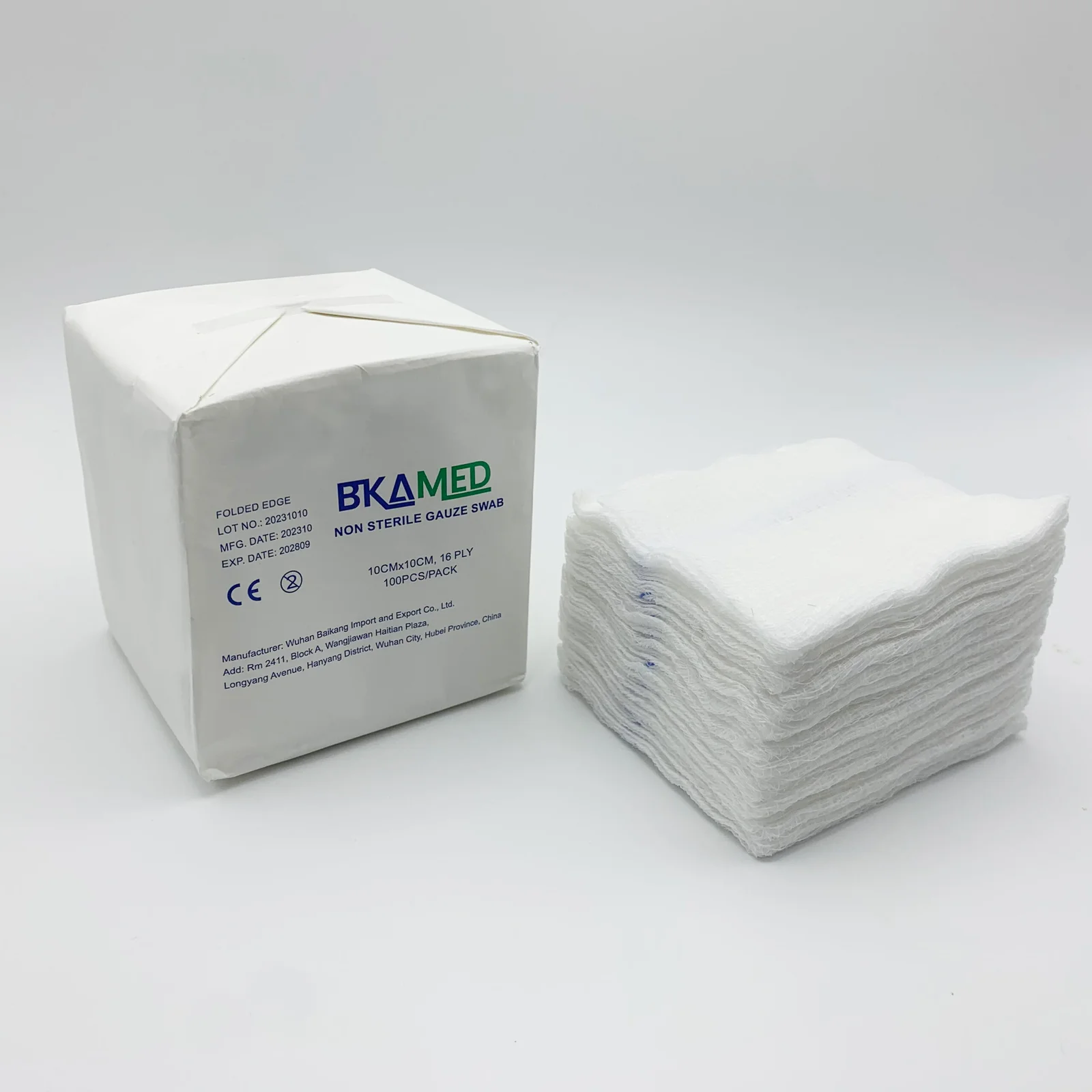
Non-sterile gauze is sold for first-aid or personal use. But healthcare buyers should never use a non-sterile pad on an open wound without first autoclaving or otherwise sterilizing it.
According to one Chinese manufacturer, healthcare buyers should check the package integrity before use and never use unpackaged or non-sterile gauze on fresh wounds. In practice, healthcare buyers always specify “sterile gauze swab” if intended for wound cleaning, and reserve non-sterile types for low-risk tasks (like external bandages on intact skin).
A Gauze Swab vs. Gauze Pad
A gauze swab is usually a smaller, softer, and more flexible piece of absorbent gauze. It is commonly used for cleaning wounds, wiping skin, packing small areas, or applying antiseptics. A gauze pad is usually larger and flatter, which makes it a better option for covering wounds, soaking up fluid, and protecting a wider surface.
In medical supply catalogs, these terms are sometimes used loosely or even interchangeably. Still, the difference matters when you are buying or sourcing products. If you need something for cleaning a wound or packing a small space, a swab is often the better fit. If you need coverage and protection for a wound site, a pad is usually the better choice.
For B2B buyers, the most important details are size, ply count, sterility, and intended use. Those factors matter more than the product name, since different suppliers may describe similar items in different ways. The table below shows the main differences between a gauze swab and a gauze pad.
| Feature | Gauze Swab | Gauze Pad |
|---|---|---|
| Size | Small | Large |
| Shape | Usually square or folded | Usually flat and rectangular or square |
| Absorbency | Suitable for targeted use | Best for broader surface coverage |
| Main Use | Cleaning, Packing and Wiping | Covering, Dressing, and Absorption |
| Best For | For small wounds, for surgical prep, and for precise applications | For large wounds and for general wound coverage |
10 Common Types of Gauze Swabs Made in China
Manufacturers in China produce a wide range of medical gauze swabs. Below are ten common types, along with their main advantages and limitations, to help healthcare buyers make better purchasing decisions.
1. A Standard Sterile Cotton Gauze Swab
Standard sterile cotton gauze swabs are made from 100% absorbent cotton. They are used to clean wounds, absorb fluids, pack dressing sites, and protect injured areas during recovery. Their soft, breathable weave allows air to circulate while still creating a clean barrier over the wound.
These medical gauze swabs are often available in different ply counts, such as 8-ply or 12-ply, depending on the intended use and the level of absorbency needed. They also come in standard sizes like 10 × 10 cm (4 × 4 inches).
Smaller or custom sizes are available for specific medical needs. Most are made from white woven gauze and packed individually or in sterile sets to support hygiene and easier handling.
Healthcare buyers can source these medical gauze swabs from BKAMED, a leading manufacturer of medical gauze swabs in China. Their product range includes standard and custom sizes to meet different clinical needs. The company also supports large-scale orders with packaging designed for efficient distribution, storage, and inventory management.
Pros
- 100% cotton medical gauze swabs are highly absorbent. Cotton can hold fluids up to several times its weight.
- They are soft and non-allergenic as cotton is gentle on tissue.
- A standard sterile cotton medical gauze swab exhibits good wicking action for cleaning wounds.
- The coarser mesh options of these swabs provide extra traction on gauzy wounds.
- They are economical. China’s high-volume production makes the medical gauze swab relatively low-priced.
Cons
- A standard sterile cotton medical gauze swab can leave lint (cotton fibers) in the wound. Especially if cut or torn during use.
- Thicker cotton gauze dries hard when soaked, so it may stick to wounds.
- The cotton medical gauze swab is bulkier for storage/packing.
2. A Heavy Duty Cotton Gauze Swab (12–16 Ply 10×10 cm)
Heavy-duty cotton gauze swab is designed to be used in a rigorous clinical setting. It is heavier, stiffer and meant to dispose more fluid as compared to the standard alternatives. A majority are produced with 12 to 16 layers making them stronger as well as increasing their ability to absorb blood or exudate.
These are usually utilized in the operating room, in wound care, or any other operation that requires swabs that are bigger than the standard. The extra thickness enables them to cover a larger number of surfaces and contain larger volumes of fluid without disintegration.
Due to such structure, they work well under high pressure conditions such as in the OR or trauma care. They assist clinicians remain in control with high fluid levels and require regular absorption. Absorbency is enhanced directly by thickness and durability is improved by the same factor, hence these swabs are used in more complicated cases.
Pros
- Can easily manage substantial amounts of fluid, and is therefore appropriate in case of heavy bleeding or larger wounds.
- The additional layers have a cushioning effect which protects sensitive tissue.
- Ideal in dry packing and in soaked jobs where drainage is required.
- Frequently contains an X-ray detectable thread, which assists teams in finding the swab fast when necessary during procedures.
Cons
- Thick in comparison to normal swabs thus occupies more space.
- Layers that are inside might take time to absorb unless the swab is moistened beforehand.
- May be excessively or uncomfortable in small or shallow wounds.
With bigger variants where the tapes are at corners, it is even more important to handle them. These tapes are easier to remove, but there is a risk. Failure of counting protocols means that the swab may be inadvertently left in a surgical cavity and this is the reason why close monitoring of swabs through the procedure is crucial.
3. A Non-Woven Gauze Swab (Sterile Rayon/Polyester)
The non-woven swabs are made of gauze, which is a new replacement of cotton gauze. They are not woven but pressed together with a mixture of rayon and polyester. It is that which forms a smooth and homogenous pad that is soft to touch on the skin and maintains its shape as long as it is in use.
Non-woven choices are preferred by many healthcare buyers since the products provide such consistency in performance. They absorb rapidly, exit the wound surface cleanly, and leave behind very little lint. That low linting could be beneficial in an environment where hygiene is important to minimize the chances of contamination.
These swabs will be in use in hospitals, outpatient clinics, and wound care supply chains. They are effective in routine activities such as wound cleaning, dressing changes and overall patient care. They are lightweight and reliable in quality thus can be easily standardized in large procurement volumes.
Pros
- Less lint, which contributes to keeping the wound sites cleaner in the course of care.
- Good construction that does not tear easily, even when moist.
- Quick fluid absorption because of the thick fiber content.
- A soft and flexible material, which is comfortable on sensitive parts.
- Less natural fiber residues and cleaner material profile.
- More lightweight and thin than cotton gauze, at the same level of absorbency, which minimizes the bulk of packaging.
Cons
- Not as breathable as woven cotton which may cause maceration of skin when worn too long.
- Lacks no wicking feel like some clinicians expect of cotton gauze.
- Minor increase in unit cost in most supply markets.
They do not use natural fibers, thus they feel different when being handled compared to a conventional gauze. Other clinicians observe that they do not attract fluid like cotton does. Nevertheless, in most uses the trade-off is justified, particularly where cleanliness, consistency and low lint are essential.
4. A Plain Cotton Gauze Swab (Non-Sterile)
Plain cotton gauze swabs (non-sterile) look and feel like standard gauze, but they come without sterile packaging. They’re usually packed in bulk — sometimes hundreds per pack — which makes them a practical, budget-friendly option for everyday use. Because they’re made from absorbent cotton, they still deliver good softness and fluid uptake for routine tasks.
In most facilities, these swabs are used where sterility isn’t a requirement. Think surface cleaning, prepping intact skin, applying solutions, or handling low-risk dressing work. Since they’re not individually sealed or sterilized during manufacturing, they cost less and are easier to stock in large volumes.
They’re also flexible from a workflow standpoint. Teams can either use them as-is for general tasks or sterilize them in-house — like with an autoclave — if they need them for more controlled applications.
Pros
- Cost-effective, especially for high-volume purchasing
- Can be sterilized in bulk when needed or used directly for non-critical tasks
- Maintains the natural softness and absorbency expected from cotton gauze
Cons
- Not suitable for direct use on open wounds unless sterilized first, due to contamination risk
Note: Manufacturers label clearly “NON-STERILE” on each pad or roll. Non-sterile gauze should never be confused with sterile gauze swabs.
5. A Vaseline (Paraffin) Gauze Swab (Sterile Impregnated)
Vaseline gauze swabs are made from cotton gauze that has been impregnated with white or yellow petrolatum (also known as paraffin). This coating helps create a moist protective layer over the wound surface, which reduces sticking and makes dressing changes more comfortable for the patient.
These swabs are commonly used for burns, skin grafts, donor sites, and other wounds that need a non-adherent dressings. Their main advantage is that they help protect delicate tissue while maintaining a moist wound environment. This makes them useful in situations where minimizing trauma during removal is important.
Pros
- It creates a non-drying, moist interface on the wound.
- Vaseline prevents the pad from sticking to tissue and soothes burns.
- It is sterile and intended for direct wound contact (e.g. burn wards).
- The petrolatum makes the gauze water-repellent on one side.
Cons
- Not for heavily exuding wounds (petrolatum repels fluid).
- Because of the oil, it cannot be sterilized by heat or gas — usually sterilized by radiation.
- After use, these pads cannot be reused or laundered.
The swab has a limited shelf life because the petrolatum can slowly oxidize; airtight packaging is a must.
6. Iodine (Povidone) Gauze Swab (Sterile Impregnated)
Iodine gauze swabs are sterile cotton gauze pads pre-treated with an antiseptic agent such as povidone-iodine. They are designed to support wound care in situations where infection control is especially important. Because of the iodine content, they often appear pink, brown, or light amber in color.
These swabs are commonly used for wounds with a higher risk of contamination, as well as in procedures where an antiseptic dressing is preferred. Their main purpose is to help clean and protect the wound area while reducing the chance of bacterial growth on the surface.
Pros
- Combines cleansing and dressing in one step by killing bacteria on contact.
- Convenient for minor infected wounds or pre-op skin prep.
- Removes the need for separate antiseptic scrubbing.
Cons
- Single-use only, as the iodophor is consumed by fluid and dries the pad.
- Can cause skin irritation or allergy (iodine sensitivity).
- Iodine staining can mask the color of a wound, making assessment harder.
- These types are also sterilized by radiation or validated processes.
As China YY standards note, products with additives are excluded from their scope. This means healthcare buyers should make sure any impregnated gauze meets the required biocompatibility and content standards. The relevant YY/T 1293 references do not cover antibiotic-impregnated gauze.
7. Ophthalmic and Small Medical Gauze Swabs (Sterile Cotton)
Ophthalmic and small medical gauze swabs are tiny sterile cotton swabs made for delicate, low-volume care. They are usually produced in compact sizes such as 2 × 2 cm or in round formats, which makes them useful for precise handling in sensitive areas. Their small size helps healthcare professionals work cleanly and carefully without using a larger dressing than necessary.
The medical gauze swabs are used in eye care, ear care, and minor wound management, especially for pediatric patients or very small treatment sites. They are also useful for applying medication, cleaning away small amounts of fluid, or covering minor areas that do not need a full-size gauze pad.
In hospitals, clinics, and outpatient settings, ophthalmic and small medical gauze swabs are valued for their gentle use, sterile packaging, and convenience in specialized care.
Pros
- They are well suited for delicate areas and infants.
- They are usually soft and low-ply, which supports precise use.
- They are often sold in multi-packs, which helps reduce waste in small procedures..
Cons
- They are not designed for heavy bleeding because their absorbency is limited and tend to cost more relative to their size.
Ophthalmic and small medical gauze swabs can be easy to lose or may slip into the ear canal if not handled carefully, so close monitoring is important.
8. Lint-Free Cotton Gauze Swab (Sterile)
Lint-free cotton medical gauze swabs are sterile and they are made to reduce fiber shedding during use. They are often produced from heavily bleached cotton and use longer, higher-quality fibers to improve consistency and limit loose particles. The swabs are designed to leave very little residue on the wound or surrounding area.
Lint-free cotton medical gauze swabs are used in procedures where cleanliness and precision matter, including surgical care, wound dressing, and other sensitive clinical applications. Their low-lint performance helps keep the wound site cleaner and supports a more controlled treatment environment.
Pros
- They keep the absorbency and softness of cotton while producing very little lint.
- They are well suited for surgical sites and clean wounds.
- They are gentle on tissue and absorb fluid effectively.
Cons
- They usually cost more because of the extra processing.
- “Lint-free” does not always mean completely lint-free; it usually means negligible lint.
- They are often associated with higher certification standards, such as USP or BP grade.
9. Abdominal/Laparotomy Gauze Pad (Sterile, with Tape)
Abdominal, or laparotomy, gauze pads are large sterile surgical dressings used in major procedures. They are much bigger than standard medical gauze swabs, often measuring 30 × 30 cm or larger, depending on the procedure and hospital requirements. Their large surface area gives them strong absorbency, which makes them useful for managing fluid during open surgery.
These pads are used in operating rooms, where surgeons need dependable coverage, fluid control, and easy handling. Many versions include a corner tape, which makes placement and removal easier for medical staff. Some also include an X-ray detectable stripe, which adds an extra layer of safety by helping staff identify the pad after surgery if needed.
Pros
- They offer high absorbency for operating room use.
- The attached tape makes retrieval easier.
- The radiopaque marker helps with X-ray identification if a pad is misplaced.
- They are consistently manufactured to reduce loose threads.
Cons
- They are too large for minor procedures and are usually limited to OR use.
Because of their size, strict counting protocols are required to prevent retention.
10. Fluffed Cotton Gauze or Wadding (Sterile)
Fluffed cotton medical gauze swab, also called cotton wadding or absorbent cotton wool, is a soft sterile dressing material made from loose cotton fibers rather than a flat woven pad. It is usually packed in strips, rolls, or small balls, depending on how it will be used.
Its fluffy structure gives it strong absorbency and makes it useful when extra padding or filling is needed. This material is often used to pack deep wounds, fill body cavities, or cushion areas that need support and fluid absorption.
Because it is soft and easy to shape, it can fit irregular spaces better than a standard medical gauze swab. In surgical and wound care, it is valued for its absorbency, flexibility, and suitability for more specialized applications.
Pros
- It absorbs well and fits irregular spaces easily.
- It can be made in different sizes and lengths.
- It is useful for packing abrasions or for use as an ear or nostril plug.
Cons
- It can shed particles, so it should not be placed directly on a clean wound surface.
- It is not a flat pad, so tools are often needed for placement.
- It does not provide much structure, so it is usually used as a secondary dressing or packing material rather than a primary pad.
Bottom Line
Each type of medical gauze swab serves a specific role in clinical practice. The right choice depends on how and where it will be used. In most cases, healthcare buyers focus on a few key factors:
- The intended application (surgical, wound care, or general use)
- The level of absorbency required
- Whether the product needs to be sterile
- How much lint or bulk is acceptable for the procedure
For instance, a radiopaque 12-ply gauze swab is typically selected for surgical procedures like abdominal operations, where visibility under imaging and high absorbency are critical. On the other hand, a standard 8-ply 4 × 4 cotton gauze swab is often enough for basic tasks such as controlling bleeding in emergency or first-aid situations.
Many manufacturers in China, including companies like BKAMED, produce these variations at scale. That gives procurement teams the flexibility to source different specifications in bulk, depending on their operational needs.
Materials Used in China-Made Medical Gauze Swabs
Chinese made medical gauze swabs are manufactured with a limited number of core materials, and they all impact the behavior of such swabs in real clinic environment. Cotton is the most noticeable alternative due to its softness, high absorbency and ability to be in direct contact with the skin and wounds.
The use of non-woven materials like rayon and polyester are also prevalent when consumers require a smoother finish, reduced linting or more uniform structure. In some applications, these synthetic fibers may be used to enhance the durability, shedding of fibers and the handling of fluids.
To do more specific work we have some gauze swabs to which a substance, such as petrolatum or an antiseptic agent, is added. The treatments can protect the wound, keep the wound not stuck and facilitate improved outcomes of wound healing in certain situations.
These material differences are important as they have direct influences on absorbency, softness, level of lint and overall performance. In the case of B2Bs, the appropriate choice of material is determined by the target use, requirements of handling, and clinical requirements.
At this point, we shall disaggregate the important materials implemented in China-made medical gauze swabs:
1. 100% Cotton

Medical swabs are in the form of gauze, the most common type of which is 100% natural cotton fiber. Most products such as BKAMED manufactures use medical-grade cotton since it provides high absorbency, a soft touch and dependable functionality in wound care.
In the case of woven medical gauze swabs, long-staple cotton is commonly selected by the manufacturers. These longer fibers provide a cleaner structure and enhance strength after processing, which prevents lint and allows it to act as consistent when in use.
The manufacturing process of 100% Cotton Gauze Swabs
Passing through several steps, before cotton turns into gauze, a process is controlled. To remove the impurities, manufacturers clean and open the raw cotton. The fibers are then carded, spun into a yarn and wove to a loose, breathable cloth. The material is then bleached and scrubbed to eliminate natural oils and waxes and pigments that will impact absorbency and cleanliness.
Through this process, a soft uniform substance is created that takes in the fluid rapidly and is effective in the clinical environment. Good-quality gauze is usually crafted out of pure cotton that is of known medical quality i.e. USP or BP and is therefore safe to touch the skin as well as to use.
The Reason as to why Manufacturers in China use 100% Cotton
Cotton is still the best option due to its absorption and fluid handling qualities. It draws off the surface of the wound, which is also effective in keeping the wound surface clean and simple to handle when changing the dressing.
Meanwhile, proper processing is essential. Natural residues, oils, waxes or starch, should be completely removed in the production. Otherwise, they may influence product performance or even irritate tissue. This is the reason why legitimate manufacturers in China are attention to detail in purification, quality testing and consistency, prior to packing and shipping of the final product.
2. Cotton/Viscose Blends
A few kinds of medical gauze swabs are produced in a mixture of cotton and viscose (or rayon) or other suchlike fibers. Manufacturers employ these blends in order to fine tune the feel, performance and cost of production of the end product. In other instances, greater viscose is incorporated in order to soften the swab and become cost effective particularly to the consumers who require high volume consumption against lesser price range.
They are effective in general medical practice, but are not necessarily going to perform as 100% cotton gauze. The swabs made of cotton/viscose can be weaker, and will not respond in the same way to the process of sterilities or storage. Owing to this fact, the precise content of fiber does count with different application in regard to absorbency, durability and consistency.
Standards of Regulation and Compliance
It is also essential to label clearly blended gauze products. Guidance on the industry indicates cotton and viscose must be labeled accordingly and scientific practice like microscopy can be used to distinguish the fibres.
Pure cotton gauze and blends are frequently distinguished as two separate entities with regard to medical standards in China. The difference is important to the manufacturers, distributors and healthcare purchasers who must align the product with the target application.
3. Non-Woven Fibers
Medical swabs of non-woven medical gauze are typically synthetic (polyester or rayon). The reason why these fibers are chosen is that they provide the finished product with a smooth finish, the strength that is reliable and a more uniform feel as compared to the traditional woven gauze.
How Non-Woven Gauze Are Made
Manufacturers, to make a non-woven medical gauze swab, cut or extrude the fibers, and then card into a loose batt. Thereafter, thermal or chemical ways of bonding the fibers are employed to make the cloth-like sheet. The result of this process is a material that appears and feels like fabric though not in the traditional sense.
The Reason Behind the Use of Non-Woven Fibers by Manufacturers in China
The reason why non-woven materials are frequently used is their uniformity, pliability, and functionality. They do not leave much lint behind compared to the woven gauze meaning they are applicable in situations where a clean finish is required. They are also more manageable in the production process, useful in enhancing the homogeneity of a product batch after batch.
Final Product Characteristics
The final non-woven medical gauze swab comes out to be soft, lightweight, and comfortable on the skin. It is also reliable in absorbency but it maintains fiber shedding low. That combination makes non-woven swabs a handy solution in the typical care and special dressing use of hospitals, clinics, and other healthcare purchasers.
4. Impregnating Agents
Not all gauze swabs are utilized as is. Rather, they are impregnated or filled in certain substances to enhance their wound care performance. These compounds, called impregnating agents, are incorporated to impart extra effects to the gauze like being able to retain moisture, be non-adhesive or have antibacterial effects.
Types of Agents In Use
The most typical is petroleum jelly (paraffin) that is rubbed into the gauze forming a non-adherent dressing. The cloth is usually sprayed and then cut and packaged to enable the material to maintain a uniform coat of petrolatum on the surface. This will aid in avoiding stuck-on dressing and healing the wound in a moist environment.
Povidone-iodine is also a common antiseptic agent. In this case, the gauze is soaked or evenly infused with the solution to provide an antimicrobial protection. Such dressings are normally applied in wounds that have a larger risk of infections or those that require further disinfection.
Quality and Application Control
The impregnating agent is of crucial importance. Such materials should be pharmaceutical grade to be able to be in direct contact with tissues. The other key consideration is the uniformity of the distribution of the agent on the gauze. Incompetent practice may cause unbalanced performance whereby certain parts apply either excessively or insufficiently of the active substance.
In case of povidone-iodine products, the concentration should be closely regulated. Standard formulations seek to provide an effective dose of antiseptic, but not beyond safe exposures to the skin and tissue. As an illustration, the povidone-iodine dressings frequently have a concentration of about 10% PVP-I, to be released with time.
Regulatory Standards and Compliance
In China, the impregnated gauze products are controlled in accordance with certain medical devices standards. As an example, the YY/T 1293.1 standard. It discusses the specifications on paraffin (vaseline) gauze, the production and delivery of the material as a sterile dressing.
These standards make sure that the main parameters like petrolatum content, sterility, and consistency of the product correspond to specific safety and performance requirements. In the case of healthcare buyers, these standards matter in the process of assessing their suppliers and the reliability of the products they provide.
5. Dyes and Additives
The majority of medical gauze swabs that are produced in China are not dyed. They are left in white condition as a natural form to keep it pure and to decrease the possibility of chemical irritation. This plays a critical role in clinical application since any dispensable additives may influence the interaction of the material with skin and wound tissue. Undyed gauze is also more convenient as it allows healthcare professionals to determine wound drainage and cleanliness when in use.
Radiopaque Visualizing Threads
In some cases, medical gauze swabs have a radiopaque thread to improve safety during surgical procedures. This thread is normally blue or green in nature and is developed to be seen by the X-ray. It is usually sewn in or folded in the construction of the pad so that it is firmly fixed therein at the time of use.
The radiopaque component frequently has materials like barium sulfate which enable it to be visible, or rather be clear on the imaging without compromising the safety of the patients. This characteristic aids the surgical teams to identify and document every gauze utilized in a procedure and minimize the chances of retained materials.
Secure Integration and Manufacturing Practice
Manufacturers have the responsibility of ensuring that any thread or other noticeable component added is safely fastened onto the gauze. Components that are loose or loosely attached can undermine product performance, and safety of patients. That is why the thread is typically sewed in the manufacturing stage and not at a later stage (typically between the folds of the swab).
The same practice is being observed by manufacturers in China whereby, the radiopaque thread is incorporated within the gauze set up to conform to both local and international standards. This practice will help to make sure that the product is not damaged during handling, use, and removing.
Controlled Use of Additives
Moreover, majority of the medical gauze swabs do not contain extra colorants or other chemical agents. In situations that require color, e.g. iodine-impregnated gauze, the formulation is carefully regulated. Its aim is to target the desired clinical effect without any residues of toxicity or to otherwise compromise the tissue compatibility.
This emphasis on the low and limited facts is significant to healthcare buyers. It makes the gauze safe, compliant and appropriate to come in direct contact with wounds and sensitive parts of the skin.
Some gauze swabs are not used in their plain form. Instead, they are coated or saturated with specific substances to improve their functionality in wound care. These substances, known as impregnating agents, are added to give the gauze additional properties such as moisture retention, non-adherence, or antimicrobial action.
6. Sterilization, Packaging Materials
Medical gauze swabs are not only packaged into a container but the final package is an important component of the product itself. The stuff to pack sterile gauze into should have the ability to keep sterile up to the time of use. The package having failed, the product is not safe, notwithstanding how it was produced well.
Common Packaging Materials
The majority of the sterile swabs delivered on sterile gauze are packed into medical-grade wraps or pouches prepared of:
- Sterile film with plastic wrap; Or
- Strong materials such as Tyvek.
The reason behind selecting these materials is due to them being able to be subjected to sterilization procedures — e.g.: ethylene oxide or steam — and yet they remain a barrier to bacteria and contaminants.
Standards and Compliance
Sterile medical packaging has to be of high international standards. The ISO 11607 standard outlines the specification of the materials and packaging systems that the terminated sterilized medical devices are packed. It is a must that the packaging:
- Serves as a good microbial barrier.
- Remains intact in storage and transportation.
- safe, aseptic at point of use opening is possible.
In China, similar requirements are imposed under GB 19633 and this standard is similar to ISO 11607. Manufacturers will be required to verify that their containers are able to guard sterility even under the actual life circumstances, such as handling, shipping, and storages.
Performance Requirements
In order to comply with these requirements, the packages should undergo various tests. They must be able to withstand tearing and puncture and ensure endurance of the seal and be stable to withstand sterilization. They should also avoid the microorganisms entering the package and at the same time, prevent discharge of the harmful substances onto the product.
More importantly, the packaging should help to open it easily and cleanly to allow healthcare purchasers to get the gauze without polluting it.
Material Consistency in a China Made Medical Gauze Swab
Overall, the materials used in China-made gauze swabs closely match global medical standards. Manufacturers rely on purified cotton or approved synthetic fibers, process them under controlled conditions, and package them using validated sterile barrier systems.
A large gauze swab factory like BKAMED also operates integrated supply chains, controlling everything from raw cotton sourcing to final packaging. This helps maintain consistency in fiber quality, cleanliness, and product performance.
For healthcare buyers, the key takeaway is:
- The core materials are not the differentiator in making medical gauze swab — quality control is
- When sourcing from China, it is important to confirm that the supplier follows recognized standards, uses medical-grade materials, and applies proper cleaning, processing, and packaging procedures.
The Manufacturing Process of Medical Gauze Swabs in China
A modern Chinese gauze swab factory like BKAMED runs on automated or semi-automated lines, but the core workflow aligns with global medical manufacturing standards.
Step 1: Fiber Preparation
- Production starts with raw fiber preparation and it directly affects final gauze swab quality.
- For cotton gauze, compressed bales are washed and mixed together to form a uniform mixture of fibres. It aids in balancing strength, length and consistency within batches.
- The cotton is then scoured and bleached. Scouring is used to remove waxes, oils and other impurities, and to enhance whiteness and cleanliness is enhanced by bleaching. This also enhances the absorbency which is important in medical applications.
- The fibers are cleansed and neutralized after treatment and dried to cleanse the residue. What remains is soft, purified cotton suitable for medical applications.
- In case of non-woven items, synthetic fibers such as polyester or rayon are checked, cut and ready to certain lengthson before processing. This guarantees uniform strength and feel on the finished material.
Step 2: Fabric Formation
Once fibers are ready, they are converted into fabric.
For woven gauze, cotton is spun into yarn and woven on looms in a loose structure. This open weave improves air flow and fluid absorption.
The fabric is made in large rolls and a firm control of the thread count and the weave density is exercised in order to be able to meet the medical standards.
Non-woven medical gauze swab fibers are formed into a continuous sheet and are bonded with heat or chemicals. This is to produce a smooth and uniform material that has the same thickness.
Step 3: Coating or Impregnation (As required)
In case the swab requires the additional functionality, manufacturers treat the fabric at this step.
It is passed through petroleum jelly or an antiseptic agent and rolled to regulate the amount of material remaining on the cloth. This helps spread the coating evenly without making it too saturated. After that, the fabric is dried or stabilized.
Step 4: Cutting and Folding
The fabric is then cut into standard dimensions and folding it into the number of layers needed. To make the cutting, folding, and stacking of the cut paper quick and uniform, automated machines are typically used. The edges are folded inward to reduce loose threads, improve safety, and strengthen the final product.
Step 5: Batching and Sealing
The swabs are then batched and counted and traceability is indicated. Depending on the packaging requirements, they are wrapped in inner protective materials. This keeps them in order and guarded until sterilization..
Step 6: Sterilization
Sterilization occurs after a product is packaged to ensure sterility resulting until utilized. Most frequently utilized methods include: gamma radiation, electron beam treatment, ethylene oxide and steam. The procedures are certified to achieve a high standard of sterility and every batch is tested to ensure efficacy is achieved prior to discharge.
Step 7: Packaging
Once sterilized, the swabs are placed in final sealed pouches or carton packaging. Manufacturers select pack materials that assist in retaining sterility and preserving the product throughout storage and transportation. The packaging is closed using heat sealing. Strength of packaging and seal integrity are also tested.
Step 8: Labeling and Batch Control
All the packages contain the important product information including:
- Product name
- Manufacturer information
- Lot number
- Production and expiry dates.
- Sterilization status
- Instructions for use
Labeling accuracy and consistency is done with the help of automated systems. Traceability is also maintained in form of batch records by manufacturers.
Step 9: Quality Inspection
Sampling of each batch is done before release. Checks consist of size, ply, appearance, absorbency and strength. If there are any defects, they are removed to ensure only compliant products move forward.
Step 10: Storage and Shipping
Medical gauze swab is stored in controlled conditions to protect its quality and sterility. Temperature and humidity are closely checked to avoid damages.
When orders are ready, the products are packed, documented, and prepared for shipment. Some manufacturers also use third-party inspections to verify quality before delivery.
Standards of Quality and Conformity
Medical gauze swabs are essential in terms of quality and compliance that can be governed as medical devices or wound dressing products, depending on the market. The key standards and regulations are:
-
ISO 13485 (Quality Management)
The vast majority of major manufacturers rely on ISO 13485. It demonstrates that they have an organized quality system over medical equipment — including design and documentation, traceability and corrective measures.
Most of the top manufactures of gauze swabs across China are usually ISO 13485: 2016 certified to enable them make sales internationally. With B2B buyers, it is customary to demand the certificate and to ensure that gauze swabs are distinctly covered under the scope of the certificate.
-
CE Marking (EU Medical Device Regulation)
Class I sterile devices are typically gauze swabs in the EU. It implies that the manufacturer will have to certify the product according to the safety and performance standards and add the CE mark.
Although Class I devices may be self-certified, still they must be given to the standards such as packaging and sterility. To match the expectations of buyers, many Chinese manufacturers acquire CE marking within the framework of the EU MDR or the old MDD.
There are also Chinese standards which are close to EU conditions. Indicatively, the local guidelines can make reference to the international packaging standards such as ISO 11607, which assists in making sure that it is reliable to the European practice.
-
FDA and International Approval
Gauze swabs are under FDA regulation in the United States. Basic cotton gauze is not usually subject to clearance under 510(k) but manufacturers must still register facilities, and adhere to quality system requirements.
In case the gauze is being treated or is a specialized one, then one might need more approval.
Registration is frequently compulsory and other markets have their own regulatory bodies (e.g. Japan and Canada). Buyers ought to demand to see evidence, e.g. of FDA registration or clearance where necessary.
-
China National Standards (YY/T & GB/T)
In China, the medical devices are regulated by the NMPA. Manufacturers follow national standards like YY/T (industry standards) and GB/T (recommended standards).
In the case of gauze products, these standards stipulate product material, production or performance requirements. Although international purchasers might not examine them closely, a product that proves to meet established standards in China is an extra point of assurance.
-
British Pharmacopeia / USP
In Western markets, other buyers, particularly the majority, demand that gauze comply with the requirements of pharmacopoeia, including BP or USP.
These standards provide distinct specifications regarding purity, absorbency and construction. Compliance is commonly described by the manufacturers as USP grade or BP standard to indicate that the material is adhering to the known standards.
-
Labeling and Packaging Standards
Sterilized gauze should be marked in a proper manner. Some standards such as the ISO 15223-1 are used to regulate the usage of symbols and necessary information.
The labels usually contain product specifications, lot numbers, production and expiry dates, and sterilization. The packaging should also conform to ISO 11607 specifications to be sterile during storage and transport.
Most exporters have resorted to bilingual labelling in order to satisfy the needs of international markets.
-
Testing Standards
Gauze swabs are subjected to various tests to ensure performance and safety. These can be pharmacopoeias, or other standards such as ASTM and ISO.
Common checks include:
- Absorbency
- Correctional chemicals (i.e. alkali)
- Linting or shedding of the fiber.
- Strength and durability
In practice, not all these tests are first run by buyers. Instead, they count on test reports by manufacturers or third-party certification that the product complies with BP, USP or ISO standards.
What the Buyers Are Supposed to Demand
In the case of B2B sourcing, the paperwork is equally a factor as the product itself. Request at least:
- ISO 13485 certificate
- CE Declaration of Conformity (sterile product)
- Registration or clearance (where necessary) by FDA.
- Appropriate test and sterility reports.
Quality is determined by national standards (YY/T, USP, BP) but most buyers use third-party validation to make final decisions such as CE compliance or FDA compliance.
Quality Control Checks Healthcare Buyers Should Expect
Purchasing medical gauze swabs in China, customers must ensure that the producer conducts regular and properly documented quality inspections. These tests demonstrate the reliability of the product in the performance of the product in a clinical situation.
1. Absorbency Testing
One of the key performance needs is absorbency. Usually, in factory setting, samples are moistened in saline and weighed to indicate the amount of fluid that the sample is holding.
Buyers are expected to demand official lab tests. Powerful and steady absorbency typically indicates correct cleaning of the fibers, good bleaching and smooth texture of fabric.
2. Tensile Strength Testing
Gauze swab should not leak. Tensile testing evaluates the amount of force that the material can withstand before tearing.
ASTM D5034 is a standard measuring the breaking strength and elongation of both woven and non-woven fabrics. This assists in ensuring that the swab is capable of handling, packing and use without breaking environmental.
Buyers are advised to study test reports to verify whether the product is of the necessary strength to use it in the desired application.
3. Particle Control and Lint
Minute issues in healthcare. This is because loose fibers may get into openings or disrupt processes.
To curb this, swab manufacturers usually cut an edge of the swab opposite which there is a folded edge that holds stray threads. They also observe the products either by the naked eye or with magnification during QC to ensure that fibers are unlikely to shed to a minimum.
In the case of surgical or sensitive usage, the buyer should anticipate well-defined low-lint performance.
4. Size and Ply Consistency
A swab taken ought to be of the recommended size and ply. Types are 8-ply and 12-ply, both of which have a direct influence on the thickness and the absorbency.
Quality department are used to measure sizes and test the accuracy of folding to make sure that each piece fits the specifications on the label – not only one sample.
5. Ply Count Verification
Ply count errors may occur when folding equipment has not been appropriately calibrated. That results in uneven swabs, skinny ones, or plump ones.
During inspection, ply count is checked by reliable manufacturers and recorded. To customers it is a mere batch report assuring them that this is the case.
6. Sterility Validation
In the case of sterile gauze, the sterilization has to be proven and certified. Such standards as ISO 11137 specify the development and control of radiation sterilization, such as to a sterility assurance level (SAL) of 10 – 6.
The manufacturers are to clearly indicate process employed — gamma, e-beam or EO; this should be supported by records per batch.
7. Packaging Integrity Testing
Sterile packaging should not be canopied until the time of use. The ISO 11607 describes the specifications needed by the packaging systems to preserve sterility during the storage and transportation.
Seals are tested in factories to detect any leakages, weak areas and damages. Any failure at this level results in instant rejection, as sterilization is neutralised by breached packaging.
8. Storage and Shelf-life Check
Sterile swabs used in collecting samples should have an approved expiry date. Shelf-life studies should support that date demonstrating that the product can perform over time.
Storage facilities (temperature, humidity, etc.) can also be regulated to maintain quality. In the case of buyers, all it takes is that the product must be safe and functional according to its labelled shelf life.
9. Sample Retention and Batch Traceability
Traceability is a way of manufacturers taking a trail of productions up to delivery. A lot number should be placed on each shipment and records and retained samples stored in case of future reference.
This simplifies the process of problem investigations, defects isolation, and checking production specifics in case of necessity.
What Buyers Should Expect
A combination of these checks will tell whether the gauze swab is indeed fit to be used in medicine or not. It must be absorbent, tough, low-lint, of appropriate size, carefully sterilized and well packed.
When a supplier is unable to answer how they test absorbency, strength, sterile, or packaging integrity, that should be taken as a red flag. Request QC reports, sterilization documentation and batch documentation always before making a commitment to large orders.
What Professionals Recommend When Choosing Gauze Swabs
Healthcare professionals focus on clinical fit first, then cost. The right gauze swab should match the procedure, the wound type, and the level of care required.
Here are some practical pointers they follow:
1. Match a Medical Gauze Swab to Wound Type
Clinicians select gauze based on the wound, not preference. Cotton gauze is often used for heavy bleeding or debridement because its structure provides a slightly firmer surface that can assist in cleaning. Non-woven swabs are preferred in cleaner surgical environments since they reduce lint and lower the risk of fibers sticking to tissue.
For example, a surgeon may use a thick cotton swab to pack an abdominal wound where strong absorption and pressure are needed. In contrast, a dermatologist working on facial procedures may choose a soft non-woven swab to avoid leaving residue on delicate skin.
2. Check Certifications and Sterility of the Medical Gauze Swab
Manufacturers like BKAMED emphasize that sterility and certification should never be overlooked. In clinical settings, a gauze swab must be sterile to reduce the risk of cross-contamination.
Buyers should confirm the sterilization method, such as gamma irradiation, and verify that each pack is properly sealed. If a product is labeled sterile, there should always be supporting documentation to confirm validation of the sterilization process.
3. Check the Gauze Swab Packaging and Labels
In the case of B2B procurement, packaging specifications are of interest. The manufacturing date, expiry date, lot number and sterilization status should be clearly displayed on labels.
Any damage, loss of information or ambiguous labelling should be regarded as a red flag. Studies have indicated that in the hospitals and emergency departments, the staff continuously checks such information at least two times before opening a pack due to the direct relationship with patient safety.
4. Be Cautious of Lighteners in the Medical Gauze Swab
UV testing is one of the practical quality checks applied by professionals. Gauze should not reveal a bright blue color under the ultraviolet light.
Fluorescence is typically a good indication that there are optical brightening agents present and that this is not a medical grade product. Good-quality gauze must be of a natural white, without chimney whitening substances that may cause tissue irritation.
5. Take Into Account Wetting and Adhesion
Moisture balance in wound management. Certain clinicians use pre-moistened or petroleum based gauze (e.g. vaseline gauze) in order to avoid sticking and to minimize trauma during removal.
The application of a lubricant might prevent the adhesion to the wound surface in the case of dry gauze application. The nature of the impregnated gauze must always be appropriate to the injury, e.g. vaseline gauze on burns and iodine impregnated gauze on infected wounds but with care.
6. Assess Edge Quality and Lint
A good medical gauze swab must possess edges that are tightly folded and no loose fibers are allowed to get out. When one can easily draw the threads off the pad, then it means that the construction was of low quality.
Higher-quality products can be said to be low-linting or non-linting, and are particularly used in the surgery. Nevertheless, it is recommended that buyers open samples and test them manually to ensure stability of fibers during manipulations.
7. Storage and Shelf Life of the Medical Gauze Swab
Appropriate storage has an impact on performance and safety. The sterile gauze swabs are to be stored under dry and controlled conditions and they must be used within the expiry date.
The majority of professionals are guided by the FIFO (first-in, first-out) inventory control rules whereby older inventory will get used first. Most suppliers are usually required to ensure an acceptable shelf life at the time of delivery, particularly with sterile products that are in a clinical setting.
8. Seek Clinical Feedback
Experience is significant as far as product choice is concerned. Numerous healthcare purchasers demand trial samples prior to ordering large volumes to test the actual performance.
When the gauze aligns with the purpose of orchestration without disturbance during the process of absorption, linting up, or handling, then there are higher chances that the purchasers will stick to the same supplier. Although alternatives might be lower-priced, any minor loss in either softness or absorbency can have an impact on patient comfort and patient results.
Finally, the majority of professionals are more focused on reliability than price. The most important factors of decision must be sterility, absorbency, low lint and proper sizing. As several clinicians say, once invested in a reliable product, one can rely on confidence rather than fixing the quality of the product in the future.
Packaging, Sterilization, and Shelf Life
-
Packaging
In an attempt to minimize contamination, sterile medical gauze swabs are typically placed in medical grade pouches or peel packs and then put into inner packs (e.g. 5 per pack) and cartons. The aim is not difficult; you have to have the swabs in good condition till the time when you will open them.
In every package, there should be:
- Product name
- Size (e.g., 10×10 cm)
- Ply count
- Manufacturer
- Lot number
- Production and expiration date.
- Sterile indicator
- Instructions (if required)
As an example, a box can carry the label of 50 × 6-ply gauze swabs 5×5 cm, or it may contain further instructions (including sometimes local instructions).
-
Sterilization
The packaging is carried out in a sterile manner to ensure that the product remains sterile until used. The typical processes are gamma radiation, electron beam, ethylene oxide, or steam-based, based on the type of product.
The procedure should be equal to material. An example is that petroleum-based gauze does not deal with heat therefore irradiation is preferable.
In the majority of packs, there is a sterilization indicator which changes color upon completion of the process.
-
Single-Use Requirements
Majority of medical gauze swab is disposable. Labels normally bear disposal symbols and they might show whether the material is biodegradable.
After being opened, sterile swabs should not be sterilized again. The packaging indicates clearly to many manufacturers the fact that it should not be used massively.
-
Shelf Life
The typical shelf life of sterile gauze swabs is 3-5 years since the date of production. This owes most to the ability of the packaging to retain its seal during the course of time.
Although the cotton itself is stable, it may be damaged during packaging, and this loss of sterility may occur. Buyers are advised to always ensure that expiry dates are well written and that they have not expired on the delivery date.
-
Sterility Assurance
The sterile gauze swabs must be accompanied by records that show that they are sterile. This may also feature a sterility guarantee level (SAL), typically 1016, that is, a very low chance of contamination.
The method of sterilization may also be indicated on the labels i.e. gamma irradiated. In case the item is not sterile, it must be displayed on the package.
-
Regulatory Symbols
Standard signs such as Do Not Reuse, Keep Dry, and sterile signs are usually found on export goods. These are in line with international labeling conventions and are designed to enable users to know quickly how to use the product.
In the regulated markets packaging should also have the details of the manufacturer and the country of origin.
Practically, the packing is as significant as the gauze. The product must have been prepared properly and presented in clean closed labeled packs without any indicators that have been tampered with and the batch number legible. When you suspect something might be amiss with damaged seals, missing data, the lack of labeling, etc., it is an indication that you should check prior to use.
How to Vet a China Medical Gauze Swab Manufacturer
The selection of the appropriate medical gauze swab producer in China is not an easy task. These are the steps the buyers can take to minimize risk, and enhance quality uniformity:
1. Verify Certifications
Begin by making requests to ISO 13485, CE certificates and FDA registrations in case you intend to sell in those markets. Make sure that the ISO 13485 scope distinctly contains gauze or wound dressing.
In CE, provide the Declaration of Conformity and in some cases the number of the notified body. In the case with FDA, it is asked to provide the Establishment Registration and all 510(k) references, which may be obtained in official databases.
They should ensure that only legitimate documents are submitted and they are written to the real manufacturer. Certified copies should be acquired whenever possible with the supplier.
2. Factory Audit / Inspection
A factory audit could be considered in the case of large or sensitive orders. This may be either by personally doing it or by outsourcing the third party services of inspectors like SGS or TUV.
During an audit, check production areas, sterilization equipment, and fabrication lines. In case a supplier evades audits or gives some dodges, take note of that.
Make sure also that what is being sold is what you see. In case the supplier says that he manufactures radiopaque swabs, then you should be in a position to get to know how such a feature is incorporated in manufacture.
3. Sample Testing
Always order samples prior to a bulk order. The sample ought to show the reality of the production quality, even packaging.
Examine absorbency, strength and overall feel. Send to a lab samples to test sterility, (as needed). Judge results to match your specification- the number of ply, size and consistency should be equal.
Even basic examinations are important: the gauze must be soft, appear clean and white, and without any strange smell or chemical traces.
4. Quality Assurance Processes
Inquire about the quality management inside the manufacturer. The supplier should be in place with established procedures and batch tracing mechanisms.
The important questions to consider are, do you verify dimensions, weight, sterility and labeling on each batch and do you keep samples to provide traceability.
Unambiguous responses here tend to spell out a well-developed production process.
5. Packaging and Labeling
Ensure the supplier has used appropriate medical grade packaging that is in compliance with ISO 11607. Request to inspect inner and outer samples of packaging.
Ensure labelling, add all the necessary information and that it can be localized to your market, such as language and regulatory characters.
In case you are working in controlled areas, do not forget to check whether or not the UDI or GTIN option is provided. Don’t use a supplier with an unbranded or obscured package.
6. Lead Time Minimum Order Quantity (MOQ)
Talk about MOQ and lead time up-front. Larger producers typically can deal with large volumes with ease and might need increased minimum order. Smaller suppliers can be flexible but might not have strong quality systems.
Atters that can be tested with a trial order that contains a combination of items can be used to test reliability and then scaled up.
7. Consider Customer Support and Responsiveness
A good sign of reliability is good communication. It is expected of a professional supplier to be responsive and respond to queries promptly, in a straightforward manner and be able to produce documentation when needed.
Search transparency – including providing batch tracking information or quality delivery reports with shipments. This degree of openness will aid in establishing long-term trust.
8. Product Liability and Insurance
Make sure that the manufacturer has product liability insurance. Particularly medical consumables.
At least, ensure that they have coverage on defective products or claims due to quality.
9. Payment and Contracts
Use safe modes of payment, more so when there is first time purchases. Escrows or letters of credit are used to lessen financial risk.
In your contract, product specifications should be well spelled out in terms of sterility, size and the number of plies and acceptance criteria and remedies in case specifications are not satisfied.
Common Buying Mistakes to Avoid
When sourcing medical gauze swabs from China, a few missteps can lead to quality issues or risks of compliance. And this is what not to do:
- Deciding on the basis of price alone: The lower price in most instances comes at the expense of quality. A less expensive gauze swab can be lacking in absorbency, strength or sterility. When the cost of a quote is unusually low, investigate it to make certain that the specifications meet.
- Disregard of sterility requirement: failing to ensure that medical gauze swab is sterile or otherwise is a huge error. Ensuring its sterility, the packaging and seals, and the supporting documentation should always be checked. The use of non-sterile medical gauze swab should be sterilized prior to the use.
- Ignoring labelling and traceability: The absence of batch numbers or expiry dates may cause issues in case something goes amiss. Traceability of all shipments should be clearly labeled. In case of the absence of important information, demand corrections prior to taking home the products.
- Mis-specifying the product: Vague orders lead to wrong deliveries. Always specify the size, ply number, sterile or non-sterile, type of material and any special conditions of the medical gauze swab. Any minor deficiencies in specification may lead to a delivery of the wrong product.
- Omission of sample testing: Not testing samples before making bulk purchases increases risks. So it’s better to have clinical staff review samples for performance, including absorbency and handling, before approving full production.
- Forgetting packaging requirements: Other B2B purchasers do not remember about packaging requirements. In the case of sterile products, stipulate any necessary barrier packaging and labeling (language, symbols).
- Forgetting packaging requirements: Packaging is part of the medical gauze swab. In the case of sterile gauze, ascertain standards in barrier packaging and labeling, including language and symbols to your market.
- Omitting factory audits with large orders: In case of new suppliers or high-volume purchases, forgoing an audit might result in unforeseen issues. A visit to the factory or third party check up aids in establishing ability to produce and consistency of the products.
Final Thoughts
Medical gauze swab is a simple product, but its performance depends on a combination of various factors, such as material, structure, absorbency, sterility, and packaging. All these contribute to the performance of the product in the actual clinical practice.
For B2B buyers, it’s important to look beyond price and focus on what truly matters: fiber quality, ply count, quality control processes, sterilization method, and compliance with relevant standards.
China supplies a broad range of gauze swabs, from basic non-sterile cotton options to more advanced surgical and impregnated types. This gives buyers flexibility when sourcing, but it also means supplier verification becomes even more important.
Ask for test reports, review batch traceability, and confirm that the product aligns with its intended medical use. When buyers prioritize quality over shortcuts, they reduce risk, maintain consistency, and build a more dependable supply chain.
Why BKAMED Is a Strong Choice for Medical Gauze Swabs

BKA MED is an effective provider of medical gauze swabs of scale to buyers of healthcare products. The company offers a wide range of options, including sterile and non-sterile swabs, standard and heavy-duty formats, and customized sizes to match different clinical and packaging requirements.
This level of flexibility is important in B2B sourcing, where exact specifications often determine whether a product fits into existing workflows.
The most attractive aspect of BKAMED is its emphasis on quality management, package efficiency and consistency in production. Its manufacturing processes, clean room environment, and specific quality control mechanisms give the company structured manufacturing processes, which ensure consistency in product performance among batches.
Customization is another benefit. BKAMED also promotes customized production and OEM, where buyers can change the product specifications, packaging types, and branding to suit the local market or contract demands. This allows greater flexibility to match supply and demand without introducing a complex element of operation.
BKA MED provides a good mix of product range, compliance and scalability to organizations interested in sourcing medical gauze swabs in China. The company complies with international standards of quality distribution through international certifications like ISO 13485, CE and FDA registration.
Ready to Source Reliable Medical Gauze Swabs from BKAMED?
Partner with BKAMED if you need medical gauze swabs that deliver consistent quality and flexible supply. The company offers the entire variety of choices, such as sterile and non-sterile swabs, heavy-duty types, and customized sizes required by various clinical and packaging needs.
So, planning for your next medical gauze swab order? Contact us today to discuss specifications, request samples, or arrange bulk supply. BKAMED supports hospitals, distributors, and healthcare supply chains with export-ready products and structured manufacturing processes.
