In 2026, the process of purchasing the right face mask is no longer a reactive buying process–it is a strategic B2B investment. The face masks that hospitals, wholesalers, government, and industrial buyers purchase now need to comply with the changing global standards, offer a consistent and known filtration performance, and have manufacturers that provide transparent and scalable supply chains. China remains the world leader in face mask production with unmatched capacity, material science innovation, and cost efficiency upon proper sourcing.
This guide has been designed to support professional customers in navigating high-volume purchases of face masks, OEM/ODM customization, and regulation. It slices through misinformation, like the ones about face mask expiration or face mask life cycle, and shifts to the more important aspects of B2B sourcing, including certifications, materials, manufacturing control, and long-term reliability.
Key Takeaways for B2B Face Mask Buyers (2026)
- In 2026, strategic sourcing of the face mask will no longer be based on price. Effective B2B procurement requires certifications, material science (particularly melt-blown quality), and manufacturability transparency – not assumptions expressed in queries such as do face masks expire or can a face mask expire.
- China has been the world leader of conforming face masks and respirators; however, only when they are obtained directly using manufacturers. BKAMED is vertically integrated; this allows the company to be more consistent, traceable, and flexible in OEM/ODM services than trading companies.
- Mastery of regulatory requirements is required. Knowing the difference between ASTM F2100-23 and EN 14683:2025 and KN95 vs. N95 will shield the buyer against the rejection of customs, audit failures, and unsafe deployment, which is a significantly greater threat than things like how to make a face mask.
- Quality and sustainability start moving together. The aspect of modern face masks is that they should strike a balance between environmental responsibility, proven shelf life, and clinical efficacy- this is where the distinction between professional purchasing and an idea of a ghost face mask or a deer face mask does not exist.
Top 10 Face Mask Manufacturers in China for B2B Procurement (2026)
The ecosystem of face mask manufacturing in China in 2026 is characterized by scale, specialization, and maturity of the industry. In the case of B2B purchasers, such as hospital systems, national distributors, industrial safety suppliers, NGOs, and government procurement agencies, finding the appropriate face mask manufacturer has a direct influence on regulatory compliance, supply continuity, and patient or workforce safety.
This section weighs manufacturers on the basis of factory ownership, vertical integration, certifications, OEM/ODM depth, and global export experience, unlike consumer-oriented lists, which are branding-oriented or retail-based packaging. All the companies mentioned below are established manufacturers of face masks and other non-woven medical consumables that were used on a professional purchasing level.
1. BKAMED (Hubei Baikang Medical Instrument Co., Ltd.)
Overview
BKAMED is the leading factory-direct supplier of international B2B customers who would like to produce face masks in large quantities with flexibility and design capabilities. Compared to the suppliers supported by trading companies, BKAMED is a genuine manufacturer whose production process has end-to-end control, which is why it is a good candidate among the hospitals and institutional customers in need of reliability at large scale.
Specialization
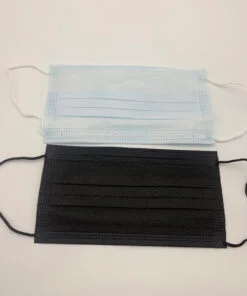
BKAMED focuses on medical face masks, whereby the mask is of high compliance, such as:
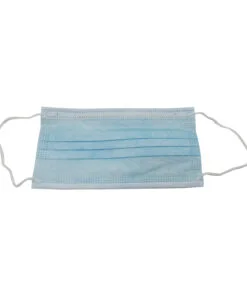
- Surgical face mask, 3-ply (Type IIR / ASTM Level 3).
- N95 and KN95 face mask models of respirators.
- Special surgical face masks for operating rooms and isolation wards.
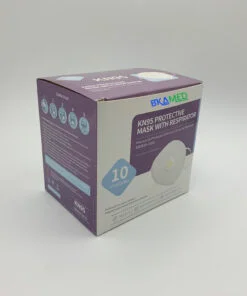
The consistency of this product focus is maintaining consistency in all filtration efficiency, breathability, and fluid resistance-important measures that are confused with people posing questions like do face masks expire or can a face mask expire without knowing the shelf-life testing procedures.
B2B Edge
- Strategic Location: The company is located in Hubei, which is the non-woven capital of China in the world and has direct access to melt-blown polypropylene supply.
- Quality & Compliance: Manufacturing done through accredited facilities with ISO 13485:2016, CE (EN 14683), FDA registration, and NMPA-listed certificates.
- Customization: Highly capable OEM/ODM solutions such as hospital branding, multilingual packaging, barcode integration, and traceability at the carton level.
- Lead Times: 15-17 days production cycles that are leading in the industry, which is important in emergency procurement.
- Scalability: Due to full vertical integration (non-woven fabric extrusion to final sterilization), the supply of face masks will not be interrupted even with peak demand in the world market.
B2B buyers who are in the process of choosing between professional suppliers and commodity sellers should know that BKAMED is the antithesis of low-value novelty products like ghost face masks or deer face masks, which have no place in regulated procurement environments.
2. BYD Precision Manufacture Co., Ltd.
Overview
BYD Precision Manufacture is a part of the large-scale of China industrial manufacturers that have managed to mass-produce face masks using its profound knowledge in automation, robotics, and precision engineering.
Although it is widely recognized worldwide as an electronics and new-energy vehicle manufacturer, the move by BYD into face-mask production has revitalized the production of high-volume PPE and is likely to be useful in 2026 for B2B purchases.
Specialization
BYD mainly manufactures standardized disposable medical face masks, such as formats of 3-ply surgical face masks and respirator face mask formats that would be used in large-scale institutional applications.
The company concentrates on standard specifications instead of generic customization, and therefore, their face masks can fit in national inventories and emergency reserves as opposed to specialized clinical use.
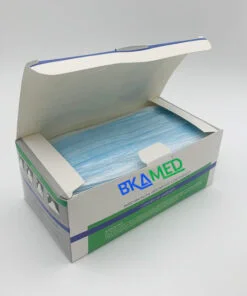
-
Extreme Scale: Capacity of production face masks in tens of millions a day.
- Automation: Minimal human intervention minimizes batch inconsistency.
- Reliability: A track record of delivering urgent government and non-government contracts.
BYD is better placed to suit customers who are more focused on continuity of supply rather than branding or customisation. It is not placed in the context of custom OEM work or in the context of an educational inquiry, such as how to make a face mask or lifestyle issues, such as can you sleep with a cold compress face mask. Rather, BYD provides face mask products and predictable production to large, controlled procurement initiatives of an industrial nature.
3. Winner Medical Co., Ltd.
Overview
Winner Medical Co., Ltd. is a publicly traded healthcare manufacturer and a long-established supplier of medical face masks as well as disposable surgical consumables. Having decades of experience in serving hospitals and clinical networks, Winner Medical is placed at the high-end of the face mask manufacturing industry in China.
Specialization
Winner Medical is characterized by its proprietary PurCotton non-woven production technology and vertically integrated production model. Its face mask products incorporate high-quality surgical face masks, procedure masks, and specialty clinical face masks, which are worn to be used over an extended period in an operating room environment and inpatient environment.
The material softness, breathability, and skin compatibility are the main differences- factors that matter as a buyer considers comfort during long shifts, as opposed to consumer concerns such as can you sleep with a cold compress face mask.

- Vertical Integration: Raw materials, non-woven, and final assembly control.
- Compliance: ISO 13485, CE, FDA registration, and high adherence to the standards of hospital procurement.
- Sustainability Focus: The use of more eco-friendly materials is increasing due to the EU and North American requests.
Buyers often choose Winner Medical when they want to purchase advanced face masks and bundled surgical consumables. Its products have well-established roots in controlled healthcare procurement, neither novelty items like a ghost face mask or a deer face mask nor didactic ideas like how to craft a face mask.
4. Zhende Medical Co., Ltd.
Overview
Zhende Medical Co., Ltd is a company that manufactures medical consumables that are used by hospitals both locally and internationally in China and has a long history of establishment. Being a publicly traded company, Zhende introduces financial transparency and long-term stability in the operations of large-scale face mask procurement.
Specialization
Zhende manufactures a variety of medical face masks, and the model of disposable surgical face mask that meets the standards of EN 14683 and ASTM. Its product line is far more than face masks to include gowns, drapes, caps, and other types of non-woven medical products, which makes it a one-stop shop to institutional purchasers.

- Portfolio Breadth: This will facilitate the combined buying of face masks and other hospital consumables.
- Export Experience: Long compliance experience with EU, US, and Asian regulatory systems.
- Stability in supply. There is reliable output, facilitated by various production facilities.
Zhende would be especially appealing to hospital groups and distributors who want to simplify the complexity of suppliers. Its model of procurement focuses on standardized, conforming face masks over experimental mask designs or consumer-led fascinations such as do face masks expire or can a face mask expire, which are already considered by validated shelf-life testing in the medical logistics.
5. Kingfa Scientific & Tech Co., Ltd.
Overview
Kingfa Scientific and Tech Co., Ltd. is essentially a materials science powerhouse and not a traditional face mask assembler. Kingfa is a major manufacturer of modified plastics and non-woven fabrics in China, and has a major upstream position in the world face mask supply chain.
Specialization
The main advantage of Kingfa is the ability to manufacture its own melt-blown polypropylene and high-tech filtration media- the main ingredient that defines the level of filtration of a face mask. Its face masks are respirator-grade, and it has KN95, FFP2, and FFP3 equivalent face masks used in the medical and industrial environment.
This level of control is material-level and directly tackles issues that have been made simple questions, such as: Do face masks expire or can a face mask expire, which are not really questions, but are determined by the stability of filters and storage factors.

- Material Control: PFE and BFE performance are consistent, and this is due to in-house melt-blown production.
- Technical Reliability: Less risk of low-quality filtration when other orders are in large volumes.
- Scale and R&D: The high investment in research of next-generation face masks and filter media.
Kingfa would best appeal to technically knowledgeable business-to-business purchasers who place more emphasis on the science of filtration rather than brand perception.
It is not centered on the idea of novelty products like a ghost face mask or a deer face mask, and irrelevant consumer information, like how to make a face mask.
6. 3M China Limited
Overview
3M China Limited is the Chinese production heart of one of the most well-known brands in the world of industrial safety. In the face mask industry, 3M is internationally considered the standard of respirator performance, especially in high-risk clinical and industrial settings.
Specialization
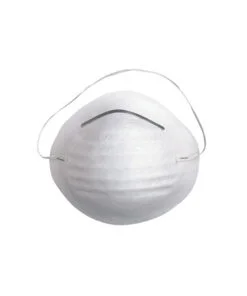
3M specializes in respirator-grade face masks, such as respirator N95 and more industrial respirator N95 and higher-efficiency models in the health care, pharmaceutical, construction, and heavy industry sectors.
These face masks are designed with close fit, consistent filtration, and consistent breathability over extended wear, which are much more important to B2B customers as opposed to consumer-oriented issues like can you sleep with a cold compress face mask or how to make a face mask.
- Brand Trust: It is often stated explicitly through the tender and regulatory framework.
- Regulatory Depth: Complete compliance with NIOSH, FDA, and global regulations.
- Risk Mitigation: This is preferred by the buyers when failure to comply is highly liable.
Although 3M sets high prices and lacks OEM flexibility, its respirators and face masks are extensively utilized in the fields where performance guarantees are superior to price.
Its professional orientation distinctively differentiates the brand and its products, as unusual, something like a ghost face mask or a deer face mask, holds no value in the regulated purchase.
7. INTCO Medical Technology Co., Ltd.
Overview
INTCO Medical Technology Co., Ltd is among the biggest manufacturers of disposable medical products in China, and has a history of heavy investment in automation and cost-effective production systems.
INTCO operates as a B2B supplier of face masks in the face mask industry, offering high volumes at competitive prices to customers worldwide.
Specialization
INTCO is mainly involved in manufacturing disposable 3-ply surgical face masks, as well as the simple models of protective face masks that have been designed to be distributed on a large scale.
The type of manufacturing model it uses focuses on standardized settings and continuous production as opposed to specialized or highly customized designs.
- Automation: Infinitely automated production lines reduce labour reliance and variability of batches.
- Cost Effectiveness: Competitive price on container-load face masks.
- Supporting OEM face mask and distributor branding in wholesale markets: Privatizing.
Distributors, NGOs, and institutional buyers who face tight budgetary limitations often choose INTCO. Its face masks are designed to meet requirements and volume, not to experiment, or be consumer-focused, like do face masks expire, can a face mask expire, or life-less-on-lesson questions like how to make a face mask.
The new designs, like a ghost face mask or a deer face mask, lie completely out of the business of professional manufacturing of INTCO.
8. Xiantao Xinfa Plastic Products Co., Ltd.
Overview
Xiantao Xinfa Plastic Products Co., Ltd. is an established company with its base being the city of Xiantao, which happens to be one of the key non-woven industrial cities in China.
Xinfa has an extensive history of exportation experience that has earned it a reputation as a reliable supplier of face masks and other medical disposable products (including high-volume face masks) to the international B2B markets.
Specialization
Xinfa specializes in disposable medical face masks, especially non-woven surgical face mask products of 3-ply designs and other non-woven face mask products.
Its manufacturing process focuses on efficiency, repeatability, and cost-controlling aspects, which makes its face masks acceptable in wholesale and institutional stocking.
B2B Value
- Export Maturity: Years of experience in dealing with buyers in Europe and North America, as well as with the emerging markets.
- Cost-Effective Scale: Maximized in the case of large orders of standardized face masks and medical disposables.
- Cluster Advantage: The supply is less susceptible to disruption because the supply is close to non-woven raw material suppliers.
Wholesalers and non-governmental organizations often choose Xinfa when they need to have reliable face masks of a base quality. It does not participate in lifestyle or novelty segments like a ghost face mask or a deer face mask, and does not deal with consumer-level questions like can you sleep with a cold compress face mask or how to make a face mask.
9. Honeywell Safety Products (Nantong)
Overview
Honeywell Safety Products (Nantong) is a Chinese company within the Honeywell International personal protective equipment division. It is vital to provide high-performance face mask solutions at regulated industrial and medical settings in the global market.
To B2B purchasers, Honeywell is a symbol of operational discipline, technical validation, and supply credibility over the long term.
Specialization
The Honeywell Nantong company specializes in face masks of respirator quality (N95, N99, and similar high-filtration models) in the healthcare, pharmaceutical, chemical processing, and heavy industry sectors.
These face masks will be designed to satisfy high breathability and fit standards, specifically for extended professional usage, which is much more applicable than the more consumer-focused queries like do face masks expire or can face masks expire, already handled by approved shelf-life standards.
B2B Value
- Global Compliance: Conformity with NIOSH, FDA, CE, and global standards of safety.
- Industrial Trust: Often required in the corporate safety programs and government tenders.
- Stability: High batch-to-batch consistency in filling orders of large face masks and respirators.
Honeywell has a purely professional portfolio. It neither creates new products, such as a ghost face mask or a deer face mask, nor does it touch on consumer interest, such as how do you make a face mask or can you sleep in a cold compress face mask.
10. Zhengxin Group
Overview
Zhengxin Group is a professional manufacturer of personal protective equipment that has a high degree of diversification of face mask design targeted at the needs of international B2B.
Although it is not as big as industrial giants, Zhengxin has been noted to be flexible and responsive to region-specific regulatory and ergonomic demands.
Specialization
Zhengxin manufactures a wide variety of medical and protective face masks, such as 3D-structured face masks, KF94-style face mask designs, and even ordinary surgical face masks.
Such designs are commonly chosen to suit fit-optimization, facial-shaping, as well as regional-usage-criteria–a significant concern to distributors providing numerous markets across the world.
B2B Value
- ODM Flexibility: High level of flexibility to change face masks and packaging to various regulatory jurisdictions.
- Design Variety: Accepts pediatric, standard, and extended-fit face mask models.
- Responsiveness in the market: Less time to develop new specifications.
Zhengxin will be appreciated by the B2B buyers who want differentiated and yet compliant face masks instead of a commodity-only supply. Its professional orientation obviously rules out novelty items such as a ghost face mask or a deer face mask, or consumer interest topics such as how to make a face mask, do face masks expire, or can you sleep with a cold compress face mask.
Understanding Medical Face Mask Classifications (2026 Updates)
To the professional procurement teams, the knowledge of face mask categories in 2026 is not optional–it is central. Auditing of hospitals, distributors, occupational safety managers, and government buyers is now a regular practice to ensure that the face masks they obtain are properly classified to be used in either their clinical or industrial intended purposes.
This misclassification may provoke regulatory fines, customs rejection, liability, or, most importantly, unsafe usage in healthcare or a high-risk workplace.
Due to slowed demand in the global market following a period of emergency buying, the regulatory authorities have been increasing their enforcement. Face masks and respirators are not considered equivalent in this setting anymore.
All standards outline particular performance standards, testing procedures, and labeling regulations that have a direct impact on procurement decision-making.
This section dissects the three most imprudent regulatory frameworks of face masks in the global B2B business, the updated US ASTM standard, the updated European EN standard, and the technical comparison between the Chinese KN95 and the US N95.
It also reformulates ordinary non-professional questions like do face masks expire or can a face mask expire within the proper regulatory framework: tested shelf-life, material stability, and storage restrictions.
ASTM F2100-23 – The New US Standard for Face Mask Performance
ASTM F2100 establishes performance requirements of medical face masks applied in the United States. ASTM F2100-23 was placed in force as an official replacement of ASTM F2100-21, and has been fully enforced since July 2025.
In the case of B2B buyers who supply hospitals in the US, any failure to meet the new revision would lead to instant non-acceptance.
Key Changes from ASTM F2100-21 to ASTM F2100-23
The biggest changes impact the process of testing, classifying, and recording face masks.
Particle Filtration Efficiency (PFE)
The -23 revision streamlines aerosol particle size distribution and test consistency. There is a higher level of importance given to sub-micron particle behavior, which is more representative of airborne exposure in the real world.
To the procurement teams, it implies that some of the old face masks that might have formerly succeeded ASTM Level 2 would no longer do so unless the melt-blown filtration material was upgraded.
Breathability (Delta P)
The breathability test is now looked at with greater scrutiny. ASTM F2100-23 further supports the weight of balancing filtration efficiency/pressure difference (Delta P), especially when using long shifts in clinical settings.
The lack of breathability has a direct impact on the compliance of the wearers, which poses the risk of inappropriate usage of the equipment, even in cases where the filtration performance is technically good.
Fluid Resistance
ASTM Level 3 face masks continue to be the standard in the surgical and procedural setting. Nevertheless, the -23 update creates tight tolerance levels in synthetic blood penetration testing.
This modification ensures that there is less variability between batches, and manufacturers are burdened with more responsibility to ensure consistent performance of the outer layer.
Implications for Wholesalers and Hospitals
The procurement teams should make sure that all the documentation clearly cites ASTM F2100-23, and not the old revisions. Questions such as Do face masks expire are usually posed incorrectly during audits. The truth is that the ASTM compliance is based on proven performance of the stated shelf life, not on guesses about the expiry.
EN 14683:2025 – The European Benchmark for Medical Face Masks
EN 14683 is still the relevant standard of medical face masks in the European Union. The 2025 changes mirror post-pandemic clinical studies, actual use in the hospitals, and a greater focus on fluid protection.
Classification Overview Under EN 14683
EN 14683 classifies the face masks into three types:
- Type I:
≥95% Bacterial Filtration Efficiency(BFE). Inhibited more and more in clinical applications because of a deficiency of protection.
- Type II:
≥98% BFE. Applicable in a medical setting that has a low risk of fluid exposure.
- Type IIR:
≥98% BFE and liquid splash resistance. The device is now highly recommended -and even a mandate in many cases- in a hospital, emergency department, and surgical environment.
The 2026 Clinical Shift
Among the most significant changes in 2026, the lessening of the recommendation of Type I face masks in a clinical setting should be highlighted. European health authorities are now keen on Type IIR face masks since they offer better protection against splashes of blood and body fluids. This change has a direct impact on procurement portfolios of distributors serving the EU healthcare systems.
B2B Procurement Impact
Distributors need to reposition product offerings to satisfy the demand for Type IIR face masks by the hospital. When non-professional questions are asked by buyers, such as can a face mask expire, they are likely to misinterpret that EN-compliant face masks are tested in terms of shelf-life during the testing of conformity. Expiry dates are calculated in terms of material stability, integrity of packaging barrier, as well as the storage conditions, not arbitrary time lines.
GB 2626-2019 vs. NIOSH N95 – A Technical Comparison for B2B Buyers
The distinction between the KN95 standard in China (GB 2626-2019) and the N95 standard in the US, which is under the control of NIOSH, is one of the most consistent sources of confusion in sourcing face masks internationally.
Filtration Efficiency
- KN95: ≥95% filtration of non-oily particles at GB test conditions.
- N95: ≥95% filtration in tighter flow rates, loading conditions, and test cycle.
Even though the percentages of filtration seem to be the same, the way of testing is radically different. This means that certifications are not exchangeable.
Breathability (Delta P)
NIOSH places greater emphasis on inhalation and exhalation resistance, particularly when used continuously. In the case of B2B consumers, this affects the fatigue of workers, compliance, and safety in clinical and industrial settings.
Fit and Design
- KN95: Often ear-loop based
- N95: Typically head-strap based
The designs used to design head-straps tend to provide a better facial seal, and this is why N95 face masks are the best face masks to use in a high-risk environment. This technical difference is much more applicable to the procurement decision-making process than the consumer-level curiosities, such as can you sleep with a cold compress face mask.
Regulatory Acceptance
KN95 face masks can be seen as an acceptable face mask in some markets, but they cannot be sold or branded as an N95 face mask without acceptance by NIOSH. The wrong labeling is a frequent reason for rejection and regulatory enforcement measures by customs.
Why Classification Mastery Matters in 2026
Face masks and respirators will not be emergency commodities in 2026; rather, they are medicalized and occupational safety equipment. The procurement teams need to match the products to the level of clinical risk, regulatory jurisdiction, and environment of end-use.
Misunderstandings: made in most cases, manifested in irrelevant searches such as how to make a face mask, ghost face mask, or even a deer face mask, do not belong in the sphere of making a sourcing decision.
Mastery of classification prevents non-compliance of buyers, safety of patients and workers, and enhances long-term relationships between suppliers. For B2B procurement professionals, face mask standards are not a matter of regulatory due diligence; rather, it is a matter of risk management on a larger scale.
Material Science & Construction (The B2B Quality Check)
To professional customers in 2026, the assessment of a face mask is much more than looks, unit cost, or the design of the packaging. Material science, layer architecture, bonding techniques, and most importantly, filtration stability with time determine the actual performance of face masks.
Hospitals, distributors, government procurement agencies, and occupational safety buyers who do not evaluate these fundamentals put themselves at risk of uneven protection, non-compliance with legal regulations, write-offs of inventory, and reputation risk.
In controlled purchasing, simplified consumer-like queries like: do face masks expire or can a face mask expire usually indicate a misconception of the professional face mask design, validation, and management. Actually, the lifespan of performance is dictated by the chemistry of materials, retention of electrostatic charge, and integrity of packaging, not by arbitrary schedules.
This section dissects the anatomy of a high-performance face mask, reasons why some materials cannot be compromised by B2B purchasers, and material innovations that will reinvent procurement decisions in 2026.
The Anatomy of a High-Performance Face Mask
An acceptable medical or protective face mask is a layered filtration–not a single-fabric barrier. Each of the layers plays a unique role that provides protection, comfort, and durability. Getting rid of any of the layers or crippling it compromises overall performance, no matter how well the product seems on paper.
Outer Layer: Spunbond Polypropylene for Fluid Repellency
Spunbond polypropylene is a type of polypropylene that is usually used as the outer layer of a medical face mask. It is mainly used as a fluid-resistant element- it will repel droplets, splashes, and aerosols or droplets before they hit the filtration core.
On the B2B quality view, this layer should be rated on:
- Bonding uniformity and Fiber uniformity.
- Surface tension treatment for Splash resistance
- Difficulty shedding off the fiber during extended periods of use.
In the case of Type IIR and ASTM Level 3 face mask types, this outer coating is not optional, but a regulatory requirement. Synthetic blood penetration testing is a test that specifically focuses on how this layer would perform under pressure. A spunbond layer can be weak or uneven, such that the layer can be passed with the naked eye but will not be passed by a standardized test.
A professional face mask does not need to be based on novelty, like a ghost face mask or a deer face mask, because it has to be structurally sound when subjected to fluids, friction, and prolonged use. This is the only difference between medical devices that are regulated and ornamental or consumer-oriented facial coverings.
The Core: Melt-Blown Polypropylene (The True Filter)
Melt-blown layer is the most sensitive part of any face mask. It is in charge of particle filtration efficiency (PFE) and bacterial filtration efficiency (BFE). There is no face mask that will provide any quality protection without a stable and high-quality melt-blown core, no matter who names it or what certifications they make.
Why GSM Matters for B2B Buyers
GSM (grams per square meter) of melt-blown fabric is a direct factor that has an influence on filtration stability and stability. GSM is not a marketing aspect in professional procurement; it is a risk-control measure.
From a B2B standpoint:
- Low-GSM melt-blown material can be able to pass initial tests of PFE/BFE but will degrade quickly during storage or use.
- GSM melt-blown layers of higher GSM retain electrostatic charge and filtration effectiveness throughout an extended validated shelf life.
Here is the place where such questions as Do face masks expire are answered appropriately. A face mask will not expire randomly; its filtration effectiveness has been proven over time, depending on:
- Melt-blown fiber integrity
- Holding of the electrostatic charge.
- Ability to be exposed to the environment.
- Packaging barrier efficiency.
Professional customers must request and look at:
- Melt-blown GSM specifications.
- Test reports on BFE and PFE at the batch level.
- Real-time shelf-life verification data and accelerated aging.
To differentiate themselves, manufacturers like BKAMED and Kingfa do this by having direct control over the melting-down manufacturing process, without introducing variability in the process that can be a common consequence of sourcing filtration media externally.
Inner Layer: Skin-Contact Comfort and Safety
The inner part of a face mask is in direct contact with the skin of the wearer. It is usually constructed using soft spunbond polypropylene or ES (ethylene-propylene side-by-side) non-woven fabric. Although this layer does not have a direct impact on filtration, it has a decisive influence on user compliance.
In the case of the hospitals or long-shift settings, the inner layer establishes:
- Wetness absorption and profuseness.
- Risk of irritation of the skin and allergic reaction.
- Feeling comfortable with prolonged wearing.
It is an expert buying problem–not an inquisitiveness of the consumer, like: can you sleep with a cold compress face mask? Weak materials in the inner layers create an uncomfortable experience, more adjustments of the masks, and incorrect use, which negates the protective purpose of even the most efficient face masks.
Institutional buyers need to make sure inner-layer materials are:
- Hypoallergenic
- Free from loose fibers
- It can be used with long-lasting clinical applications.
Specialized Materials for Face Masks in 2026
Material innovation remains one of the factors B2B buyers look for when assessing face masks, especially as the sustainability mandate and the antimicrobial performance expectations turn into part of tender requirements.
Graphene-Enhanced Layers
Face masks are in the pipeline of R&D of graphene-enhanced non-wovens. Proposed benefits include:
- Surface Antimicrobial properties.
- Better temperature controls.
- Improved mechanical life.
But these materials should be approached with care by the procurement teams. Acceptability of regulations differs greatly with jurisdiction, and there may be an inhalation and toxicology issue associated with poor integration of graphene.
Any face mask with graphene that can be used in B2B procurement needs to be supported by:
- Toxicological risk assessment.
- Inhalation and Migration safety studies.
- Clearance through explicit regulations
Graphene claims are still in their experimental stage and not in a procurement-ready form without this documentation.
Biodegradable and Eco-Friendly Non-Wovens
Sustainability is no longer an option in most EU and North American tenders, but rather an obligation. This has increased the demand for environmentally friendly face masks, which include:
- Blends of biodegradable polypropylene.
- PLA (polylactic acid) fibers
- Mono-material designs of face masks make them easier to recycle.
These inventions offer a direct solution to the crisis of the PPE waste and maintain filtration performance- when designed appropriately. Nevertheless, consumers should be wary of so-called greenwashing, when marketers rebrand consumer concepts, such as how to make a face mask into untested sustainability concepts.
The professional evaluation should be ensured with the confirmation that eco-friendly materials:
- Pass current filtration requirements and breathability requirements.
- Sustain the usage beyond the stated shelf life.
- Supported by conformity examinations and test information.
Material Stability and Shelf Life: The Professional Reality
Questions like Is a face mask expired or not are answered, not as a matter of speculation, but as a matter of science in the context of B2B procurement. The establishment of shelf life is achieved via:
- Accelerated aging studies
- Real-time stability testing
- Validation of barrier packaging.
A face mask that complies will have a stated shelf life that is backed by information. The most common time-dependent degradation of materials includes:
- Melt-blown electrostatic charge.
- Elastic ear-loop resilience
- Adhesion and accuracy of positioning of the nose bridge.
The face masks are designed by professional manufacturers to continue to perform during their stated shelf life in a stored environment meeting the stated conditions. This fact has nothing to do with consumer myths or DIY products like how to make a face mask, and they are irrelevant in regulated supply chains.
Why Material Science Is a B2B Differentiator
To institutional buyers, material science has a direct impact on:
- Regulatory pass/fail results.
- Long-term storage viability
- Product recall risk
- Total cost of ownership
Two face masks can look the same but act radically differently in the course of time because of variations in melt-blown quality, precision in layer bonding, and discipline in the source of materials. That is why responsible procurement teams screen construction data- not marketing lingo, fashionable appeal, or fashionable interpretation of masks.
Professional respirators and face masks are medical and safety devices designed by professionals. They have nothing in common with a ghost face mask, a deer face mask, or consumer-level misunderstandings of facial coverings. By 2026, material science will not be a technical aspect; it will be the basis of safe, compliant, and sustainable B2B face mask procurement.
Manufacturing Process & Quality Control
By 2026, professional purchasers assessing a face mask supplier will have to go much deeper than superficial certifications and unit costing. For hospitals, distributors, NGOs, and government procurement agencies, the manufacturer’s method and quality regulations for large-scale production of face masks are the direct determinants of whether a product will perform well across millions of units or not when subject to regulatory review.
The enforcement after the pandemic has highlighted a distinct difference between the real manufacturers and the predatory assemblers. A compliant face mask is not just a face mask that has been assembled; it is designed using proven industrial practices and adheres to strict quality management systems.
This area describes the entire lifecycle of the production of professional face masks, including raw polymer through to finished product, and redefines simplified questions, including do face masks expire or can a face mask expire, with the context of proven manufacturing, packaging, and testing processes.
From Polymer to Protection – The 5 Manufacturing Stages of a Face Mask
1. Fabric Extrusion: Spunbond and Melt-Blown Production
A medical face mask is produced by starting at the polymer level. Medical-grade polypropylene pellets are melted and extruded into non-woven materials in two fundamental processes:
- Spunbond: It is a fabric that creates robust, breathable outer and inner layers.
- Melt-blown: This is a method that produces microfibers that are very fine, and then they are used to create the filtration core.
Those manufacturers that have their own extrusion facilities control the fiber diameter, web uniformity, and electrostatic charging directly, which have a direct influence on the filtration efficiency and the filtration life.
This difference is essential to B2B purchasers who purchase face masks and respirators. The outsourced suppliers of melt-blown fabric have been subjected to variability in batches, poor retention of electrostatic charges, and diminished stability of shelf-life.
It is also at this stage that shelf life is literally engineered. The right answer to the question, Do face masks expire, when being posed by procurement teams, is based on how well the melt-blown layer has maintained its own electrostatic properties over time by storing them under known and validated storage environments, not on the arbitrary expiry of face masks.
2. Ultrasonic Welding: Structural Integrity at Scale
After the non-woven layers have been made, contemporary face masks are sewn together with ultrasonic welding and not stitching or adhesive bonding. Ultrasonic welding involves high-frequency vibrations that are used to fuse layers of the fabric without piercing.
In the case of face mask production, where professionalism is required, ultrasonic welding produces:
- Consistent seam strength
- Better ear-loop attachment strength.
- Less possibility of contamination during assembly.
Weld integrity is a crucial quality variable that is hidden but essential from a B2B perspective. Ear-loop detachment at the time of use is caused by weak welds and reduces compliance in clinical settings and causes a downstream liability. This is not related to consumer-level curiosity, such as how to make a face mask, and has everything to do with industrial repeatability and process validation.
3. Nose Bridge Insertion: Fit and Seal Control
The nose bridge element provides the facial contours with sealing. Popular materials of professional face masks are:
- Aluminum wire, which is plastic-coated.
- Complete nose bridges made of plastic to be used in MRI.
The nose bridges of high-quality face masks have constant memory storage and do not get tired of constant adjustment. Nose bridges of poor quality lose shape, which allows the air to escape and minimizes the protection in reality.
This step is especially imperative to respirator-style face masks, in which the integrity of the seal has a direct influence on filtration performance. Fit failures are not aesthetic failures; they are compliance and safety failures.
4. Automatic Folding, Cutting, and Dimensional Control
The last size of a face mask is determined by automated folding and cutting machines. Dimensional accuracy is not much considered, although it is at the heart of B2B procurement due to the following reasons:
- To minimize the possibility of user error, PPE sizing is standardized in hospitals.
- Regulatory audits check the size of masks in comparison with the specified specifications.
- The facial cover, consistency of the seal, and comfort are influenced by poor tolerances.
In-line dimensional checks are carried out by professional manufacturers during production. Such a high degree of control does not exist in suppliers whose products are oriented towards novelty products or products of low compliance, like a ghost face mask or a deer face mask with no dimensional responsibility.
5. Sterilization and Packaging: EO vs. Non-Sterile
Face masks are not all sterile. In case of the need to carry out sterilization, they are often carried out with:
- Ethylene Oxide (EO): used in medical disposables that are sterile.
- Non-sterile bulk: commonly used in general face masks.
The choice of sterilization has a direct impact on cost structure, lead time, regulatory classification, as well as packaging requirements. The packaging barrier performance cannot be separated from shelf-life validation, such as expiration dating. Such questions as Can a face mask expire are not answered based on assumptions but rather through packaging validation studies.
EO-sterilized face masks take more time to aerate, do need greater documentation, and non-sterile products are dependent on controlled manufacturing processes and the integrity of packaging.
Quality Management Systems (QMS) in Face Mask Manufacturing
The face mask factory is a submissive company that is run by formal quality systems that produce repeatable results at a large scale. These systems create a difference between honest manufacturers and assembly-only operations.
ISO 13485 and GMP: The Non-Negotiables
The international and accepted standard of quality management in the medical device industry is ISO 13485. In the production of face masks, it controls:
- Document and record control
- Process validation and change management.
- Dealing with nonconformance and corrective measures.
Cleanroom discipline, personnel training, hygiene controls, and equipment maintenance are also further elaborated under the Good Manufacturing Practice (GMP) principles. In the case of B2B buyers, certificates are not enough, but on-site or third-party audits are mandatory.
Batch Testing Protocols: Verifying Every Production Run
Professional face masks cannot be accepted at once and forgotten. The performance verification is done on each production batch, and it includes:
- BFE (Bacterial Filtration Efficiency)
- PFE (Particle Filtration Efficiency)
- Synthetic Blood Penetration Resistance.
The batch testing ensures that current production is in line with the specifications stated. This is the professional response to the most common misunderstandings, like do face masks expire-performance is constantly measured over time by testing based on data.
The suppliers should be asked to provide buyers with:
- Certificates of Analysis Batch-level (COAs)
- Third-party laboratory test report.
- Post-market review retention samples.
Why Manufacturing Transparency Matters in 2026
B2B buyers in a mature post-pandemic market are becoming more responsible when it comes to choosing the supplier. Government agencies, regulatory bodies, and hospital systems now require procurement teams to go beyond superficiality in terms of compliance in due diligence.
Manufacturing transparency helps buyers to avoid:
- Delay and the denial of shipment.
- Products recall and the enforcement of regulations.
- Reputational and legal liability.
The professional face masks and respirators are industrial medical equipment- not accessories. They have nothing in common with new products, such as a ghost face mask or a deer face mask, or even informal DIY ideas, such as how to make a face mask.
Knowing the process of producing a face mask and quality regulation is no longer a matter of choice in 2026. It is a fundamental strength of any serious B2B buyer of face masks who would like to experience consistent performance, regulatory security, and the stability of the supply over time.
B2B Sourcing Strategy – Navigating the Chinese Face Mask Market
Sourcing a compliant face mask in China in 2026 takes significantly more than locating a supplier that has stock. To institutional buyers, distributors, hospital procurement teams, and government agencies, the success of sourcing requires an understanding of market structure, verification of manufacturer legitimacy, logistics risk management, and strategic exploitation of OEM/ODM capabilities.
China is still the face mask production hub of the world, but it is a multi-layered and complicated world in which a bad sourcing choice can lead to a failed compliance aspect, delay shipments, or poor product quality.
Most sourcing errors are based on oversimplification, most of the time coming through non-professional questions like Do face masks expire or Can a face mask expire. Supplier verification, documentation accuracy, and the long-term reliability of suppliers are the true risks in regulated B2B procurement.
This section presents a realistic, risk-conscious model for how to manoeuvre through the Chinese face mask production scene.
Direct-from-Factory vs. Trading Companies
The choice of working with a manufacturer or a trading company is one of the most crucial sourcing face mask decisions. This is even though they both present very different risk profiles, and can be found all over the PPE ecosystem of China.
Identifying a True Face Mask Manufacturer
A licensed face mask producer will be able to show evident, provable control over production capability. At the very least, a real manufacturer:
- Operates and owns mask assembly lines and non-woven processing equipment.
- Is registered in the NMPA (National Medical Products Administration) manufacturer list of China.
- Is capable of delivering factory audit, production flow files, and test data in batches.
Organizations like BKAMED can be described as vertically integrated producers of face masks, and they have control over sourcing raw materials, melt-blown filtration, assembly, testing, and packaging. This vertical integration gets rid of the markup of the middleman, and the variability of batches to batches is greatly reduced.
Trading companies, on the contrary, generally:
- Get face masks and respirators in various factories.
- Lacks direct control over the quality of melt-blown and the source of materials.
- Is not able to assure the same specifications on repeat orders.
In the case of B2B buyers providing the hospitals or regulated institutions, this inconsistency presents inadmissible operation and regulatory risk.
Verifying Factory Credentials
Verification cannot be a check box event; verification is a fundamental procurement discipline. Professional buyers should ensure that the certifications and registration are of the actual manufacturing facility, and not a marketing company.
Some of the important documents to check are:
- NMPA manufacturing license and products registration.
- The scope of the ISO 13485 certification (address and product category)
- CE and FDA documents are associated with the name and location registered in the factory.
When this verification is not done, buyers risk being exposed to fake certificates, re-labeled products, and regulatory non-compliance, which continue to exist in the face mask market worldwide. This measure alone eliminates a significant proportion of unreliable suppliers.
Evaluating Lead Times and Logistics
Logistics strategy directly affects service continuity, working capital, and the total landed cost. Logistics planning has to be incorporated into sourcing decisions in B2B face mask procurement.
Managing the “Shipping Gap”
To order face masks in bulk, the buyers usually have the choice between:
- Air Freight: Rapid and costly; necessary to replace or respond to an emergency outbreak.
- Sea Freight (20ft / 40ft containers): It is cost-effective and scalable; this is often used in planned procurement.
Millions of disposable face masks can be fitted within a single 40ft container, and thus, the use of sea freight is the default choice when hospitals and distributors are dealing with a rolling inventory. Nevertheless, lead times should take into consideration:
- Production scheduling
- Batch testing and quality release.
- Export customs clearance
- Transit and destination customs handling on the ocean.
Knowing this complete timeline eradicates the illusions of unrealistic expectations fuelled by consumer assumptions, such as how to make a face mask in a hurry or the myth about expiration.
Customs and Documentation Compliance
errors in documentation are considered one of the most frequent reasons for the shipment delays of face masks. Each shipment of exports will consist of:
- Conformity Declaration in accordance with destination regulations.
- Test reports with reference to the standards used (ASTM, EN, GB, or NIOSH).
- Proper HS codes, labeling, and language requirements.
High-risk issues are mislabeling. As an instance, face masks such as KN95 cannot be labeled or sold as N95 without the NIOSH certification. Such mistakes often lead to the seizure of customs or forcible re-importation.
OEM/ODM Customization for Wholesalers and Institutions
In the year 2026, the option of customization in B2B sourcing of face masks is no longer optional as it is a competitive requirement. Hospitals, distributors, and healthcare systems are demanding more and more products that meet their operational and regulatory requirements
Private Labeling and Packaging
Services in OEM face masks usually involve:
- Retail and hospital cartons that are custom-printed.
- Personal wrapping using multilingual IFUs.
- Integration of the barcode systems and batch traceability.
Professional private labeling helps in brand integrity, traceability, and compliance audits. It also distinctly differentiates the medical face masks that are legit and the ones that are novelty or lifestyle, like a ghost face mask or a deer face mask that should not feature in institutional supply chains.
Specialized Sizing and Application-Specific Masks
The generic one-size-fits-all face masks are less and less able to conform to the institutional requirements. B2B buyers are now routinely demanding:
- Children’s Hospital pediatric face masks.
- Industrial/extended-fit face mask extra-large versions.
- Operating room and isolation ward designs that are procedure-specific.
Trading companies or ad-hoc suppliers are not able to meet these requirements. They require engineering manufacturers who have tooling facilities as well as validation experience.
Risk Management: Avoiding Common Sourcing Failures
Established procurement departments know that the cheapest face mask might be the most expensive in the long term. Some of the most common sourcing failures are:
- Defective melt-blown filtration material.
- Unreliable ear-loop welding strength.
- Certifications, which are not traceable to the factory.
Other questions, like Do face masks expire cannot be asked without context. The question to ask is whether a supplier has the proven shelf life, batch testing, and traceable quality system that can be applied to the long-term contracts.
The risk-conscious buyers are concerned with:
- Factory transparency
- Documentation accuracy
- Repeat-order consistency
Why Strategic Sourcing Defines Success in 2026
China is still the most competent face mask production hub in the world- but only to those buyers who shop smart. Strategic sourcing is shifting face masks and respirators from interchangeable commodities to reliable medical equipment.
Direct factory relations, strict checking, and unified logistics planning safeguard procurement teams against the collapse of regulations and failure to supply. This disciplined style has no relation to the consumer illusion, DIY thinking, such as how to make a face mask, or novelty aesthetics, such as a ghost face mask or a deer face mask.
B2B face mask sourcing is a professional operation in 2026, which can be characterized by data, conscientiousness, and decades of alignment with suppliers- not shortcuts.
Environmental Sustainability in Face Mask Production
With the 2026 maturity of global procurement standards, environmental sustainability now stands as a formal evaluation criterion in the face mask sourcing of hospitals, government agencies, NGOs, and multinational distributors, with the ESG and public accountability requirements.
The pandemic imposed an unparalleled demand on the use of disposable face masks worldwide, which has left a permanent environmental impact that the world is no longer able to ignore. Compliance and performance, material footprint, production efficiency, and end-of-life impact are now to be considered by institutional buyers.
Face mask and respirator sustainability is not a branding strategy anymore. It is a quantifiable, auditable aspect of procurement strategy that influences tender eligibility, supplier selection, and long-term contracts.
This part will discuss the sustainability facts of the modern face mask, the innovations that may arise within the Chinese manufacturing base, and how B2B buyers can weigh between environmental awareness and compliance assurance.
The PPE Waste Crisis: Why Sustainability Matters
Disposable face masks are mostly manufactured using polypropylene, a petroleum-based polymer, which cannot be easily biodegraded in the natural setting. The global usage amounted to billions of units per month during high pandemic seasons.
The environmental agencies have since documented considerable addition of PPE-related waste in landfills, incineration streams, as well as marine ecosystems, in which degradation leads to long-term microplastic pollution.
To institutional purchasers, sustainability is no longer a conceptual challenge- it is now a procurement requirement. Several public tenders now specifically seek documentation of:
- Composition and recyclability of materials.
- Waste minimization measures in the production process.
- Carbon footprint reporting and energy consumption.
These are radically opposed to consumer-level questions like do face masks expire or can a face mask expire which do not discuss the environmental impact of face masks across millions of units. B2B customers need to consider sustainability at the system level rather than at the product level.
Innovative Solutions in Face Mask Manufacturing
Due to regulatory and demand pressure, the manufacturers of face masks in China are turning to the use of sustainable options that maintain the filtration capability but produce a less harmful impact on the environment.
Recyclable Mono-Material Face Masks
The introduction of mono-material face masks, in which all of the layers (outer, filtration core, and inner) are made of compatible polypropylene mixtures, is among the most promising ones. The design method removes the mixed-material separation issues, which have a history of reducing the recycling process of PPE.
Mono-material face masks and respirators have several benefits to B2B buyers:
- Streamlined recycling processes.
- Minor pollution in waste streams.
- Conformity to current medical waste management procedures.
Nevertheless, consumers should ensure that recyclability assertions are consistent with the real recycling facilities in the target market. A face mask that cannot be recycled and has no feasible downstream waste solution is not of much use in the real world.
PLA (Polylactic Acid) and Biodegradable Fibers
Non-wovens made of PLA are made on the basis of renewable materials like corn starch and are drawing interest in the EU and North American procurement systems. These materials offer:
- Less reliance on polymers that are based on fossil fuels.
- Biodegradability of partial under controlled industrial composting.
PLA face masks are especially appealing to those institutions that want to minimize carbon footprint indicators. Nonetheless, sustainability should not undermine protection.
Face masks made of PLA should also have the ability to fulfill filtration efficiency, breathability, and fluid resistance standards as specified by ASTM, EN, or GB standards.
In the case of B2B buyers, validated test information and transparent end-of-life documentation should support the adoption of PLA. It is a trend, but not acceptable to rebrand consumer notions, such as how to make a face mask to become a sustainability claim without verifying it.
Energy Efficiency and Low-Carbon Manufacturing
Sustainability will go further than materials in the production of face masks. The intensity of energy use, production of waste, and emissions is now examined throughout the manufacturing lifecycle.
BKAMED’s Green Manufacturing Initiative
Major producers like BKAMED have already started to incorporate environmental controls in the production infrastructure, including:
- Solar-powered production line to replace grid energy.
- Ultrasonic welding devices require less energy.
- Waste heat recovery during non-woven extrusion.
These investments minimize unit-based carbon emissions and comply with the requirements of international purchasers to report on their ESGs.
To the procurement teams, such transparency stands out between professional face mask manufacturers and cheap assemblers who are only interested in output volume.
Balancing Sustainability with Compliance
In the case of B2B purchasers, the most difficult question is how to achieve sustainability goals and regulatory certainty. All sustainable face masks should still:
Conform to the ASTM, EN, or GB standard wholly.
Pass the BFE, PFE, and fluid resistance test.
Have a proven shelf life, which is reinforced with stability tests.
Any sustainability efforts that compromise compliance are unacceptable. This is the reason professional procurement teams consider environmental requirements as an extra level of evaluation, not a substitute for technical performance.
Consumer-driven ideas, like how to make a face mask, novelty items like a face mask of a ghost or a deer face mask, do not apply to the regulated sourcing choice.
The B2B Buyer’s Role in Sustainable Face Mask Adoption
B2B buyers are decisive in determining the sustainability outcomes throughout the face mask supply chain. The procurement teams can hasten the implementation of responsible manufacturing by using supplier selection, specification design, and contractual ESG requirements.
Some of the major levers that buyers can use are:
- The priority of suppliers of materials that can be recycled, or with less impact.
- Demanding energy and emissions reports in contracts.
- Promoting long-lasting relationships that warrant sustainability investment.
Sustainable face masks do not deal with lifestyle convenience or consumer myths, such as can you sleep with a cold compress face mask. They are concerned with the engineering of environmental responsibility within the industrial-scale protection.
Sustainability in the manufacture of face masks is no longer a choice in 2026. It is a quantifiable strategic aspect of professional procurement that aligns the protection of the public health with extended environmental stewardship.
Common Pitfalls in Bulk Face Mask Procurement (And How to Avoid Them)
In 2026, B2B buyers are still subject to unnecessary risks because of the face mask bulk buying. Hospitals, distributors, NGOs, and government agencies frequently believe that quality and compliance failures have been removed due to regulatory maturity.
The fact is that sourcing problems are also present at scale-and these issues are seldom revealed during quotation or even sampling. Rather, they come into place once the shipments have been received, the regulatory check has passed, or even after the actual deployment.
Bulk face mask is a regulated medical and safety product and not a generic item. When the procurement teams adopt them as price-driven products, the outcome is usually late delivery, breach of compliance, or security.
This section explains the pitfalls that are most common in bulk face mask procurement and strategies that can be used in practice to avoid them.
The “Low Price Trap”: When Cost Undermines Protection
The one error in the face mask acquisition that is the hardest to eliminate is the need to focus on the unit price rather than the integrity of the material.
In manufacturing, the melt-blown filtration layer, the most expensive and technically sensitive part of a face mask, is nearly automatically the target of cost reduction in professional manufacturing.
Key Risks
- Rapidly degradable low-GSM melt-blown fabric.
- It is caused by non-consistent or weakly electrostatic charging.
- Products that demonstrate success on short-term tests but fail long-term performance verification.
Professional misunderstandings emerge here. Questions like Do face masks expire or Can a face mask expire are frequently asked after face masks of poor quality lose filtration efficiency too soon. Expiration is not the root of the problem; it is poor choices of materials and unregulated sourcing.
How to Avoid It
- Demand a write-up of melt-blown GSM specifications.
- Request BFE and PFE test reports on the batch level.
- Perform random third-party verification testing.
Seasoned customers consider filtration life, and not merely first conformity.
Counterfeit or Misrepresented Certifications
The other significant danger is fake or wrongly used certification. Some suppliers offer valid-looking CE or FDA certificates that are not related to the actual manufacturing plant, product, or manufacturing location.
Common Red Flags
- Certificates for another business name.
- CE modules whose expiry or withdrawal has taken place.
- KN95 face masks that are labeled or sold as N95.
Mislabeling may lead to a seizure of customs or forced re-export, recall, or regulatory fines. This is a major risk, especially where the customers are relying on the trading companies instead of individual manufacturers.
How to Avoid It
- Authenticate the certificates with the direct issuing authorities.
- Compare factory addresses and registration numbers.
- Ensure that records include a reference to the specific face mask model purchased.
This is hard work, which has nothing in common with the issues of consumers, such as how to make a face mask, and everything with regulatory discipline.
Fit and Comfort Failures in Clinical Environments
The bulk procurement will assume that a single size fits all. In practice, the poor fit has become one of the most common reasons for non-compliance among healthcare and industrial workers.
Common Issues
- Poor or uneven ear-loop elasticity.
- Nose bridges have weak memory storage.
- Poor coverage of faces amongst the users.
When technical requirements are met, but real-life protection is compromised with the failures of filtration materials. Customers who are solely interested in certification do not pay much attention to ergonomic performance.
How to Avoid It
- Ask for fit samples with a variety of sizes.
- Assess the long-term comfort in experiments.
- Name face masks and respirators, which are application-specific.
Comfort is undermined with questions such as Can you sleep with a cold compress face mask. Professional purchasers need to evaluate comfort in actual working conditions.
Inconsistent Reorders and Supply Instability
A common but less reported pitfall is doing repeat orders. Samples and early production are approved by buyers, and later on, they get new batches with new materials or construction.
This typically happens when:
- Melt-blown fabric is sourced from outside by suppliers.
- Trading companies change factories without any previous announcement.
- There is no material contractual lock-in.
How to Avoid It
- Collaborate with vertically integrated face mask manufacturers.
- Contractually secure lock specifications.
- Keep reference samples to compare in batches.
Professional manufacturing is characterized by consistency within orders.
Ignoring Shelf-Life Validation and Storage Requirements
Shelf life is a term that has not been invented in the air but is a confirmed fact depending on materials, packaging, and storage. When consumers request Do face masks expire, the actual questions to be asked in procurement include:
- Is there shelf life validation of aging?
- Have storage conditions been well-stated and recorded?
Professional face masks contain a stated shelf life backed by facts, not opinions. Buyers are advised to make sure that packaging integrity and storage requirements are in line with their logistics environment.
Avoiding the Noise: What Not to Consider
B2B purchasers need to be active in filtering irrelevant narratives. Regulated procurement decisions do not include novelty ideas like a ghost face mask, a deer face mask, or lifestyle information like how to make a face mask or whether can you sleep with a cold compress face mask.
These distractions diminish concentration on what is really important: material quality, discipline in manufacturing, and compliance traceability.
Why Pitfall Awareness Protects Procurement Teams
These pitfalls can be avoided to ensure that the procurement teams are not exposed to:
- Penalties and regulatory policing.
- Stock-out and disruption of operations.
- Reputational and legal risk.
Bulk face masks are not the products to be casually sourced, but medical and occupational safety devices. Proficient sourcing groups consider sourcing as a systematic risk management process, rather than price negotiation.
Pitfall awareness does not serve as a defensive measure in the year 2026, but rather as a strategic measure.
Conclusion
In 2026, precision and not price will characterize successful face mask sourcing. In the case of hospitals, distributors, and institutional buyers, the regulatory certification, material science, manufacturing transparency, and supply-chain reliability have to be balanced when procuring compliant face masks.
China is the center of production of face masks in the world, although only those manufacturers who have a proven quality system and verticalization can regularly challenge the demand of the modern B2B.
The professional purchaser needs to shed illusions, including do face masks expire, can face mask expire, and concentrate on tested shelf life, filtration, and long-term working connections with suppliers.
The next generation of face masks and worldwide procurement will be the manufacturers that know the science of protection and the logistics of big.
Volume-based pricing and long-term security of supply: The procurement managers who need face mask solutions with high compliance at a factory-direct and with scalable OEM/ODM capabilities are welcome to contact BKAMED directly.
